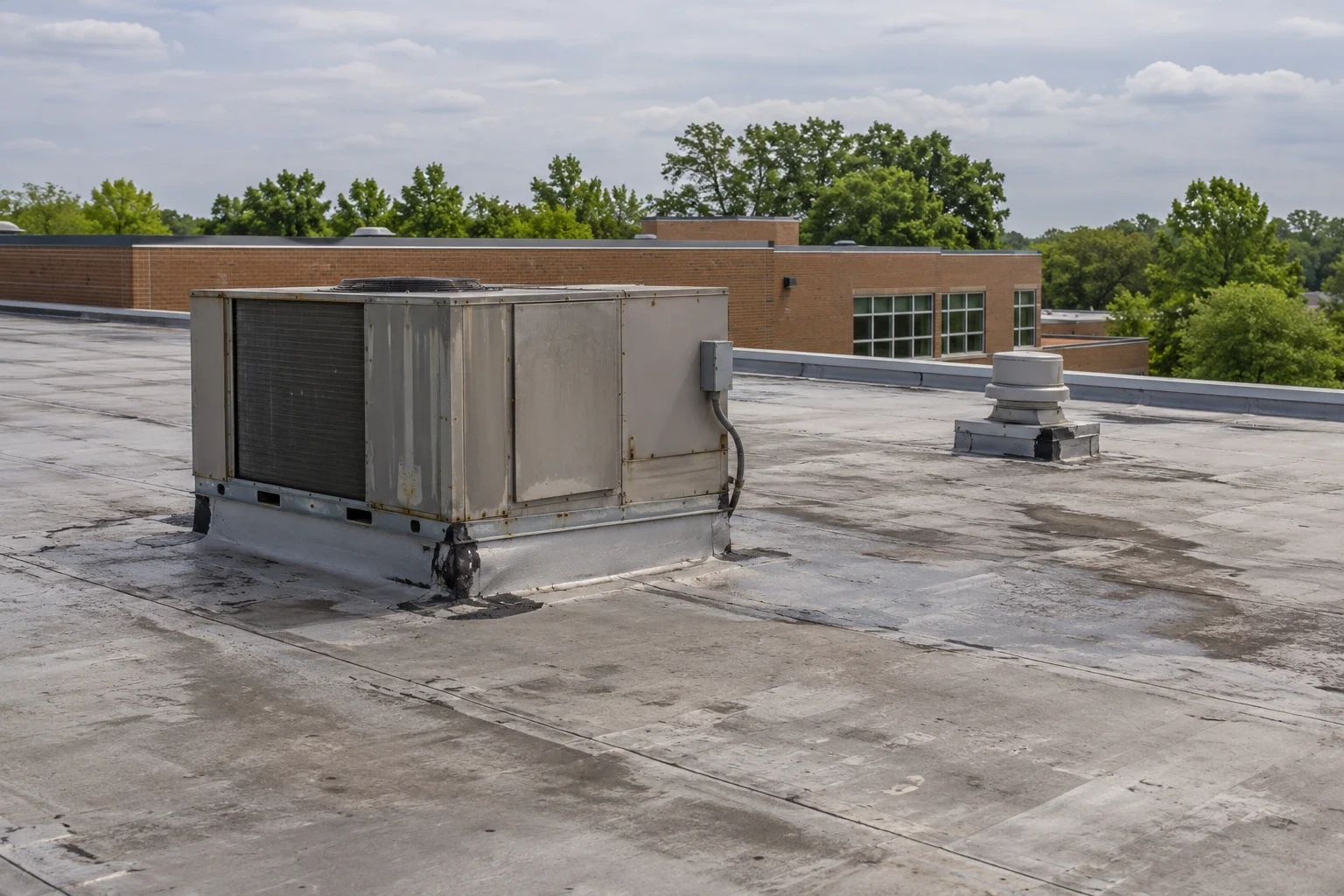
A school building, a city office and a roadside shop all sit under flat or low-slope roofs that behave the same way when the weather turns. Holliday, TX lies in the north of Archer County, some 14 miles southwest of downtown Wichita Falls, with U.S. 82 and U.S. 277 passing on its northwest side. The town is served by Holliday ISD, and the 2020 census counted 1,524 residents.

That mix of public buildings and small businesses sets the order of our work. We start with who uses the building and when, then walk the roof, then write down what we found.
Public Buildings Need a Calendar
A building used by a school district has a calendar that cannot move: classes in the fall and spring, athletics in the evening, summer for heavy work. A roof job that runs into the first week of class is a problem for everyone. So the schedule comes first and the scope second.
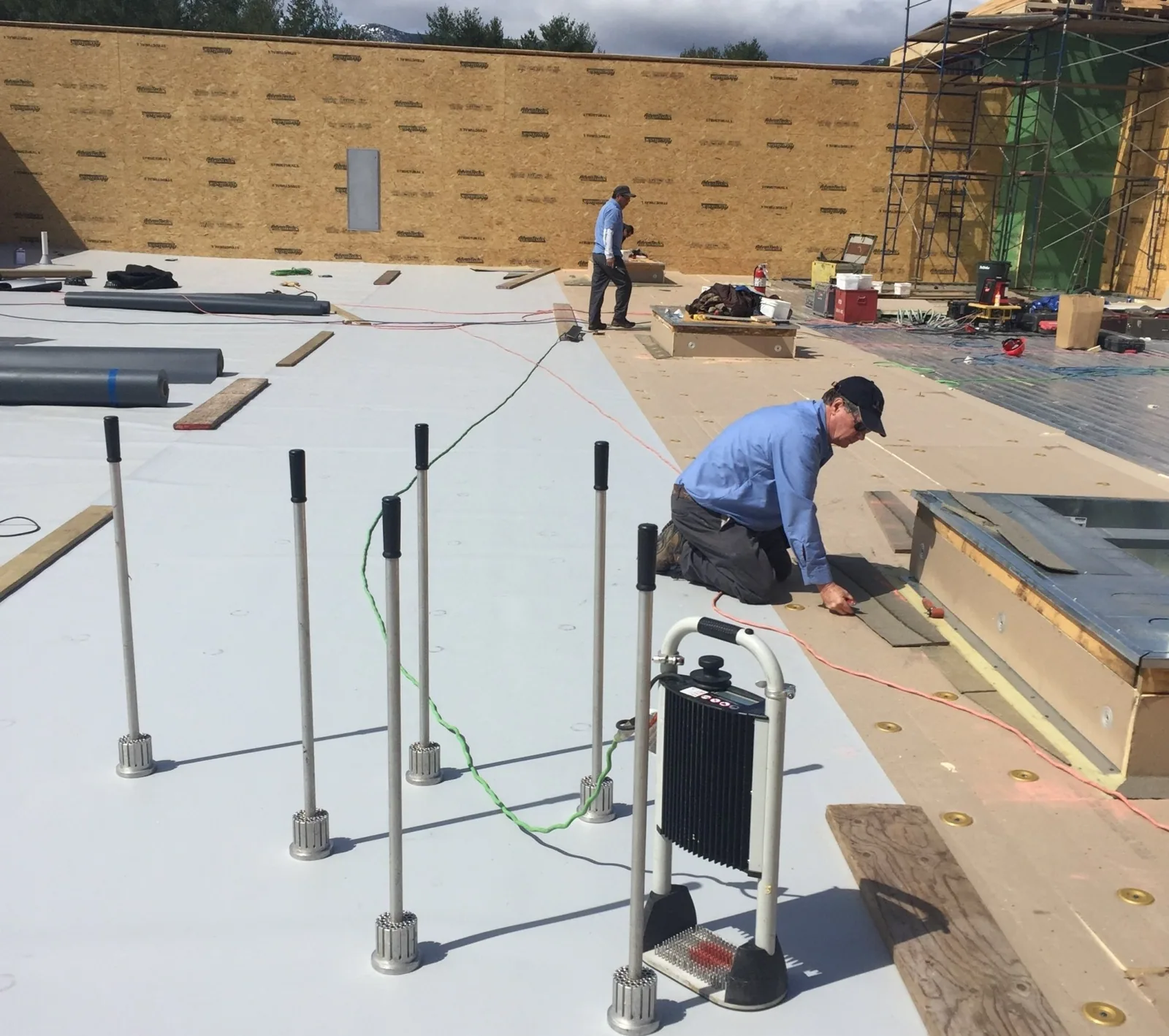
We map the roof zones, mark the ones that must be dry before students return, and plan tear-off in sections that can be closed in a day. Staging stays away from entrances and bus lanes. That is how we plan school roofing for a district, and the same discipline helps a city office or a store that cannot close for a week.
Safety adds a second layer. Fall protection, fenced material areas and a clear route for deliveries are set before the first day. Noise from fastening and tear-off is scheduled for hours when classes and offices are quiet, and every closeout leaves the roof watertight.
Follow the Water to the Drain
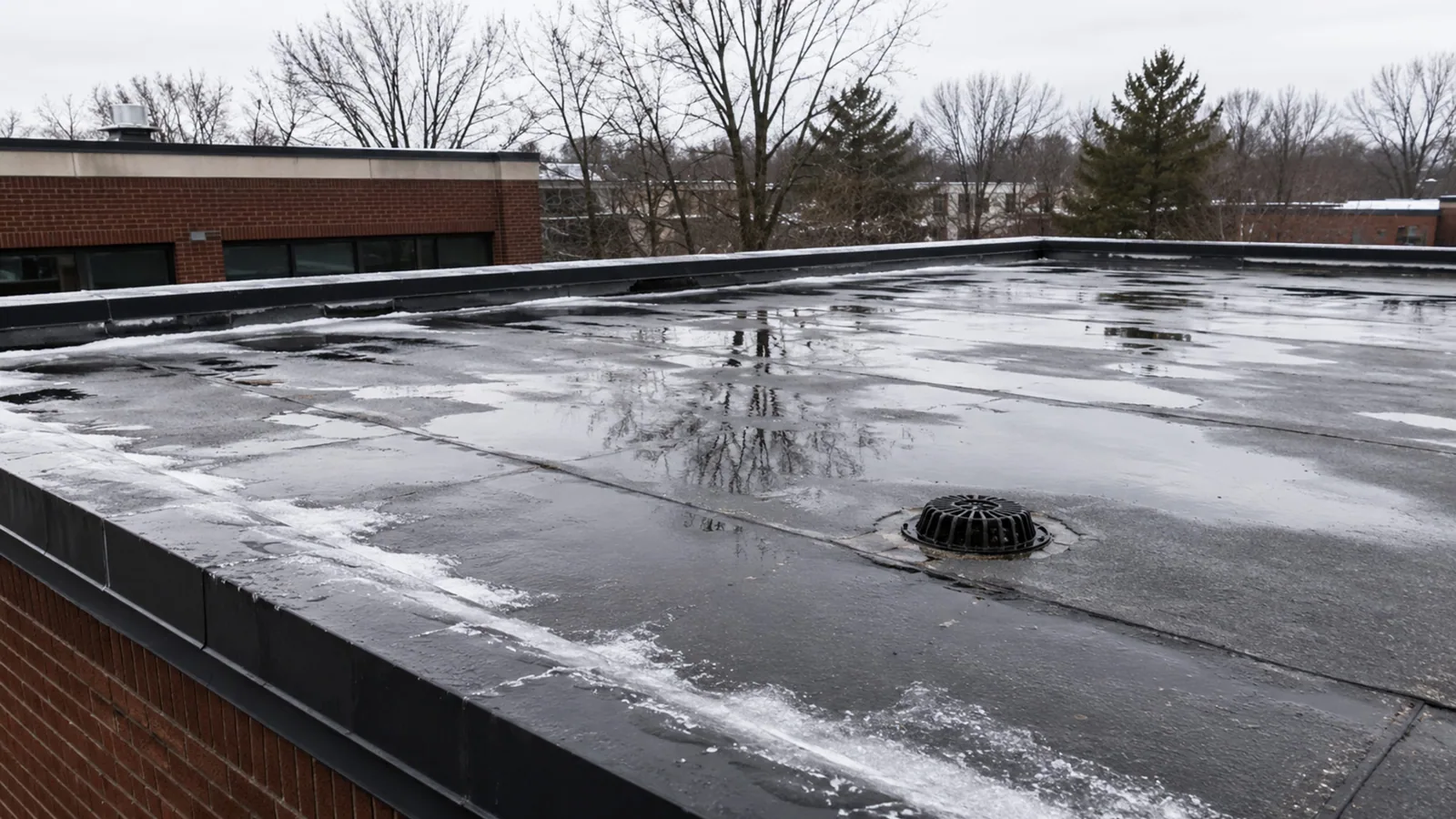
Rain in Wichita Falls totals about 27.9 inches in an average year, and May 2015 brought a record 17.00 inches in one month. A flat roof must move that water to an outlet fast. If a drain is blocked, water backs up against walls and finds every weak spot.
The ponding line tells the story. A drying puddle leaves a band of dirt and algae, and we look for that band after every storm. Over a firm roof the band raises a drainage question; over a soft spot it raises a moisture question. Our work on ponding water and on roof drains and scuppers follows that split.
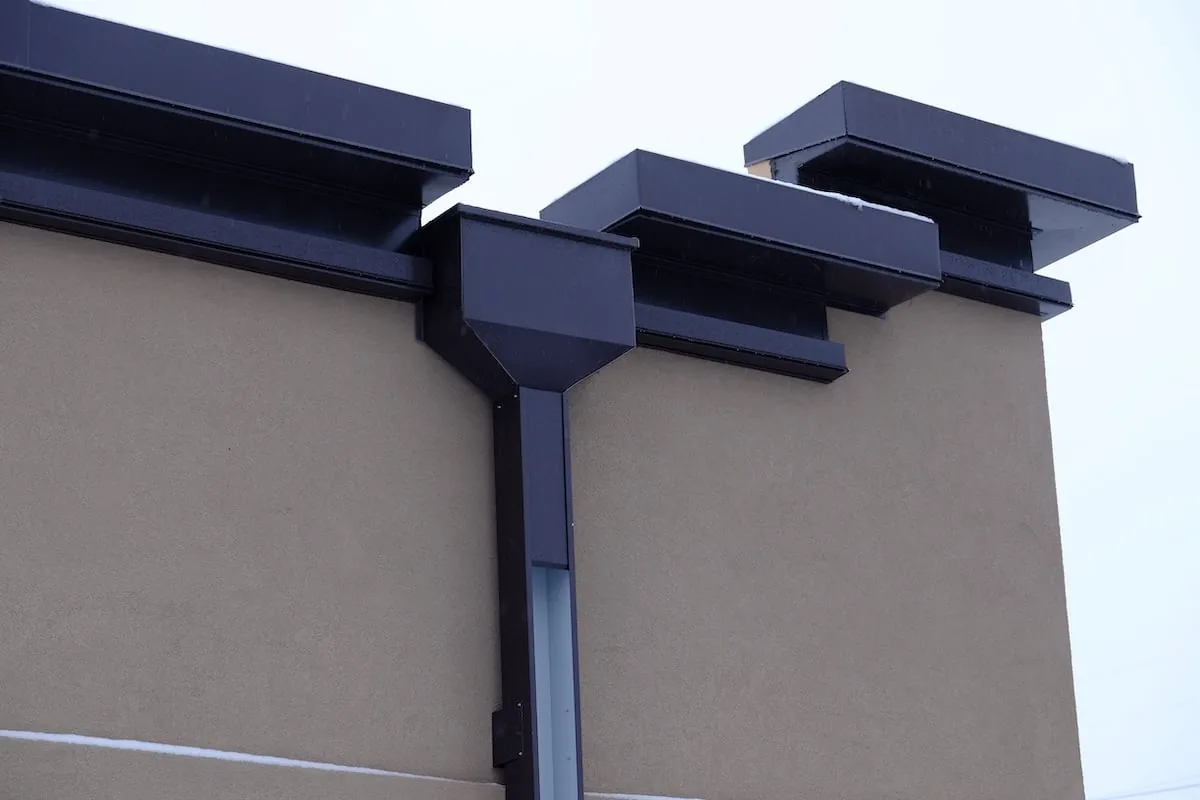
Fixes range from a cleaned strainer to a new drain at the low point, or tapered insulation that gives the water a slope. Which one fits depends on the deck and on how much structure the owner is willing to alter. We price each in plain terms so the board or the owner can compare.
Wind Lifts the Edges First
On open ground, wind finds the corners and the edge metal before it touches the middle of a roof. A loose coping cap or a bent drip edge lets air get under the membrane, and each gust pulls on it. We check the edge metal, the fasteners behind it and the seams that run to the edge.
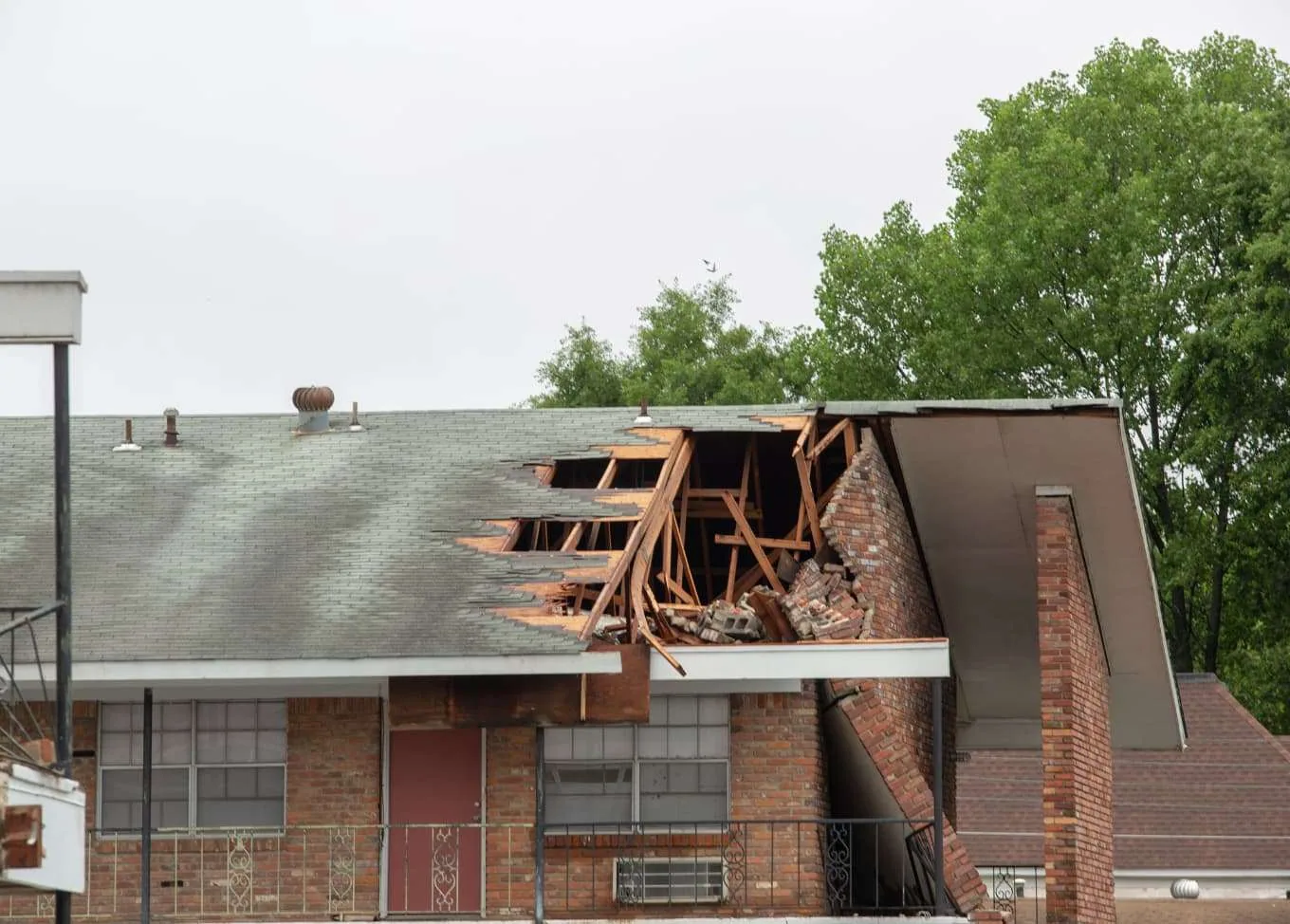
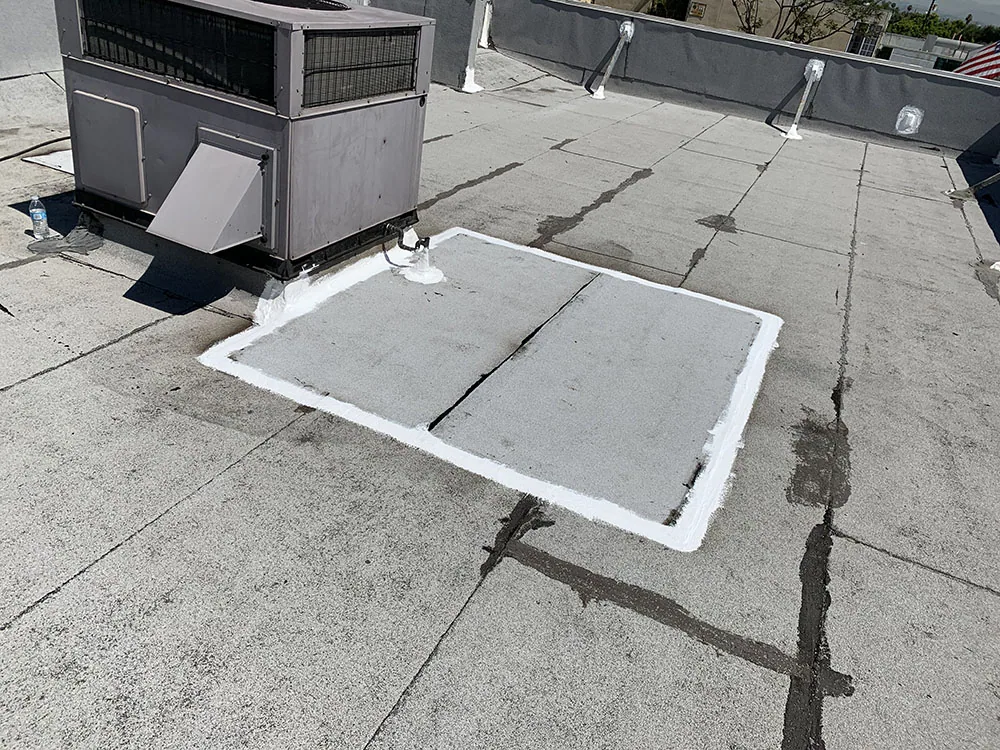
In April 1979 a tornado carved an 8-mile path across southern and eastern Wichita Falls, and the 1964 tornado left debris on every Sheppard AFB runway. Both belong to the past. They explain why edge details deserve a close look, and why a wind damage check belongs after any strong storm season. We also look at rooftop units, since a unit that shifts in wind can tear the curb flashing around it.
Count the Hail Bruises
Golf-ball hail fell on Electra for a quarter of an hour in March 1982, and damage ran from Electra to Burkburnett. That is regional history, not a claim about a Holliday roof. It reminds an owner that hail which lasts hits the same spot many times.
Test squares do the work: an equal patch is marked on every slope, and each hit inside it is counted. Shallow marks in small numbers may mean little, but many hits with soft spots call for a look beneath the surface. The counts go into a hail damage report that an insurer can follow.
Twice a Year, Walk the Roof
The cheapest roof work is the work that happens before a leak. Walk the roof in spring and again in fall. Clear the drains, check the seams, look at every pipe and unit, and photograph what you see. A preventive maintenance visit takes a few hours and gives the owner a written list ranked by urgency.
Fall is the better time to catch what summer heat has done, and Wichita Falls holds a record high of 117 F from June 28, 1980. Spring is the better time to catch what winter has loosened. Two short visits a year keep small repairs small.
Keep Records a Board Can Read
A public owner answers to a board, a budget and sometimes a state review. A roof file helps with all three. It holds the roof plan, the photographs from each walk, the repair history and the warranty papers if any exist. Each new finding is added with a date.
When a leak appears, the file shows whether it is new or has been there since the last repair. When the budget meets the capital plan, the file shows which roofs can wait and which cannot. Our roof condition reports follow this pattern, with photographs and zones named the same way each time.
Repair, Recover or Replace
A repair fixes one defect. A recover puts a new membrane over a roof that is dry and sound. Replacement removes the old system down to the deck. Which one fits depends on moisture, deck condition, the number of existing layers and what the owner plans to do with the building.
Cost follows size, access and penetrations. A building in Archer City or Windthorst raises the same questions, and the answers come from the same walk.
A roof nearing the end of its service should be replaced on a schedule you pick. Planning buys good weather, the right material and time to tell staff and neighbors, where an emergency takes whatever the sky allows.
Commercial Roofing Questions
When is the best season for school roof work?
Summer, because the building is empty and the weather is dry. Material orders and permits need to be settled in spring. We plan the sections so each one is closed in by the end of the day.
How can I tell a clogged drain from a leak?
Look at the roof after rain. Standing water near an outlet points to a clog, while stains inside under a dry roof point to a leak. A roof walk separates the two in an hour or two.
Do I need to be on site for the walk?
No. We can meet a facility manager or work from a roof access plan. Give us the roof's age, the building's function and where water has appeared, and photographs come back with the report.
What does a hail report include?
Test square counts for each slope, photographs of marks, notes on soft spots and a ranked list of repairs. It is written so an insurer or a board can read it without visiting the roof.
Can a roof be replaced in sections?
Yes, when the plan names each zone and its tie-in to the next one. Each section is closed in before the shift ends, with a temporary seal where old roof meets new. Sectioned work suits buildings that cannot close, and it lets the owner spread cost across budget periods.
Will repair work disturb daily operations?
Some noise is unavoidable. We stage away from entrances, close the work area at the end of each shift and keep the daily plan in writing so staff know which zone is active.