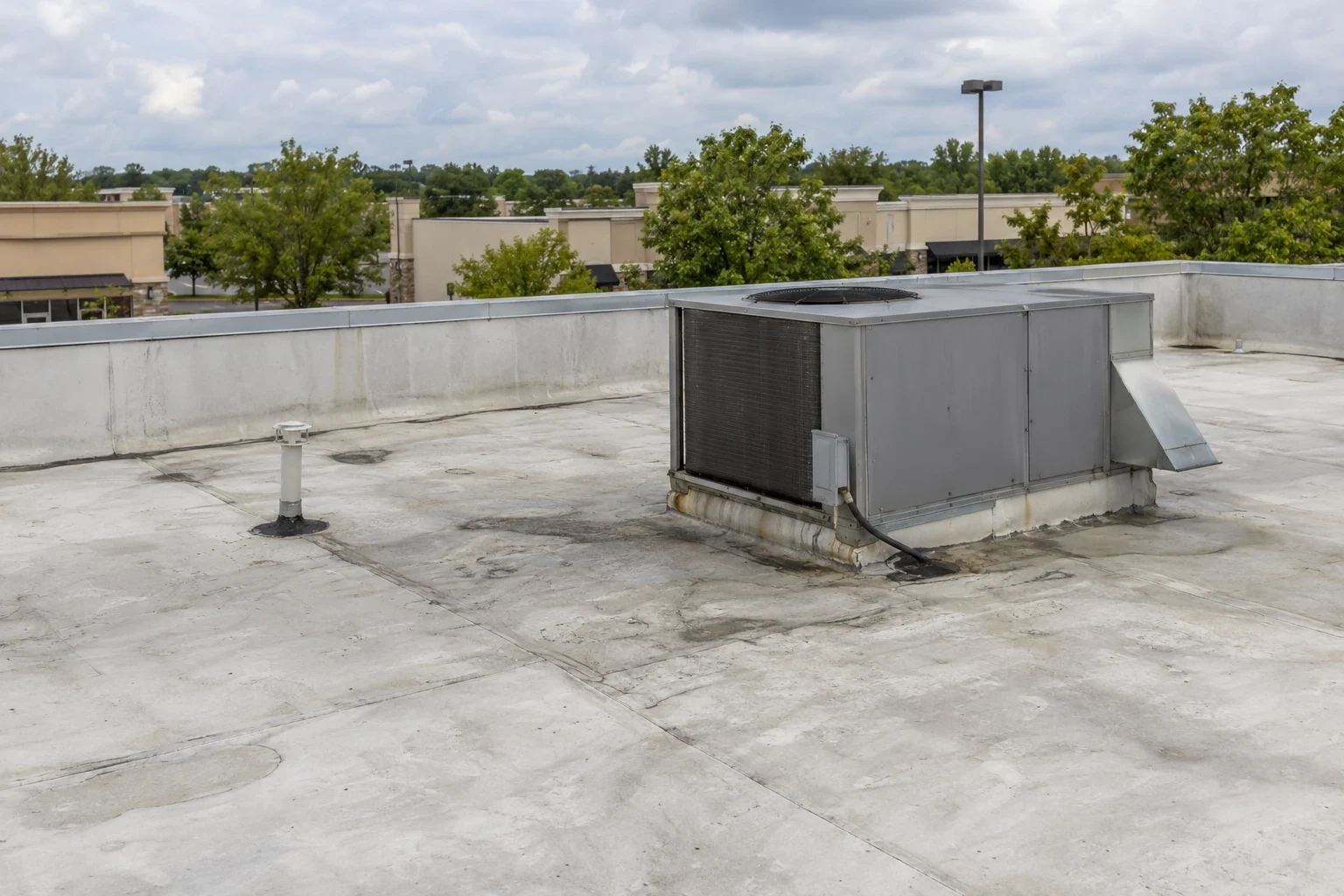
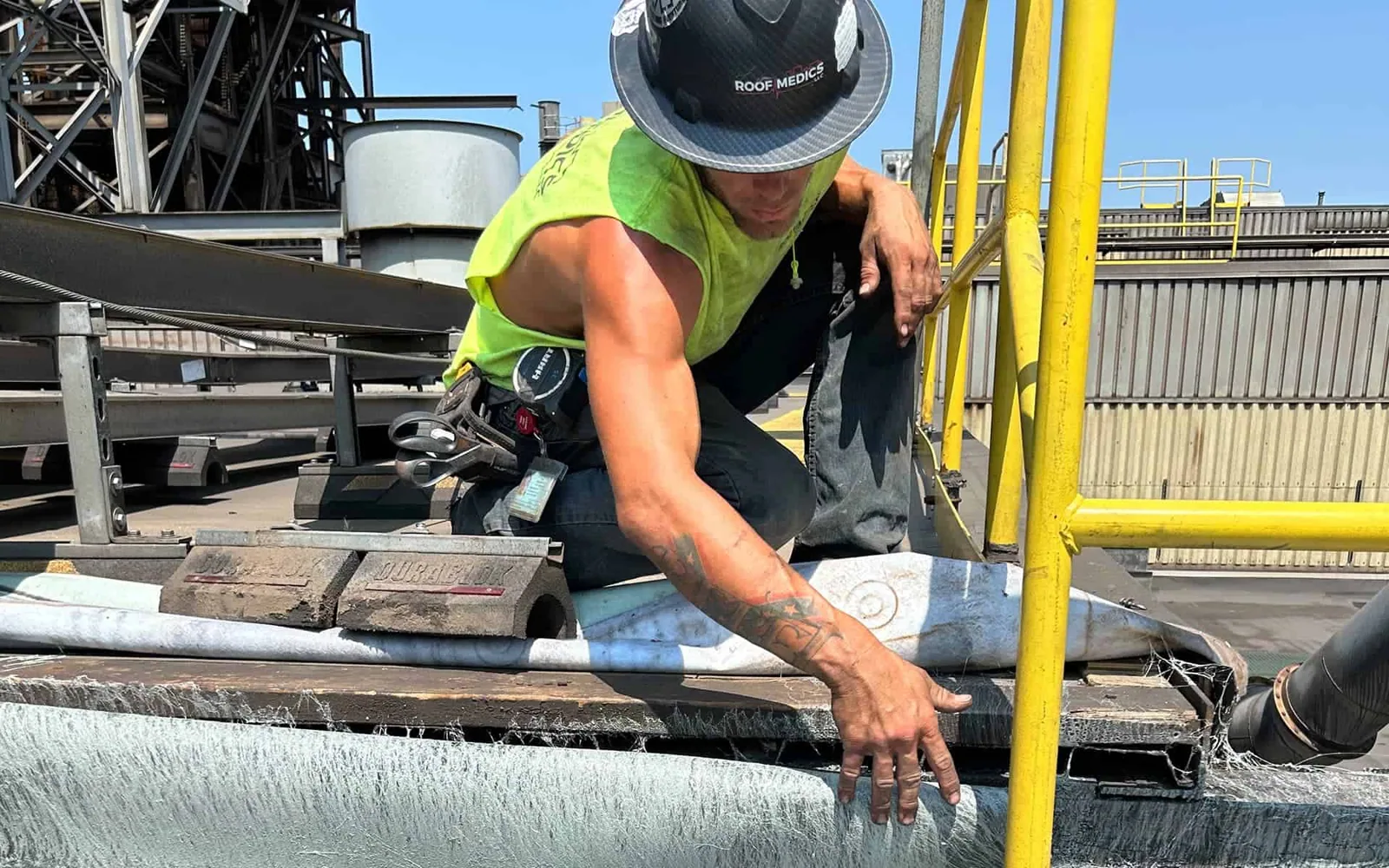
Black rubber on a flat roof is usually EPDM, and it can cover a small retail space, a low commercial building off Kell Boulevard or an older flat-roofed office. The one thing an owner should understand is that EPDM is a flexible sheet with glued or taped seams, and flexibility is both its strength and its weakness.
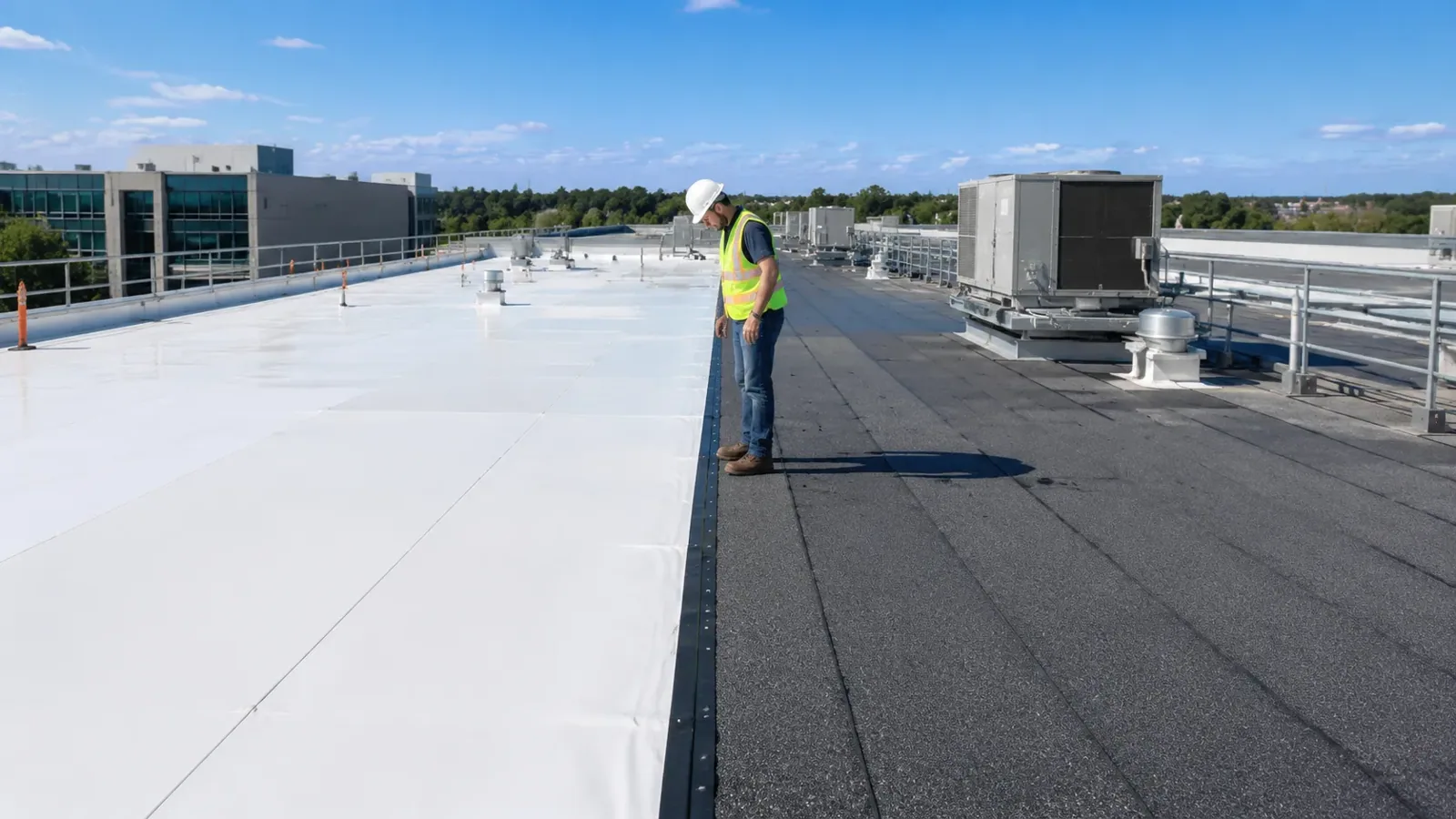
EPDM stands for ethylene propylene diene monomer, a synthetic rubber. It is sold in wide rolls that cut seam counts, and how the sheet is attached, seamed and flashed decides how it ages.
Know How It Is Put Together
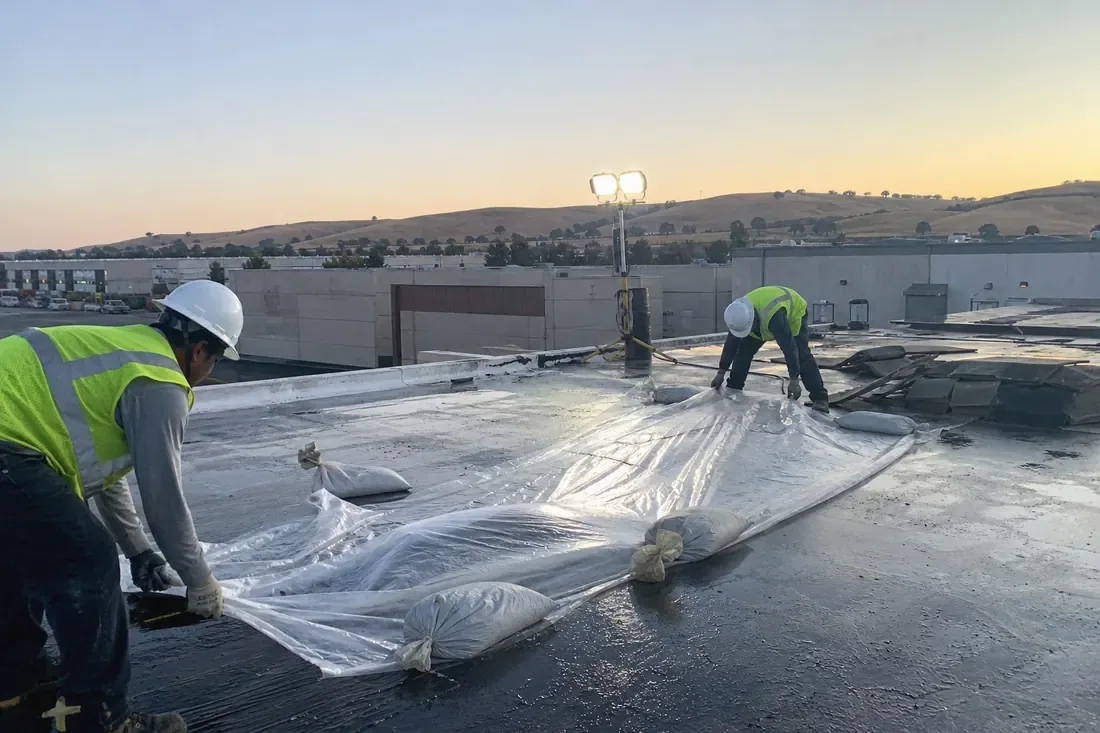
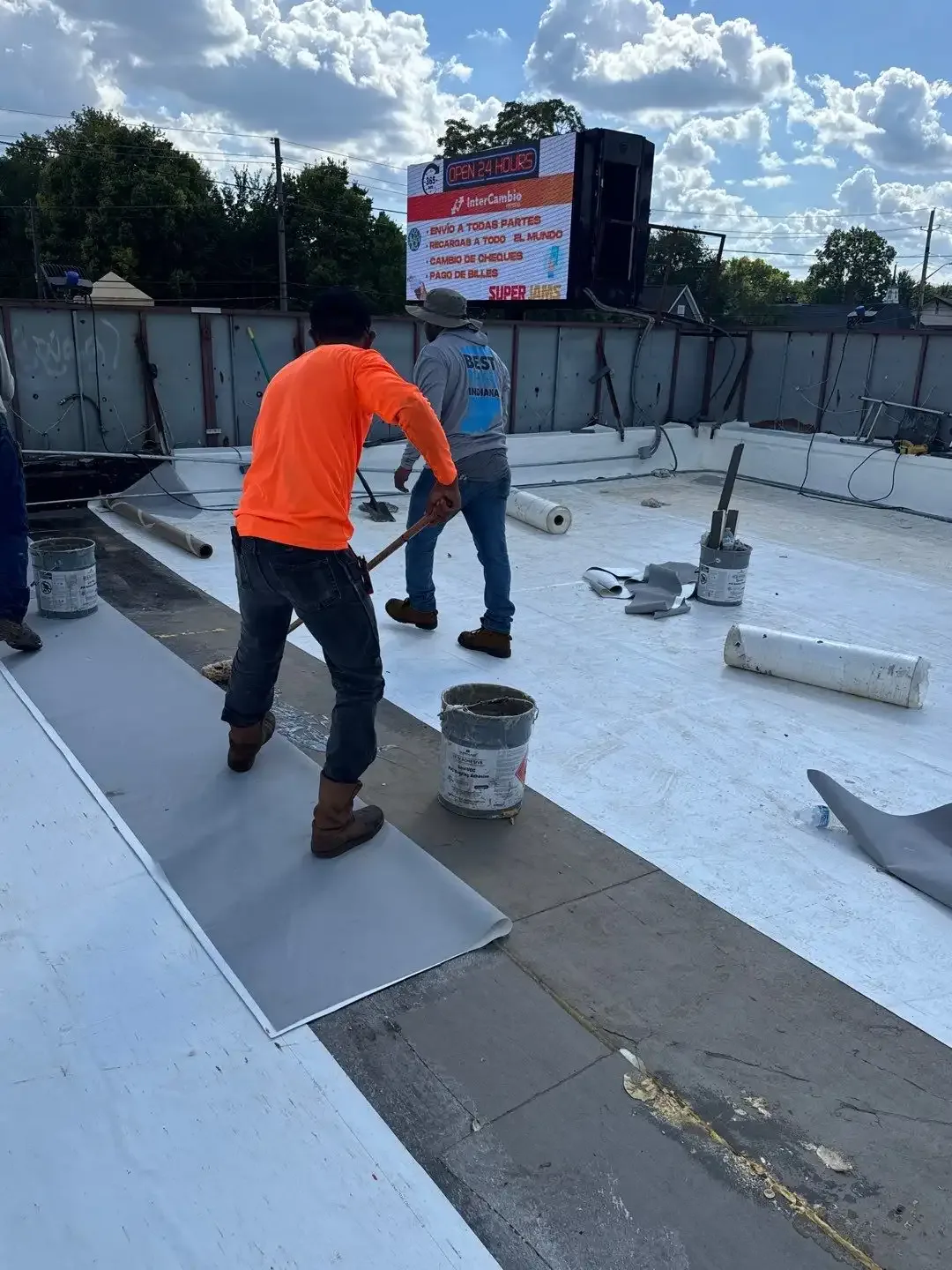
An EPDM roof has a deck, insulation, sometimes a cover board and the rubber sheet. The sheet is attached one of three ways. Fully adhered sheets are glued to the substrate. Mechanically fastened sheets are held by plates and screws. Ballasted sheets are loose-laid and covered with stone.
Seams join the rolls. Older roofs use liquid adhesive and a splice. Newer ones use factory tape. Corners and penetrations use flashing pieces glued to the field sheet. Each joint is a place where one piece of rubber meets another, and each depends on a clean surface and good pressure.
Ballast hides the sheet. A stone-covered roof looks tough, but it conceals seams, punctures and wet insulation. We lift the stone along test lines to see the sheet. Ballast also loads the structure, so the weight stays in the file when a roof is recovered or replaced.
Find Where It Fails First
Three problems repeat. Seams open when the glue or tape lets go. Flashings pull away when the sheet shrinks. Punctures happen when something sharp lands on the rubber.
Shrinkage is the quiet one. Over years, rubber can pull back from the walls and curbs it was glued to. The flashing is stretched tight, then lifts or tears. A lifted flashing along a wall is a classic leak path.
On a walk we press every seam, check every flashing edge and tug gently at the corners. We look for splices that are ridged or lifting, for tape that has curled and for patches that have slid. A hand pressed along a seam tells us a lot. A simple test: if a thumbnail can lift the edge of the tape, the seam is open. Open seams on a ballasted roof are harder to find, so we sweep stone off a strip along each seam line.
Count the Heat
Heat comes in bulk here: about 102 days a year at 90 degrees or higher, and a full 100 days at 100 or above in 2011. Black EPDM absorbs sun. Its surface runs far hotter than the air, and the sheet expands and relaxes every day.
That movement works seams and flashings. It also ages the rubber, which hardens and loses stretch over years. White EPDM exists and helps, and a reflective coating over a sound black roof can also lower surface heat.
What it means for you: a black roof in this climate wants a spring and fall check on seams and flashings, and it wants a flexibility test before anyone talks about a coating. Rubber that cracks when bent is done.
Plan for Hail and Debris
Hail has a long record here: golf-ball stones piled up in Electra on March 13, 1982, and baseballs fell on Iowa Park and Burkburnett nine years later. That history is context, not proof of damage on any roof.
EPDM resists some hail because it flexes. It does not shrug off all of it. A big stone can bruise the rubber, crush the insulation under it or puncture it. After a storm we walk the roof, press for soft spots and probe for water. A membrane puncture repair is simple on a dry roof: clean, prime and patch with a lapped piece.
Foot traffic punctures too. Service techs drag tools. We mark walk routes and add pads where the traffic is heavy.
Plan for Wind
The F5 tornado of April 3, 1964 scattered debris over all four runways at Sheppard Air Force Base and badly damaged downtown. It is history, not a forecast. It does show what flying material can do to a roof, and it is a good reason to check how an EPDM roof is held down.
Ballasted sheets resist lift by weight, but loose stone can blow off at corners and edges and leave the sheet bare. Fastened sheets can flutter, and plates can pull through. Adhered sheets hold along their whole surface, and their weak point is the edge.
We check the perimeter first. Edge metal, termination bars and the first rows of fasteners are probed. A wind damage repair begins at the corners, then moves in, and every torn or lifted spot gets a temporary cover until the permanent repair is made.
Match EPDM to the Building
EPDM suits roofs with simple shapes and light traffic. It tolerates ponding better than some single-ply sheets, which helps on flat roofs with slow drains. It struggles around grease, fats and heavy chemical exhaust, where PVC or KEE hold up better.
On an older commercial building, EPDM may have been the original sheet, followed by years of patches. We map the patches and ask what each fixed. A cluster at one wall points to shrinkage there. A scatter across the field points to age.
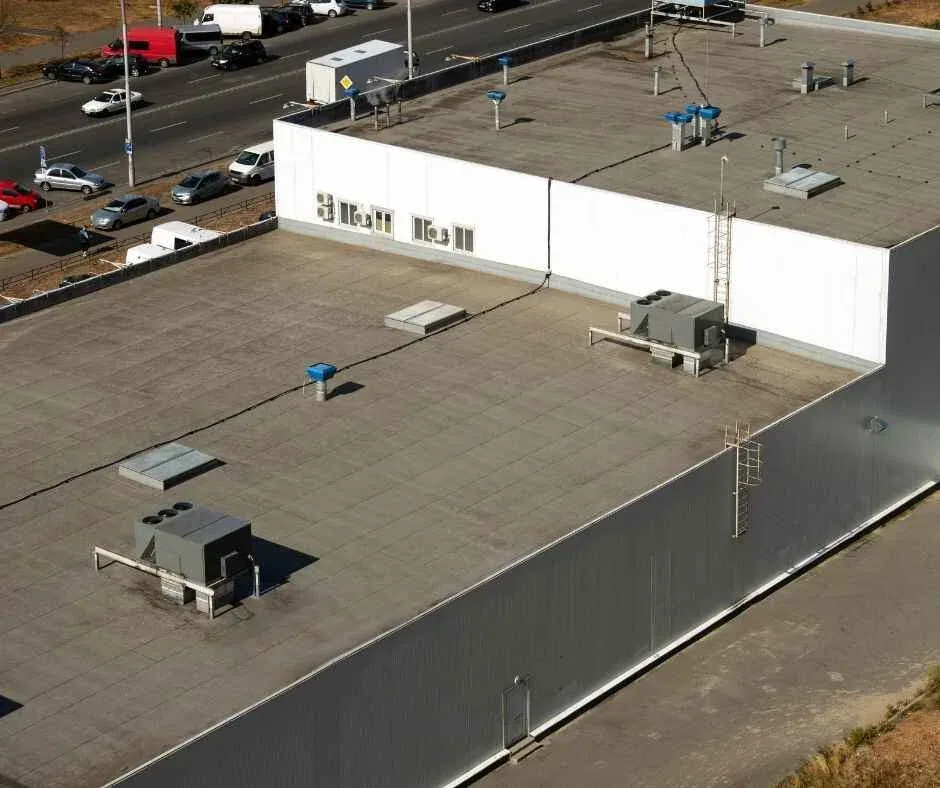
The shopping center roof with many tenants is one place EPDM may turn up. Each tenant's unit adds a curb, and each curb adds a flashing to watch.
Repair or Replace
EPDM repairs well when the rubber is still flexible. Open seams are cleaned, primed and re-taped. Lifted flashings are cut back and replaced. Punctures are patched. If the sheet cracks when bent, repairs will not hold, and the roof is near the end of its life.
We test first. A moisture scan and a few cores show if the insulation is dry. If it is, a roof recover can put a new layer over the old. If it is wet, we cut out the wet sections or tear off.
Tell us how old the sheet is and where the patches cluster, and the first walk starts at those patches. Buildings along the Kemp-Kell corridor or in the Taft Boulevard area get the same checks.
Commercial Roofing Questions
Why does my EPDM roof leak at the walls?
The rubber shrinks and pulls flashing loose. A lifted edge lets water behind it. The repair cuts back the stretched flashing and glues a fresh piece with slack built in, then seals the top edge under a termination bar.
Can I coat an old EPDM roof?
Sometimes. The rubber must be flexible, clean and dry, and the insulation must be dry. We test first, with a bend test on a scrap, a scan and a few cores, and the coating waits if any one fails.
Does ballast protect the sheet?
It holds the sheet down and shades it. It also hides problems, so we lift stone along test lines. Loose stone at corners is replaced, since bare corners lose their weight first in a gust.
Is black EPDM too hot for Texas?
It runs hot. White EPDM or a reflective coating over a sound sheet lowers the surface heat.
How can I tell if the rubber is finished?
Bend a scrap or a trimmed edge. Rubber that stays supple can be repaired and even coated. Rubber that cracks, chalks or has lost its stretch is at the end of its life, and patches will not hold.