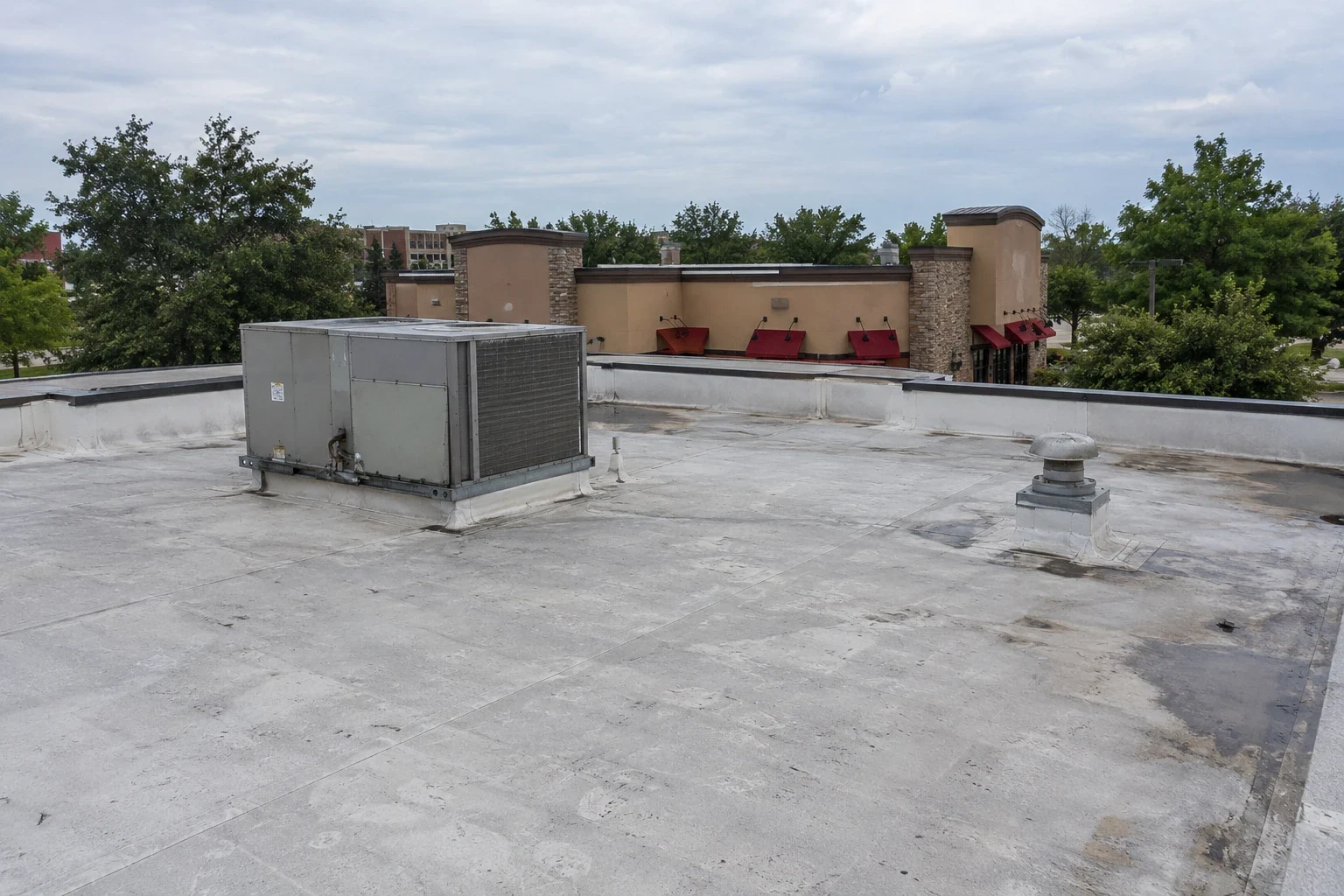
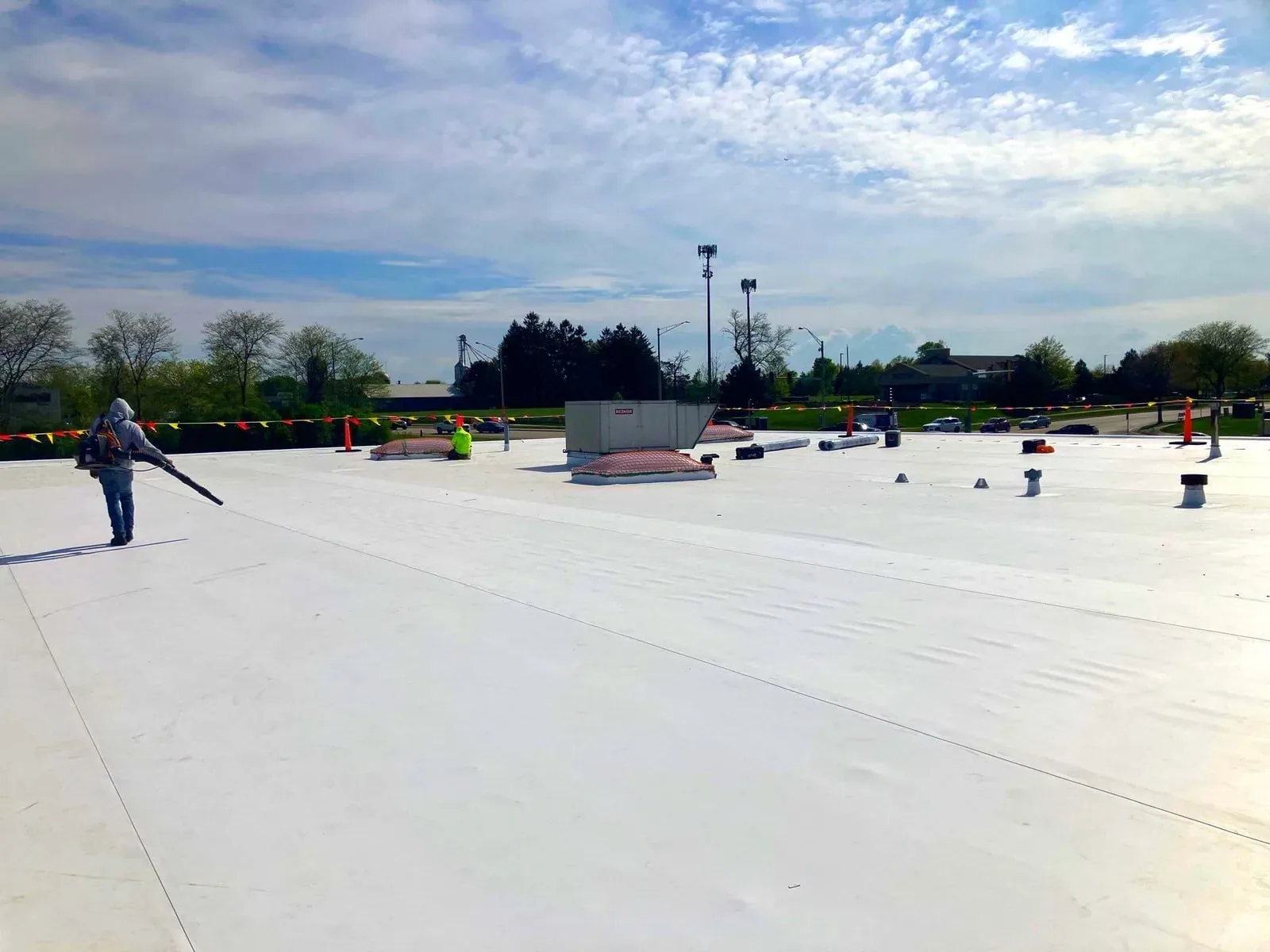
A plant that vents oils, a commissary kitchen with heavy exhaust and a lab with chemical fans all drop things on the roof that most membranes were never meant to meet. The one thing an owner should understand about KEE is that it is a PVC-alloy sheet built to tolerate those exposures.
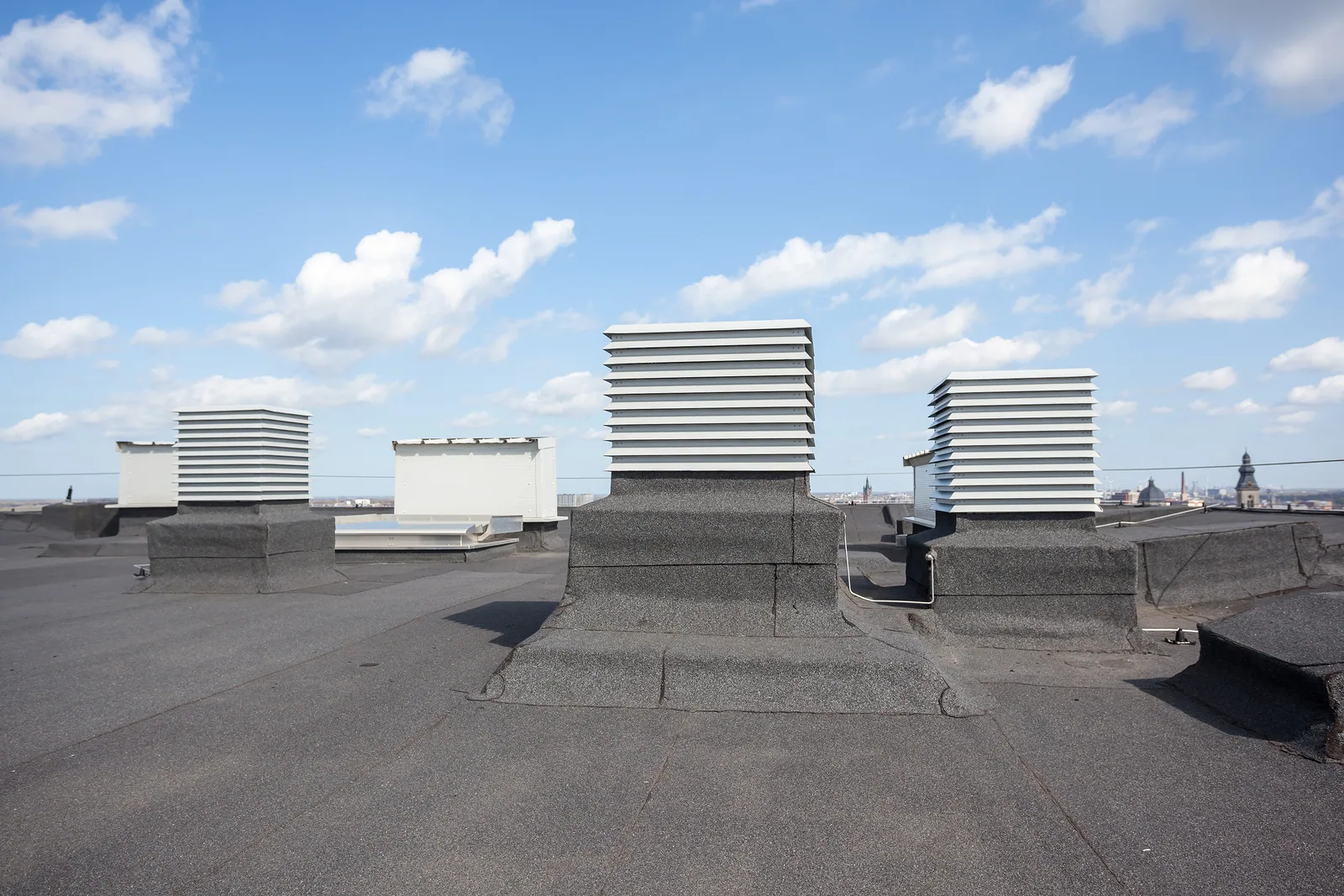
KEE stands for ketone ethylene ester. It is blended into a PVC sheet so the membrane stays flexible and resists fats, oils and many chemicals. A KEE roof is laid like other single-plies, and the differences show up in the polymer, the exposure and the seams.
Know What KEE Is
Think of KEE as PVC with a built-in stabilizer. The sheet is reinforced with a fabric scrim, welded at the seams with hot air and fastened, adhered or ballasted like other single-plies. The difference is in the polymer. The ketone ester stays in the sheet where ordinary plasticizers can migrate out, so the membrane keeps its flexibility longer.
That matters on hot roofs and on roofs with heavy exposure. A sheet that stays soft resists cracking at corners and seams, and a flexible corner is the first thing we check by hand. It also keeps welding well when repairs are needed years later.
The layers underneath follow the usual order: deck, insulation, cover board and sheet. The weak points are the usual ones too, so we start where every walk starts, at the seams.
Test What Lands on the Roof
This is step one. Before we call a roof a KEE candidate, we ask what the building vents. Cooking oils and animal fats. Machine oils. Solvents. Acids. Steam. Each reacts with membranes differently.
Wichita Falls counts aerospace and aviation supply-chain firms, business support services and manufacturing among its business clusters, and Arconic, Pratt and Whitney and Sealed Air appear among its major employers. Whatever a given building vents, we ask the engineer, read the safety data and match the sheet to the exposure.
If the exposure is mild, a cheaper membrane may do. If it is heavy or unknown, KEE is the conservative choice. For lighter exposure, PVC usually does the job.
Check Seams, Flashings and Pads
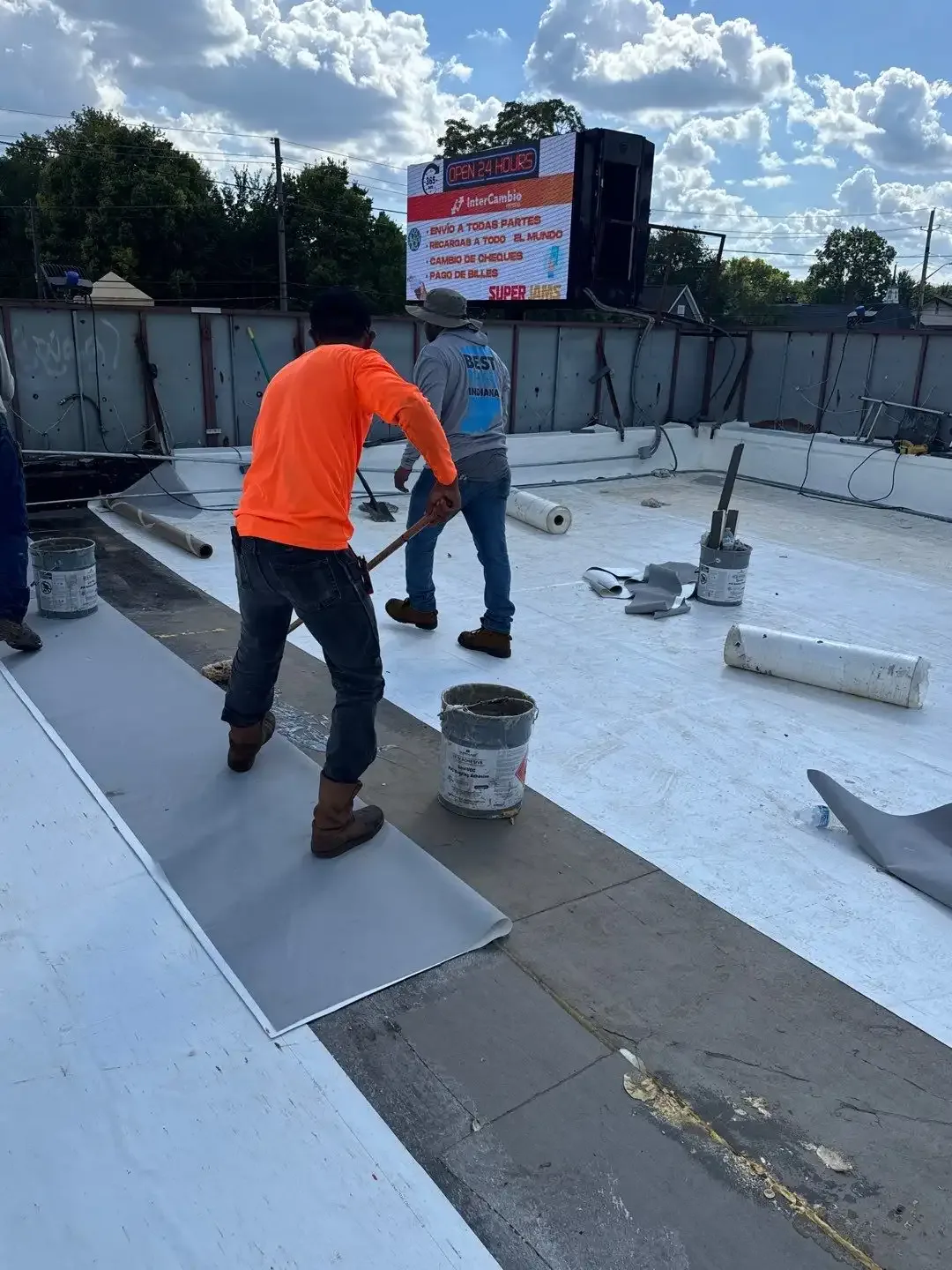
KEE seams are hot-air welded, and a good weld is as strong as the sheet. We probe every seam with a blunt tool and look for gaps at T-joints and corners. Flashings around curbs, pipes and walls are formed pieces welded to the field. They move the most and leak the most when rushed.
Walk pads matter on a plant roof. Service techs carry tools and oil. A drop of lubricant on a sheet is harmless, but a puddle of it is not. Pads under fans and along service routes protect the sheet from spills and from wear. We mark the routes on the roof plan, with the sheet type beside them, so every contractor who climbs up uses the same path and nobody has to guess which membrane sits under a fan.
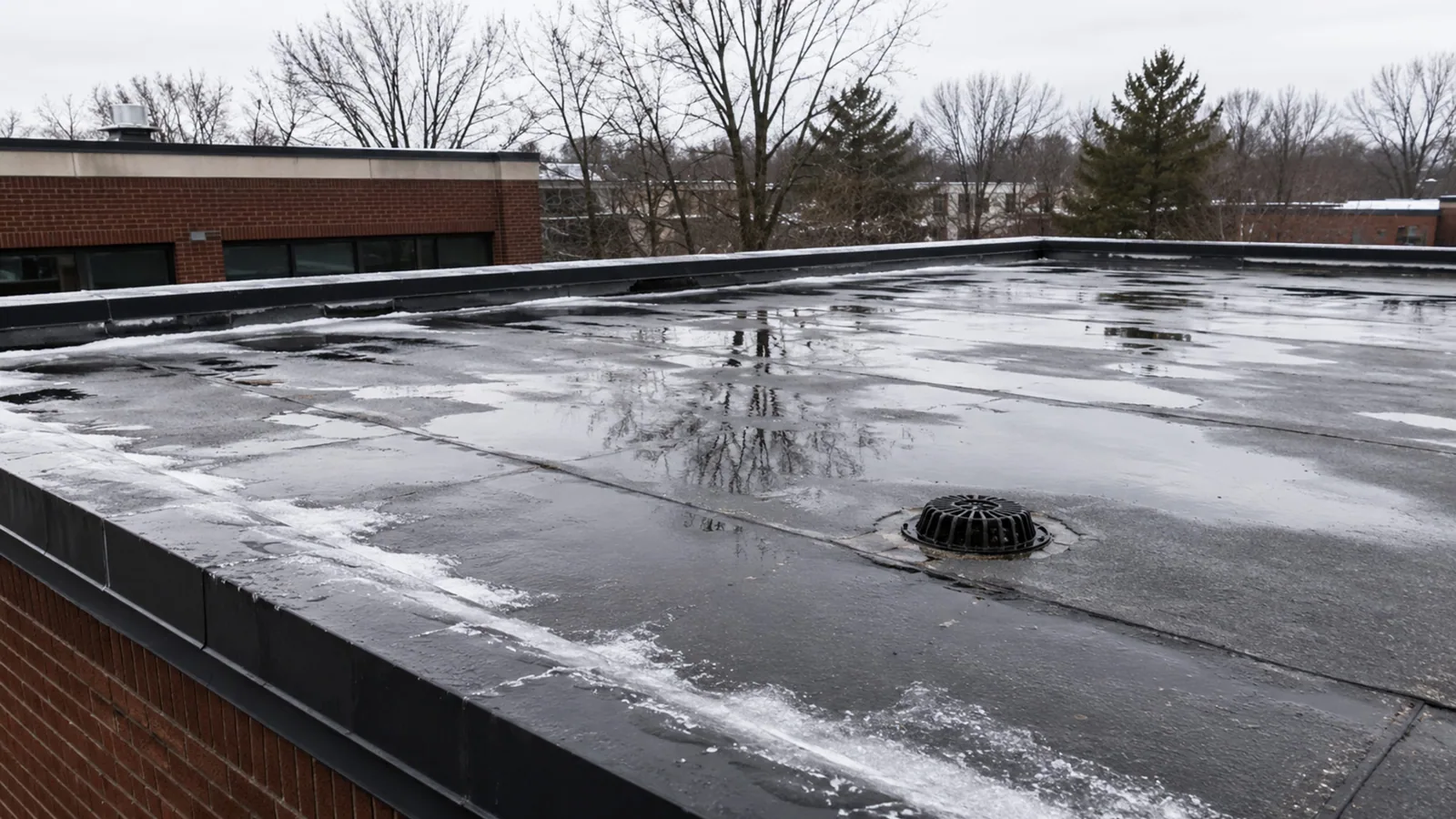
We also look for ponding near exhausts. Standing water mixed with oil makes a slick that attacks the sheet and the seams. Clearing and sloping those spots is part of the roof's care. A ponding water repair may be as simple as a cricket behind a unit or a drain moved a few feet.
Count the Heat and the Hail
On a KEE roof here, 102 days a year pass 90 degrees, and the record high stands at 117. KEE is usually light colored. It reflects much of the sun and stays flexible in the heat.
Hail is the other test. Baseball-size stones struck Iowa Park and Burkburnett on April 2, 1991, and larger ones followed at Sheppard Air Force Base on March 29, 1993. Those events are history, not proof of damage. After a storm we press the sheet, probe for bruises and check the insulation under any dent.
A cover board under the sheet raises impact resistance. A thicker sheet does too. We price both against the exposure so the owner sees the trade. Impact is not the only hail risk: a bruised sheet over wet insulation fails faster, so the scan comes before any recommendation.
Plan for Wind
The F4 tornado of April 10, 1979 destroyed more than 100 commercial businesses along its path through the south and east of Wichita Falls. That is context, not a prediction for any roof.
What it teaches is practical. Plant roofs carry heavy equipment, tall stacks and exhaust hoods that catch wind. Edges and corners see the strongest uplift. We check the perimeter, the termination bars and the fasteners at the first rows. Equipment must be strapped to its curb, because a shifting unit tears the flashing around it.
After a storm, we walk the roof for lifted edges, torn flashing and impact marks. Temporary covers go on before any permanent repair. A tornado damage scope begins with securing the building and photographing every opening.
Match KEE to the Building
KEE suits roofs that see steady grease or chemical exposure: food plants, restaurants, commissaries, labs and some manufacturing. It costs more than a standard single-ply sheet, so it makes sense where the exposure justifies it. For a manufacturing plant roof, the question is what the process vents. For a restaurant roof, the grease from the exhaust usually decides it.
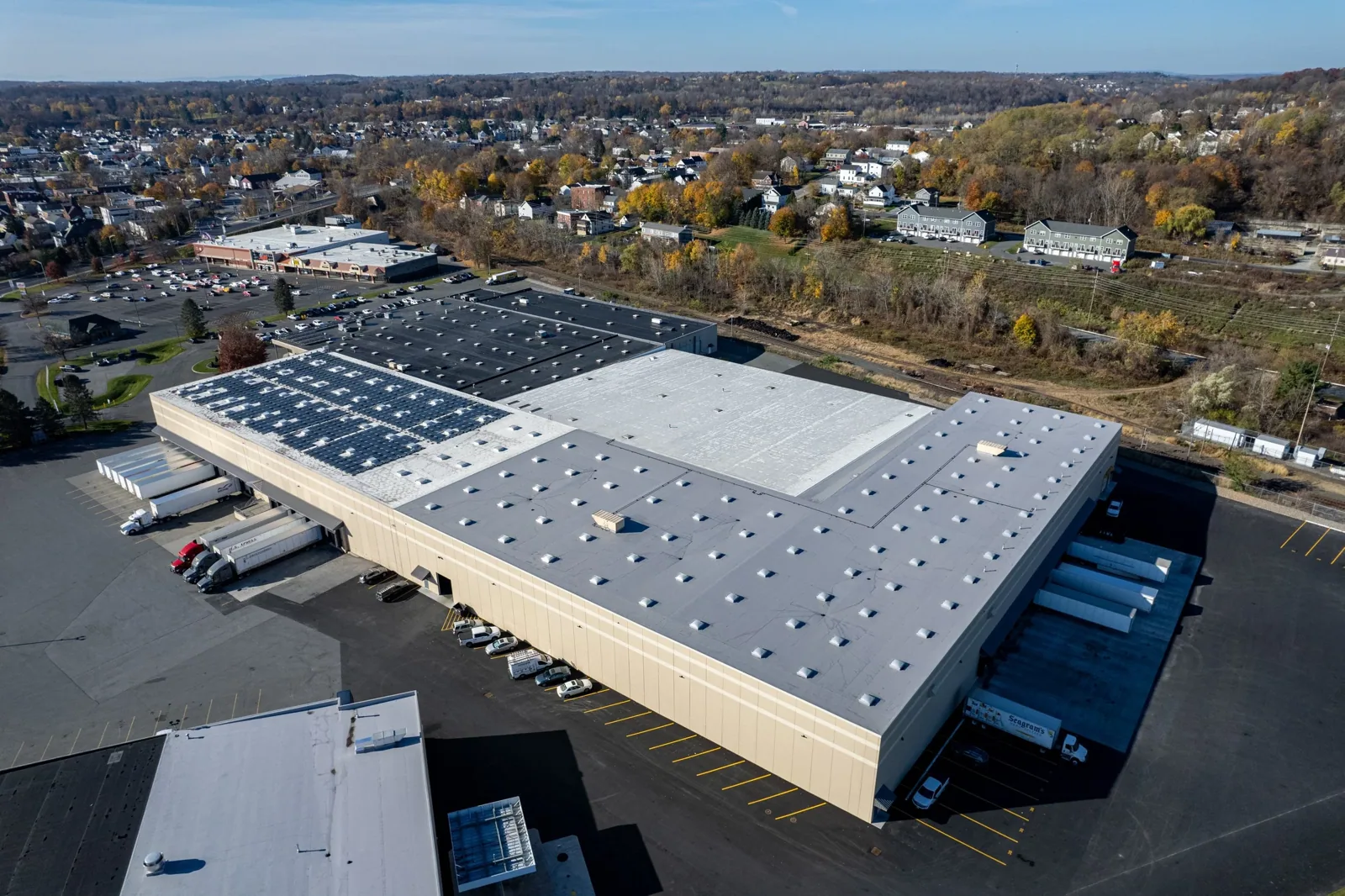
A clean warehouse with few penetrations does not need KEE. TPO may serve it well for less. We tell the owner when the extra cost is not justified. A mixed building, with a clean warehouse side and a process side, can carry two sheets on one roof, split at a clear line.
Fire matters too. The PVC base is flame resistant, which helps near rooftop kitchens and process equipment.
Repair or Replace
KEE repairs well. Open seams are cleaned and re-welded. Punctures are patched with welded overlays. Flashings are rebuilt. Because the sheet stays flexible, welds on older KEE usually take, which makes repair a real option.
When the sheet has been attacked, repairs stop making sense. A sheet that is swollen, soft or cracked near an exhaust has lost its integrity. We cut cores to see if the insulation is wet and decide between a recover and a tear-off.
Tell us what the building vents and how old the sheet is, and the first walk starts at the exhaust curbs. A building in the Wichita Falls Business Park or the north Wichita Falls airport area is walked in the same order.
Commercial Roofing Questions
Is KEE the same as PVC?
It is a PVC-alloy. The ketone ester keeps the sheet flexible and resistant to many fats and chemicals. The seams, flashings and installation steps follow the same rules as PVC, with welds probed at every T-joint.
Do I need KEE for a restaurant roof?
Often, if exhaust is heavy. A grease pan and a rebuilt curb matter as much as the sheet. If the exhaust is light, a standard single-ply may do, and we say so.
Can KEE be repaired when old?
Usually. The sheet keeps its flexibility, so new welds tend to take. We test a small patch on the old sheet before we price a full repair.
Does KEE resist hail?
It flexes, but a large stone can still bruise it. A cover board and a thicker sheet help, and a walk after a storm finds the bruises before they turn into leaks.
How do I know if an exhaust is attacking the sheet?
Press the membrane near the fan and around the curb. A sheet that feels swollen, tacky or soft is reacting to what lands on it, and we test a small patch to confirm before deciding between repair and replacement.