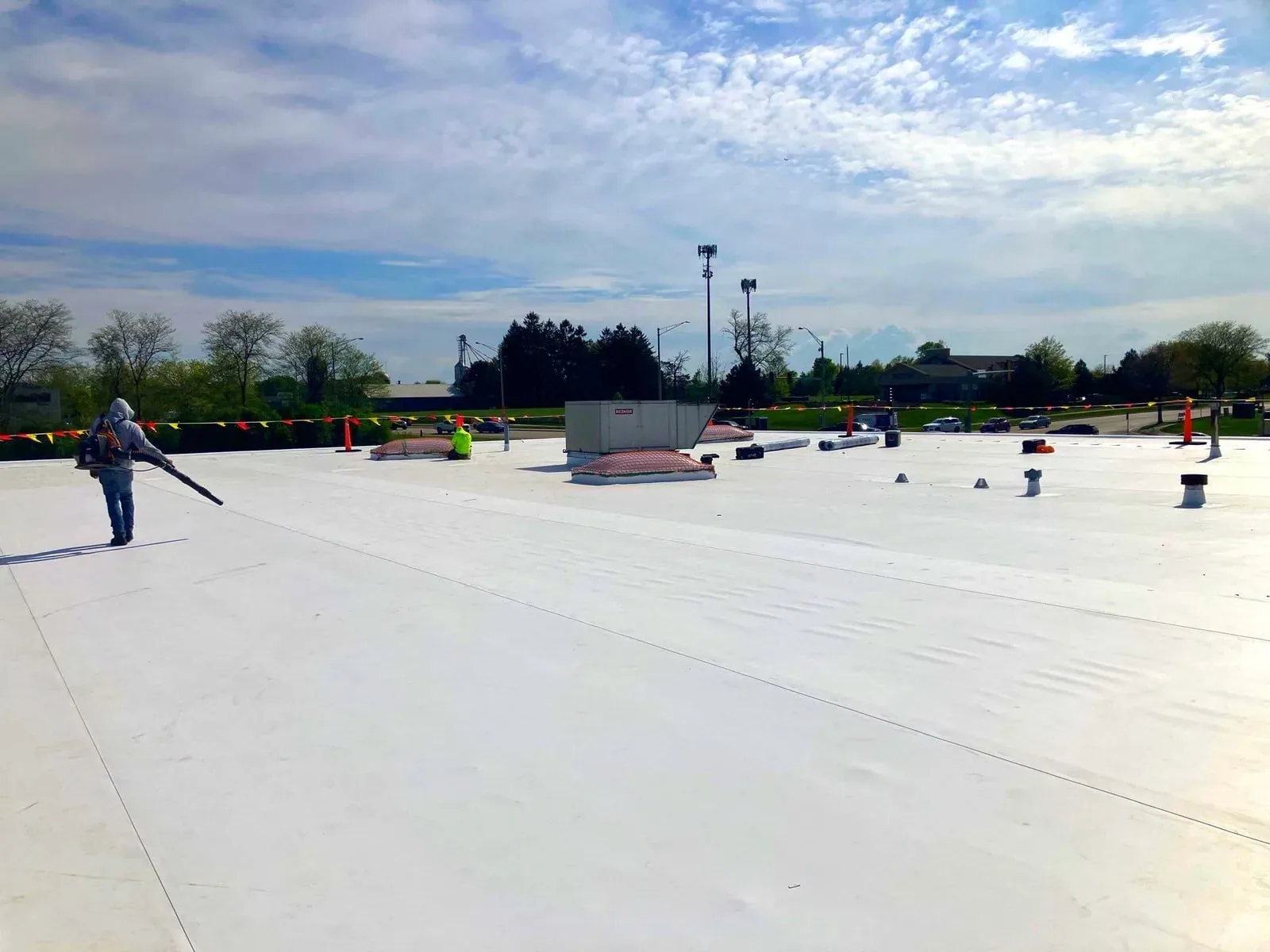
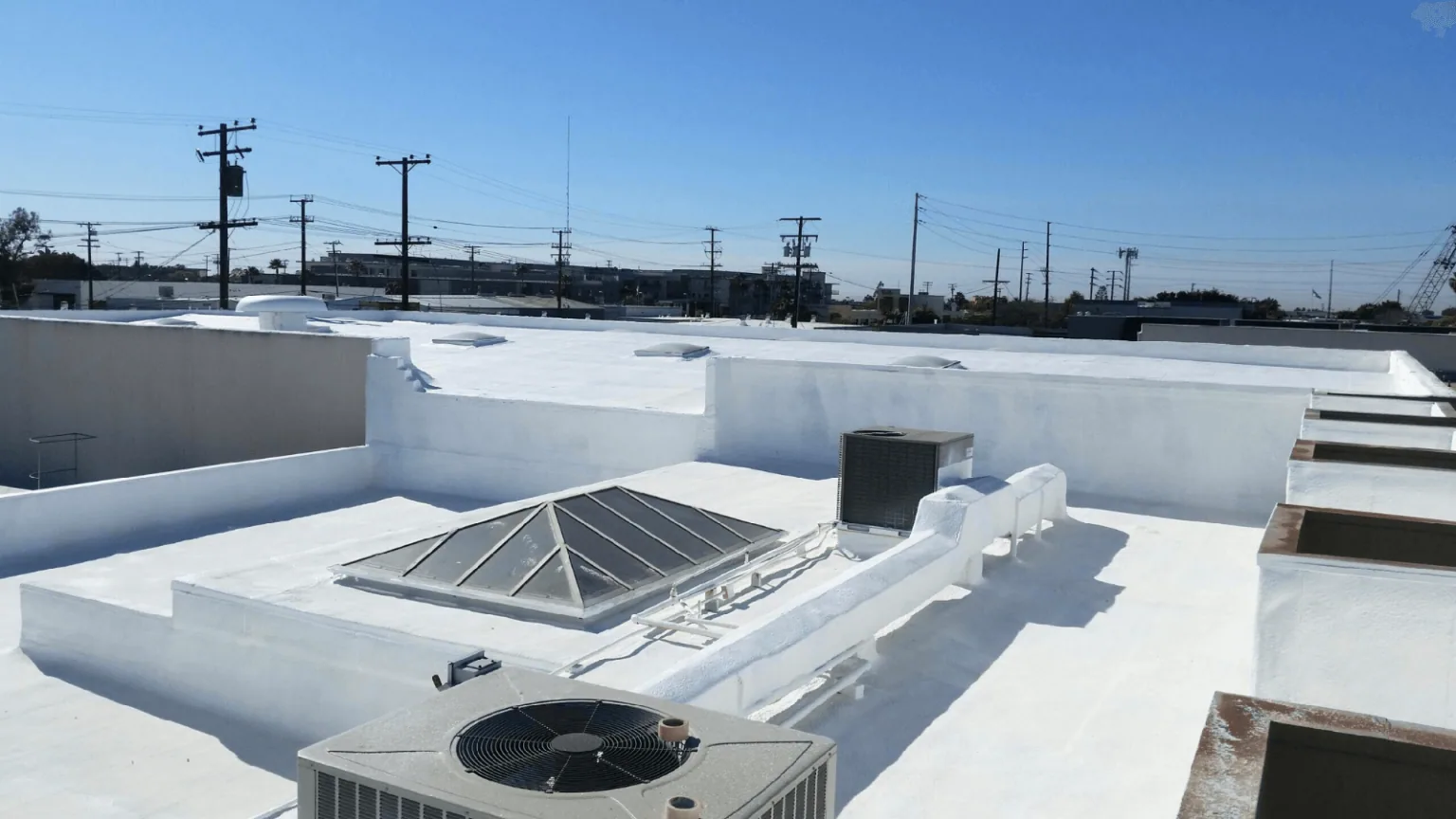
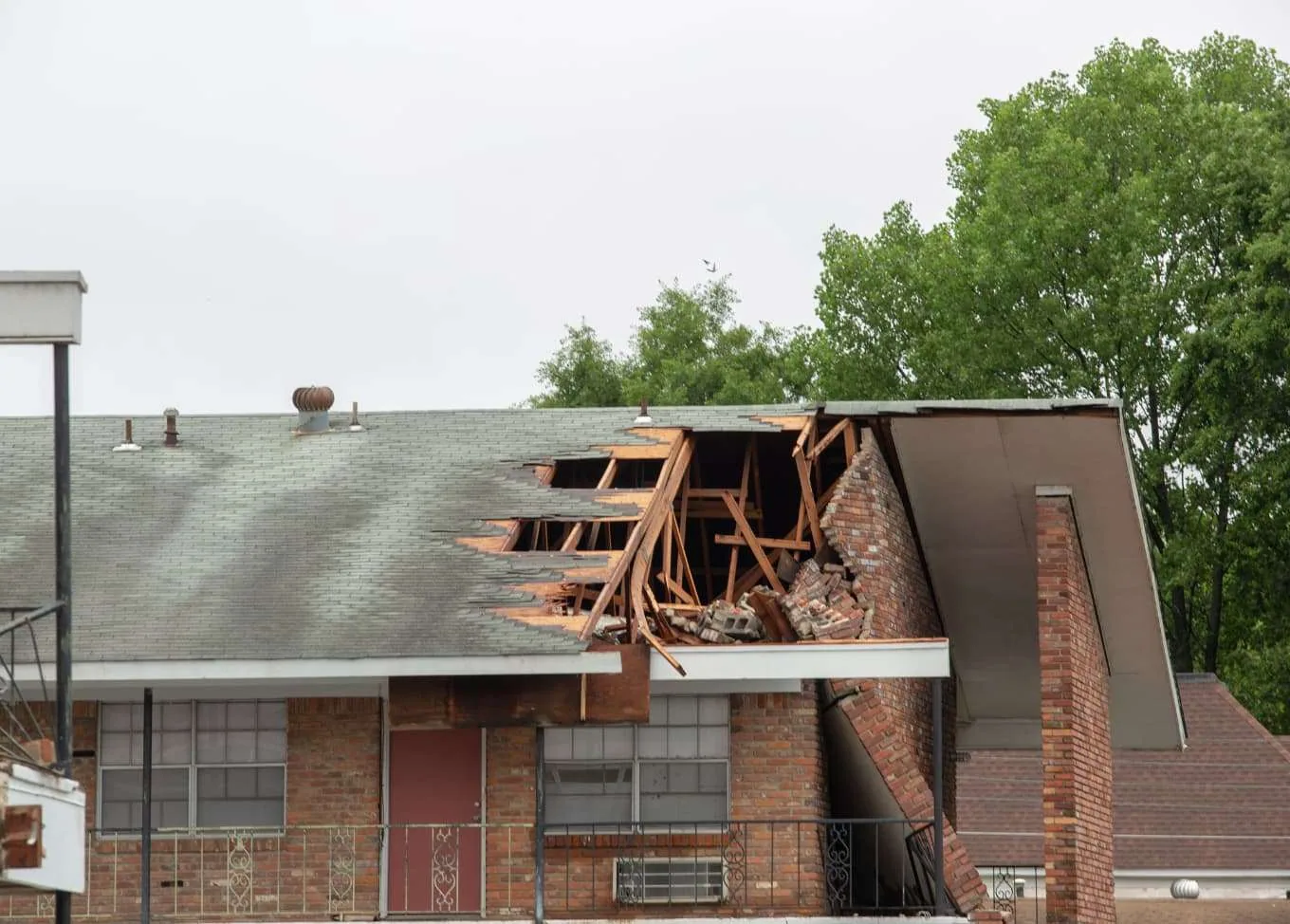
A warehouse roof is mostly open field, and the open field is the thing to understand. Few penetrations and a lot of surface mean that heat and hail work on the same square footage for years before anything shows. In Wichita Falls, TX, that is a long exposure. Start with the field, then the edges, then the handful of details that interrupt it. We walk it in that order, because that is the order in which a warehouse roof usually tells the truth.
Know the Shape
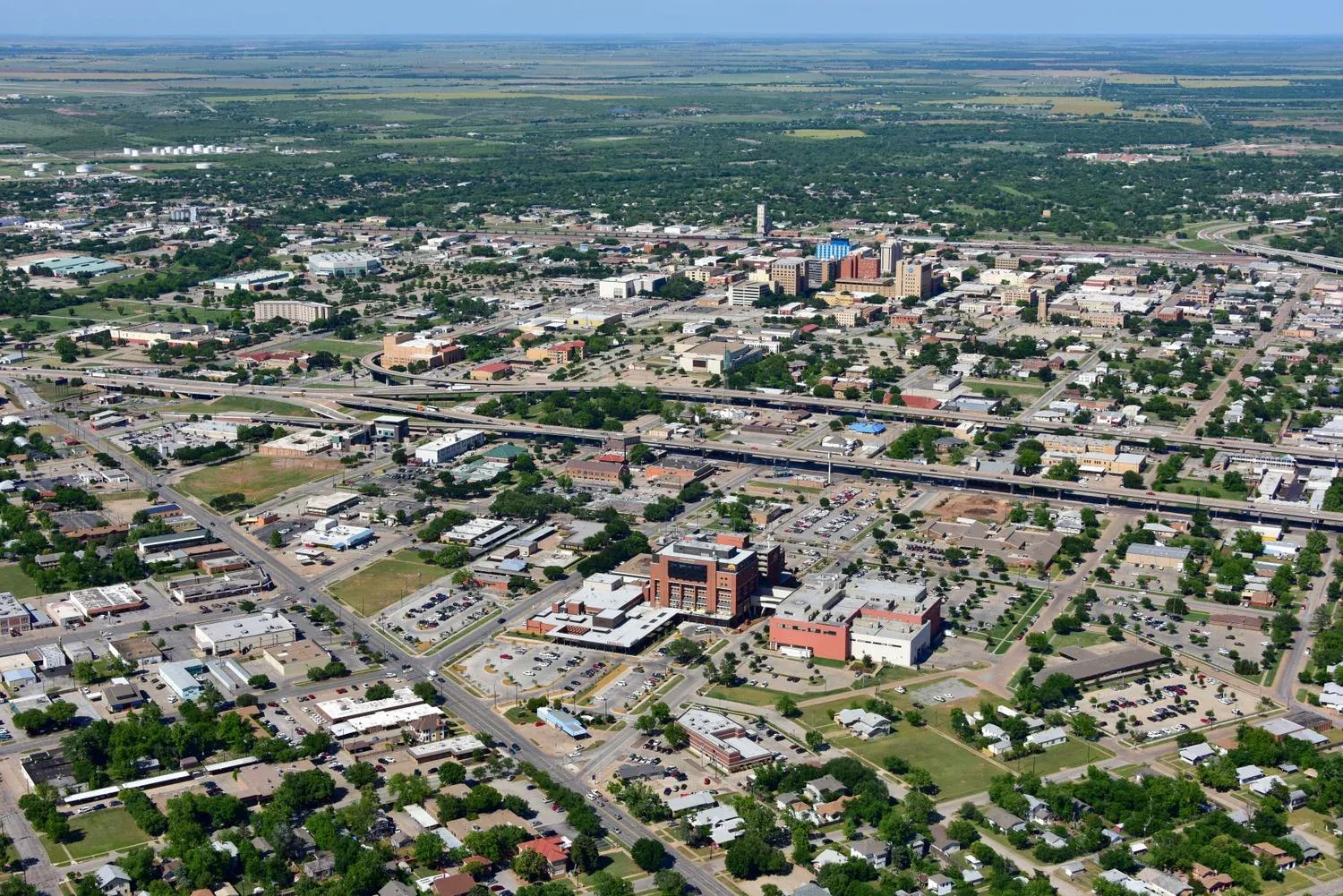
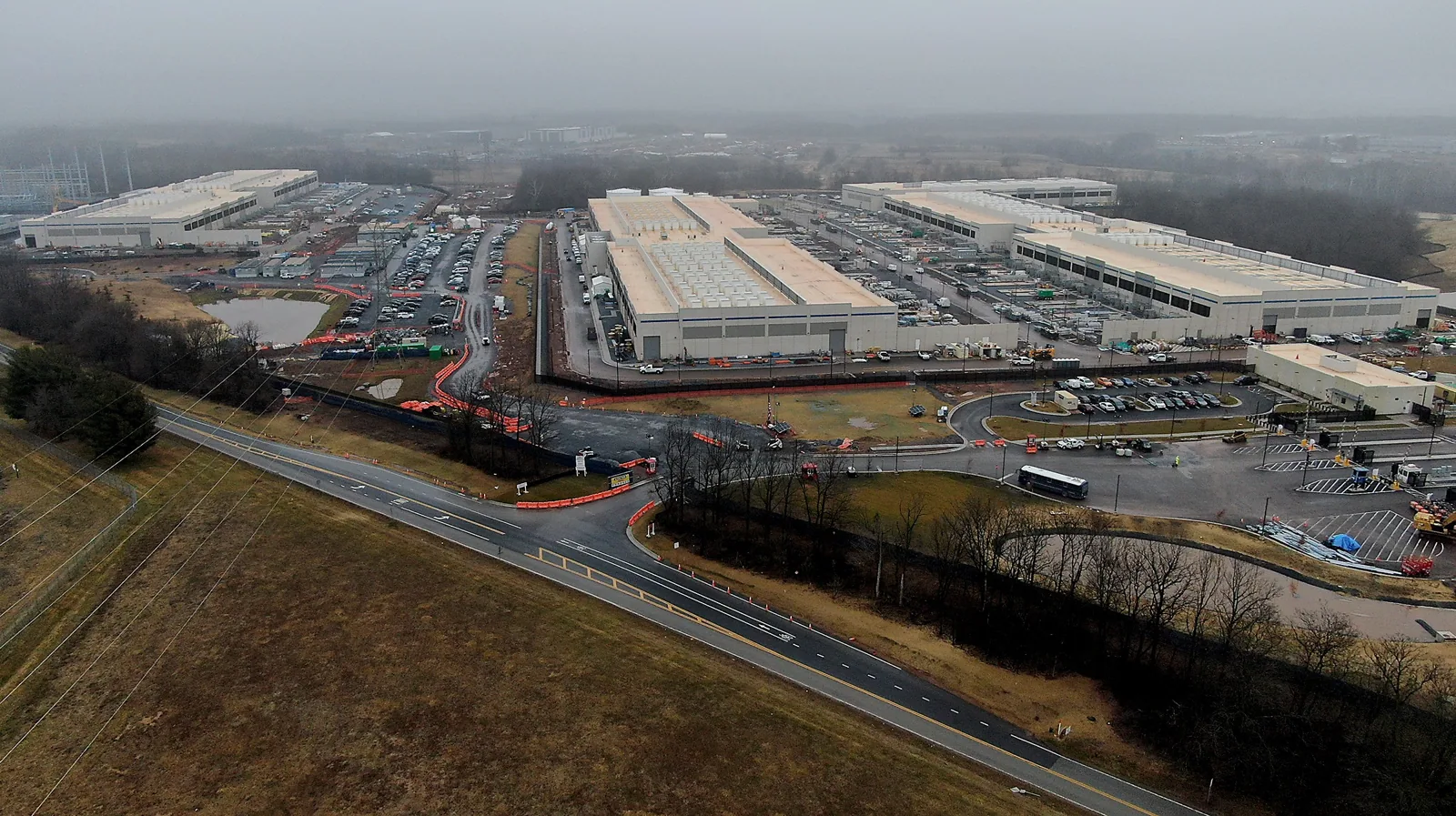
Across 525 acres, the Wichita Falls Business Park targets distributors, high-tech operations and manufacturers, which points to broad, low-slope roofs over storage and shipping space. Class I rail and Interstate 44 are the logistics selling points. A building built for that use tends to put its roof drains, rooftop units and dock canopies in a small number of places. That makes the plan simple to read.
It also means that one wet spot can matter more than it first appears. Inventory sits right under the deck. Racking and product do not move out of the way of a drip. So the first question is not how old the roof is. It is what sits under each part of it. A loading bay, a sorting floor and a quiet storage aisle may share one roof, and each deserves its own place in the repair order. Mark them on the plan before anything else is written.
Layers From the Deck Up
Step one is the deck, which may be steel, concrete or wood depending on the building. Above it sits insulation, then often a cover board, then the membrane. Each layer has a job. The insulation holds heat out. The cover board protects the insulation from foot traffic and hail. The membrane keeps water off all three. When water gets past the membrane, the insulation absorbs it and the layer underneath starts to rust.
That is why a warehouse roof can look sound and still be failing. The surface may be dry while the layer beneath is wet. A TPO membrane is common on large roofs because it welds into long, strong seams. Whatever the membrane, the rule is the same: read the layers, not the surface. A core sample is a small cut, usually a few inches across, that shows each layer in section. We take one at a suspect spot and one at a control spot that looks fine, then compare the two. The comparison tells us more than either sample alone.
Where It Fails First
Warehouse roofs fail at the places where the field stops. The edge metal comes first, because wind finds it before it finds anything else. Then the seams near the edges, where the sheet shrinks and pulls. Then penetrations: exhaust fans, plumbing vents, skylights and rooftop unit curbs, each sealed by a boot or a flashing that ages faster than the membrane around it.
Drains come next. A big flat roof sheds water toward a few outlets, and when debris builds around one, the water stays. A ponding line, the dirt ring left where a pool dried, marks the spot. Hail adds its own failure. A hail bruise is a soft spot in the sheet or the insulation that may not leak for months. What it means for you is simple: a roof can fail quietly, so check it on a schedule. Twice a year is a sound habit, with one visit after the hottest months and one after the spring storm season. Each visit adds to a dated file, so the next person sees the trend and not only the snapshot.
Walk the Roof in Order
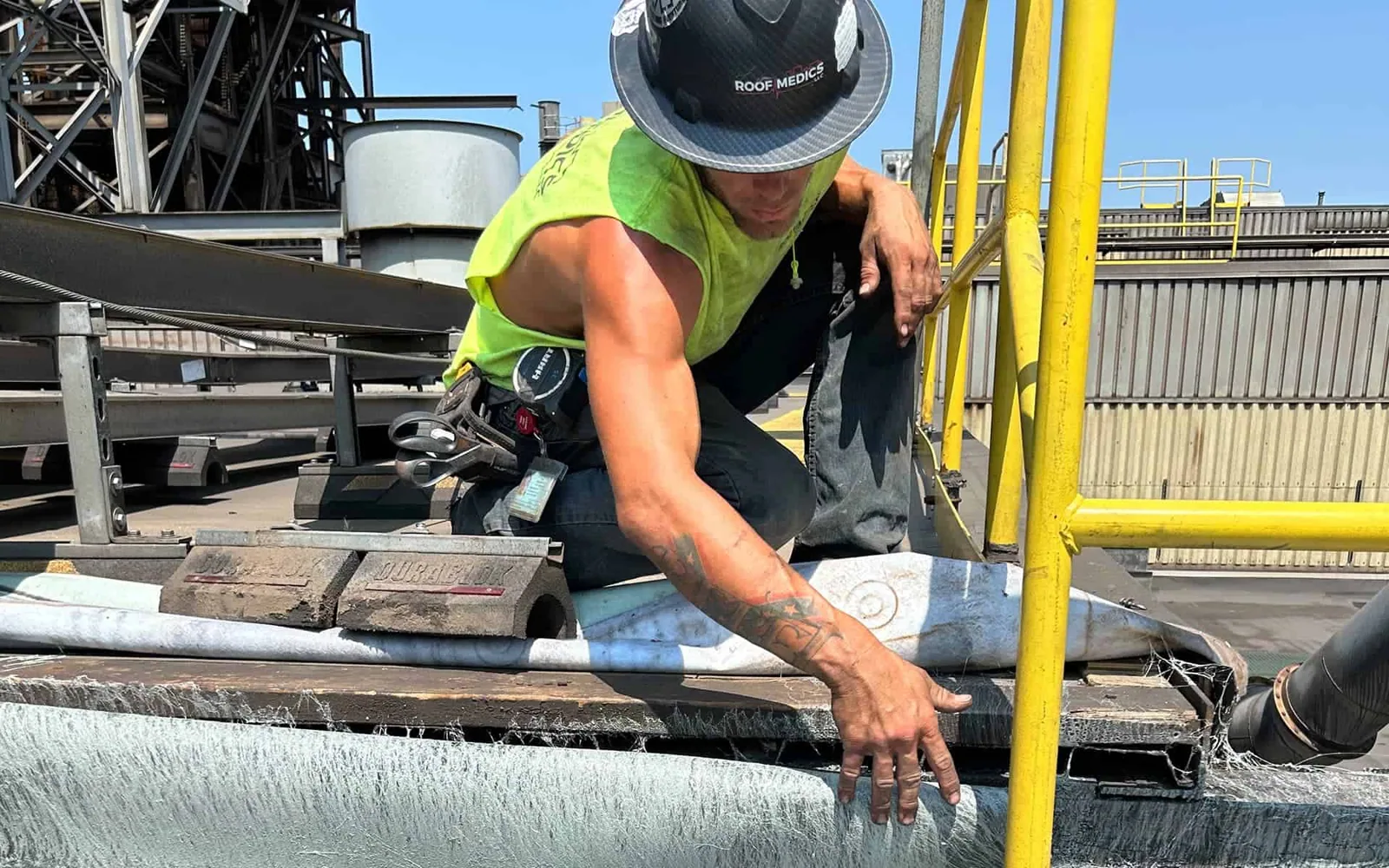
A first walk follows a fixed order, so nothing gets skipped. We photograph each finding and mark it on a roof plan.
- Edge metal, coping and corners, checked for lift and loose fasteners.
- Seams and laps, probed along their full length for open edges.
- Drains and scuppers, flushed to see whether water actually leaves.
- Curbs, vents and fans, with a close look at every boot and collar.
- Soft spots underfoot, tested with a probe and confirmed by a core cut.
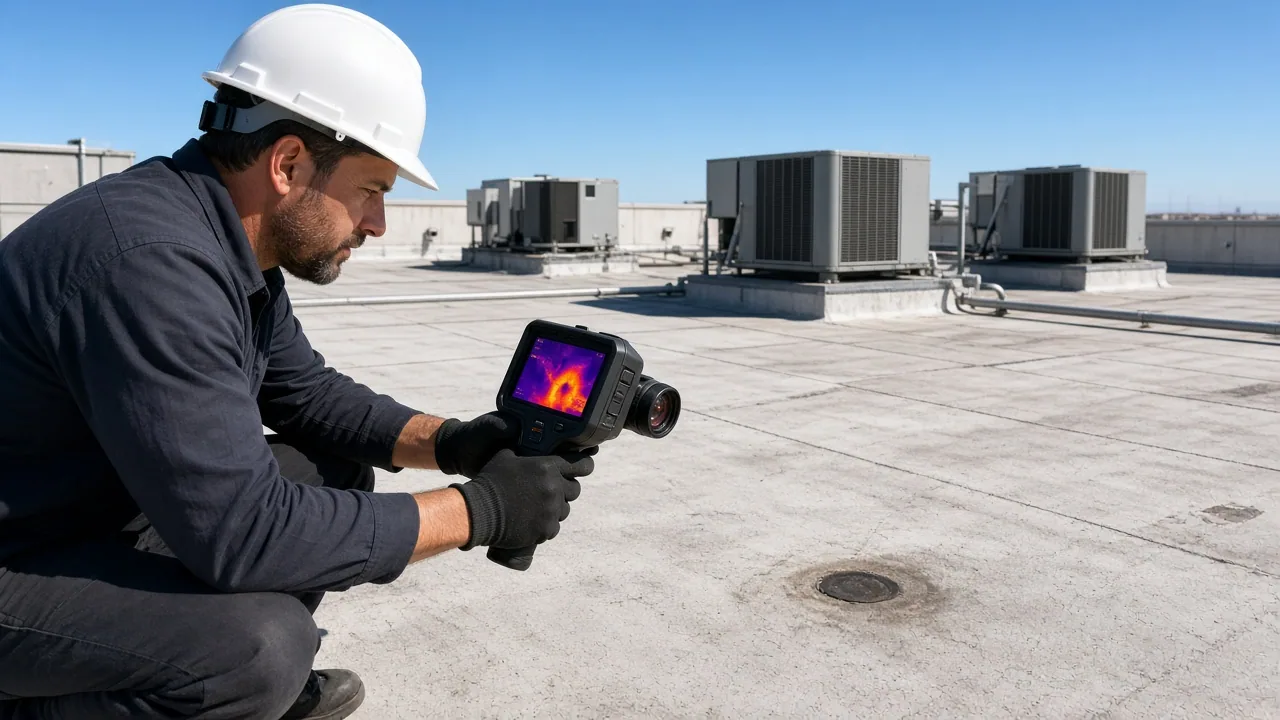
On a very large roof, an infrared moisture survey narrows down where to cut. The scan shows where insulation holds water. The core confirms it. Then the repair line is drawn from evidence, not from the stain on the ceiling. A stain tells you where water landed. The scan and the core tell you where it came in.
Repair or Replace
Sorting comes down to the layer underneath. Dry means repair or recover, and wet across a wide area means replace. A dry roof with failed details is a repair job: new boots, reset edge metal, welded seams. A recover adds a new membrane over a dry, sound roof and saves the tear-off. A full replacement removes wet insulation and starts clean.
Cost follows roof area, the amount of wet material, access and edge details. We price each option and say what it leaves behind. Ask for the same line items from every bidder, and compare roof area, tear-off, insulation, edge metal and warranty terms side by side. A cheaper repair that leaves a known weak seam is a fair choice if you plan for it, and a bad one if nobody writes it down.
Heat, Hail and Timing
A dark membrane swells and relaxes through some 28 days a year at 100 degrees. That slow movement fatigues seams and flashings. Hail is the sudden stress: Burkburnett and Iowa Park absorbed baseball-size stones in April 1991, and we treat that history as a reminder, not as proof of damage on a given roof. The roof tells the truth when you test for hail damage directly.
Work around the dock. A planned job starts with the calendar: peak shipping weeks, inventory counts and any tenant move dates. Hoisting and staging happen outside shipping windows, and we close in each section before crews leave. A distribution center faces the same schedule limits, and a manufacturing plant adds process limits on top.
Commercial Roofing Questions
How long does a warehouse roof last in north Texas heat?
The answer depends on the system, the installation and the maintenance, not on a single number. Heat, hail and ponding shorten life. A walk and a core cut tell you more than the calendar does.
Can we keep shipping while the roof is repaired?
Usually yes. We work in sections, close in each section daily and keep trucks and docks clear. You get a written schedule before the first day.
What is the simplest test for wet insulation?
Press the roof. A spongy spot is suspect. A moisture scan finds the wet area and a small core cut confirms it. Do not patch until you know.
Is hail damage visible from the ground?
Rarely. A bruise in the membrane or the insulation is often invisible from below. We press, probe and mark suspect spots on the roof.
What should we send before a first visit?
The roof age if known, how the building is used and any leaks you have seen. With those, the first walk goes straight to the suspect spots.
Why does a warehouse leak only after a hard, wind-driven rain?
Wind pushes water sideways into gaps that straight rain misses, such as a lifted edge, a loose counterflashing or a cracked collar on the windward side. We test each suspect detail with a hose, one section at a time, working from the bottom up until the leak shows.