Repair is a decision with a limit. Fix the right defect and a roof gives another good stretch of service; chase leaks one at a time on a roof that is failing everywhere and the bills pile up without an end. Commercial Roofing Wichita Falls plans commercial roof repair in Wichita Falls, TX around that limit, and we say so up front: here is what a repair can fix, here is what it cannot, and here is the line where replacement becomes the cheaper choice.
Start with the building. A retail center on Kell Boulevard, a manufacturing shed near the Wichita Falls Business Park and a small commercial building in Henrietta all fail in their own ways. We read the roof the way a mechanic reads an engine: by its parts, one at a time, before we touch anything.
Parts That Fail First
Membranes rarely fail in the middle of a field. They fail at the details. Flashing is the first suspect, because it joins two materials that expand at different rates, and in a climate that bakes roofs for weeks it takes constant movement. After flashing come the seams, where heat-welded or adhered joints can open at the edges. Then penetrations: pipes, vents, conduit and curbs, each one a hole in the roof sealed by a boot, collar or flashing that ages faster than the sheet around it.
Drains and scuppers come next. When debris builds up around an outlet, water stays on the roof and the membrane around it takes constant moisture. Edge metal and coping complete the list, since wind finds them first. A repair plan that skips these parts treats a symptom and leaves the cause.
Rooftop equipment adds its own wear. Every unit has a curb, a set of supports and often a line of conduit or refrigerant tubing crossing the membrane. Service crews walk the same paths week after week, and a membrane without walkway protection scuffs, thins and eventually punctures along that route. We check the paths between units and the area under each pipe support, because damage there is common and easy to miss from a single quick glance.
Match the Material
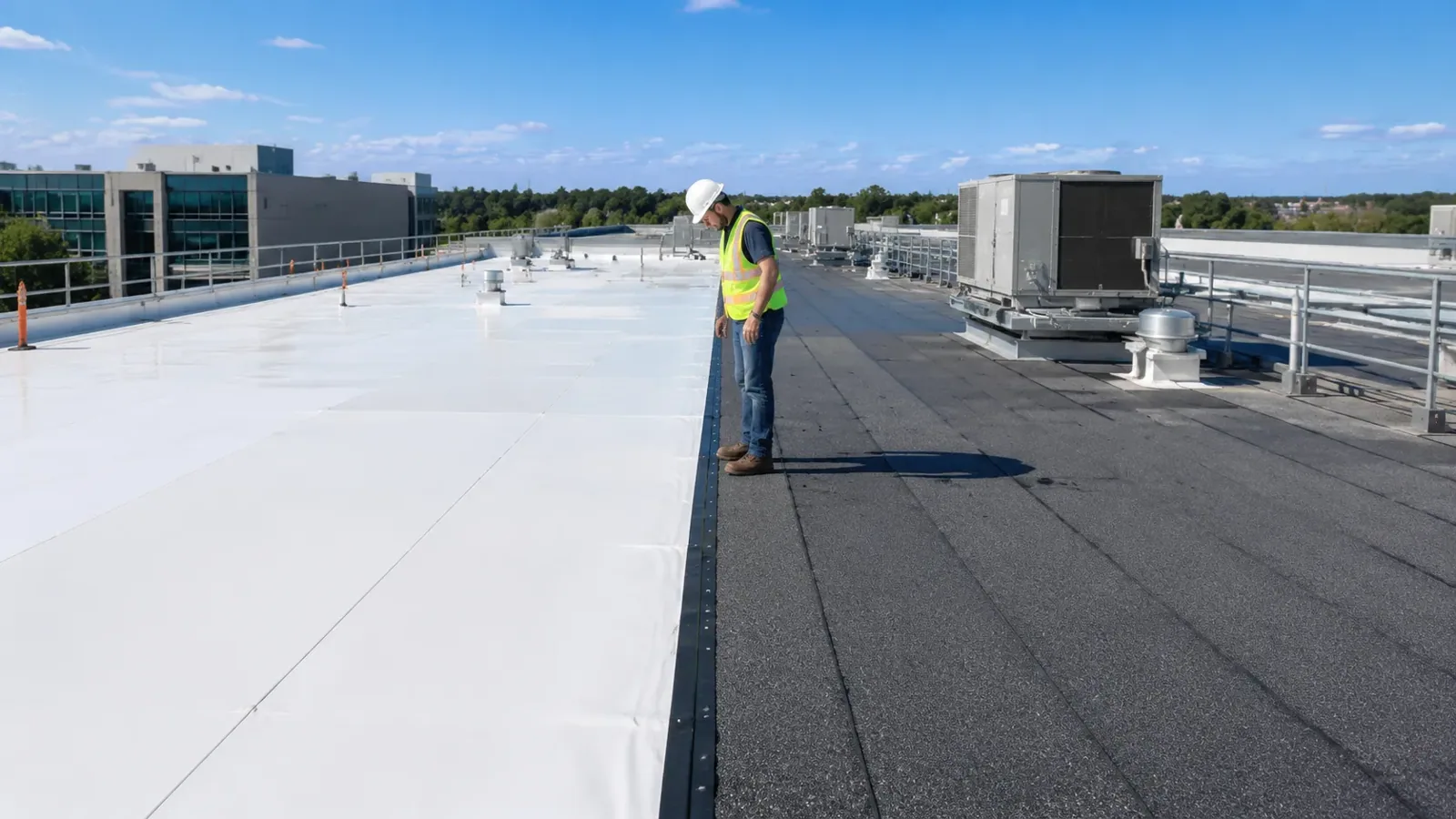
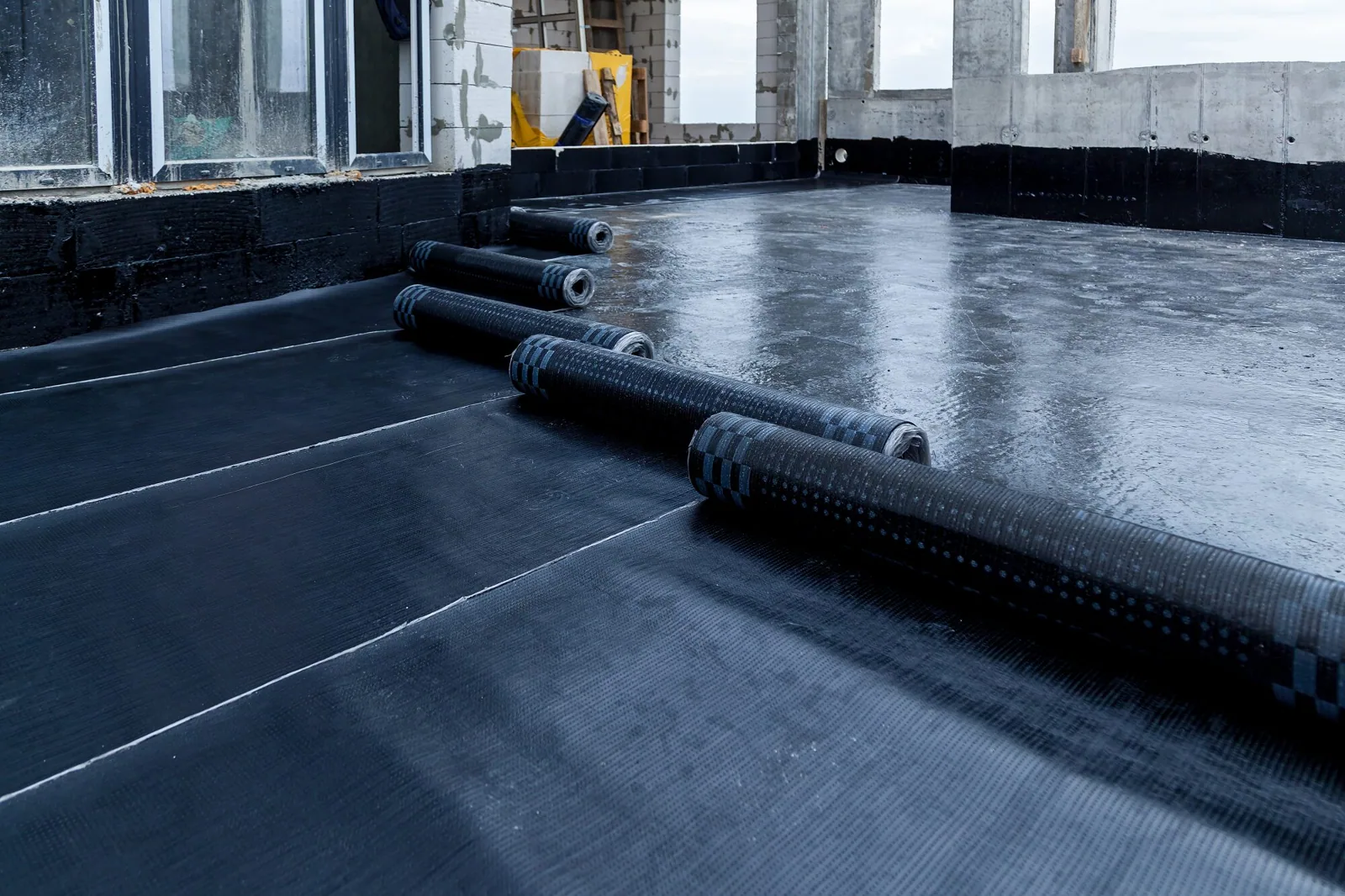
The repair has to match the roof. A patch made for one membrane will not bond to another, and a sealant that works on metal fails on single-ply. We identify the system first, then choose the repair method and the material. On modified bitumen, that may mean heat-welded patches and new granulated cap sheet. On TPO or PVC, it means clean heat-welded patches with proper overlaps. On EPDM, it means a primer and a cured patch or splice tape.
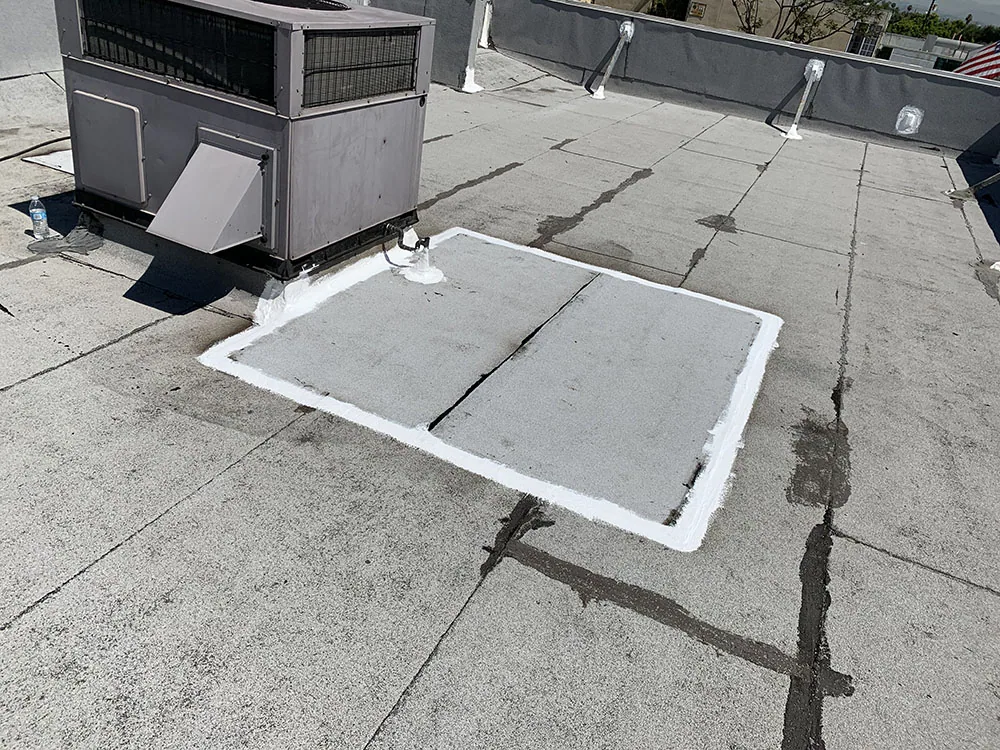
Old repairs deserve scrutiny too. A patch placed over wet insulation traps water, and a layer of mastic over a seam often hides a failing joint rather than restoring it. We remove failed patches where we can and mark what stays, so the next person on the roof sees what was done.
Surface preparation decides whether any repair holds. We clean away dirt, oxidation and old sealant, dry the area, and test adhesion on a small spot before the full patch goes down. A repair made in a hurry on a dirty surface looks fine on the day it is finished and lifts at the edge within a season. Cleaning is slow, quiet work, and it is where most of the quality in a repair comes from.
Heat and Repair Timing
A summer afternoon of 100 degrees puts the surface of a dark membrane far above the air temperature. That affects repairs in practical ways. Adhesives flash off quickly, seam welding needs a controlled pace, and a crew working on a hot membrane needs to protect it from foot damage. We schedule sensitive repairs for cooler hours and keep the surface clean.
Winter has its own limits. Cold, damp surfaces do not accept adhesive, and a repair done in poor conditions can fail in months. When a leak cannot wait for ideal weather, we make a temporary seal and return for a permanent one. When water is already inside the building, the stopgap becomes a commercial roof leak job with a permanent fix to follow.
Storm Damage Repairs
Spring in this region brings hail and wind. NWS Norman records golf-ball-size hail covering the ground in Electra for 15 minutes in March 1982, and a tornado crossed Sheppard Air Force Base in April 1962, blowing out nearly every window in the control tower. Those events are history, but they point to what a roof can face: impact, uplift and flying debris.
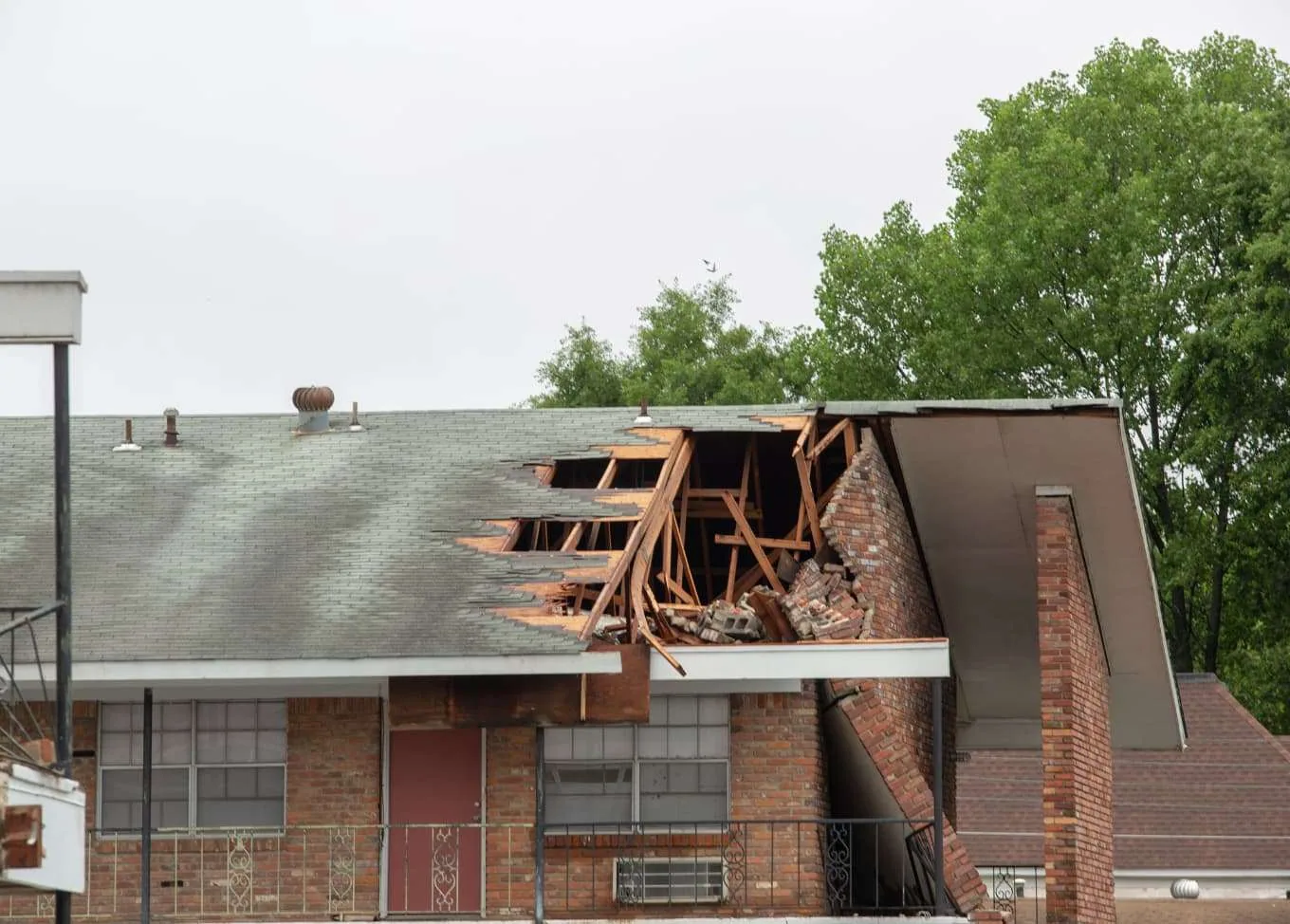
After a storm, we sort damage into three groups. Some of it is cosmetic and does not need work. Some of it is repairable, such as torn flashing, lifted edge metal and punctured membrane. Some of it is structural to the roof system, such as bruised insulation or a deck that moved. We put each item in the right group with photographs, and where it applies we help you prepare documentation for storm damage repair claims.
Repair or Replace
Here is one clean rule. When repairs cost more than a fixed share of a replacement over a few years, and the roof keeps producing new leaks, replace it. We do the arithmetic with you: the cost of the last several repairs, the likely cost of the next ones, and the price of a new roof spread over its life. The numbers are specific to your building, so we do not quote a standard figure.
A roof can still deserve repair at an advanced age if the insulation is dry and the damage is local. In that case a preventive maintenance plan can stretch the roof's life and keep small items from becoming emergencies. When the evidence says the roof is finished, we tell you, and we show the moisture findings that support it.
What You Receive
Each repair visit ends with a written record: the location of every item, the cause as we found it, the repair method and photographs before and after. Keep that record with the roof file. It speeds up the next visit, supports warranty questions and gives an insurer or lender a clear history. For multi-building owners, the same records let you compare roofs and plan spending across a portfolio.
If your property sits in a town like Burkburnett, Iowa Park or Electra, tell us the address and the roof history, and we will schedule an evaluation visit.
Commercial Roofing Questions
Which repairs are worth doing on an old roof?
Repairs at flashing, seams and penetrations are usually worth doing, because they are where most leaks start. Patching a large wet field is rarely worth it. We show you which items fall in each group.
How long should a repair last?
A repair on a sound base can last for years, and a repair on a wet or worn base can fail in months. The base decides, so we check moisture and attachment before we choose a method.
Do repairs affect my roof warranty?
They can. Some manufacturers require approved repair methods or an approved installer to keep coverage. We read the warranty terms and follow them, and we record each repair for your file.
Can you repair a roof while the tenants stay inside?
Yes, in most cases. Repairs are quiet compared with tear-off, and we protect interior spaces and coordinate access. We tell the site manager the work zone and the times in advance.
When should I stop repairing and replace?
Replace when new leaks keep appearing, insulation is widely wet or repair cost starts to approach replacement over a few years. We prepare a side-by-side comparison so the decision is clear.