A freezer building has the hottest roof and the coldest room on the same property, and the roof sits between them. That gap is the lesson. Heat on top pushes moisture downward through the insulation, cold below pulls it in, and the two meet in the layers. In Wichita Falls, TX, summers are among the hottest in the country outside the desert Southwest, so the push is strong and long. Start with the temperature difference. Then read the layers in order, from the membrane down to the vapor retarder.
What This Building Is
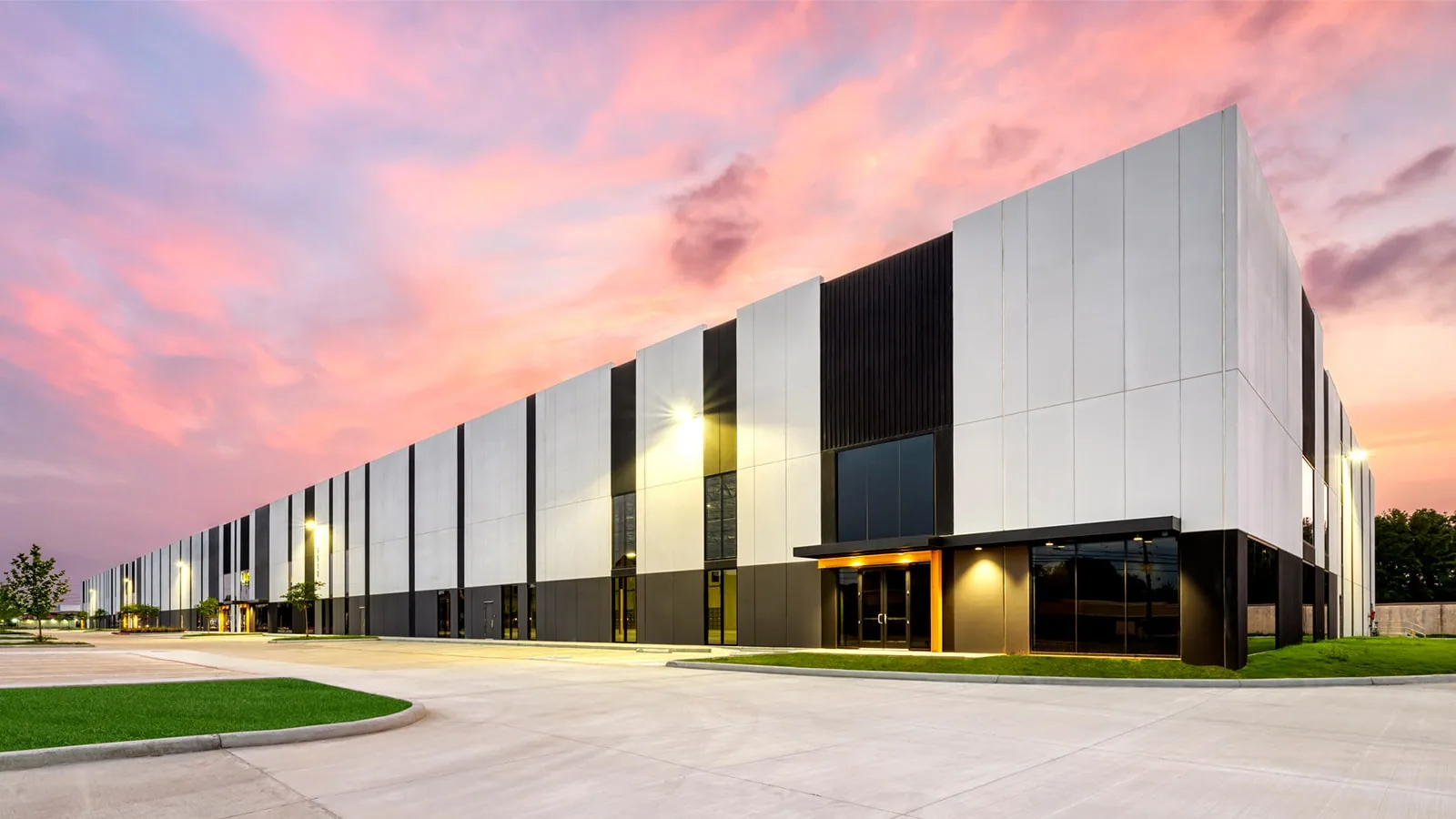
A cold storage building holds product at a set temperature, often below freezing, inside a tightly insulated shell. The envelope is built to keep heat out and cold in, and the roof is the largest part of the envelope. Refrigeration units, condensers and ductwork often sit on or near the roof, which adds penetrations and weight. A distribution center may share the site, and its roof follows different rules from the freezer beside it.
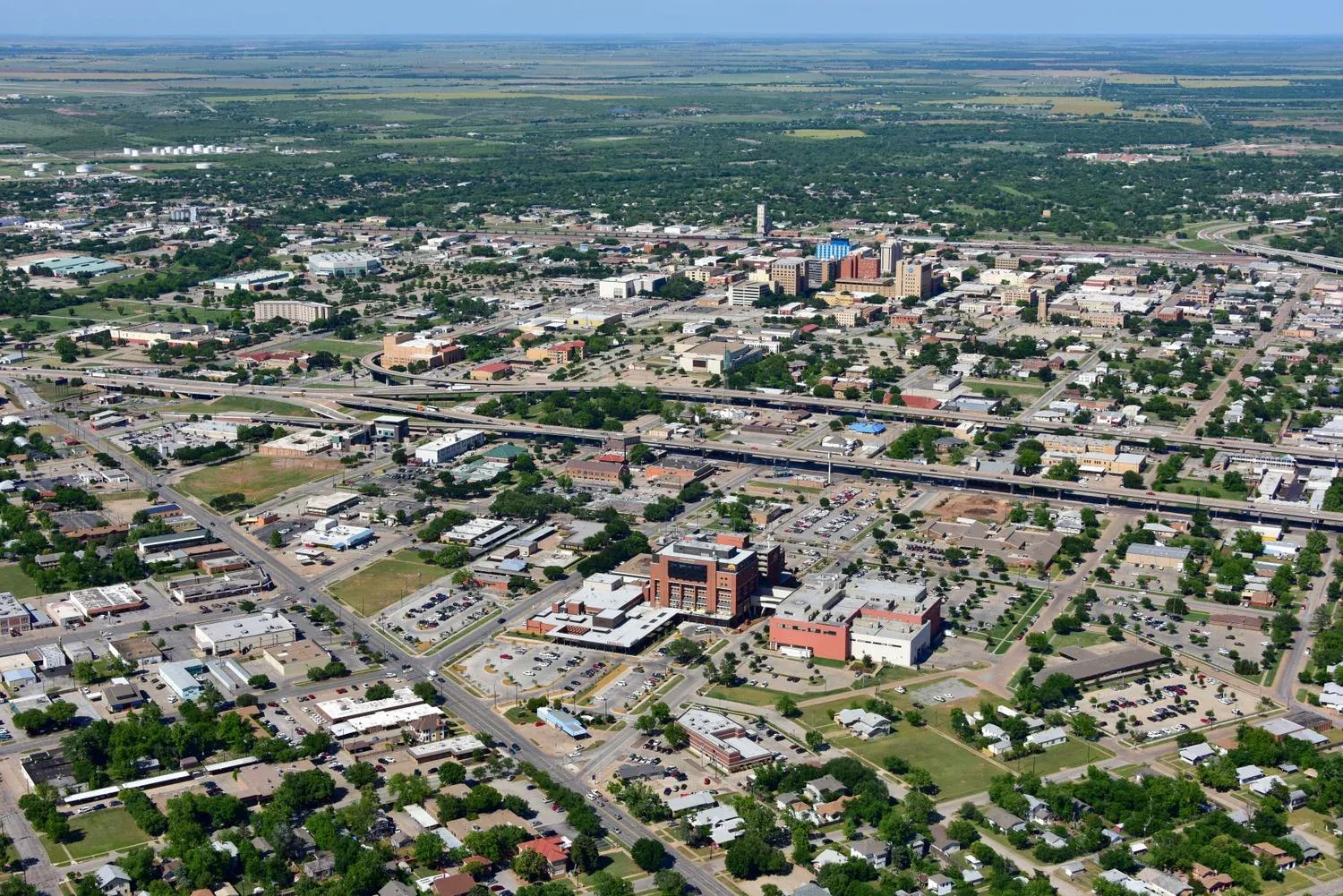
The Wichita Falls area has the freight links such a building wants: Interstate 44 ends here, several U.S. highways serve the city, and Class I railroads handle logistics and distribution. The Wichita Falls Business Park markets its 525 acres to distributors and manufacturers. Whatever the freight corridor brings to a site, each roof gets read from scratch.
How the Roof Is Put Together
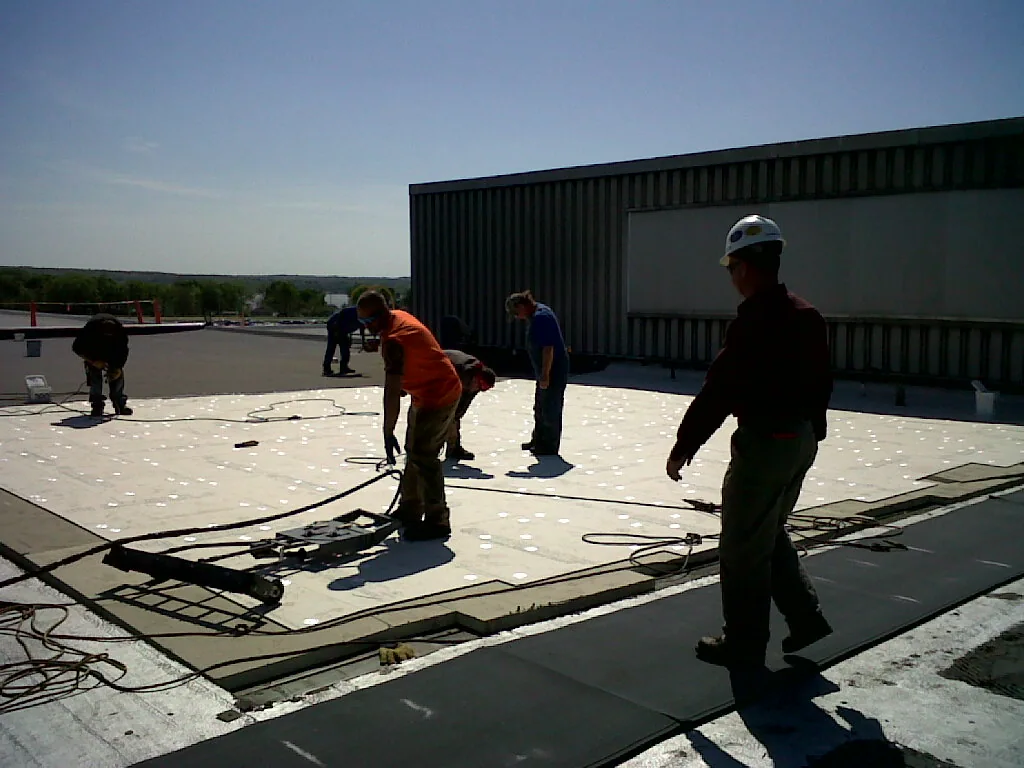
Step one is the deck. Above it sits a vapor retarder, a thick stack of insulation, a cover board and the membrane. The vapor retarder is the layer people forget. Its job is to stop warm, humid air from reaching cold insulation, where it would condense and freeze. If the retarder is torn at a penetration, moisture enters the stack and stays there.
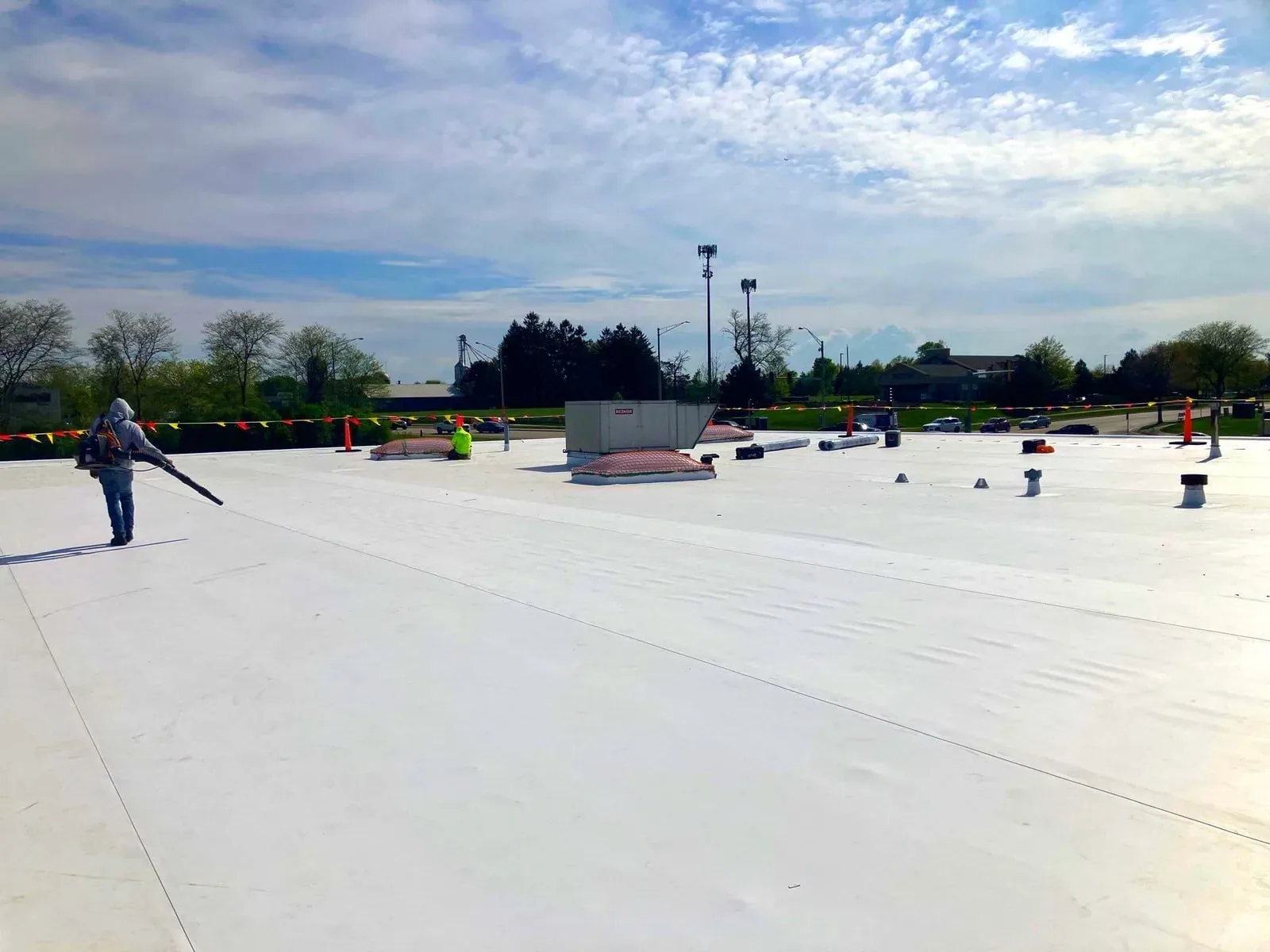
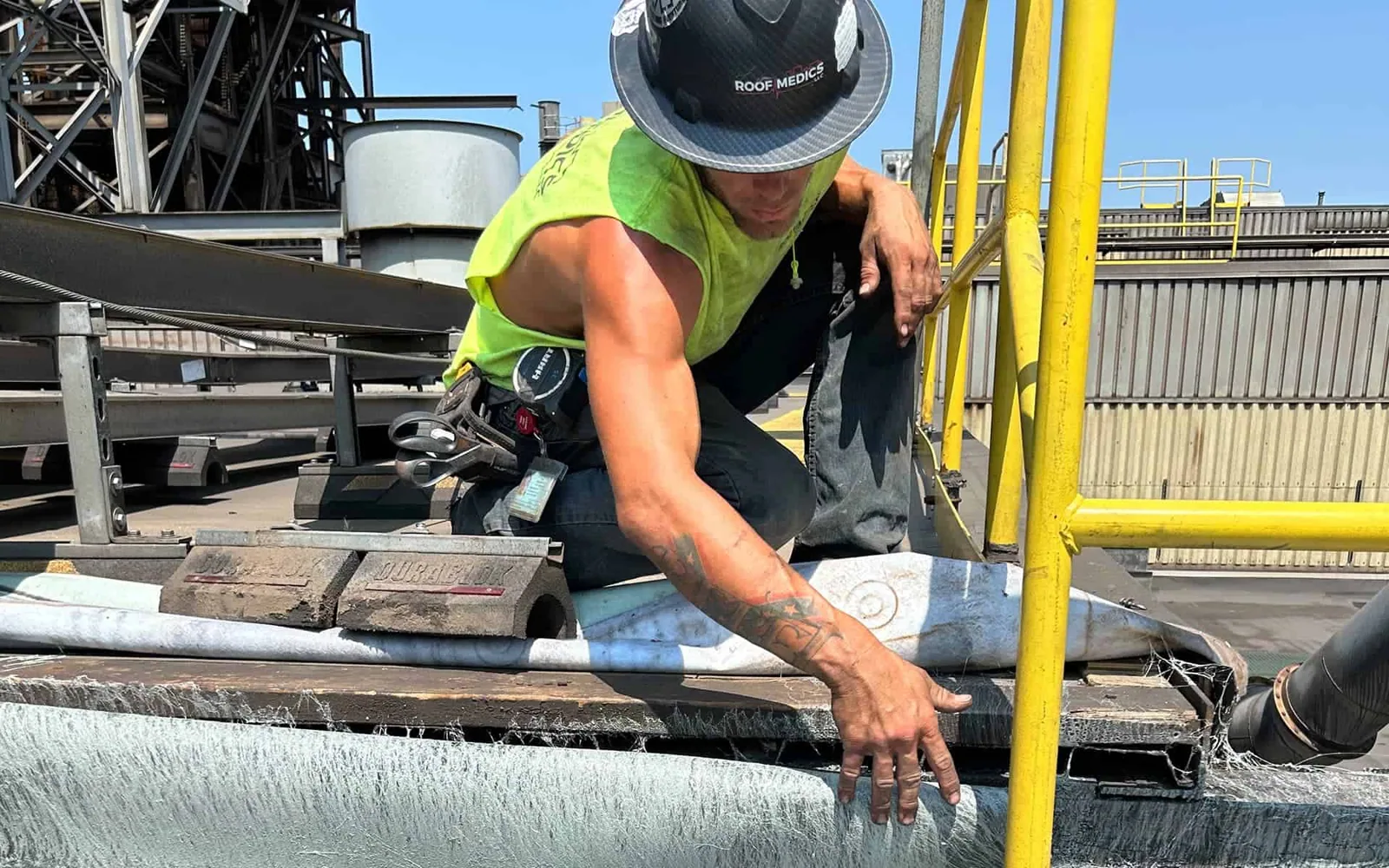
The membrane needs to be tough and reflective, because it takes both the sun and the people who service the equipment. A white TPO sheet lowers surface heat, and a cover board protects the insulation underneath from foot traffic and from the hail that moves through this region in spring. Where the roof deck has a lot of equipment, insulation and cover board choices decide how well the stack handles foot traffic. Each layer has a job, and when one layer fails, the layers around it take the load. The insulation in a freezer roof is usually thicker than in a dry warehouse, so a wet zone holds far more water and takes far longer to dry. That is one reason we scan before we cut.
Where It Fails First
Cold storage roofs fail from the inside out, which makes them hard to read. A small leak at a boot soaks insulation near the opening. Freezing and thawing then expand the wet zone. The insulation loses value, the refrigeration load climbs and the owner sees it first on the utility bill, not on the ceiling.
Heat makes it worse. Triple-digit heat arrives on roughly 28 days in a typical year here, and 90 degrees or more on about 102. In 2011 the city became the first in Texas to log 100 days at 100 degrees. A membrane that bakes at those temperatures over a freezing room stresses every seam. Condensation adds a second path, and it is easy to confuse with a roof leak: warm air leaking through a penetration meets cold surfaces and forms ice, which melts into the stack when the equipment cycles.
What to Check
The walk begins at the refrigeration equipment and works outward. We look at the places where the building envelope is cut.
- Refrigeration lines, conduit and pipe penetrations, with their boots and seals.
- Equipment curbs and supports, checked for movement and flashing height.
- Seams and laps, probed for open edges that let moisture in.
- Drains and overflow, flushed, with ponding lines marked.
- Surface condition, noting heat damage, chalking or blistering.
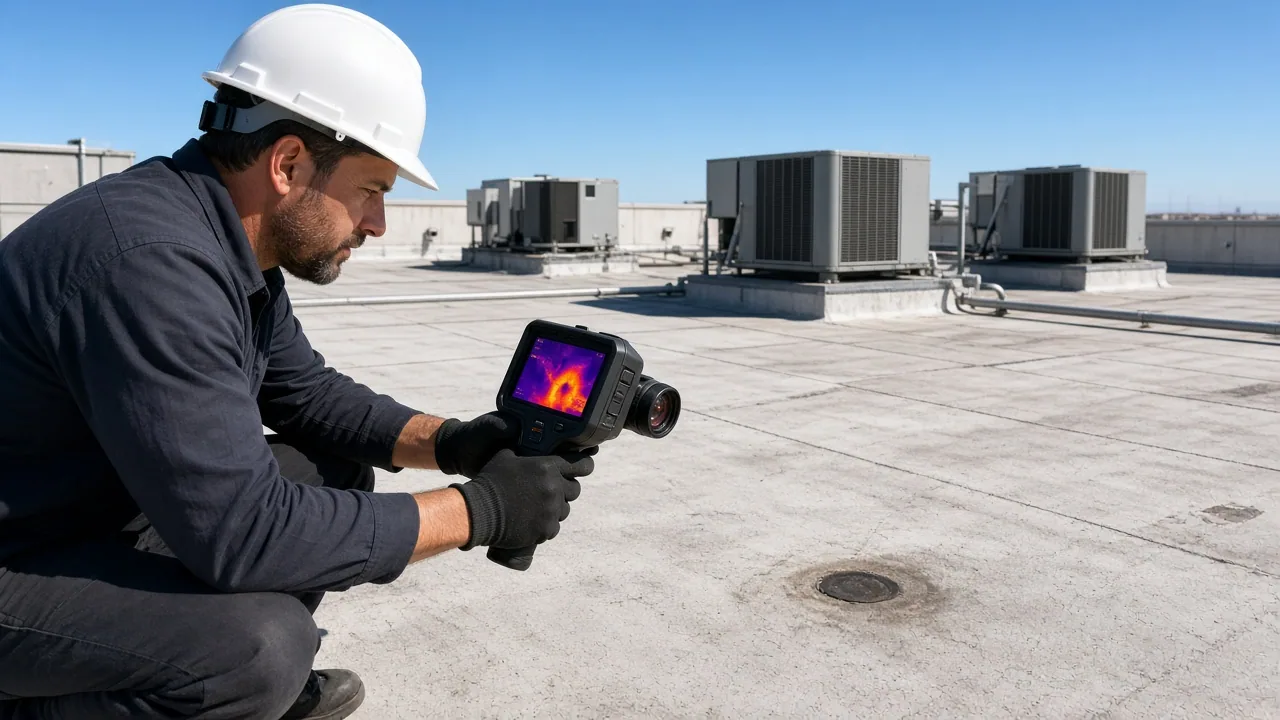
An infrared moisture survey maps wet insulation, and core cuts confirm what the scan shows. In a freezer building the core also shows whether the vapor retarder is intact. That finding changes the repair plan. If the retarder is sound, we repair the opening and seal it back to the stack. If it is torn across a zone, the zone gets rebuilt from the deck up, because a membrane patch on top cannot restore a barrier that sits several layers below.
Repair or Replace
One clean rule applies: dry insulation is worth keeping, and wet insulation is not. Where the layer underneath is dry, repair the penetration seals, weld the seams and restore the surface. Where insulation is wet over a wide area, plan a section replacement or a full roof, and rebuild the vapor retarder as part of the job.
A recover is rare on cold storage, because it adds weight and does not fix a failed retarder. Cost follows roof area, wet material, the number of penetrations and the thickness of the insulation stack. We price the repair and the replacement together and show what each leaves behind, so the owner compares the energy cost of waiting with the cost of fixing. We put the thermal numbers in the same quote as the roof price: the insulation thickness and the expected change in cooling load. That lets an owner weigh a roof decision against the energy bill, which is where this building feels it first.
Timing and Access
Cold storage cannot go warm. Roof work is planned so product temperature never moves. We open small zones, close them the same day and use temporary vapor barriers and insulation where the permanent layers need to wait. The facility manager approves each step and a refrigeration contractor handles any equipment shutdown. Dock doors, loading schedules and delivery windows are mapped before the first day, so the crew never blocks a truck that carries product.
Hail is an extra risk for a roof this valuable. NWS records show baseball-size hail causing extensive damage in Iowa Park and Burkburnett on April 2, 1991. We use that history as context only. After a large hail event, a hail damage inspection finds bruises before they leak. A warehouse roof can wait longer between checks than this one.
Commercial Roofing Questions
Why does wet insulation matter more on a freezer roof?
Wet insulation loses its value, raises the refrigeration load and can freeze, which expands the damage. The cost shows up on the utility bill before it shows up on the ceiling.
What is a vapor retarder and why do we care?
It is the layer that keeps warm, humid air from reaching cold insulation. If it is torn at a penetration, moisture enters and stays. We check it with core cuts.
Can the roof be worked on without warming the building?
Yes, with small zones, temporary barriers and same-day close-in. A refrigeration contractor handles equipment shutdowns, and the facility manager approves each step.
Is a white roof worth it on a cold storage building?
A reflective surface lowers roof temperature, which helps the cooling load. We weigh it against the membrane, the insulation and the budget.
How often should this roof be checked?
Twice a year, once after the hottest months and once after spring storms. A dated record shows trends, such as a seam that opens a little further each summer, and trends are what let an owner budget instead of react.
What do you need to give a first estimate?
The roof age, a list of penetrations and equipment, any leak or ice history and the temperatures below. The first walk answers a specific question.