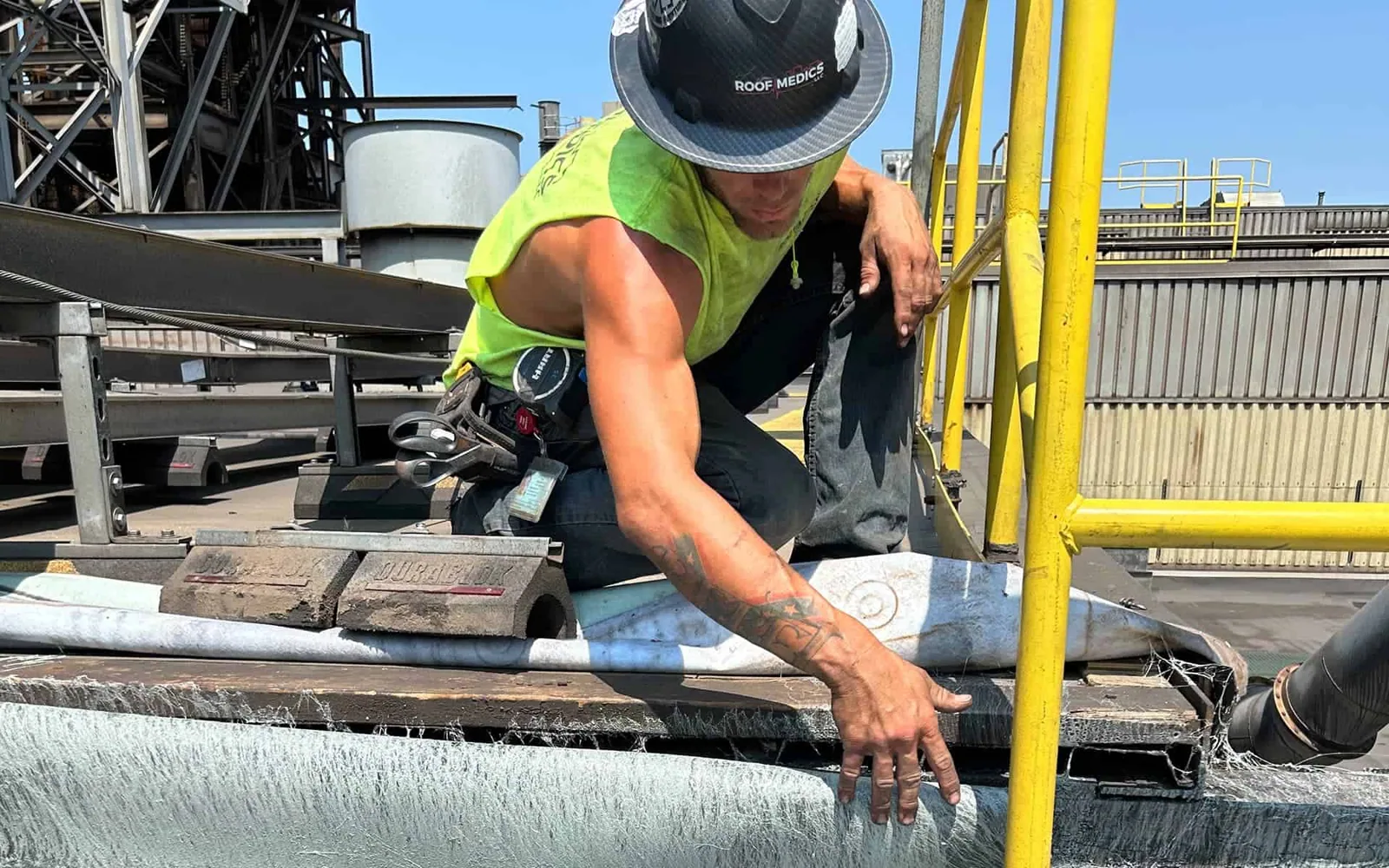
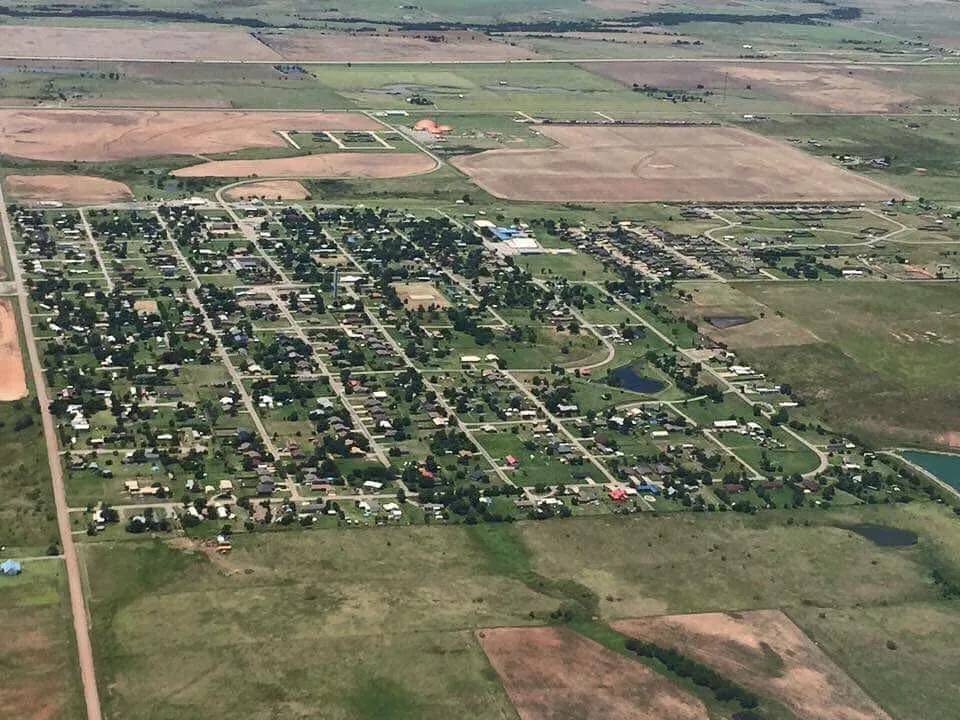
Start with the building, even when the building is one we have not yet seen. Archer City, the Archer County seat, sits where State Highways 79 and 25 meet, about 25 miles south of Wichita Falls, TX, and a commercial roof there faces the same heat, hail and spring wind as a roof in the city. The roof does not know the county line. What changes is the trip, the schedule and how we plan the first visit.
Here is step one. We learn the roof age, the use of the building and any leak you have seen. Step two is a walk across the membrane or metal panels, edge to edge, with a written report and photographs at the end. Step three is a plain list of what is worth fixing now and what can wait a season.
What the Heat Does to a Flat Roof
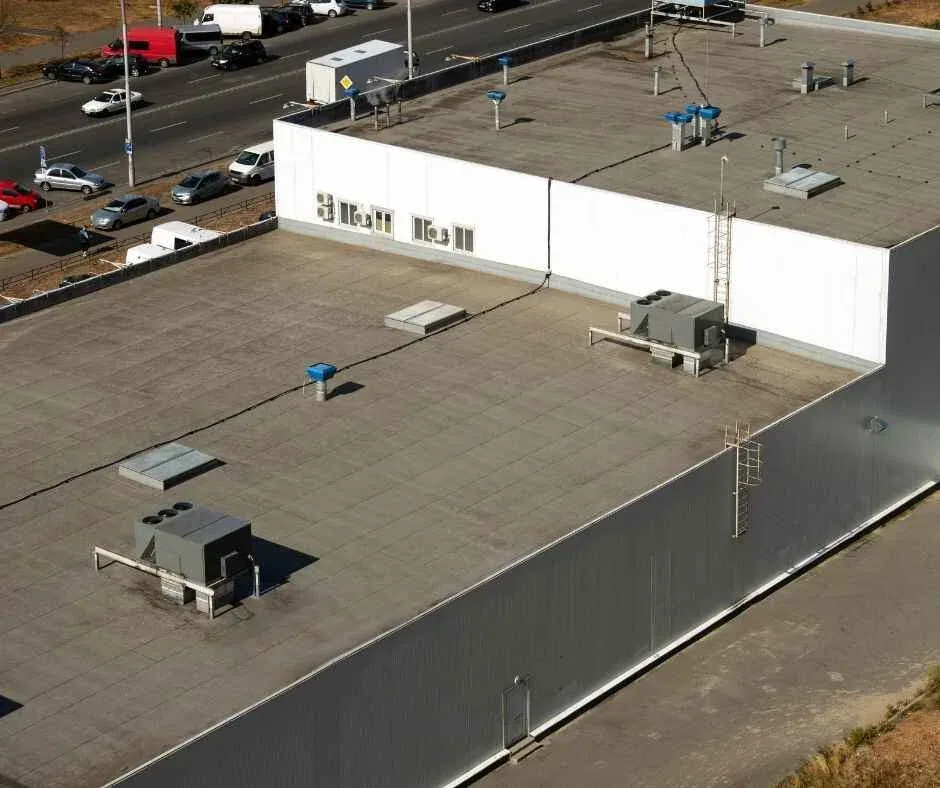
The city of Wichita Falls counts about 28 days a year at 100 degrees, and 2011 delivered 100 of them in a single summer. Archer City lies about 25 miles south, so the same kind of sun is a fair planning assumption for any dark low-slope roof you own there. A dark membrane swells in the afternoon and shrinks overnight, and that daily push and pull works on every seam and every flashing corner.
The slow damage shows up as heat and ultraviolet wear: a chalky surface, seams that open a hair, flashing that pulls away from a wall. None of it announces itself from the parking lot. We look for it by walking the roof, pressing on the surface and reading what the seams are doing.
Hail Is History Until a Roof Shows It
Large stones have fallen in this part of North Texas before: baseballs on Iowa Park and Burkburnett in April 1991, and bigger ones at Sheppard Air Force Base in March 1993. Those storms belong to those places. They tell an owner in Archer City that this part of North Texas can produce large stones, not that any particular roof here was hit.
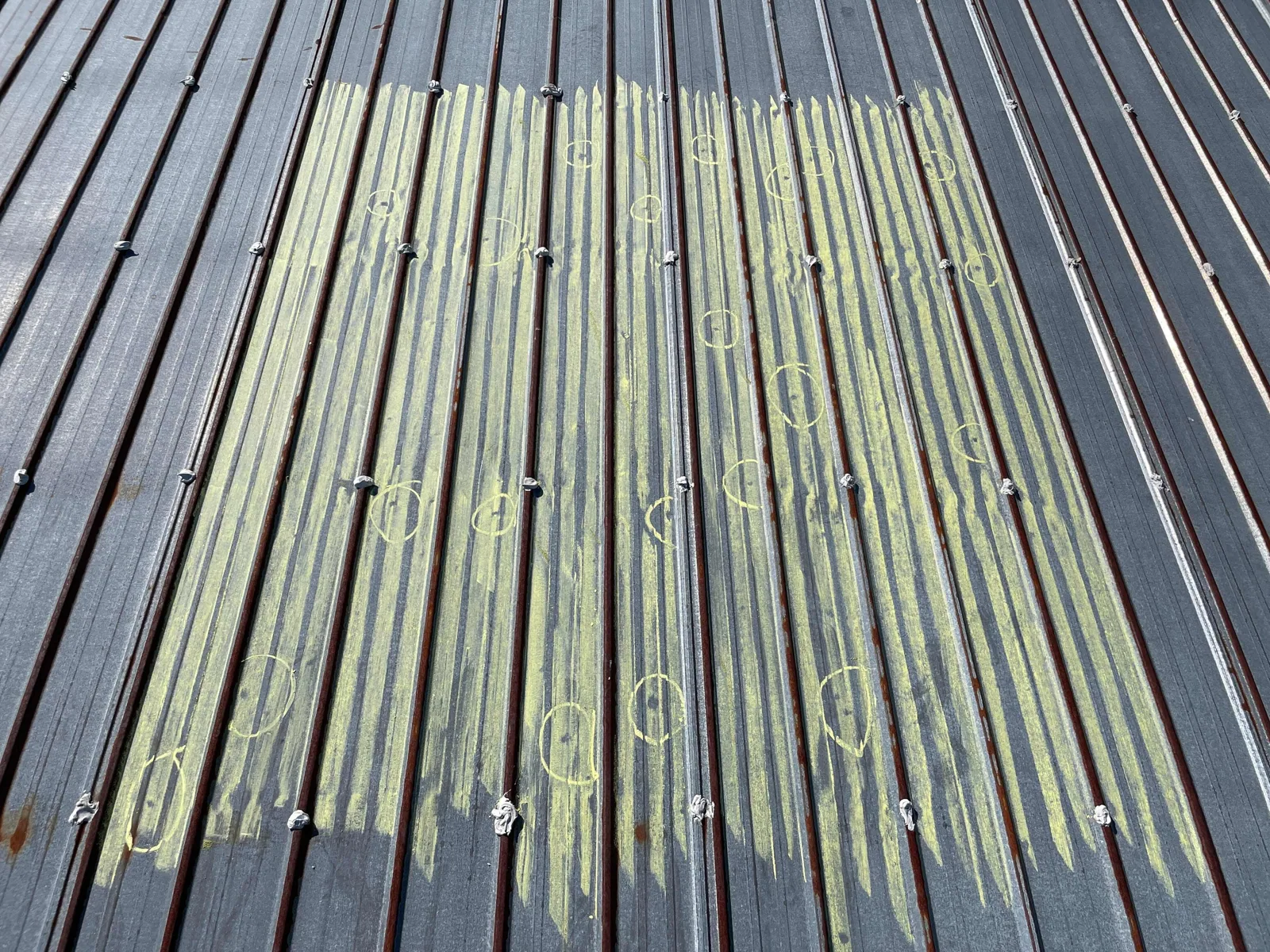
So the test is on the roof. A hail bruise is a soft, dished spot in a membrane or the insulation under it, and it often cannot be seen from the ground. We press, probe and mark each suspect spot, then photograph it. If the roof shows bruising, the report supports a conversation with your insurer, and our claim documentation keeps the photographs organized by roof area.
Wind and the Spring Season
The weather service lists Archer City as a tornado location in April 1961, and Wichita Falls carries the memory of the F5 of April 3, 1964 and the F4 of April 10, 1979. We treat that history as context for how seriously to take edges, not as proof of anything on your roof today.
Wind lifts a roof where the edge is weakest. We check the metal at the perimeter, the fasteners behind it and the first few feet of membrane inside it. A fastener back-out, where a screw rises out of the deck and pushes up under the sheet, is a small thing now and a torn flap after the next gust. Catching it early is a small wind damage repair, usually a few hours of work.
The Layer Underneath
The membrane gets the attention, but the insulation under it decides whether a leak stays small. Water that gets past a seam can travel sideways through wet insulation and show up in a ceiling far from the opening. That is why a stain in a back room does not tell us where to cut. Step one is to find the wettest reading, step two is to trace it uphill to the nearest opening, and step three is to cut a small test sample so the layers can be read directly.
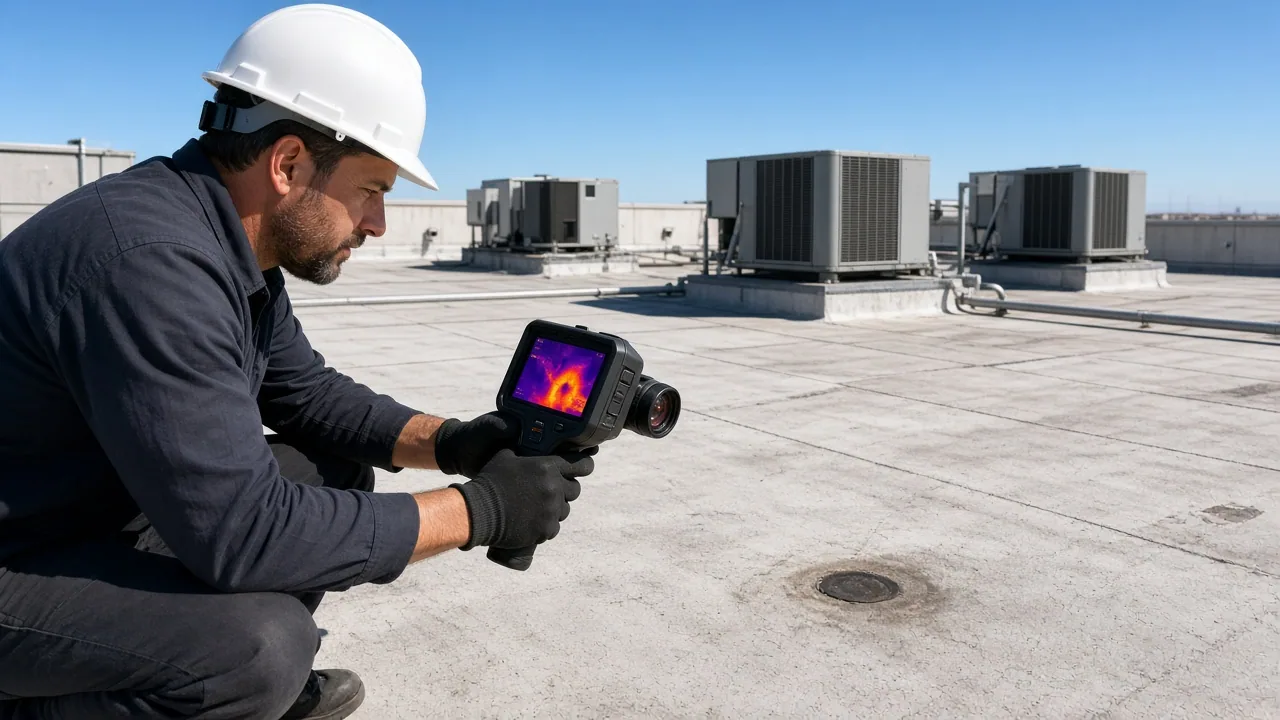
When a roof has been patched several times, we use a moisture survey to map the wet areas before anyone proposes a number. A small wet zone is a repair. A large one points toward a recover only if the rest of the insulation is dry, and toward replacement if it is not.
Timing, Travel and Access
Archer City is far enough from Lakeside City and the rest of the Wichita Falls side that we plan the first walk as one trip, with a drone pass when the roof is large or fragile and a hands-on pass over every drain, curb and corner. The same trip can include Windthorst, which is 11 miles east on State Highway 25. We bring the report back, then talk through the options by phone or on site, whichever you prefer.
The Lake Kickapoo Field Station lies about eight miles west-southwest of town and is an Air Force space-surveillance site with no public access, a reminder that some property in this part of the county has controlled entry. If your building has a gate, a key or a tenant who keeps odd hours, tell us at the start and we will schedule around it. Emergency calls run all day and all night, including holidays.
Repair, Recover or Replace
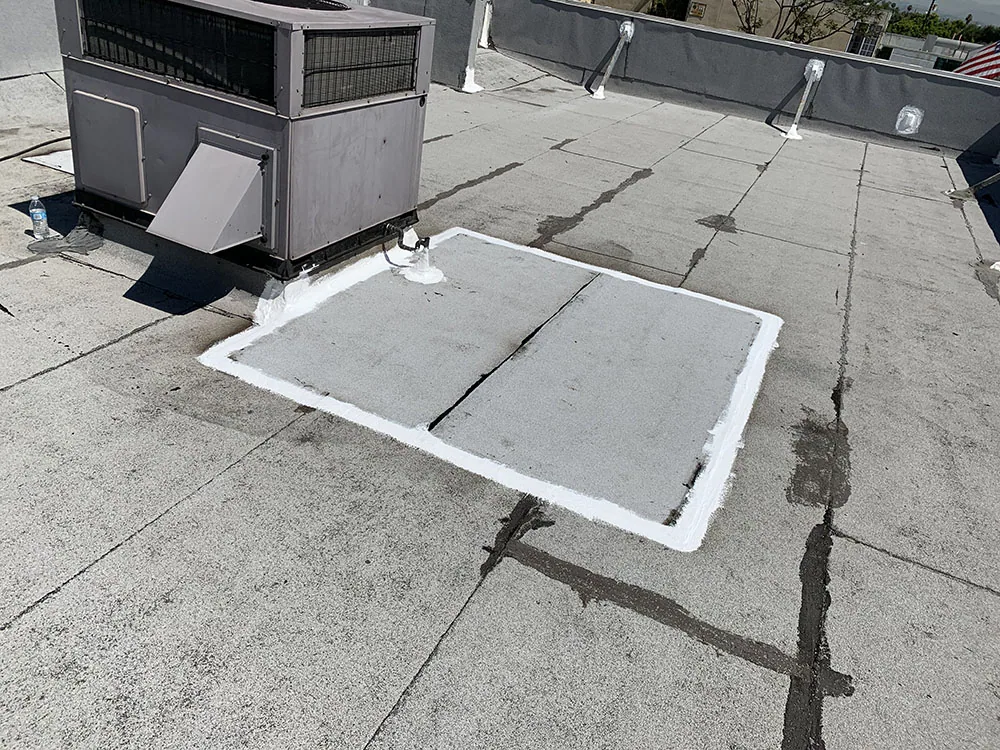
A small defect on a sound roof is a repair, and one clean rule applies: fix the cause, not just the stain. A tired roof with dry insulation can often take a new membrane over the old one. A roof with wide wet areas needs the wet material removed, and that is the point where replacement becomes the cheaper path over time.
Cost follows a short list: roof size, how much insulation must come out, how many penetrations need new flashing, and how hard the building is to reach. Timing follows the weather and the membrane. We put each item in the report as patch or fix, so you can decide with the numbers in front of you.
Commercial Roofing Questions
How far will you travel for one roof in Archer City?
The trip from Wichita Falls is about 25 miles, and we make it for a single building. We plan the first walk as one visit, with a written report and photographs sent after, so you do not pay for a second trip just to hear what we found.
Does the 1964 or 1979 tornado history matter to my roof?
Only as a reminder of how wind behaves. Those storms hit Wichita Falls, and the weather service records Archer City for an April 1961 tornado. Your roof is judged by what we see on it: the edge metal, the fasteners and the seams.
Can you tell hail damage from age wear?
Usually, yes, by pressing and probing. A hail bruise is a localized soft spot with a pattern, while age wear spreads across the surface. We mark each spot, photograph it and say which type it is in the written report.
My roof leaks in one corner. Is the corner the problem?
Maybe, maybe not. Water moves along the deck and through wet insulation before it drips. We start at the nearest penetration, drain or seam, then confirm with moisture readings before we propose anything.
Is a metal roof treated differently from a membrane roof?
The checklist changes. On metal panels we look at fasteners, panel laps, sealant at the ribs and rust at the cut edges. On a membrane we look at seams, flashing and ponding lines. Both get a drainage check, and both get photographs.
What should I send before you visit?
Send the roof age if you know it, what the building is used for and where water has shown up. A photo of the ceiling stain and the date it first appeared helps us decide where to start the walk.