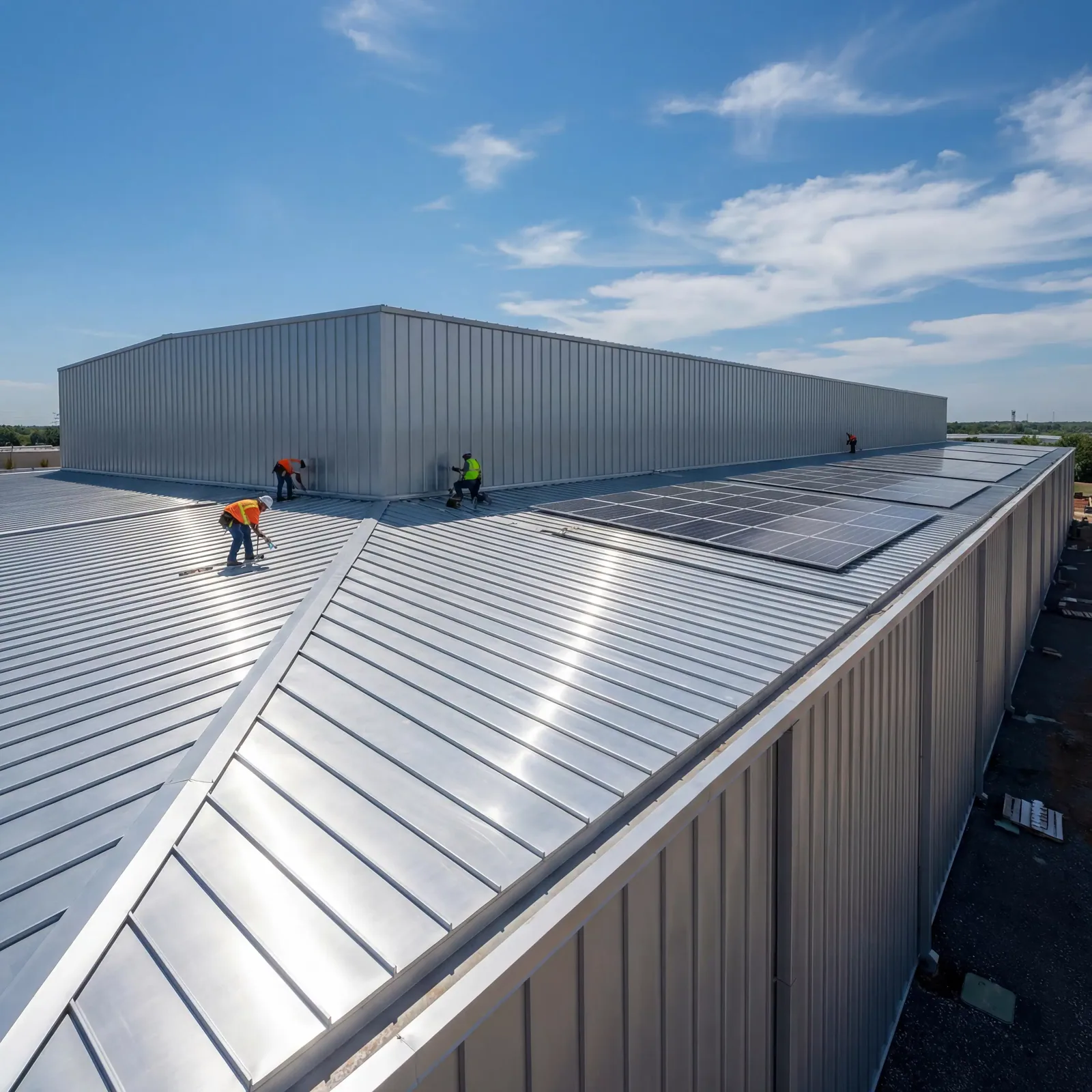
Henrietta, TX is the Clay County seat, and U.S. 287, U.S. 82 and State Highway 148 all meet there. Roof work in a place like that covers shops, offices, stores and service buildings, and the first thing to learn about any of them is what the roof is made of. Step one is the building. Step two is the layers under the surface.
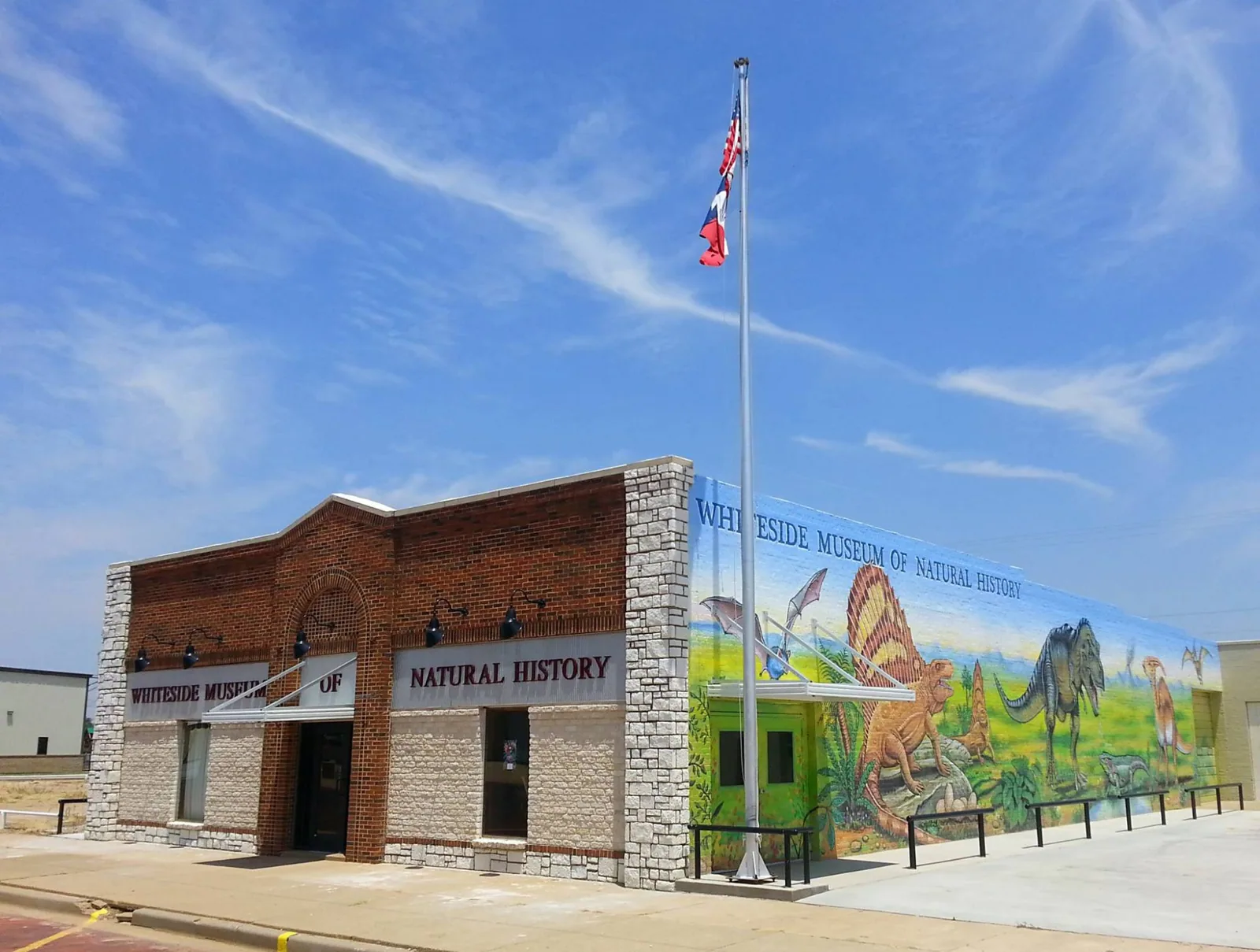
Henrietta is about 20 miles southeast of Wichita Falls and is described as a bedroom community for the city. An owner who lives in Wichita Falls may be managing a Henrietta roof from a distance, so we write findings in plain words, with photographs, that can be read on a phone.
Read the Building Type First
A small store with a flat roof and a parapet ages differently from a shop with a long metal span. The flat roof holds water at its low points and fails at seams, corners and drain bowls. The metal roof sheds water but fails at screws, laps and trim. Both need a walk before any price is given.
We note the roof type, the slope, the number of units on the roof and the places where water leaves. That list shapes the rest of the visit. A single-ply membrane gets a different test than a screw-down panel roof, and a modified bitumen roof gets a different one again.
We also look at the edges. Edge metal and coping take the first hit from wind, and a loose piece lets water under the membrane. A loose edge is easy to spot from a ladder and expensive to ignore. We tighten it, seal it and record it before moving on to the field of the roof.
Name the Layers Underneath
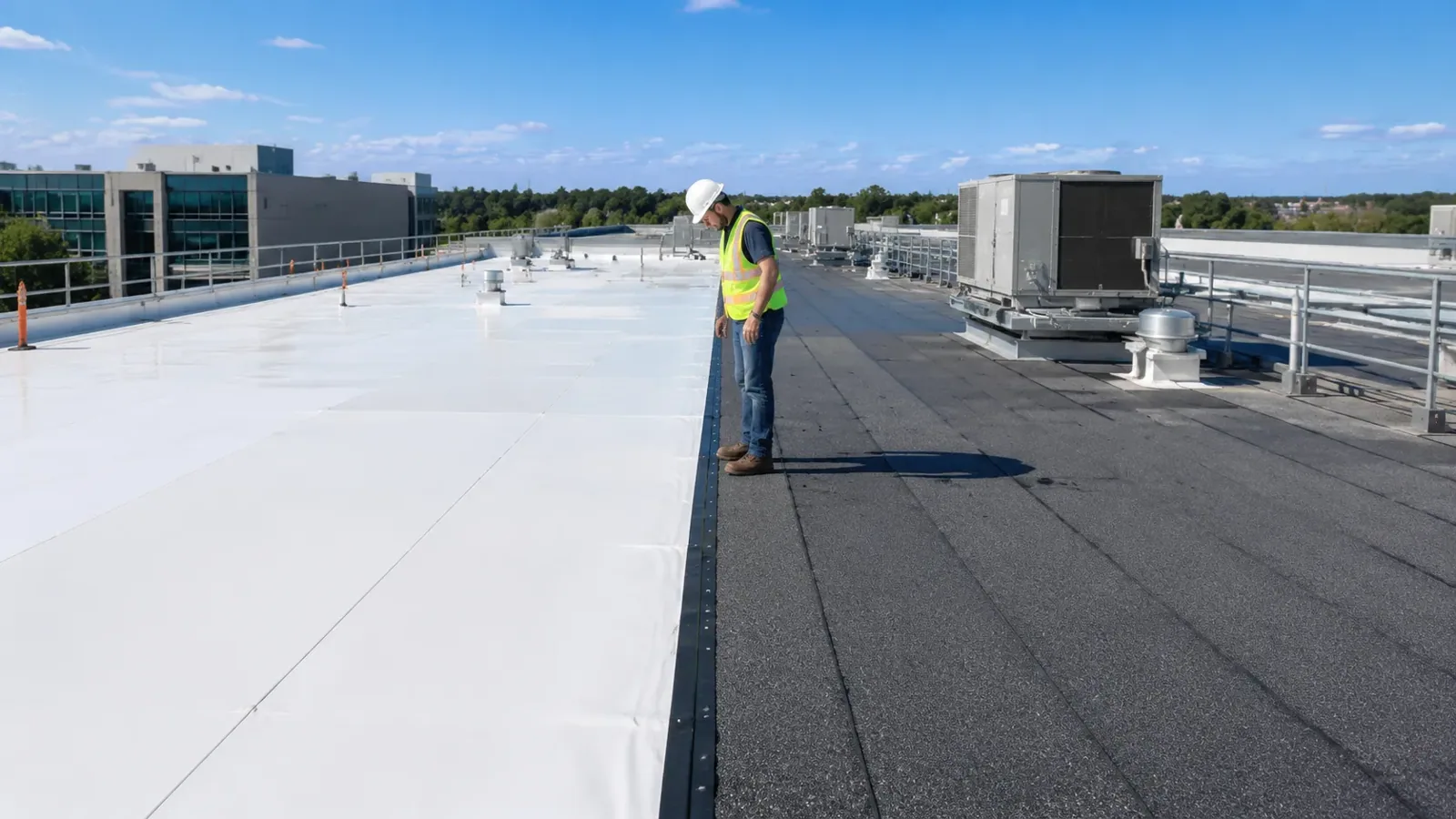
A commercial roof is a stack. At the bottom sits the deck. Above it is insulation, then a cover board on many roofs, then the membrane or metal panel that sheds water. Each layer can be fine while the one above it fails, and each can be ruined by water that entered through the top.
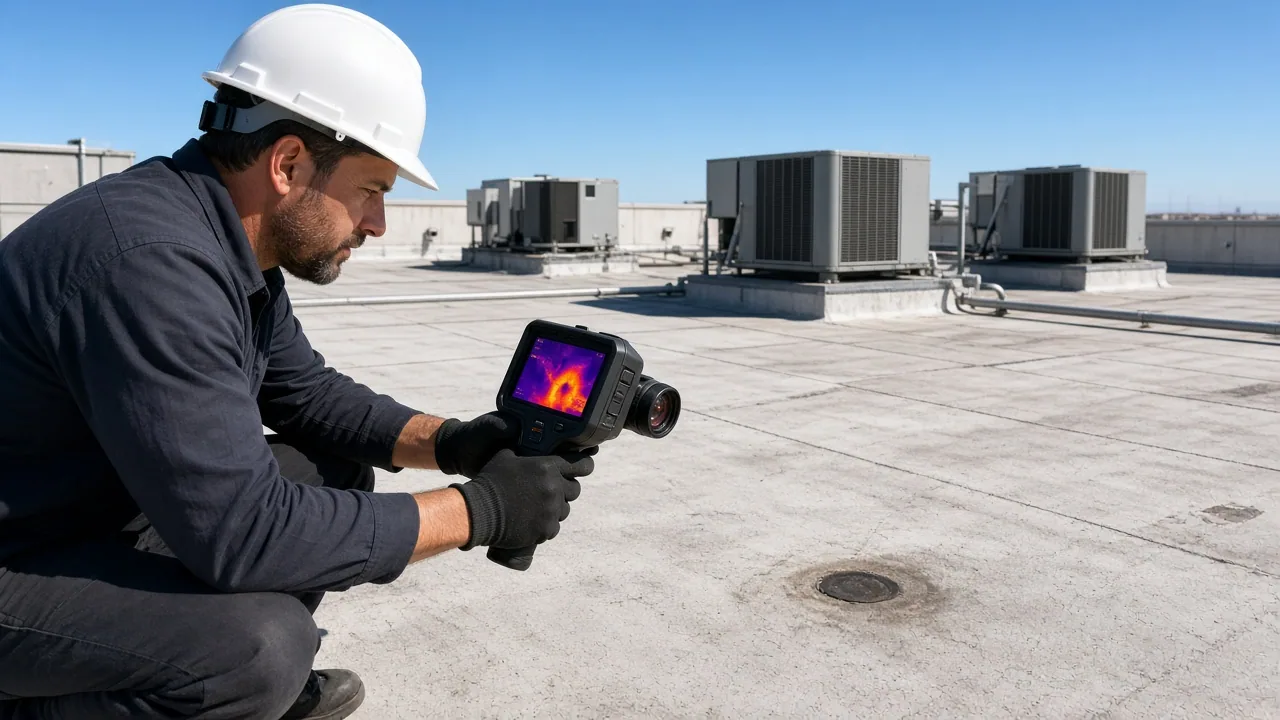
Here is a simple test. If the surface is dry and firm but a section feels soft underfoot, the layer underneath has taken on water. We mark the soft area and probe it. Wet insulation does not dry out by itself, and a patch laid over it hides the problem. An infrared moisture survey maps the wet area when the roof is large or the leak is hard to find.
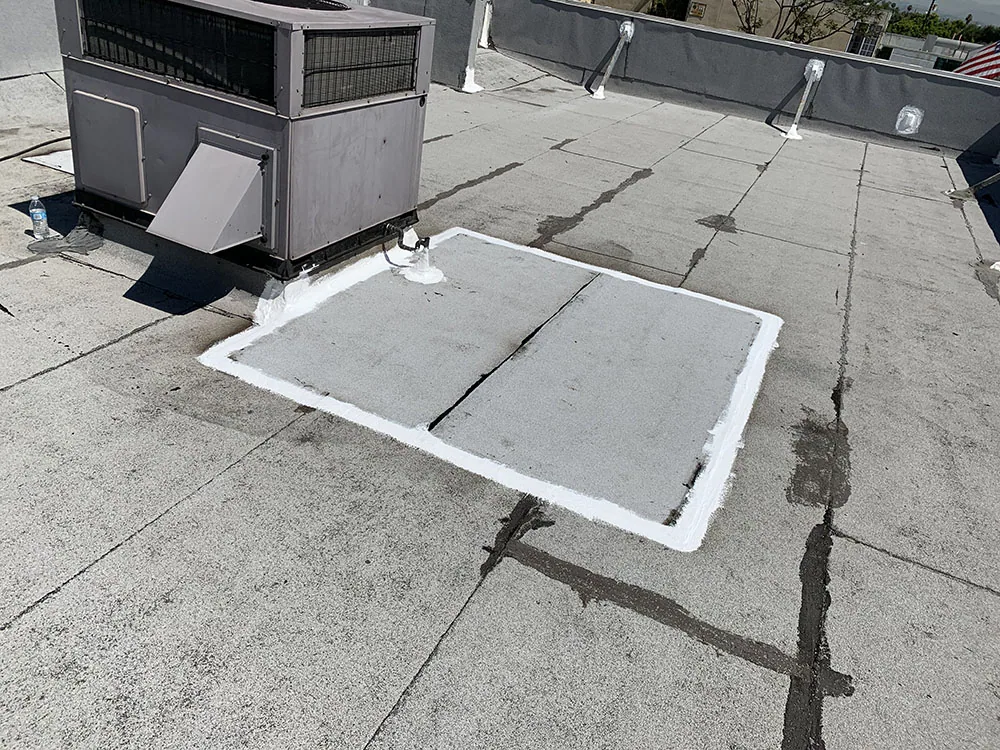
The lesson is short. Fix the layer that failed, not the layer that shows the stain. A repair that skips the wet layer lasts until the next rain, and then the owner pays twice.
Heat Works Slowly on the Surface
In Wichita Falls, our market city, summer brings roughly 28 days of 100-degree heat and about 102 days at 90 or above. Heat expands a membrane by day and lets it relax at night, and that cycle works the seams and the flashing.
Sealant dries and cracks. Thin spots appear where foot traffic crosses the roof to reach a unit. We look for heat and ultraviolet wear along the sunny side of every roof and mark each place where a surface has chalked, cracked or lifted.
Hail Has Left Marks in Nearby Towns
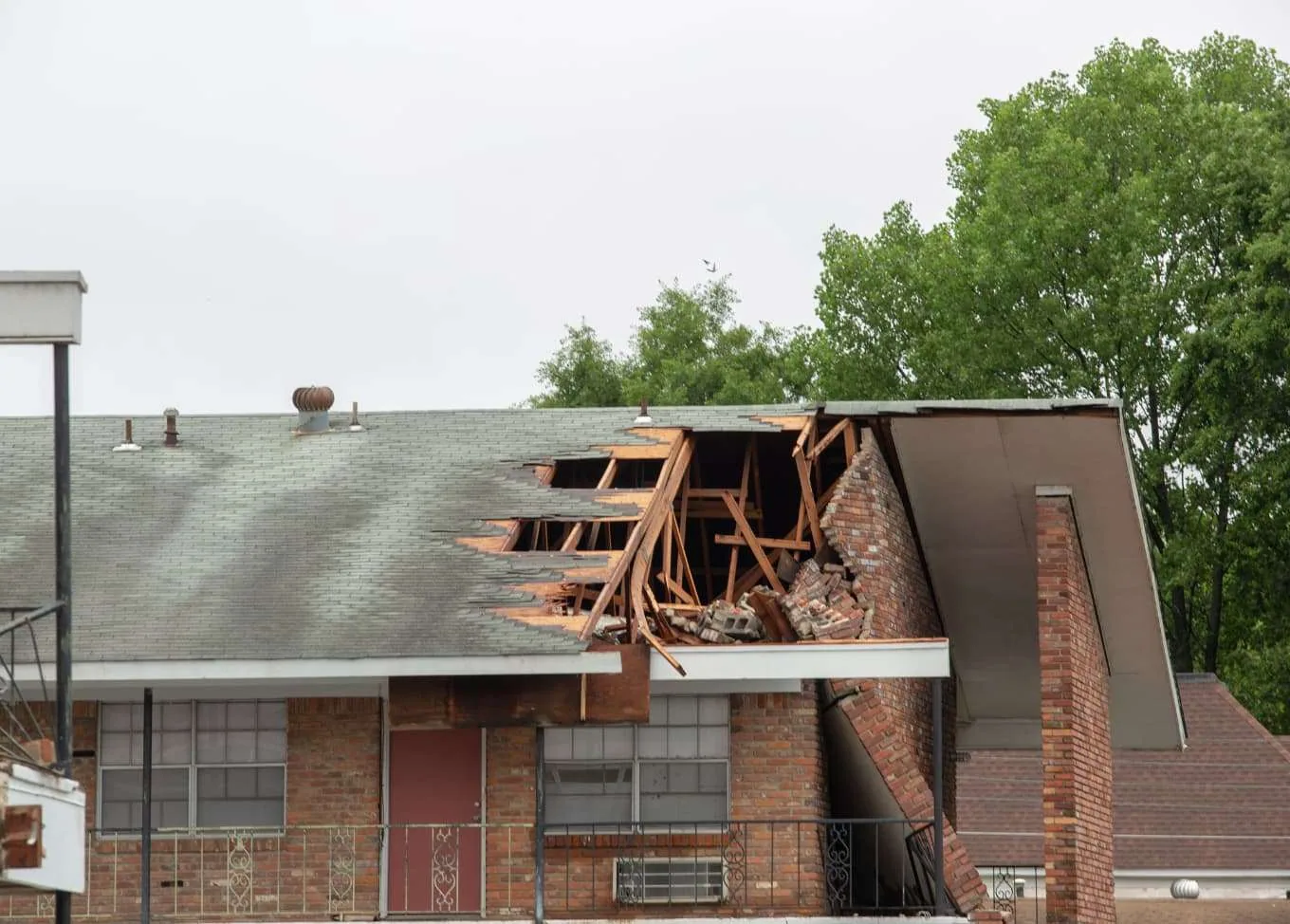
Iowa Park and Burkburnett took baseball-size stones on April 2, 1991, and Sheppard AFB saw some bigger still on March 29, 1993. Both events are history, and neither is a finding about a Henrietta roof. They show what the region can throw at a roof, and they explain why we look for a hail bruise after any severe storm.
A hail bruise hides as a soft spot that is hard to spot from below. We press, probe and mark. On metal we look for dents and cracked coatings. A hail damage report that counts hits by slope gives an owner something an insurer can read. Wind comes with many storms, so we also check for lifted edges and loose flashing on the same visit.
Care for Metal Panels and Their Fasteners
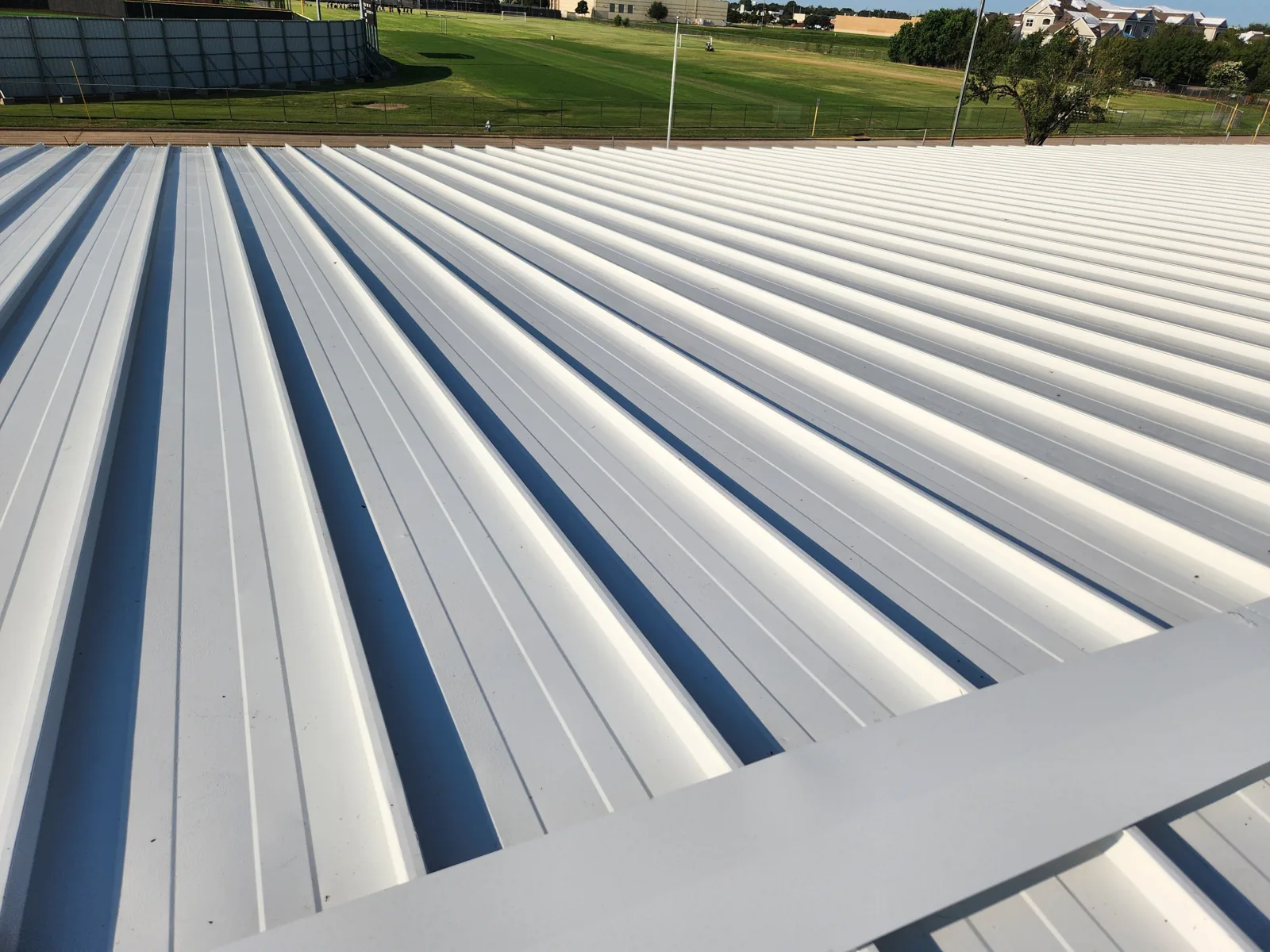
On a screw-down metal roof, the fasteners do the holding. Metal moves with the sun each day, so screws loosen gradually until a washer stops sealing. We check each fastener line and replace failed screws. This is called fastener back-out, and it is a common cause of small leaks.
A standing seam roof hides its fasteners under the panel, so we check the clips, the seams and the trim instead. If an older low-slope roof is tired, a metal roof retrofit can fit over it when the structure and the insulation allow.
Plan Access and Timing Around the Owner
Step one is to learn when the building is open. A store needs the roof quiet during business hours. A shop may need the lot kept clear for trucks. We set the work area, the lift position and the daily cleanup before anyone climbs a ladder.
Step two is weather. Wind and storms close roof work faster than anything else. We keep the deck covered at the end of every shift and carry temporary protection for sudden rain. If the owner lives in Wichita Falls, we send photographs at each stage so the roof can be reviewed without a trip. For urgent water entry, our emergency response is available at any hour.
Repair, Coat or Replace
Small defects such as a split boot, loose screws or a lifted seam are repairs. A sound roof with surface wear can be coated, and a silicone coating can add reflectivity. A roof with wet insulation, widespread corrosion or a high count of hail hits usually needs replacement.
Cost depends on roof size, deck condition, access and penetrations. The same factors apply in nearby Iowa Park and Burkburnett. We plan materials ahead so deliveries do not stall the job, and we explain what each option costs in time as well as in money.
Commercial Roofing Questions
How do I know if my roof has wet insulation?
Walk it and feel for soft spots, or look for ceiling stains below. Stains can sit far from the real entry point, since water travels along the deck. A moisture survey confirms the wet area, and a small core sample proves it.
Does the highway junction matter to my roof?
It matters to access and timing. Trucks and deliveries share the same roads as our crews, so we plan material drops and lift positions ahead. The roof itself still follows its own rules: layers, seams and drains.
Can a metal roof be repaired without replacing it?
Yes, when the panels are sound. Failed screws, cracked sealant and loose trim are all repairable. Widespread rust or panels that have lost their coating point toward a larger scope.
What should I do after a hailstorm?
Photograph what you can from the ground, then call us for a walk. Do not climb up yourself. Hits are counted on test squares for each slope, and the report is ready to send to an insurer.
How long does a first walk take?
A small shop or store takes a few hours with the report. Larger roofs take longer. You receive a written list that ranks each finding by urgency, with photographs, so a lender or insurer can read it without a site visit.
What should I send to start?
How old the roof is, what the building is used for and where it has leaked. Mention the date of any storm that stuck in your memory, and the walk follows that order.