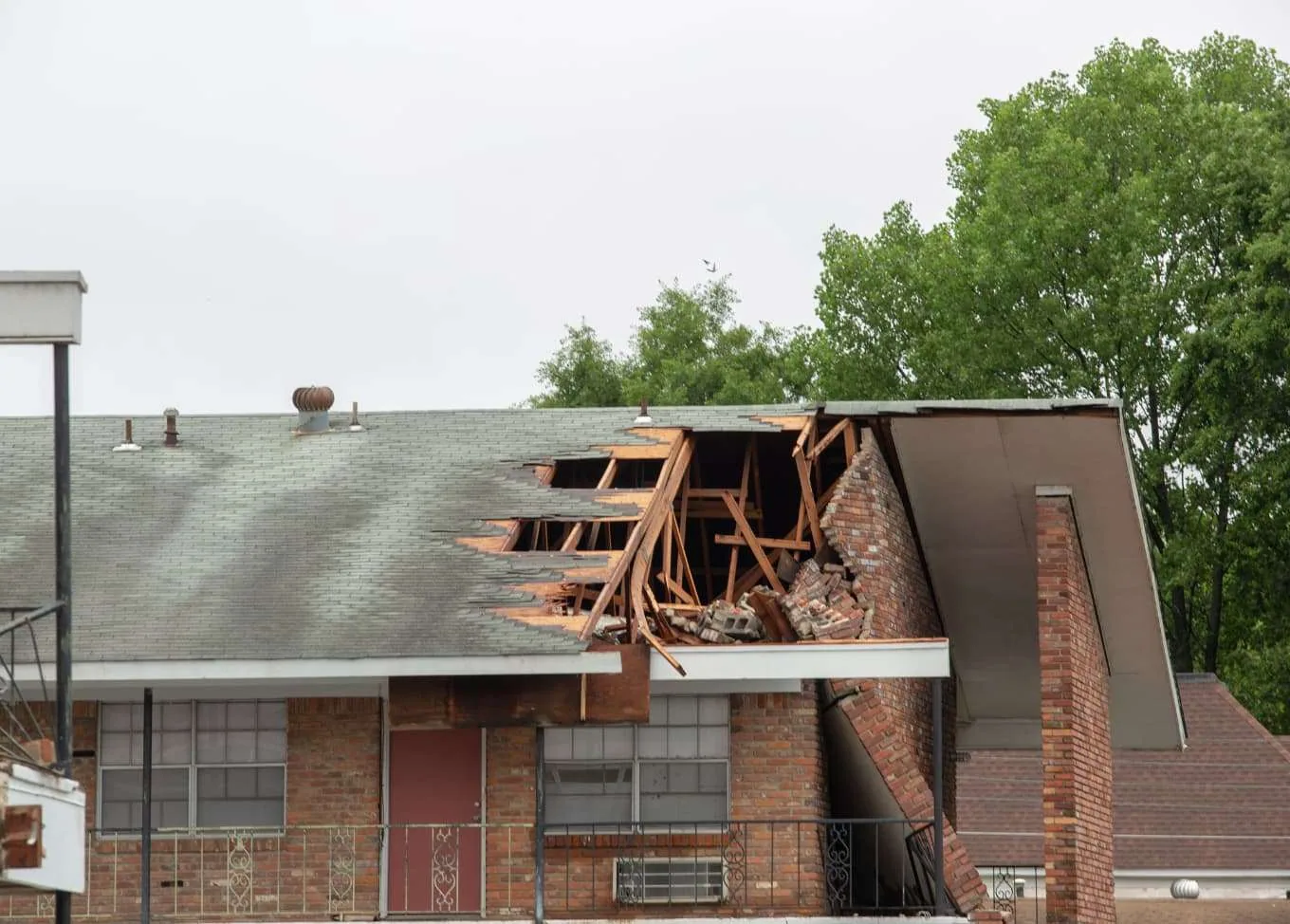
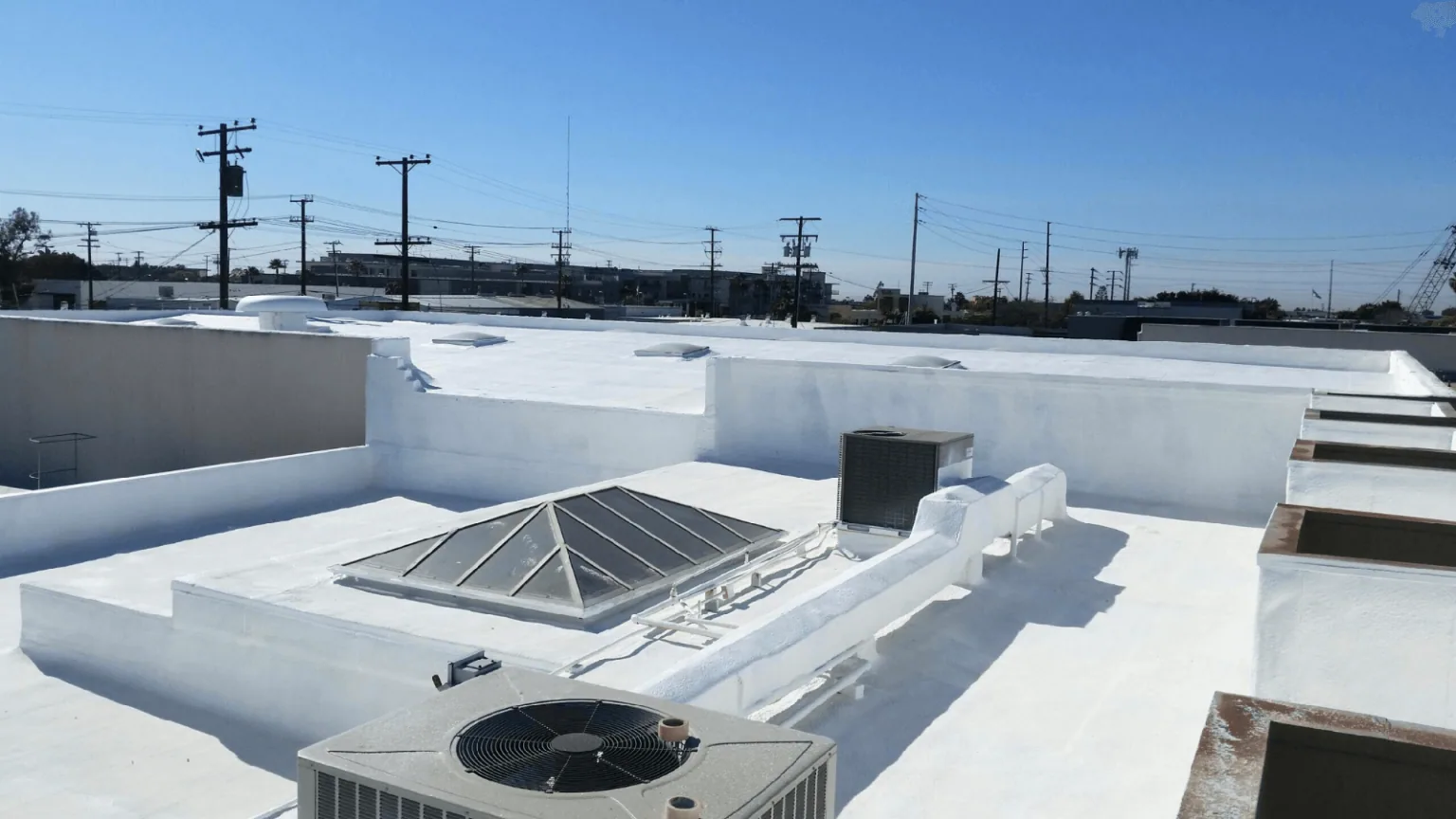
A small-town commercial building, a shop on the main road, an office or a service garage, usually has a simple roof with one big enemy: hail. On April 2, 1991, baseball-size stones did heavy damage in Burkburnett and Iowa Park, and a 1982 storm damaged the stretch from Electra to Burkburnett. Those storms are history. They do not say what happened to any roof today, and they do explain why owners here ask about hail first.

Here is step one: learn what hail leaves behind, then look for it. The signs are small and easy to miss from the ground.
What Hail Leaves Behind
Hail marks a roof in different ways depending on the surface. On a single-ply sheet, hail can leave round bruises, soft spots or small punctures. On a roof with a gravel or granule surface, it knocks off granules and exposes the layer under them. On metal, it leaves dents. On rooftop units, it bends the metal fins and dents the housing.
From the ground a hail bruise can pass for nothing at all, so we press, probe and mark each one. Then we count the marks inside a test square on each slope. The count tells us how widespread the damage is, and it gives you something to show an adjuster.
Rooftop units suffer too. Hail bends the thin fins on a condenser coil, and bent fins cut airflow. The unit runs harder and wears out sooner. A fin comb can straighten light damage. Heavier damage needs a coil replacement, and the repair is separate from the roof work.
The Test Square Method
One clean rule: count, do not guess. We mark a square of equal size on each slope of the roof, usually in the area facing the storm. We count every hit inside the square, note its size and photograph it. If the count is low and the marks are cosmetic, the roof may need little. If the count is high or the marks go through the surface, repairs or replacement follow.
Counts vary by slope. The windward side often shows more. A report with counts for each slope shows the pattern. A hail damage file with dated photos and counts is the best support for a claim.
Soft metal tells the same story in a different way. Vents, flashings, gutters and rooftop unit housings dent under hail, and the dents are easy to see in low sun. We photograph each dented piece and note its size. Dents on soft metal often match the pattern of hits on the roof, which confirms that a storm did the damage.
Cosmetic marks are worth recording even when they do not leak. A dent that does not affect water shedding is still part of the roof's history, and an adjuster or buyer may ask about it later.
Older Buildings and Oil-Boom Roots
Oil discovered west of town in 1912 drew roughly 20,000 people by 1918, and Sheppard AFB, established nearby in 1941, boosted the population after the Depression. A roof's age and system tell us more than the date on the building, so we read each one on site.
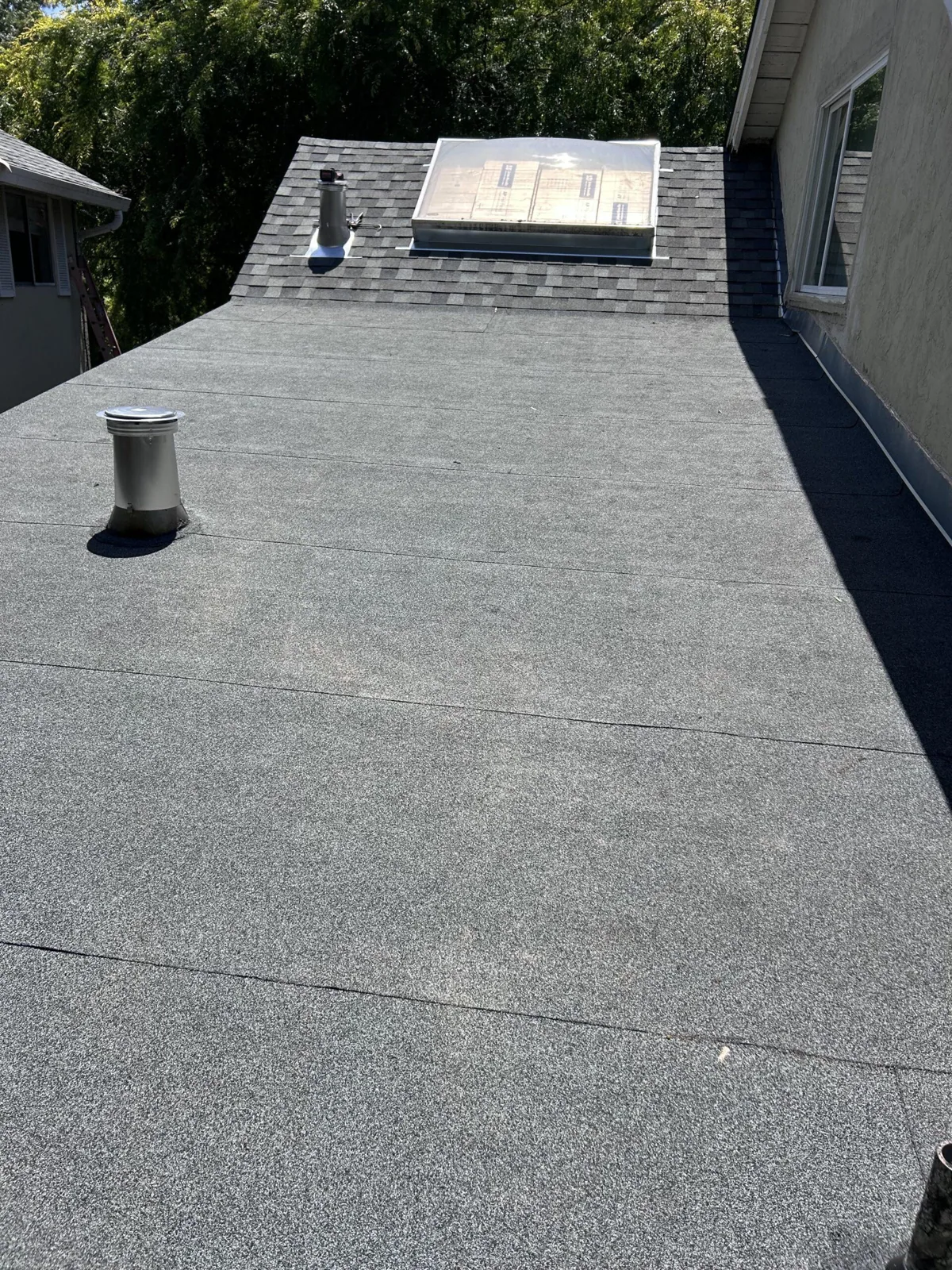
We find out what each roof is made of with a walk and a few core samples. A flat roof built decades ago may have several layers on it. A built-up roof and a newer single-ply sheet age in different ways, and each has its own repair method.
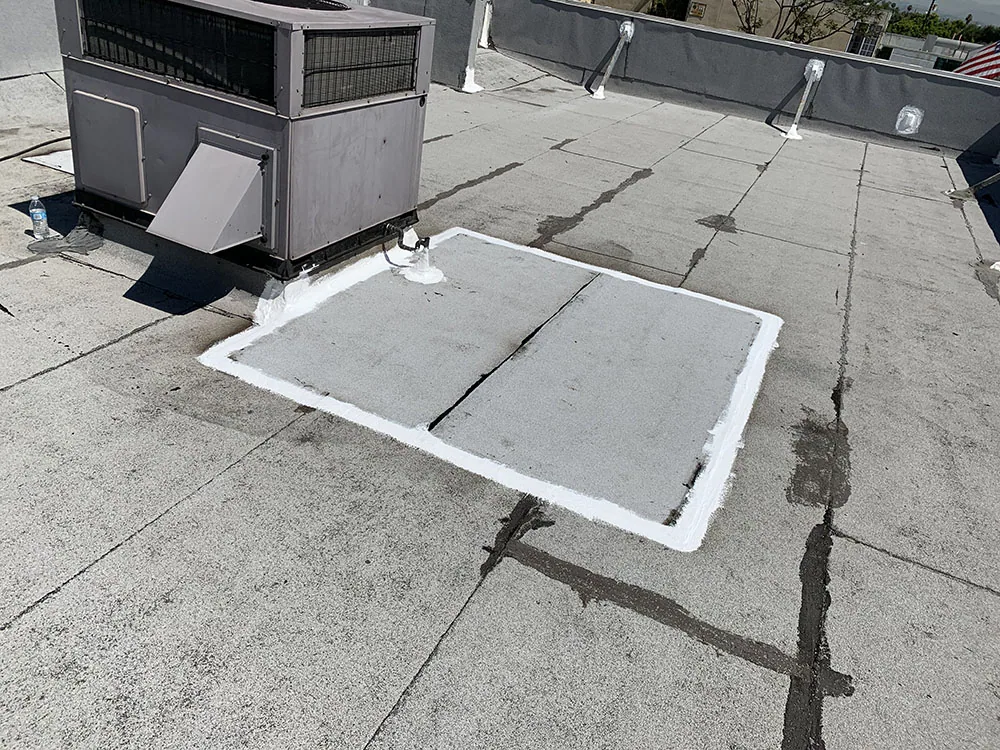
Many small commercial roofs have had several repairs over the years. We read those the way a doctor reads a chart. Three patches at one drain tell a different story from three scattered punctures. The first points to a drainage problem, and the second to foot traffic. The fix differs, so the cause comes first.
Heat Between the Storms
In Wichita Falls, the nearest big city, a typical year brings about 28 days at 100 degrees, a regional figure that frames the heat stress on roofs here. Summer heat ages a roof quietly. The surface chalks, the seams stretch and the sealants crack.
The signs are easy to find once you know them. Chalk on your hand after pressing the surface. Cracks at flashing. Seams that lift at the ends. A heat and UV damage check puts them on a list.
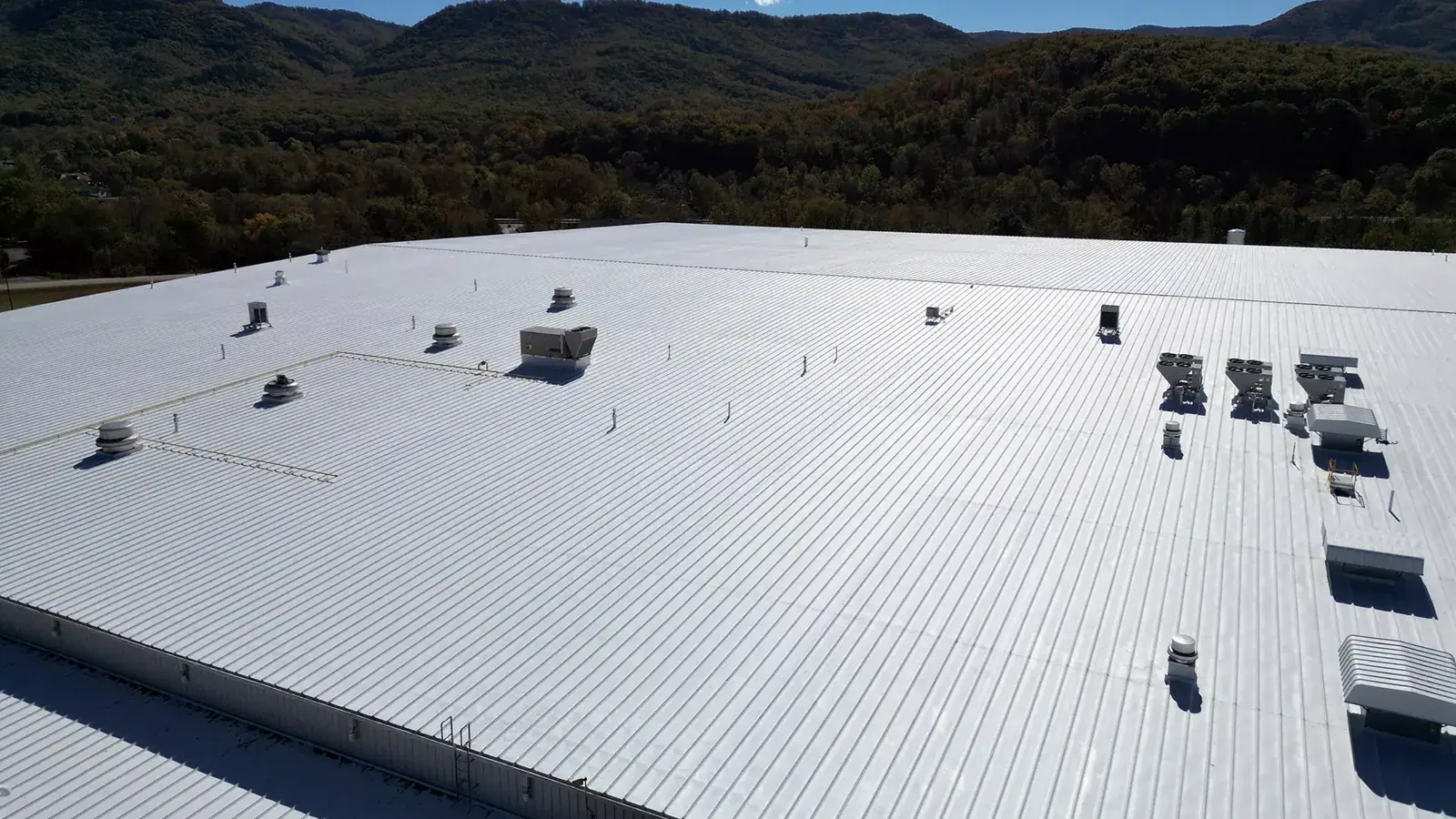
Metal roofs fade and loosen too. Panels expand in the afternoon sun and shrink at night, and over years the screws that hold them can back out. A loose screw leaves a small hole, and a small hole leaks. We check every fastener line and replace what has failed.
What We Check on the First Walk
Step one is the drains and the roof edges. Step two is the seams and flashings. Step three is every vent, pipe and unit. Step four is the surface, where we press, probe and mark. Each finding gets a photo and a spot on a roof sketch.
If we suspect wet insulation, we add an infrared moisture survey and a few core samples. They show how far the water reaches. That decides whether a repair is enough.
Gutters and downspouts get a look as well. Dents in a gutter can hold water and dirt, and a clogged downspout sends water down the wall. We clear what we can and note what needs to be replaced.
Access gets planned. A roof reached by a ladder on an outside wall needs a safe setup, and a roof with a hatch needs a clear path to it. We note the access type in the job file and bring the right gear.
On a small roof the walk, the photos and the report can fit inside a day. You get the sketch and the list the same week.
Repair, Coat, Recover or Replace
A few hail marks on a sound roof can be repaired. A sound roof with dry insulation and heat wear can take a restoration coating. A tired roof with dry insulation can take a recover. A roof with wet insulation or widespread hail damage usually needs replacement.
Cost follows roof size, deck condition, insulation, the number of units and the hours the building gives us. For a small building, the cost of a walk and a clear report is low, and it can save the cost of a wrong guess.
Owners with buildings in Iowa Park or Electra can keep the same hail file for each roof, which makes comparing them easy.
Timing matters after a storm. A claim has deadlines, repairs have a season and materials can be slow to arrive when demand spikes after a storm. We write the scope early, with photos and counts, so you can act as soon as the claim allows.
Commercial Roofing Questions
How do I know if hail hurt my roof?
Look for bruises, dents and missing granules. Press the surface and check rooftop units. A test square count gives a firm answer.
How soon after a storm should I check?
Within days. Fresh marks are easier to date, and open seams can be closed before the next rain.
Can hail damage hide inside the roof?
Yes. Hail can crack insulation under a sound-looking surface. Moisture readings find it.
Does an old hail event change my roof's value?
History does not prove damage today. A current walk and dated photos are what matter.
What do I send to start?
Send the roof age, the building use and any leaks. Add storm dates if you have them. That lets the first walk answer a real question.