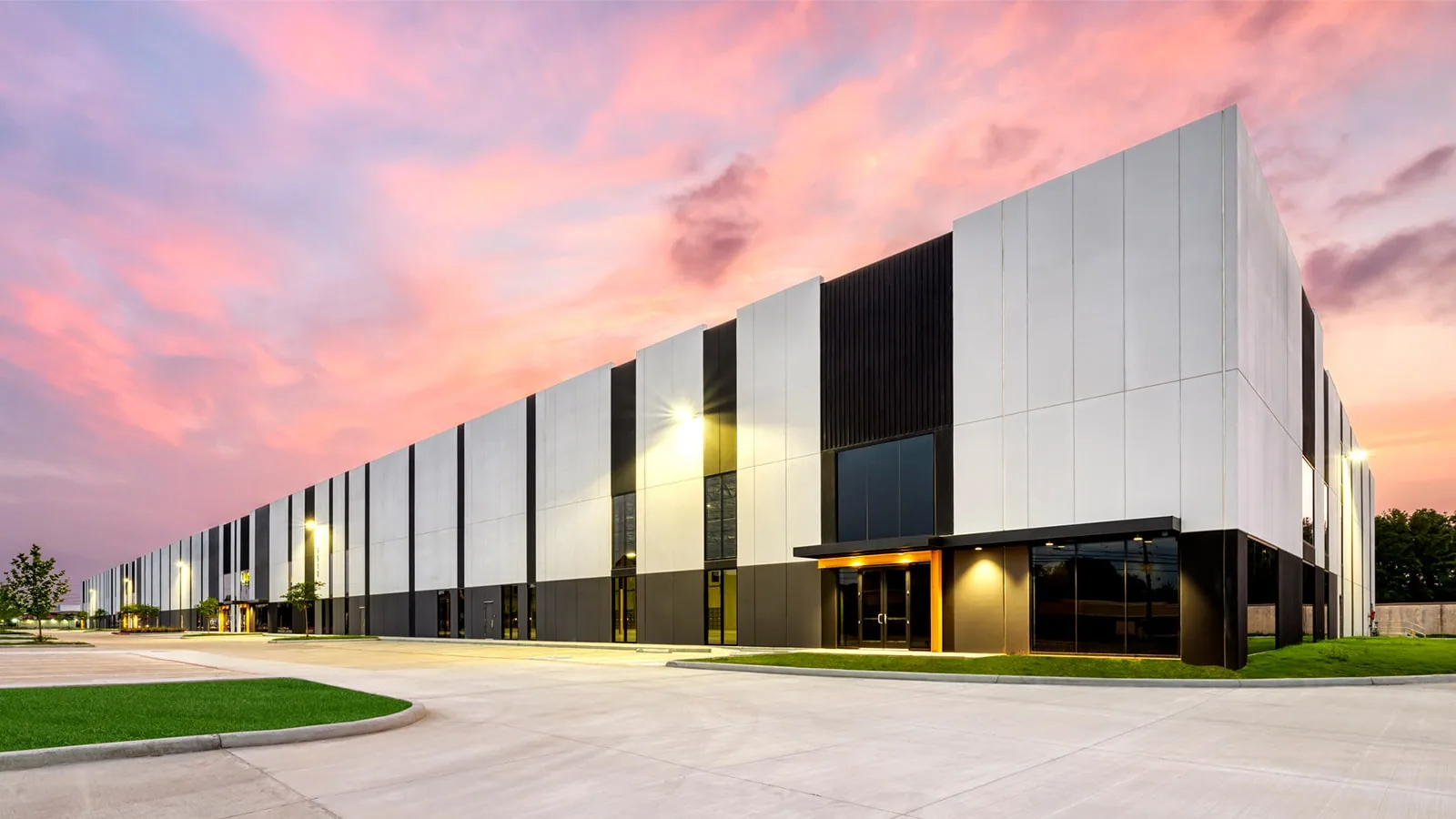
Think of a distribution building as a lid over inventory. The lid is large, flat and mostly empty of detail, and that simple shape tells you how it will age. Few penetrations means few places for a leak to start. Long runs of seam and a wide perimeter mean the failures that do happen are spread over a lot of ground, and a small one can go unseen for a season. Step one is to know which of those two stories your roof is telling.
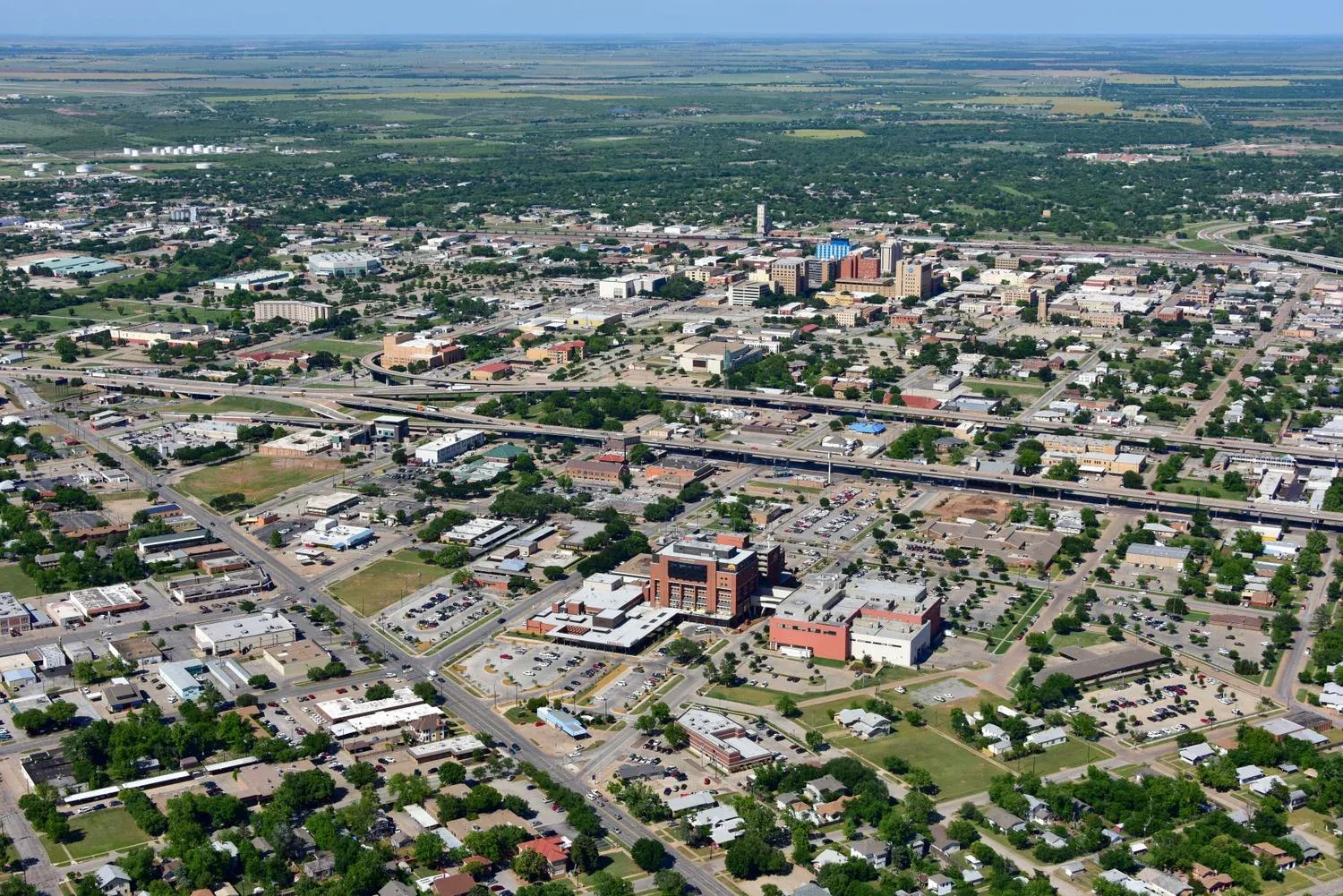
Wichita Falls, TX sits where Interstate 44 ends, with U.S. 287, 277, 281 and 82 serving or passing through and Class I rail serving the area. That makes it a natural place for storage and shipping. We inspect and repair the low-slope roofs on those buildings, report the condition in writing, and schedule the work so docks keep moving and product stays dry.
Protect the inventory first
A leak in a warehouse is rarely a roofing problem alone. It is a damaged pallet, a rejected shipment, a customer claim and a lost storage contract. So before we talk about membrane, we ask what sits below each bay. Packaged paper, electronics, food-grade goods and plain hardware have very different tolerance for water, and the roof priorities should follow that order.
We mark the bays on a simple roof plan and rank them by what is stored beneath. The sensitive bays get walked first and repaired earliest. During any open-roof work, we stage tarps, daily dry-in and a plan for rain, so that a sudden storm does not turn a repair into a loss. Where racking is tall and sprinklers are close to the deck, we plan the work to avoid disturbing either.
Tenants change in a third-party operation, and so does the cargo. A bay that held dry goods last year may hold something more fragile next year, so the roof plan is reviewed whenever the lease or the product mix changes. We keep the roof plan current, and we note which areas have had repairs, which have open warranties and which are due for a second look. A short record saves the next manager from starting over.
Where a big flat roof fails first
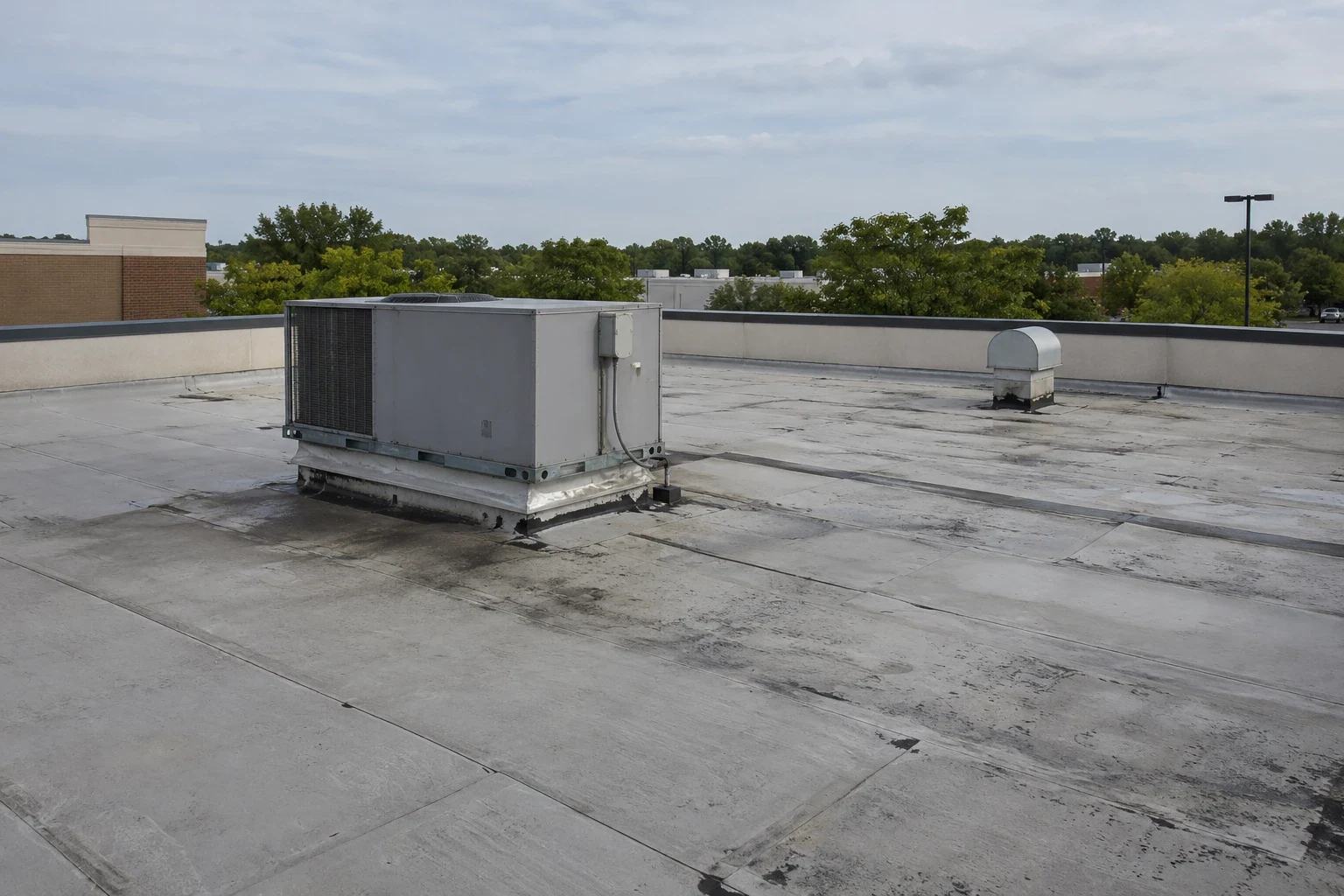
Look at the seams and the edges. A long flat membrane moves with temperature, and a normal Wichita Falls year includes about 28 days at 100 degrees or more. Each cycle puts strain on seams, on fastener rows and on the flashing at walls and docks. The signs are small: a lifted seam edge, a fastener that has backed out and pushed a bump into the membrane, a wrinkle that shows where the attachment has loosened.
Then look at drainage. A wide roof with few drains depends on every one of them. When a drain clogs, water collects and leaves a ponding line, a stain on the membrane that marks where water sat. Ponding adds weight and speeds wear. We clear drains, check drains and scuppers and record where the low spots are, so you can decide whether the fix is a drain, a slope correction or a new section.
Hail, wind and the record
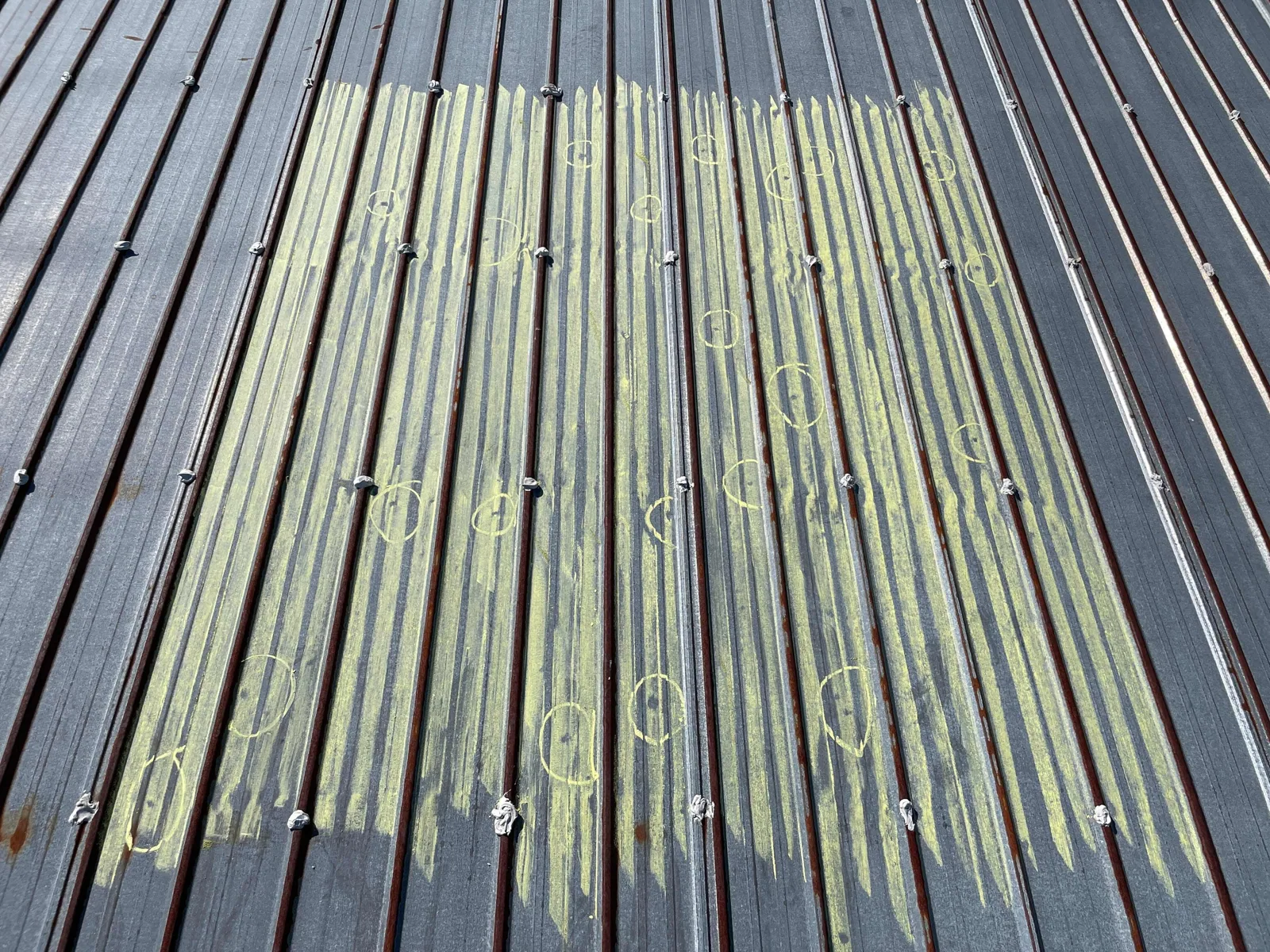
Hail has a local record. A hail strike on April 2, 1991 damaged buildings in Burkburnett and Iowa Park, and on March 29, 1993 stones bigger than baseballs fell at Sheppard AFB. Those events do not prove a given warehouse roof has damage, but they justify a check after a hard storm. A bruise from hail shows up as a soft spot in the membrane or the board beneath it, so we press, probe and mark each one.
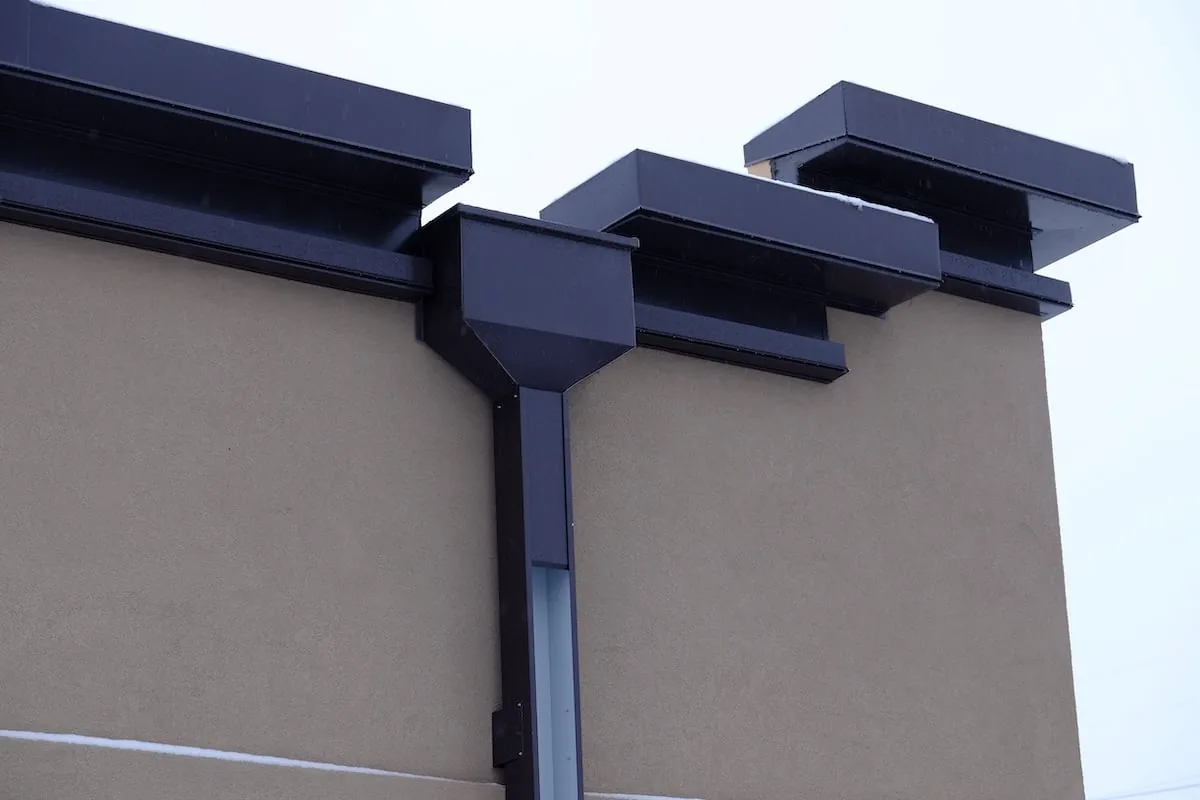
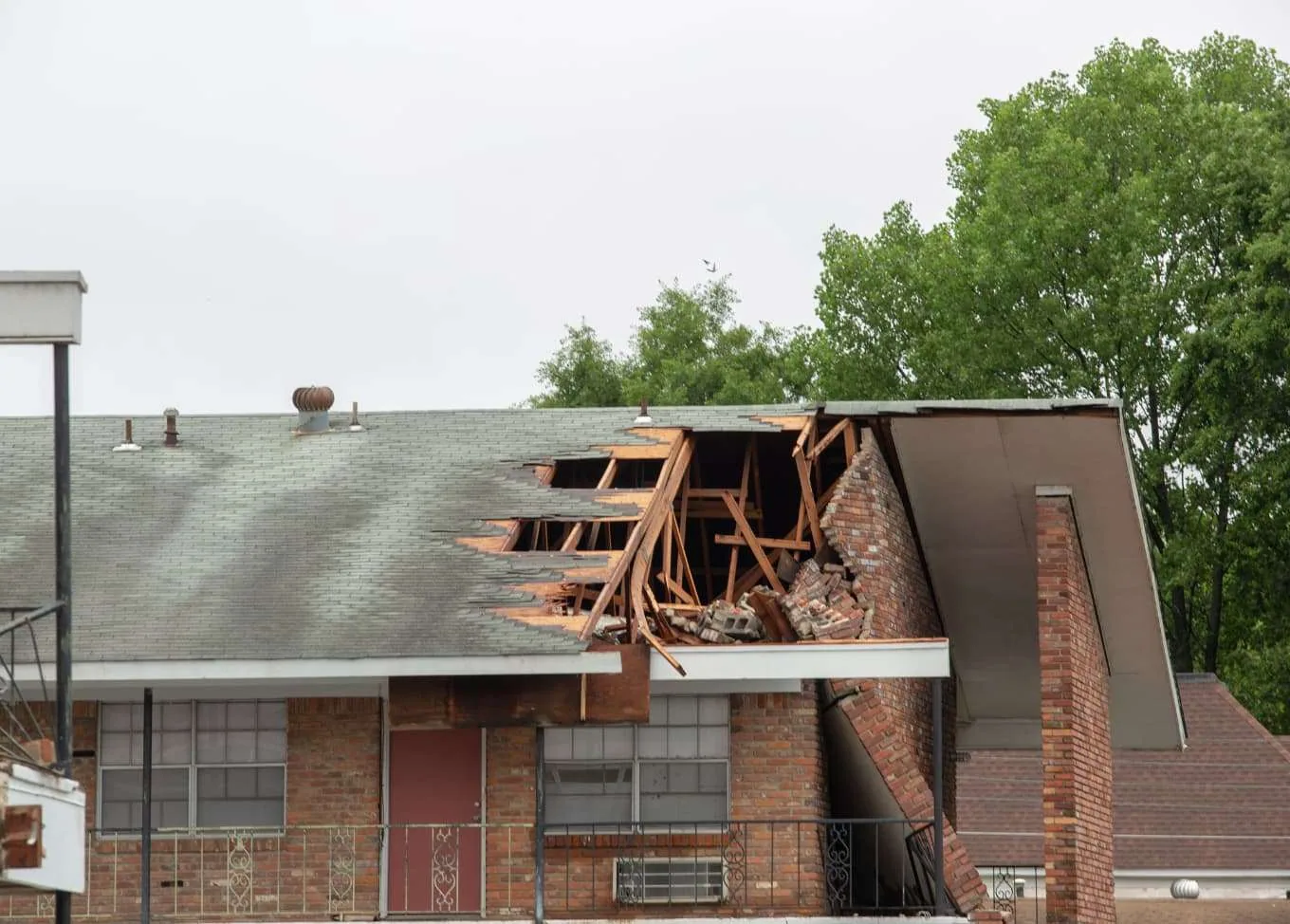
Wind works from the edges. On a large roof, the perimeter and corners take the highest uplift, and a loose edge can open the field of the roof if it is ignored. The April 1979 tornado, which destroyed businesses along Kemp Boulevard, is a reminder of what wind can do to industrial and commercial roofs. We inspect edge metal, flashing and attachment and, if needed, recommend a storm damage repair that restores the edge first.
After a storm, speed matters less than order. We walk the dock canopies and edges first, since they are most exposed, then the field, then the penetrations. Photos and measurements go into a written report so an adjuster, a landlord or a customer can follow what was found. Where a claim is involved, claim documentation keeps old wear and new damage clearly separated.
Repair, recover or replace
One clean rule: look under the membrane before choosing. Dry insulation over a sound deck means a repair or a coating may still stretch the life of an aging roof. If the membrane is worn but dry, a recover adds a new surface without tearing off the old one. If water has spread through the insulation, replacement is the sound answer, and the new system can be selected for reflectivity, wind and long-term upkeep.
Common choices for warehouse roofs include TPO, PVC and reflective coatings over a sound roof. Cold storage adds another question, since a roof over a refrigerated space has a different moisture drive from the roof over dry racking. We ask how each bay is conditioned before recommending a system. A cross-dock or a regional distribution center has its own traffic pattern on the roof, and the system should be chosen for it.
Keep the docks moving
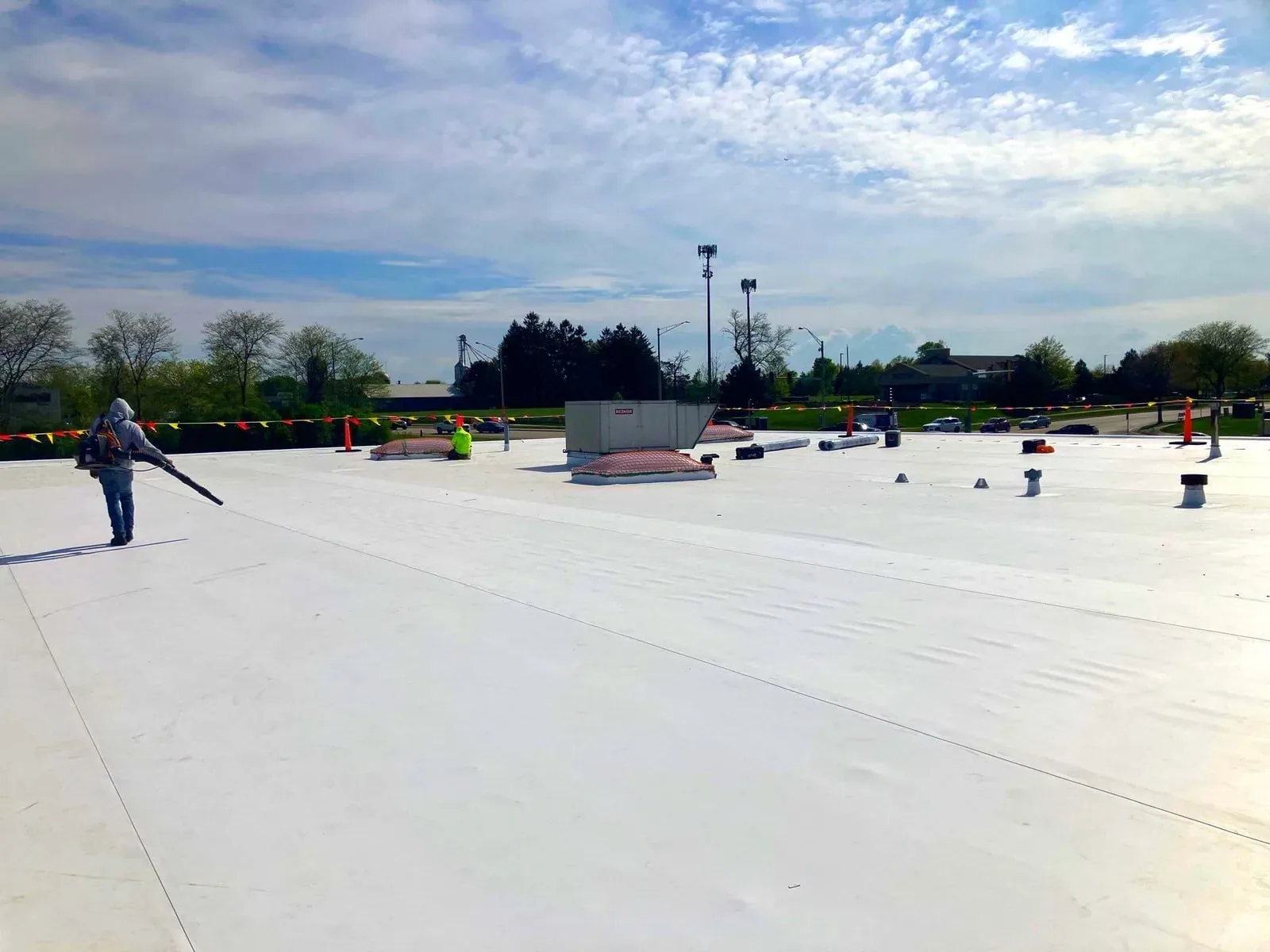
A distribution building cannot close for a week. We plan roof work in sections that avoid the busiest dock doors and keep truck routes clear. Material is staged on the side of the building away from the yard, and crews use designated access so forklifts and trailers never cross the work area. Safety zones are marked and moved as the work advances.
The Wichita Falls Business Park spreads over 525 acres and targets distributors, high-tech firms and manufacturers, while its rural setting leaves open ground for companies to grow. Expansion means new tie-ins between old and new roof, so we keep a drawing of every edge and penetration. Neighboring manufacturers face the same dock and storage questions, and retail and restaurant chains that run regional supply buildings do too.
Commercial Roofing Questions
How do you protect stored product during roof work?
We stage the work in small sections, dry in every evening and watch the forecast. Bays holding water-sensitive goods are sequenced for dry days. Tarps and temporary closures are ready before any opening is made.
Can our docks stay open during a roof replacement?
Yes, in most layouts. We work around busy doors, keep truck lanes clear and stage material on a quiet side. We map the dock schedule with you before the first day.
What is a ponding line and why does it matter?
It is a stain or film left on the membrane where water sat after rain. It marks a low spot or a slow drain. Standing water adds weight and wears the surface, so we find the cause.
Do tall racking and sprinklers change the roofing plan?
They change how we work, not what the roof needs. We avoid loads near sprinkler lines, protect the deck underside and agree on hot-work rules before any torch or heat tool comes out.
What should we send before a first inspection?
Send the roof age, a floor plan showing what is stored where, and any leak reports. Photos of stains help. With that, the first walk answers a particular question about your building.
Does a large roof need more drains than a small one?
Drainage depends on slope, area and the plumbing layout, not size alone. A wide roof with few drains has less room for error, so we check each drain, each scupper and the low spots between them.