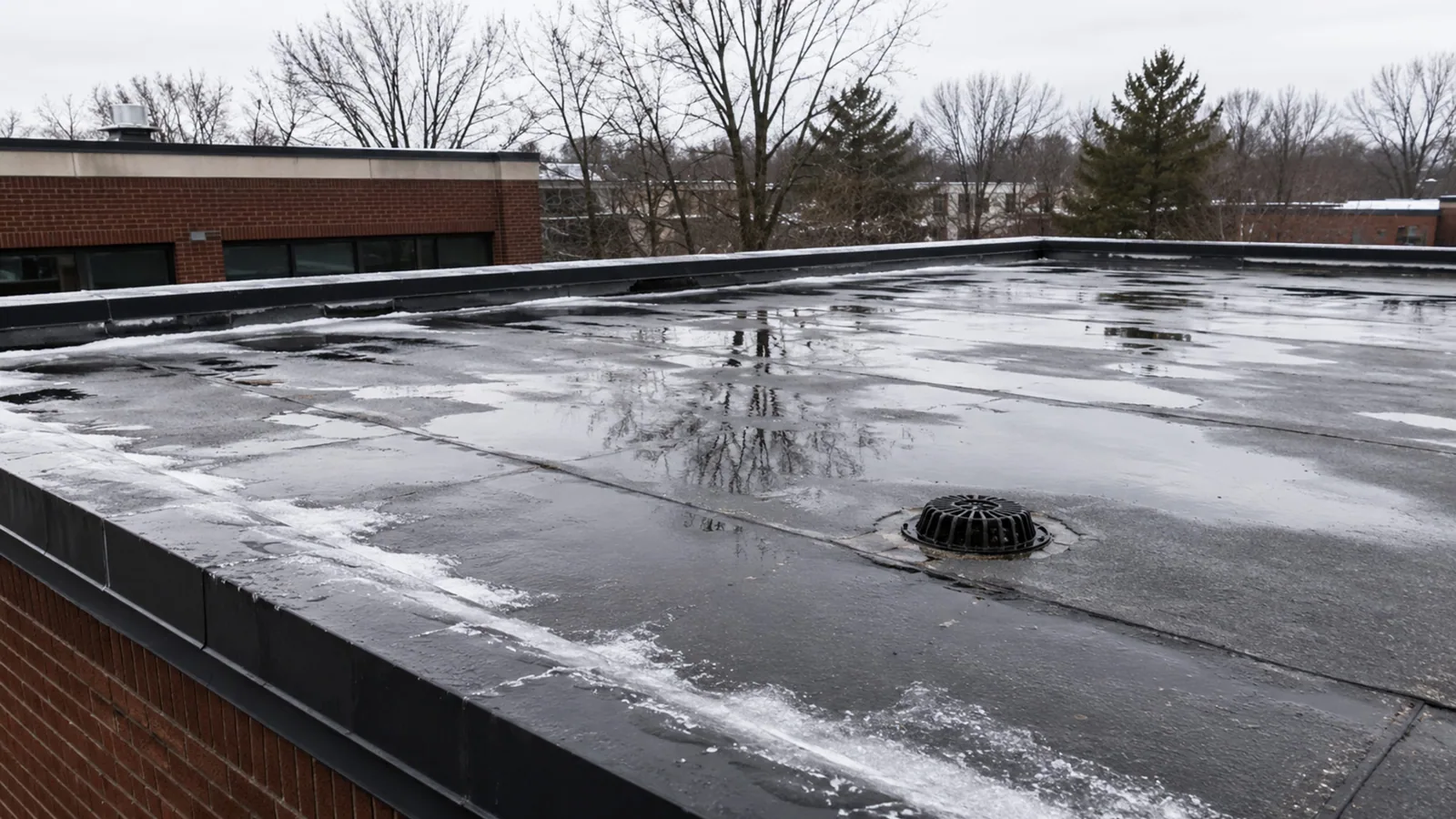
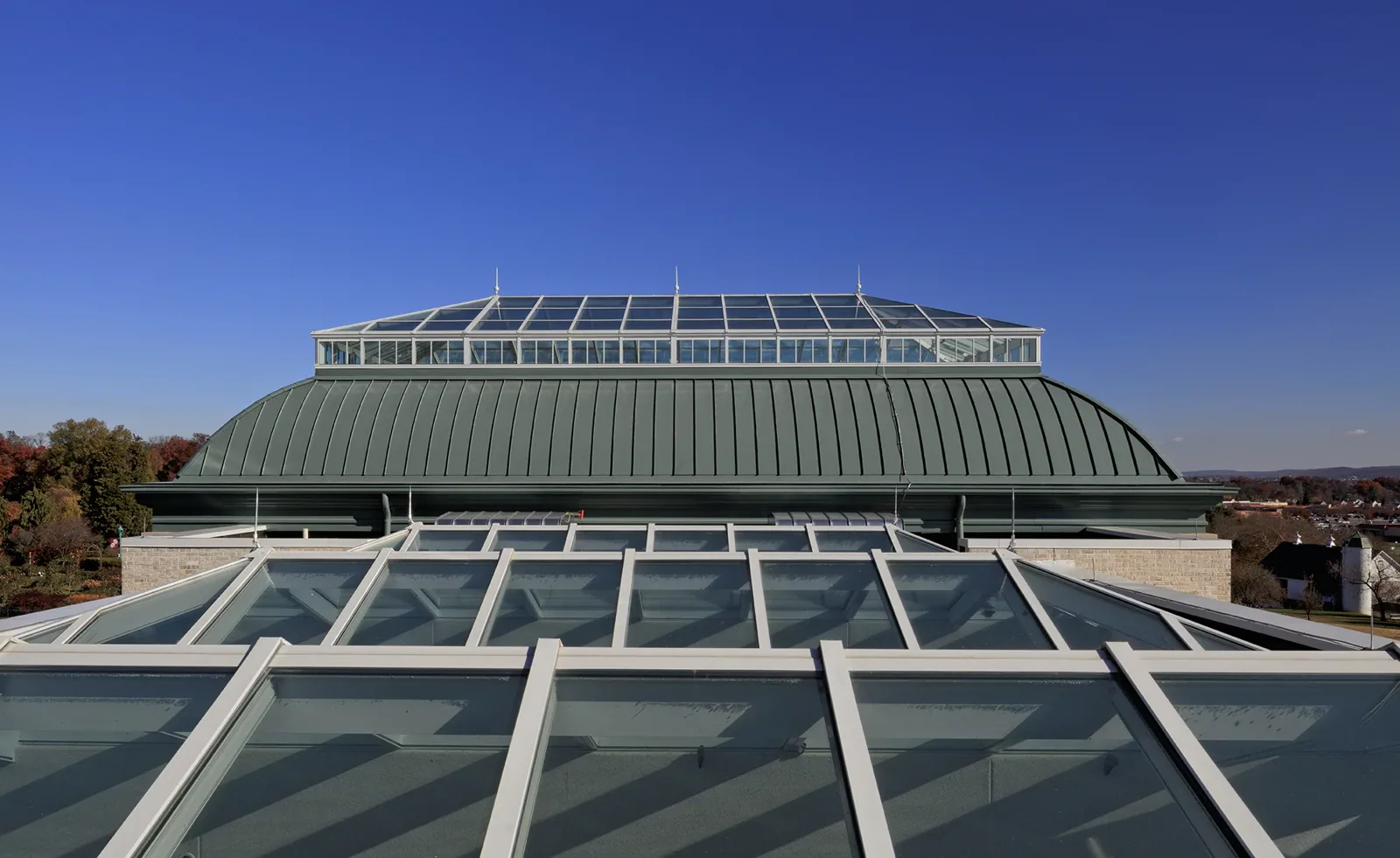
A flat roof is not flat. It is a very gentle slope that carries water to a handful of exits, and everything about the roof's life depends on those exits working. When a drain clogs or a scupper sits too high, the roof holds water, and each inch of standing water weighs about five pounds on every square foot. A shallow pond on a big roof can weigh tons. It also keeps a membrane wet, which speeds aging, and it finds every weak seam.
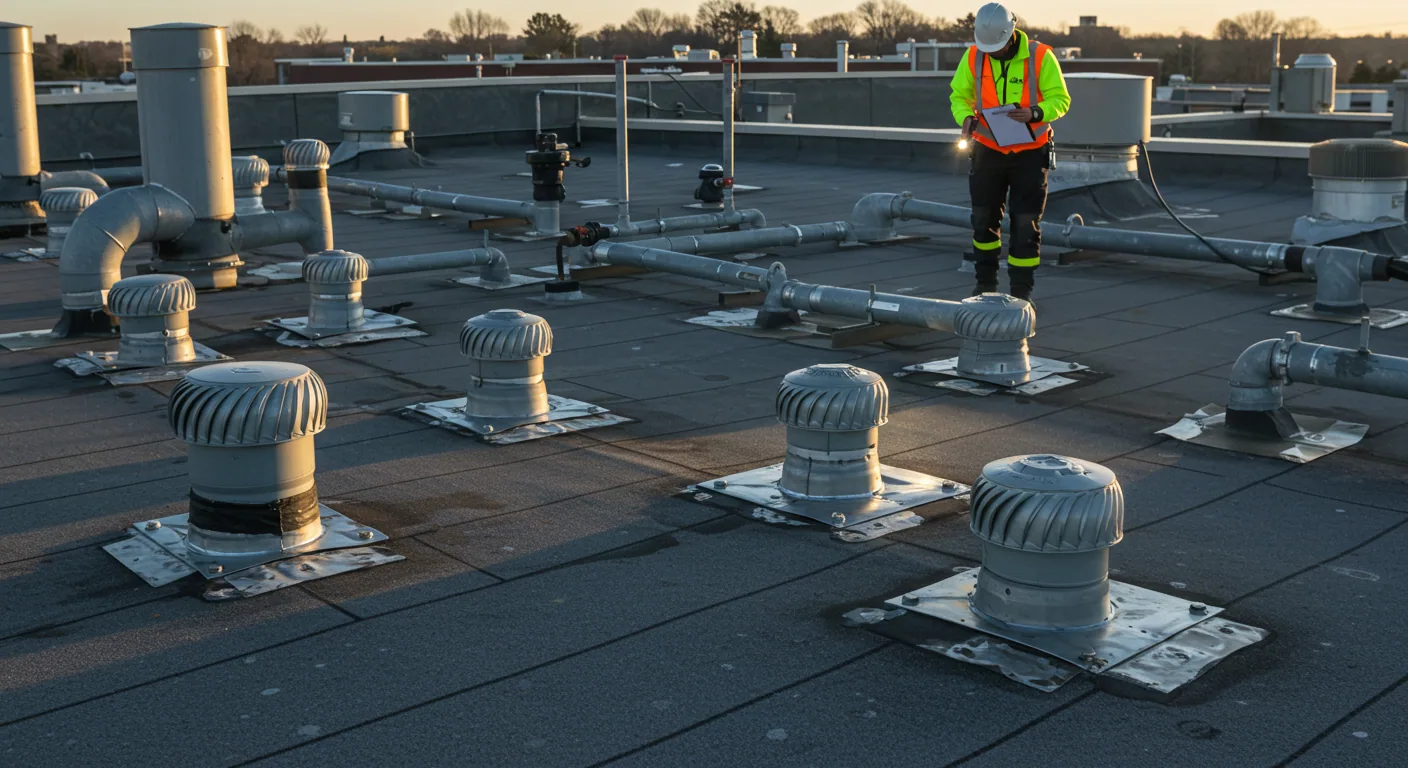
So step one on almost any commercial roof is to follow the water. Where does it go, what stops it and what would make it leave faster?
How Water Leaves a Roof
There are three common exits. Interior drains sit in low points of the roof and carry water down pipes through the building. Scuppers are openings through a parapet wall that let water spill to the outside or into a downspout. Gutters collect water along an edge and send it to downspouts, and edge metal and gutters must be fastened so they hold that load. Many roofs use more than one.
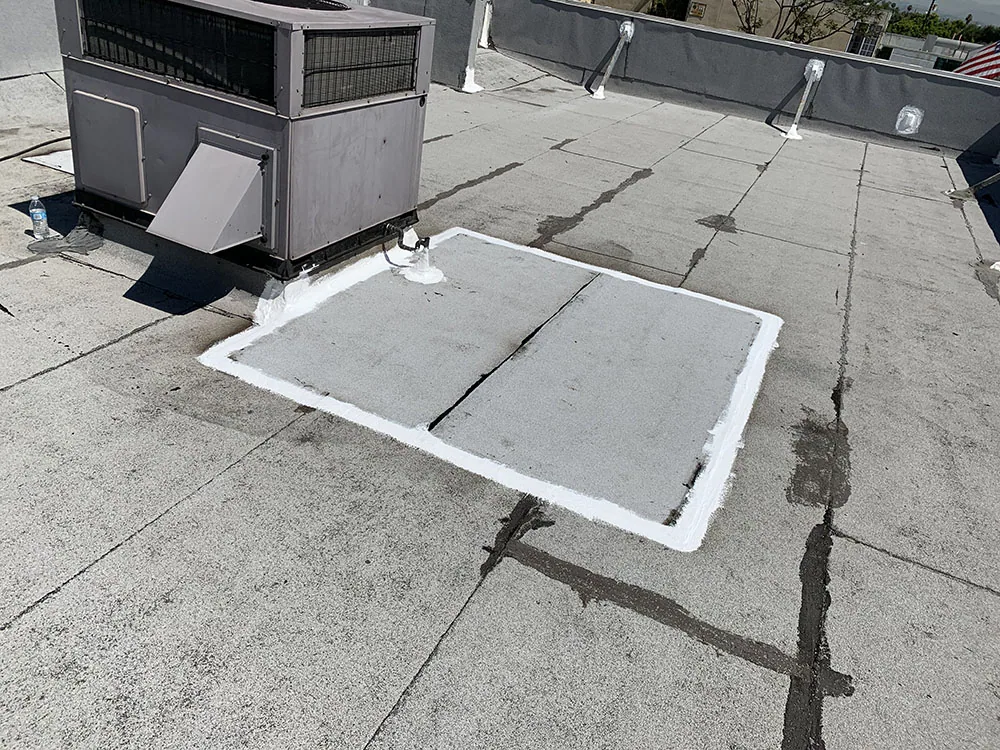
Between the exits, the roof itself directs the water. Slope built into the deck or into tapered insulation moves water toward drains. Crickets, small peaked saddles built behind a curb or at a valley, split flow around obstacles. Overflow scuppers sit higher in the wall as a backup. If the main drains clog, water rises to the overflow instead of climbing past the flashing.
What Blocks the Exit
Debris is the usual cause. Leaves, grit, windblown trash and the granules shed by aging roofs pack into drain baskets and scupper throats. After a hail event, broken material adds to it. A drain cover that is missing or crushed lets bigger debris into the pipe, and a pipe plugged below the roof will not show from above until the roof fills.
The other causes are built in. A drain set higher than the surrounding membrane leaves a permanent ring of water. A scupper cut with its bottom above the roof surface holds a pond at all times. Insulation that has compressed around a drain makes a dish. And a roof that was never sloped properly will pond anywhere between exits, however clean the drains are.
Hail makes this worse. Granules knocked off a modified bitumen roof, torn gravel and shredded debris all wash toward the exits, so a drain check belongs on the first visit after any hail event, including events like the baseball-size hail recorded in Iowa Park and Burkburnett on April 2, 1991.
Reading the Ponding Line
A ponding line is the dirty ring left where water stood and dried. It marks how far the pond reached and how long it stayed. We look for rings, algae, silt and a lighter-colored membrane in the pond area. Then we measure depth and area after a rain, or with a hose test if the weather has been dry.
Standing water that remains 48 hours after rain is a common rule of thumb for a roof with a drainage problem, and many manufacturers set warranty limits tied to ponding. Wichita Falls averages about 27.9 inches of precipitation a year, and the wettest month on record, May 2015, reached 17.00 inches. A roof that drains badly in an average year is in real trouble in a month like that one. When water has already worn a membrane, ponding water repair treats the damaged membrane along with the low spot that caused it.
Fixes From Small to Large
The first fix is cleaning. Drains are cleared, baskets reset and pipes flushed, and the roof is hosed to confirm flow. Next come replacement parts: a new drain bowl, a clamping ring, a strainer or a scupper insert with the right flashing. These are small jobs that make a large difference.
If the problem is slope, the fix is tapered insulation or crickets that guide water to the exit. Tapered boards add slope to a roof without changing the deck. A larger fix adds a drain, lowers a scupper or cuts a new one. Each change is marked on the roof drawing, and the insulation and cover board layout is revised to match.
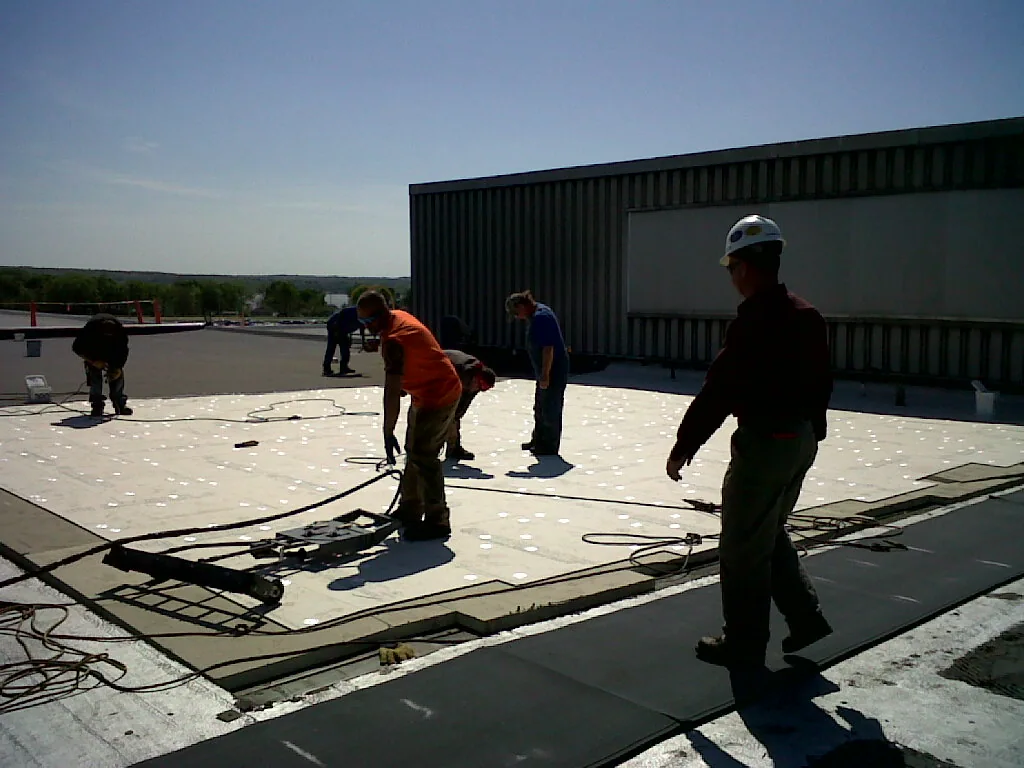
Tapered insulation is laid out in a pattern, and every board is numbered so the crew can install it in order. The slope is small, often a quarter inch per foot, but it is enough to move water to the outlet within a day.
Which Buildings Need This Most
Large, flat roofs live and die by drainage. A roof at the Wichita Falls Business Park, marketed to distributors and manufacturers on a 525-acre site, points to the large, low-slope kind where one clogged drain can hold water over a wide area. Retail roofs along Midwestern Parkway, where Sikes Senter sits, call for a look at every curb and unit, since each is an obstacle the water must go around.
Older roofs often have had drains added, moved or abandoned over the years. We map what is there, what works and what does not. An abandoned drain that was capped badly is a leak waiting. A new unit added without a cricket behind it creates a dam. The map shows both.
Keeping the Exits Open
Cleaning is a schedule, not an event. Roofs near trees or with heavy foot traffic need drains cleared more often. We fold drain checks into every maintenance visit, and we photograph each drain so a change is easy to see.
When a roof is replaced, drainage is part of the design. Slope, drain count and overflow capacity are checked against the roof area, and the plan shows where each drop of water will go. If the current roof ponds, replacing the membrane without fixing the slope repeats the problem on a new surface. We fix the cause first.
Parapets are another place water hides. A parapet that boxes in a roof makes every scupper a critical exit, and a scupper that is too small or too high turns the whole roof into a tub. Wall flashing is checked at the same time, since a roof that holds water stresses the base flashing first.
Commercial Roofing Questions
How can I tell if my drains are clogged from the ground?
Often you cannot. Look for water staining on exterior walls below scuppers, ponded water visible from a taller neighbor or interior stains near drain lines. The sure test is a walk on the roof after rain.
Is ponding water always a problem?
Water that clears within a day or so after rain is usually acceptable. Water that stays longer shortens membrane life and may break a warranty. We measure how deep it gets and how long it stays before suggesting a fix.
What is a cricket?
A small sloped saddle built behind a curb, a wall or a unit so water splits and runs around the obstacle instead of pooling against it. Tapered insulation forms most crickets.
Can you add a drain to an existing roof?
Yes, when the structure and the plumbing allow it. A new drain requires a connection to a pipe or a scupper through the wall, and the roof slope must be adjusted around it. We check both before quoting.
Does a scupper need a screen or a cover?
Often a guard helps keep large debris out, but it must be sized so it does not become the clog. We choose guards and inserts that match the opening and clean easily on each visit.