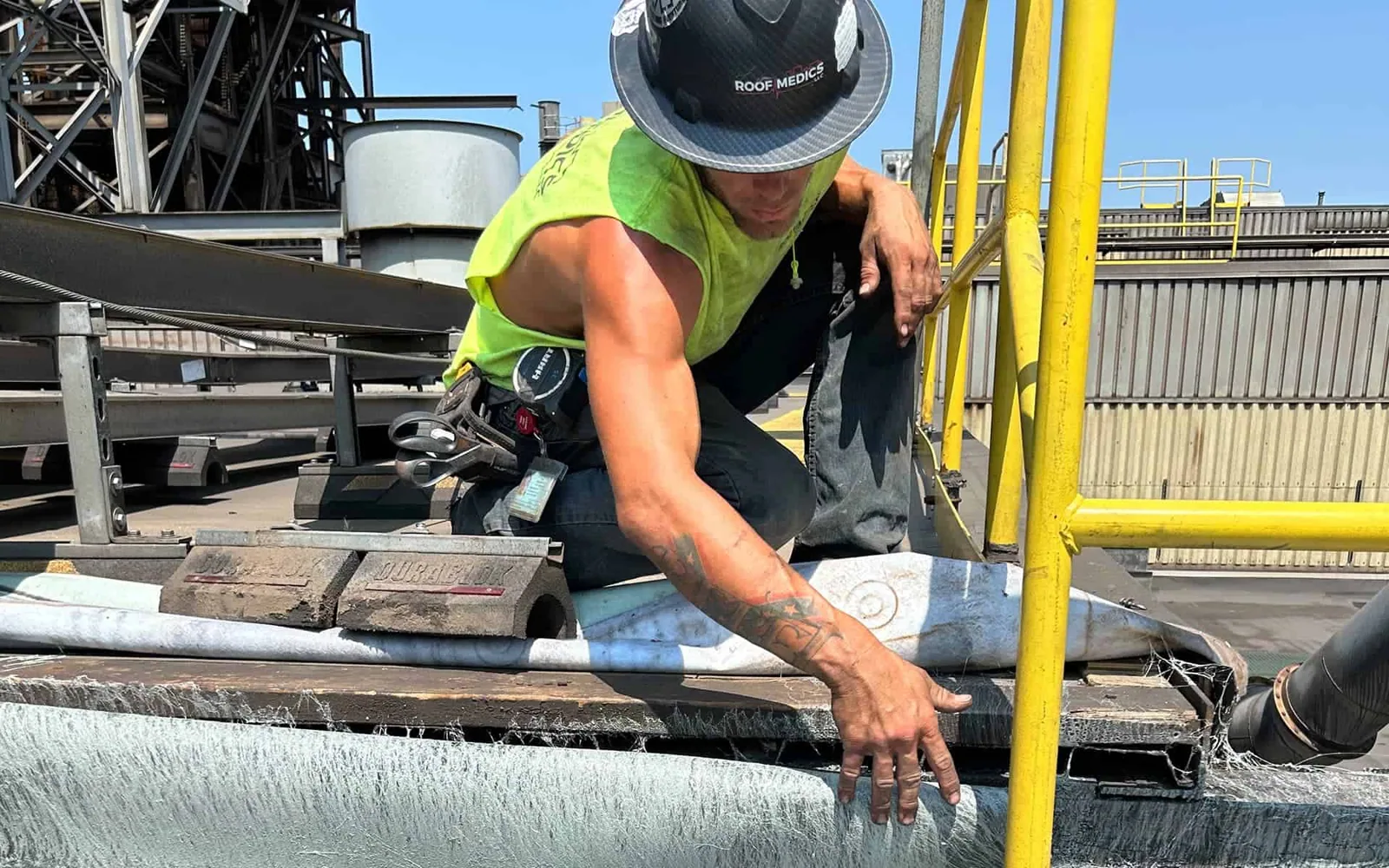
Start with the building, because the building sets the plan. A distribution shed near the Wichita Falls Business Park, a retail center along Kemp Boulevard and a small commercial building in Burkburnett can all be low-slope roofs at the end of their life, and each one needs a different tear-off, a different schedule and a different set of protections for what sits underneath. Commercial Roofing Wichita Falls handles full commercial roof replacement in Wichita Falls, TX and the towns around it, and we begin every job with the same question: what is this roof made of, and what is wet?
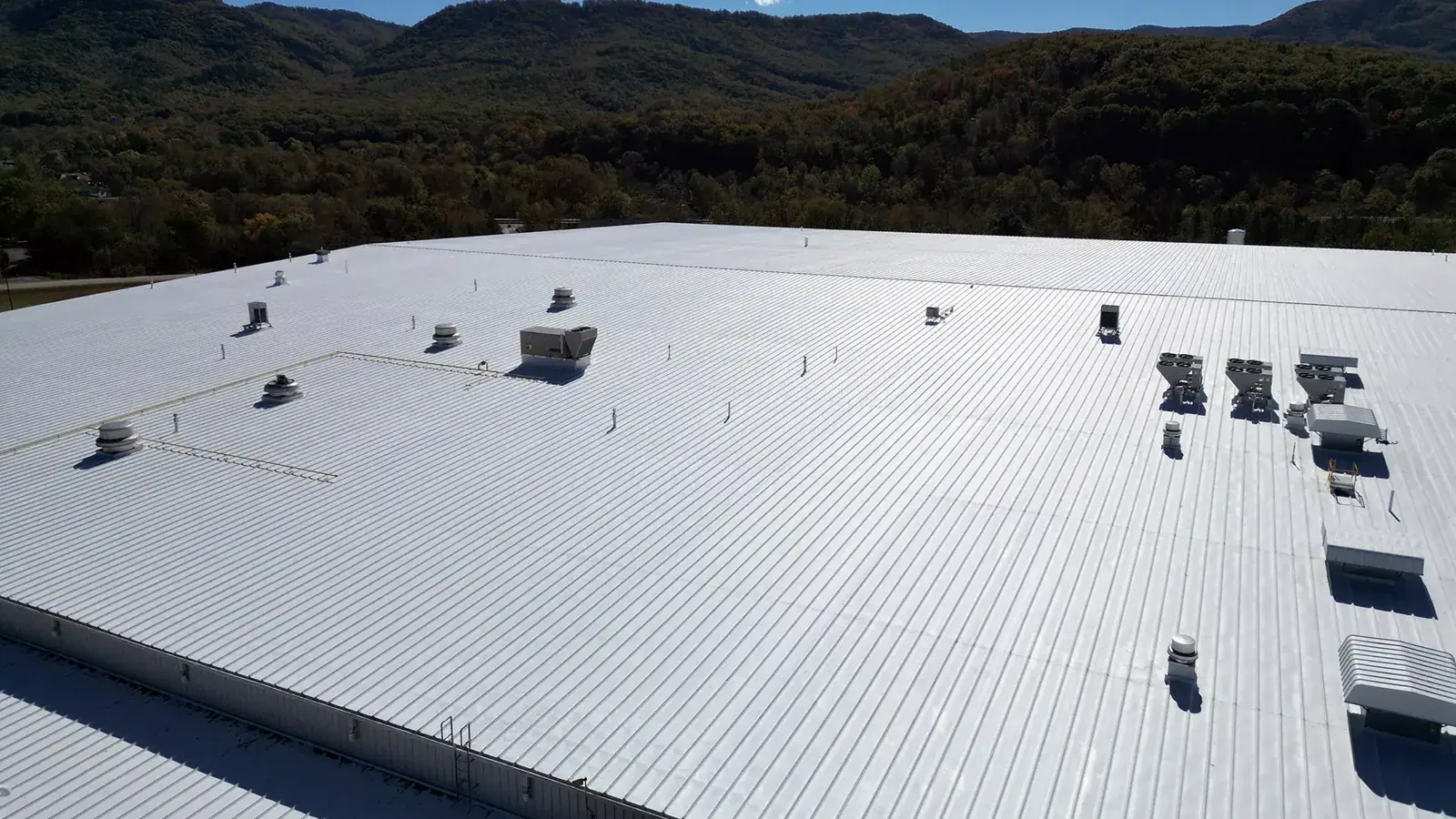
Here is one clean rule. A replacement is a stack of layers, and every layer has a job. The deck carries load. Insulation holds heat out in August and in during January. The membrane sheds water. The edge metal keeps wind from getting under the membrane. When one layer fails, the others usually carry the damage with them, so a good replacement plan names each layer before anyone picks up a tool.
Replacement Starts With Evidence
Step one is a walk of the roof, not a proposal. We look for the signs that say the membrane has stopped working as a system: seams that have opened, flashing that has pulled away from curbs, patches stacked on patches, and low spots where water stays long after a rain. Then we find out what is under the surface. Insulation that feels soft underfoot, or that returns a wet reading on a moisture scan, is a separate problem from a worn membrane, and it changes the scope.
Why does this matter to you? Because replacement money is spent twice when the wet insulation is left behind. A new membrane over saturated board traps the moisture, the deck keeps rusting, and the leak you thought you fixed comes back at a different spot. A moisture survey before the contract is signed is cheaper than discovering the same facts with the old roof half removed.
Heat Is the Slow Enemy
Wichita Falls reaches 100 degrees on about 28 days in a typical year, and in 2011 it recorded 100 such days in one year. A membrane on a dark roof absorbs that heat all afternoon and gives it back all night. Over many summers the sheet expands and relaxes at every seam, penetration and corner. Plasticizers leave some materials, and the surface goes brittle. That is a different failure from a storm puncture, and it shows up as hairline cracks at flashing and as seams that no longer lie flat.
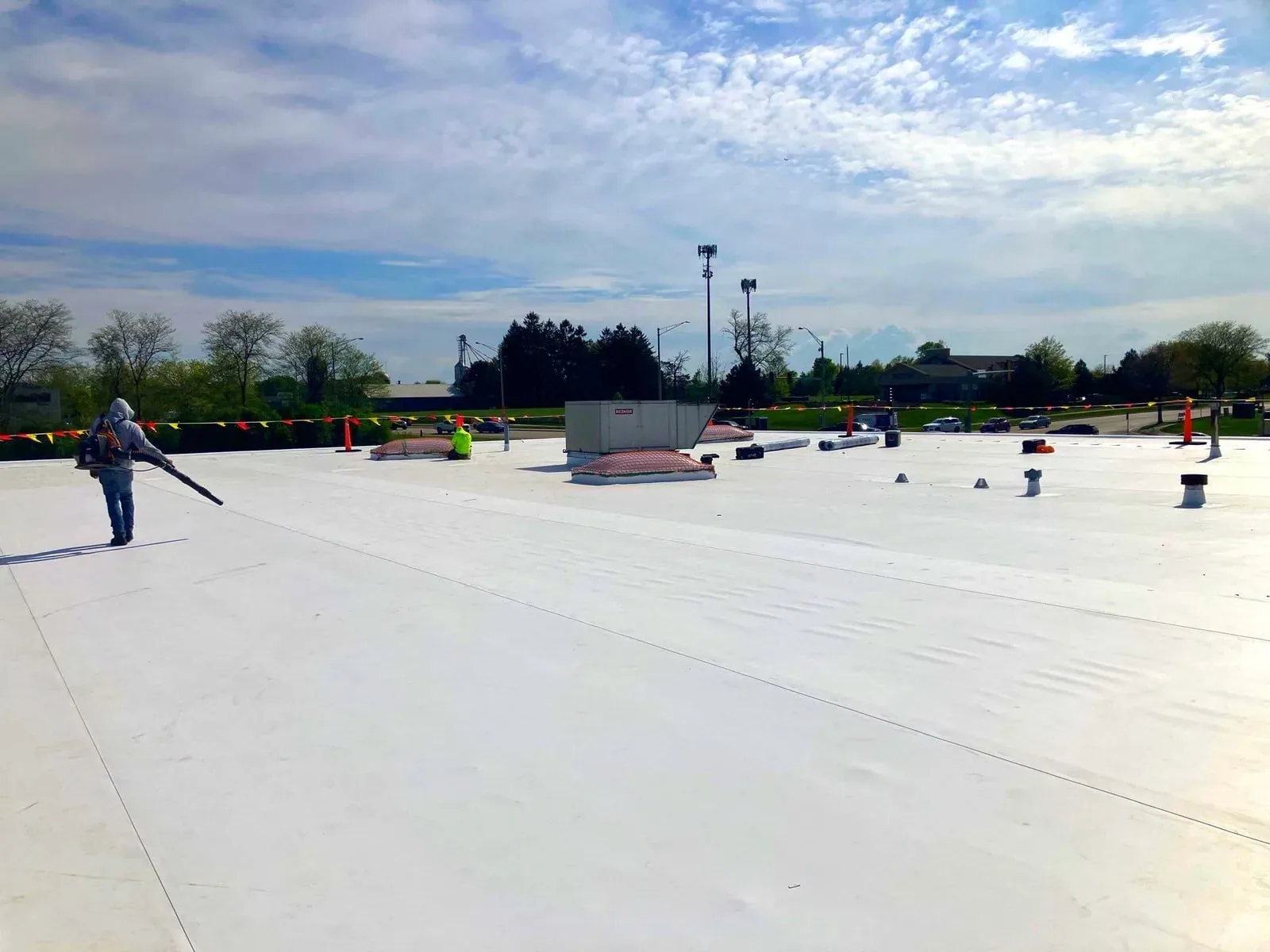
For a replacement, this means the system choice matters as much as the labor. A white single-ply such as TPO reflects much of that heat. A heavier modified or built-up assembly can take foot traffic from the rooftop equipment crews that visit through the summer. We explain the trade, then you decide.
Hail Changes the Spec
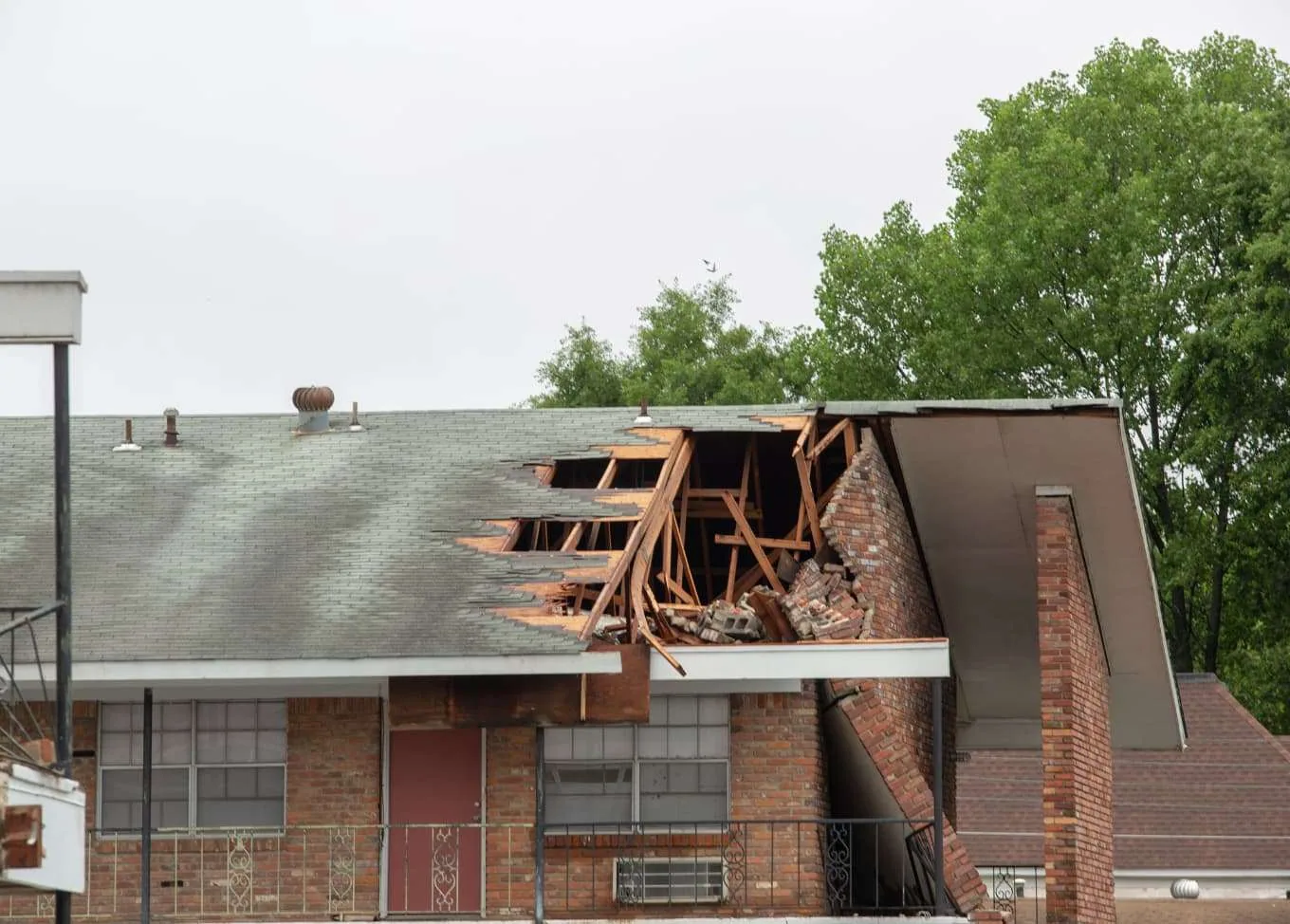
Hail history in this region is not abstract. NWS Norman records baseball-size hail that caused extensive damage in Iowa Park and Burkburnett in April 1991, and hail larger than baseballs at Sheppard Air Force Base in March 1993. Those events are past, but they teach one practical lesson: a roof that is replaced today should be able to take a hit. Thicker membranes, a firm cover board over the insulation and well-fastened edge metal all improve how a roof resists impact and wind.
A hail bruise is a soft spot in the membrane or insulation that often looks fine from the ground. If your roof has taken hail in the past, we check for bruises before we write a scope, and we document what we find with photographs. That record matters when an insurer asks what changed on the property and when. If a storm did the harm, the same photographs feed straight into hail damage repair and the insurance file.
The Tear-Off, Step by Step
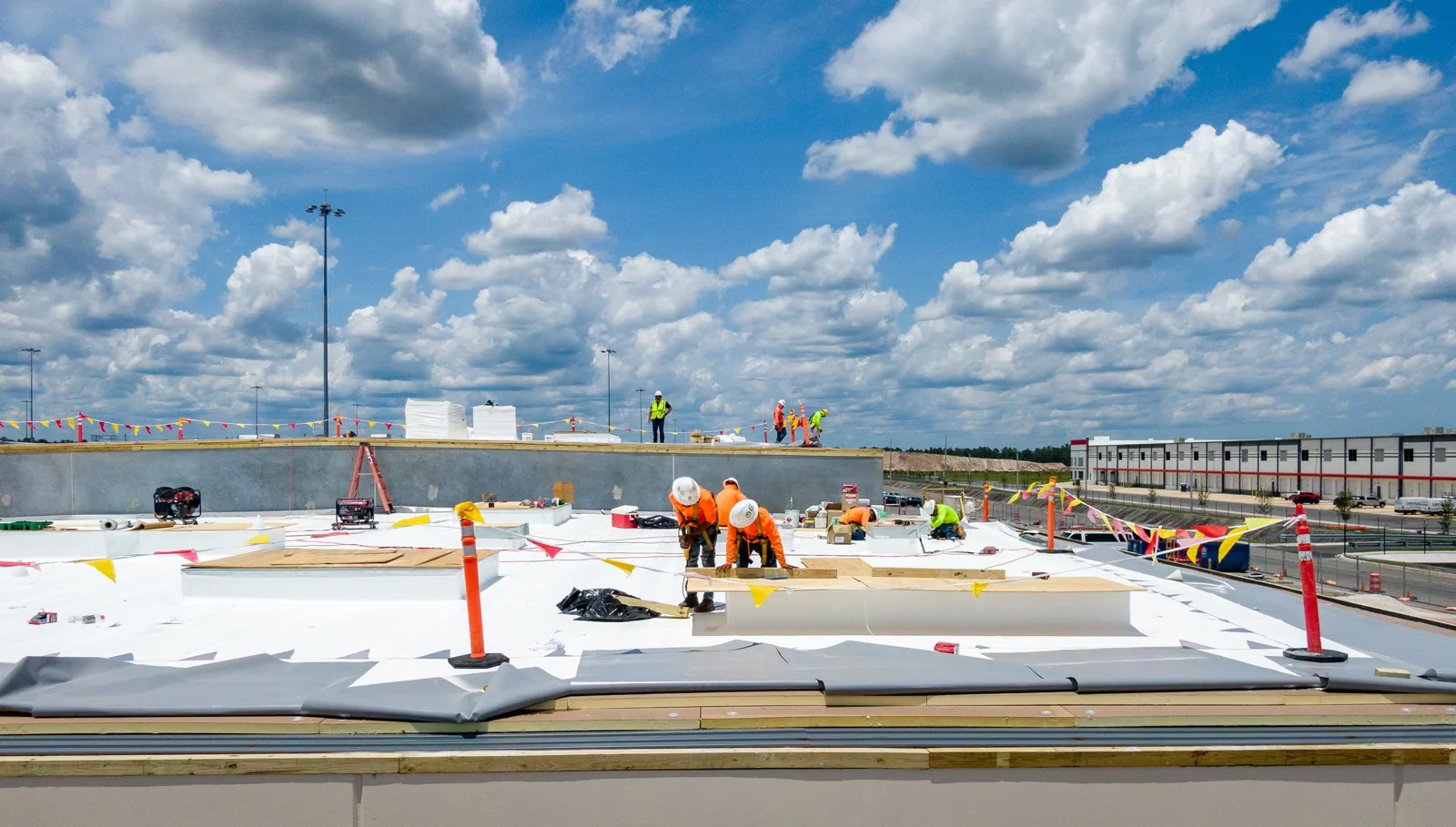
Step two is the removal. We cut the old roof into sections that can be torn off and dried in on the same day, so a weather change at four in the afternoon does not leave a building open. Debris goes into a chute or a hoist, never over the edge, and we keep the work zone clear of walkways, loading docks and parked vehicles. On a building with tenants below, we agree on noisy windows and protect interior spaces before the first cut.
Step three is the deck. We inspect it panel by panel and replace what is rusted, rotted or soft. Step four is insulation, laid in staggered layers with a cover board where the system calls for one. Step five is the membrane, with seams welded or adhered, flashing at every curb and wall, and edge metal fastened to the wind-load detail. The last step is a final walk with you, a punch list, and photographs of the finished work.
Occupied Buildings Keep Running
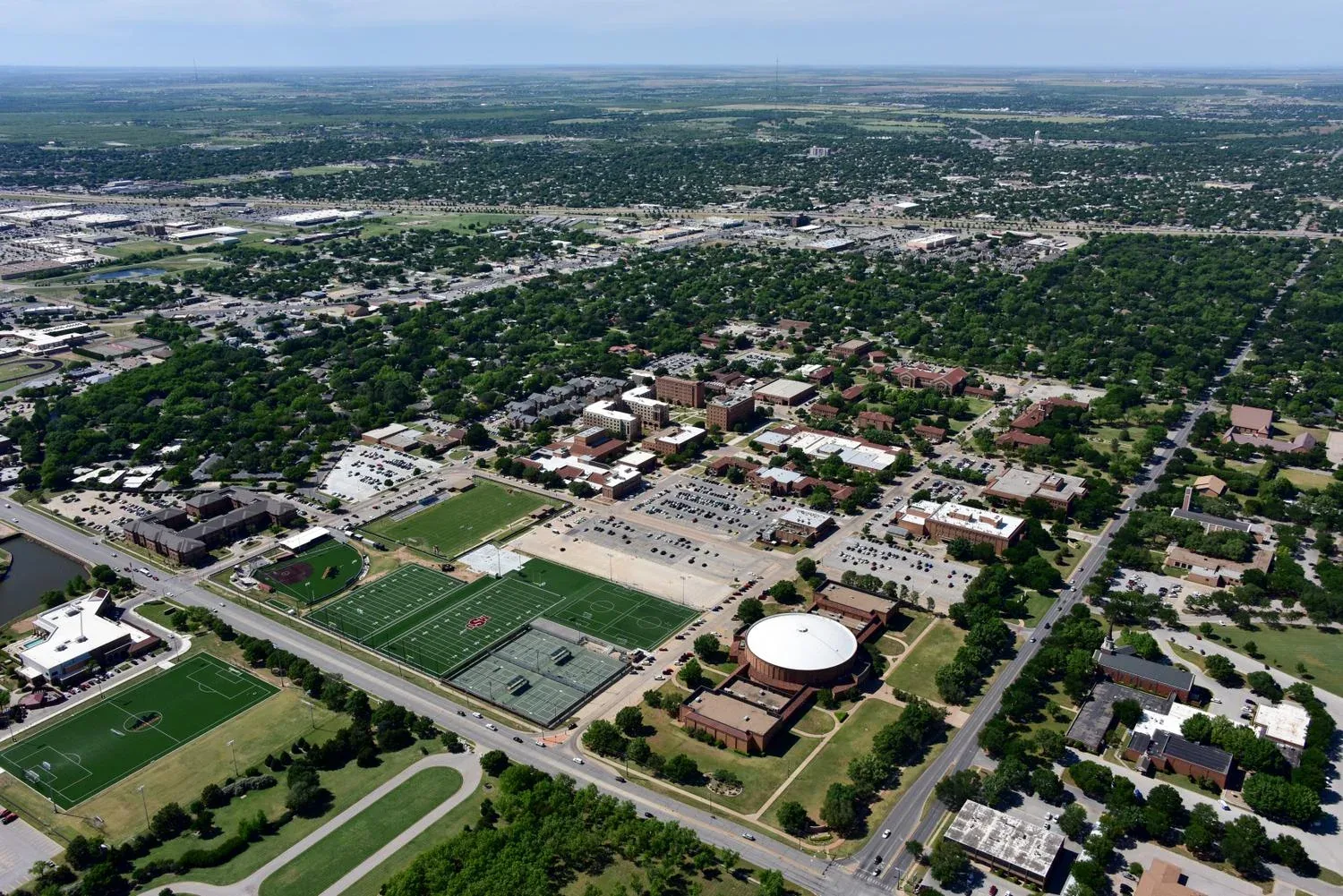
Plenty of buildings under a replacement cannot close. A warehouse still ships, a clinic still sees patients, and a campus still runs classes. Plan the crane picks, the hoist locations and the material staging around the dock schedule, not over it. Sequence the roof in zones so one section is open while the rest stays sealed. For the Taft Boulevard area, where a 255-acre campus mixes classrooms, residence halls and athletic venues, that sequencing is the whole job.
Quiet hours, rooftop equipment shutdowns and fire watch requirements all belong in the written schedule before the crew arrives. If your building houses sensitive operations, tell us early. On an occupied building, the plan for access, safety and communication is written down before the first cut.
Replace, Recover or Repair
Replacement is not always the answer. If the insulation is dry and the deck is sound, a recover over the existing roof may cost less and keep one layer of old material out of the landfill. If the damage is local, a planned repair can buy years. We lay out all three options with their trade-offs and the evidence for each, and we tell you plainly when a patch will no longer hold.
The decision rests on three things: how much of the roof is wet, how many repairs the roof has already had, and what the building plans to do in the next ten years. A building that will be sold or renovated soon is a different case from one the owner plans to hold.
Commercial Roofing Questions
How long does a commercial roof replacement take?
The schedule follows the roof, not a fixed rule. Size, weather, access and the amount of deck repair set the pace. We give you a day-by-day sequence once we have walked the roof, and we update it when conditions change.
Do I need a permit for a full replacement?
Yes, commercial reroofing normally needs a permit from the city building department, and we prepare the paperwork. When the building sits in Burkburnett, Iowa Park or another town, we confirm which office issues the permit before work starts.
Can the new roof go over wet insulation?
No. Trapped moisture rots the deck and shortens the life of the new membrane. We find wet areas with a scan or core cuts, remove them, and replace the board before the new system goes down.
What warranty comes with a new roof?
Manufacturer warranties depend on the system and the installation details, and the terms are written by the manufacturer. We review the warranty paperwork with you before you sign so you know what it covers and what it asks of you.
Will tornado season delay the job?
Spring storms can move the schedule, and we watch the forecast closely. We tear off only what we can dry in the same day, so a storm warning leaves the building closed and protected rather than open.