Hail damage hides in the layer underneath. A membrane can look whole from the ground while the insulation below it has been crushed at every strike, and the first sign of trouble may be a leak months later. That is the lesson to start with: the surface tells part of the story, and the layers beneath tell the rest. Step one is to find every hit. Step two is to learn how deep each one went.
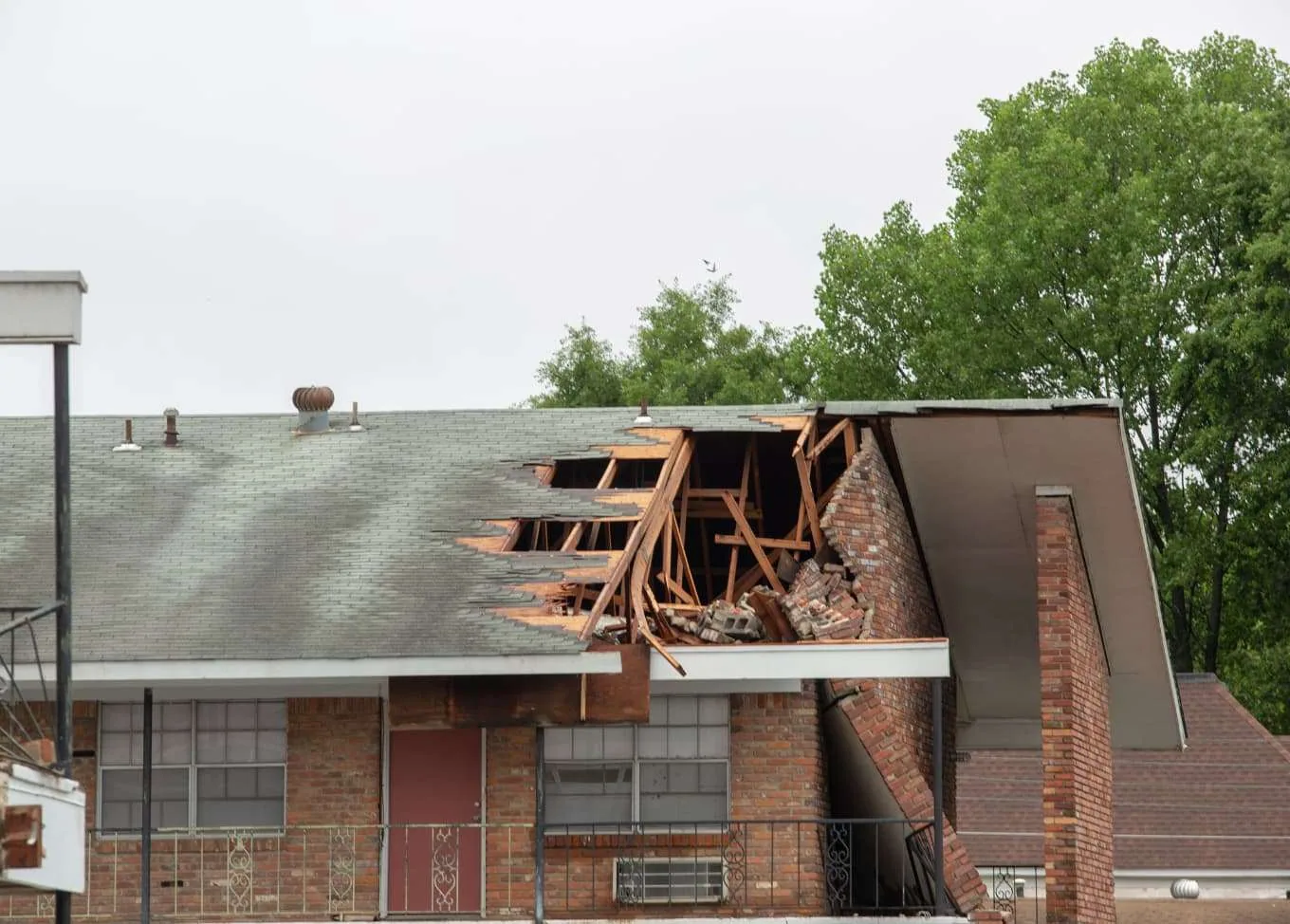
Part of our work is hail inspection and repair on low-slope and metal roofs for commercial buildings in Wichita Falls, TX. We press, probe and mark the roof, document it for the owner and the insurer, and repair what is damaged without replacing what is not. Emergency response runs around the clock, holidays included, when a hail strike has opened the roof.
What the local record shows
North Texas sits in hail country, and the Wichita Falls area has a written record. NWS Norman's weather history logs an April 2, 1991 storm that did extensive damage to Iowa Park and Burkburnett with baseball-size stones, and a March 29, 1993 fall of hail bigger than baseballs at Sheppard AFB. On March 13, 1982, golf-ball-size hail fell for 15 minutes in Electra, with damage from Electra to Burkburnett.
That is history, not an inspection. It tells an owner that hail reaches this area, but it says nothing about a particular roof on a particular day. A claim or a repair plan rests on the roof as it stands. We use the record to explain why a post-storm walk is worth doing, and then we let the roof tell its own story.
Different building types raise different questions. A large distribution roof in the Wichita Falls Business Park has a wide field to sample, a campus such as Midwestern State has many roofs of different ages to rank, and a maintenance building near Sheppard AFB has a roof type that has to be identified before anything else. The method is the same everywhere, but the report is written for the building in front of us.
How hail damages each roof type
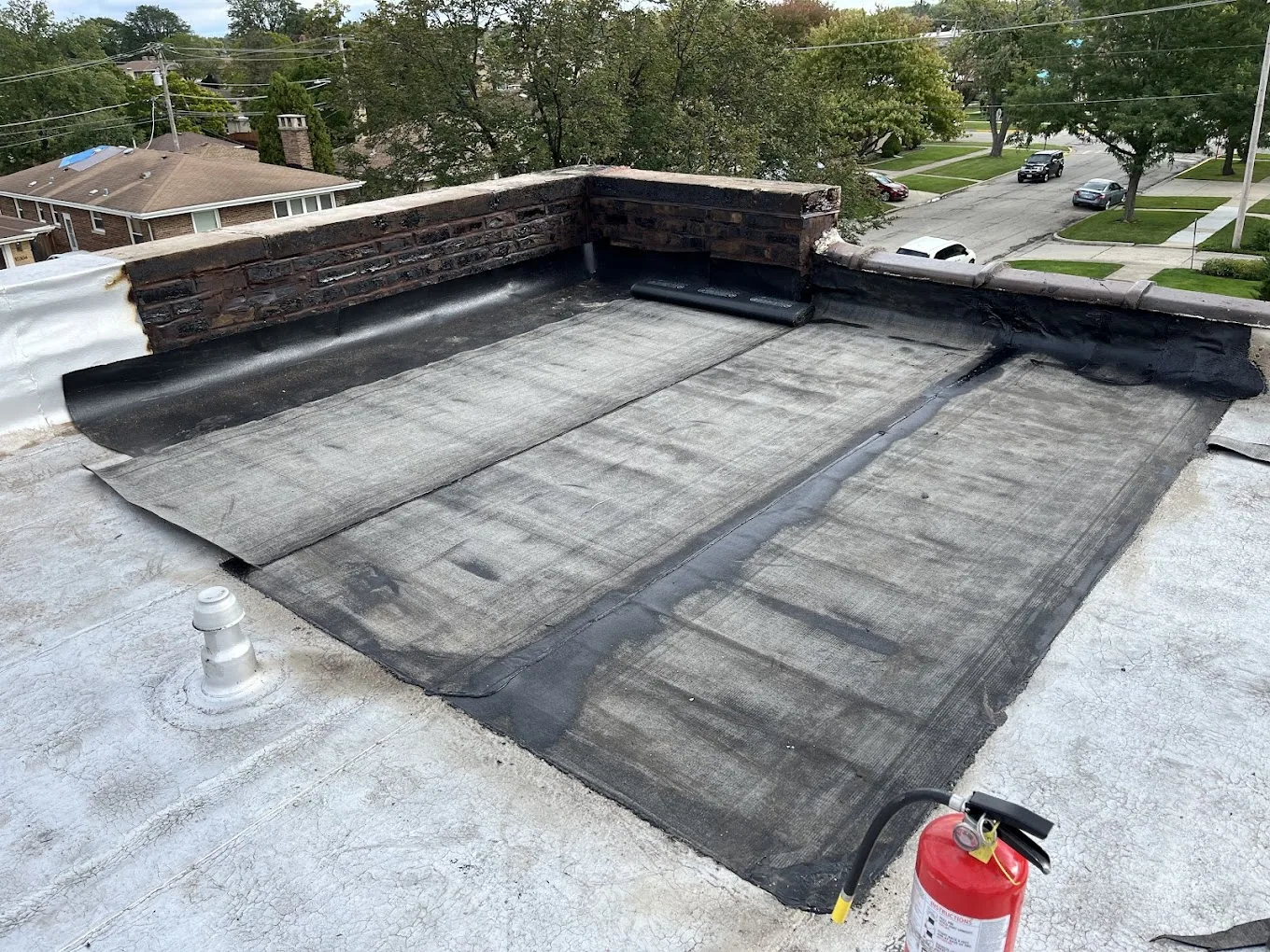
Single-ply membranes such as TPO, PVC and EPDM show hail as round, soft dents, small fractures or breaks in the reinforcing scrim. A hail bruise is a spot where the layer underneath has been crushed, and it may only be visible as a faint ring or a soft area under thumb pressure. On built-up and modified bitumen roofs, hail can knock granules loose, fracture the felt or open the surface so that water gets into the plies.
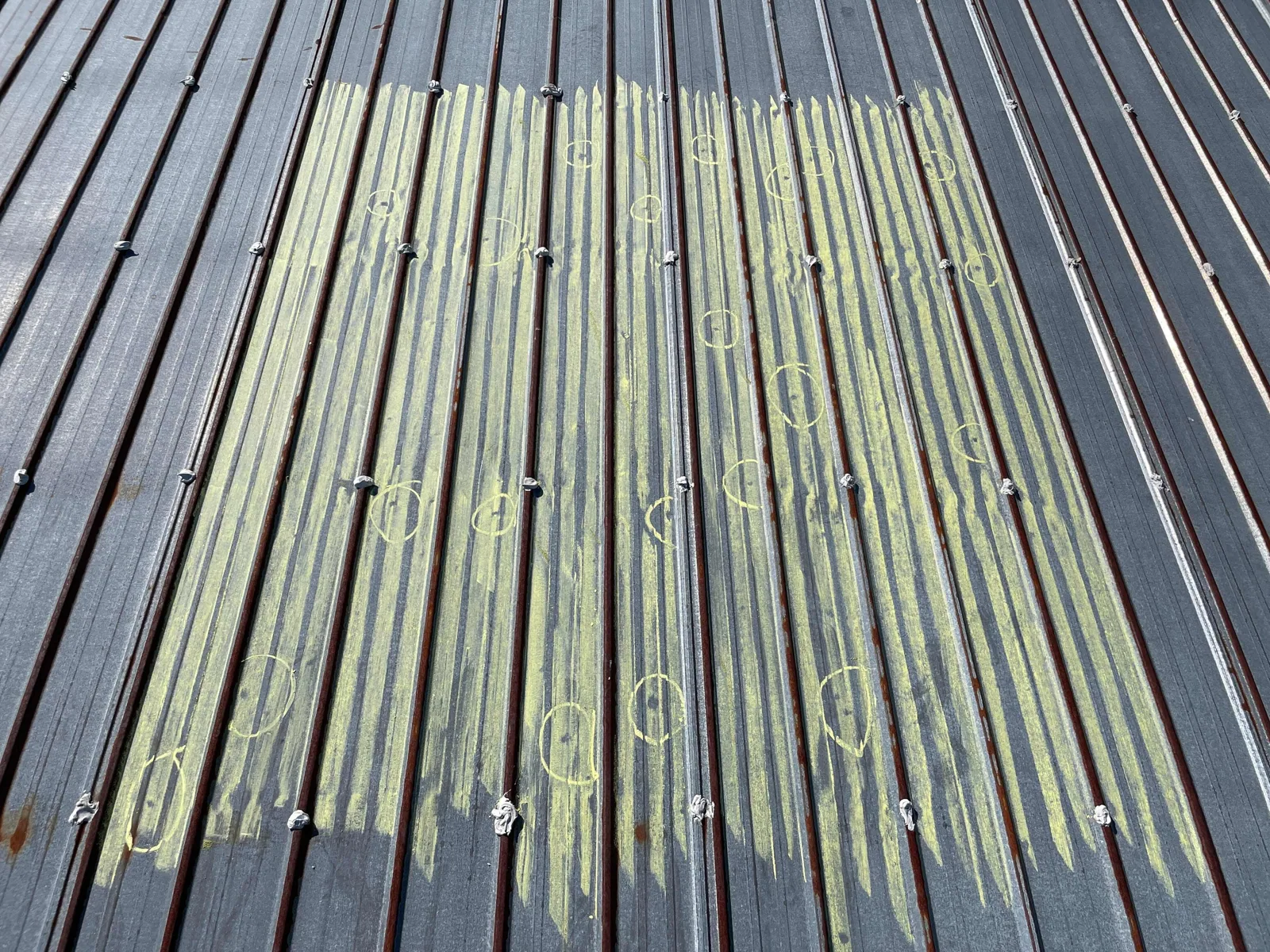
Metal roofs show dents, dimples and cracked paint, and standing seam panels may keep their seams while the finish fails. Coated roofs show cracks and thin patches in the coating. Insulation under any of these can be crushed or wet. Each system calls for a different test, and we use the right one: probing for single-ply, cutting a small core for built-up, and a close look at fasteners and laps for metal.
Age changes the result. A new, flexible membrane can absorb a strike that would crack an older, stiffer one, which is why two roofs under the same storm may show very different damage. Insulation type matters too, since some boards crush easily and others hold their shape. We note the roof age and the insulation in the report so the damage can be read in context.
Finding every hit
Start with a pattern. Hail falls with the wind, so strikes are denser on the side of the roof facing the storm and on corners and ridges. We mark a test square, count hits within it and compare squares across the roof. That way the report shows how widespread the damage is, not just that some exists. A drone view helps with large roofs, since it gives a quick picture before anyone steps onto the surface.
Below the surface, an infrared moisture survey maps wet insulation, and cores confirm. The final report names each roof area, shows photos with a scale reference, gives counts per square and separates storm damage from older wear. That separation is what an adjuster looks for, and it is what makes a repair decision clear.
Repair, partial replacement or full replacement
One clean rule applies: repair the bruises that have broken the surface, replace the sections where the insulation has been crushed or wet, and replace the whole roof when damage is widespread. Isolated fractures can be patched and sealed. Dented but intact metal may need no repair at all, only a record. Wet insulation must come out, since a patch on top leaves the problem inside.
When damage is widespread, a full replacement with a hail-resistant design is often more sensible than patching dozens of spots. Cover boards, thicker membranes and impact-resistant metal can reduce future damage, though nothing makes a roof hail-proof. Related damage often travels with hail, including punctured membrane, opened laps that call for seam repair, and clogged drains that lead to standing water.
Prevention is limited but real. A cover board over the insulation spreads impact, a thicker or reinforced membrane resists puncture, and a clean, well-drained surface lets ice and water leave quickly. For owners planning a replacement in hail country, those choices are worth discussing before the specification is set.
Working the claim
After a hail event, the timing of documentation matters. Fresh bruises show clearly and weather away over weeks. We walk the roof soon after the storm, photograph each hit, count and map the damage and write a plain report. Coverage is the carrier's call, but we make the file clear enough that the carrier can see what happened.
Claim documentation and storm damage repair stay together, so the documented scope and the real repair match. Hail crosses town lines, as the events in Iowa Park, Burkburnett and Electra show, so we organize post-storm visits by area and no roof waits longer than it should.
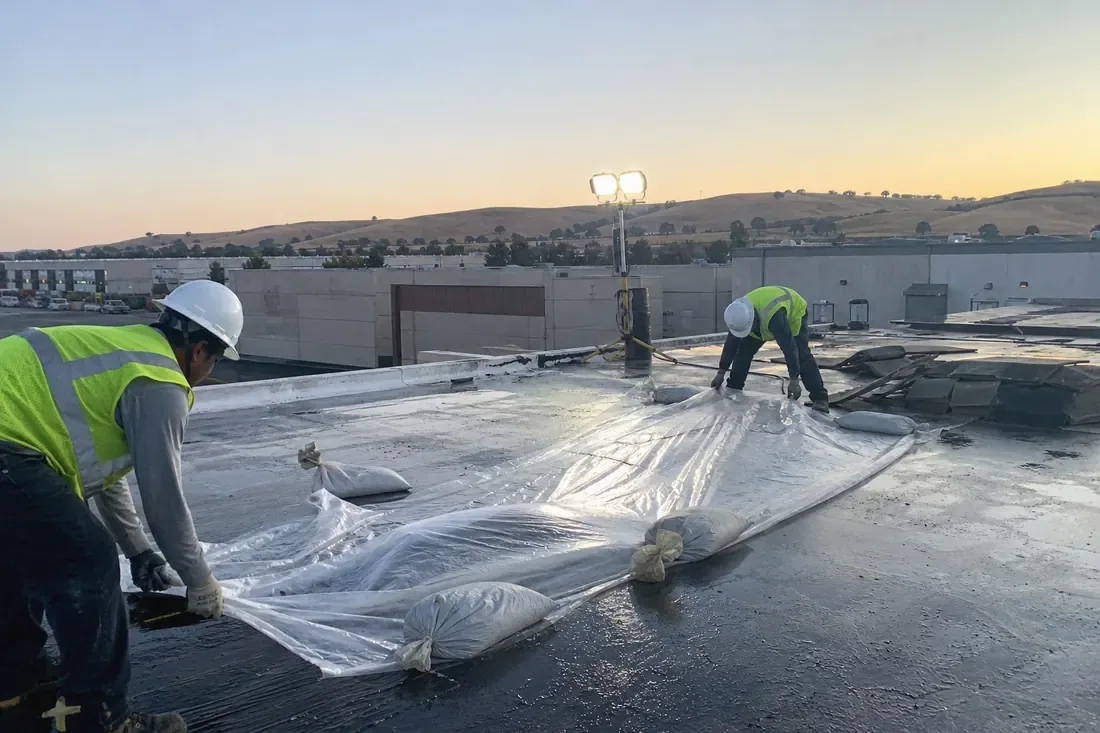
Temporary protection comes first when hail has broken the surface. Cracked membrane and open seams are sealed or covered the same day so the next rain does not finish the job, and each temporary repair is listed in the file with a photo. Permanent work follows once the carrier has had the chance to see the roof. That order keeps the claim file complete without leaving the building open to more rain.
Commercial Roofing Questions
Can hail damage a roof that looks fine from the ground?
Yes. Many hits are small, round and soft, and they are easy to miss from below. Probing, a test square count and a moisture survey show what the ground view cannot.
How large does hail need to be to damage a commercial roof?
Size is only one factor. Roof age, membrane type, insulation and wind speed all change the result. Golf-ball and baseball sizes are well-known threats, but we judge by the damage on the roof.
Does a past hailstorm mean my roof needs replacing?
Not by itself. The Iowa Park and Burkburnett storms of 1991 are history. We inspect the roof as it is today and recommend replacement only where the evidence calls for it.
What if the membrane is cracked but not leaking?
A crack that has not leaked yet will, in time, and the insulation below may already be damp. We seal or patch it and check for moisture so a dry-looking roof is not hiding a wet one.
What should I send to start?
Send the storm date, the roof age and type, and any photos of dents or cracks. We will plan a first visit that measures the damage and gives you a written next step.