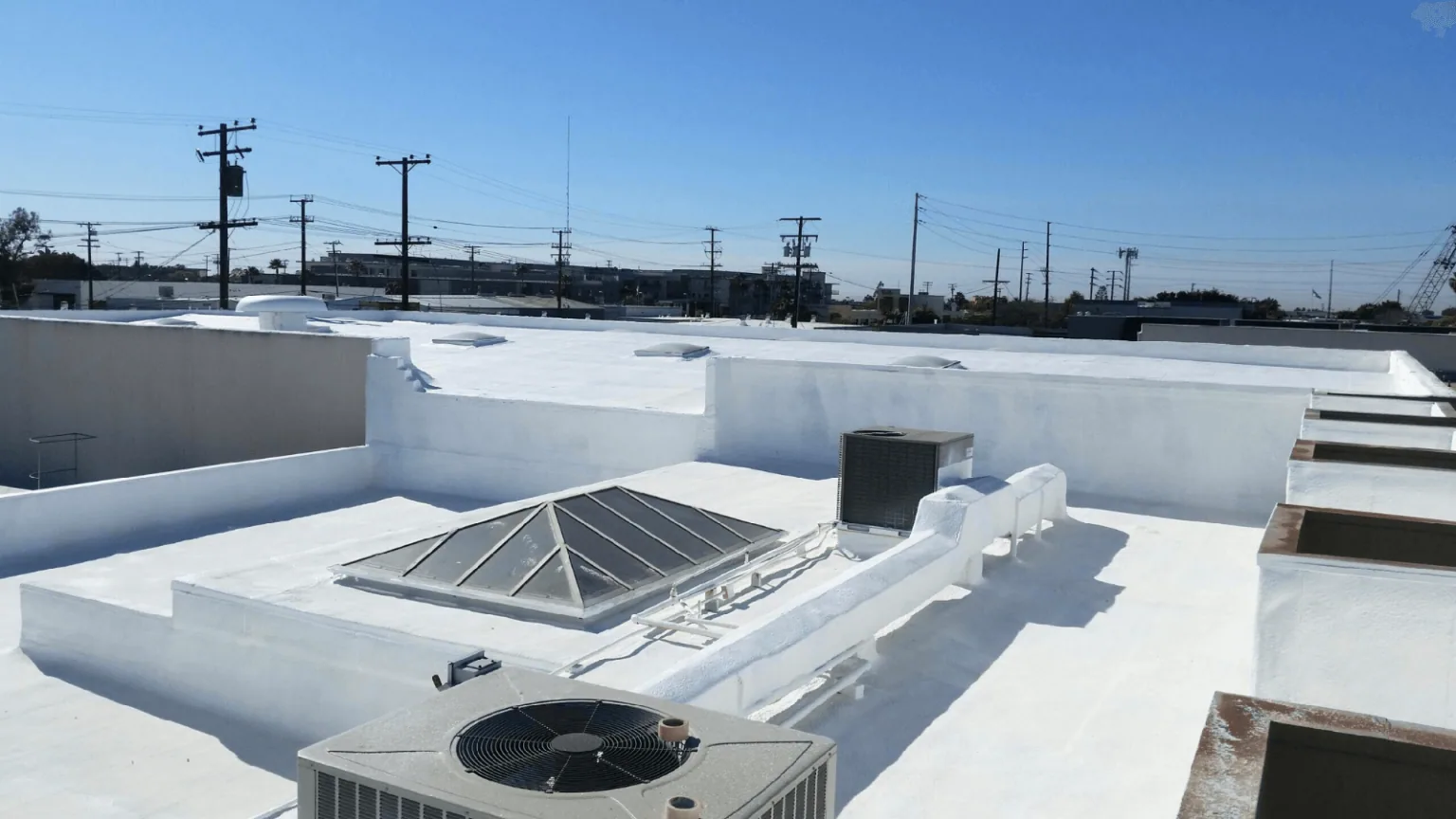
A retail roof along Midwestern Parkway comes in two kinds: the one over a store that is open, and the one over space that is not. Both need the same attention, and for different reasons. The open store has customers, stock and a manager who needs a dry ceiling. The empty one has no one inside to notice a leak, so water can run for weeks. Here is step one for either owner: find out what the roof is doing now.
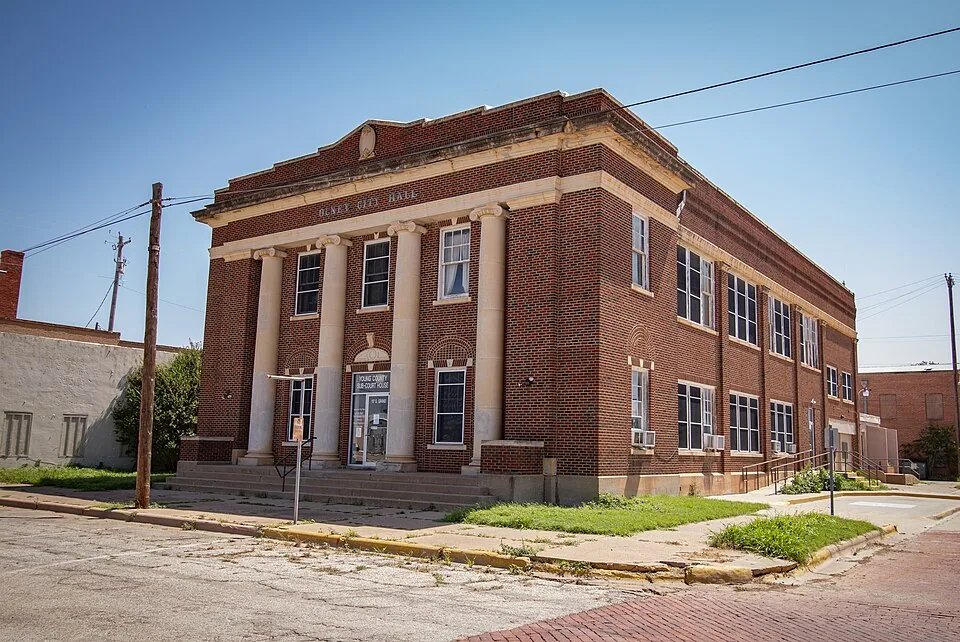
We walk the roof in a set order and write down what we see. Then we explain it in plain words, so you know what to fix, what to watch and what can wait. A commercial roof inspection is the place to begin.
Why Retail Roofs Age Fast
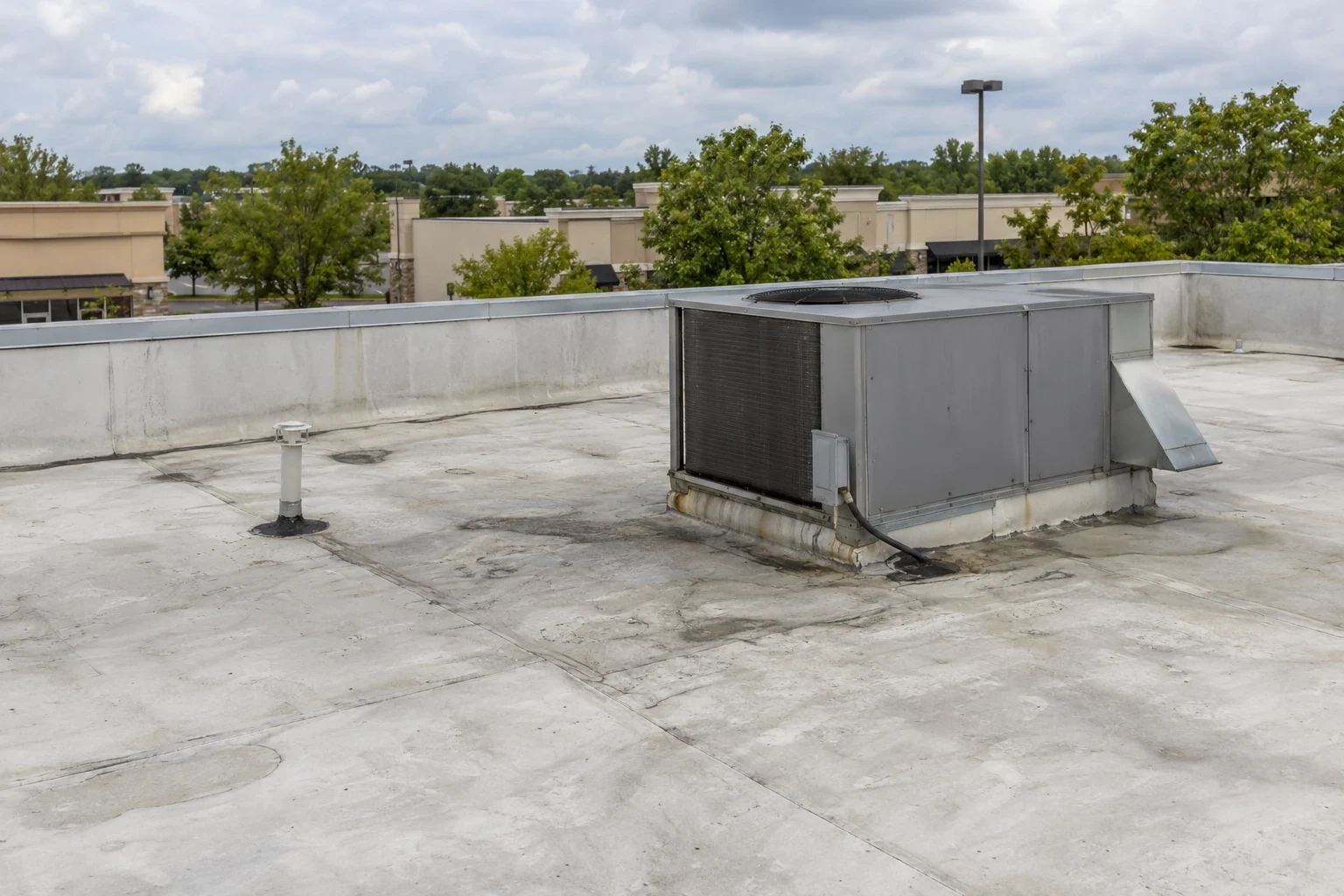
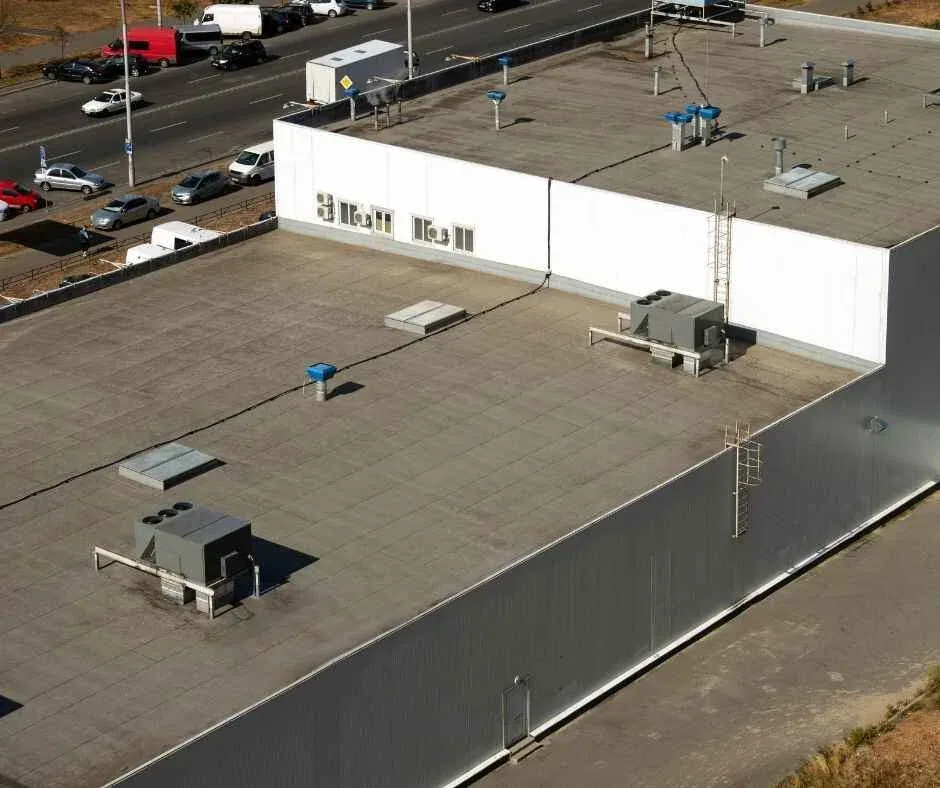
Most retail roofs are flat or nearly flat. They carry rooftop air conditioners, vents, exhaust fans and sign supports, and each one is a hole in the membrane with flashing around it. With about 28 days a year at 100 degrees in Wichita Falls, a dark sheet heats, stretches and relaxes day after day. Sealant at those penetrations is usually the first thing to crack.
One clean rule: the more things on the roof, the more places to check. A shopping center roof has many.
Look at the roof from above and you can read the building's history. Patches that stack on each other show where leaks keep coming back. Rooftop units set on wood blocks show where someone made a quick fix. Old sealant in thick beads shows where a crew tried to stop a leak by adding more of it. Each sign tells us where to press, probe and mark.
Retail buildings also change tenants. A new tenant often means a new unit on the roof, and a new unit means a new hole. The roof sketch we draw lists every one, so changes stay on record.
The Empty Bay Problem
Sikes Senter, a single-story enclosed mall of about 670,000 square feet, opened on Midwestern Parkway in 1974. Its four largest tenant spaces are now vacant, and the city bought the property on October 15, 2025 with demolition discussed near the end of 2027. A vacant building is not a ruined roof, and it can stay in good shape if someone keeps up with it. The risk is simple: no one is inside to see a drip.
If you own or manage a nearby center with empty bays, walk those roofs more often. Look for ponding after rain, clogged drains and stained ceilings through a door or window. An infrared moisture survey finds wet insulation you cannot see.
Wind and Edges
The April 1979 tornado hit the mall's northern edge. It partly collapsed a JCPenney store and damaged other stores while about 1,000 shoppers were inside. That storm belongs to the record and says nothing about any roof here now. It does tell us where to look first when a storm line comes through: the edge.
Wind gets under the metal at the roof edge, then peels the sheet back. We check the coping, the fasteners and the flashing along every wall. If you have just had a storm, wind damage is easiest to find in the first week.
Signs add their own risk. A sign support that passes through the membrane needs a curb or a boot, and the sealant at its base moves every time the wind pushes the sign. We check the bolts, look for rust and press around the base for soft spots. A loose sign support in high wind can tear the roof around it.
What We Check on the First Walk
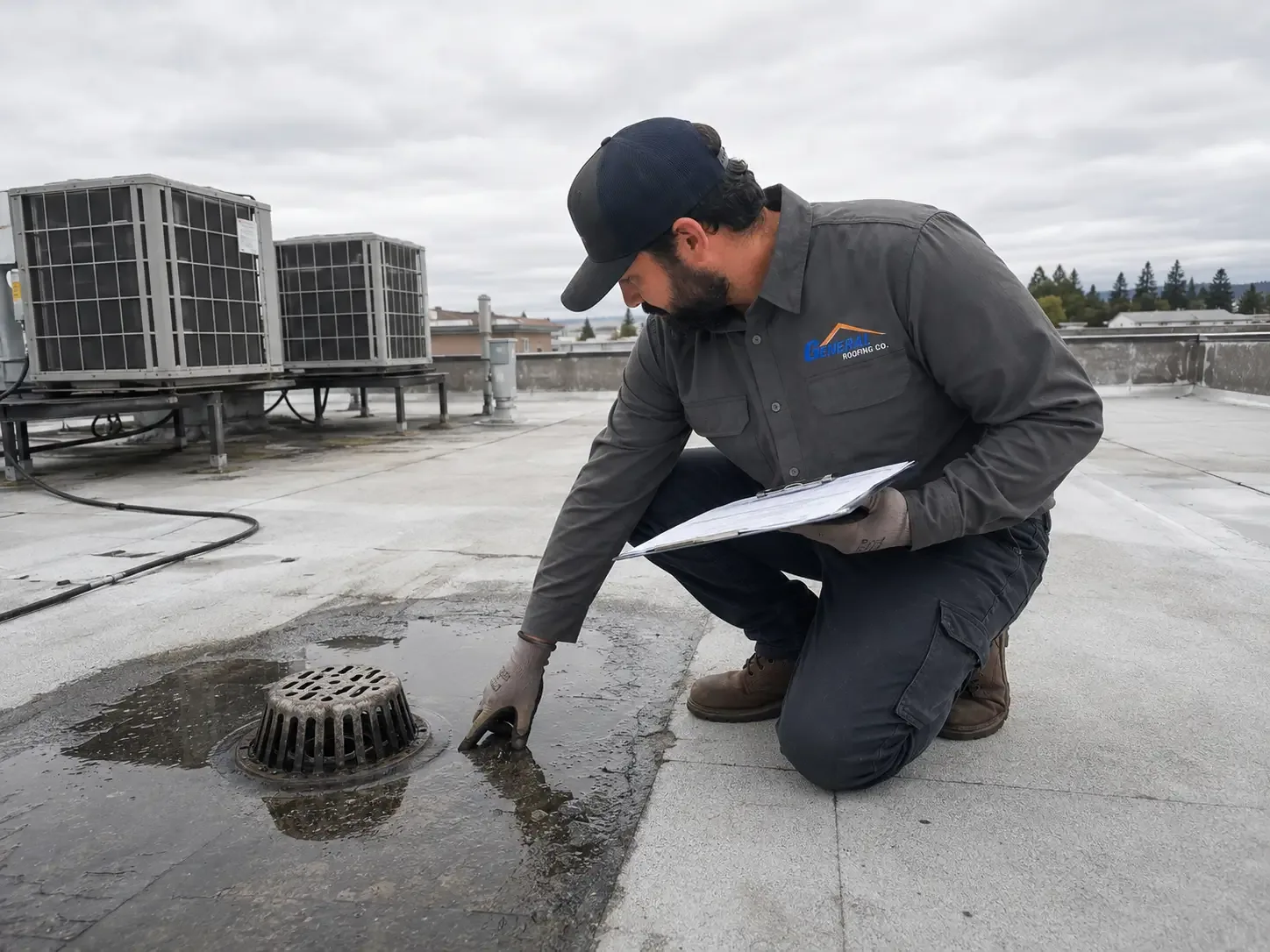
Step one is the drains. After a rain, look for a pale ring on the membrane, the ponding line, where water has stood. Step two is the seams, where the sheets join. Step three is every pipe, vent and unit. Last, we press the surface to find soft spots, which can mean wet insulation under the sheet.
Every finding is photographed and placed on a roof sketch. You get the sketch, the photos and a short list ranked by urgency. That is what it means for you: a plan you can hand to a manager, a lender or a buyer.
On a large retail roof, we also walk the long runs. Seams that run for hundreds of feet pull apart where the sheet is stretched tight, usually near walls. A simple test is to push a thin tool along the seam edge. If it slips in, the seam is open and needs a fix.
Drainage gets a second look after a hard rain. A drain that was clear on Monday can be packed with leaves and trash by Friday.
Repair, Recover or Replace
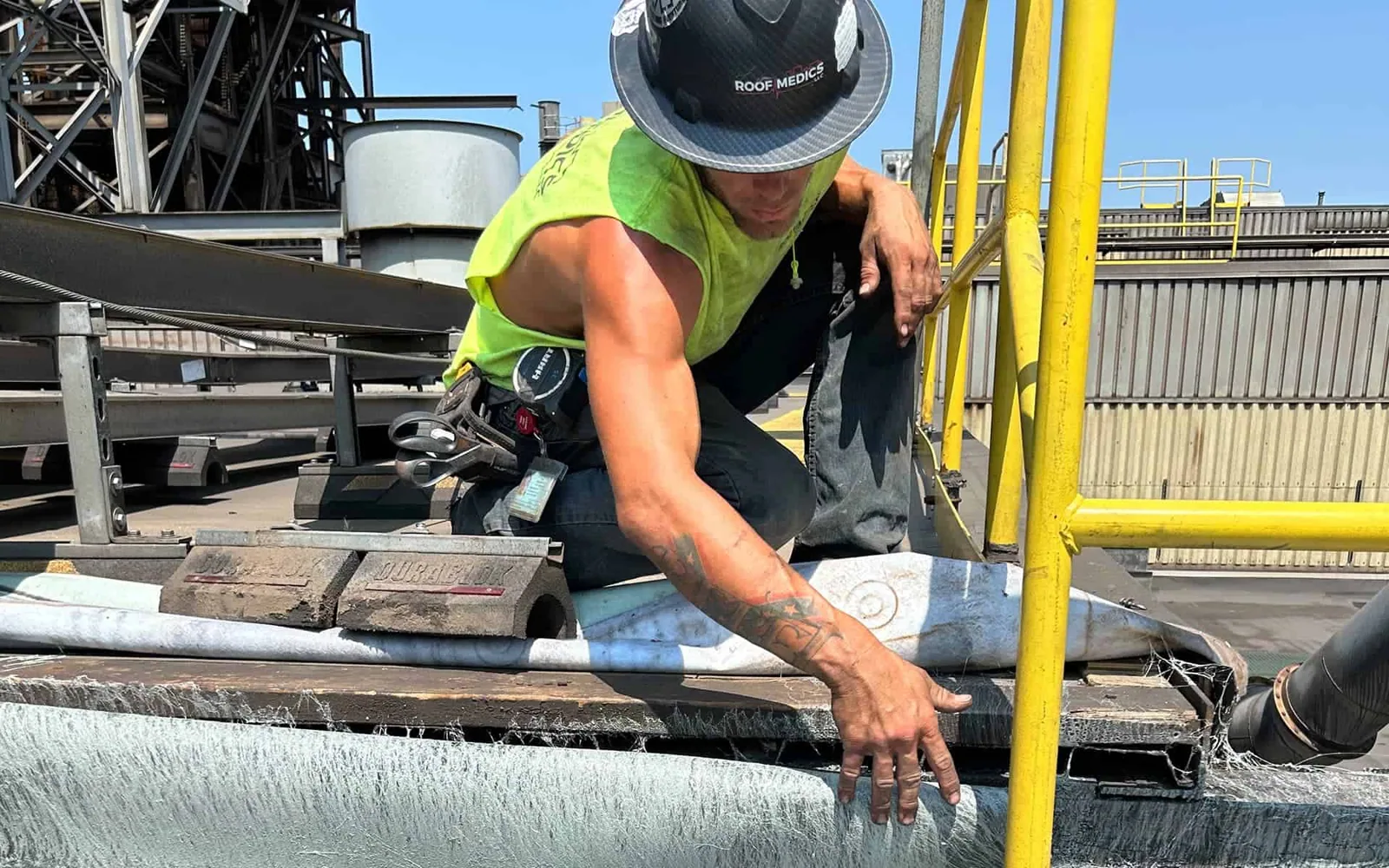
A small problem on a sound roof calls for repair. When the insulation is dry, a tired roof may take a recover, a new sheet laid over the old one. Wet insulation across a wide area means the wet parts come out, and that usually means replacement.
The test is moisture. We take readings and sometimes cut a small core. If the insulation is dry, you have more choices. If it is wet, the choice narrows fast. Cost follows roof size, deck condition, how many units sit on the roof and how much time the building allows us.
If your center is likely to change, say so. A roof over a building planned for demolition needs only enough work to keep water out until then. A roof over a building you plan to keep needs a longer view. We write both plans on the same sketch, so you can compare costs side by side and pick one.
Timing and Access
Retail runs on a calendar. Holiday weeks and sale weekends are busy, and loud work over a sales floor is a bad fit. We plan around those dates and agree on a route for trucks, a spot for the hoist and a time for deliveries. If the building has empty bays, we can start there while open stores stay quiet. Nearby Kemp and Kell Corridor properties follow the same approach, and so do those in the Taft Boulevard area.
Weather sets the calendar too. Rain in Wichita Falls totals near 27.9 inches in a typical year, and one May brought 17 inches. Spring is the busy season for storms, so we try to finish tear-off sections in a single day and seal each one by evening.
Commercial Roofing Questions
Does a vacant retail building need roof work?
It needs a roof that sheds water. Check drains, seams and flashing, and look inside for stains. A dry roof protects the structure and keeps options open.
How do I find a leak with no one in the building?
Walk the roof after rain and look for ponding. Then trace any stain inside to its source. An infrared scan can show wet insulation without opening ceilings.
What should I fix first?
Fix what lets water in now: open seams, bad flashing, blocked drains. Cosmetic items can wait. We rank every finding so you can see the order.
Will roof work shut down my store?
Usually not. We stage work around your hours, protect the entrance and close each section by evening.
What does the walk-through cost?
The inspection price comes after a short call about the building. The roof age, the building use and any leak history are enough to give you a number.