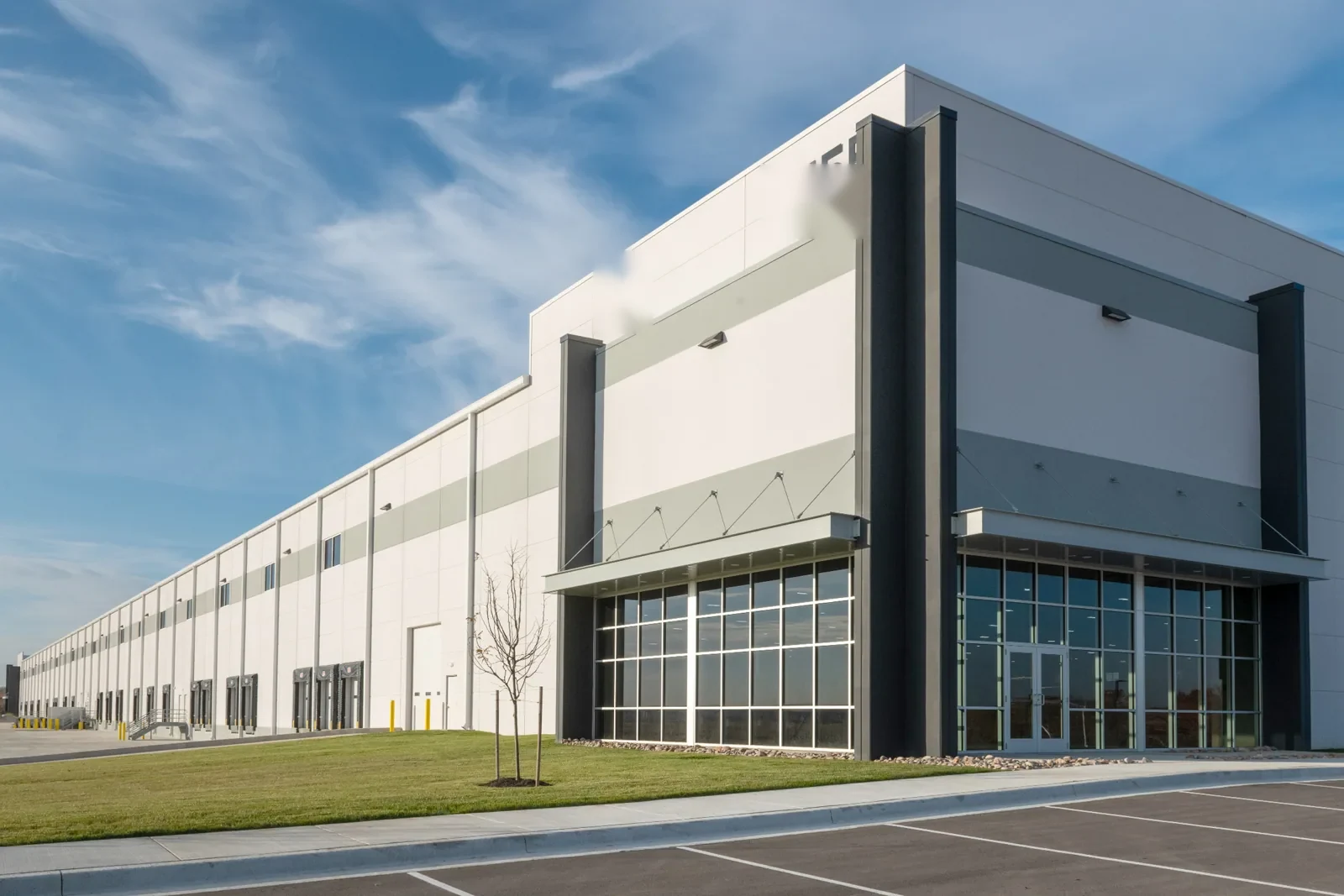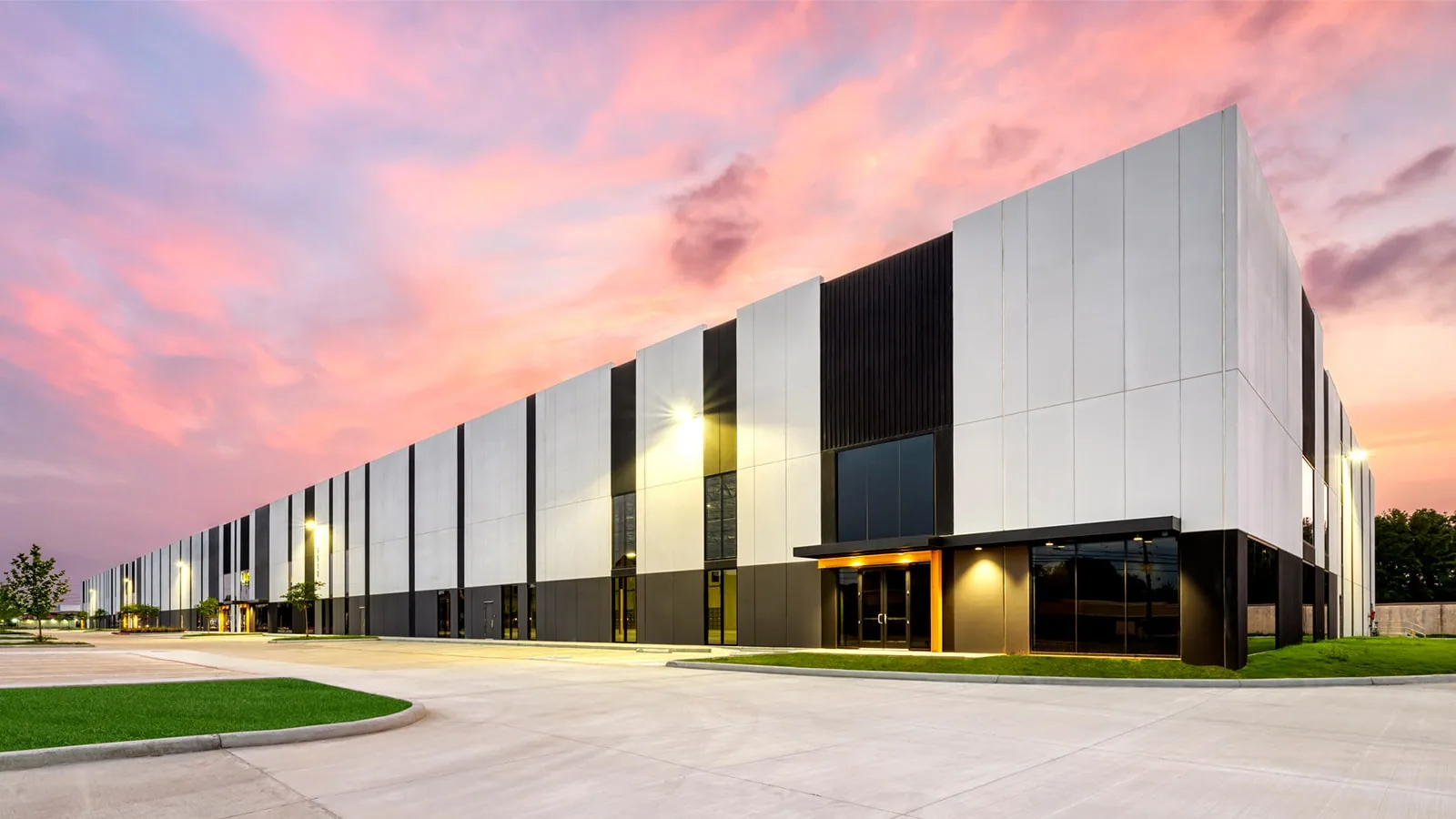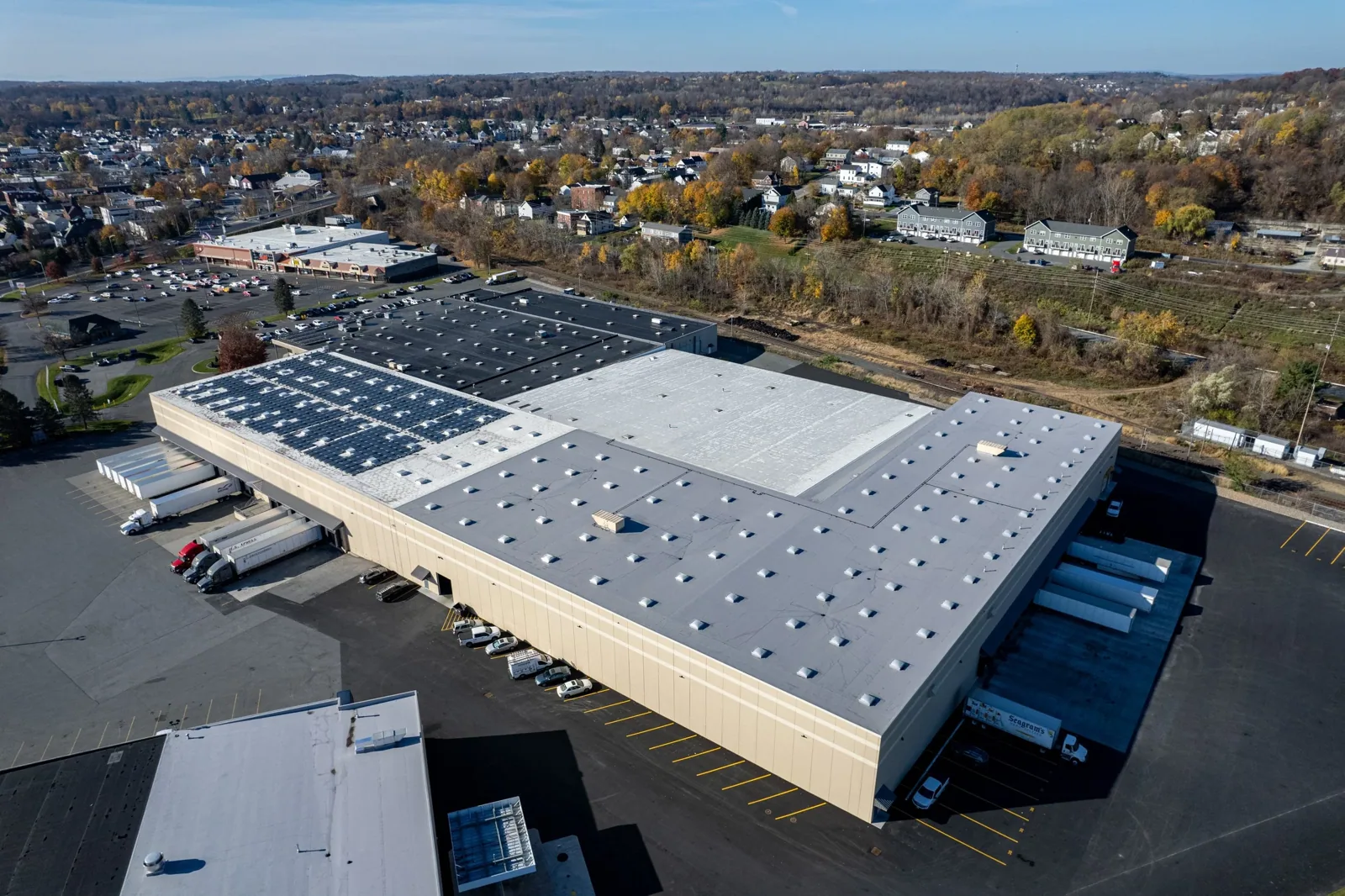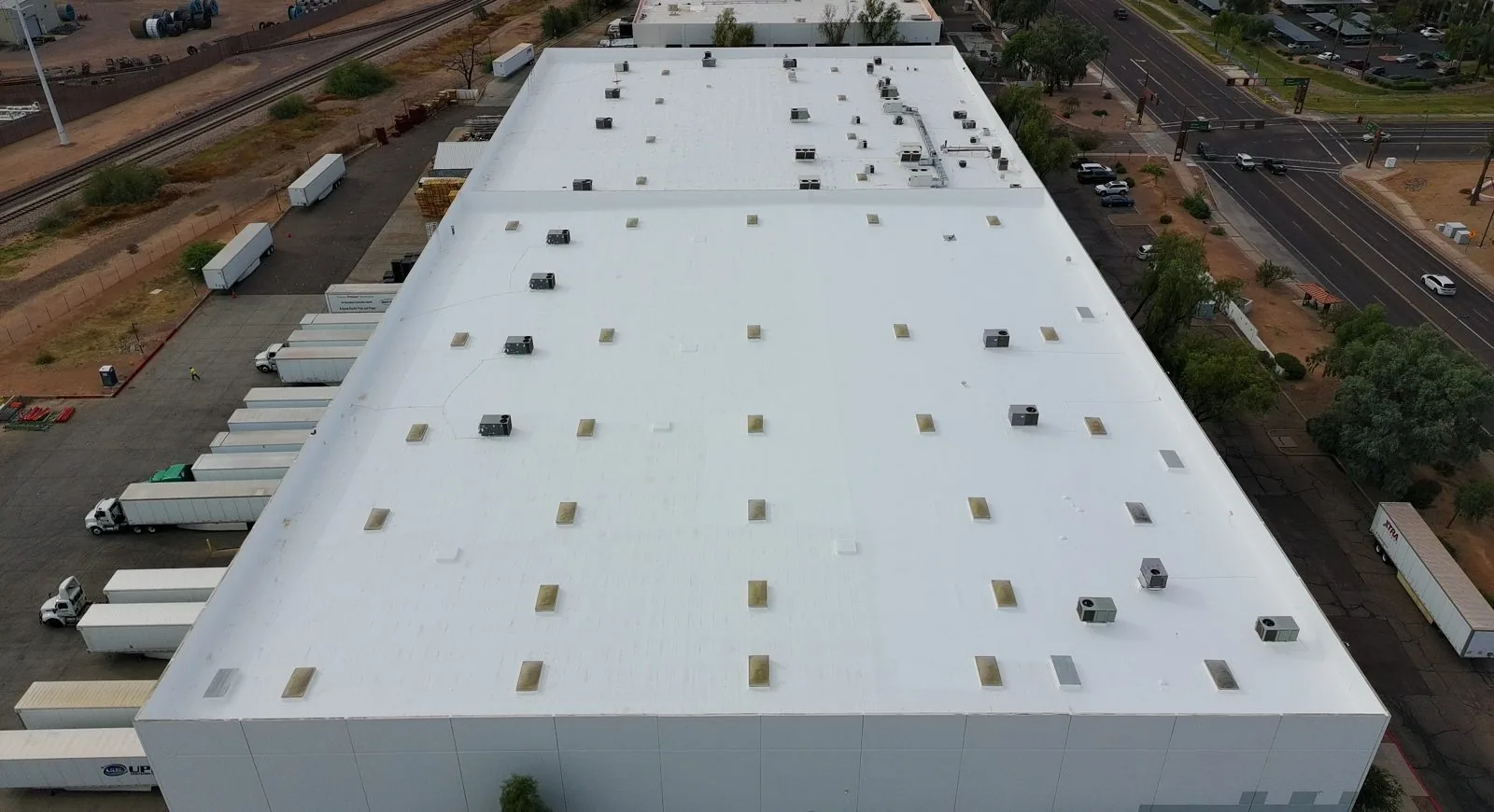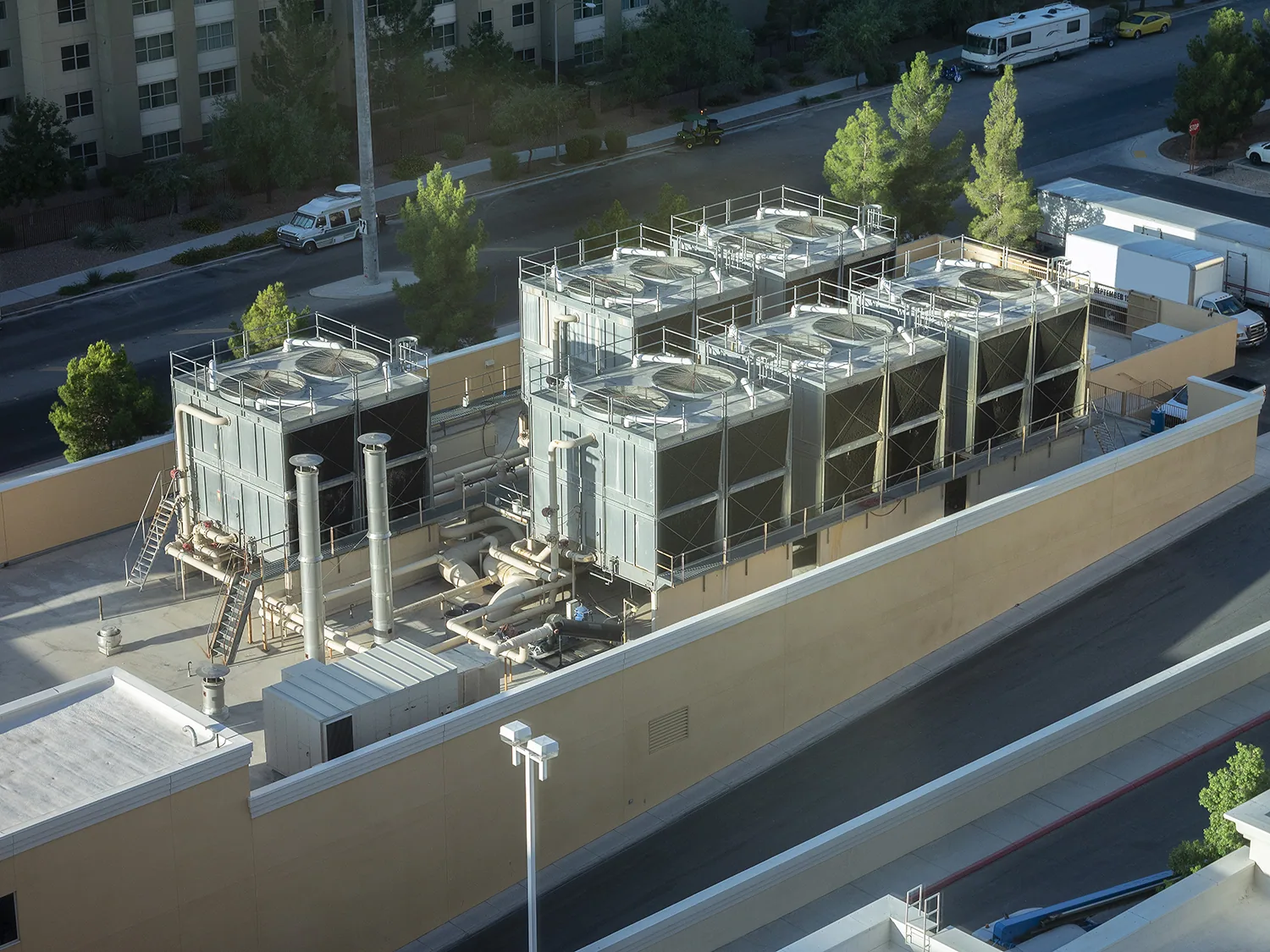
A distribution warehouse or manufacturing plant in a business park has one thing to understand about its roof: it is big, low and quiet, and that shape decides how it ages. Sitting on 525 acres, the park targets distributors, high-tech operations and manufacturers. Buildings for those users tend to be wide single-story boxes with few interruptions in the roof, and the work is mostly about water, heat and seams.
Here is step one for an owner or facility manager: learn what the roof is made of and how old it is. Everything else follows from that. Our warehouse roof work starts there.
The Big, Low Roof
A wide low-slope roof sheds water to a few drains or to the edges. If a drain blocks, the roof holds water, and a lot of water weighs a lot. Standing water leaves a ponding line, a pale ring on the membrane. That line shows how the water sits and where it has been sitting.
Big roofs also have long seams. Seams carry the load of heat and cold, and they open first. One clean rule: look at drains and seams before anything else. A distribution center roof and a manufacturing plant roof both follow this rule.
Dock areas deserve their own walk. Loading docks sit at the edge of the building, and the roof above them carries gutters, downspouts and a parapet that often get hit by trucks or lifts. A dented coping cap or a bent downspout looks small and can let water run behind the wall. We note each one with a photo.
Skylights and smoke vents, if the building has them, are checked for cracked domes, loose fasteners and sealant pulled back from the frame.
What Heat Does
Each year brings about 28 days at 100 degrees to Wichita Falls, and 2011 brought 100. A dark membrane gets much hotter than the air. It expands in the afternoon and shrinks at night, and that movement works at every fastener and every seam.
Heat also changes the sealants and the plastics in the sheet. They get hard, then crack. The signs include a chalky surface, cracks at flashing and seam ends that lift. A white or light-colored membrane runs cooler, and a cool roof can take some of that stress off.
A simple test tells you how a roof is holding up in heat. Press a thumb on the surface in the afternoon. A sheet that feels soft or sticky has lost some of its plastic. A sheet that feels hard and brittle has dried out. Neither is good, and both are worth a closer look.
Metal roofs have their own heat story. Panels expand along their length, and fasteners that hold them down can back out over time. We check each fastener line and the sealant at every lap.
Equipment, Exhaust and Penetrations
Manufacturing and high-tech buildings put equipment on the roof: exhaust fans, air handlers, vents and pipes. Each one needs a curb and flashing. We look at each curb for open corners and each pipe boot for splits. Where a fan blows hot or chemical air across the roof, we look for discolored or soft membrane nearby.
What a building exhausts shows in the roof, so we check the signs. Then we recommend a surface that handles the exposure. Good rooftop equipment curbs and supports keep water out of the building around each unit.
High-tech and aerospace-supply users often want a roof that stays clean. Dust, fumes and vibration can come from a roof job, so we plan around intakes, cover them when needed and agree on quiet hours for sensitive work. If the building has a clean area below, we ask early which part of the roof sits above it.
The same planning helps any user. Know what is under each section of roof, and the work goes smoothly.
What to Look for After a Storm
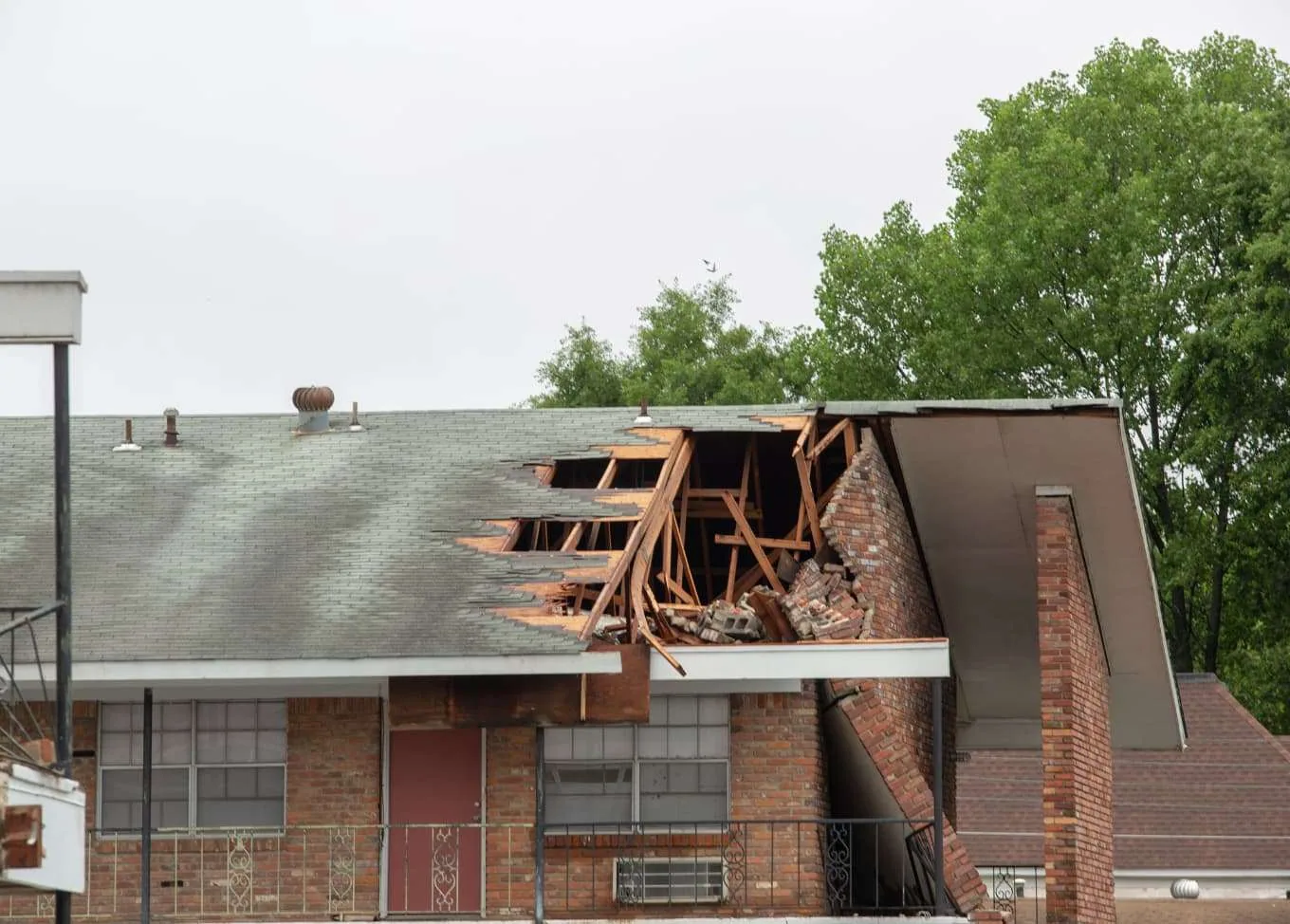
Hail in this part of Texas has been big in the past. Baseball-size stones hit Iowa Park and Burkburnett on April 2, 1991. That is history, and it does not prove damage on a roof today. It does show why we check after every hail event.
Hail bruises hide at street level, so we press, probe and mark each one, then count them in a test area. The count tells us whether the damage is spread out or limited. A hail damage report with photos and counts helps with an insurance claim.
Seams and flashings come next. Wind lifts the edges first, so we look hardest at corners and perimeters. A flashing that has pulled away from the wall by even a quarter inch will let water in during a driving rain. We press each flashing, tug at loose spots and note them on the sketch.
Repair or Replace
A big roof with dry insulation and a few failed details is a repair. A big roof with wet insulation over a large area is a replacement. In between sits the recover, a new sheet over the old, and the coating, a liquid layer over a sound membrane. Moisture readings decide which is possible.
The park has room to grow, so a roof may be part of a building that will expand. In that case, we plan the edge so a future addition can tie in without tearing up good roof. Cost follows area, deck condition, insulation, the number of penetrations and how much time the operation gives us.
If a recover or a coating is possible, it often costs less and creates less waste than a tear-off, but it works only on a roof that tests dry. Skipping the moisture test saves money up front and leaves the choice to a guess, and a recover laid over wet insulation fails early.
Timing and Access
Plants run shifts and warehouses run dock appointments. We agree on a truck route, a staging area and a plan for noise before we start. Interstate 44 and Class I rail serve the area, so freight schedules matter. We work around them.
The same plan can run across every roof an owner holds in North Wichita Falls or the Kemp and Kell Corridor.
Our crew meets with the building manager before the first day. We walk the route the trucks will take, mark where the hoist will stand and agree on who can pause the work if a delivery arrives. Written notes from that meeting go with the job file.
Commercial Roofing Questions
Why check drains first on a warehouse roof?
A big roof sends all its water to a few drains. If one blocks, the roof holds water. Clear the drains, then look at what the water did.
How often should a plant roof be walked?
Twice a year is a good start, plus after any hail event. Spring and fall visits catch what summer heat and winter cold have done.
Can the plant keep running during a replacement?
Usually. We work in sections, seal each one by evening and keep trucks and lifts away from dock doors and fire lanes.
Does a white roof help in Wichita Falls?
It runs cooler and reduces heat stress on the membrane. It does not replace good seams and flashing, which still need checking.
What speeds up the first walk?
The roof's age, how the building is used and any leak history, plus the dock and shift schedule so the walk avoids the busiest hours.