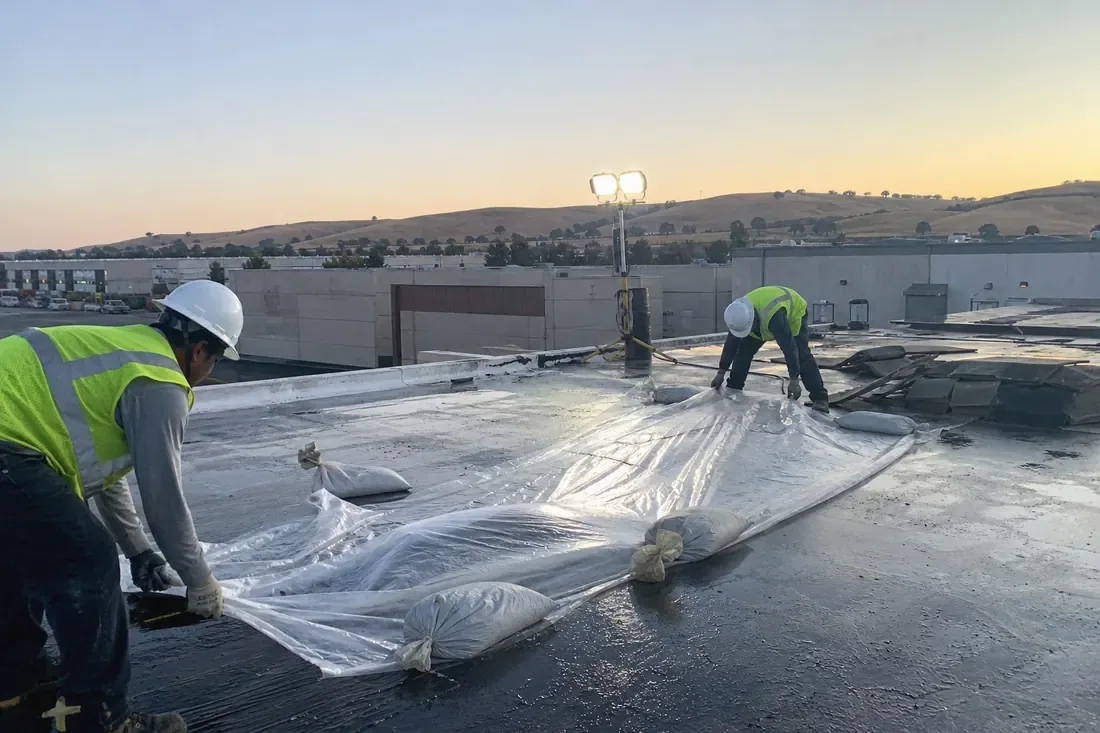
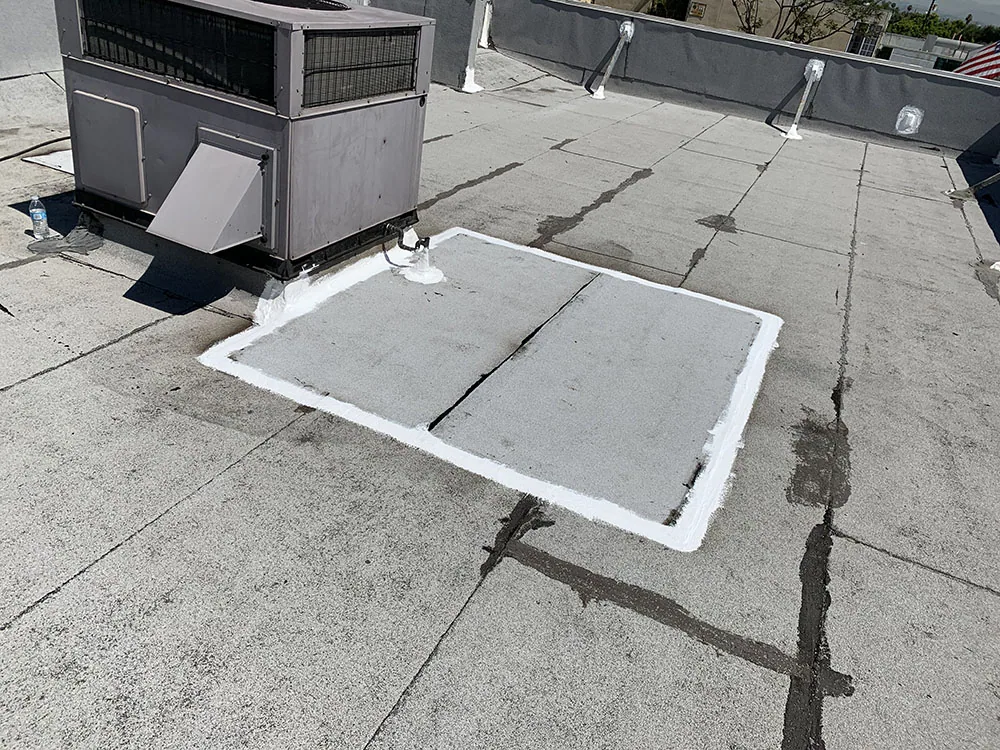
Ponding is a drainage problem before it is a membrane problem. Water that stays on a flat roof for more than a day or two after rain has nowhere to go, and the cause is almost always one of four things: a blocked drain, a low spot in the deck, a drain set too high, or a roof that was never sloped enough. Step one is to learn which of the four you have. The repair depends entirely on the answer.
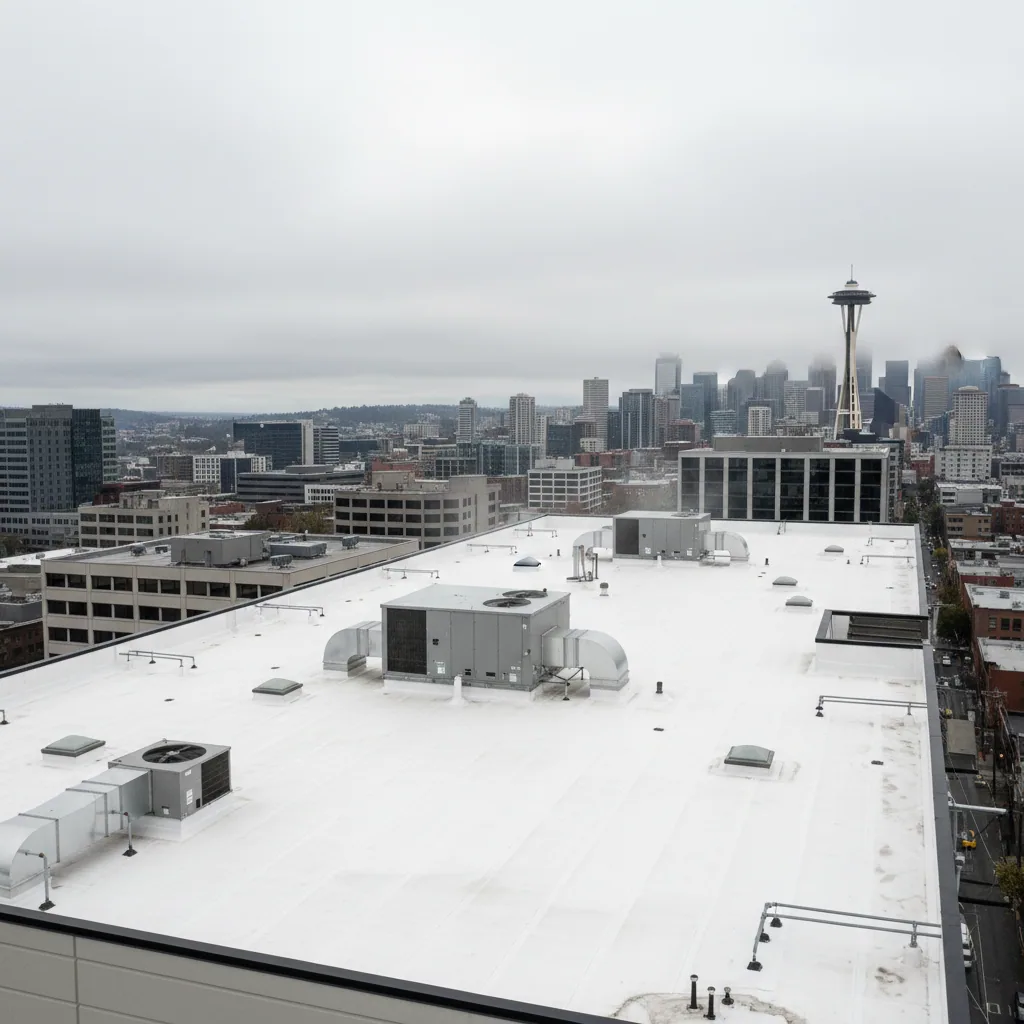
Ponding on low-slope commercial roofs across Wichita Falls, TX is something we trace and fix. We walk the roof after a rain, measure the depth and extent of every pool, trace the water to its cause and propose the smallest repair that actually drains the roof. Emergency response runs around the clock when standing water has started to leak.
Read the ponding line
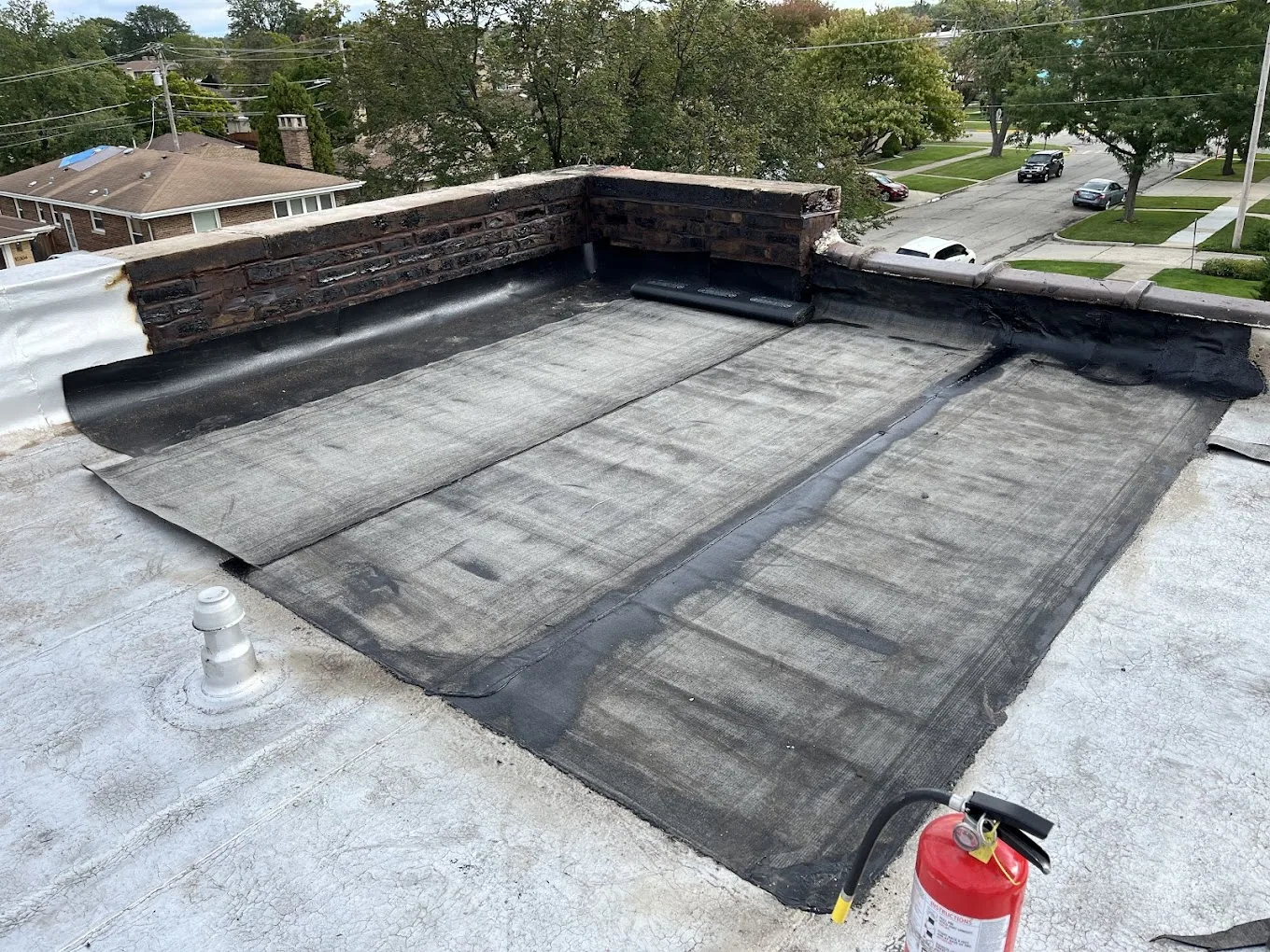
The roof keeps a record of every puddle it has held. Where water sits, dirt, algae and a faint film settle in a line at the edge of the pool, and that ponding line shows where the water has been even when the roof is dry. We look for these marks first, then check them against the drains and the structure to see the pattern. A ring around a drain points to a clog or a poorly set sump. A long stain across the middle of a bay points to a deck that has sagged.
We also measure. A shallow puddle that dries in a few hours is usually harmless. A pool an inch deep that lasts for days adds weight, speeds membrane wear and invites debris to settle. Photographs and measurements go into the report, so you can see which pools matter and which are cosmetic.
Why water refuses to leave
The simplest cause is a blocked drain or scupper. Leaves, gravel, plastic and construction debris pile up at the opening, and the roof behaves as if the drain were not there. Clearing the opening can fix the problem in an afternoon. The next cause is a drain that sits above the lowest point of the roof, which holds a pool around it no matter how clean the pipe is.
Structure is the third cause. Decks deflect under load, rooftop equipment adds weight, and wet insulation compresses over time. Each can create a dip where water gathers. The fourth cause is design: a roof built with too little slope for its span will pool in places by nature. Standing water is also heavy, and it keeps working on seams and flashing, so a ponding roof tends to develop leaks at those points first.
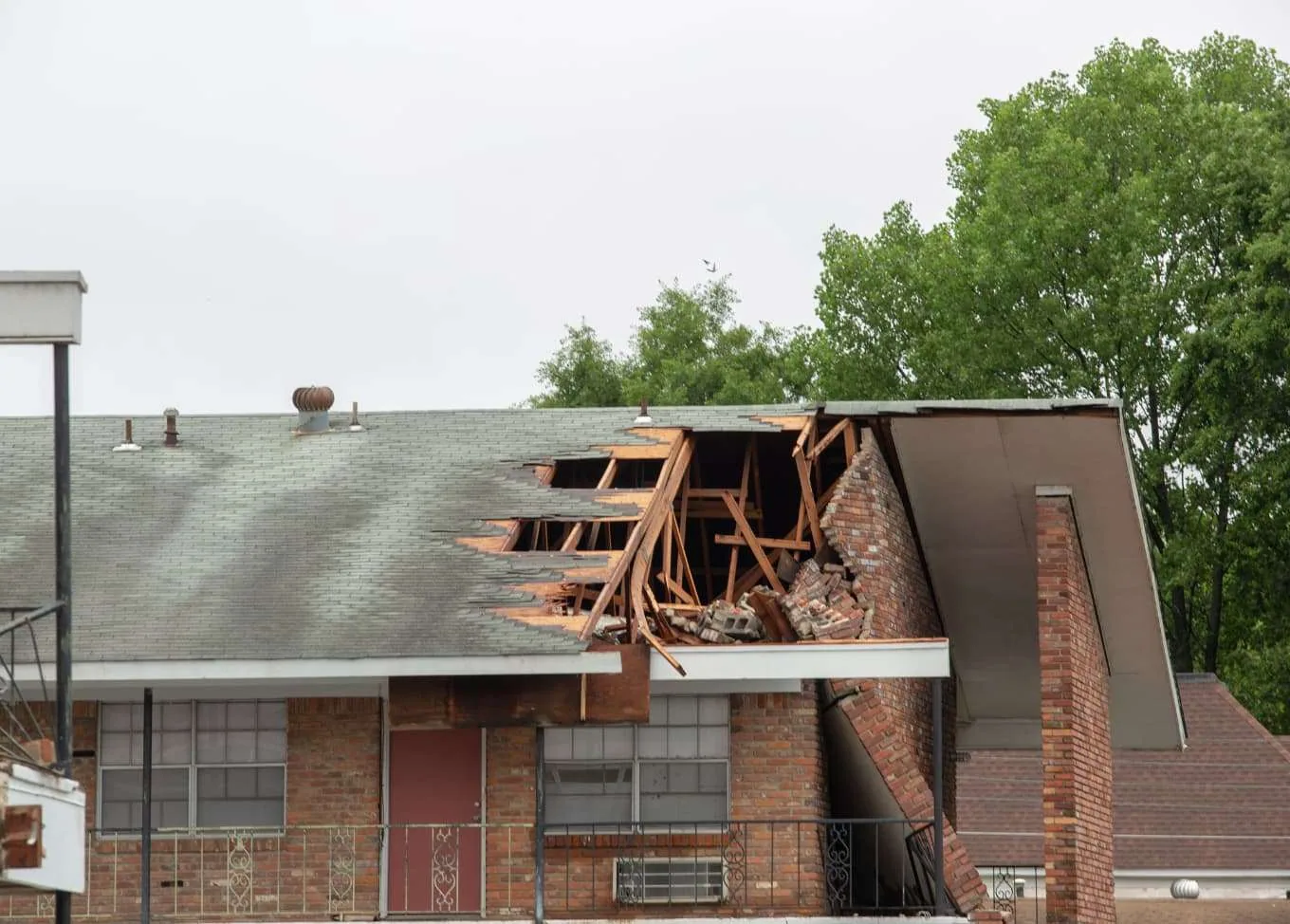
Storms add to the pile. After a hail event, ice, shredded debris and granules can wash toward the drains, and a drain that worked before the storm can be half blocked after it. Hail the size of baseballs reached Burkburnett and Iowa Park in April 1991, and a hail-struck roof can pool water where bruises have softened the surface. If the membrane has also been punctured, standing water finds the opening quickly, which is why hail damage and ponding are often found together.
What Wichita Falls adds
This part of Texas swings between dry heat and heavy rain. Average annual precipitation is about 27.9 inches, and May 2015 set the wettest-month record at 17.00 inches. A roof that drains slowly in an ordinary rain can fail badly in a month like that, since standing water arrives faster than it leaves.
Heat then takes over. On the roughly 28 days a year that hit 100 degrees, a pool of warm water against a membrane speeds the chemical aging of some materials. Algae and dirt in the pool absorb heat too. The combination of long wet spells and long hot spells is hard on seams, which expand and contract under standing water. That is why we pay attention to seam failure near any pool.
Repair options, smallest first
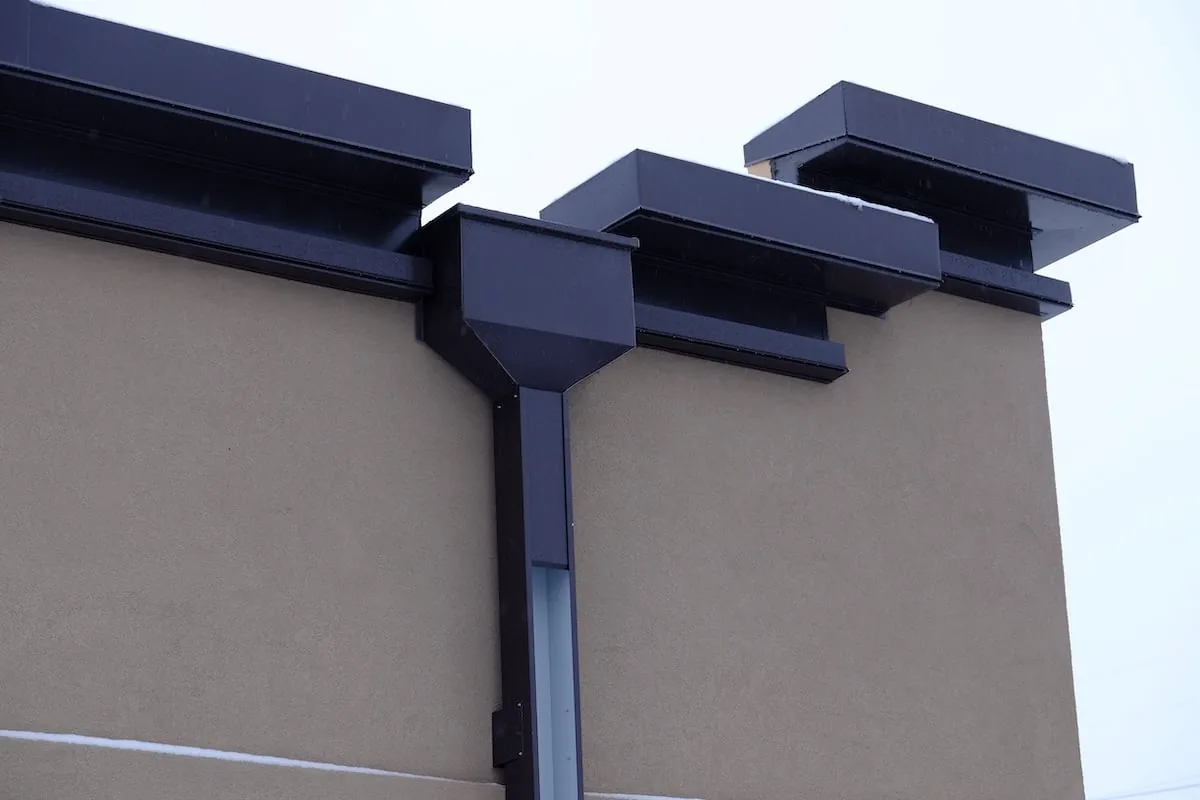
One clean rule applies: fix the cheapest cause first. Clearing and cleaning drains, scuppers and sumps costs little and often solves the whole problem. If the drain is set high, it can sometimes be lowered or a sump added. Drain and scupper work includes replacing broken drain bodies, adding overflow scuppers and checking that leaders run clear.
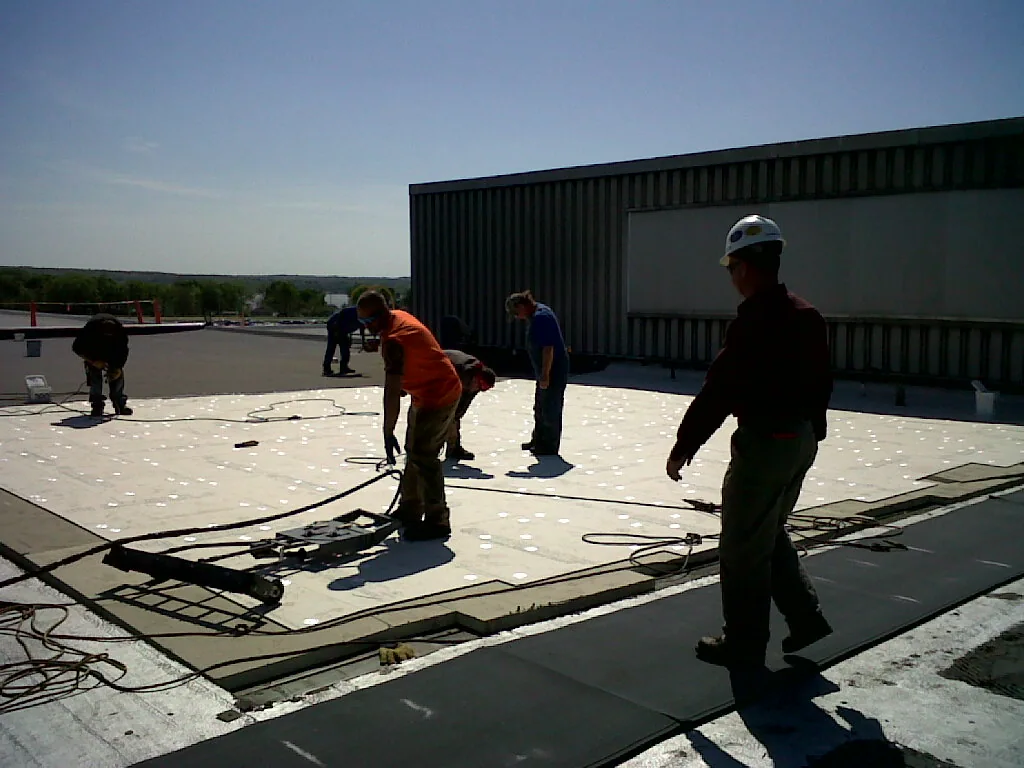
When the roof itself is low, the fix is to build up the low area. Tapered insulation is added to create slope toward the drain, then a new membrane section is installed over it. In severe cases the roof needs structural work or a full replacement with a better slope design. We explain each option with its tradeoffs, and we check the insulation beneath the pool for moisture before choosing, since wet insulation must be removed rather than covered.
Insulation is the usual sticking point. Tapered boards need a firm, dry substrate, and a cover board over the insulation protects the new membrane where water used to stand. Foot traffic around pooled areas and drains also wears the surface, so walk pads go in where crews will step, and a punctured membrane is patched before it takes more water.
Where ponding shows up in the city
Wide, flat roofs collect ponds more easily than small ones. At 525 acres, the Wichita Falls Business Park is pitched to distributors and manufacturers, which points to large low-slope buildings where a few blocked drains can hold a lot of water. The one-floor Sikes Senter mall on Midwestern Parkway is another large single-story building in the city, though what its roof holds is a question for an inspection, not an assumption.
For owners, the practical step is a routine. A maintenance visit before spring storms and again after summer clears the drains and records any new pool. Newly installed rooftop equipment can also change loads, so the roof should be checked after any mechanical change. If you manage several buildings in the Wichita Falls Business Park, a shared record keeps the worst roofs from slipping through.
A leak under a pond is the sign that the problem has moved from the surface to the building. We trace it with a moisture scan and handle it as commercial roof leak repair, and then deal with the pond so the leak does not come back. Fixing only the leak leaves a heavy pool on a repaired spot, and fixing only the pool leaves the opening.
Commercial Roofing Questions
How long should water stay on a flat roof after rain?
Most water should be gone within a day or two. A pool that lasts longer, or a ring that returns in the same place after each storm, points to a drainage or structure problem worth fixing.
Is ponding water covered by a membrane warranty?
Terms vary by manufacturer, and many limit coverage where water stands for long periods. Check the document for your roof, and we will record the pond depth and duration so the file is accurate.
Can you fix ponding without replacing the roof?
Often yes. Clearing drains, lowering a drain body or adding tapered insulation in a low area can fix it. Replacement is a choice when the membrane or insulation is already worn out.
Why does the same corner always hold water?
Usually the deck has dipped there, a drain is set high, or the slope runs the wrong way. We check drain elevations and measure the surface to find which one it is.
What do you need from me before the first visit?
Send the roof age, a note of where water stands and photos taken after a rain. If you have drain drawings, those help. We will plan the walk around the pools you describe.