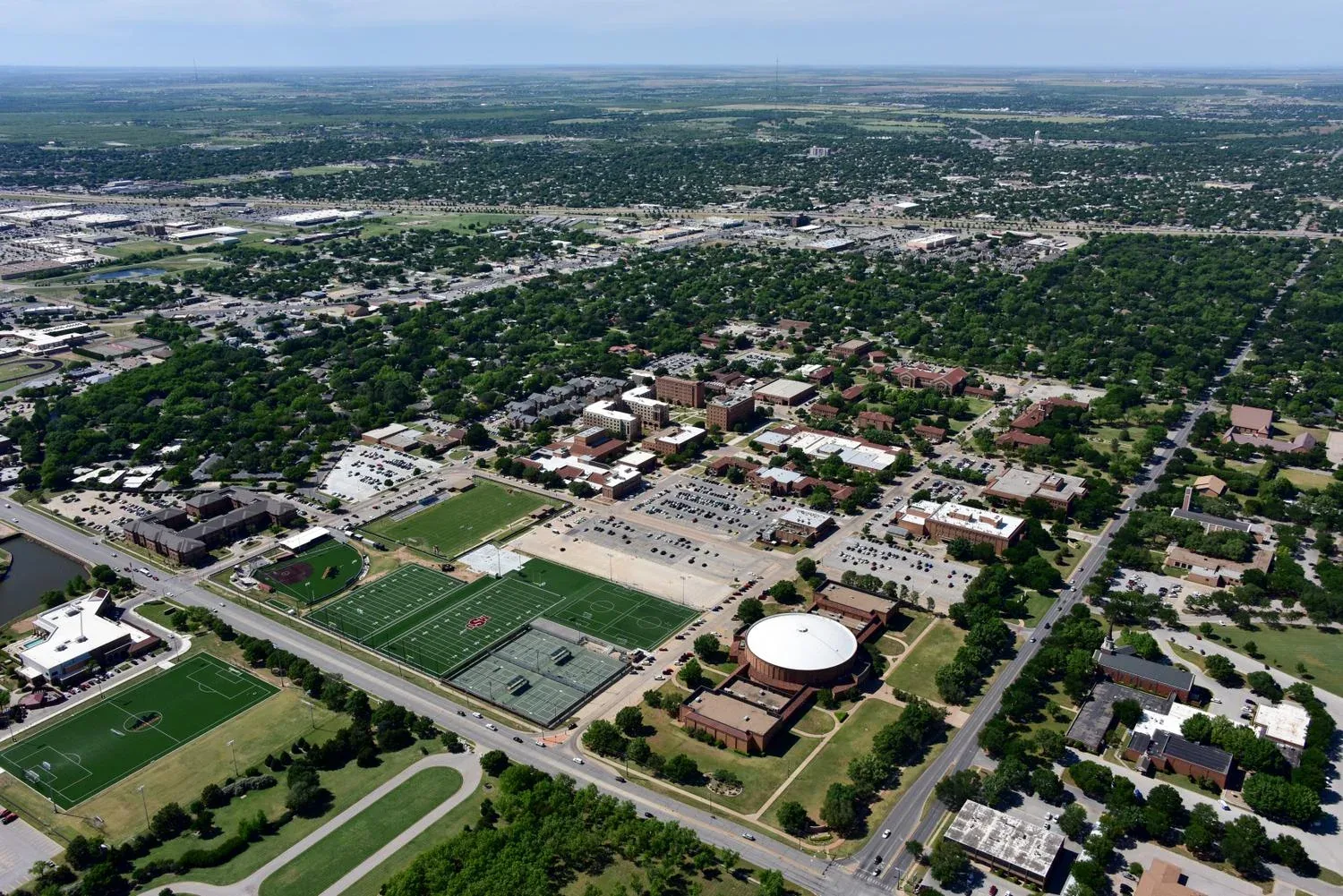
A roof in a downtown can be hard to reach and easy to forget. Downtown Wichita Falls sits at the center of the county seat, with offices, civic buildings and street-front businesses, and a roof among them has one trait to plan for: access decides the job.

Here is step one for an owner: find out how a crew gets to your roof. Ladder, lift, stair or hatch. Then everything else can be planned around it.
Flat Roofs Behind Parapet Walls
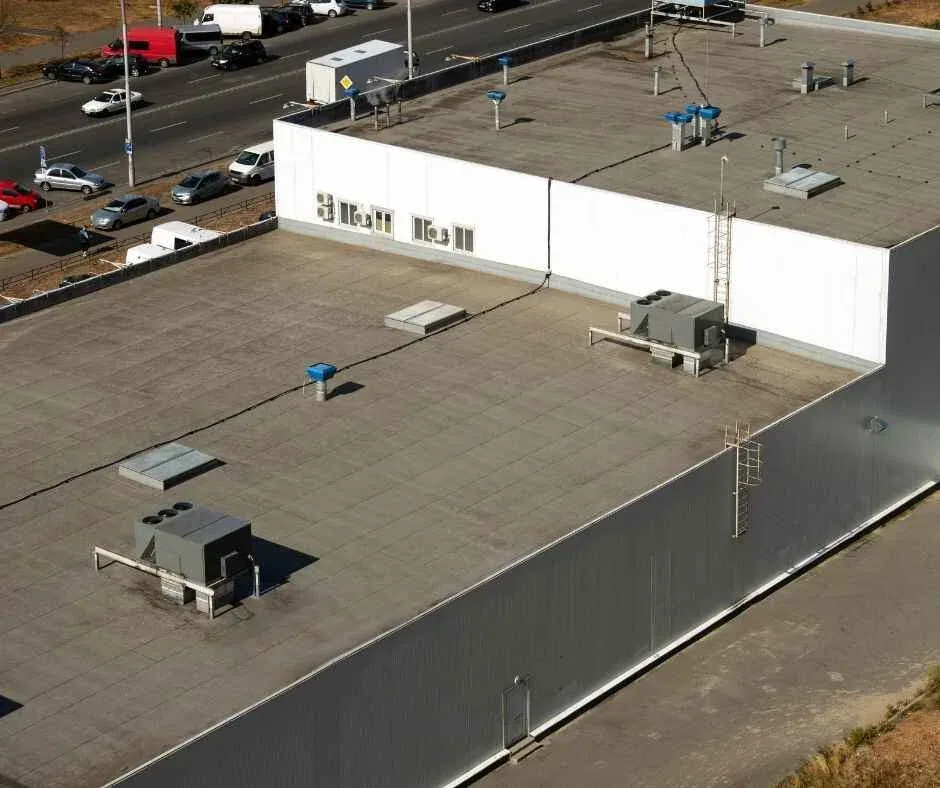
Where a street-front building has a flat roof, it often has a short wall around the edge, called a parapet. Water drains to a few spots, often scuppers cut through the wall or drains in the roof. If those clog, water sits against the wall and finds its way in. The wall itself, its cap and its flashing are the first things we look at.
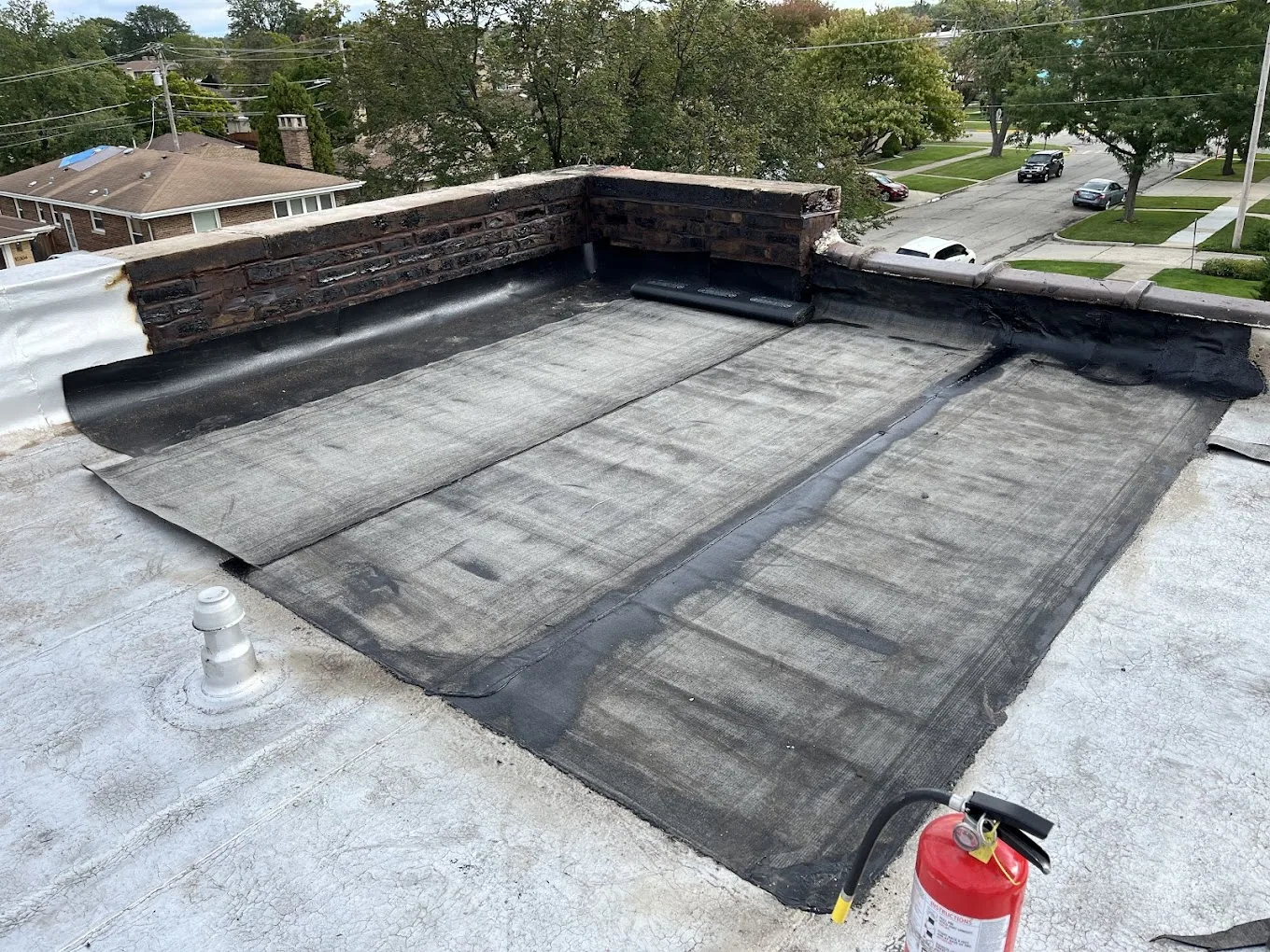
A parapet has two faces. The inside face meets the roof, and the outside face meets the weather. Cracks on either one can let water in behind the flashing, so we walk the whole wall.
Roof drains downtown may tie into a storm line shared with neighbors, and a drain that backs up affects more than one building. We note where each drain goes, test it with water and record how long it takes to clear. A slow drain is a warning, and a fast one is a good sign.
Equipment is next. Air conditioning units, exhaust fans and vents sit on curbs, and each curb has flashing at its corners. Corners crack first, so we probe every one.
Roofs downtown also collect trash from nearby buildings and the street. Paper, leaves and bottles lodge in drains and against walls, so a spring and fall cleaning keeps water moving.
Storm Memory and Edge Detail
Downtown was heavily damaged by the April 3, 1964 F5 tornado, with about $10 million in losses recorded there. That is history, and it is not proof of anything on a roof today. We use it for one lesson: wind loads the edges, so the edges get the most attention on every walk.
We check coping, caps, fasteners and sealant, then lift any loose metal and probe the wall behind it. If you have wind damage after a storm, a dated report helps with a claim.
After a storm, the first walk should happen within days. Fresh damage is easy to date, and open seams can be closed with a temporary patch. The longer the delay, the harder it is to tell new damage from old wear.
Hail also matters. We press the surface of the roof, mark each bruise and count them in a test square. A report with counts, photos and dates lets you and an adjuster see the same facts.
Offices and Civic Buildings
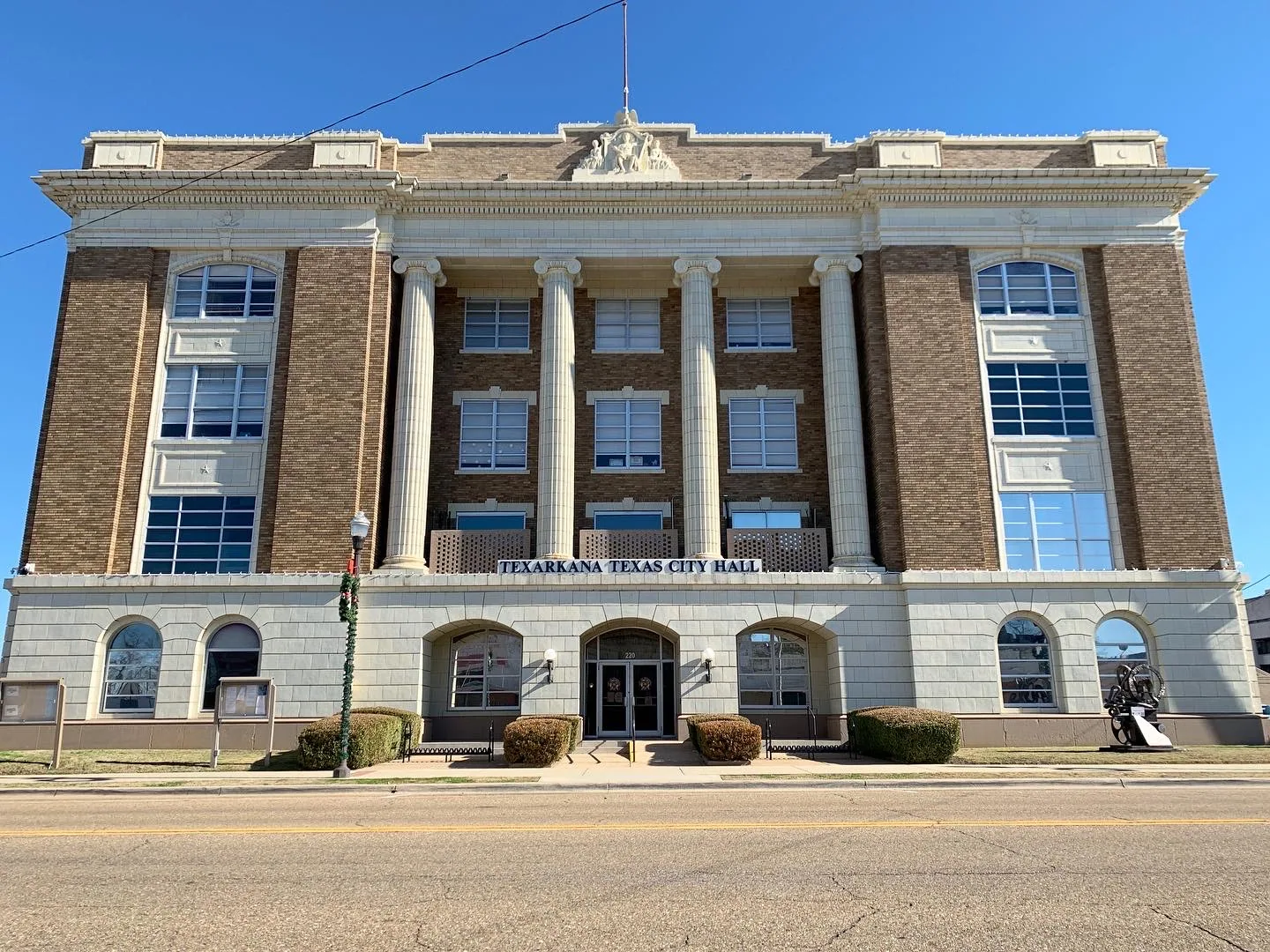
About 1,217 people work for the city of Wichita Falls, the fifth-largest local employer. Wichita Falls is also the Wichita County seat, so civic and government buildings are part of the downtown picture. A government building roof often has public hours, secure areas and a budget process, and the work has to fit all three.
We write the scope in line items a purchasing office can read, with photos and a roof sketch. That makes a request easier to approve.
Public buildings follow rules about bids, records and schedules, so a roof report should be written to stand alone. It names the roof, shows its condition, ranks the repairs and gives a range for the cost. A reviewer who has never seen the roof can read it and understand the need.
Heat matters here too. Downtown sits in a city that records about 28 days a year at 100 degrees, with 100 such days in 2011. A flat roof that sits in the sun all summer ages faster than one that gets shade, and a roof with a dark surface runs hotter than a light one.
What to Check Before You Spend
Step one is the drains. Look for debris, clogs and ponding lines. Step two is the flashings, along every wall and around every pipe and unit. Step three is the surface: blisters, splits and soft spots. We press, probe and mark each one.
Where we suspect wet insulation, we use an infrared moisture survey. It shows warm and cool areas on a clear evening, and a few core samples confirm them. You learn how much of the roof is wet before you choose a repair.
Rooftop access is checked too. A hatch that sticks, a ladder with loose rungs or a missing guardrail is a safety issue for anyone who goes up. We note each one and put it on the list.
Repair, Recover or Replace
One clean rule: choose the smallest fix that fits what the tests show. A local leak with dry insulation is a repair. A tired roof over dry insulation may take a recover. Wet insulation across a wide area needs a full replacement.
Cost follows roof size, deck condition, access, the number of penetrations and how many hours the building gives us. Downtown access adds lift time, so we list it by itself in the quote.
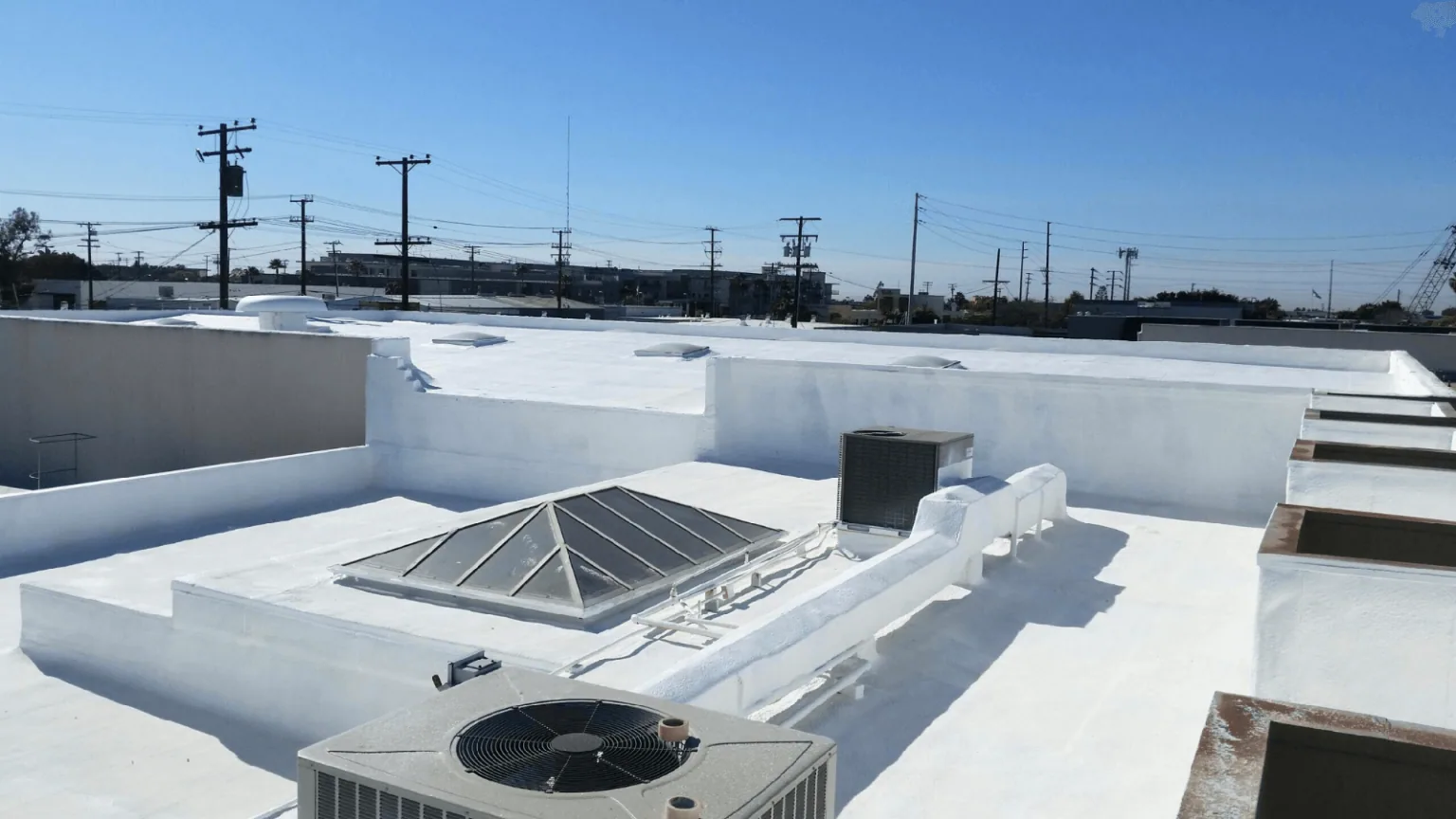
A coating can add years to a roof that is sound and dry. It seals small seam gaps and reflects heat. A coating cannot dry out wet insulation or close an open seam, so the tests come first. If a roof fails them, the money is better spent on repair or recover.
For a building that the owner plans to sell or lease, a dated report carries weight. A buyer or tenant sees photos, readings and a plan, and the questions get shorter.
Timing and Access
Downtown work can need permission to close a lane or a sidewalk. We plan hoisting for quiet hours, keep entrances open and fence the work area. Annual rainfall near 27.9 inches means we also plan for weather holds and seal each section by evening.
The same planning fits buildings near the Taft Boulevard area or in the Kemp and Kell Corridor.
Before work starts, we walk the route with the building manager and mark where the hoist will stand, where material will wait and which door the crew will use. The notes go into the job file, so any change is easy to track.
Notice goes to tenants and neighbors before the first day. It lists the dates, the noisy hours and a person to call. If a sidewalk or lane must close, the permit is requested early and the closure is kept as short as the work allows.
Commercial Roofing Questions
Why does access matter so much downtown?
Streets are tight, so trucks and lifts need space. Plan how the crew reaches the roof before you plan the repair.
What is a parapet and why check it?
It is the low wall around the roof edge. Its cap and flashing are where leaks often start, so we check every foot.
Can the building stay open during work?
Yes, in most cases. We stage work in sections, protect entrances and finish each section by evening.
Do old buildings need a different roof?
Age alone does not decide it. The deck, insulation and drainage do. We check those and recommend a system that fits.
What do I send first?
Send the roof age, what the building is used for and any leaks you have seen. That helps the first walk answer a real question.