The first hour after a roof opens up has an order, and following it protects more than the roof. People come first, then power and equipment, then contents, then the building envelope. The rule is plain: stop the harm in the sequence that matters most. Commercial Roofing Wichita Falls answers emergency roof repair calls across Wichita Falls, TX at any hour, on weekends and on holidays, and we walk callers through those first steps while a crew is on the way.
North Texas weather can turn quickly. The April 1979 tornado crossed the south and east of the city in about 30 minutes, and a spring thunderstorm can drop hail, wind and heavy rain over a building in less time than that. A written plan made before the storm saves the scramble after it.
Step One Is Safety
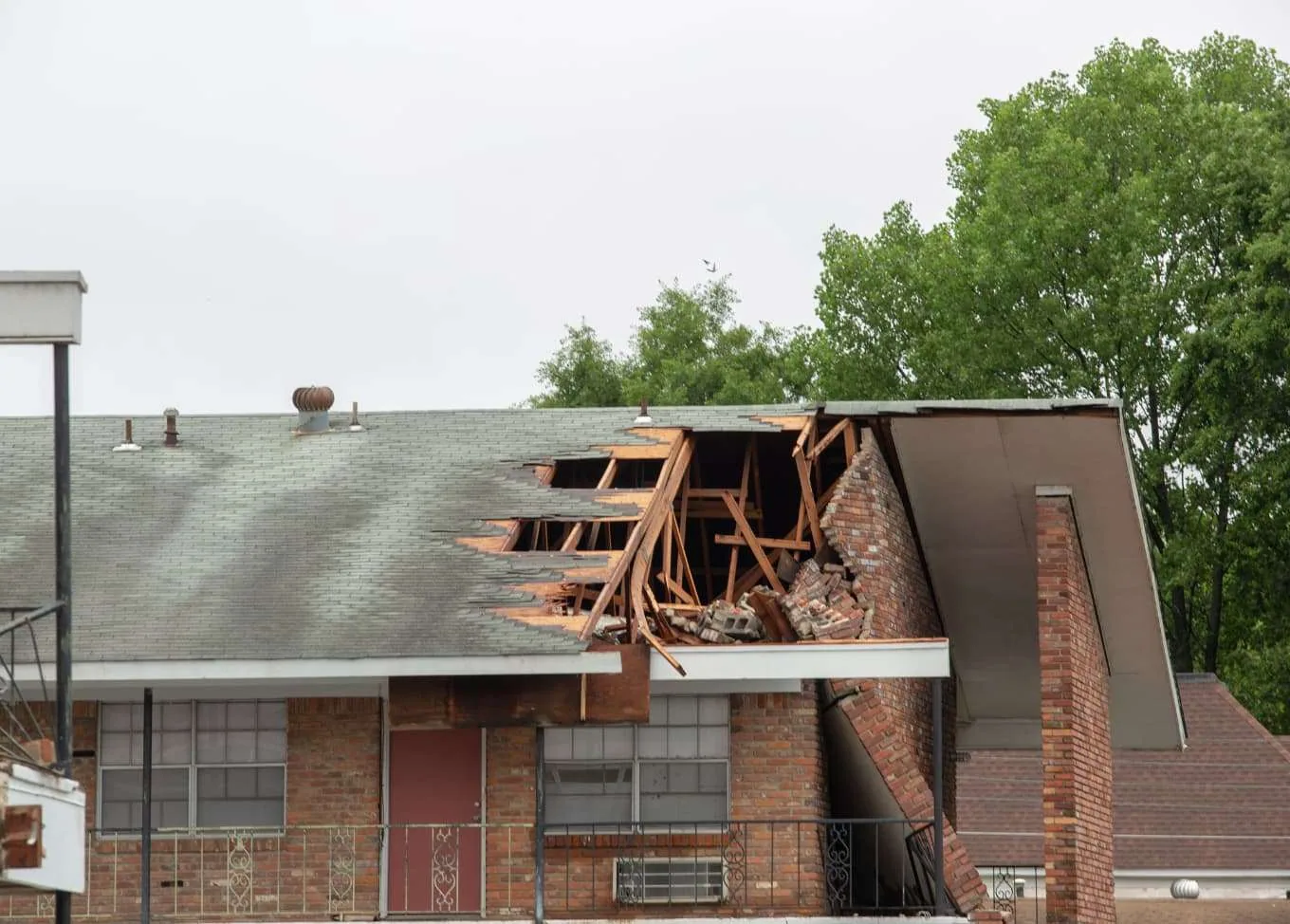
Before anyone thinks about the membrane, check for hazards. Water near electrical panels, lights or rooftop equipment is a danger. Sagging ceiling tiles hold more water than they look like they do, and a ceiling can drop without warning. If a deck is damaged, no one should walk on it, including on the roof itself. We ask callers to clear the area below the damage, shut off power to affected circuits if it is safe to do so and keep people away until we arrive.
Then call us with the basics: the address, what you can see, whether water is entering now, and whether anyone is hurt. That short list lets the dispatcher send the right crew and materials in the first trip rather than making a second one.
Access matters as well. Tell us where the roof hatch or ladder sits, whether the gate is locked after hours and who can let the crew in. For a building behind a fence, such as a manufacturing site or a compound near the Wichita Falls Business Park, a missed gate code can cost the first hour. We also ask whether any roof area is already weakened, because a crew that knows where the soft deck sits can set up fall protection and avoid it.
Step Two Is Containment
Next, limit what the water can reach. Move inventory, cover equipment with plastic, open drains inside the building if there is a floor drain and set buckets under drips. In a distribution building, the first pallets to move are the ones in the drip path. In a clinic, supplies and records come out first. In a retail center along Kemp Boulevard, the display zones under the damage are cleared.
Do not cut into a ceiling that is bulging with water unless you can do so safely and control the flow. Water held in a ceiling can be released slowly through a small opening, but only by someone who knows where the weight sits. When in doubt, wait for us and keep people away.
Step Three Is Dry-In
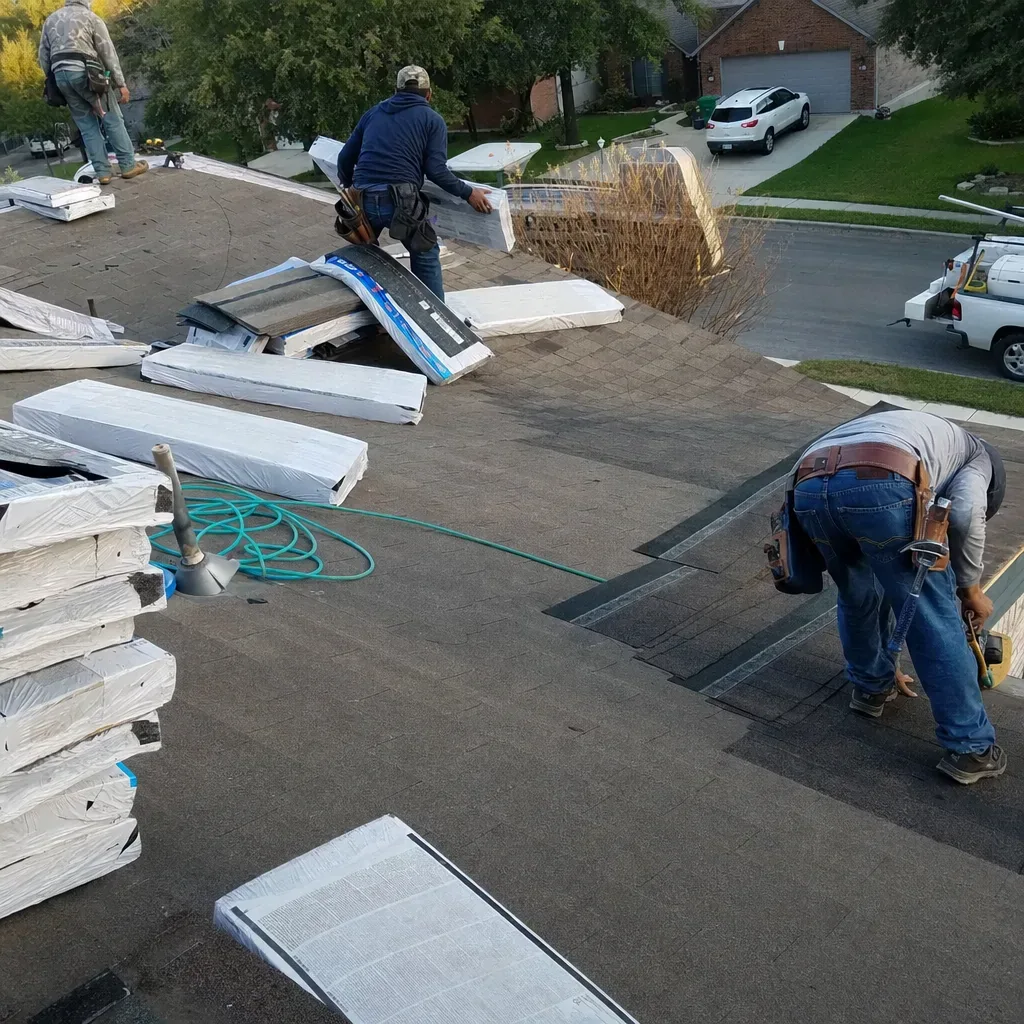
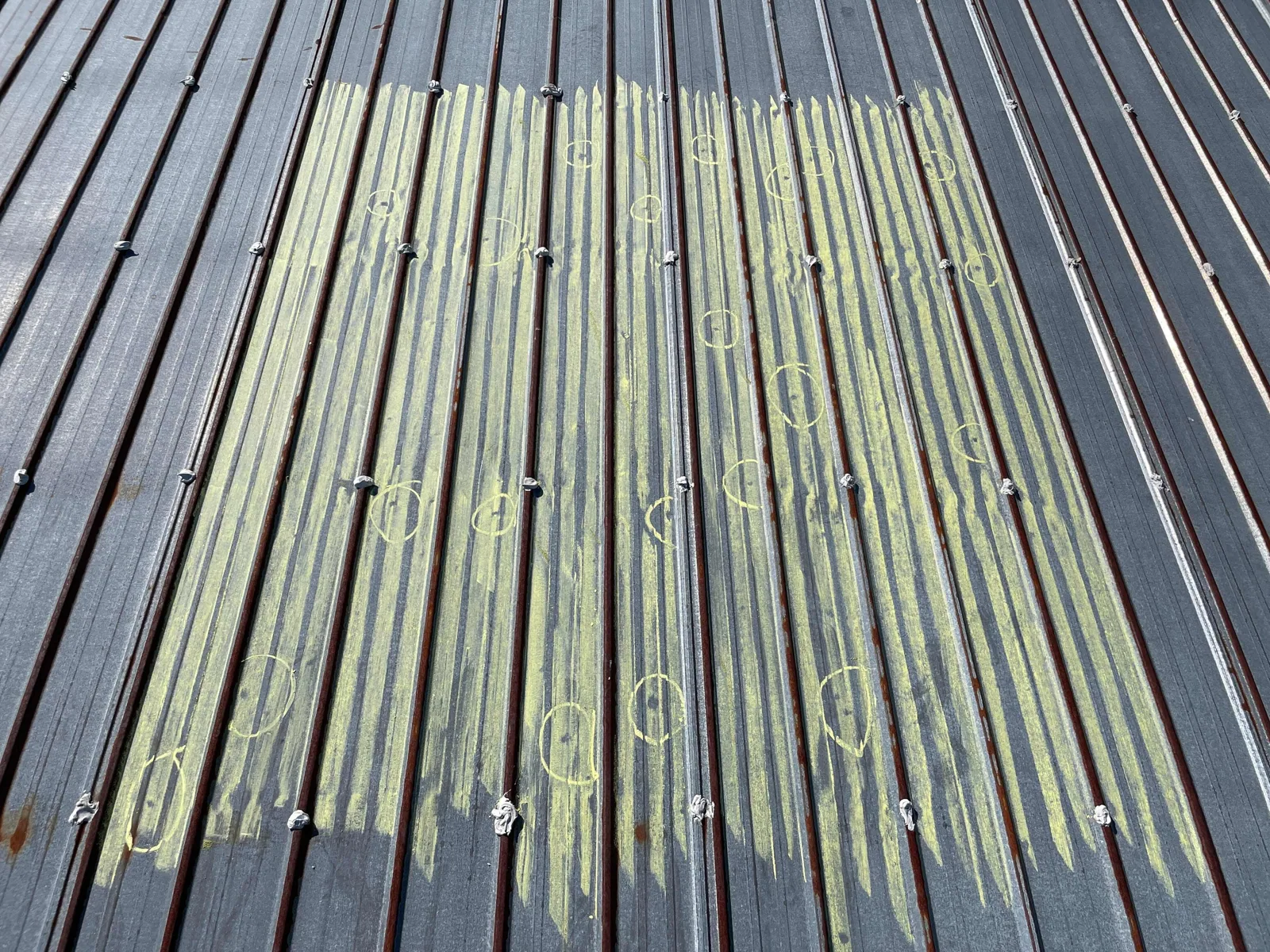
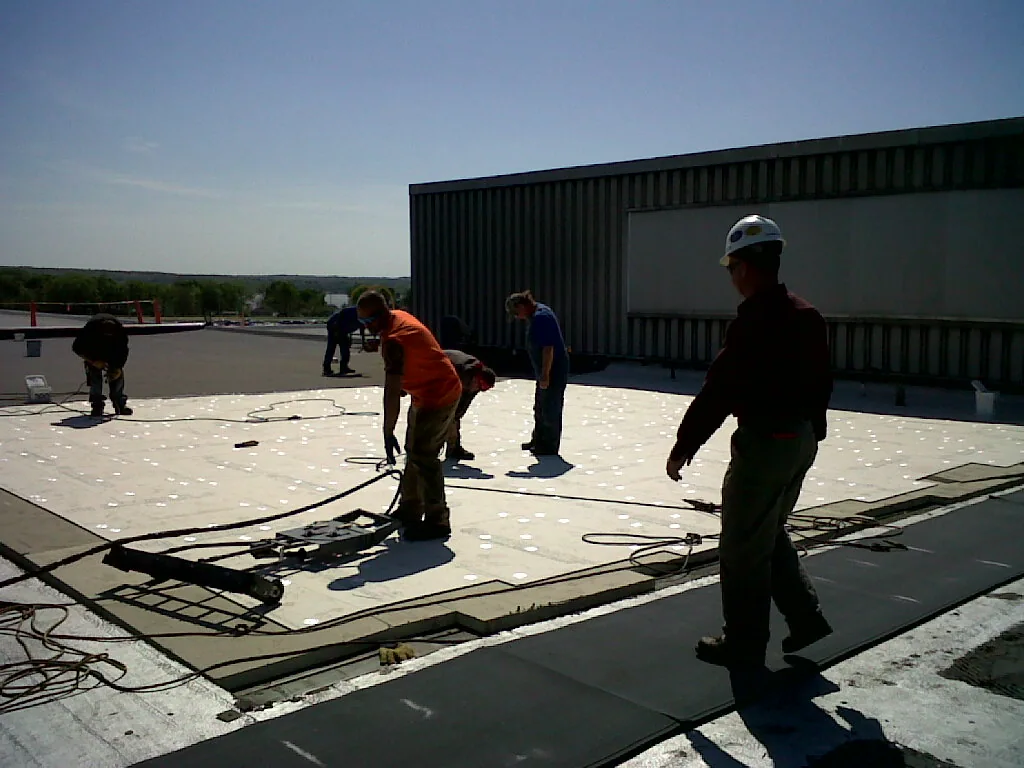
Once the crew is on the roof, our goal is to stop water entry as quickly as conditions allow, with materials chosen for the damage. A torn membrane gets a patch or a temporary covering. A lifted edge gets secured with fasteners and sealant. An opening from a fallen limb or equipment gets a deck cover and tarp, weighted or fastened so wind cannot take it. Hail damage often requires a wider sweep for punctures, because many small holes can let in as much water as one large one.
A dry-in is temporary. We label it, photograph it and report it, and we schedule the permanent repair so the building does not run on a patch for months.
Wind is the opponent during a dry-in. A tarp that is not fastened to a firm edge acts like a sail, and a badly secured cover can tear more roof than it protects. We run fasteners and battens into sound material, wrap edges so wind cannot lift them and keep weights off areas that have lost strength. On a roof with standing water, we also clear the low spot, since a pooled area under a cover adds weight to a damaged deck. After a severe event, a permanent fix may follow the pattern used for tornado damage, with the deck checked first.
Storm History to Plan Around
Past events show what the area can produce. An F5 tornado in April 1964 heavily damaged downtown Wichita Falls and left debris on all four runways at Sheppard Air Force Base. A tornado in April 1962 blew out nearly all the windows in the control tower at the base. Hail the size of baseballs hit Iowa Park and Burkburnett that same decade, in April 1991. None of this tells you what a given roof has suffered, but it tells you why an emergency plan is worth having.
Iowa Park and Burkburnett have both taken heavy hail, and it changes a roof in minutes. Keep roof access information, a contact list and a copy of your insurance policy where your staff can find them at night.
Documentation for Claims
Good records turn an emergency into a manageable insurance claim. We photograph the damage before we cover it, note the weather, record what we did and why, and keep receipts for materials. Your insurer will ask for these things, and a clear record shortens the conversation. Many policies require reasonable steps to protect the property from further damage, and a dry-in is exactly.
Our roof insurance claim assistance goes further, with a scope of loss written in plain language. We do not argue your policy for you. We supply the roof facts, so you and the adjuster talk about the same building.
Timing matters in a claim. Photograph the damage before repairs where you safely can, keep removed material until the adjuster has seen it and write down the time you first noticed the problem. A hail or wind event leaves a date, and a gradual leak leaves none. The clearer the date and cause, the easier the discussion with the carrier.
After the Emergency
The call ends when the permanent repair is done, not when the tarp goes on. We schedule a follow-up visit once the weather clears, inspect the deck and insulation under the damaged area for moisture and give you options: a permanent repair, a larger storm damage repair or, when the roof is near the end of its life, a replacement.
If you manage several buildings, ask us to set up a written emergency contact sheet for each, with access notes, shutoff locations and roof layouts. When the call comes at two in the morning, the crew already knows how to reach the roof.
Commercial Roofing Questions
What should I do first when a roof opens up?
Move people out of the danger area and shut off power to affected circuits if that is safe. Then call us with the address and what you see. Containment and photographs can happen while the crew is traveling.
Do you work at night and on holidays?
We answer emergency calls around the clock, every day of the year. A night call gets the same triage questions as a daytime one, and we send a crew when the situation requires it.
Is a tarp a permanent fix?
No. A tarp or temporary patch buys time. We schedule the permanent repair and check the deck and insulation underneath, so water does not keep working under a covered area.
Will my insurer cover emergency work?
Many policies cover reasonable steps to prevent further damage, though terms differ. Keep receipts and photographs, and read your policy or call your agent. We provide the documents that show what we did.
Can you work in high wind or lightning?
No. Crews stay off the roof when wind or lightning makes the work unsafe. We protect the interior from below and return the moment conditions allow.