An office roof is judged by what happens one floor below it. A stained tile, a damp corner, a conference room that smells of wet insulation: those are the reports that reach the property manager. The roof itself is quiet. In Wichita Falls, TX, hot summers and storm-season springs make steady demands on it. Start with the tenants and the rooftop equipment, then work through the layers in order, from the surface down to the deck.
Know the Building and the Tenants
Business support services are among the area's major clusters, and the City of Wichita Falls is itself one of the largest local employers, with about 1,217 people. The city's west side is where Interstate 44 ends, and U.S. 82-277 passes through town as Kell Boulevard; a building on either approach is judged by the same weather. Offices come in many shapes: a single-tenant building with one operator, a multi-tenant block with a dozen suites, a government building with public hours. Each one asks for a different schedule and a different level of care.
Wichita Falls is the Wichita County seat and the Wichita River runs through the city, and downtown was heavily damaged by the F5 tornado of April 3, 1964. That history does not tell us what is on a given roof today. It does tell us the district has been rebuilt over time, so we plan for a mix of old repairs, added equipment and records that may be missing. The first walk sorts that out.
How an Office Roof Is Put Together
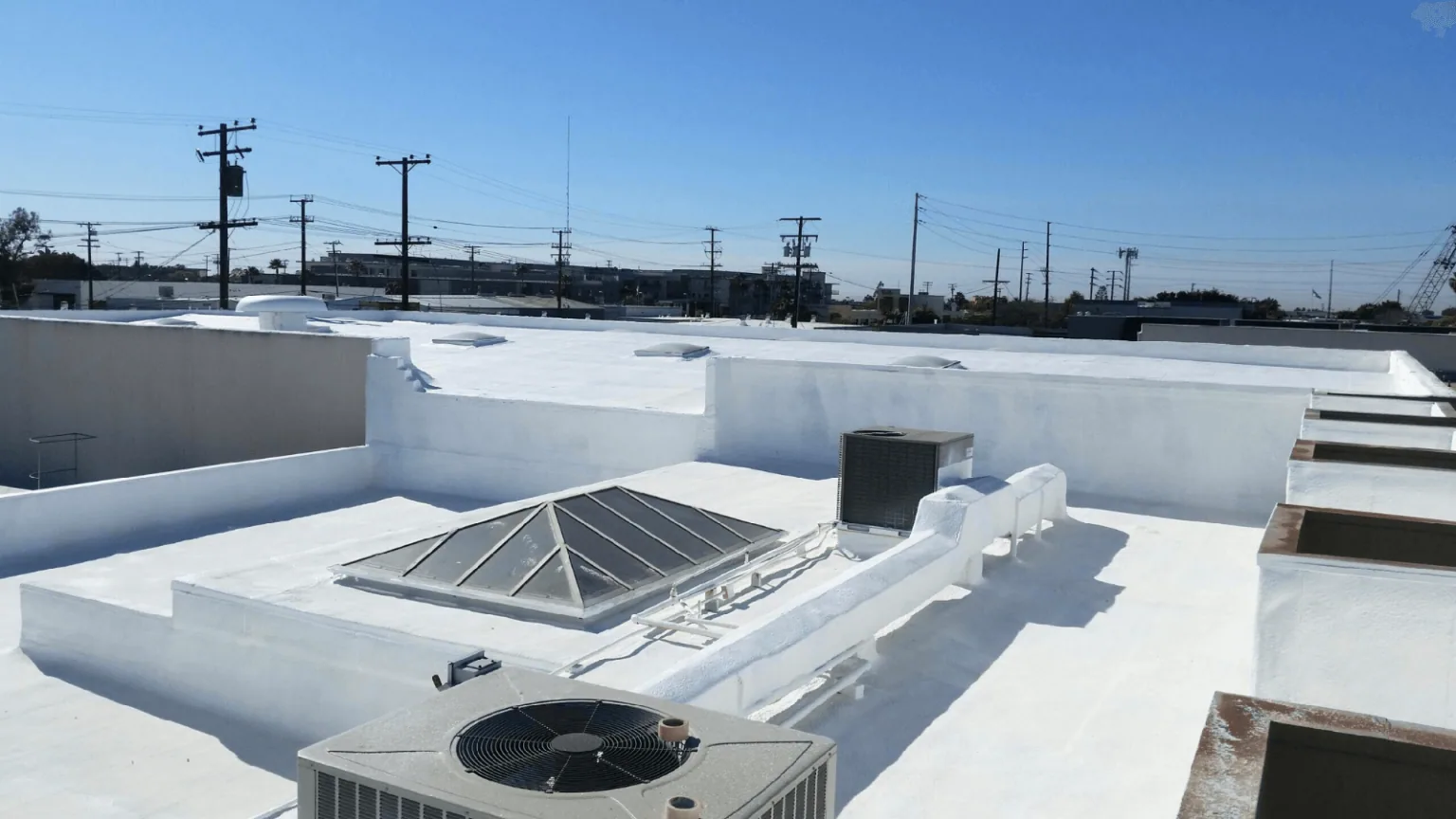
Most office roofs are low-slope builds of deck, insulation, cover board and membrane, with a parapet or a coping at the edge. Rooftop units dominate the field, since an office needs heating and cooling and the roof is a convenient place to put them. Over the years units are swapped, relocated or added, and old curbs are often left open or capped with whatever was handy. Every unit stands on a curb, and every curb is flashed into the membrane.
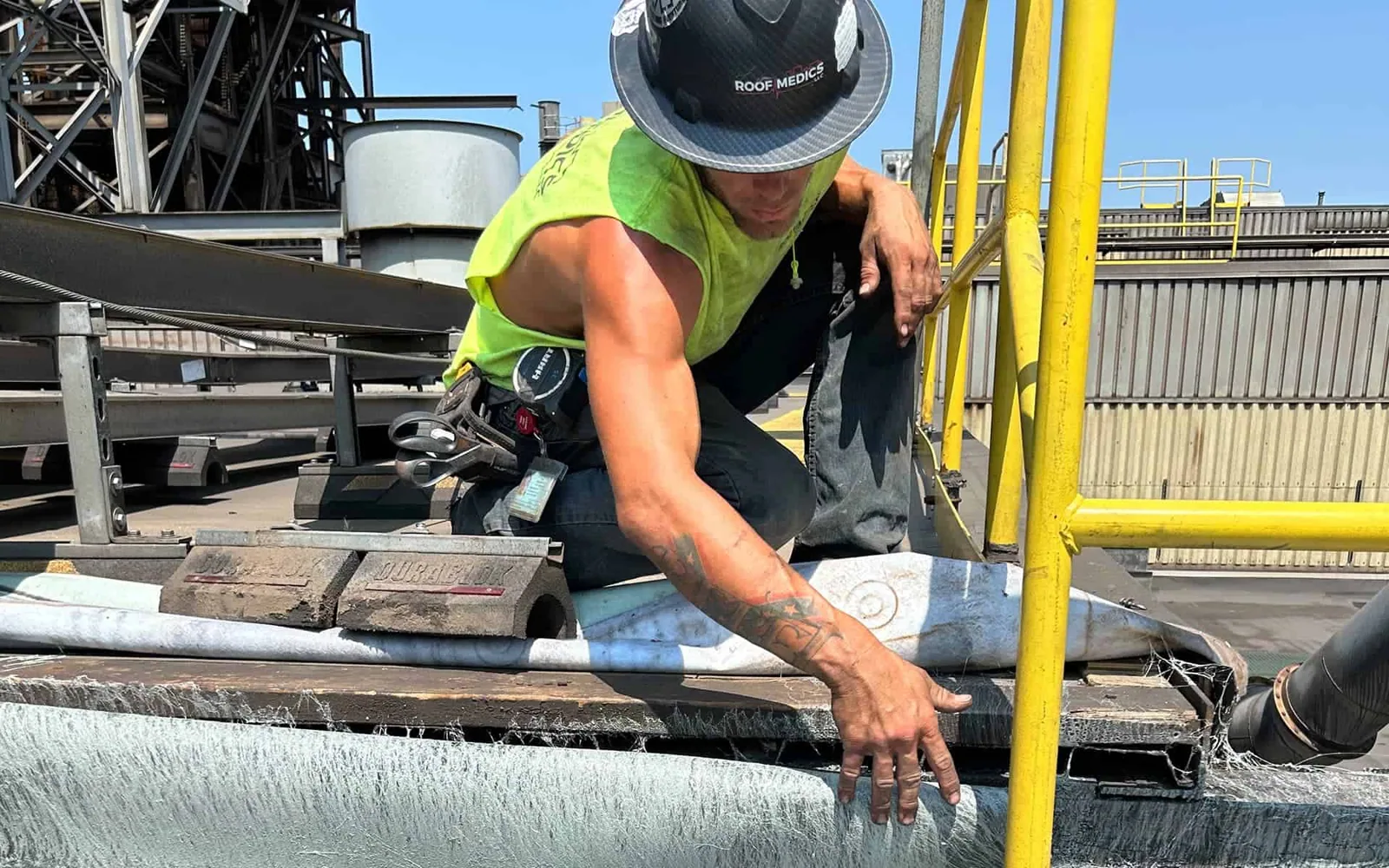
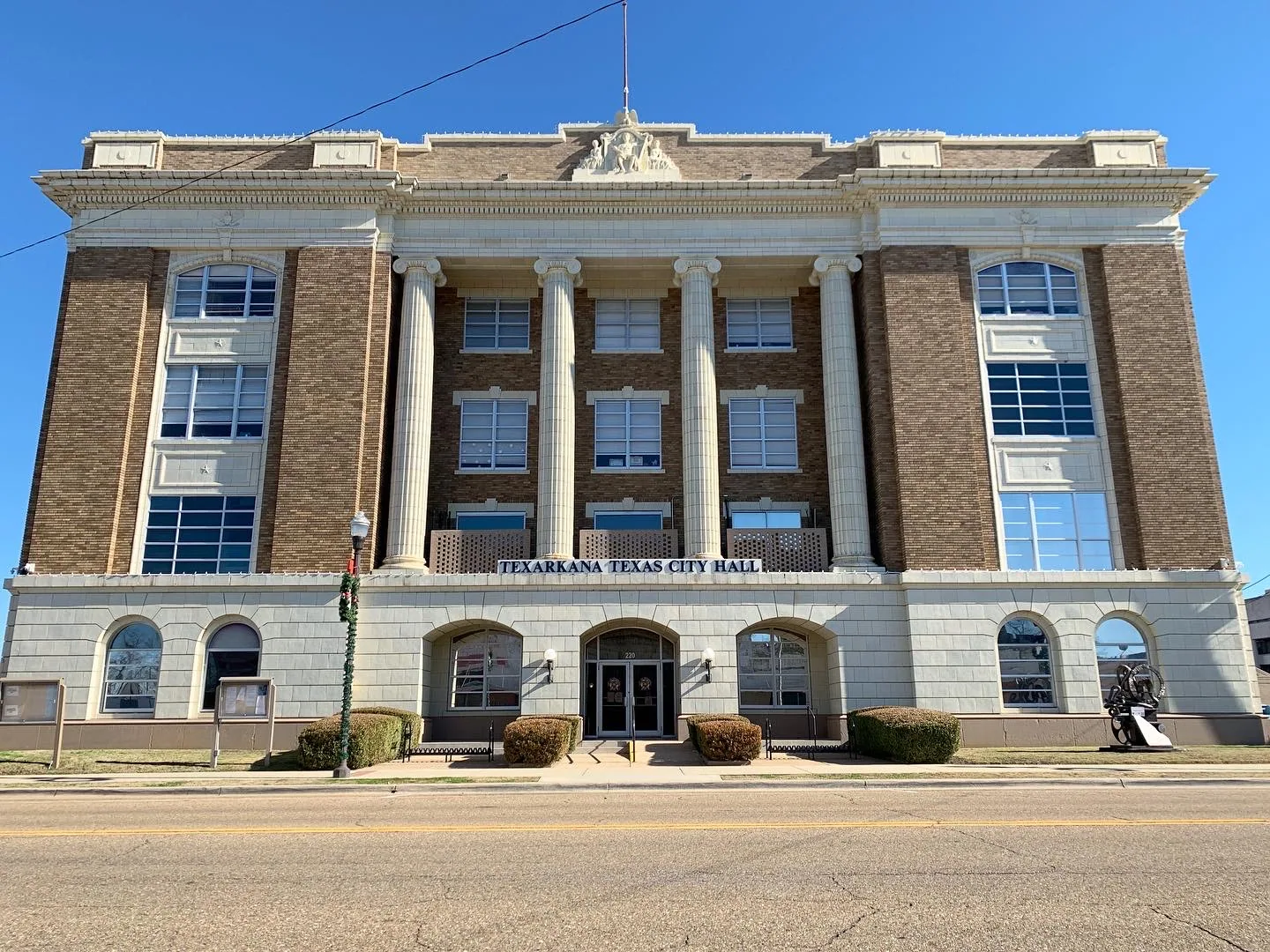
The membrane may be TPO, EPDM, modified bitumen or a built-up system. Each one ages differently. Single-ply sheets weld at seams. Bituminous roofs have laps that can open. The membrane type decides how we repair a seam, a patch or a flashing, so we identify it before we touch it. A patch that bonds to one membrane will peel off another, and a sealant that suits metal fails on single-ply. Step one on every repair is knowing what is underfoot. A government building roof follows the same rule.
Where It Fails First
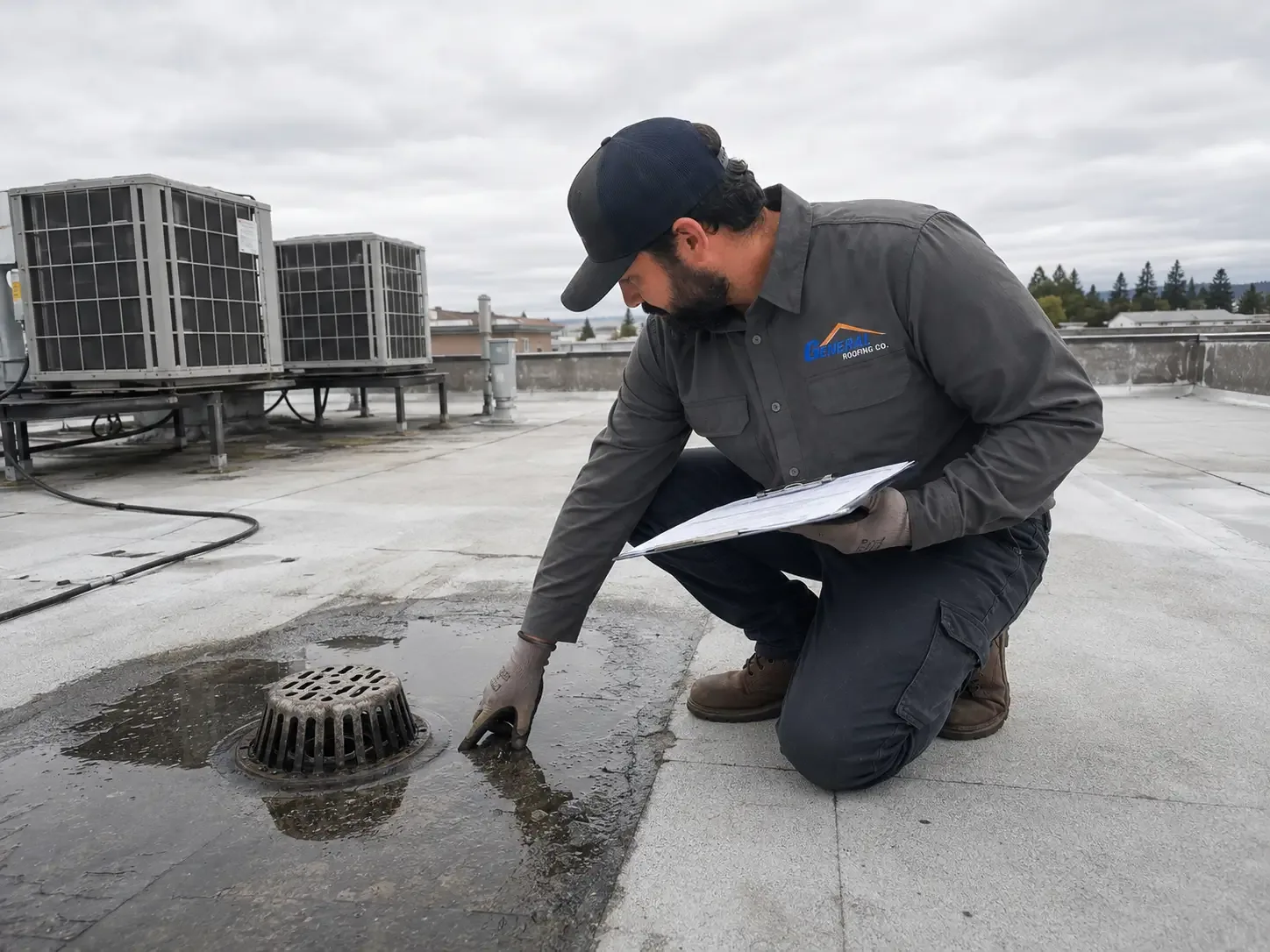
Office roofs fail at units, parapets and drains. Curb flashing around a rooftop unit cracks or pulls away. Parapet caps open at joints. Drains collect leaves and grit and hold water against a seam. Service technicians walk the same path to each unit for years, and the membrane wears along that line until it thins.
Heat is the slow stress. A dark sheet expands and relaxes through about 28 days a year at 100 degrees. Tenant improvements add holes: a new exhaust, a new cable run, a rooftop antenna. When a vendor cuts the roof without notice and seals it with whatever is on the truck, the leak shows up a season later at the tenant's ceiling. By then no one remembers who was on the roof, and the owner pays to find the hole. A simple rule, no roof work without notice, prevents most of it.
What to Check
The walk starts at the roof access and follows the service path, since that is where most of the wear lives. We photograph each finding and mark it on a plan. The plan stays with the property manager, so a second walk a year later can compare like with like.
- Rooftop unit curbs, flashing height, cap seals and fastener heads.
- Service paths, for scuffs, cuts and thin spots in the membrane.
- Parapet caps, coping and counterflashing at every wall.
- Drains and scuppers, flushed, with ponding lines marked.
- Penetrations from tenant work, with the boot or collar at each.
Interior stains are mapped to roof zones before anything is opened. A stain over a suite can come from a drain two bays away, so we trace the water and test the suspect detail before we write the repair.
Repair or Replace
One clean rule: fix the details first, and replace the roof when the layers say so. A dry roof with failed curbs and seams is a repair job. Wet insulation across a broad area is a replacement. Where the base is dry and sound, a recover skips tear-off, and in an occupied building that means less noise and dust.
Cost follows roof area, the number of units and penetrations, the amount of wet material and access. We price a repair and a replacement together and say what each leaves behind. An owner can then compare the cost of patching every year with the cost of a new roof that lasts. Insulation upgrades, new curbs and drainage fixes can be added while the roof is open, which is cheaper than opening it again later.
Timing and Tenants
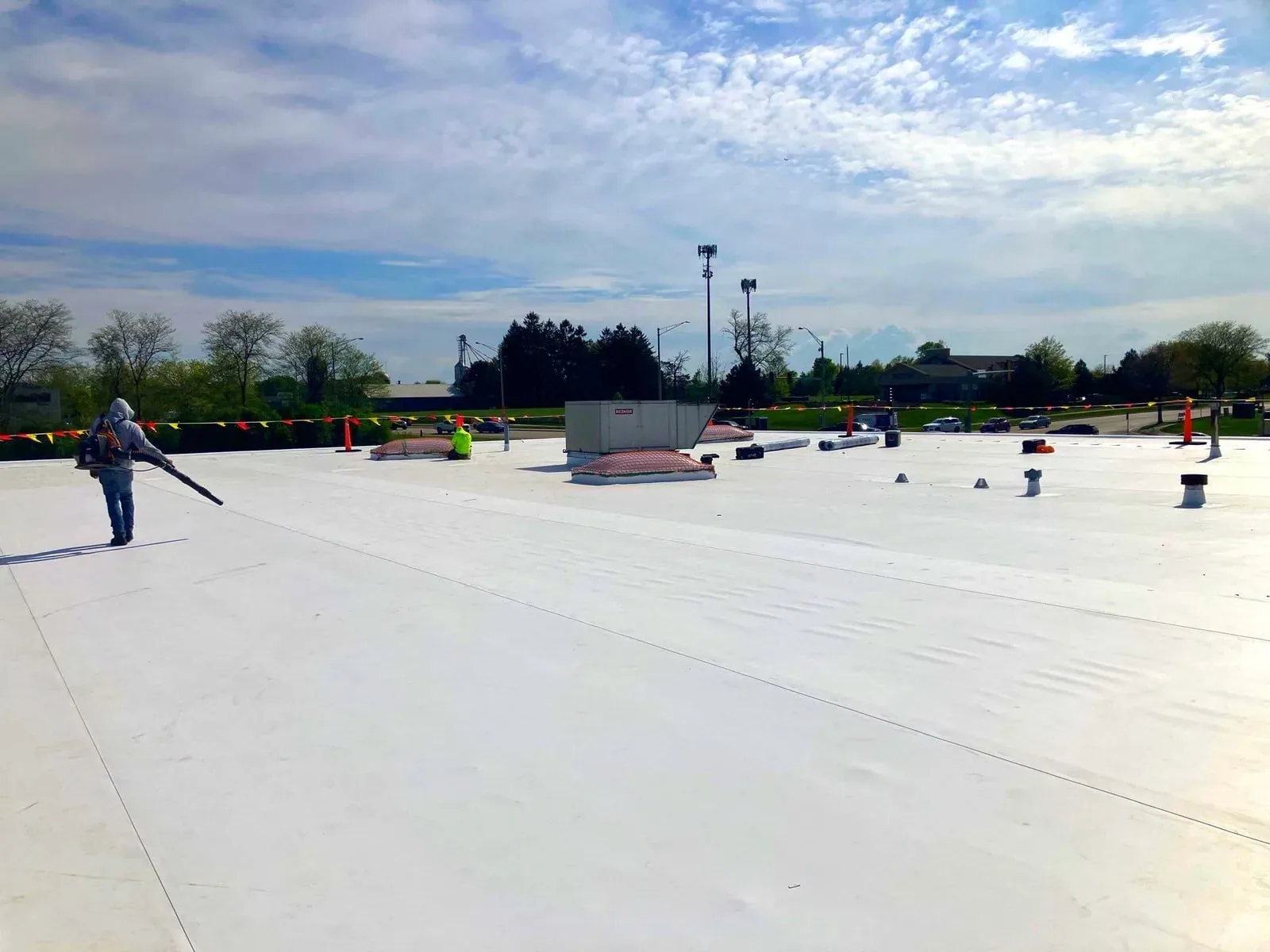
Office work happens around people, and that changes the order of operations. We choose a lift position that leaves entries and parking clear, run noisy work early, brief tenants in writing and protect interiors below any open section. Rooftop unit shutdowns are scheduled with the building engineer, and no floor loses cooling longer than it has to.
Lease terms matter too. In a multi-tenant building the roof may be a shared cost, and notice requirements may run to weeks. We give the property manager a one-page summary of the work, the dates and the areas affected, so notices go out on time and tenants hear it from the owner first.
Plan the work for the shoulder seasons. Spring brings hail and wind, and summer brings the longest heat. Sheppard Air Force Base took hail bigger than baseballs on March 29, 1993, and we use that kind of history as context, never as proof of damage. A dated roof inspection after a large event goes in the file. A medical office adds its own tenant rules on top of these.
Commercial Roofing Questions
How do we keep tenants comfortable during roof work?
Schedule noisy work early, give tenants written notice, protect interiors and coordinate unit shutdowns with the building engineer.
A tenant added a rooftop unit. Who should seal the roof?
A roofer should perform or observe it. Sealant alone does not last on a curb, and an unreported penetration can affect the roof warranty.
Is a stain on the ceiling always above the leak?
No. Water travels along the deck and the insulation before it drops. We trace it to the entry point and test the detail.
How often should an office roof be walked?
Twice a year is a sound habit, once before summer and once after the spring storms. A storm adds a visit.
Can we repair a roof that is near the end of its life?
Yes, if the insulation is dry. A core cut tells us. A wet core means repair only buys time, and the quote says so. We also note which defects will return soon, so the owner can budget the replacement instead of being surprised by it.
What speeds up the first visit?
The building address, the roof age if known, tenant sensitivities and any leaks. With those, the first walk starts at the suites that have complained.