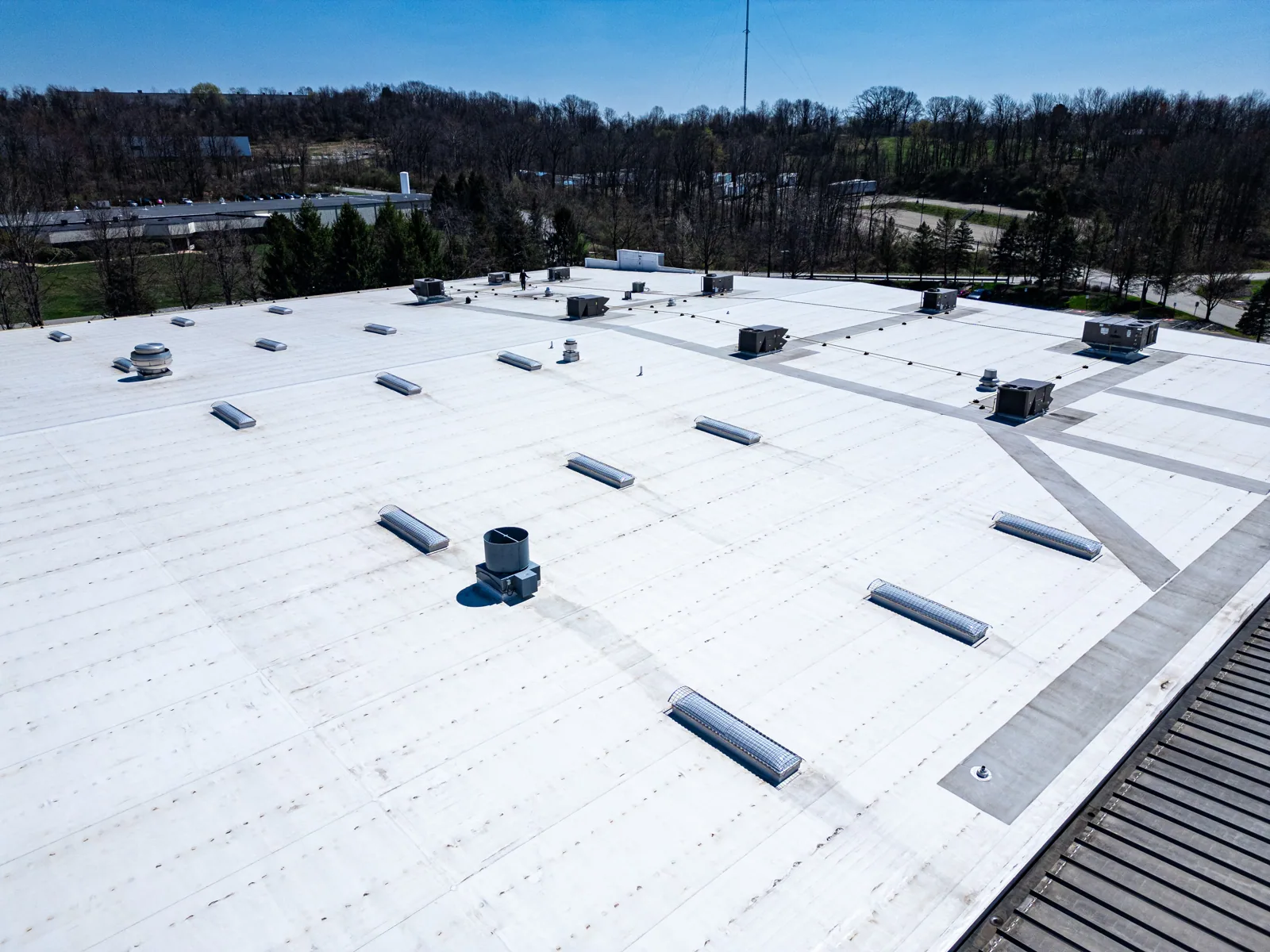
A restaurant with a kitchen exhaust fan on the roof, a clinic with air handlers and a plant that vents oils all share one problem: something unusual lands on the membrane. The one thing an owner should understand about PVC is that it was made for those roofs. It is a single-ply sheet that resists many fats, oils and chemicals that soften other membranes.
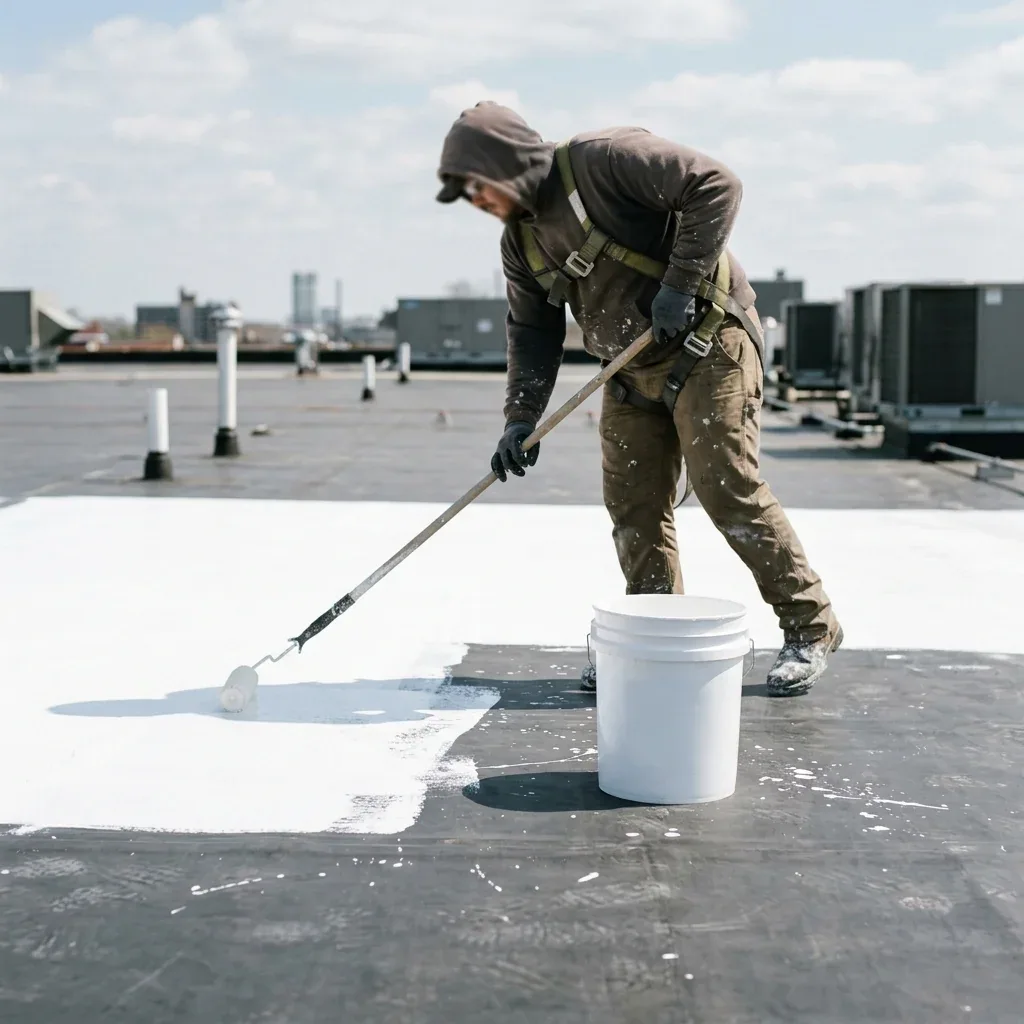
PVC stands for polyvinyl chloride. The sheets are welded with hot air, and the result is a continuous, watertight skin. Seams, grease exposure and heat decide how long the sheet lasts.
Know How It Is Built
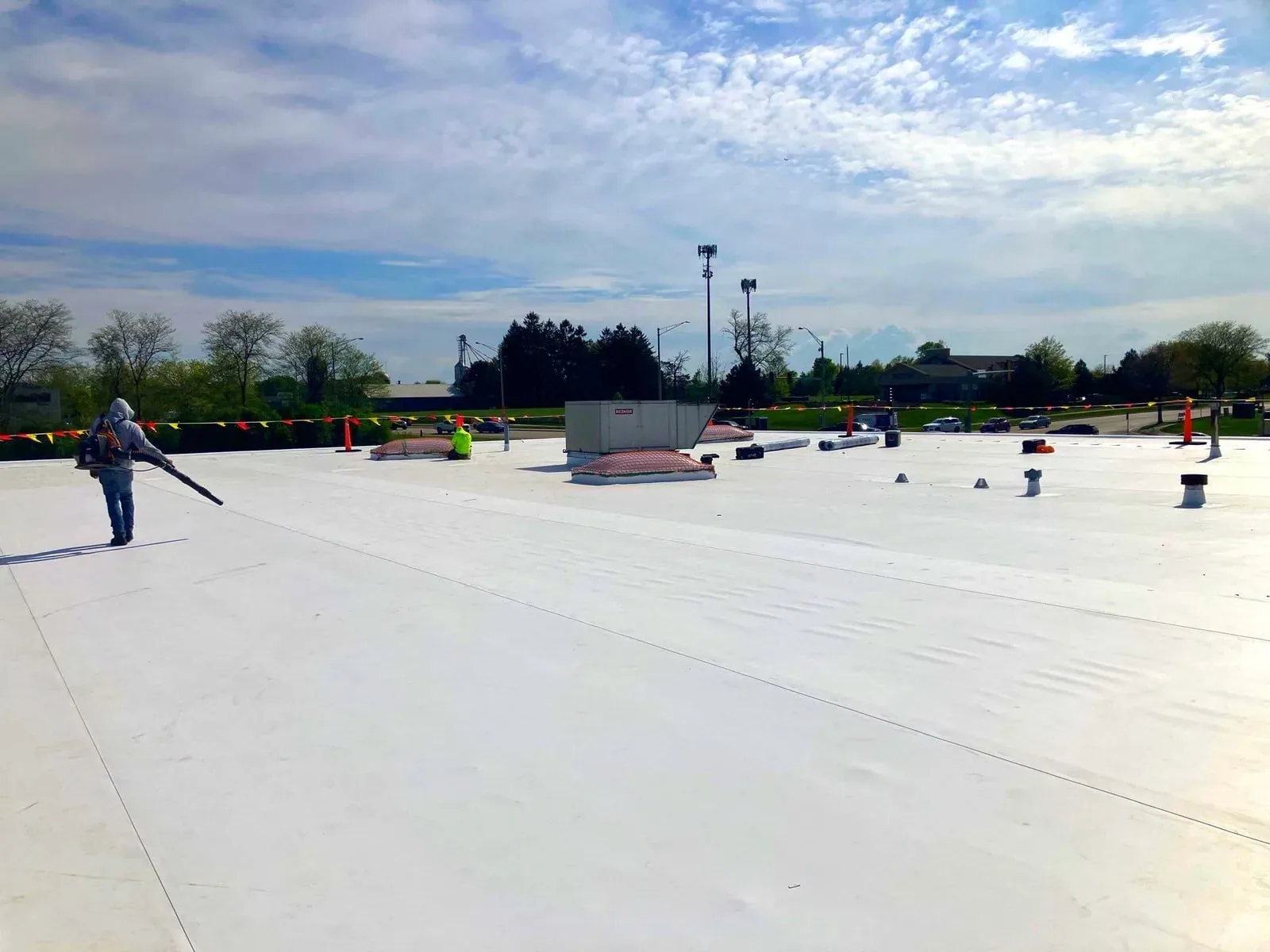
A PVC roof has a deck, insulation, often a cover board and the sheet on top. A reinforcing scrim of polyester or fiberglass runs through the sheet and gives it strength. The sheet is fastened, adhered or ballasted, and the seams are welded.
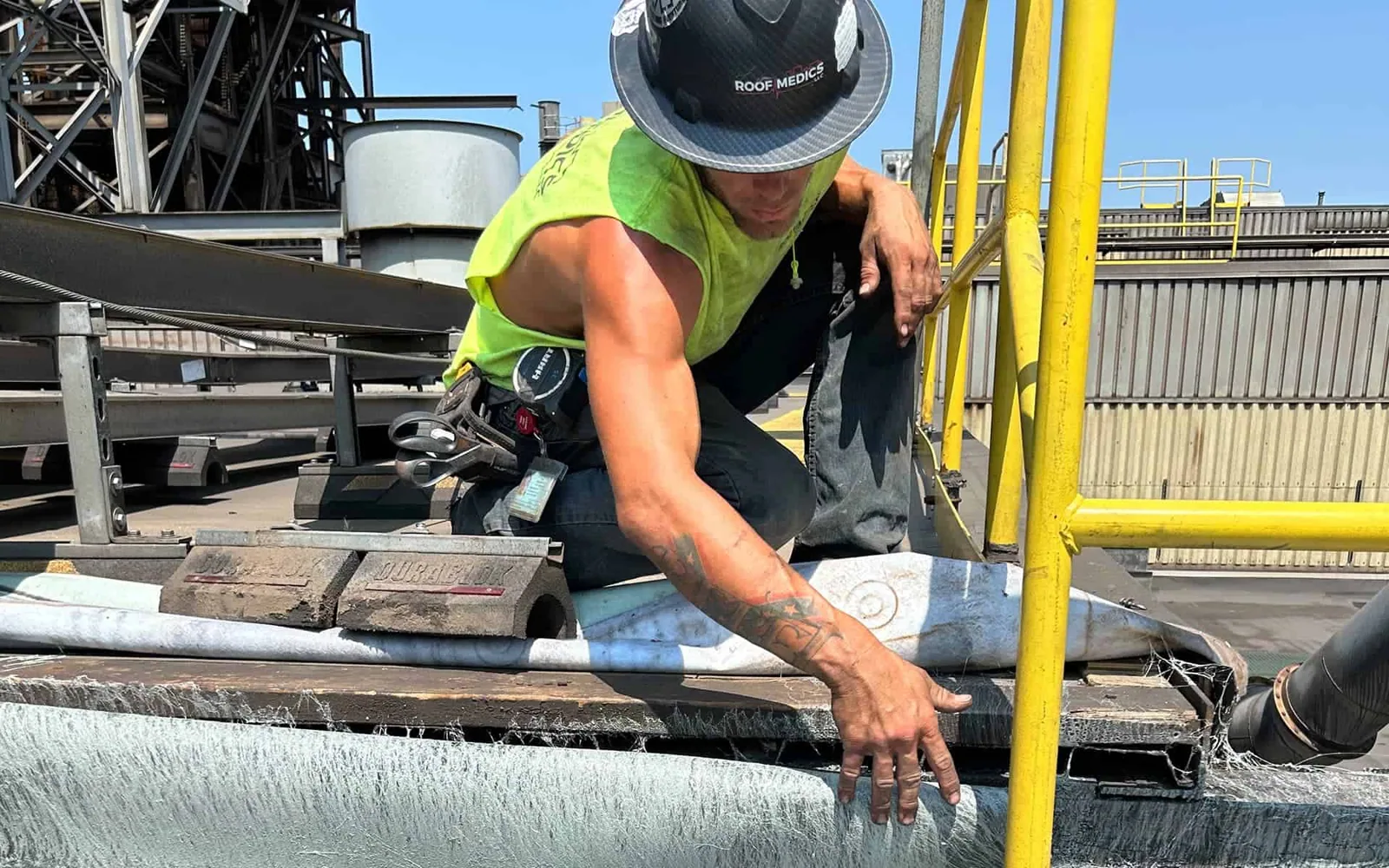
The weld is the heart of the system. When two sheets are heated to the right temperature and pressed together, they fuse. A good weld is stronger than the sheet around it. A poor weld looks fine and peels. We probe every seam on a walk, and we pay extra attention at T-joints, where three layers meet and the weld has to cross a step in the sheet. A hot-air weld that passes at the roll edge can fail at the step, so the probe goes there first.
Flashings are welded too. PVC flashing is formed around curbs, pipes and walls, and corners are made with pre-molded pieces where possible. Those details take the most movement and leak first if they are rushed. The KEE alloy sheets are close cousins of PVC, and the weld rules are the same.
Test the Chemicals and Grease
This is where PVC earns its place. Kitchen exhaust throws grease onto the roof around the fan. Some single-plies swell and soften when fats soak in. PVC is made to resist many of them. That is why restaurant roofs, food plants and many industrial roofs use it.
It is not immune. Some solvents attack it, and some oils shorten its life. We ask what the building vents and what the site uses. A grease containment pan under a fan and a walk pad at the service route still matter, because even a resistant sheet should not sit in a puddle of fat.
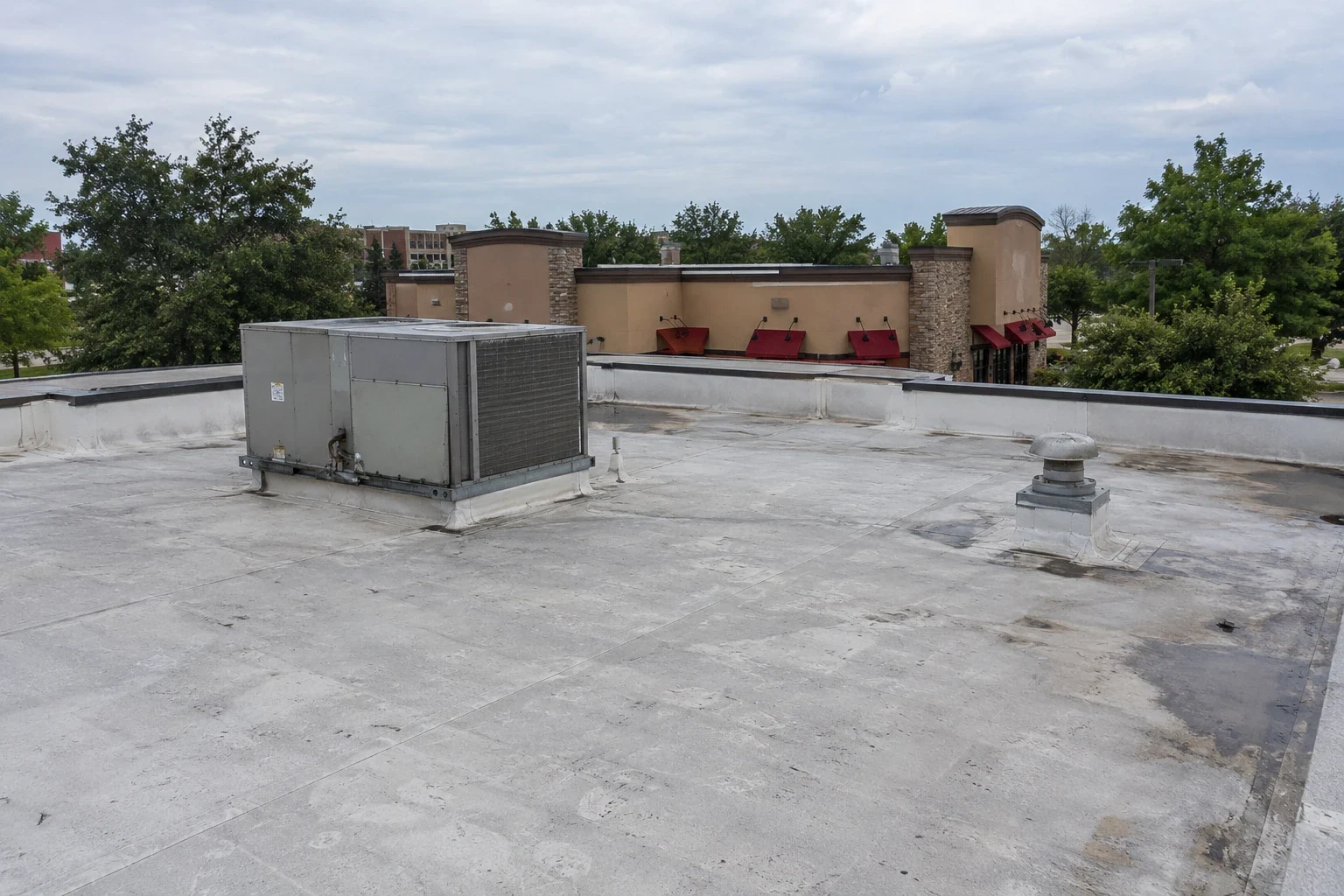
On a restaurant roof, the first checks are the exhaust curb, the pan and the sheet around the base. A simple test: press the membrane near the fan. If it feels soft or swollen, the sheet is failing there. Check the drains close to the kitchen too, since grease that washes off the roof can coat a strainer and slow the water.
Count the Heat and the Hail
Summer here means about 28 days at 100 degrees in a typical year, and 100 days at that mark in 2011. PVC is usually white or light, which reflects much of the sun. It also loses some plasticizer over time in high heat, which makes the sheet stiffer. Stiff sheet cracks at seams and corners.
Hail is the other test. Golf-ball stones fell on Electra for a quarter hour in 1982, and baseball-size hail damaged Iowa Park and Burkburnett in 1991. Those events are history, not a finding about any roof. After a storm, we press the sheet and probe for bruises and punctures.
A thicker sheet and a cover board both raise hail resistance. We price them so the owner can see the trade, and we note which roof zones sit under the most exposed edges and rooftop units.
Plan for Wind and Tornado Season
Spring brings tornado-season wind. The April 10, 1979 tornado was rated F4, destroyed more than 100 commercial businesses along its path across the southern and eastern parts of town. The April 3, 1964 F5 tornado heavily damaged downtown. Those are history, not predictions, but they are fair reasons to check wind details.
Wind lifts roofs at edges and corners first. PVC roofs are held down by fasteners, adhesive or ballast, and the choice sets how they behave. We check edge metal, perimeter fasteners and the rows of plates near corners. A loose edge is a minor repair today and a peeled roof in the next gust.
After a storm, debris is the other danger, and a tarp or temporary patch goes on before any permanent repair. Flying material punctures the sheet. We walk the roof and patch every hole, then probe for water under the sheet.
Match PVC to the Building
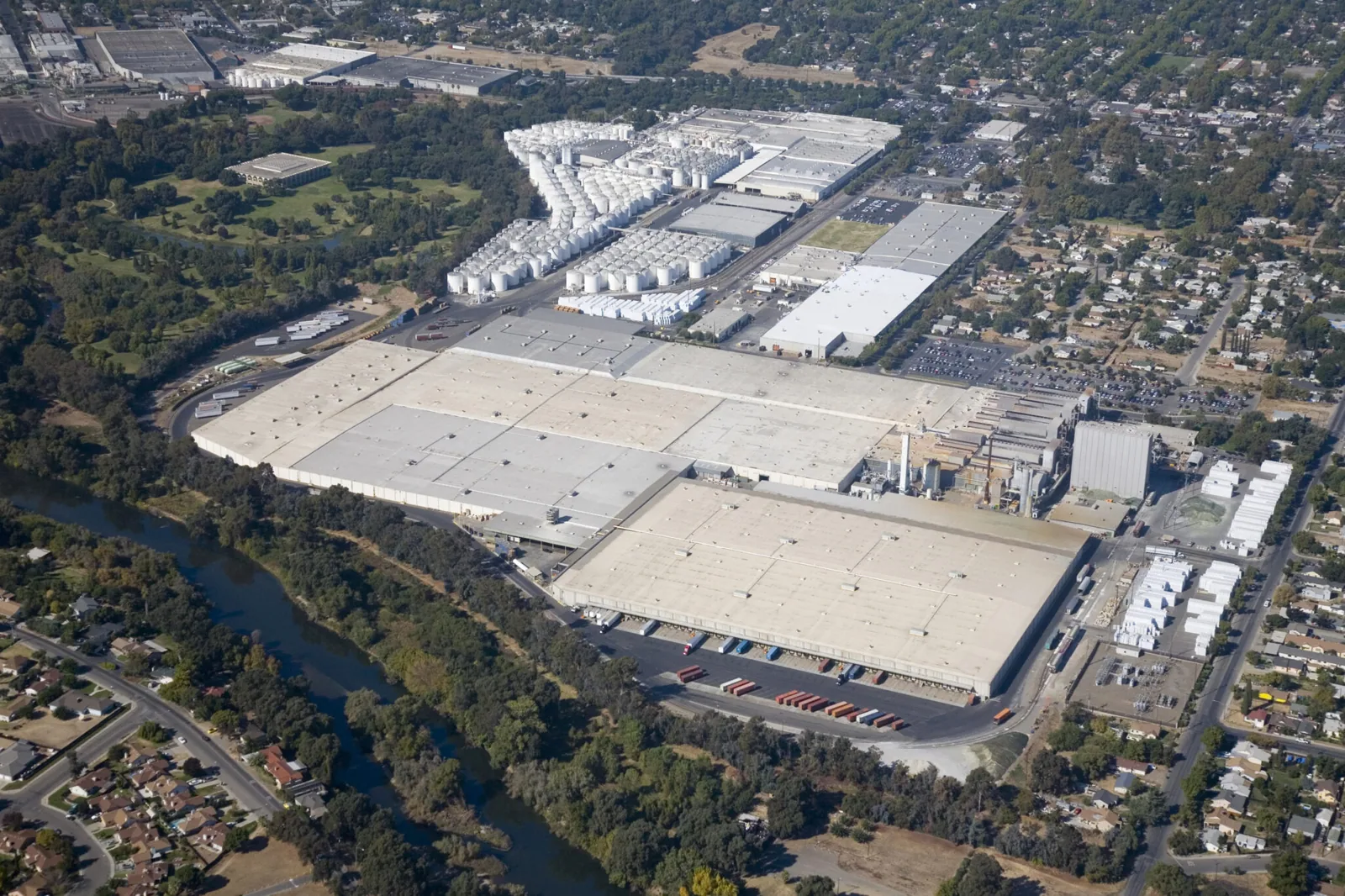
PVC suits roofs that see grease, oils or chemicals, roofs with many penetrations and roofs where seam strength matters. Hospitals and clinics use it because it welds cleanly around dense equipment. Food plants use it for the same reasons. A distribution roof with few penetrations may be well served by TPO at lower cost.
Wichita Falls has varied building stock: the Business Park's 525 acres of distribution and manufacturing, the retail along Kell Boulevard, the 330-bed North Texas State Hospital campus and Midwestern State University's 255-acre campus. Which of them carries a PVC roof is a question for the walk, not a guess.
Fire matters on some roofs. PVC is naturally flame resistant, which helps near rooftop kitchens. That does not make a grease fire harmless, so the pan, the curb and the fan housing still get cleaned on a schedule.
Repair or Replace
PVC repairs well when the sheet is sound. We clean the area, weld a patch with overlap and probe the edges. On older sheet the weld may not take, because stiff material resists fusion. A heat-weld test on a small patch tells us whether repair is possible.
When repair fails, we compare a recover over dry insulation with a tear-off. A recover saves disposal. Tear-off is cleaner when the board is wet. We cut cores to tell which one applies.
If the problem is flashing at a kitchen curb, the fix is often a rebuilt curb, a new grease pan and fresh welds, with a water test at the end to prove the weld holds. A flashing failure repair that skips the curb comes back.
Take the Next Step
Tell us what the building vents and where the fans sit, and the first walk goes to those curbs. Buildings along the Kemp-Kell corridor and in the Business Park are checked in the same sequence.
Commercial Roofing Questions
Is PVC better than TPO?
Not always. PVC resists grease and chemicals better. TPO is often cheaper for clean roofs with few penetrations. We price both for the building in question and show the trade-off.
Can PVC handle kitchen exhaust?
It resists many fats and oils. Add a grease pan and walk pads, and keep the curb flashing sound. Check the pan monthly, because a full pan spills onto the sheet.
Does PVC get brittle in Texas heat?
It can lose plasticizer over time, which stiffens the sheet. Inspection shows how far that has gone: we flex a corner by hand and watch for hairline cracks at seams.
Can hail damage PVC?
Yes. A cover board and a thicker sheet help. After a storm we press and probe for bruises.
Does a PVC roof need special cleaning near a kitchen?
Yes. Grease on the sheet and in the pan is cleaned on a schedule, and the strainers at nearby drains are cleared with it. A film of fat that builds up season after season is what attacks even a resistant sheet.