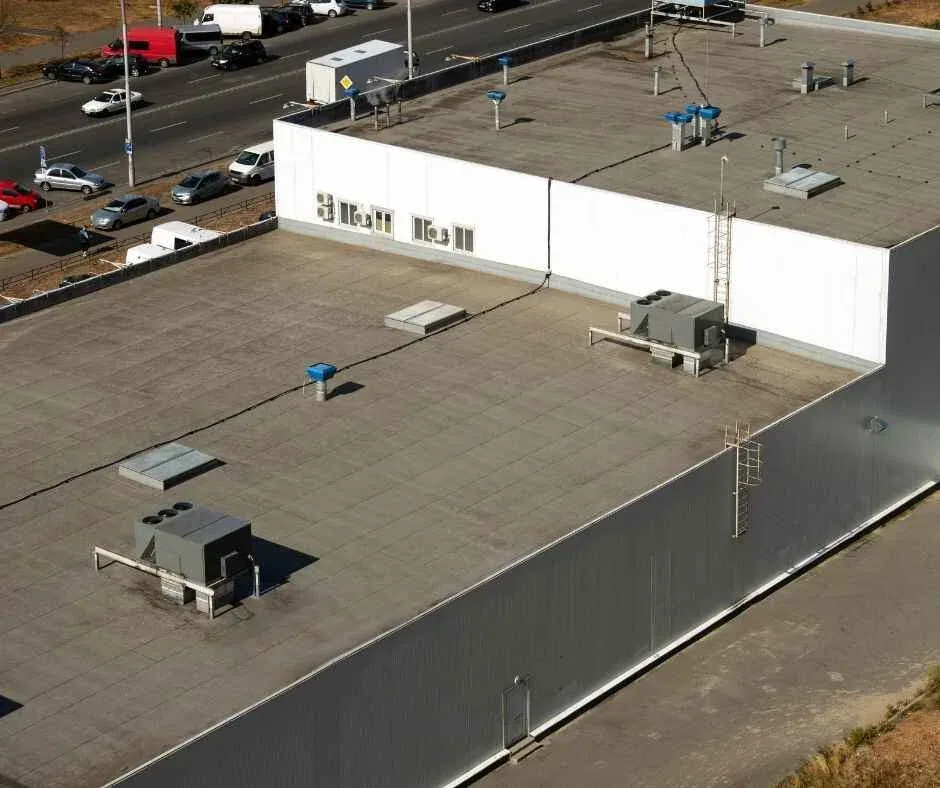
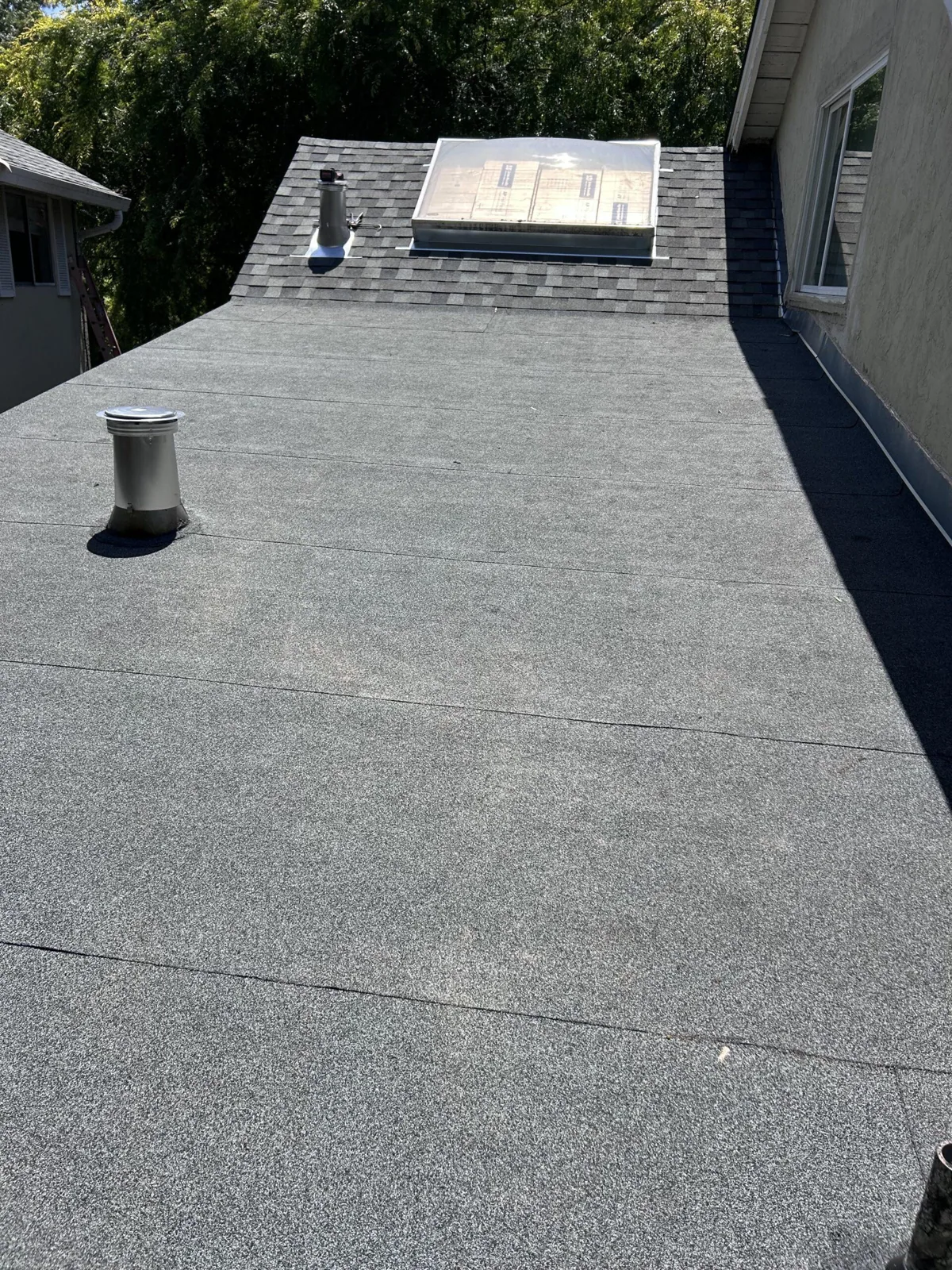
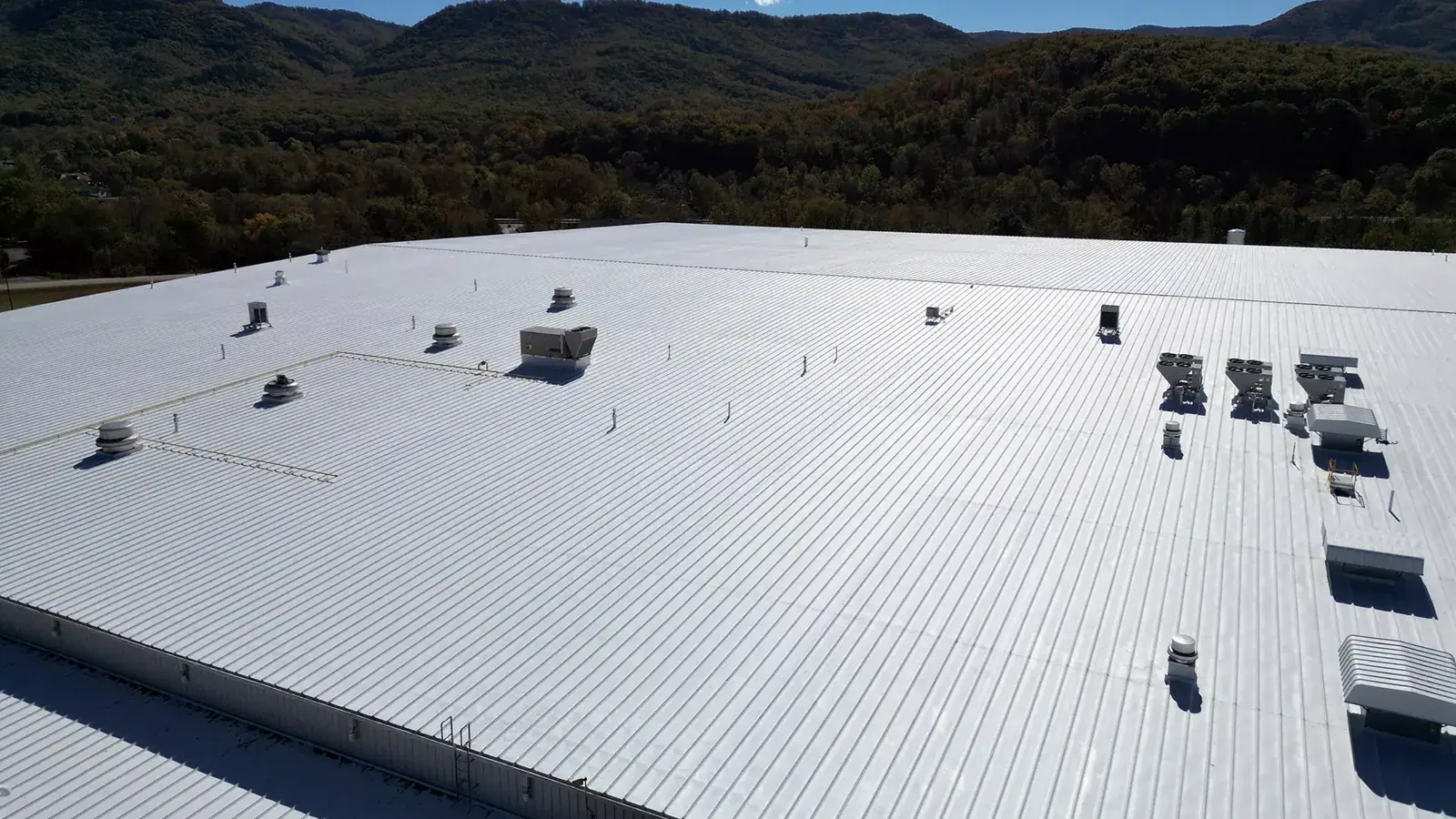
A gray or dark surface that looks like heavy asphalt paper is usually modified bitumen, and it can turn up on a flat-roofed downtown office, a strip of shops along Kell Boulevard or an older commercial block. The one thing an owner should understand is that it behaves like a layered sandwich, and the top layer, the cap sheet, takes all the weather.
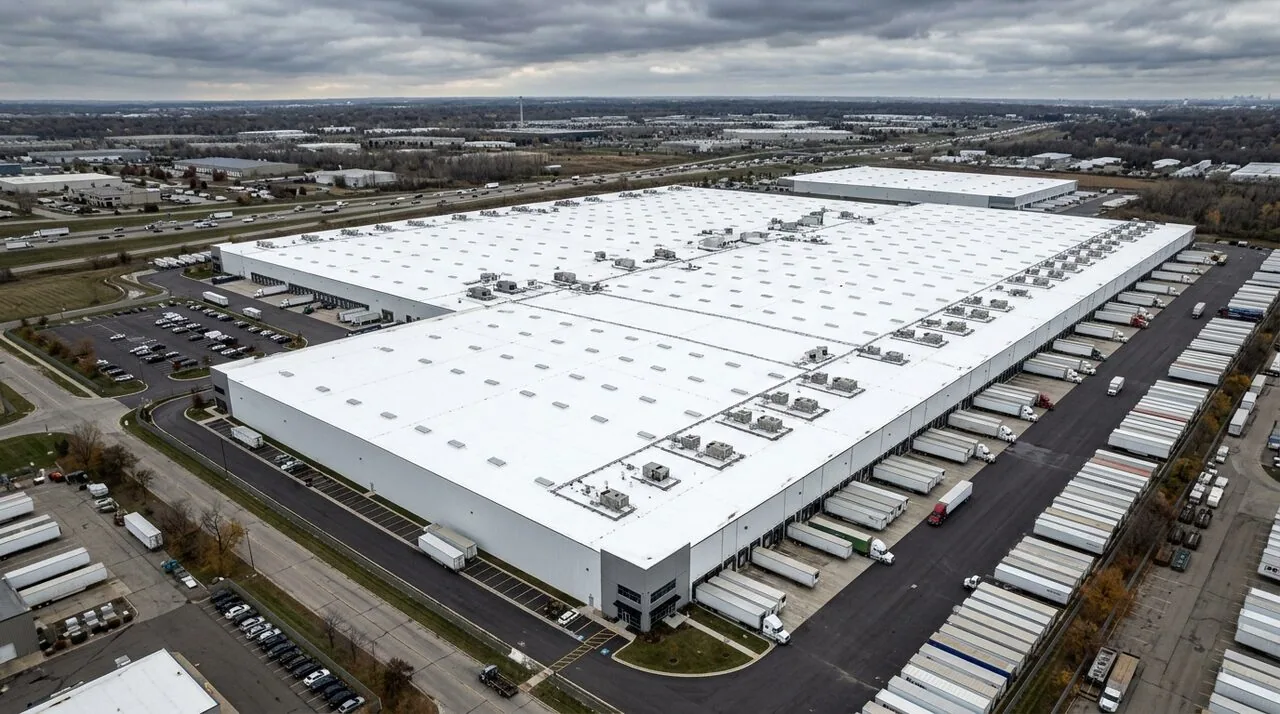
Modified bitumen is asphalt blended with polymers so it stays flexible. It comes in rolls, in two main types. SBS is rubber-modified. APP is plastic-modified. The cap sheet, the laps and the flashings carry most of the risk.
Know the Layers
A modified bitumen roof has a deck, insulation, a base sheet and one or more plies, finished with a cap sheet. The cap sheet carries mineral granules on top that shield the asphalt from sun. Under it, the base ply adds thickness and a second line of defense.
The plies are joined in one of three ways. Torch-applied sheets are heated with a flame so the underside melts onto the layer below. Cold-applied sheets are glued with adhesive. Self-adhered sheets stick by a factory-applied compound. The method changes the work, the safety plan and the fumes.
SBS is stretchy and tolerates movement. APP is stiffer and resists heat. Each suits a different roof. We read the existing roof first to see which one is there, because a patch for one will not bond to the other. The surface texture and the lap pattern tell us which sheet is there, and a small test patch confirms it before we commit to a repair.
Check the Laps and Flashings First
The laps are where rolls overlap. A good lap shows a bead of asphalt squeezed out the edge. A bad lap is dry, curled or open. Laps lift when the heat was wrong at install or when movement has worked them loose.
On a walk we run a blunt probe along every lap and press at the corners. We look for fishmouths, which are small openings where the edge has curled, and for blisters, which are pockets of trapped air or water. Flashings at walls and curbs are the next stop. They are built up from layers of the same sheet and take the most movement.
A simple test: if a flashing edge lifts under a thumb, water gets behind it. Re-sealing a loose lap is a modest repair. Ignoring it is how a wet corner turns into a wet ceiling. Fishmouths in particular act like a funnel: the open edge catches water running down the slope and feeds it under the sheet.
Count the Heat
Asphalt softens in heat like this, and a typical year here brings 102 days at 90 degrees or higher, with a record of 117. A dark cap sheet can run far hotter than the air, and foot traffic on a hot afternoon can scuff the surface.
Heat also pulls the oils out of asphalt over time. The surface turns brittle and crazed. Granules loosen and wash into the drains. A roof that has lost granules in patches has lost the layer that protects the asphalt from sun.
What it means for you: a spring look for bare spots and a fall check of drains for granules will tell you more about aging than the roof's calendar age. A handful of granules in the downspout strainer is normal on a new roof and a warning on an old one, and a photo of the strainer each fall makes the trend plain.
Plan for Hail
Hail has a long record here, from the baseballs of April 1991 in Iowa Park and Burkburnett to the larger stones at Sheppard Air Force Base in March 1993. None of that proves anything about a given roof. It shapes what we look for after a storm.
On modified bitumen, hail knocks off granules and leaves bruises. A bruise is a soft spot where the asphalt has been crushed. Granule loss exposes the surface to sun. We press the cap sheet, mark the bruises and probe for water in the plies below.
A hail damage repair may be a patch over a bruise or a larger section if impacts are dense. Count the impacts per zone and write them down, because the number guides the choice.
Plan for Wind and Debris
The F5 tornado of April 3, 1964 killed 7 people and heavily damaged downtown Wichita Falls. It is history, not a forecast, but it is a fair reason to look hard at wind on a downtown roof. Modified bitumen is heavy and well bonded, so it resists lift better than many loose sheets. Its weak points are the edges, where the layers end.
We check the perimeter metal, the nailers behind it and the edge of the plies. A lifted edge lets wind get under the roof and peel it back. Fasteners at the first row and cant strips at walls are probed. A loose edge is a small repair today and a torn roof in a gust.
Debris is the other risk. Flying material punctures the cap sheet and bruises the plies. Once the weather clears we patch every cut and scan the plies for water. A wind damage repair starts with a temporary cover and then moves to the permanent fix.
Match the System to the Building
Modified bitumen suits roofs with many penetrations and detail work, because it is easy to flash by hand. It suits roofs with foot traffic, because the cap is tough. It suits roofs that need a redundant system, because two plies back each other up.
It does not suit every roof. Torch application near combustible walls needs a careful plan, and some owners choose cold-applied or self-adhered sheets for that reason. On a clean, low-penetration warehouse, a single-ply such as TPO may cost less. On an older office building roof with a history of patches, modified bitumen is often the sensible match.
A built-up roof is a close relative, with more plies.
Repair or Replace
Modified bitumen is repairable. Lifted laps are cleaned and sealed. Blisters are cut out, dried and patched. Flashings are rebuilt. Bare spots can take a coating if the sheet underneath is sound.
We test first. A moisture scan and core cuts show if the plies and insulation are dry. If they are, a coating restoration can extend the life. If the plies are wet, the wet area comes out.
Tell us what the cap sheet looks like and how many patches it carries, and the first walk starts at the oldest one. Roofs in downtown Wichita Falls and along the Kemp-Kell corridor are read in the same order.
Commercial Roofing Questions
What is the difference between SBS and APP?
SBS is rubber-modified and stretches. APP is plastic-modified and resists heat. The right one depends on the roof.
Why do granules matter?
They shield the asphalt from sun. Bare spots age fast and crack.
Is torch application safe?
It needs a careful plan, fire watch and clear walls. Cold-applied and self-adhered sheets avoid open flame.
Can I coat modified bitumen?
Yes, if the sheet is sound and dry. A coating protects the surface and adds reflectivity.
How do I read the granules on my roof?
A thin dusting in the downspout strainer is normal. Bare asphalt in patches, or granules piling up each fall, means the cap sheet is losing its sun shield and the roof is aging faster than its calendar age.