The smaller the town, the more the roof matters to whoever owns the building. Windthorst has 342 residents, and U.S. 281 runs through the center of town, about 25 miles from Wichita Falls, TX. A commercial building here may be a shop, a hall, an office or a storage building, and each has a roof that needs the same kind of reading before anyone prices a repair.

So we start with the building. We ask what it is used for, how old the roof is and where the water has shown up. Then we walk the roof in a fixed order, edge first, then seams, then penetrations, then the field, and we write down what we find with photographs.
Reading a Roof We Have Not Seen
We do not assume what a roof in Windthorst is made of. It could be a low-slope membrane, a metal panel system or an older built-up roof with gravel. The first five minutes on the roof tell us, and the answer sets the checklist.
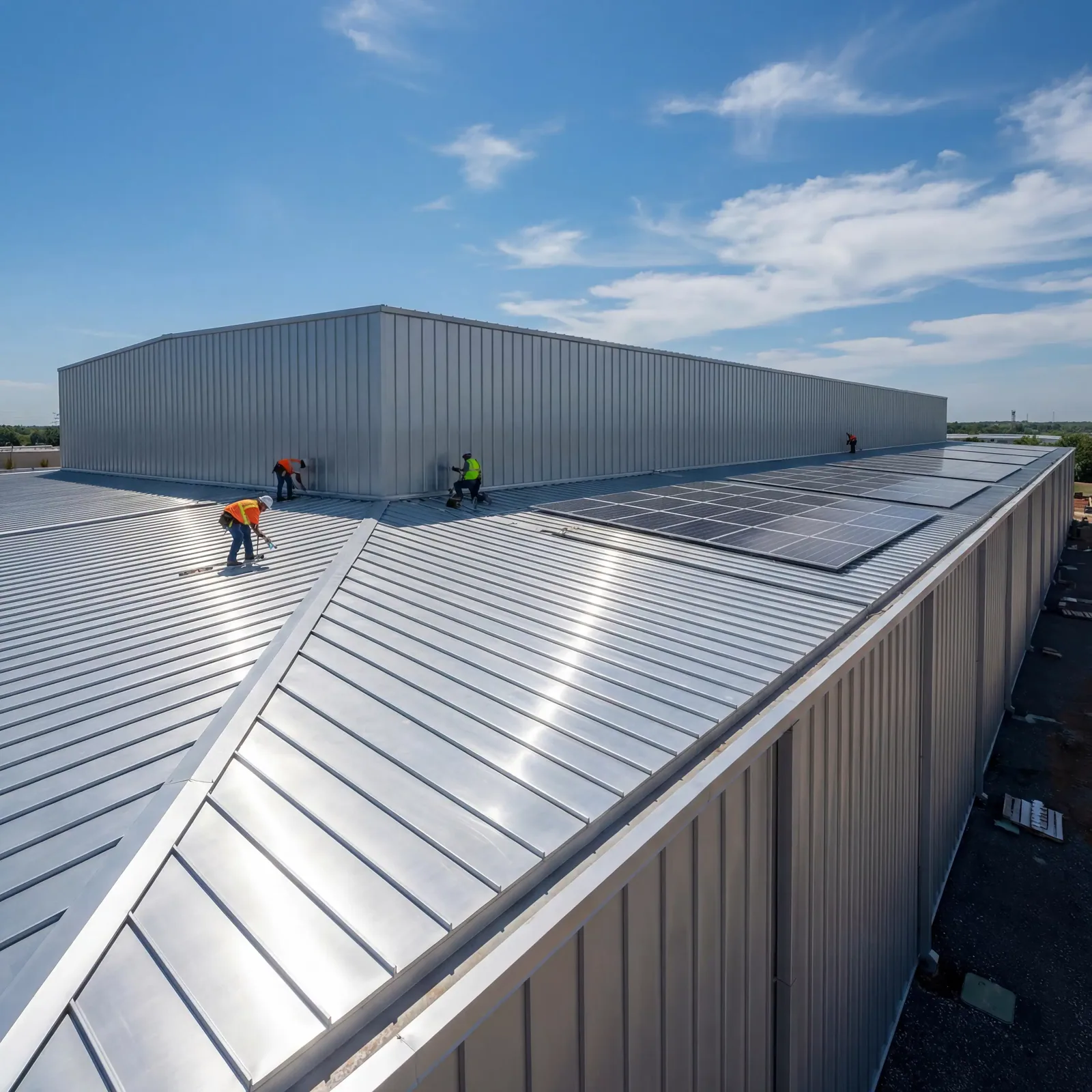
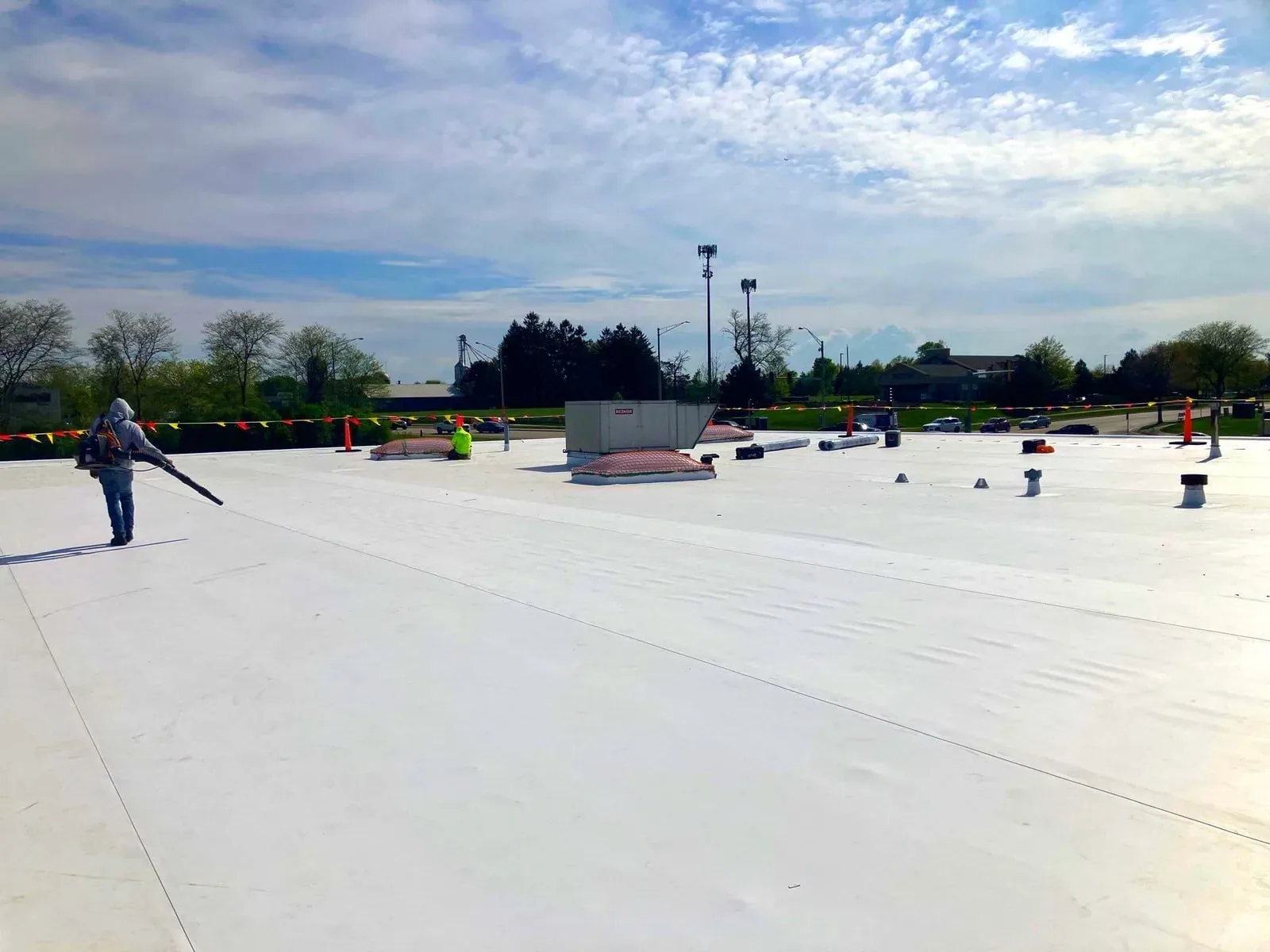
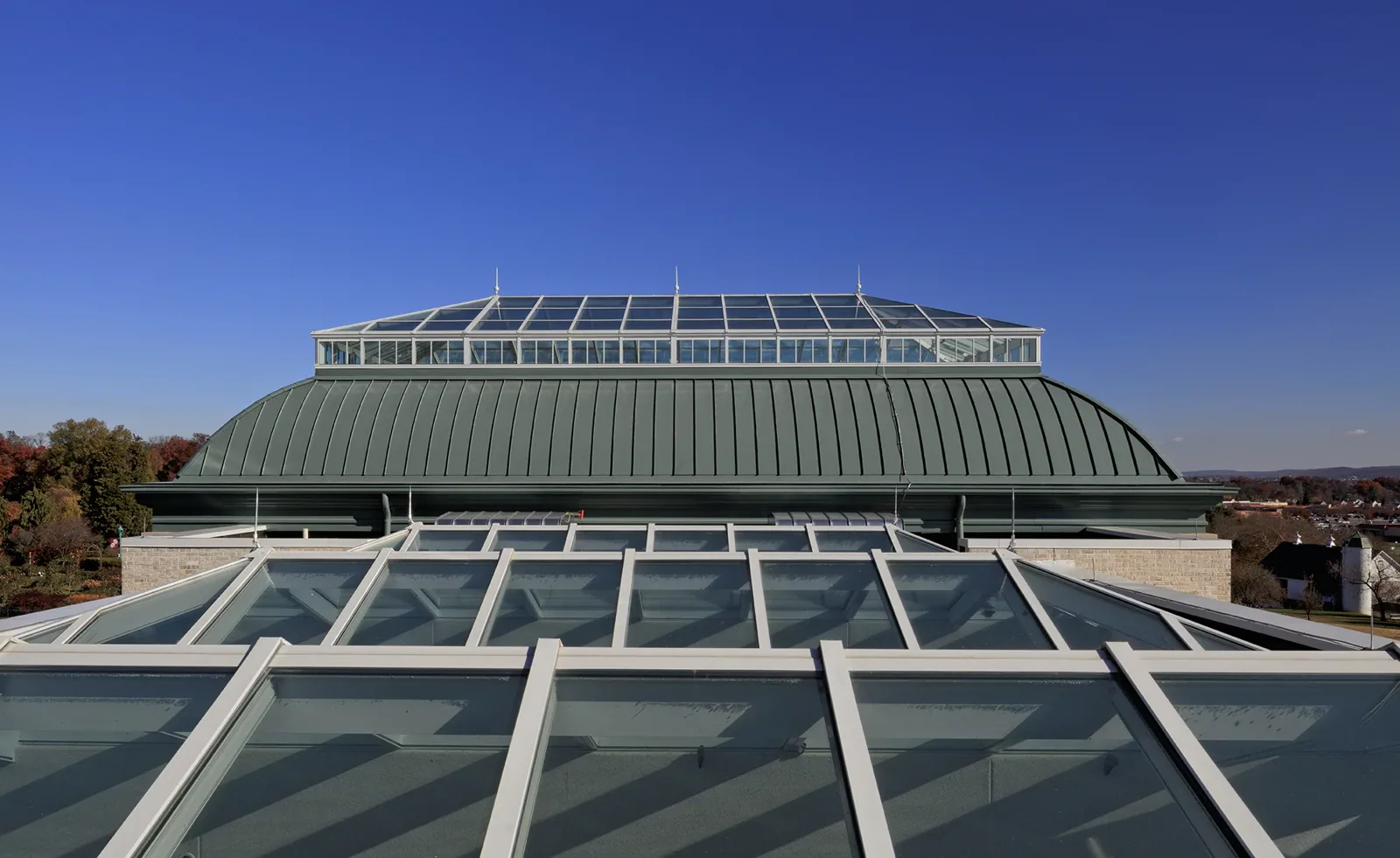
On a membrane roof, the seams and the flashing around pipes and units are the first suspects. On a metal roof, the fasteners and the panel laps come first. On a built-up roof, we look for blisters, bare felt and cracked flashing at the walls. Three systems, three checklists. The standing seam metal version of that walk is quite different from a TPO membrane walk, and either one is better done by someone who has walked both.
Summer Heat, Slowly
Wichita Falls, about 25 miles away, records roughly four weeks a year at 100 degrees and logged 100 such days in 2011, a fair guide to the sun a roof in Windthorst meets on a bad July afternoon. Heat does not break a roof in a day. It dries out sealants, softens asphalt, chalks the surface of a membrane and works at every seam as the roof expands and contracts.
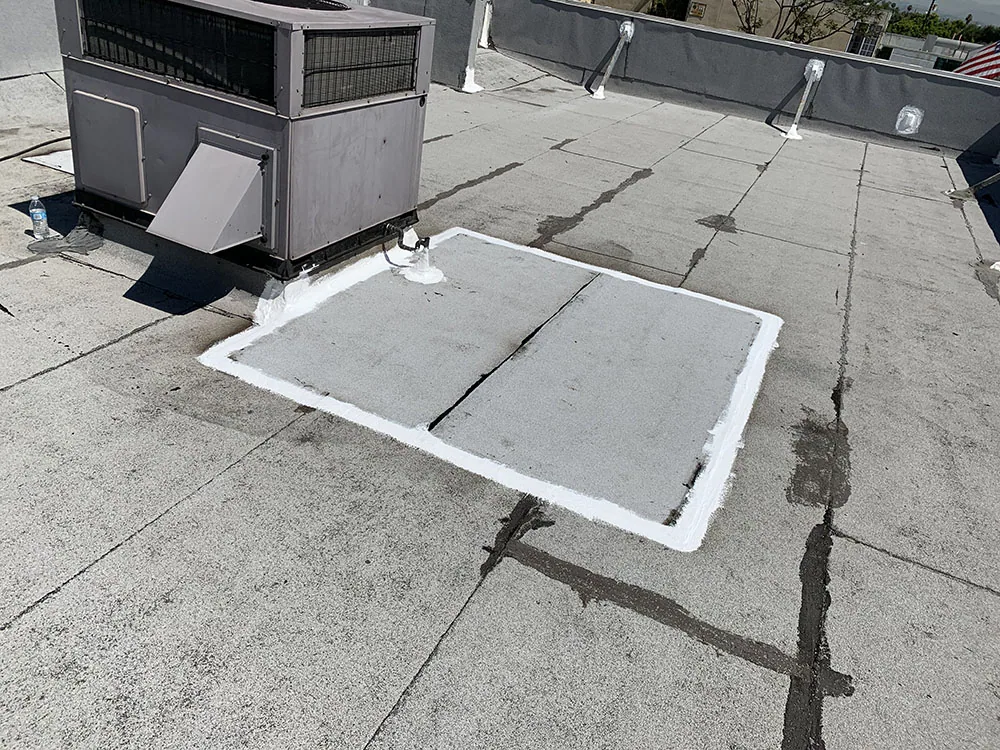
The signs are quiet. A sealant bead that has pulled away from a vent, a seam edge that no longer lies flat, a flashing that has shrunk back from the wall. We catch them during a maintenance visit, when a tube of sealant and an hour of labor can head off a much larger repair.
Hail Bruises Hide
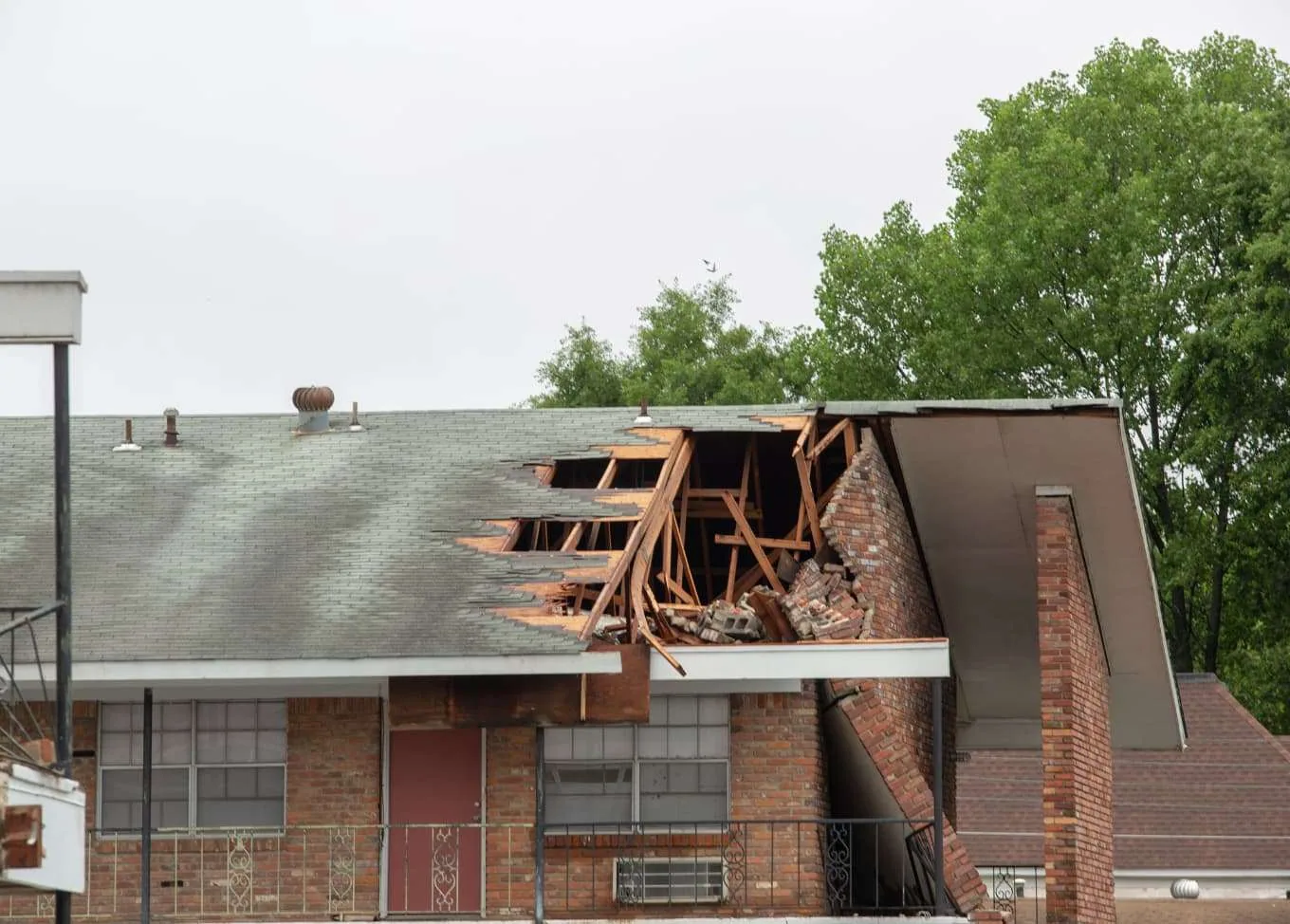
Large hail has a regional record: baseballs smashed into Iowa Park and Burkburnett in April 1991, and larger stones struck Sheppard Air Force Base in March 1993. Neither record names Windthorst, and both are reasons to check for bruising after any spring storm.
A hail bruise is a soft, round spot where the insulation under the membrane has crushed or the surface has cracked. It can sit unnoticed for a season and then leak at the first hard rain. We probe the roof, mark each spot and photograph it. If the roof does show bruising, the hail damage report is built for an insurer to read.
Drains, Edges and the Last Foot
The last foot of a roof, the part nearest the edge, takes more abuse than the middle. Wind pulls hardest there, runoff concentrates there and the metal trim that finishes the roof is exposed on every side. We read the trim for gaps, then the fasteners behind it, then the membrane under it for lifted seams. Fixing edge metal and gutters early costs far less than replacing a torn section of roof.
Then comes drainage. Every scupper, gutter and downspout should move water off the roof within a day or two of a rain. A ponding line, the pale ring where water stood, tells us a drain is slow or the deck has settled. Clearing debris is a ten-minute job. Re-sloping the roof is a larger decision, and we price it separately.
Getting There and Getting Started
Windthorst is in eastern Archer County, and State Highway 25 leads west to Archer City, 11 miles away. A single morning can cover both towns, and Scotland, which also sits on U.S. 281, fits the same route. That matters because it keeps the cost of the first walk-through low.
For the work itself, we agree on where trucks park, where materials sit and where debris goes. A plan made in advance prevents a day of shuffling equipment around a tight site. If the building stays open, we section the roof and work one area at a time.
Following the Leak Uphill
A leak is rarely where the stain is. Water enters at one point, runs along the deck or through the insulation, and drops at another. So we do not start at the ceiling stain. Step one is to find the nearest penetration, seam or low spot above it. Step two is to test with moisture readings. Step three is to open a small cut if the readings point to wet insulation.
A small, clean opening is a patch. A long run of open seam is a leak repair across several seams. Wet insulation over a wide area is a different question, and we answer it with the numbers from the survey, not with a guess.
What a Repair Costs and What a Roof Costs
Cost follows a short list of drivers: the size of the roof, the amount of wet insulation to remove, the number of penetrations that need new flashing, the system chosen and how difficult the roof is to reach. A small repair costs a fraction of a replacement, and a repair on a roof past its life is money that buys a few months.
We put the options in the report side by side: repair now, recover over the old roof if the insulation is dry, or replace the whole system. Each option has its own scope and its own price, and the choice is yours.
Commercial Roofing Questions
Does a small building need the same inspection as a large one?
The steps are the same and the time is shorter. We still walk the edges, seams and penetrations, press the surface and photograph each finding. The report is shorter, but it is not thinner. A small roof with a bad seam can leak just as hard as a big one, and the owner of a small building usually has less room in the budget for a surprise. We rank every finding, so you can see what matters first.
My roof is metal. Where do leaks start?
At fasteners and laps most often. A screw backs out as the metal moves with the heat, the washer stops sealing and water finds the hole. We replace or re-seat fasteners, reseal laps and look at the sealant at every rib.
How soon can you get a crew to Windthorst?
Emergency calls are answered at any hour, holidays included, and the drive along U.S. 281 is about 25 miles from Wichita Falls. For planned work we schedule the walk first, then the crew once the scope is set.
Should I wait to see if the leak comes back?
Waiting lets water soak the insulation, and wet insulation costs more to remove than a dry patch costs to make. If a stain dries, the cause is still there. A quick look at the roof is cheaper than another storm. If the stain returns after every rain, that pattern itself is useful, because it points to a specific opening.
What should the building owner have ready?
The roof age if known, what the building is used for and a description or photo of any leak. If the building has a gate, an alarm or limited hours, tell us so the visit fits.