Electra's economy began with a 1911 oil gusher, and the state named it the Pump Jack Capital of Texas in 2001. The Waggoner family still drills for oil there. A commercial building that serves oil work, a shop, an office or a service garage, lives in a hard-working setting. Its roof needs to be checked for more than weather.
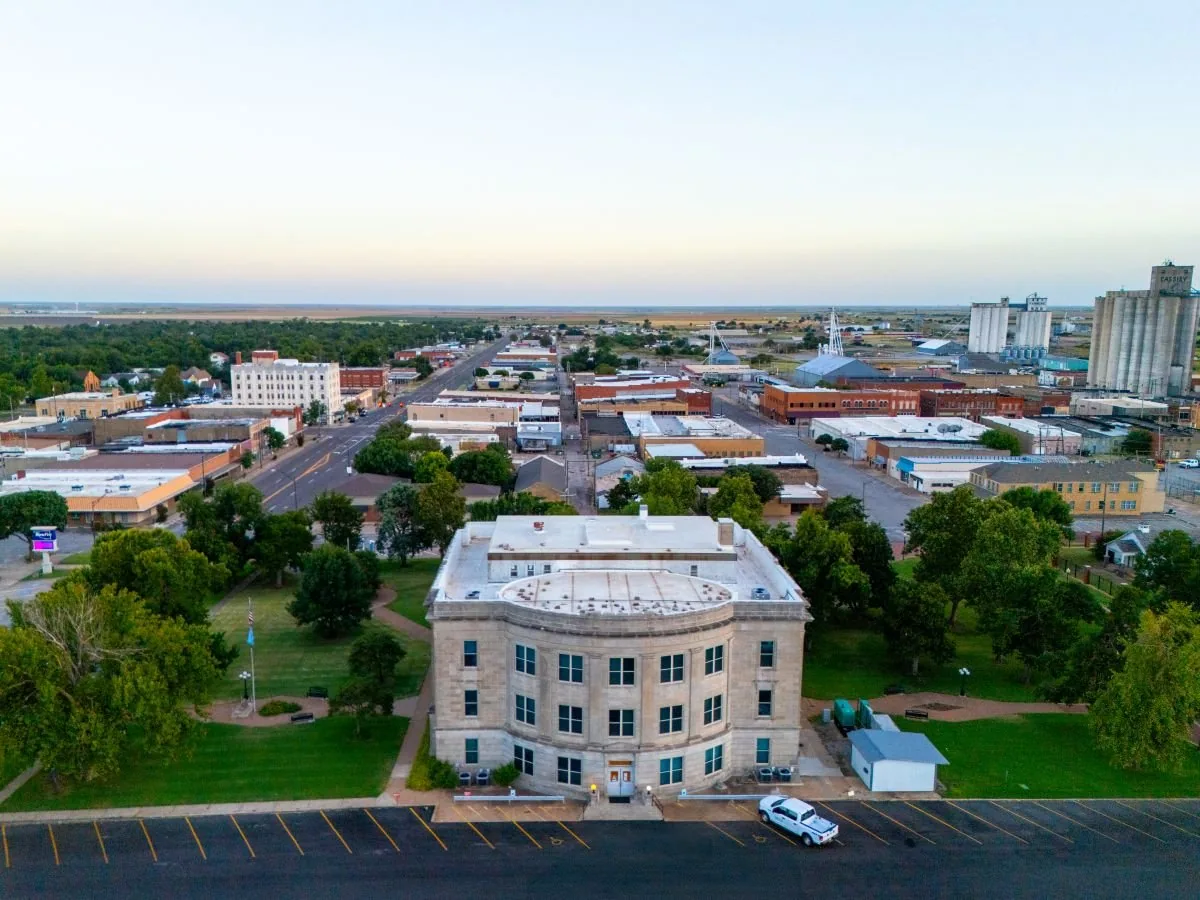
Electra is a Wichita County city of 2,292 residents, and its oil economy still shapes the town. A roof there is read the way any commercial roof is read, from the edge inward, with the building's work in mind. We ask what the building is used for, who works in it and which rooms or equipment cannot take a drip.
Here is step one: look at what the building does, then at what the roof is made.
Service Buildings and Shop Roofs
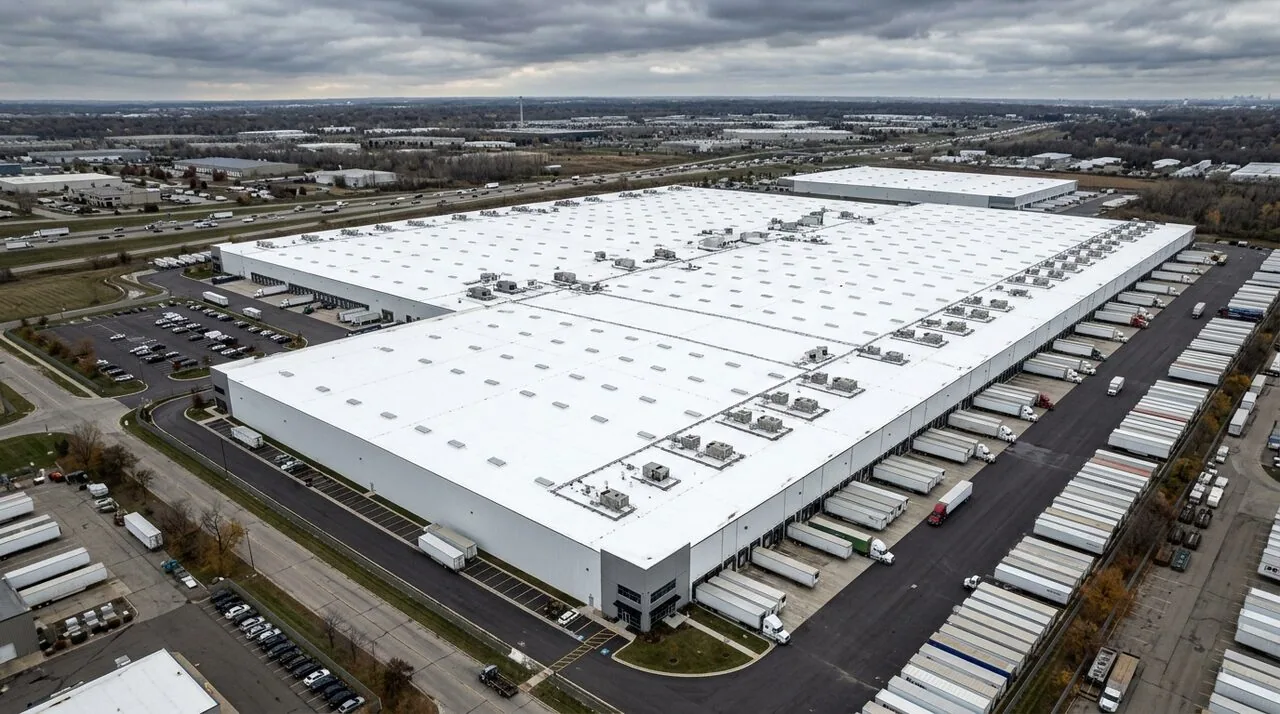
A shop or garage roof can be a long, simple span with a few vents. It may be metal or a flat membrane. Each one fails differently. A metal roof fails at its fasteners and laps. A membrane roof fails at its seams and flashings. We identify the type on the first walk, because the right repair depends on it.
Where a building serves oil work, the roof may see fumes, oil mist or hot exhaust from equipment. Those can soften some membranes and discolor metal. We look for stains, soft spots and corroded fasteners near vents and doors.
Yards and loading areas bring their own wear. Trucks and forklifts kick up dust and gravel, and wind carries it onto the roof. Grit gathers in drains and under the edges of walkway pads, and it grinds at the surface when someone walks across. We sweep it off and note where it collects.
Heavy equipment parked near a wall can also bump a gutter or downspout. A bent gutter holds water and pulls at its brackets, so we straighten or replace it.
Access to the roof is part of the price. A shop with a tall bay door may have no inside ladder, and a roof reached from a yard may need the lift set on soft ground. We note the approach, the ground and any overhead lines before the first visit, because a lift that cannot get close turns a short repair into a long one.
What Fifteen Minutes of Hail Does
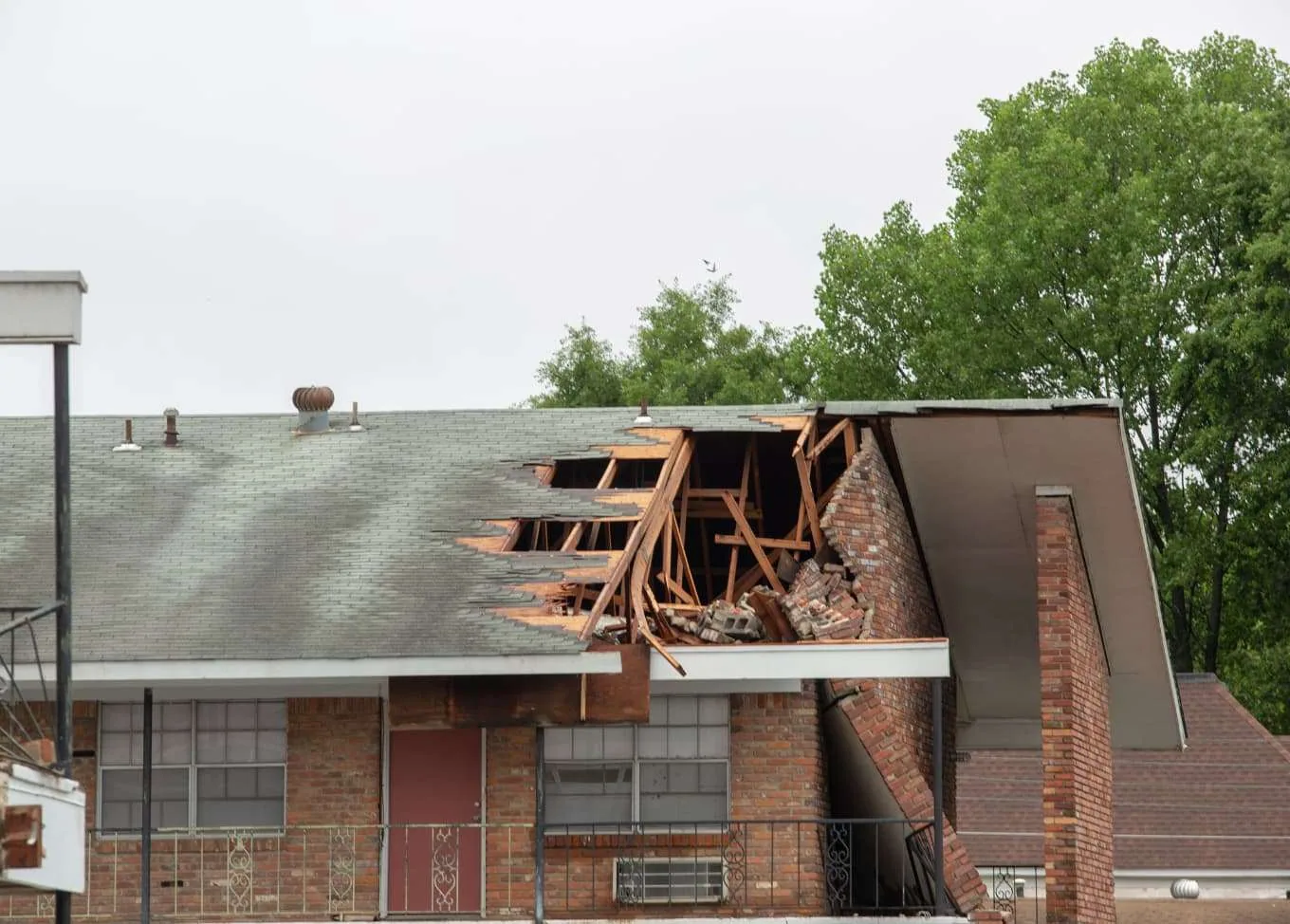
On March 13, 1982, golf-ball stones covered Electra for a quarter of an hour, and the damage ran from Electra to Burkburnett. That date is history, not a finding about a roof today. It does show something useful: hail that lasts is hail that hits the same spot many times.
Repeated hits crack a surface that one hit would only mark. We look for clusters of marks, soft spots under the surface and dents on soft metal. A hail damage report with counts by slope shows the pattern.
Test squares are the tool. We mark an equal area on each slope and count every hit inside it. A low count with shallow marks may mean little. A high count with fractures means repairs or replacement. Counts by slope also show which side of the roof faced the storm.
Rooftop units need a look. Hail bends their thin cooling fins, and bent fins reduce airflow. We note bent fins on our report so the owner can have a mechanical contractor straighten them.
Metal Roofs After Weather
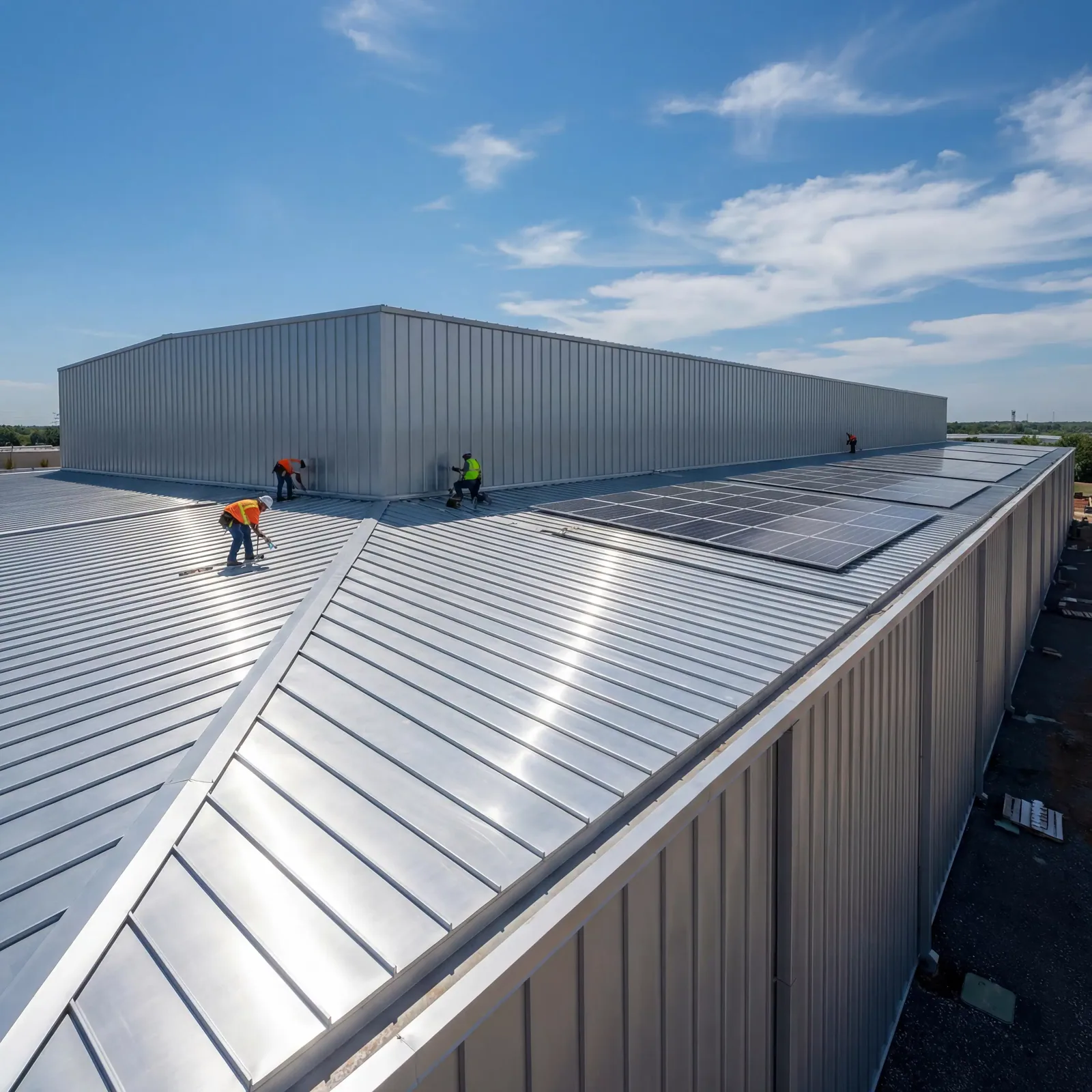
Metal panels shed hail better than many membranes, and they still need care. Panels dent, and dents can hold water and break coatings. The screws that hold panels can back out as the metal expands and contracts. Sealant at laps cracks. Each of those leaves a way for water to enter.
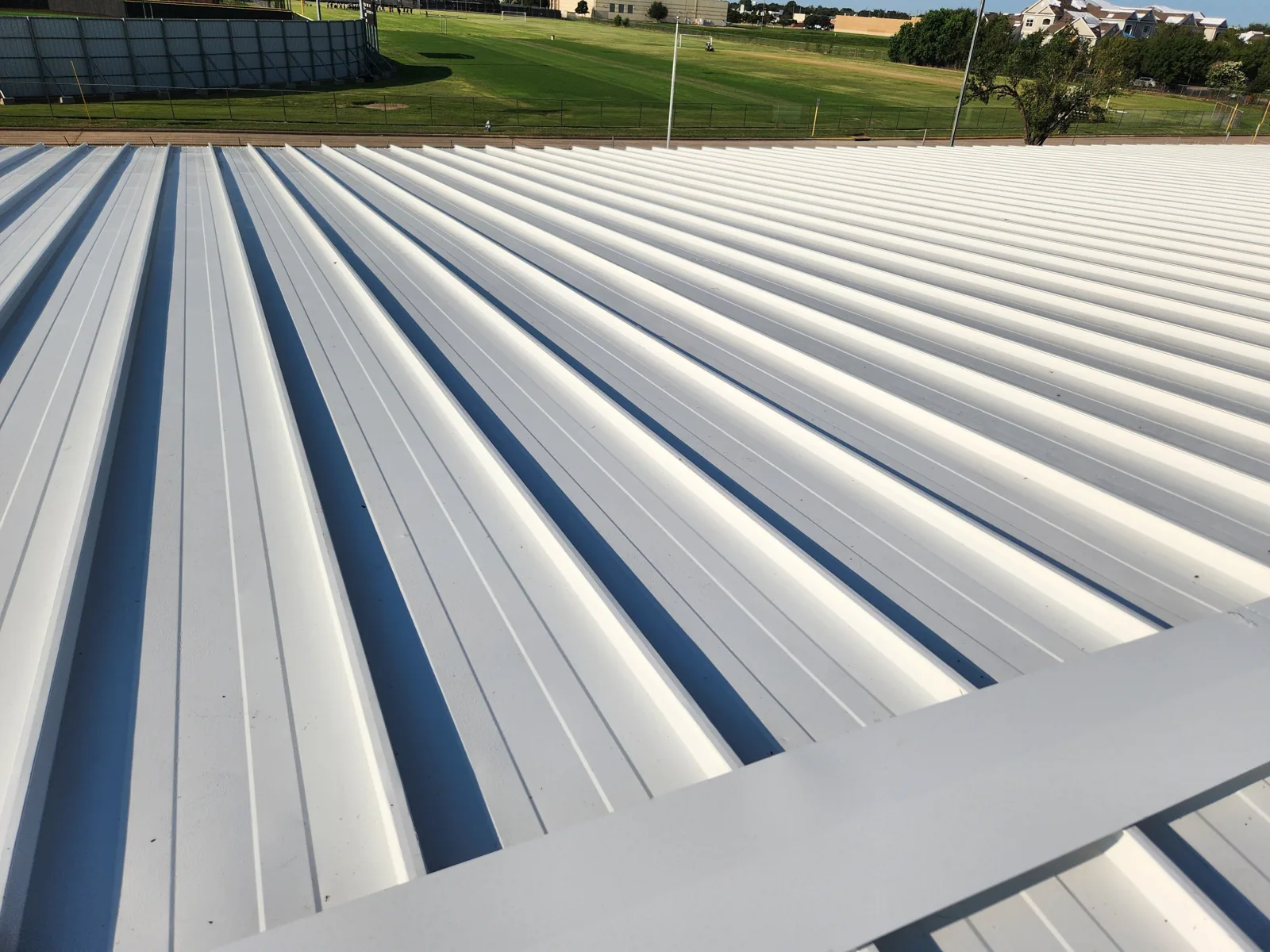
On a standing seam metal roof, we check the clips, the seams and the trim. On an older screw-down panel roof, we check every fastener line and replace failed screws and washers. A metal roof retrofit can fit a tired low-slope roof.
Rust is the other enemy of a metal roof. It begins where the coating is thin: cut edges, scratches and spots where water sits. A small patch of rust can be cleaned and treated. A large patch means the panel is losing its coating, and the plan may need new panels in that area.
Heat and Coatings
Wichita Falls, the nearest city of any size, counts about 28 days a year at 100 degrees. Heat cooks the surface of many roofs, and sealants dry and crack. A silicone coating can seal small gaps, add reflectivity and extend a sound roof's life.
One clean rule applies: a coating covers a sound roof, it does not fix a wet one. We test for moisture first. If the insulation is dry and the surface is sound, a coating can be a good choice. If not, we repair or replace.
What We Check on the First Walk
Step one is the edges and the drains. Step two is the seams or laps. Step three takes in every vent, pipe and rooftop unit. Step four is the surface itself, pressed and probed section by section. We take photos and draw a roof sketch.
Photographs go with every item on the list, each tied to a spot on the sketch, so a lender, an insurer or a partner can follow the roof without a visit. Small items found early, such as a loose cap or a split boot, are noted with a rough time to fix, which lets the owner batch them into one visit.
The written list ranks each finding by urgency. The list is written so a lender or an insurer can read it without a site visit.
Doors and overhangs get a look. An overhang over a bay door takes wind and rain, and its edge metal is easy to dent with a truck. We check the flashing where the overhang meets the wall.
Repair, Coat or Replace
A few failed screws or a split boot is a repair. A sound roof with surface wear can be coated. A roof with wet insulation, widespread corrosion or heavy hail damage points toward replacement. Pricing follows roof size, the state of the deck, access and the number of penetrations.
We plan materials ahead and schedule deliveries so the work does not stall. The plan reads the same for a building in Burkburnett or Henrietta.
If a roof is near the end of its life, we help you plan. A planned job gets the best weather, the right material and time to tell neighbors and tenants. An emergency job gets whatever the sky allows.
Weather decides timing. Metal work stops in high wind, membrane work needs a dry surface, and coating needs a stretch of clear days. We hold a backup date for each job and tell the owner early when the forecast moves it.
Commercial Roofing Questions
Is a metal roof better against hail?
Often, but it still dents and can leak at fasteners. Check the screws and the laps after every storm.
Do oil fumes hurt a roof?
Some membranes soften when they sit near oil mist or hot exhaust. Look for stains and soft spots near vents.
Can I coat a leaking roof?
Not until the leak is found and the wet insulation is dealt with. A coating over wet material fails.
How long should a roof walk take?
For a small shop, a few hours. Larger roofs take longer. We write up the findings in plain words.
What helps most before the walk?
Tell us the roof age, what the building does and where water has shown up, plus the date of any storm you remember.