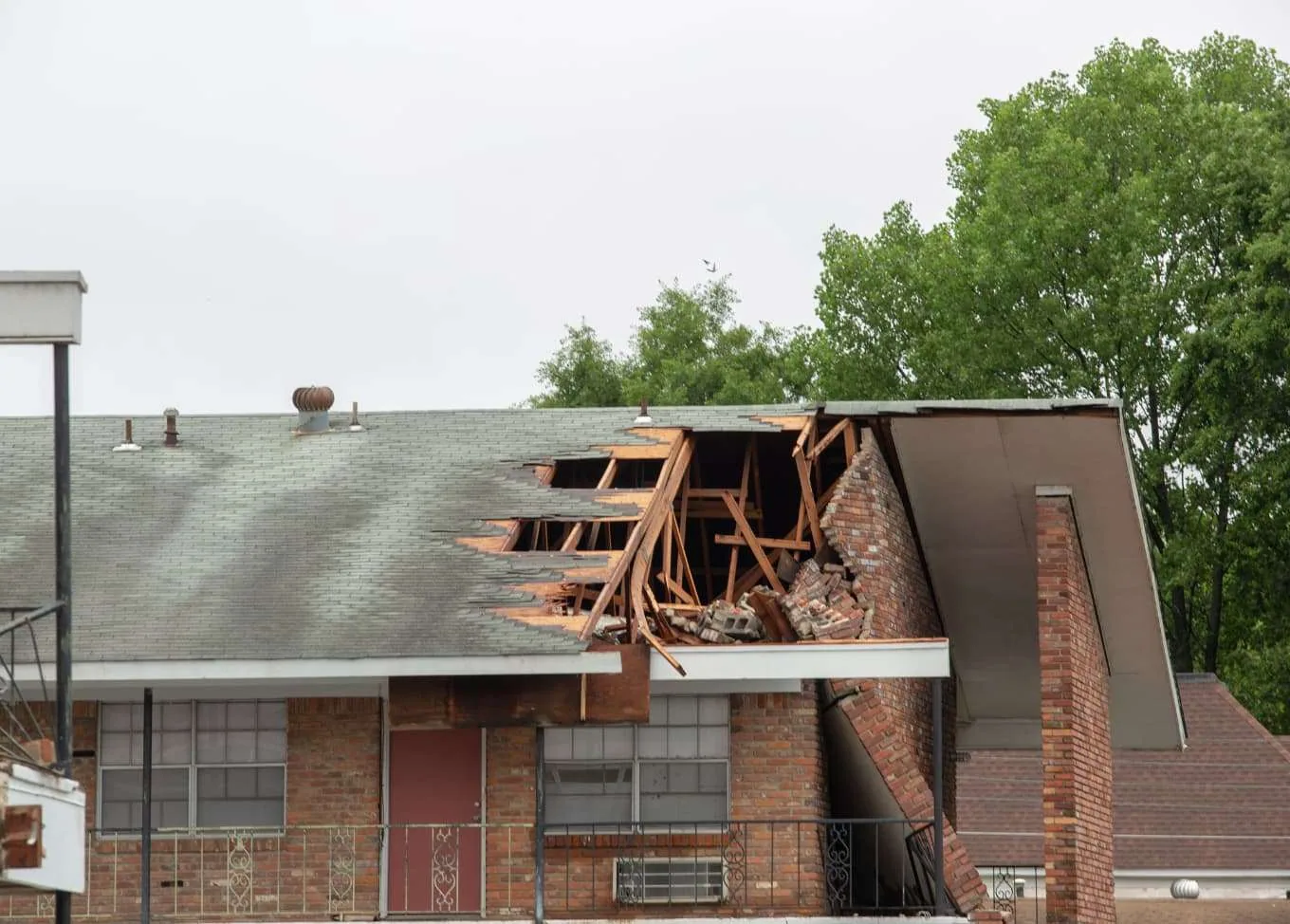
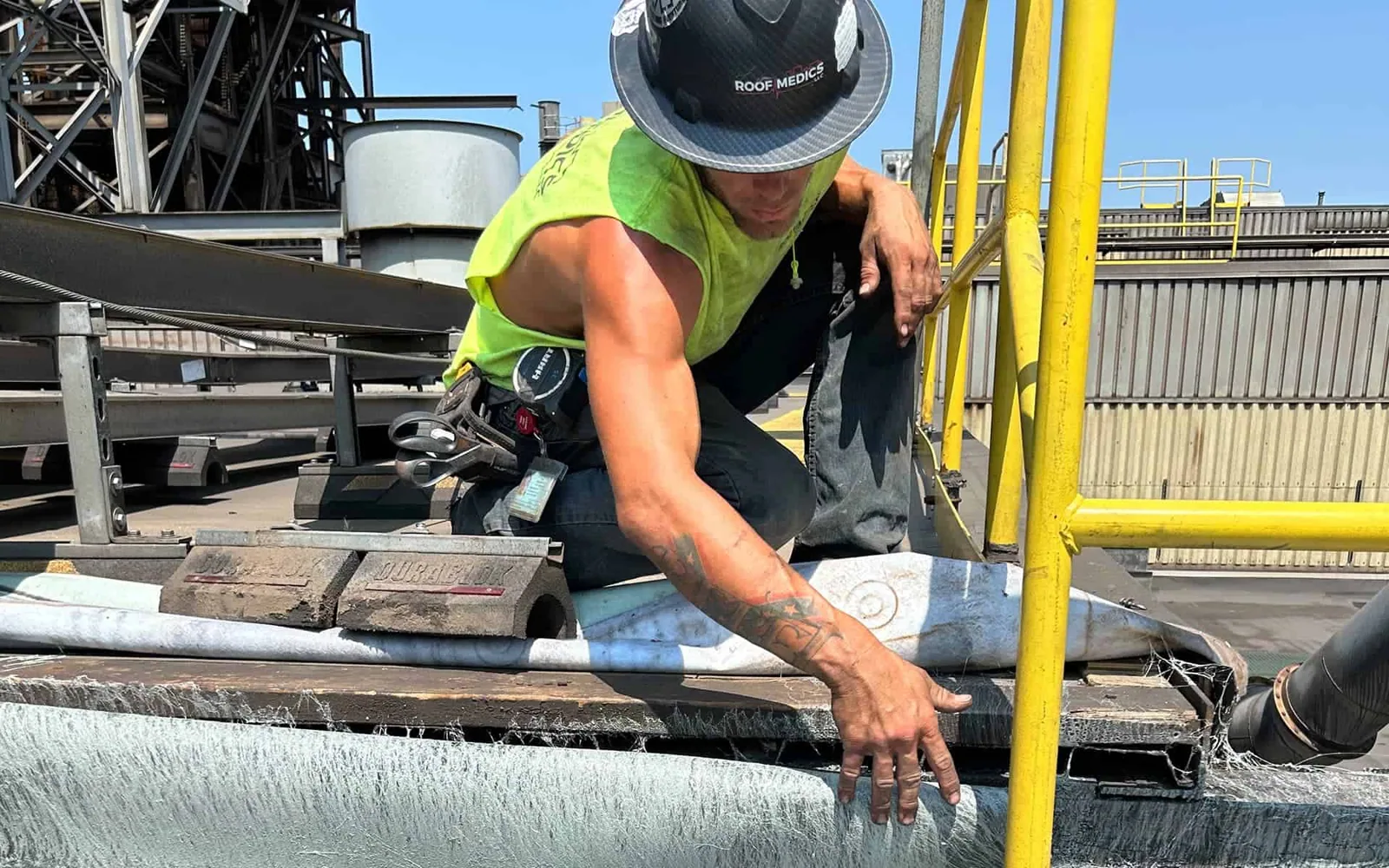
Roofs along a busy expressway have a lot in common. Kell Boulevard carries U.S. 82-277 across Wichita Falls as an expressway, and Kemp Boulevard is the other name on this corridor. Commercial buildings on busy roads need a plan for trucks and customers, and every roof needs a plan for wind.
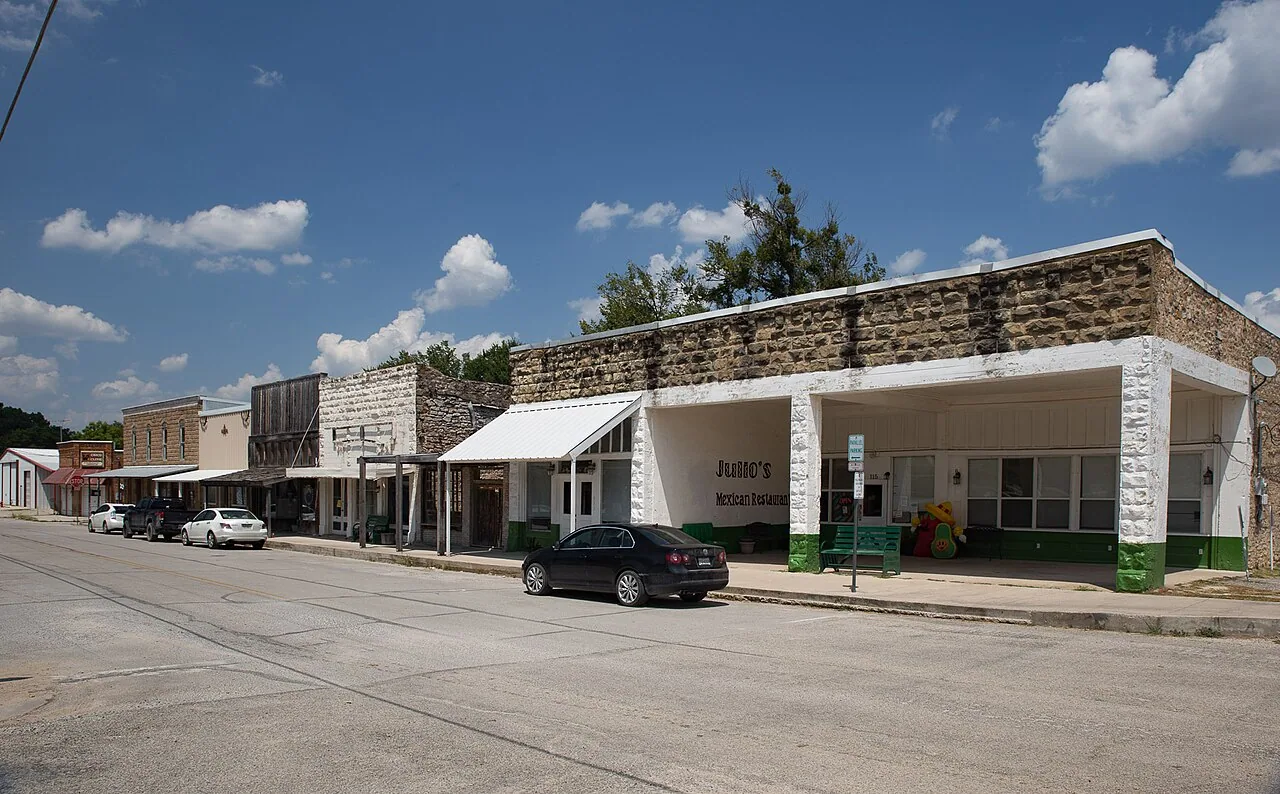
Here is the lesson for an owner: a roof does not fail all at once. It fails at one weak spot, then spreads. Our job is to find the weak spot early. We start with the edges, because that is where wind starts.
Why the Edge Comes First
Wind pushes air under the edge of a roof. If the metal at the edge is loose, the air gets under the membrane and lifts it. Once the sheet starts to peel, it can strip back a long way in a few minutes. That is why we check coping, fascia, gutters and the fasteners behind them before we look at the middle of the roof.
Along Kemp Boulevard the April 1979 tornado destroyed businesses, and a shopping center in the Southmoor subdivision was razed as well. We mention it as local memory. It does not tell us the condition of a roof today, but it does remind everyone why edge details matter.
Check the edge metal by hand. Grab it where you can reach it and pull gently. Metal that moves is metal that will fail in a gust. Look for gaps where the cap meets the next piece, rust at the fasteners and sealant that has pulled back from the joint. Each is a place for air and water to enter.
Photographs of the edge go on the roof sketch, so any later repair has a starting record.
Plants and Warehouses
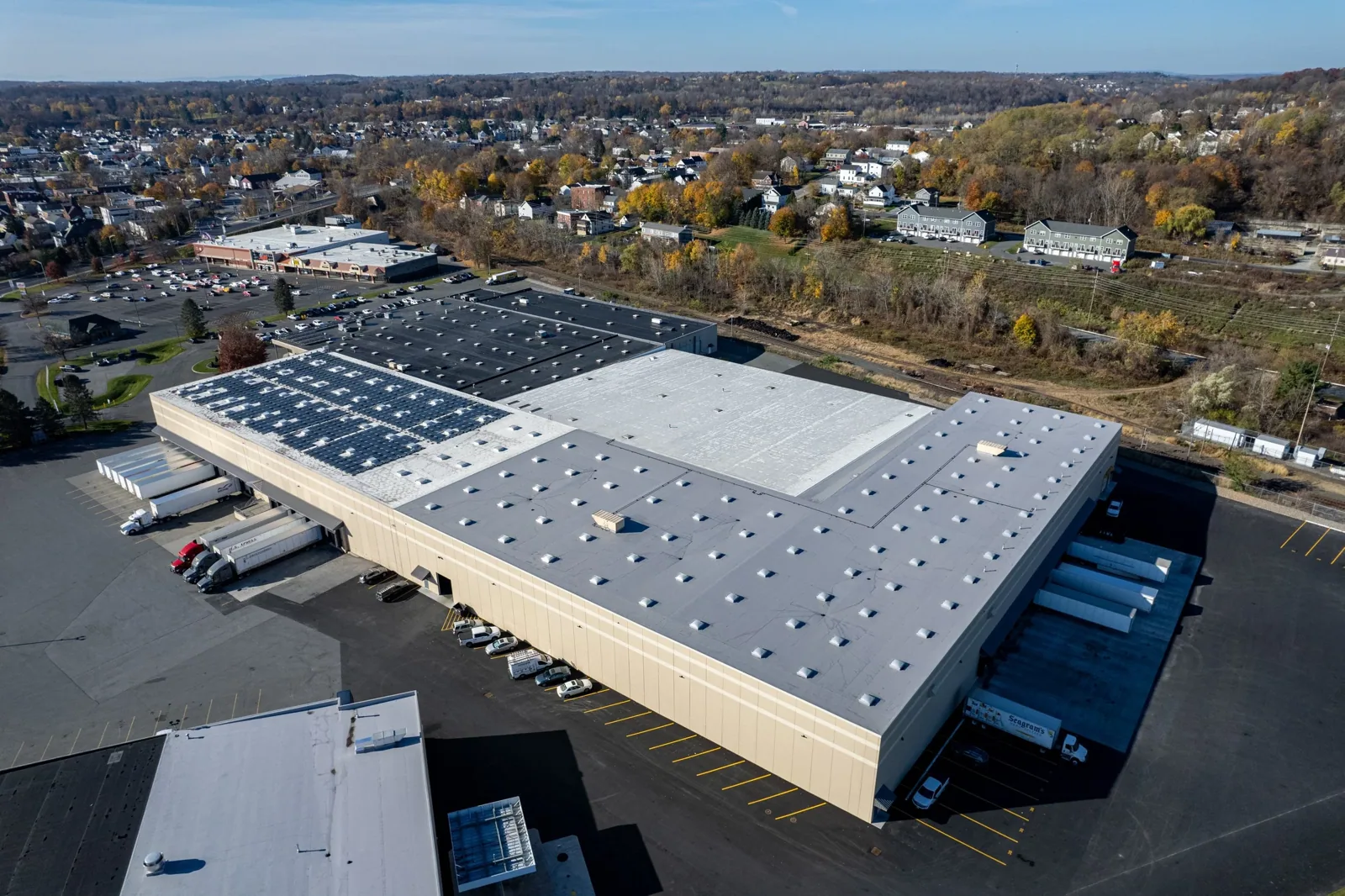
In the same storm a Levi Strauss and Co. plant and other industrial buildings were lost as the tornado moved east. Industrial roofs are big, flat and low, and they hold a lot of equipment. Look at the manufacturing plant roof and the warehouse roof as a system: deck, insulation, membrane and flashings, each one in order.
A simple test is to follow the water. Where does it go when it rains? Drains and scuppers should carry it off. If they are blocked, the water sits on the roof and weighs it down.
Penetrations on an industrial roof are numerous. Exhaust fans, vents, pipes and conduit each pass through the membrane, and each needs flashing that has stayed bonded. We count them, check them and rate them. A short list of weak spots often tells more than a long report of a roof that is mostly fine.
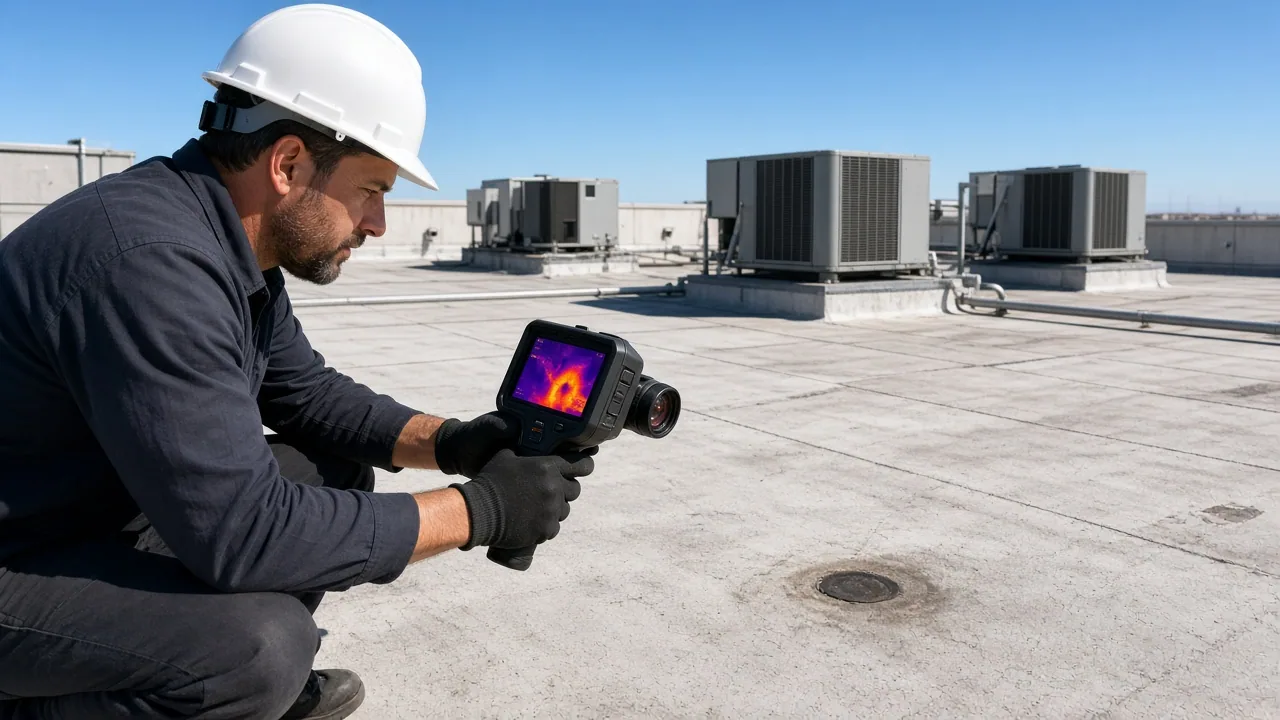
Where wet insulation is suspected, an infrared moisture survey maps it from above.
Storefronts and Strip Centers
Retail roofs along a corridor like this carry rooftop units, vents, signs and parapet walls. A parapet, the low wall that rims the roof edge, has a cap, flashing and a joint with the roof surface, and those are the places a leak starts. We check them wall by wall.
Strip centers share one roof over many tenants, so a leak in one bay can show up in another. We trace the water along the deck before we recommend a patch. A leak repair in the wrong place leaves the leak.
Signs and awnings add load at the wall. A sign bolted through a parapet makes a hole, and sealant at that hole moves in every gust. We check those joints and the wall below for stains that suggest water has been getting in.
Rooftop units are the next item. Each one sits on a curb, and each curb has flashing at all four corners. Corners are where the flashing stretches, and where it cracks first. We probe every corner and note the ones that need new material.
Heat, Hail and Wear
Heat wears down the sheet, hail bruises it, and a typical year here brings about 28 days at 100 degrees. Iowa Park and Burkburnett took baseballs in April 1991, and Sheppard AFB took larger stones in March 1993. Those events are history. They tell us what this region can produce, not what a given roof has seen.
After any hail event, we press the surface, mark each bruise and tally the bruises inside a test square. The count tells us how widespread the damage is. A written hail damage report gives you counts, photos and a repair scope.
Heat and wind work together. Heat softens the sealants and loosens fasteners, and then a gust finds the loose spot. A roof that has gone through many hot summers needs its fasteners and seams checked at the start of storm season, not after.
Metal roofs, if the building has one, need their own check. Panels move with the heat, and the clips and screws that hold them can back out. We look at every fastener line and the laps between panels.
Repair or Replace
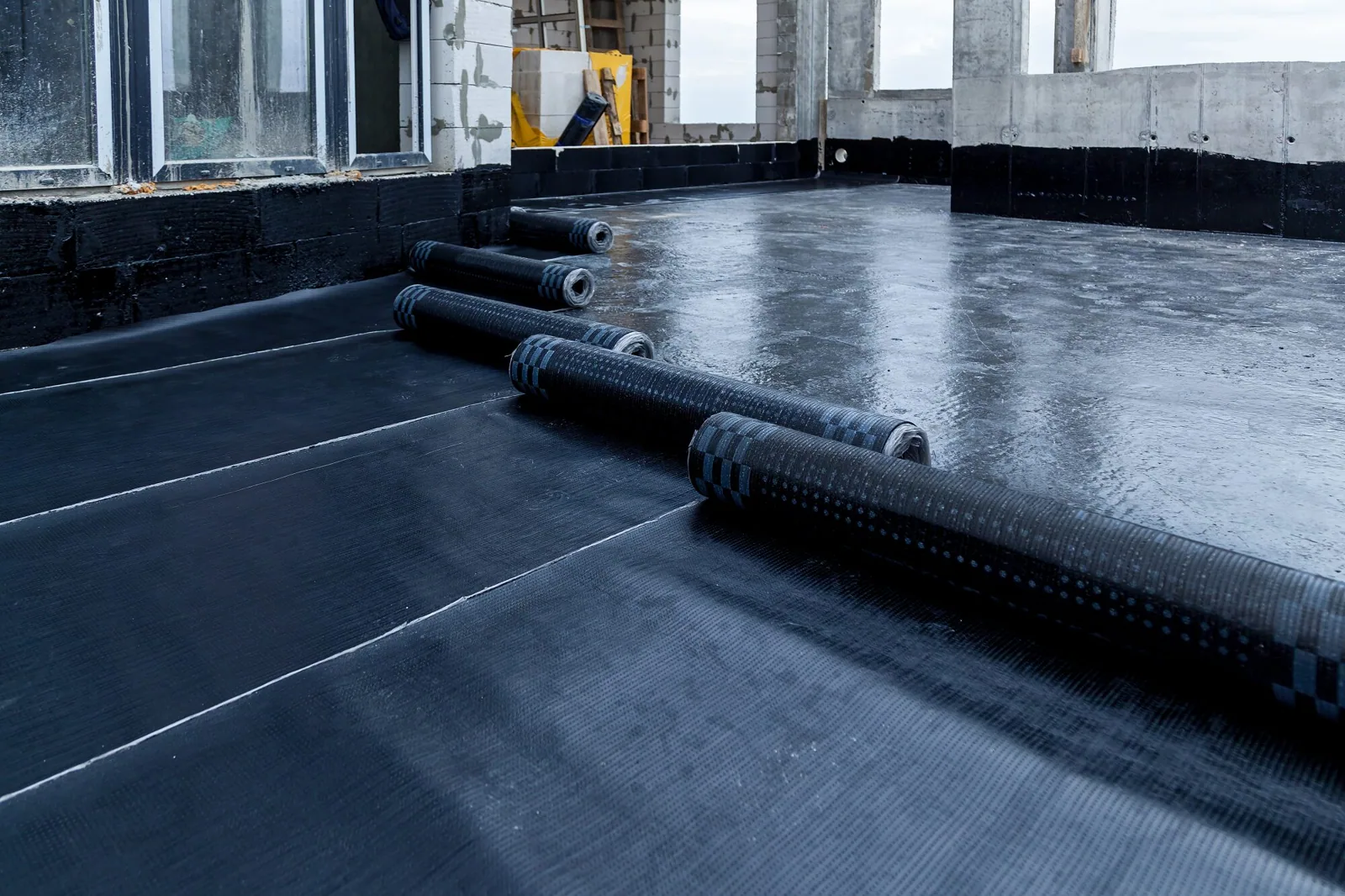
A repair is right when the membrane is sound and the problem is local. A recover fits a tired roof with dry insulation. A tear-off is right when the insulation is wet over a large area. We take moisture readings and a few core samples, and the results decide.
What drives cost is simple: roof size, deck condition, the number of units on the roof, the insulation and the hours the building lets us work. We list each one in the quote.
A roof close to the end of its life deserves a planned replacement instead of a rescue after a failure. A planned job can be scheduled for good weather, with materials ordered ahead and tenants told. An emergency job takes whatever the weather allows.
The written scope should say what is repaired, what is replaced and what is left alone, with photos for each, before you decide.
Timing and Access
Work near a major road needs a plan for trucks. We agree on a route, a staging spot and a time that keeps customers and loading docks clear. The same plan fits the Midwestern Parkway Retail Corridor and the Wichita Falls Business Park.
Storm season shapes the schedule. Spring brings the worst of the hail and wind in this part of Texas, so we try to complete tear-off in sections that can be sealed by evening. If a front moves in, the crew closes the open section first and packs up second.
Tenants get a notice before work begins, with the dates, the noisy hours and a phone number.
Commercial Roofing Questions
Why does wind matter more near an expressway?
It does not, by itself. Wind hits the edge of any roof first, and the edge needs a close look wherever the building stands open.
What do you check first after a storm?
Start at the roof edge, then the flashings, then the field of the roof. Edge failures spread fast, so we find them first.
Can one patch fix a strip center leak?
Sometimes. Water travels, so we trace the path before we patch. The patch goes where the water enters, not where it shows.
How much does a repair cost?
Cost follows the size of the repair, the access and the materials. We quote after the walk, and the quote lists each item.
What helps the first walk?
The roof age, the building use and any leak you have seen along the corridor, so the first walk can start at the likeliest weak spot.