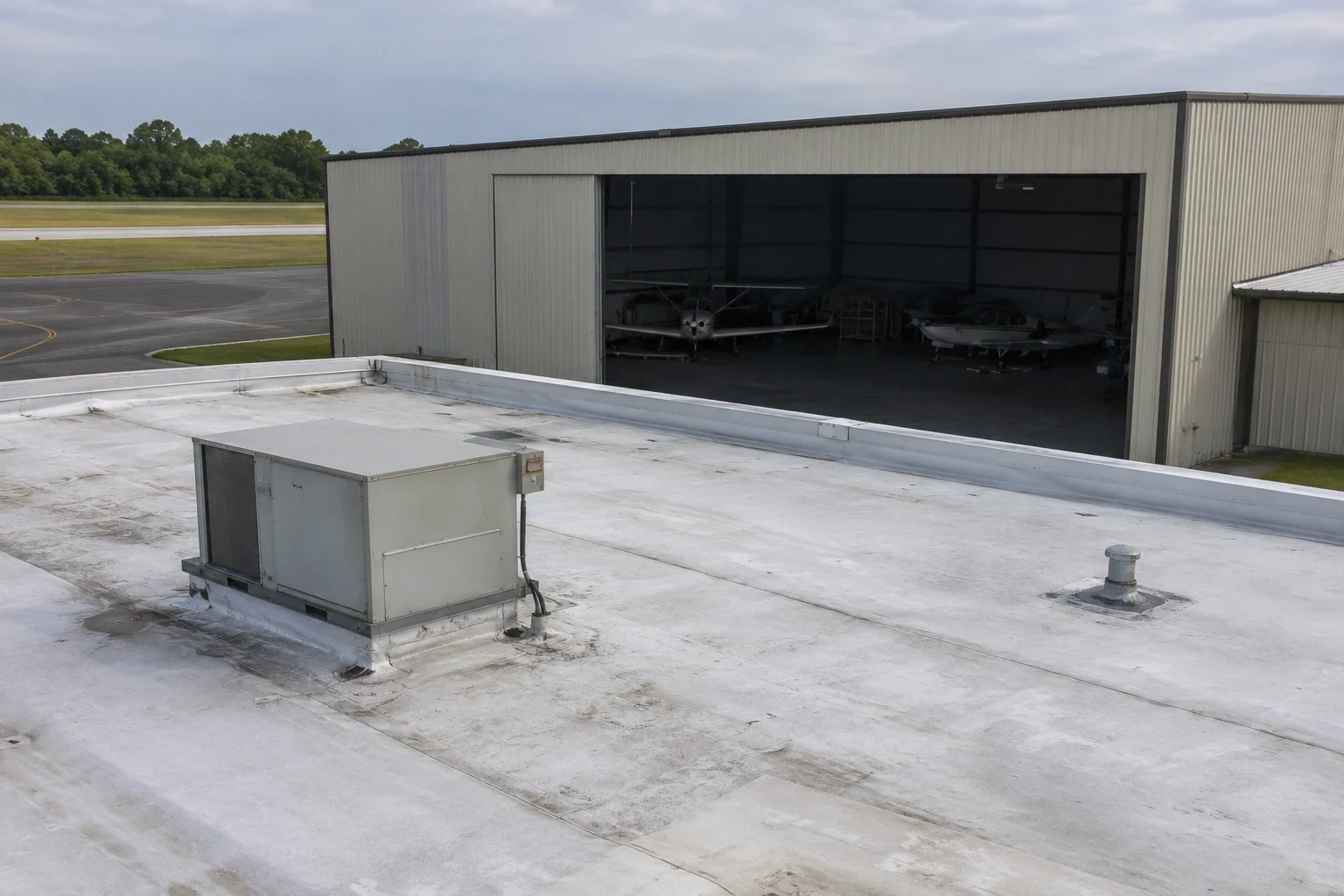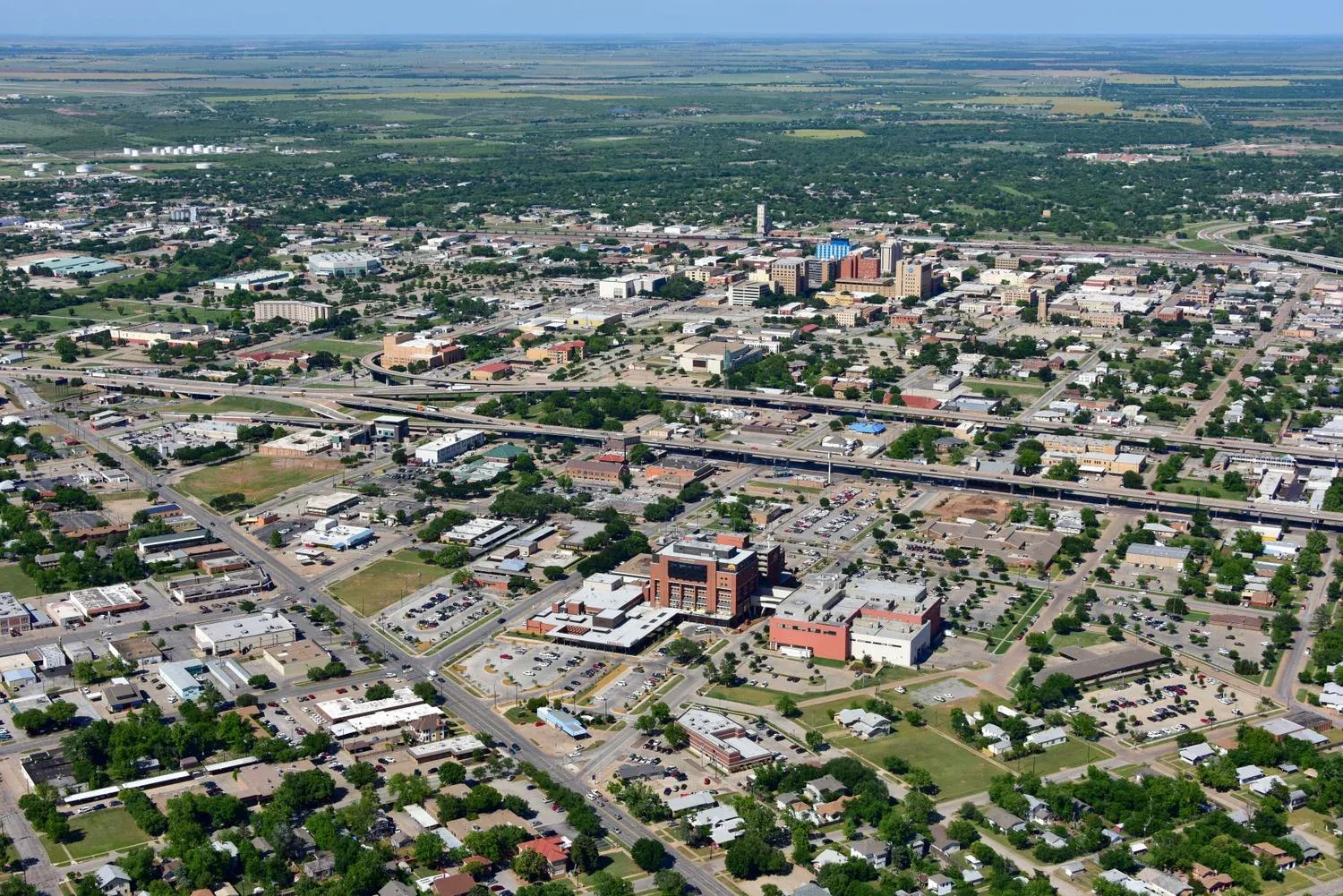
An aircraft hangar has one thing an owner should understand about its roof: the span is wide and open. Water that gets in has a long way to fall and often lands on expensive equipment. The north side of Wichita Falls sits near a regional airport about six miles north of the city, and the buildings around an airfield, hangars, maintenance shops, offices and storage, share that trait.
Here is step one: learn what the roof is made of, how it drains and who controls access to it. Then a plan can be built in order.
Hangars and Maintenance Shops
A hangar roof covers a wide open room with large doors at one or both ends. That shape matters. Wind loads the doors and the walls, the roof flexes with the wind, and the seams and flashings take the strain. A hangar roof needs a close look at its edges, its door headers and its drains.
A maintenance shop adds equipment on the roof: exhaust fans, ventilation and pipes. Each one is a hole that needs flashing. A maintenance facility roof is checked for discoloration near exhaust and for wear at the walk paths.
Door headers deserve a note of their own. The roof edge above a hangar door carries the load of the door track, and water that runs down behind the header can corrode the track and stain the floor. We check the flashing above each door and the gutter or scupper that serves it.
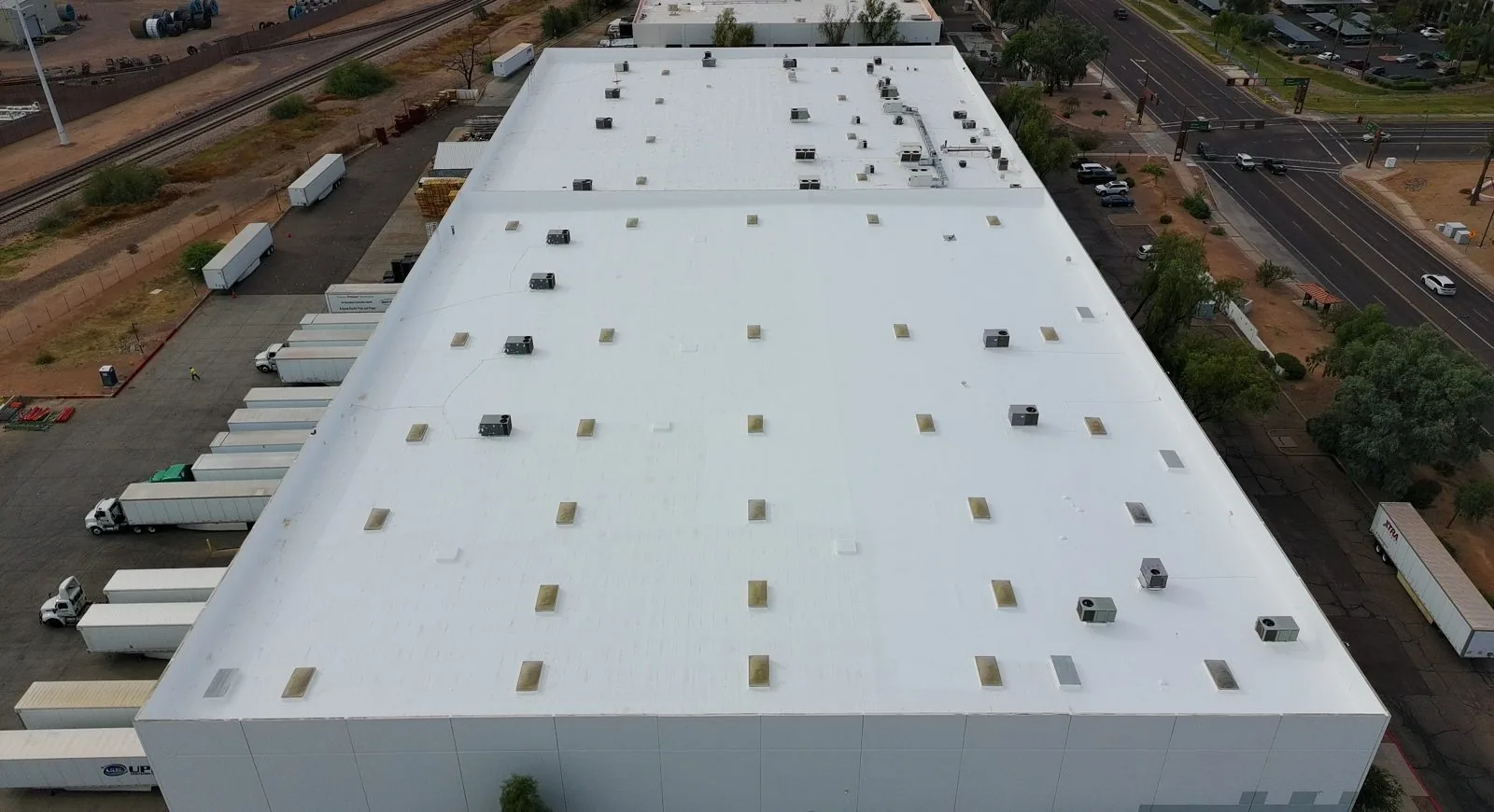
Skylights and light panels are common on large open roofs. They add daylight, and they add seams. We probe each frame, check for cracked panels and look for stains on the floor below.
What an Airfield Changes
Wichita Falls Regional Airport and Sheppard AFB use the same runways and taxiways, and about 97 percent of the airport's operations are military. American Eagle has been the only scheduled carrier since 2001, flying to Dallas/Fort Worth. The airport had 213 based aircraft in 2020, including 200 military. Those numbers tell us that this is a working airfield, and a working airfield changes how roof work is done.
Cranes and tall lifts near an airfield need clearance. Loose debris on a roof can blow onto a taxiway. Noise and vibration schedules matter. We ask early about gate rules, escort needs and height limits, and we plan the job around the answers.
Foreign object debris, called FOD, is a real concern near a runway. A scrap of membrane, a fastener or a bit of insulation can damage an aircraft if it blows onto a taxiway. We use closed containers, sweep the roof at the end of each shift and tie down loose material. The plan lists those steps in writing.
Fuel, solvents and hot work add their own rules. We agree early on what is allowed on the roof and where, and we pick adhesives and methods to match.
Roof Work Near Military Operations
Sheppard AFB is about five miles north of downtown, and its mission includes technical training and flight training. Work on a base follows its own rules: badging, escorts, vehicle checks and scheduled access. Roofing on military buildings is typically specified to the Unified Facilities Criteria. We plan the schedule around mission needs and keep the crew roster current.
Roofs on the installation itself fall under air force base roofing, with its badging, escorts and mission schedules. For work off base, the same discipline helps: a clear route, a known contact and a written plan.
Aerospace and aviation supply-chain firms are a major business cluster around Wichita Falls. A building that serves that kind of work, a parts room or a precision shop, needs the same care: a dry interior, clean work areas and quiet hours when the shop requires them. We ask what is under each section of roof before we plan the work.
Wind, Hail and Storm History
Sheppard's weather record includes tornadoes in April 1961, 1962 and 1964, with the 1962 storm breaking nearly every control tower window and the 1964 F5 scattering debris across all four runways, plus hail larger than baseballs on March 29, 1993. None of that is a finding about any roof today.
It does explain why we check edges first. We look at coping, fasteners and flashing, then at the field. After any storm, a dated walk with photos is the best record. A tornado damage repair starts with temporary closure and a dated record.
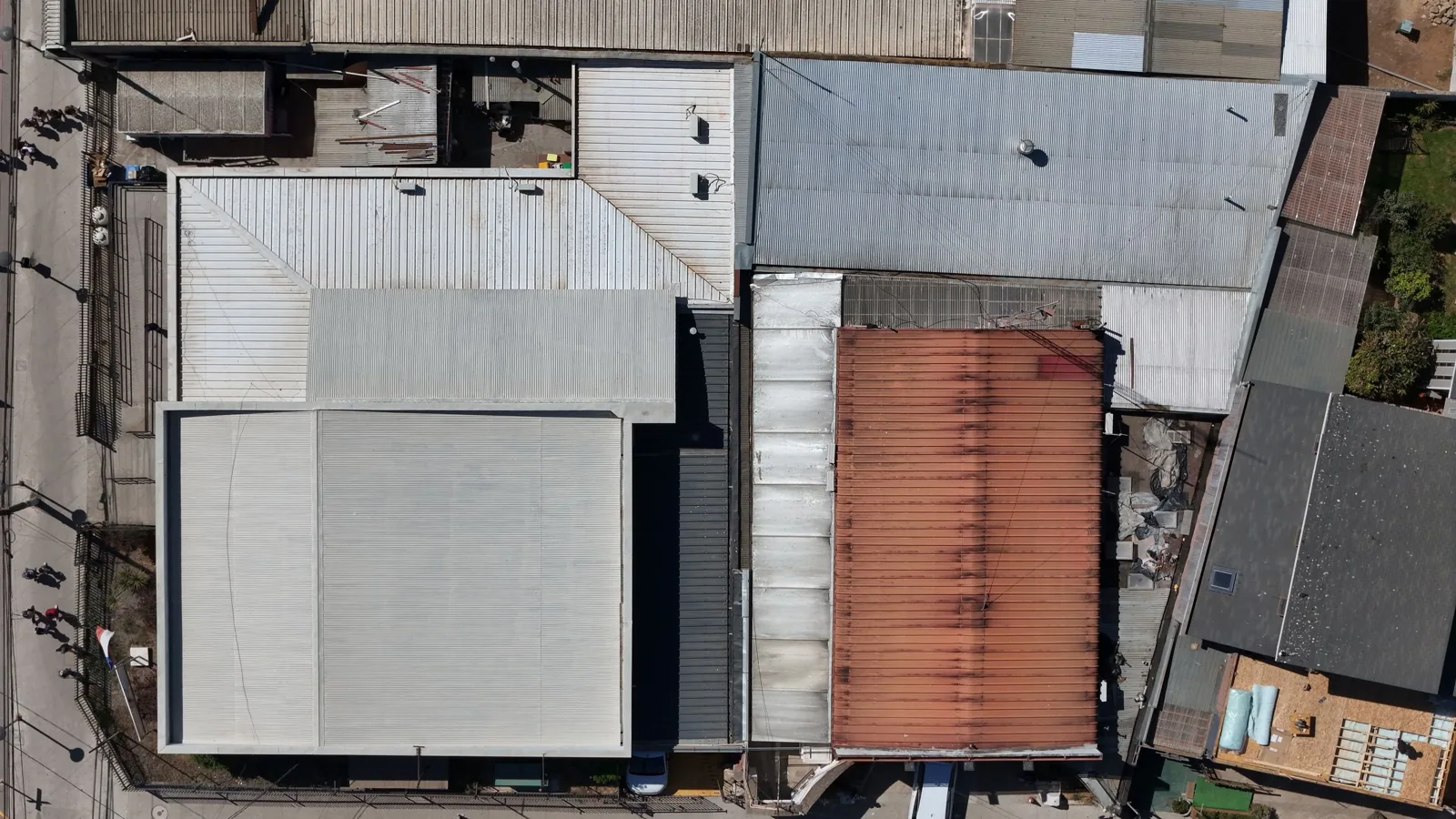
Metal roofs, if a building has one, need a fastener check after wind. Panels move, clips loosen and sealant at laps cracks. We walk every seam line, press each cap and tighten or replace what has backed out. Quick attention keeps a small gap from becoming a long leak.
What We Check on the First Walk
Step one is the drains. Step two is the seams, step three the flashings and step four the equipment. We press the surface to find soft spots, and we note every patch, because a roof with many patches is telling us something.
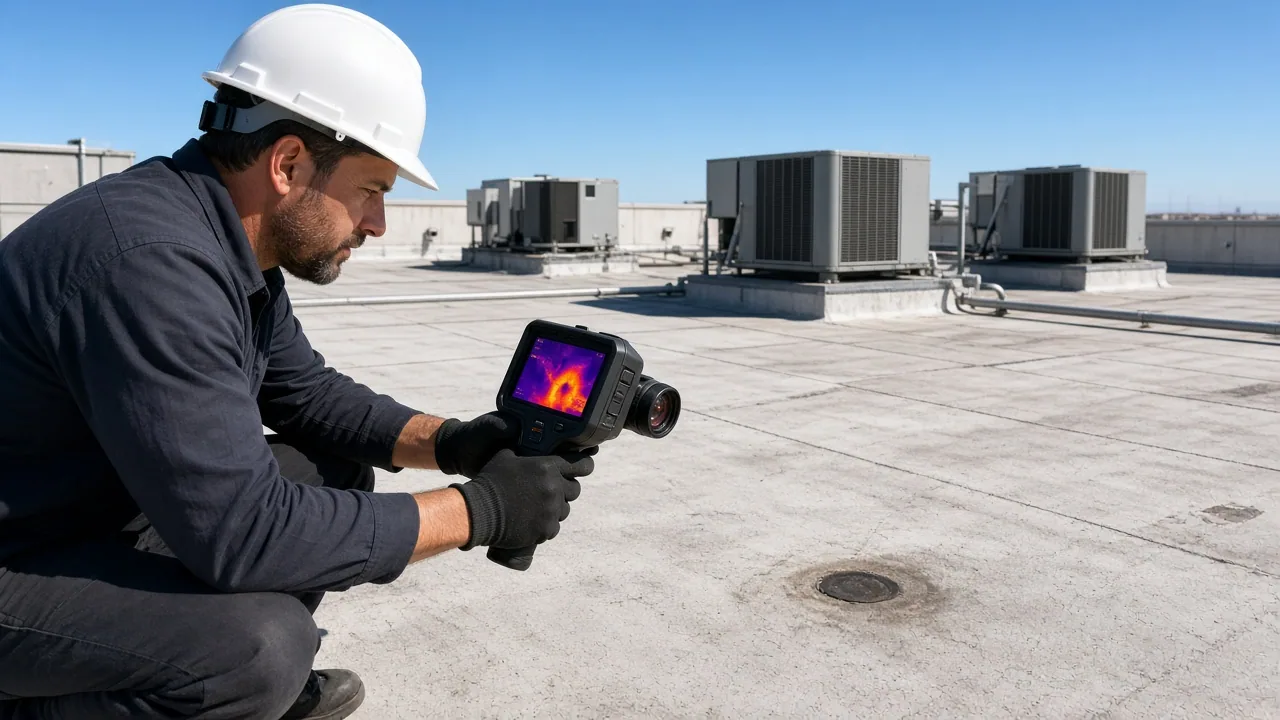
On a large roof, an infrared moisture survey and a few core samples map where insulation is wet and how deep the water goes. That decides between a repair, a recover and a replacement.
We also check what hangs from the roof inside, when the building allows. Lights, fire lines and ducts can be damaged by a leak, and a stain on one of them points to a source above. We trace it up to the roof before we recommend a patch.
Findings go on a roof sketch with photographs, and the owner receives the sketch and a ranked list.
Timing and Access
With about 28 days a year at 100 degrees, summer work here starts early in the day. Aviation shops often run on set shifts, and we plan noise and dust around them. The same plan serves the Wichita Falls Business Park and downtown Wichita Falls.
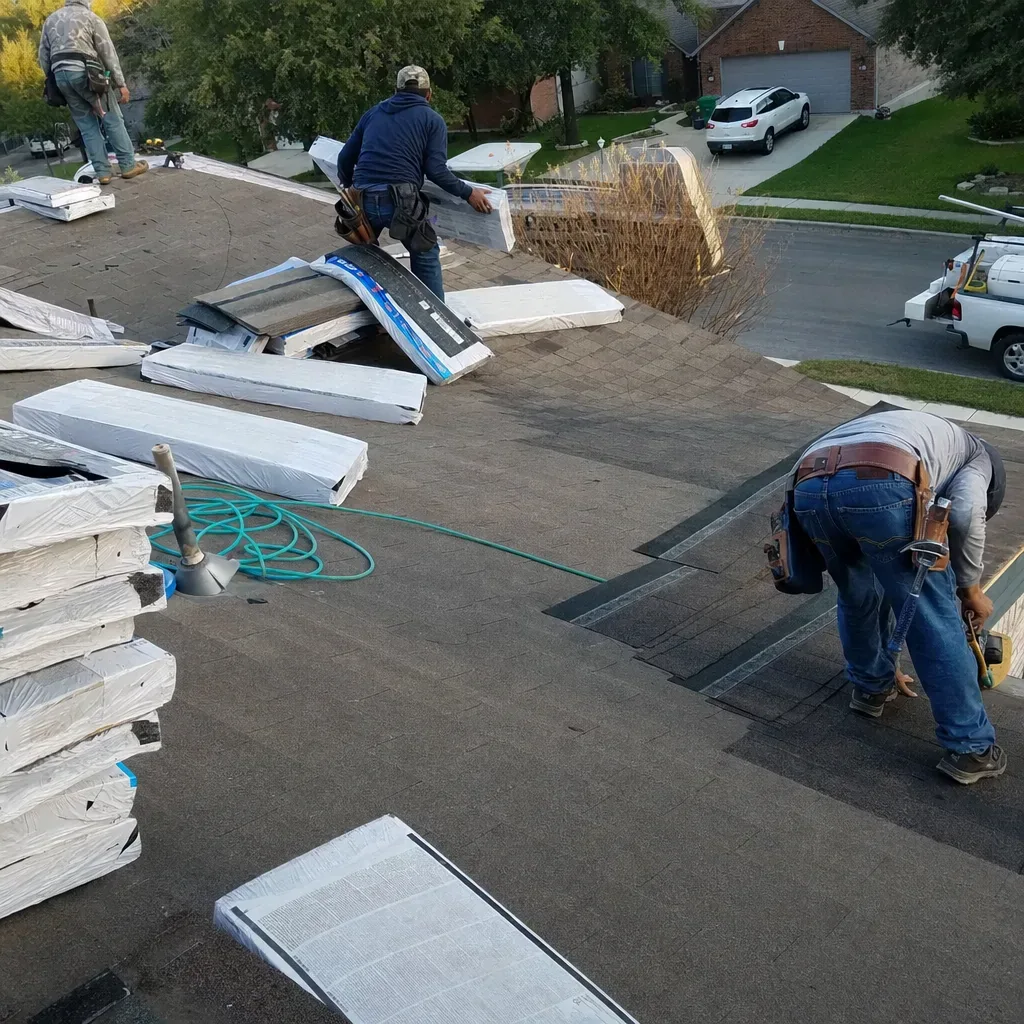
Because shops and hangars hold costly equipment, the dry-in plan matters most. We also ask whether a hangar door schedule or aircraft movement limits the days a lift can stand near the building, and a short call before the visit settles gate rules and who meets the crew. A section is opened only when its materials are on the roof and the forecast holds, and it is sealed by evening. If rain comes early, the crew closes the section first and leaves second.
Pre-job walks save days. We meet the building contact, walk the route the trucks will take and settle who can stop the work if the shop needs quiet. The notes go in the job file for everyone to read.
Commercial Roofing Questions
Why are hangar roofs different?
The span is wide, the walls are open and the doors are big. Wind and water both have more room to do damage, so edges and drains get extra attention.
Do airfield rules slow a roof job?
They can. Clearance for cranes, debris control and gate access take time. We ask about them early so the schedule holds.
Can a crew work on a base roof?
Roof work on a base needs badging, escorts and an approved schedule. We follow the base's rules and keep a current roster.
What damage should I look for after a storm?
Loose edge metal, lifted flashing, torn seams and dents in metal panels. Take dated photos and call for a walk.
What helps first?
Roof age, building use and the place where water has appeared, with the airfield access rules if they apply.