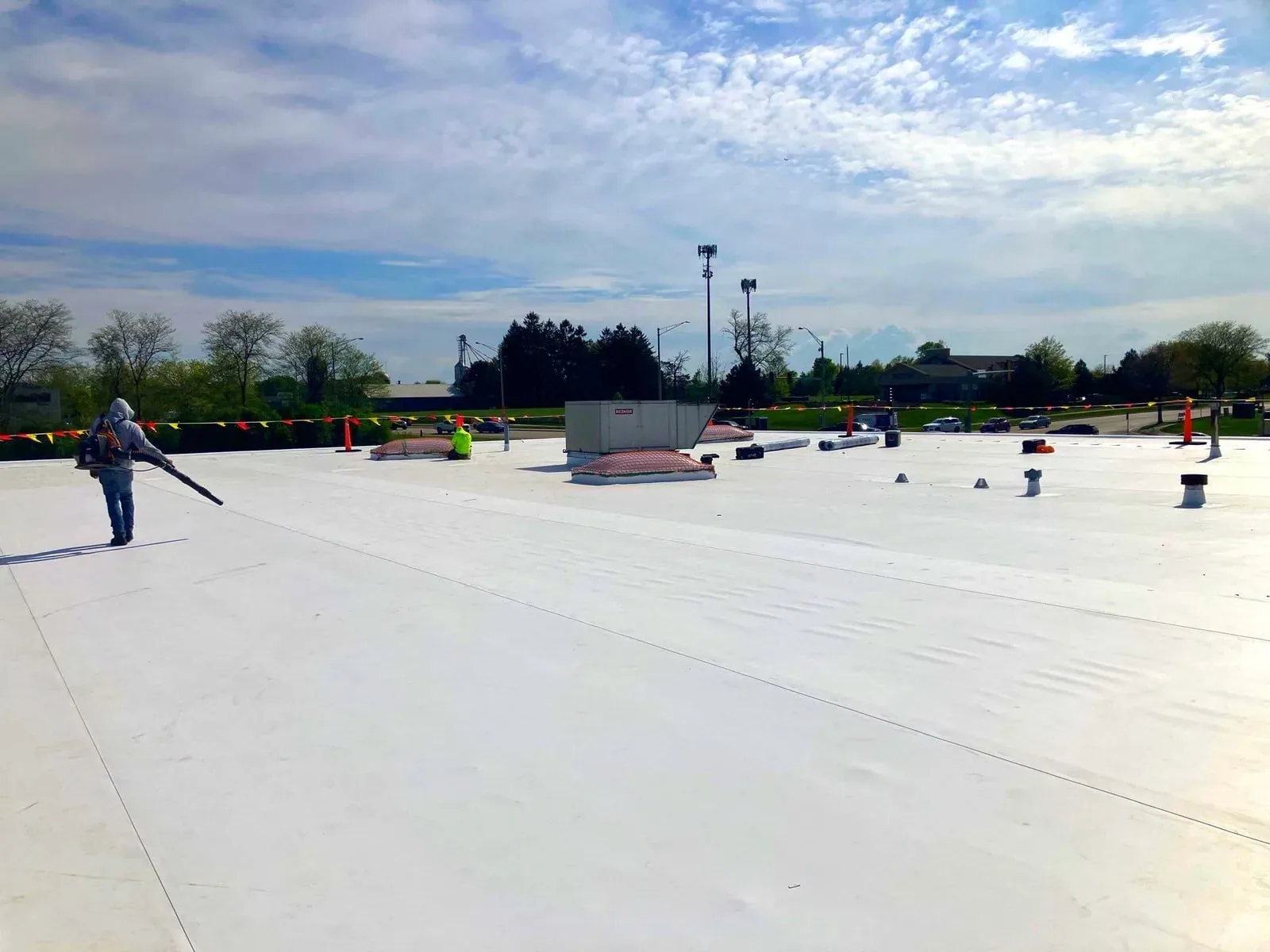
A health system rarely owns one roof. It owns a tower, a clinic wing, a loading dock canopy, a mechanical penthouse and a medical office building added a decade later, and each of those roofs has its own age and its own way of failing. That is the first thing to understand. Treat the campus as a set of separate roofs, then rank them.
In Wichita Falls, TX, the large care providers include United Regional Health Care System and the North Texas State Hospital campus, and smaller clinics sit in neighborhoods all around them. We inspect low-slope and metal roofs for hospital and clinic owners, write down what each roof needs, and plan the work so that patients, staff and air handling are never put at risk. Step one is to walk the roof and learn what is underneath it.
Know which roof is which
Start with the building. A hospital wing built in one era usually carries a different membrane, a different insulation and a different drainage layout than the clinic annex built later. Where an older roof has been recovered more than once, the layer underneath decides how a repair will hold. We open a small test cut where it is safe to do so and record what we find.
The North Texas State Hospital campus on the Wichita Falls side is a good example of why this matters. The campus has 330 beds and dates to the 1920s, and a $425 million legislative appropriation in 2023 funds a new hospital building to rise behind the existing ones. A campus with old buildings and new construction side by side holds roofs of very different ages, and the maintenance plan should say so. We write a short record for every roof so that nothing is treated as one lump.
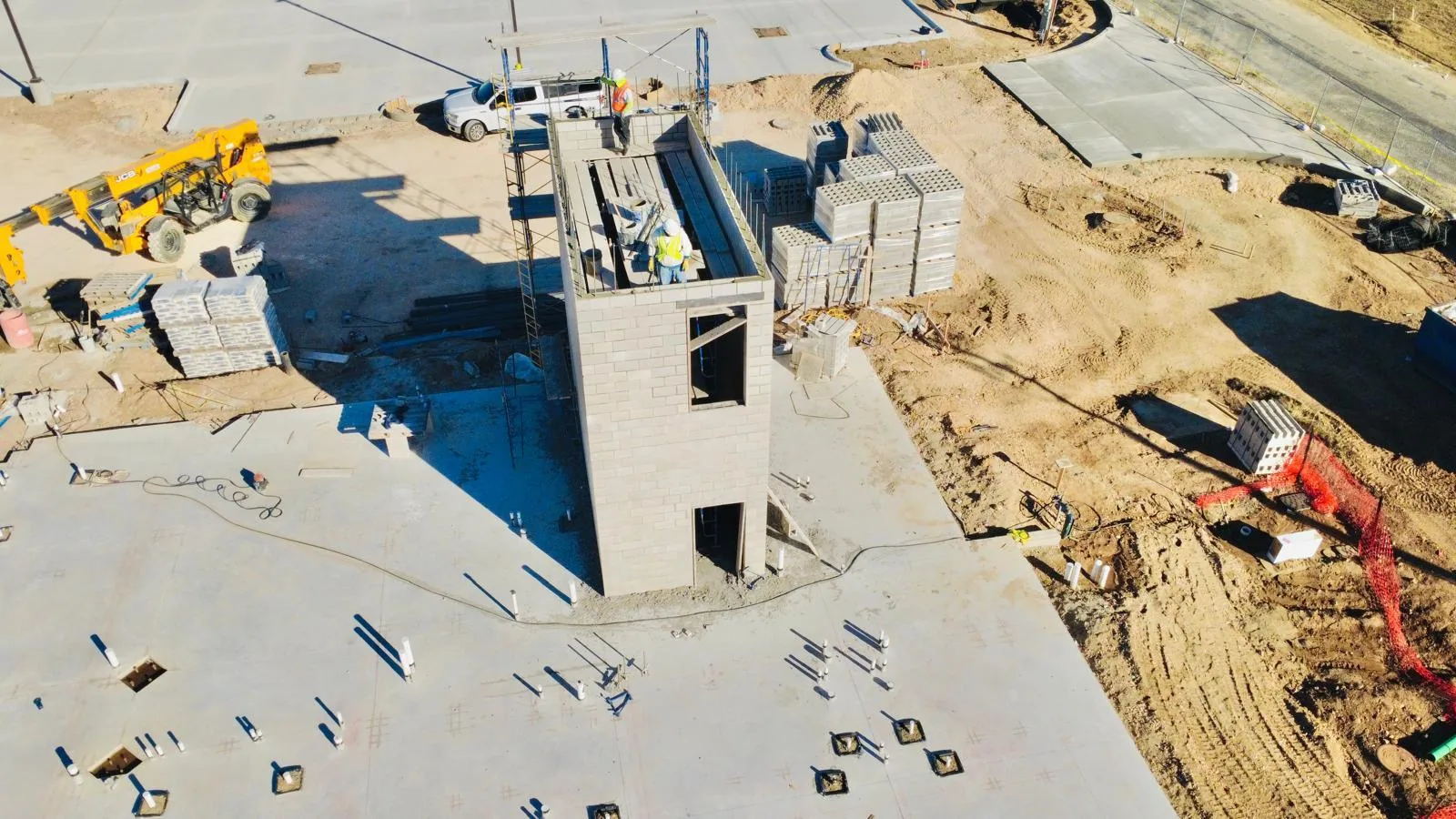
New construction raises a separate question. When a general contractor is building a wing, the roof is often one of the last trades on site and the first to be blamed for a delay. We coordinate with general contractors on tie-ins, penetrations and flashing details so that the new roof meets the old one cleanly. A state-owned campus also follows public agency purchasing and documentation habits, which we plan for from the first visit.
Water is a clinical problem
On an office roof, a leak is an inconvenience. Over an operating room, a patient corridor or a pharmacy, it is a clinical and regulatory problem. The first rule is simple: the roof above a sensitive space gets the most careful inspection and the earliest repair. We trace every ceiling stain back to its true entry point before we recommend a fix, because water often travels along the deck or insulation joints before it shows itself inside.
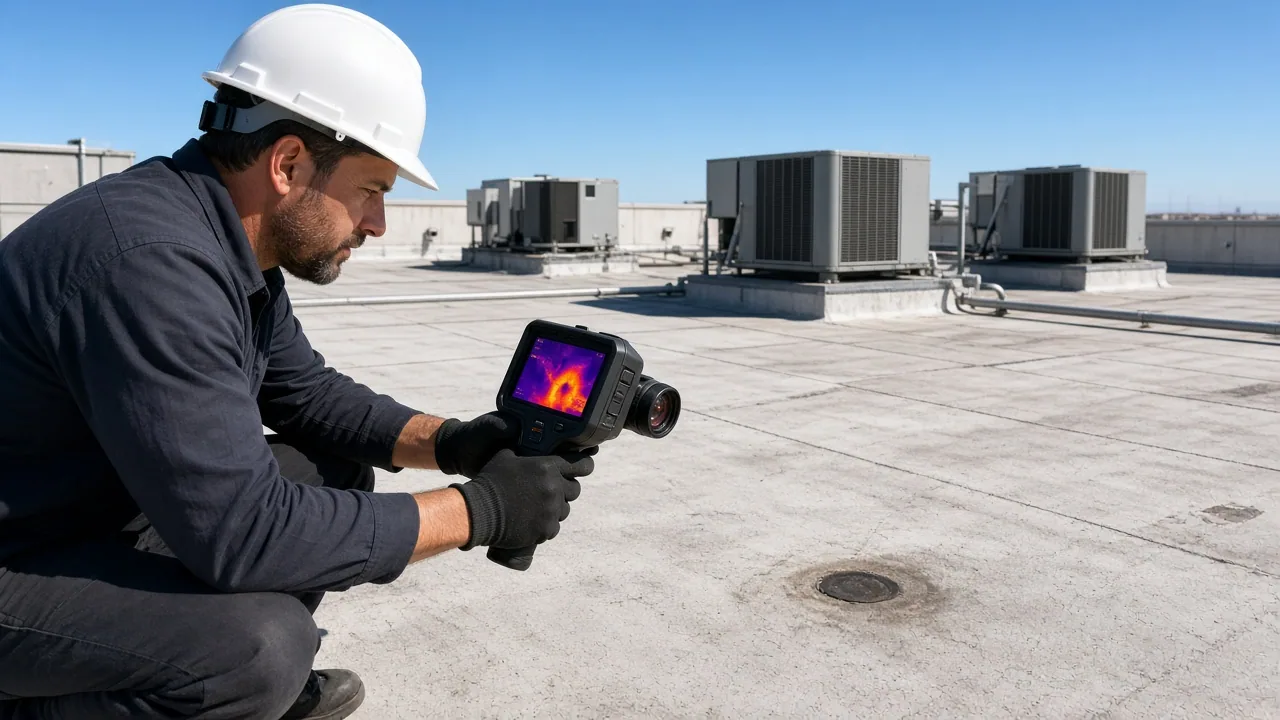
An infrared moisture survey helps here. It shows where insulation has taken on water that nobody can see from above, which means a repair can be sized to the wet area instead of guessed. An infrared moisture survey is especially useful over occupied care areas, where opening the roof at random is not an option. The results become a map that facility staff can keep.
Heat, hail and mechanical load
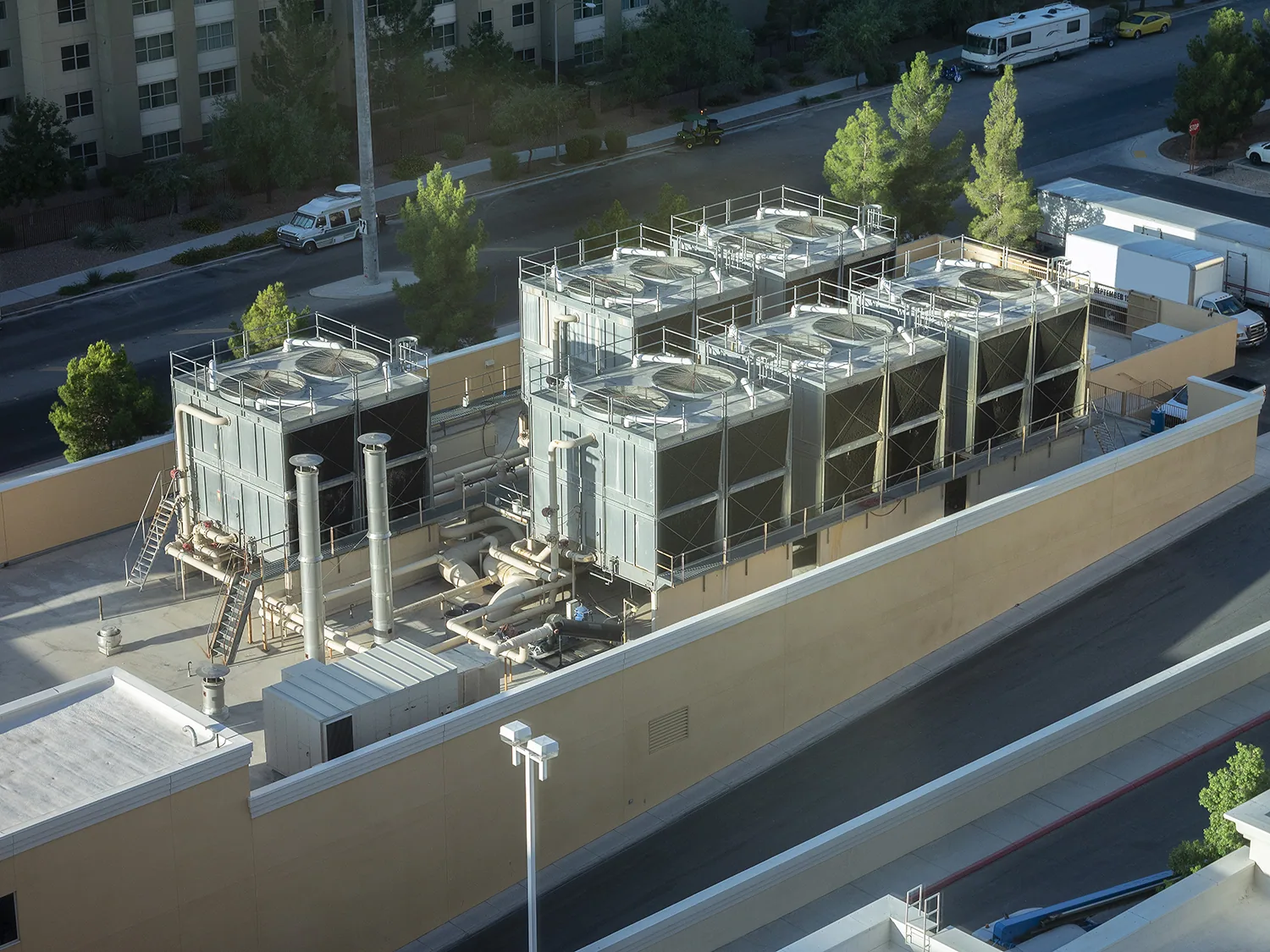
In a typical year Wichita Falls sees triple-digit highs on about 28 days, and 2011 stretched that to 100 days. A hospital roof under that heat carries a second burden, because rooftop air handlers, exhaust fans and chillers run hardest exactly when the membrane is hottest. Foot traffic around equipment is heavy, and every service visit can scuff a membrane or loosen a flashing. We look at walk paths, pads and equipment curbs and supports first.
Hail is the other long-range worry. Baseball-size hail damaged Burkburnett and Iowa Park on April 2, 1991, and hail larger than baseballs fell at Sheppard AFB in 1993. Those events are history, not proof that any given hospital roof is bruised today. They are a reason to check. A hail bruise is a soft spot that is hard to see from the ground, so we press and probe the membrane and mark what we find.
Repair or replace the wing
One clean rule governs the choice. Repair when the system under the surface is dry and sound, and replace when water has spread through the insulation or the membrane has aged past holding a patch. A health system budget works best when each wing has a stated answer and a rough year for the next decision.
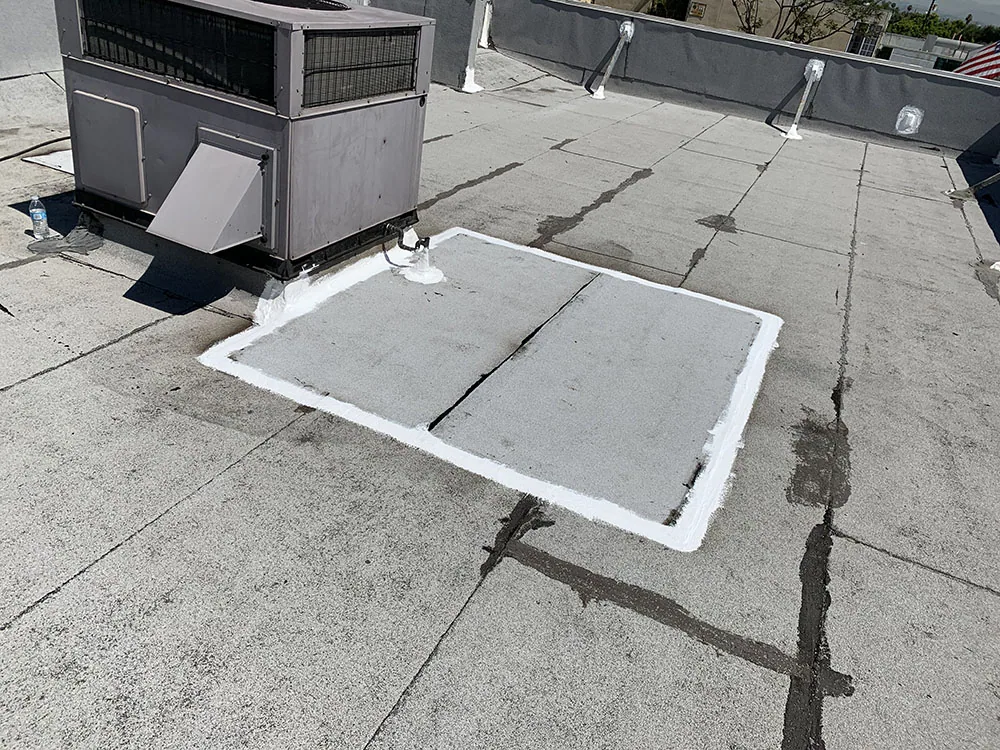
For a roof that is still serviceable we may recommend preventive maintenance that clears drains, reseats flashing and seals small splits before they spread. For a roof that is finished, a full replacement in TPO, PVC or another low-slope system is planned wing by wing, so that the rest of the building keeps operating. A hospital owner can pair this with a written condition report that goes into the capital plan.
Records matter as much as repairs. Every patch, drain cleaning and flashing fix is written down with a photo and a location on the roof plan. When a surveyor, insurer or board asks what was done and when, the file answers in minutes. That habit also keeps one wing from being repaired twice because nobody remembered the first fix.
Plan access around care
Work above a care floor is scheduled before it is priced. We ask where the air intakes are, which hours are quietest, and which entrances must stay open. Odor, dust, noise and vibration are managed with work sequencing, with temporary protection and with a clear path for materials. Our crews work on occupied buildings, and we plan for tenants, staff and patients as part of the scope, not afterthoughts.
Emergency repair does not wait for a convenient hour. If a storm opens a seam over a ward, we are on call at night, on weekends and on holidays, and emergency roof repair starts by stopping the water and protecting the space below. A permanent fix follows once the roof is dry enough to take it. For campuses near the airfield, we also plan for the flight activity on the north side of the city, where the regional airport shares its runways with Sheppard AFB.
Commercial Roofing Questions
Which roofs on a hospital campus should be inspected first?
Start above surgery, imaging, pharmacy and patient rooms, then move to administrative wings. Roofs with equipment traffic come next. We rank them in that order and give each one its own written finding.
Can a clinic roof be replaced without closing the clinic?
Often it can, in sections. We stage tear-off and new membrane so one part of the roof is open at a time, keep the deck covered each night, and coordinate with staff about intakes and entrances.
How do hail events like Iowa Park in 1991 affect a medical building today?
They raise the question without answering it. A past storm tells us to inspect for hail bruises, cracked membranes and dented metal, but only a walk on the actual roof shows whether damage is there.
What should a facility team send before the first visit?
Send the age of each roof, the use of the rooms below, and any leak history or past repairs. Photos of ceiling stains help. With that, the first walk answers a specific question.
Is a new state hospital building a reason to wait on older roofs?
No. Older buildings on the Wichita Falls campus keep working until they are retired, and their roofs still leak if neglected. We plan repairs to match the remaining life of each building.