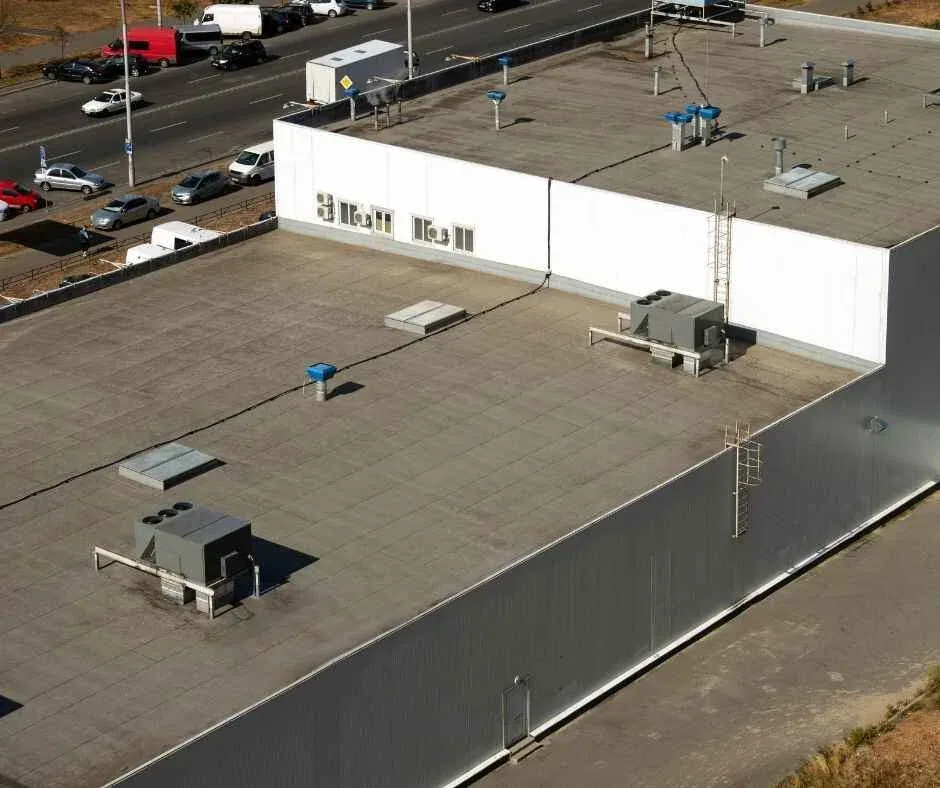
Start with the building. An older downtown office, a brick storefront row and a long-lived commercial building with a flat roof and a gravel top can carry a built-up roof, called BUR. The one thing an owner should understand is that a BUR is a stack of layers, and its strength comes from the number and the quality of those layers, not from any single sheet.
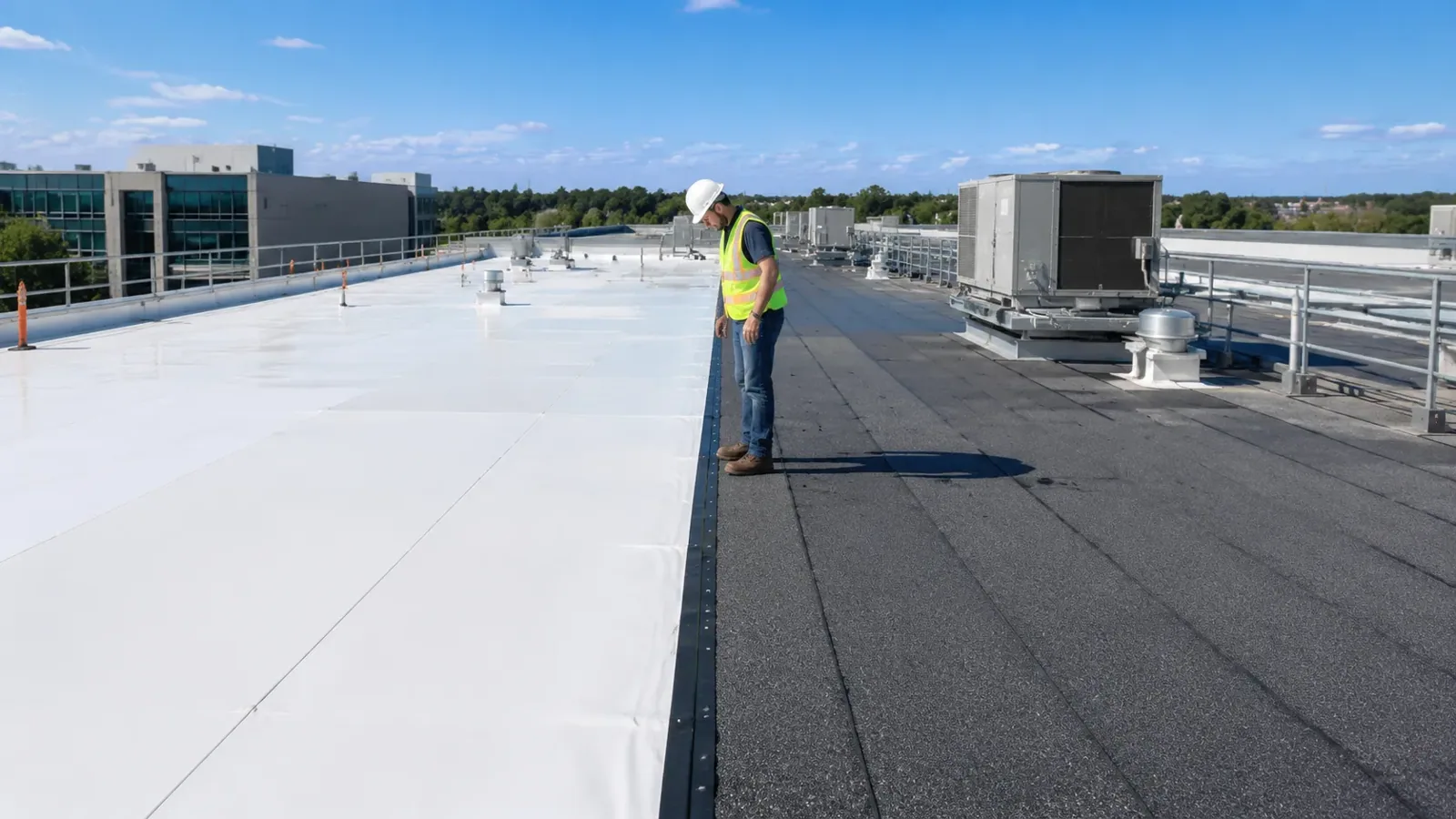
BUR is the oldest family of commercial flat roofs still in use. Alternating plies of asphalt and reinforcing felt are built up on site, then finished with gravel or a cap sheet. Here is how it goes together, where it fails first and what to check, in order.
Know the Stack
From the bottom: the deck, insulation, a base sheet, then three or four plies of felt, each mopped in hot asphalt or glued with cold adhesive. The top is a flood coat of asphalt with gravel embedded in it, or a granulated cap sheet.
The gravel does a job. It shades the asphalt from sun, holds the surface down against wind and gives a fire rating. It also hides what is under it. A gravel roof can look fine for years while the felts below slowly fail.
The layers matter. More plies mean more backup if one fails. A BUR with four plies can tolerate a small defect better than a single sheet. That redundancy is why BUR roofs have lasted so long when they were well made and kept dry. It is also why the cost of an old BUR repair can be modest: one bad ply does not take the whole system with it.
Find the Blisters, Splits and Alligatoring
BUR fails in recognizable ways. Blisters are bubbles where moisture or air is trapped between plies. Splits are cracks that run along the felt, often over deck joints. Alligatoring is a crazed pattern in the surface asphalt where sun has dried it.
A blister does not always leak, but it signals trapped water. Pressing on it shows whether it is soft. A split is more serious, because it opens the felts directly to rain. Alligatoring means the protective surface is thin and the sun is reaching the plies.
On a walk we sweep gravel off test spots, probe the surface and mark every defect on a plan, with a photo of each so the next visit can show what grew. A simple test: if a screwdriver sinks into a blister or the felt feels spongy, the plies are wet.
Look for the Ponding Line
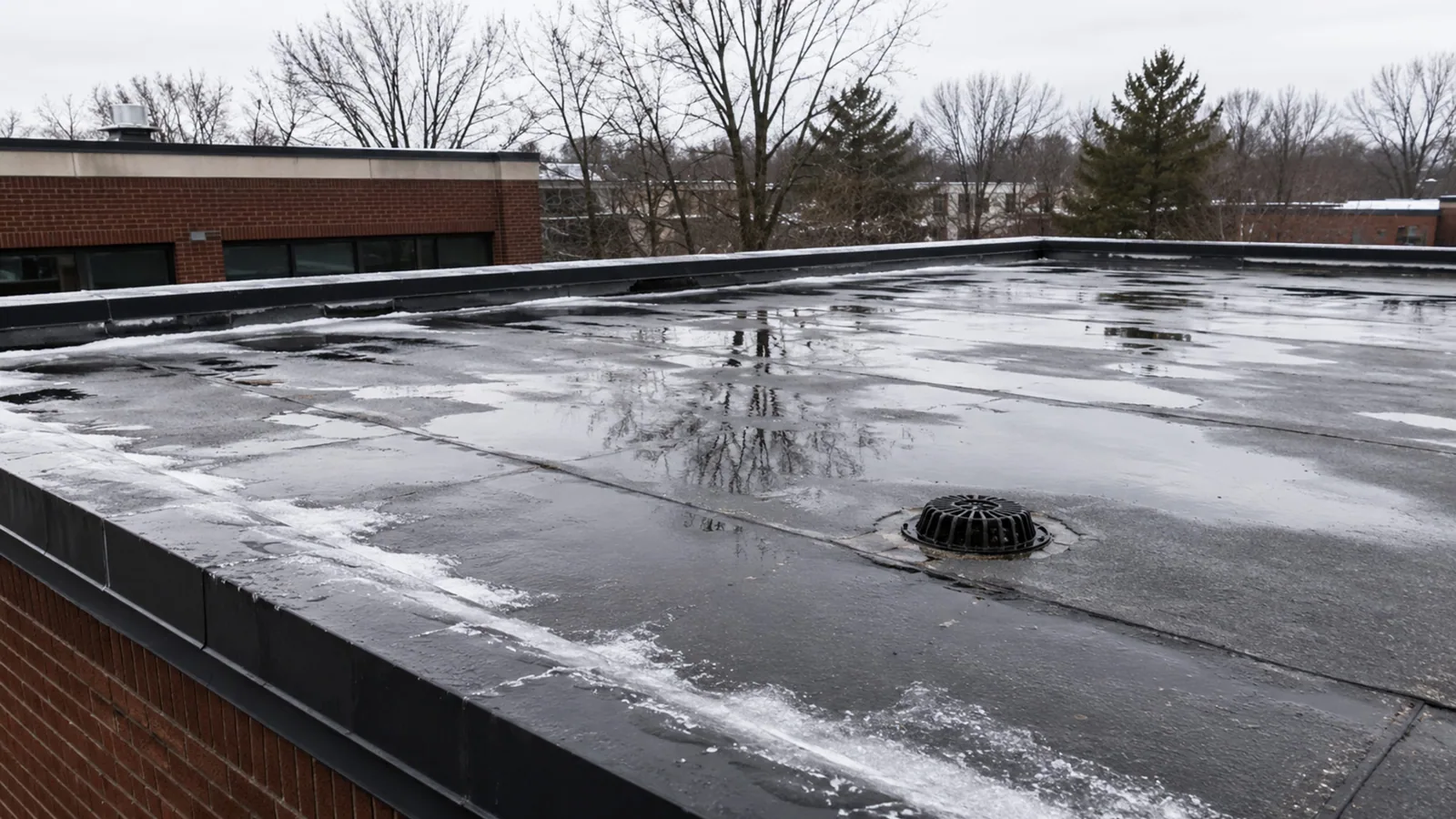
Most BUR roofs are dead flat or nearly so. Water collects in low spots, and a ponding line, a ring of staining or algae, marks where. Standing water speeds aging. It softens asphalt, grows algae and finds every small flaw.
We map every pond with a level and a tape. Depth and area go on the plan. A shallow pond that clears in a day may be a nuisance. A deep one that lingers is a structure and drainage question. The fix may be a cleared drain, a new scupper or tapered insulation under a new roof.
The steps for a ponding water repair start with clearing the outlets and end with a slope fix if clearing does not work. Water is the enemy of every flat roof, and a BUR is no exception; a pond over a split felt is a leak waiting for the next rain.
Count the Heat and the Weight
Wichita Falls reaches 100 degrees on about 28 days a year and 90 degrees or higher on about 102, and in 2011 it logged 100 days at 100 degrees or higher. Asphalt ages in that heat. It dries, shrinks and cracks. Gravel protects it, which is why a BUR with good gravel often outlives one without.
Weight is the other issue. Gravel and plies are heavy. Adding another layer on top may overload the structure. Before any recover we ask for the original drawings or have an engineer check. Heavy roofs on old decks need care. If the deck is wood or old steel, we look for sag, rot and rust from below before anything heavy goes up.
What it means for you: a BUR roof with intact gravel and dry plies can serve for decades. One with scoured gravel, blisters and ponds is on borrowed time.
Plan for Hail and Wind
Hail has hit this area before. The National Weather Service recorded baseball-size hail in Iowa Park and Burkburnett on April 2, 1991, and golf-ball hail in Electra on March 13, 1982. That history proves nothing about a given roof. Gravel gives BUR some cushion against hail. It does not make the roof hail-proof, and bare spots take direct hits.
Wind moves gravel. A strong gust can blow stone off a corner and leave the surface bare, and loose gravel on the ground below is a hazard. Downtown Wichita Falls took heavy damage from the F5 tornado of April 3, 1964, a reminder of how violent local wind can be. We check parapets, edge metal and the corners of every older roof.
After a storm we walk the roof, patch every cut and replace missing gravel. A wind damage repair begins at the edges and moves inward, with a scan for water under any torn felt.
Match the Repair to the Roof
BUR repairs well when the felts are dry. Splits are cut open, dried and patched with new felt and asphalt. Blisters are cut out and rebuilt. Flashings are rebuilt with new base flashing and cap flashing. A flood coat and new gravel can renew a surface that is still sound. Each patch is lapped onto good felt and photographed, so the log shows where the roof has been opened and closed.
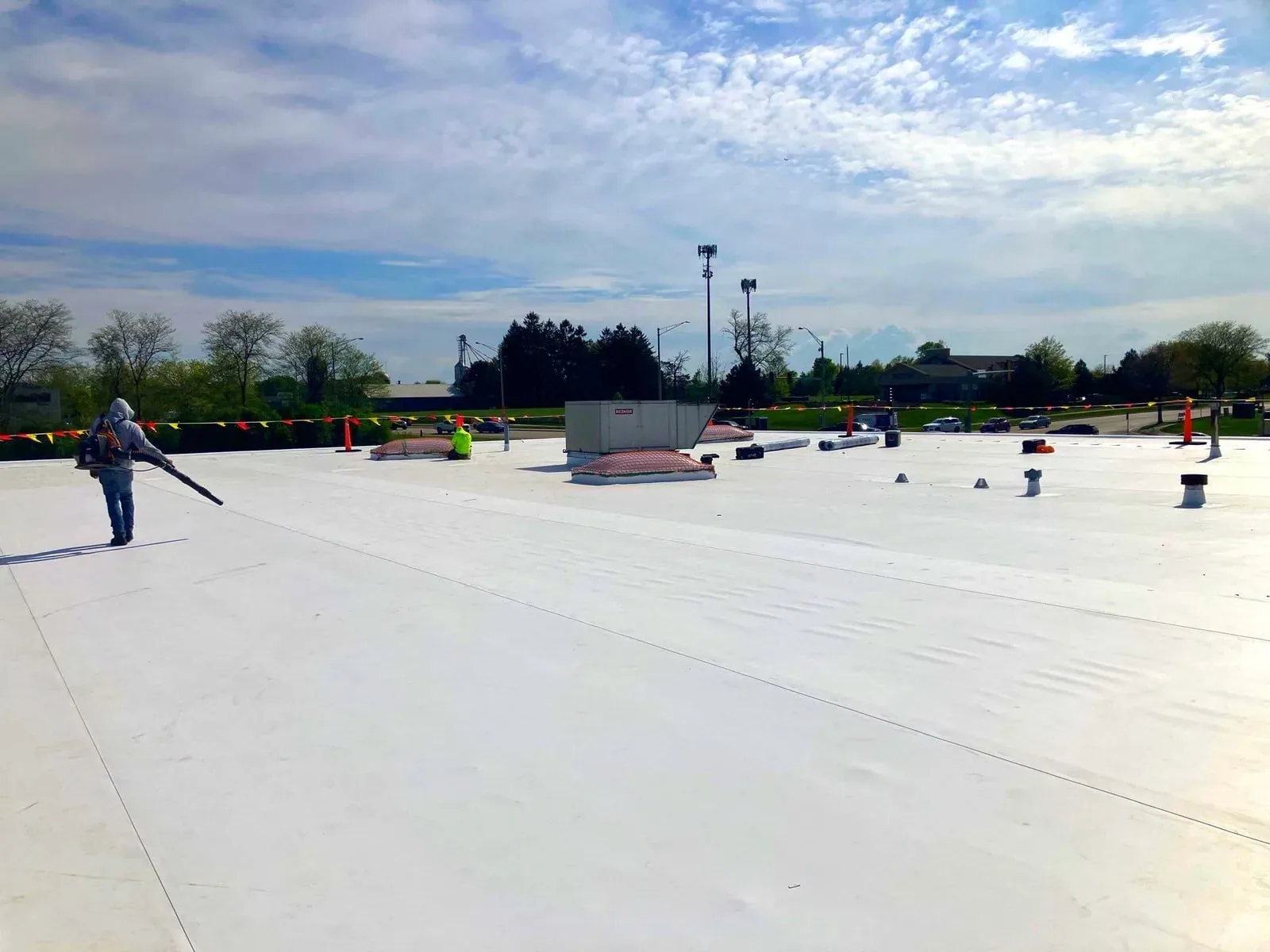
Hot asphalt needs a plan. The kettle makes fumes and a fire risk. Occupied buildings may prefer cold-applied or self-adhered systems that avoid the kettle. A modified bitumen system is a close cousin that can be applied without a kettle, and a single-ply such as TPO is another route when a full replacement is on the table.
When the felts are wet across a wide area, repair stops making sense. We cut cores and scan before we decide.
Take the Next Step
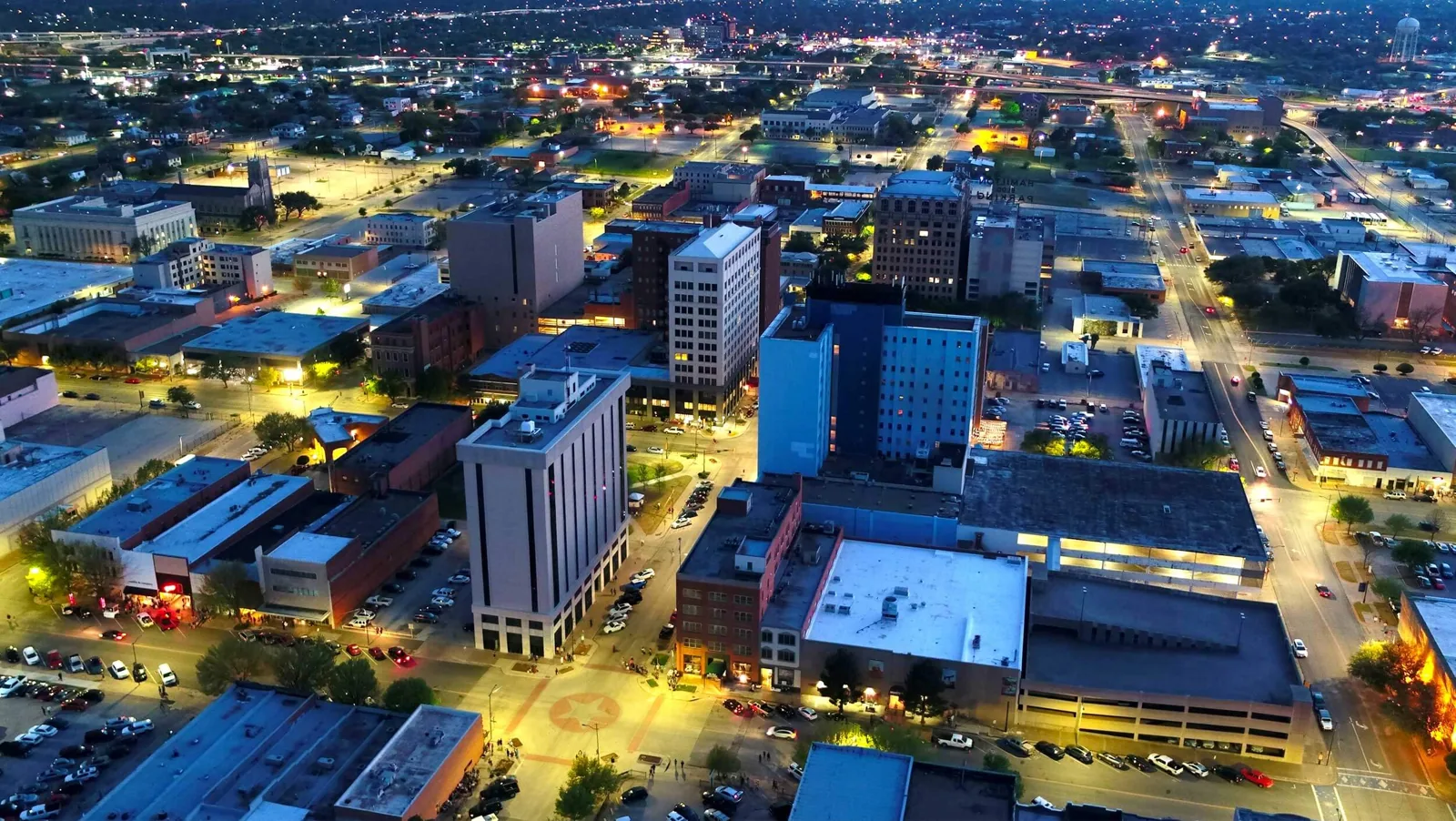
Tell us how old the gravel is and where the roof ponds, and the first walk starts with a map of the low spots. The same checklist fits a building in downtown Wichita Falls or the Taft Boulevard area. When the felts are finished, the job becomes a commercial roof replacement with a closeout record of every layer.
Commercial Roofing Questions
What does BUR stand for?
Built-up roofing: layers of asphalt and felt built on site and topped with gravel or a cap sheet.
Is a blister a leak?
Not always, but it signals trapped moisture. We press it and read the plies, and if the felt under it is wet we cut the blister out, dry the area and rebuild it layer by layer.
Can I add a new layer over BUR?
Only if the plies are dry and the structure can carry the weight. We test and check the drawings, and if either answer is no, tear-off of the wet or overloaded part is the safer path.
Why is gravel on the roof?
It shades the asphalt, holds it down against wind and adds fire resistance. It also needs to stay put, so scoured corners are re-graveled after a windy season.
How long does a built-up roof last?
A well-made roof that stays dry and gets its gravel replaced can run for decades, but the number belongs to the roof in front of us. We read the plies, the gravel and the ponding line, then give a range in writing.