Heat damage is slow, and that is why it is easy to miss. A roof that has baked through many summers does not fail on one afternoon. It stiffens, cracks, chalks, shrinks and lets go of its seams a little at a time, and the first leak is the end of a long process. That is the lesson to start with. Step one is to read the surface for age. Step two is to learn how much life is left underneath.
On commercial roofs in Wichita Falls, TX, low-slope or metal, heat and ultraviolet repair starts with testing. We test the membrane, probe the seams, check the insulation and recommend the smallest fix that restores the roof, whether that is a repair, a coating or a replacement. Emergency response is available at any hour, holidays included, when a heat-worn roof lets rain in.
The heat Wichita Falls actually delivers
Wichita Falls is hot by any measure. Highs of 100 degrees arrive on roughly 28 days in a typical year, readings of 90 or more on about 102 days, and the record is 117 degrees, set on June 28, 1980. In 2011 it became the first Texas city to record 100 days at 100 degrees or higher in a single year. Those numbers describe the air. A dark roof surface in full sun runs far hotter than the air above it.
The effect is cumulative. Each hot day expands the membrane, insulation and metal, and each cool night shrinks them back. Ultraviolet light adds to the aging by breaking down the polymers and coatings at the surface. A roof in a place like this is working all year, and heat wear should be expected as a normal part of its life, to be managed, not ignored.
Heat also changes how work is done. Adhesives, sealants and coatings have temperature limits, and a surface hot enough to blister a hand will not accept some materials. We start early on summer days, check surface temperature before bonding and pause work when the roof is too hot to hold a good weld or cure. Crews drink water, rotate off the surface and keep the roof safe to stand on.
What heat and UV damage looks like
Start with the surface. Chalking, a powdery film that comes off on a gloved hand, shows that the top layer is breaking down. Surface cracking, often in a pattern like dried mud, shows that a membrane has lost flexibility. Granule loss on mineral-surfaced roofs, faded or peeling coating, and brittle edges on a patch all tell the same story of sun at work.
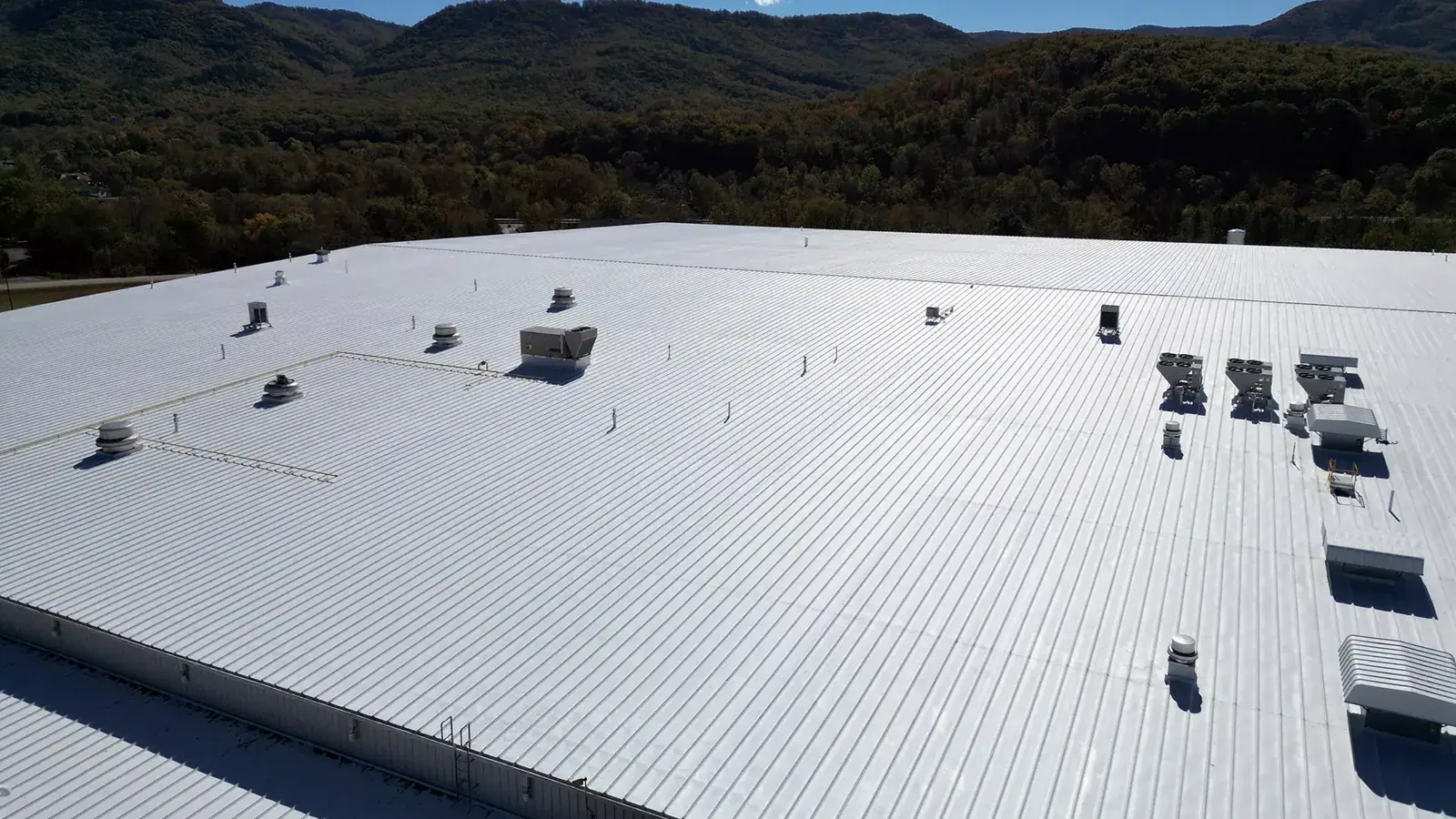
The edges of the sheet move too. Membranes can shrink and pull away from walls and curbs, leaving a gap at the flashing. Seams that were tight when new can open at the ends. Metal roofs show faded finishes, loose fasteners and sealant that has cracked from daily expansion. When we find several of these together, the roof is aging as a whole and not failing in one place.
How much life is left
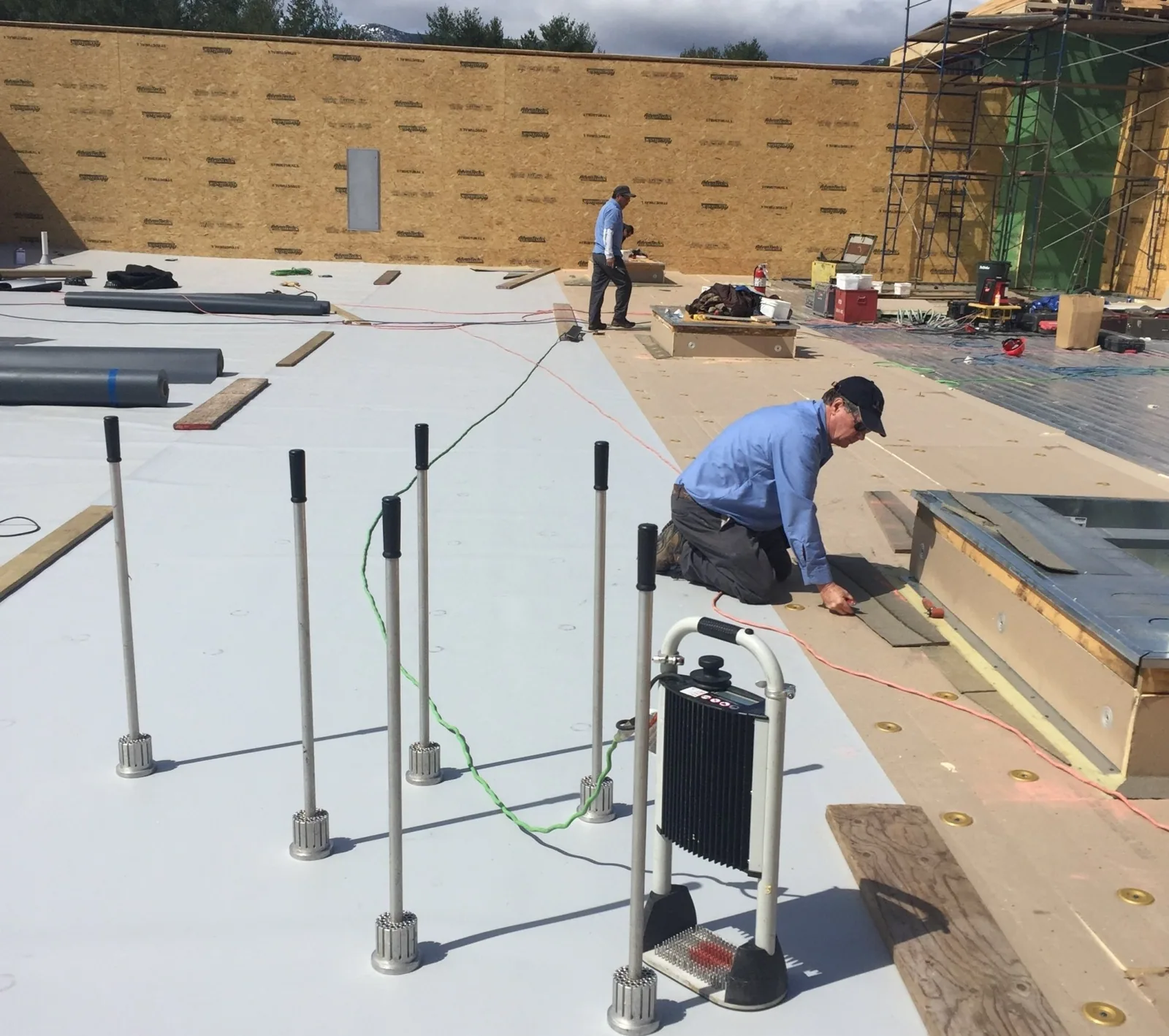
A roof can look worn and still be sound, or look fine and be nearly finished. We test it. For single-ply, we check for flexibility at the edges, probe the seams and look for exposed scrim. For built-up and modified bitumen, we look at the surface, the felts and the granules. For metal, we check finish, fasteners and sealant. A small core, taken where it is safe, shows how wet the insulation is.
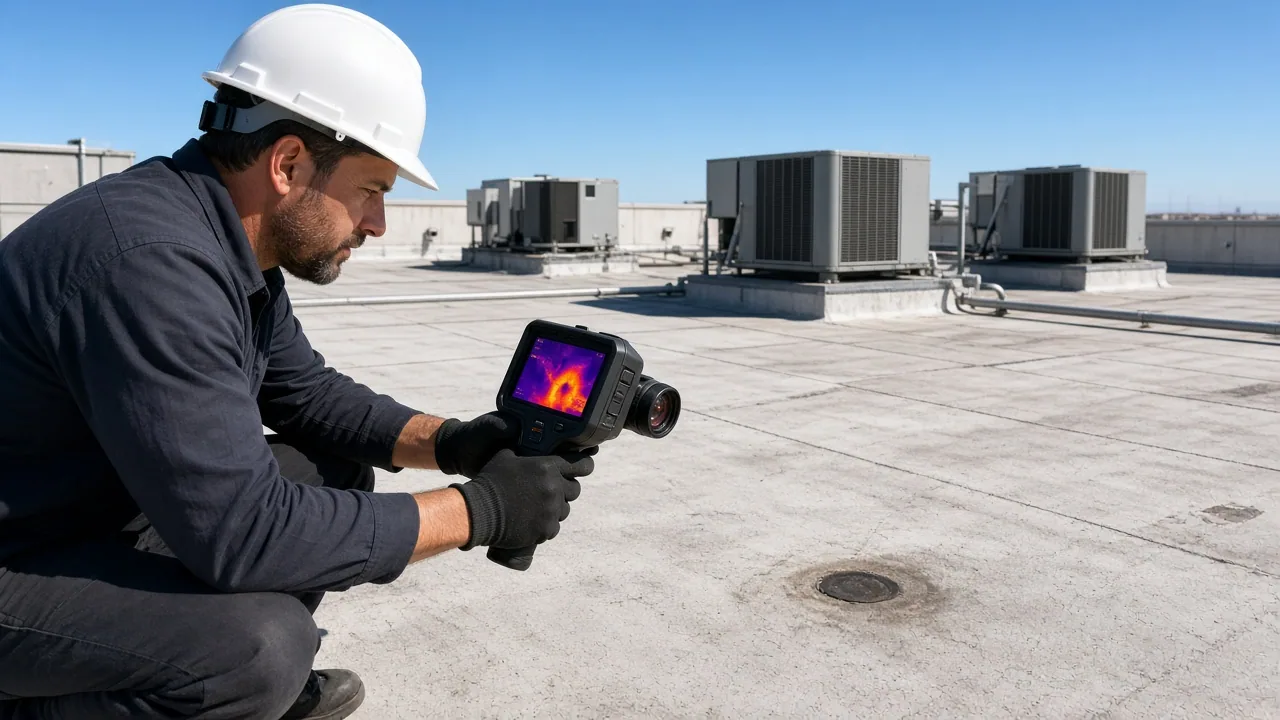
An infrared moisture survey adds a second view. Where cracking has let water in, the survey maps wet insulation, which decides whether a coating or a repair is even an option. If the insulation is dry and the membrane is sound enough to bond to, there is often a lot of life left. If it is wet, the answer changes. The findings go into a written condition report.
Shrinkage deserves its own measurement. A membrane that has pulled back from a wall by even a quarter inch has lost the slack it needs to move with temperature, and the flashing on that wall is on borrowed time. We measure the gap, photograph it and decide whether the answer is a new flashing strip, a reattached edge or a larger repair.
Repair, coat or replace
One clean rule applies: coat only what is dry and sound. A reflective coating over a clean, tested roof can slow further aging, lower surface temperature and extend the life of a membrane that has years left. Silicone coatings and acrylic systems are common options, and roof coating restoration begins with cleaning, repair of seams and flashings and a primer where one is needed.
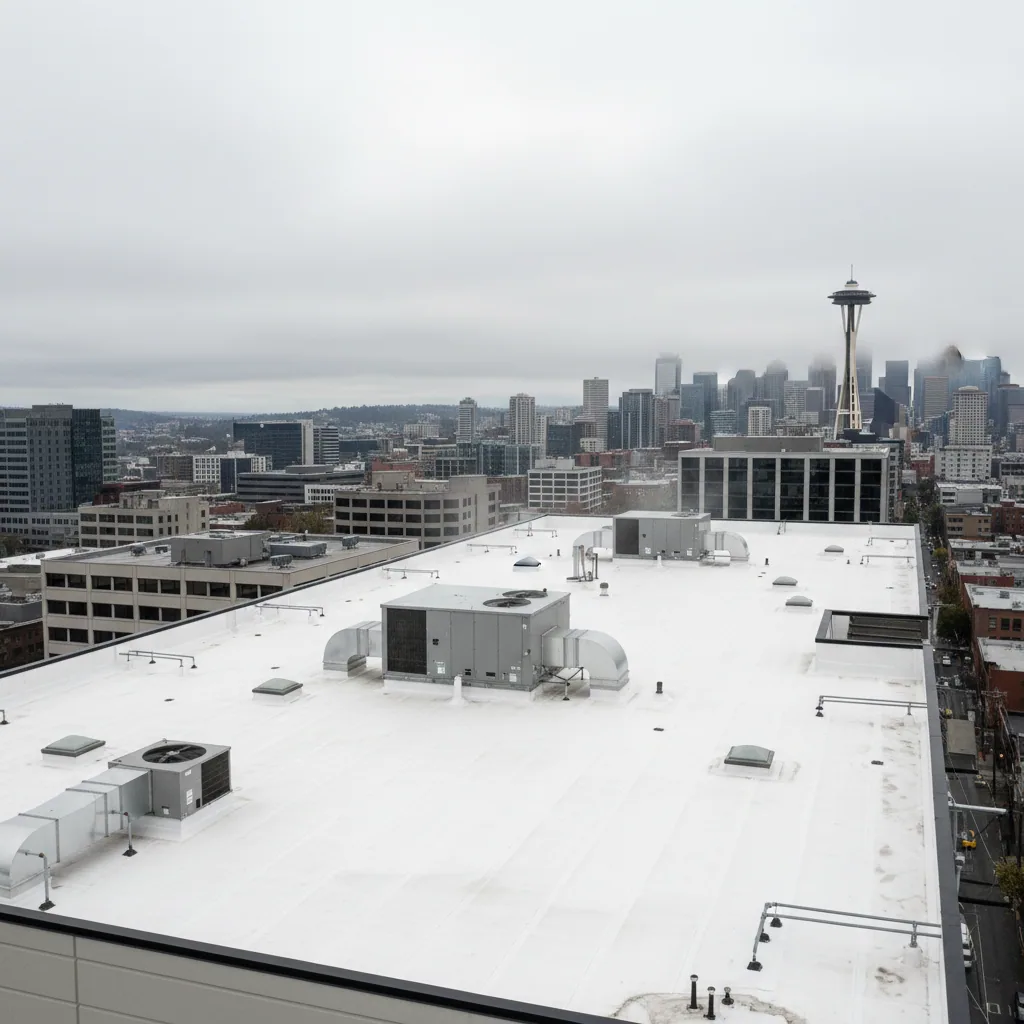
When cracking is deep, the insulation is wet or the membrane will not bond, replacement is the sound answer. A new reflective single-ply, such as TPO or PVC, reduces heat load from day one, and a cool roof can lower the temperature of the surface. We lay out the cost drivers for each path, including cleaning, repairs, material and access, so an owner can compare repair, coating and replacement fairly.
Maintenance keeps the choice open. A scheduled visit to clear debris, reseal small cracks and refasten loose metal each spring slows the damage that summer causes. Owners who skip those visits tend to face the coat-or-replace question sooner, with fewer options, because small cracks have become wet insulation.
Roofs that carry the most heat load
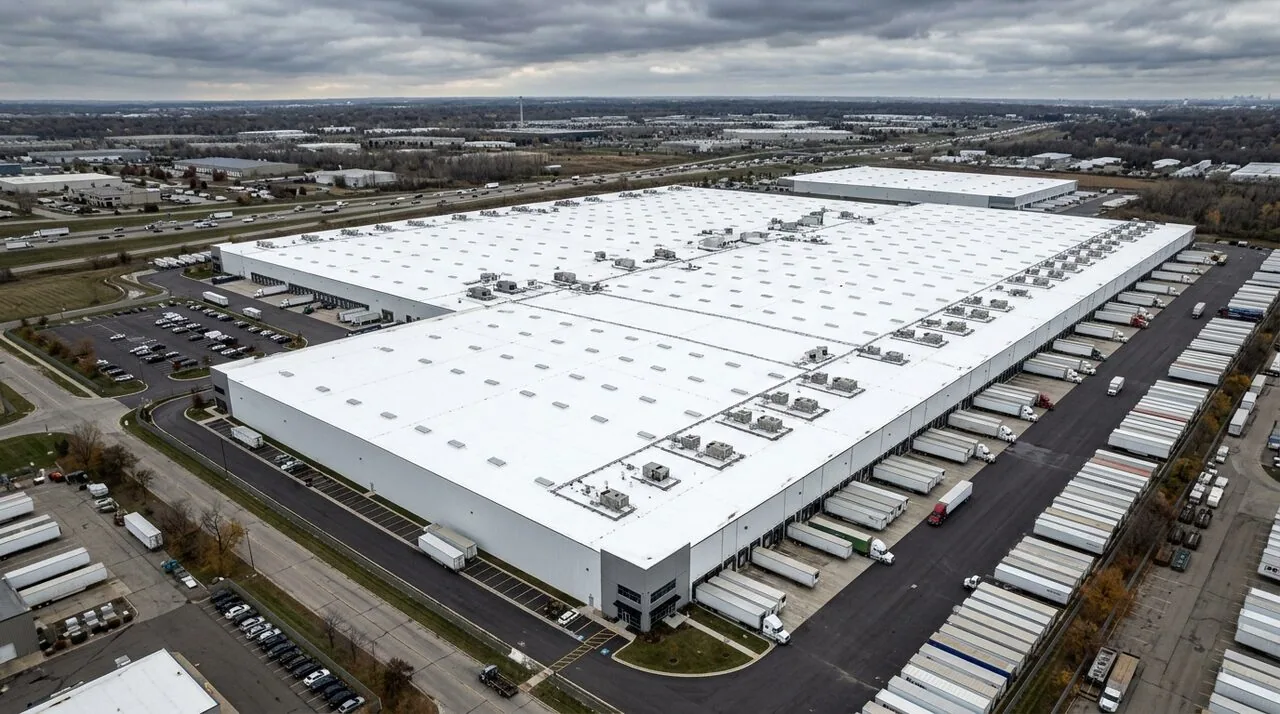
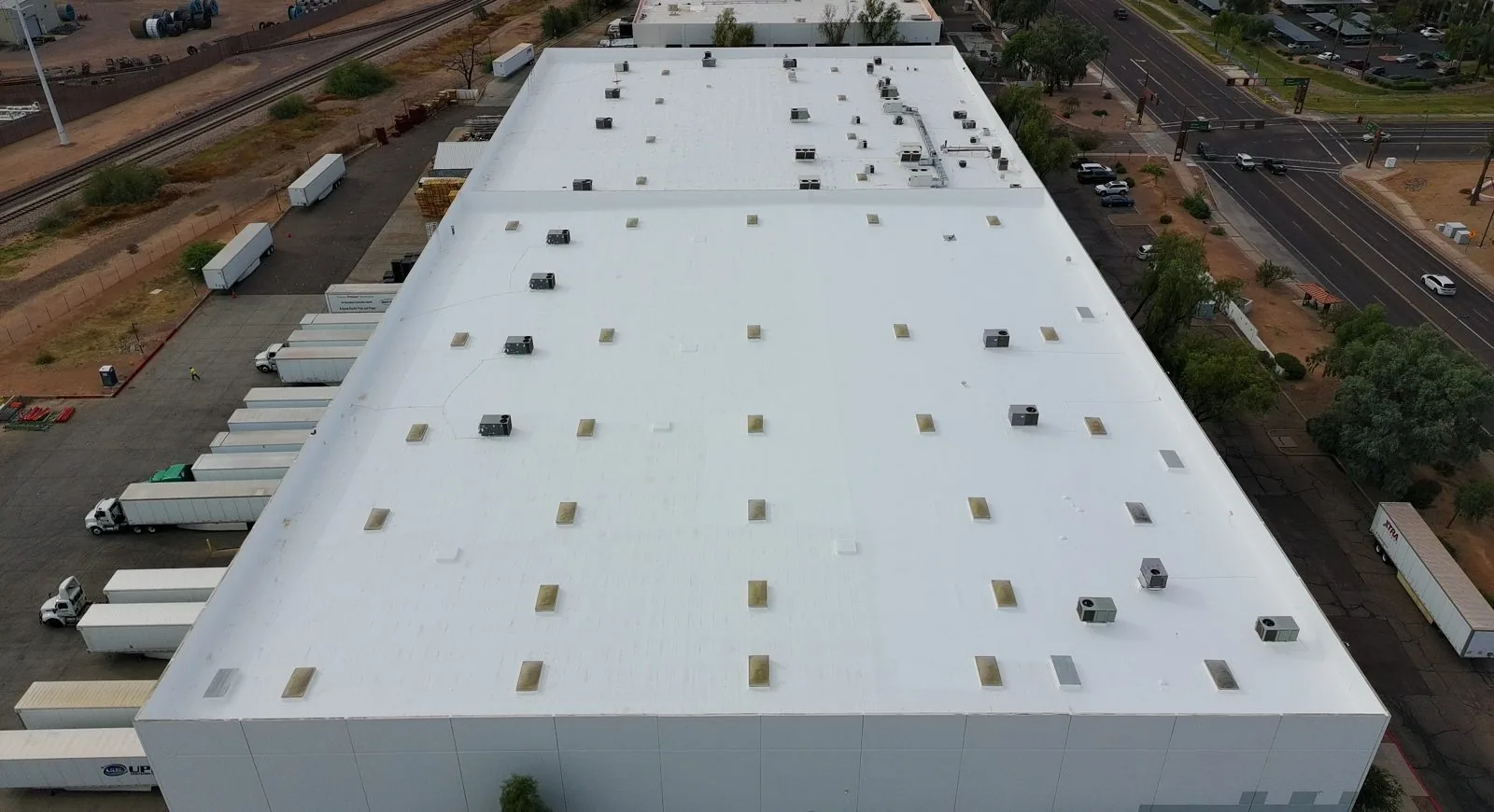
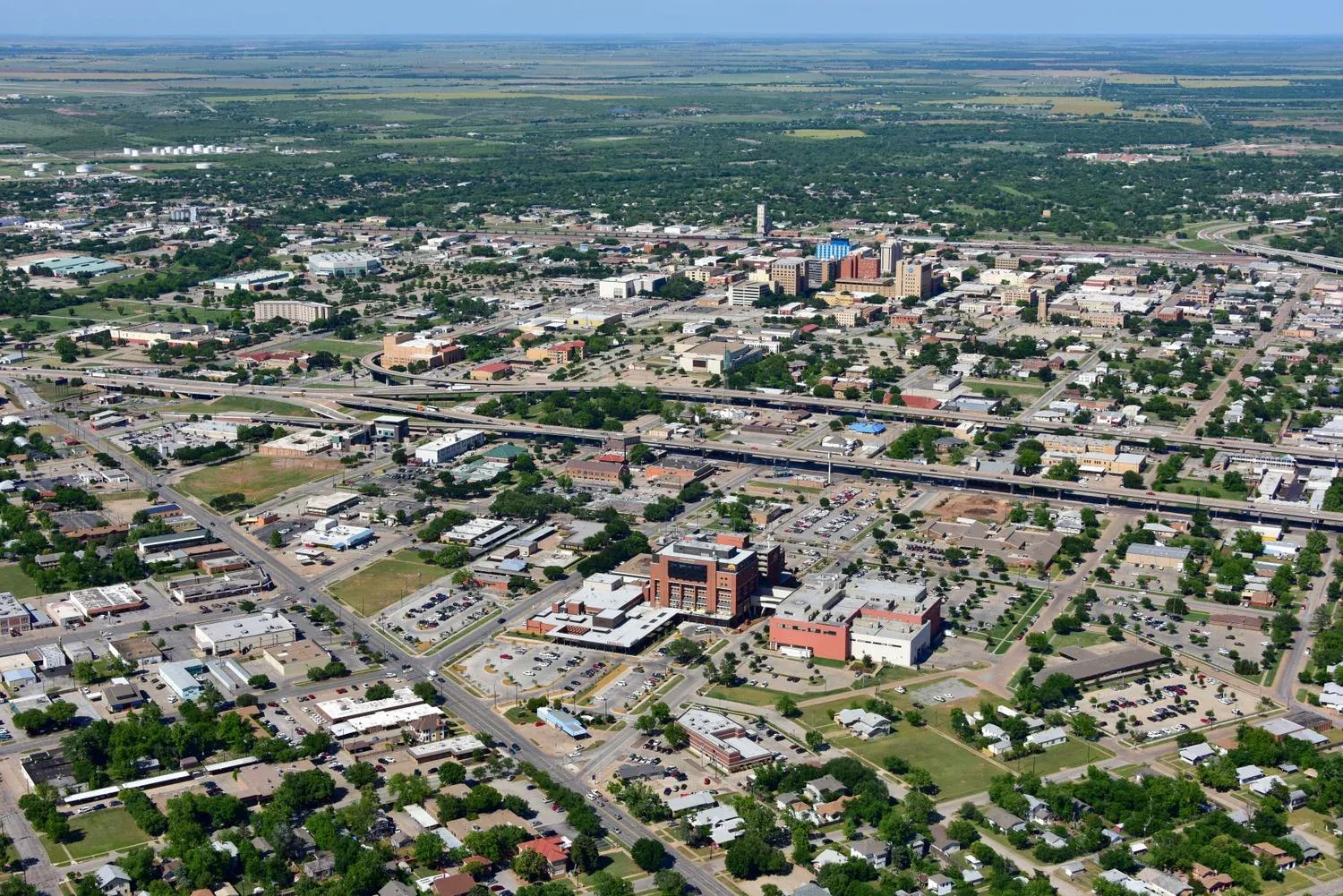
Large, dark roofs with little shade absorb the most. The Wichita Falls Business Park spans 525 acres set aside for distributors, high-tech operations and manufacturers, so its large low-slope buildings are the kind of roof where a reflective surface and a regular seam check matter. The Midwestern State University campus off Taft Boulevard includes residence halls, athletic venues and newer buildings such as the Bridwell Activities Center, and each roof there has its own exposure and age.
Heat is also a cause of trouble that appears as something else. A seam that opened in July may look like a seam failure, a split flashing may look like a flashing failure, and a pool of warm water may look like ponding. We trace each symptom to its cause, because a heat-aged membrane often shows all three at once.
Commercial Roofing Questions
How can I tell whether sun has worn out my roof?
Look for chalking, surface cracks, faded coating and shrinkage at walls and curbs. A probe at the seams and a moisture scan under the surface show how far the aging has gone.
Will a reflective coating stop heat damage?
It slows it. A coating lowers surface temperature and shields the membrane from UV, but it does not fix open seams or wet insulation. We repair first, then coat.
Is a record high of 117 degrees a concern for roofs?
The record is a reminder of the extreme end. What counts for a roof is the many ordinary hot days, since daily expansion and contraction do most of the wearing. We plan for that routine, not the record.
Can I coat over a wet roof?
No. A coating traps moisture and hides a problem that will grow. We test for water first and remove wet insulation before any coating goes on.
What should I send to start?
Send the roof age, membrane type if known, any past coating or repair work and photos of cracking or chalking. We will plan the walk to test the areas that show the most wear.