Water that you cannot see is the expensive kind. Insulation that has absorbed moisture loses much of its insulating value, adds weight to the deck, feeds rust and mold, and leaves a new membrane to fail early. An infrared and core-cut moisture survey finds that water before a repair or replacement is priced. Commercial Roofing Wichita Falls performs infrared moisture surveys in Wichita Falls, TX to answer one question that every roof decision depends on: how much of this roof is wet, and where?
The method has three steps. Scan from above or on foot to find temperature patterns. Confirm with a meter and probe. Then cut a small core at chosen spots to see what is inside. Each step checks the one before it.
Why Wet Insulation Shows Up
Water holds heat longer than dry insulation does. After a sunny day, a wet area stays warm into the evening while the dry roof around it cools. A thermal camera captures that difference as a contrast map. Summer sun pushes a roof surface well past the air temperature, so roofs here soak up a great deal of heat, and the evening cooling window gives a strong signal on a clear day.
The scan works best on roofs with insulation under a membrane or a ballast layer. It is less useful on some metal roofs, on roofs shaded by trees or equipment and on days with wind or recent rain. We choose the day and the hour with those limits in mind, and we tell you when a scan alone will not be enough.
Surface color and roof age matter as well. A white membrane reflects much of the sun, so the thermal contrast is weaker than on a dark one, and an aged gravel surface scatters heat in ways that make a quick read unreliable. Rooftop equipment casts shade and gives off heat of its own. We note each of these factors on the roof plan, so the person reading the results knows which readings to trust and which to confirm with a probe.
Scan, Meter, Core
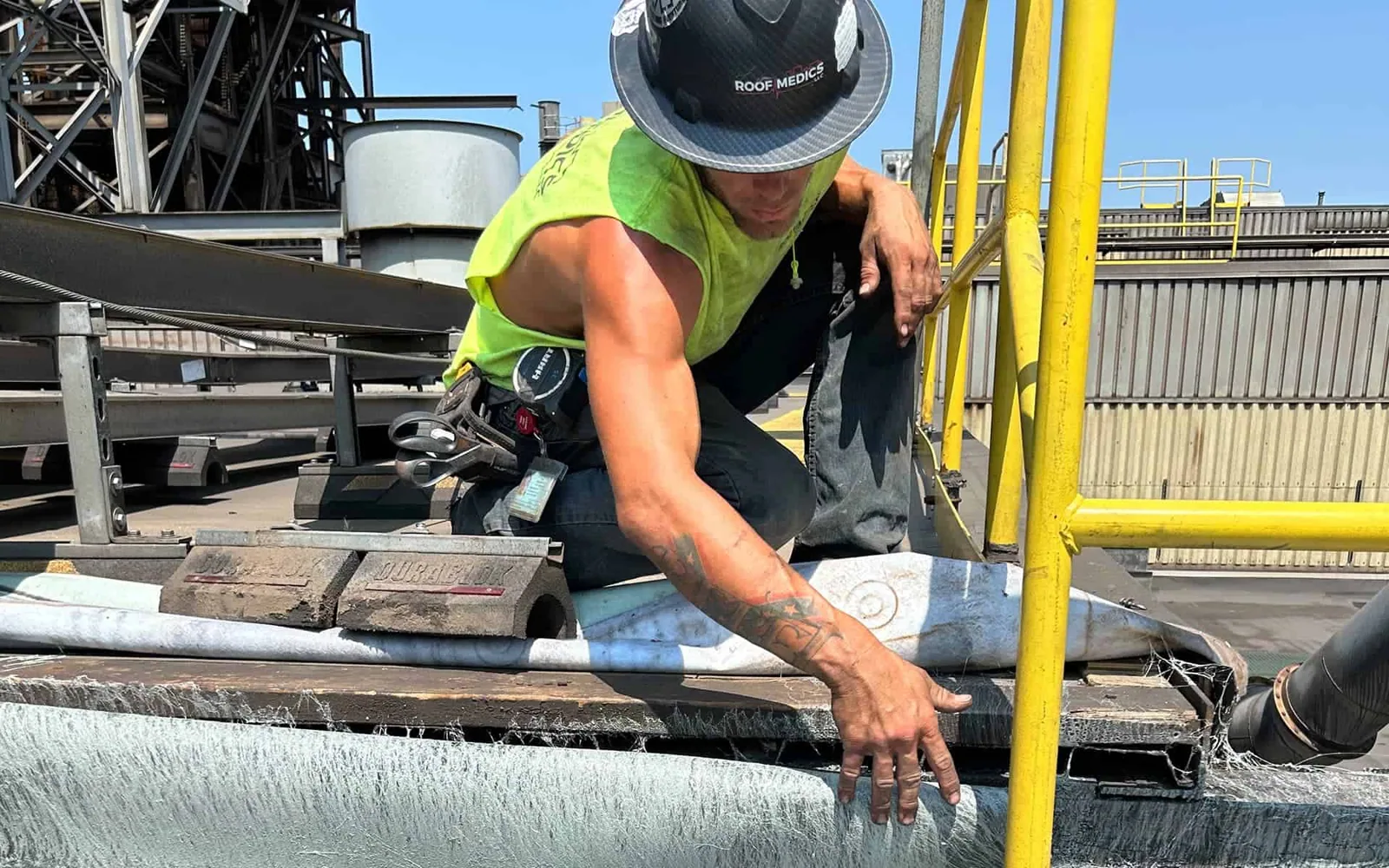
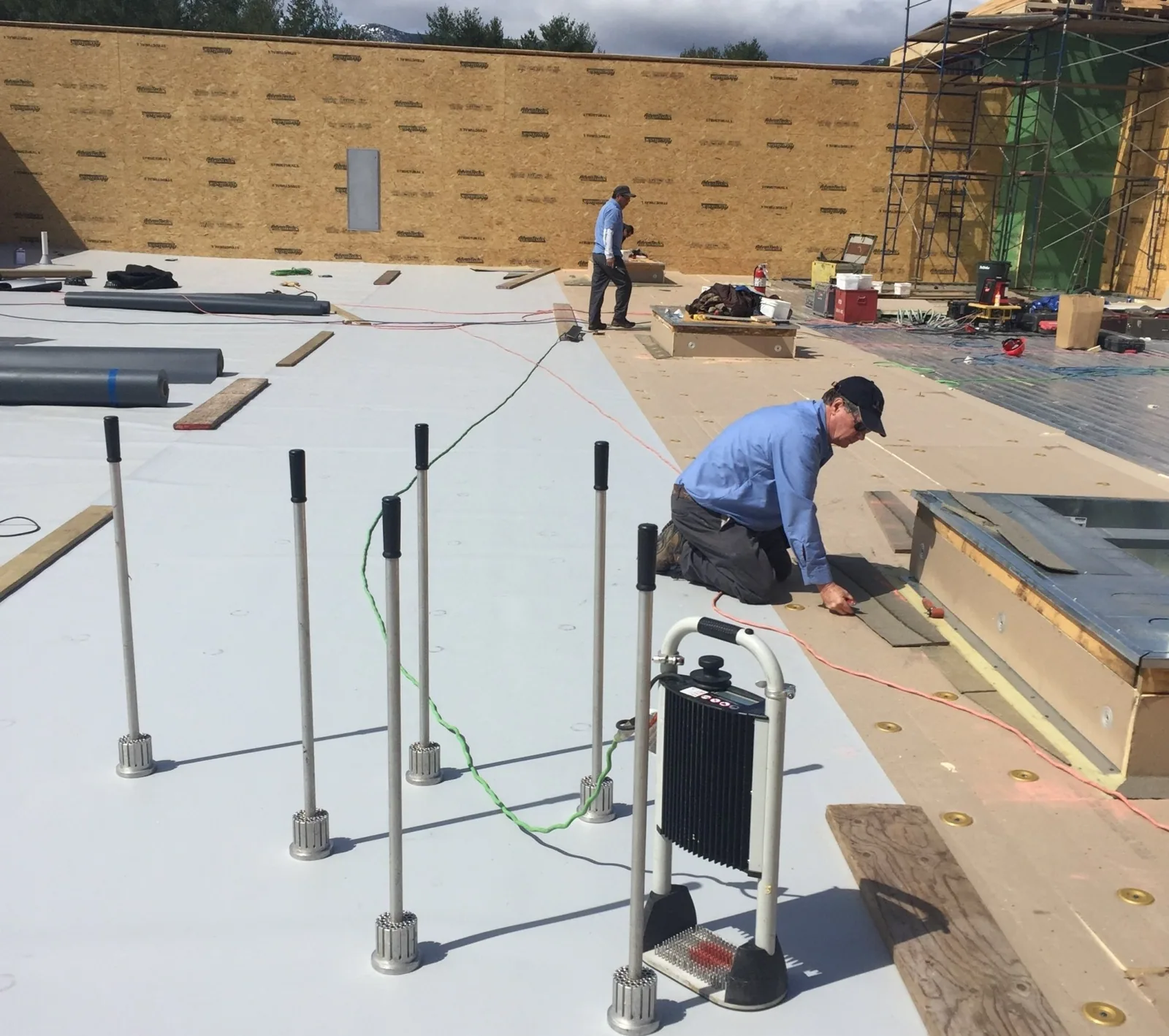
The camera gives a map. The moisture meter checks it. A handheld capacitance meter reads moisture beneath the surface at a grid of points, and we mark the wet edges on the roof with paint so you can see them. Then we cut small cores at chosen spots, a few at the wet edge and a few in dry areas as controls, and look at the layers: how wet the insulation is, whether the deck is rusted and how the membrane is attached.
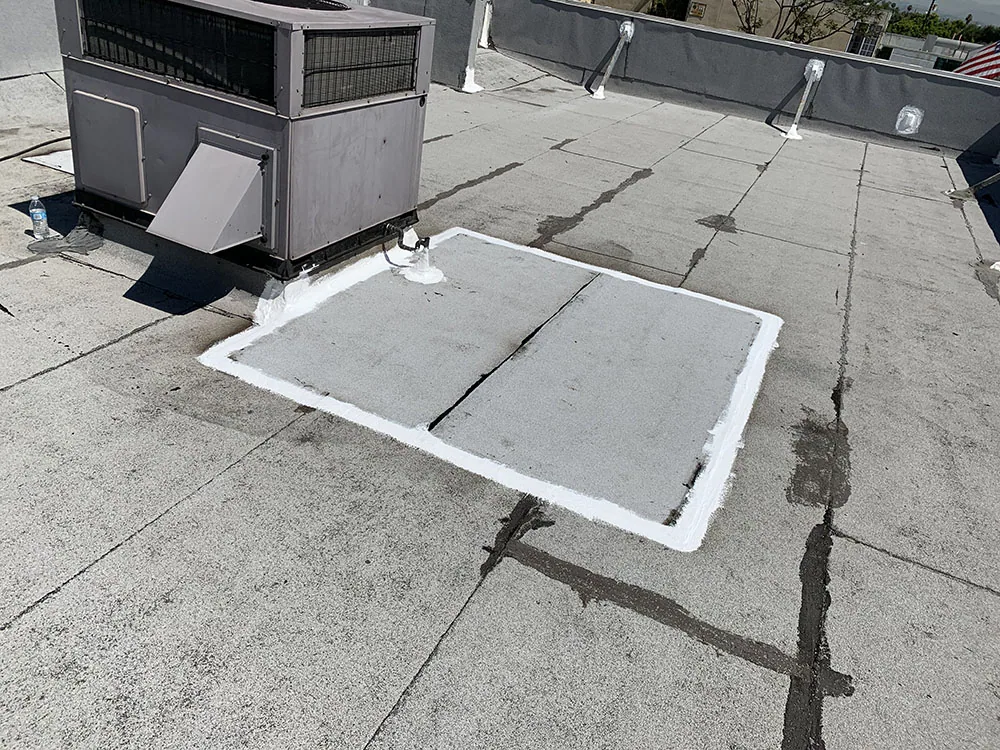
Each core is patched the same day with a repair matched to the roof. We photograph every cut. The cores let us say not only that moisture is present but what kind of insulation holds it, because polyiso, perlite and fiberboard each behave differently once wet.
The cores also tell us about fasteners and adhesive. A deck that shows rust at the fastener points tells a different story from a deck that is clean, and a membrane that peels from the board with no resistance tells us the attachment has failed. These details change the repair scope and the price. They are cheap to learn from a small cut and expensive to learn halfway through a tear-off.
What You Get
You receive a roof plan with wet zones outlined and numbered, a table of core results, photographs and a clear recommendation. The recommendation sorts the roof into three kinds of area: dry areas that can stay, wet areas that need cut-out and replacement, and uncertain areas to recheck. If wet areas are small, the survey can turn a replacement into a targeted repair or a recover.
That is real money in your decision. Without a survey, a roofer must either guess or price the worst case. With one, the scope matches the roof, bidders price the same work, and you can compare offers fairly.
Large Roofs and Mixed Stock
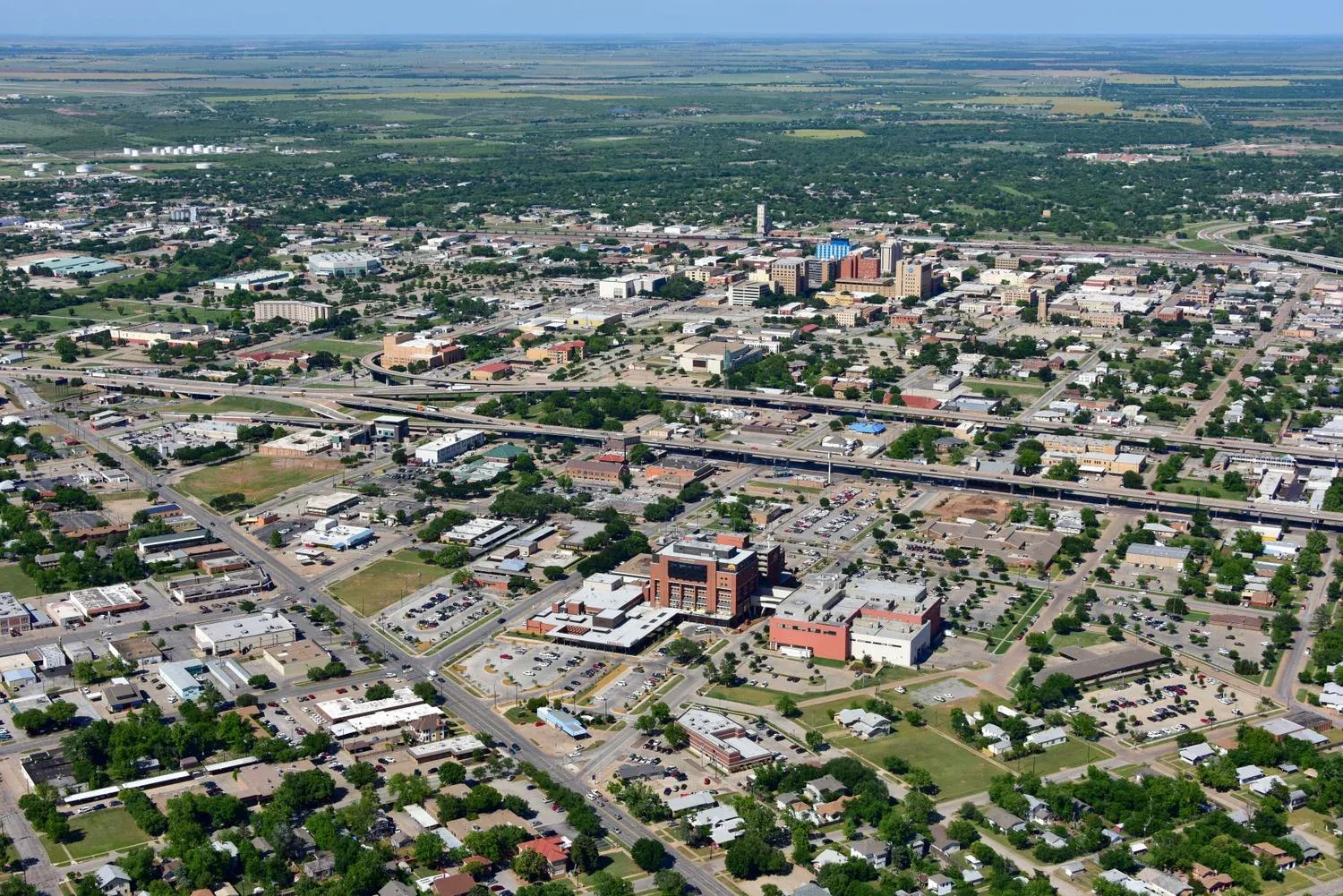
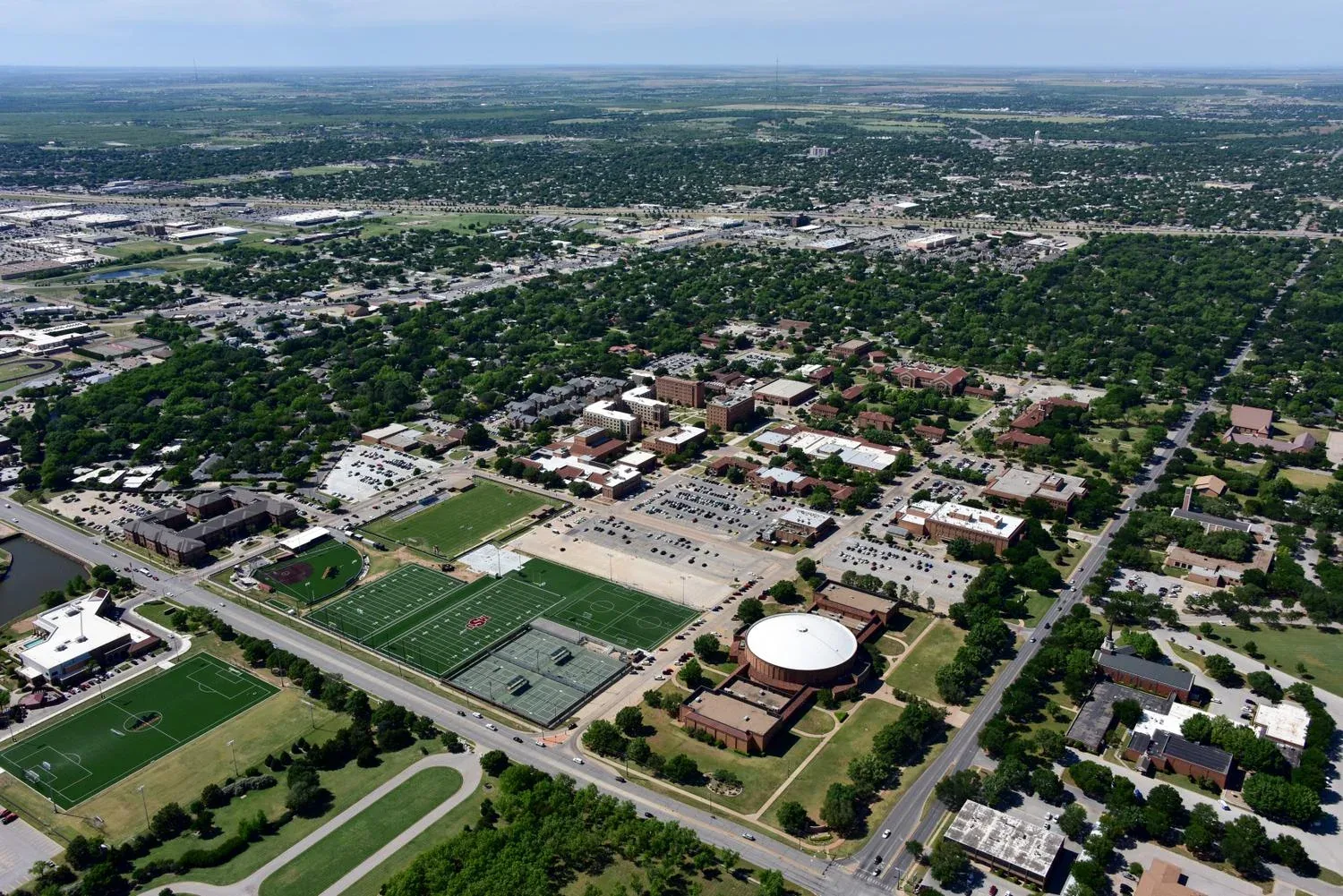
Moisture surveys pay off most on big, low-slope roofs where a single leak can spread over a wide area. The Wichita Falls Business Park is marketed to distributors and manufacturers, retail runs along Kemp Boulevard and a 255-acre campus sits in the Taft Boulevard area. We do not assume what any particular roof holds. The scan shows it.
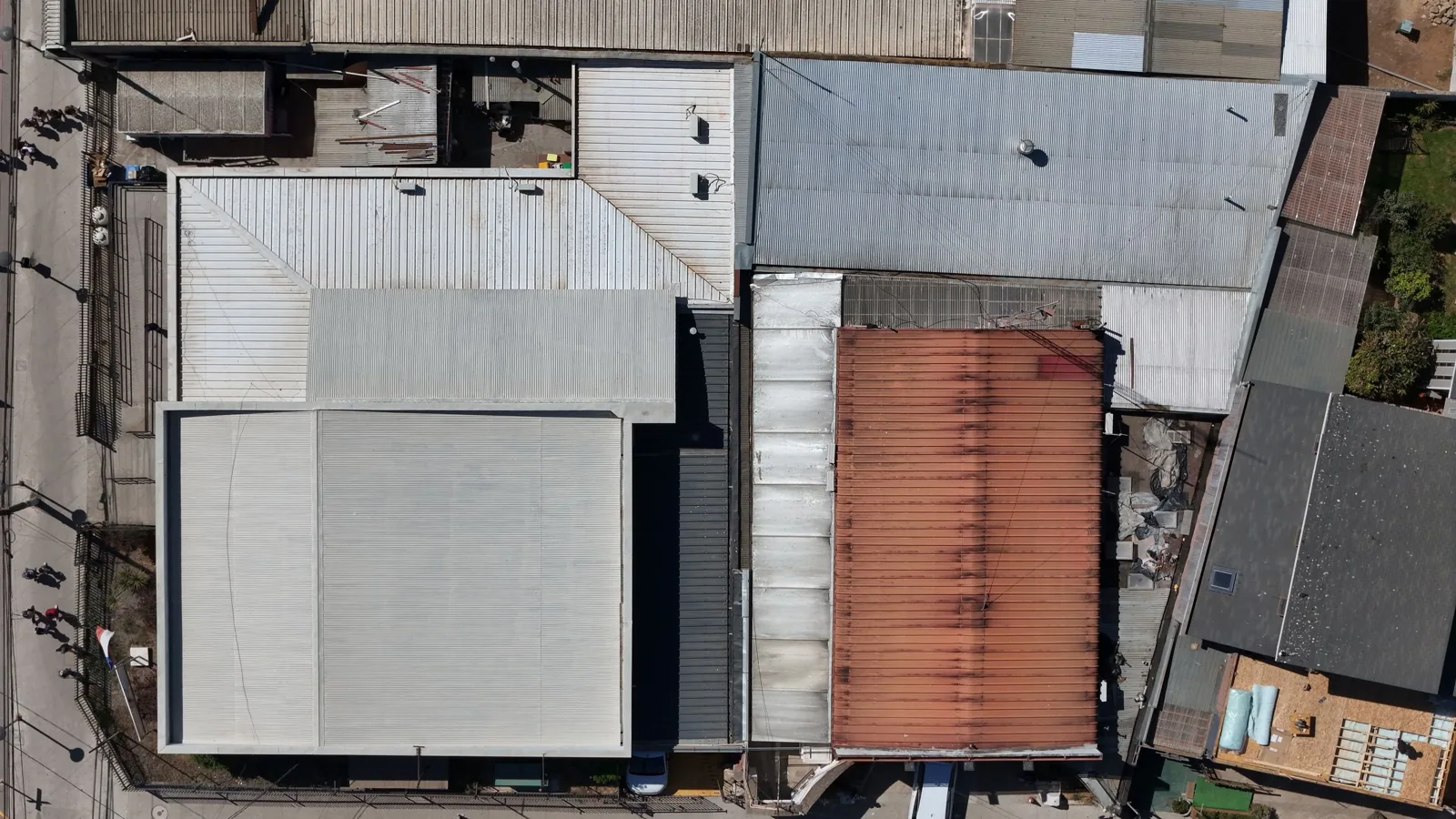
For roofs of this kind, we sometimes begin with drone imaging to cover the field quickly, then follow up on foot at the suspicious spots. The pairing saves time on a large roof and keeps the cost of core cuts low.
After Hail or a Long Wet Season
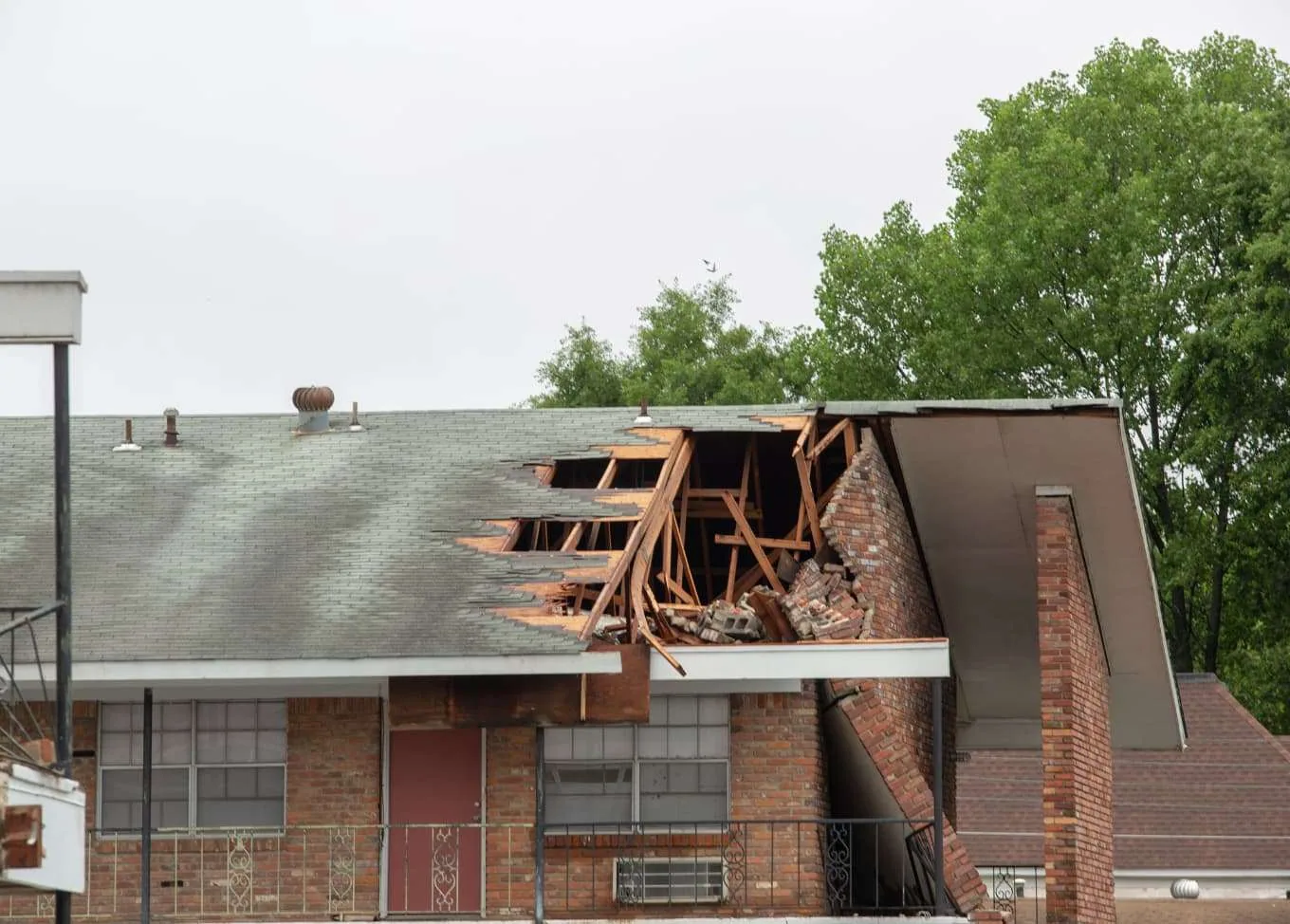
Storm history gives reasons to survey. NWS Norman records baseball-size hail that damaged property in Iowa Park and Burkburnett in April 1991, and the 1982 hail event in Electra covered the ground with golf-ball-size stones for 15 minutes. A bruise from large hail can break a membrane or crush insulation, and the moisture that follows may stay hidden for a season. A survey after a storm checks for exactly.
In a wet year, the same logic applies. Slow leaks at flashing or seams feed water into the insulation for months before a ceiling shows a stain. A survey after a wet season finds the damage early, and it gives you a measured basis for the next capital plan instead of a guess about how much insulation has to come out. Wichita Falls recorded its wettest month on record in May 2015, with 17 inches of rain, and a roof with a hidden defect would have felt that month for a long time afterward. Even an ordinary run of wet weeks can push water through a small opening at a flashing and into the board below, where it spreads sideways. For a storm claim, the findings pair well with your hail damage documentation.
Timing and Access
Plan a survey for a clear day with a warm afternoon and a calm evening. The scan starts as the sun goes down and runs through the cooling window. A building that runs at night, such as a warehouse or a clinic, may need coordination for roof access and for lighting. We bring our own lights and keep noise down.
Core cuts are best done in dry weather so each patch can set before the next rain. If rain is likely, we hold the cuts and finish the rest of the survey. For owners of several buildings, we survey the oldest or most leak-prone roofs first, then fold the data into a roof condition report program.
Commercial Roofing Questions
Can infrared find a leak by itself?
Infrared shows where moisture sits, not where it entered. The leak source can be some distance away. We use the map to guide a water test or detail check at the likely entry point.
How many core cuts are needed?
The number follows the roof and the scan. We cut enough to confirm each suspicious zone and to give a dry control sample. A small roof may need a few; a large one needs more.
Do the cuts harm the roof?
Each cut is small and is sealed the same day with a patch that matches the system. We photograph every one, so the repair is documented and can be inspected later.
Does a survey work on a new roof?
Yes, and it is a sound way to confirm a new installation is dry. A baseline scan also helps if a leak claim comes up later in the warranty period.
Will a survey replace a visual inspection?
No. The two work together. Visual checks find surface damage and detail failures, and the survey finds water inside the roof. Most roof decisions need both.