A membrane roof is a quilt of sheets joined at the seams, and the seams are the only part of the roof that depends entirely on a bond. The sheet itself is a tough, continuous material. The joint between two sheets is a weld, an adhesive line or a tape strip, and it has to resist heat, wind, water and years of small movement. Step one is to find the seam that has let go. Step two is to find out why.
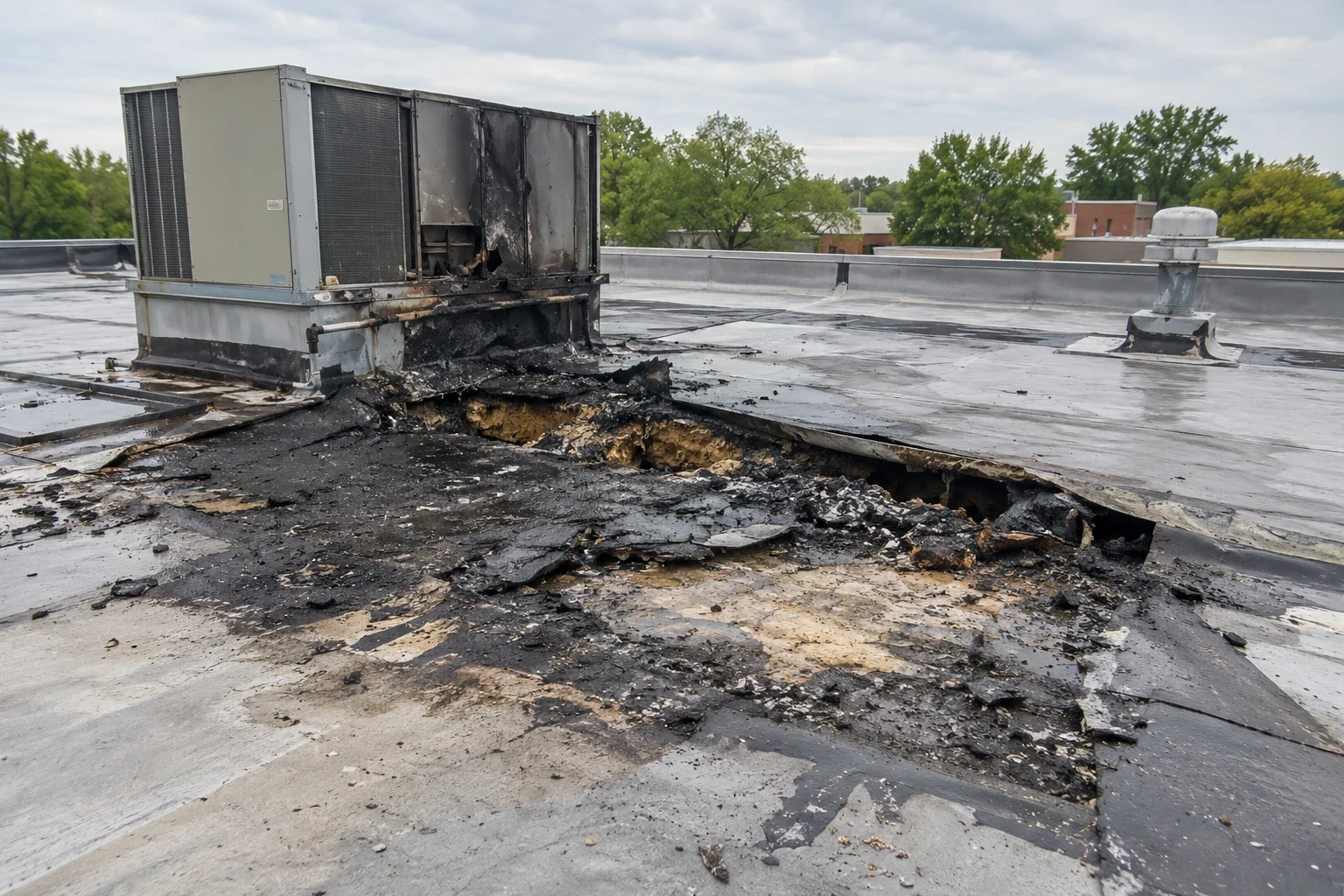
Open, split and peeling seams on low-slope commercial roofs across Wichita Falls, TX are what we repair. We probe every run, mark each weak spot, make the repair with materials suited to the membrane and check the neighboring seams for the same cause. Emergency response is available any hour, including holidays, when an open seam is letting water in.
What an open seam looks like
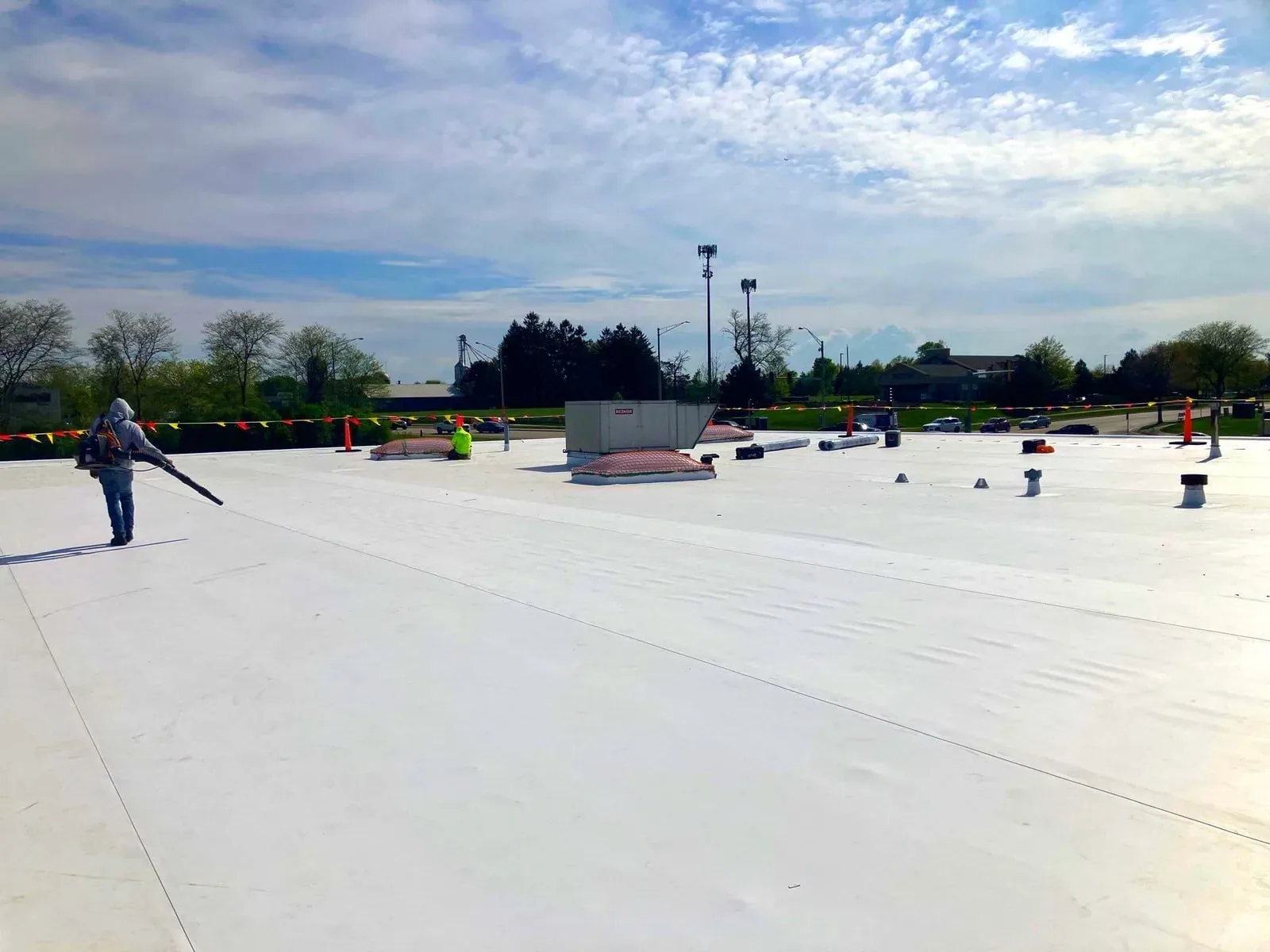
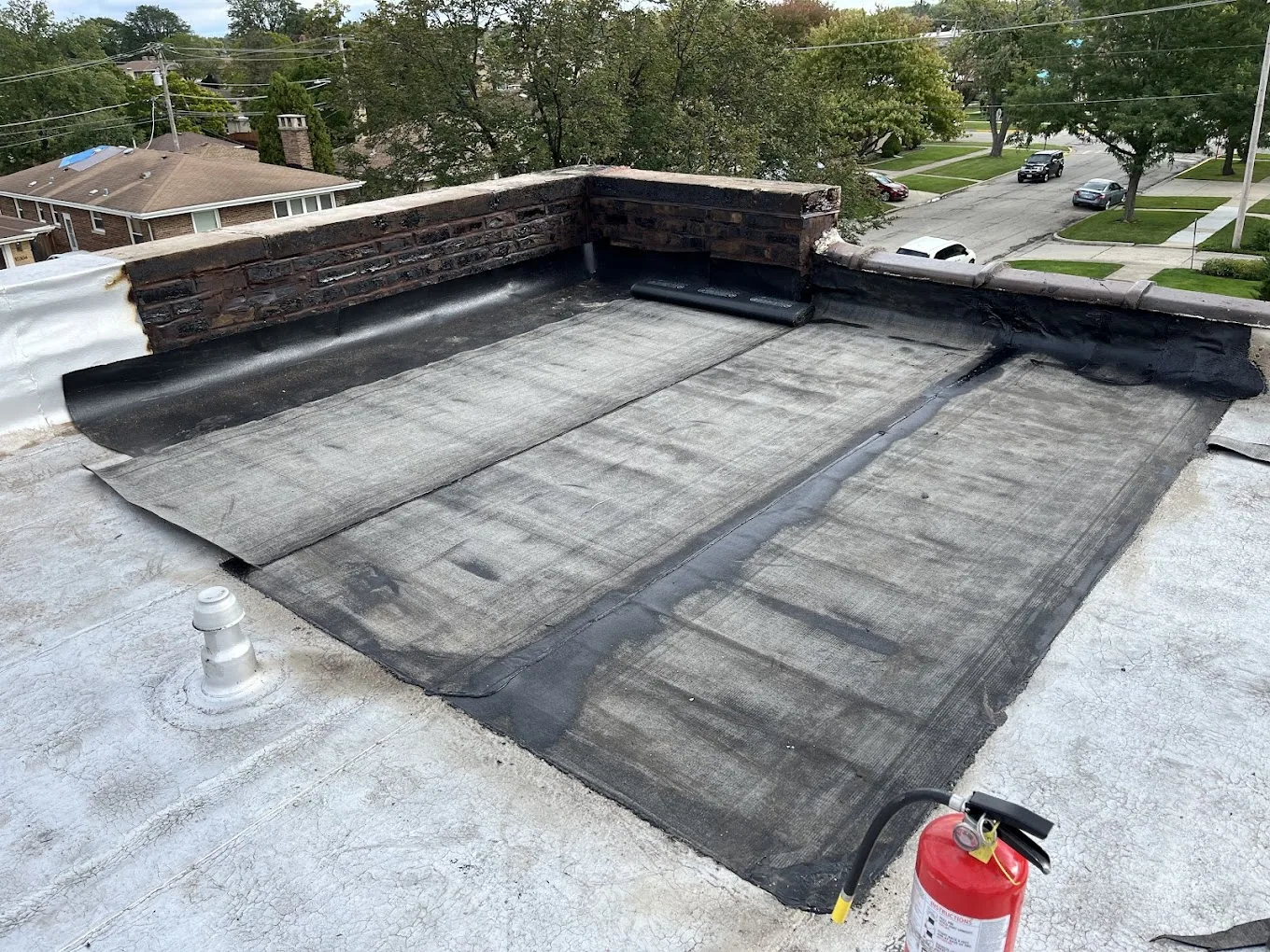
Start at the edge of each sheet. A seam in trouble may show a visible gap, a lifted lip, a wavy edge or a dark line of dirt and water where the joint has opened. On a heat-welded membrane, a good weld has a clean, even bead. A bad one shows pinholes, dry spots or a gap where the sheets never fused. On adhered or taped seams, the signs are a peeled edge, a bubble or tape that has slid.
Many failed seams look fine from a few feet away. We run a probe along the edge to check whether the lap is tight. If the tip slips in, the seam is open, whatever it looks like. We mark each open section with paint, photograph it with a scale reference and note its length. The finished map shows whether the problem is one bad splice or a pattern across the roof.
Why seams fail
Heat and movement are the main causes. Triple-digit highs come on about 28 days in a normal Wichita Falls year, and 2011 delivered 100 such days. A dark membrane flexes with each swing, and the seam carries the stress at the joint. Over many cycles, a weak bond tears and opens at the end of the lap. Wind adds to the load by lifting the free edge.
Installation is the second cause. A seam that was welded too cool, glued over dust or lapped too narrow will fail early, sometimes within a few seasons. Contamination is a third: oil, grease and dirt on the mating surface block a bond. The fourth is age. Adhesives and tapes lose strength, and the membrane itself becomes stiff and brittle. Knowing which cause applies tells us whether to repair a few feet or plan a larger fix.
Metal roofs have seams too, though they behave differently. A standing seam panel locks along its length, and the failure points are the clips, the end laps and the seam closures at transitions. Thermal movement can walk a panel out of its clips over time, and a fastener through the face of a panel can back out and leak around its washer. We check those points on metal roofs just as carefully as the welds on a membrane.
Making the repair
One clean rule applies: clean first, then bond. The surfaces on both sides of the seam are cleaned and dried, and any wet insulation underneath is checked. On thermoplastic membranes such as TPO or PVC, a hot-air welder fuses the sheets again or a cover strip is welded over the opened joint. On EPDM, a primed splice tape or a cover strip restores the lap. Modified bitumen laps are reheated or sealed with compatible material.
Fasteners and plates beside the seam are checked as well, since a loose fastener can pull a seam open. After the repair, we probe it again and test nearby seams of the same age. A single bad seam is often the first of several, and fixing only one leaves the others to open in the next heat wave. Where seams have failed widely, commercial roof repair may expand to a recover or replacement.
Edges of a repair are where most second failures begin. A patch with square corners can peel from the corner, so we round them. A weld that stops short of the old good seam leaves a gap, so we run it past the damage on both ends. Small habits of this kind decide whether the repair outlasts the season.
Seams after wind and hail
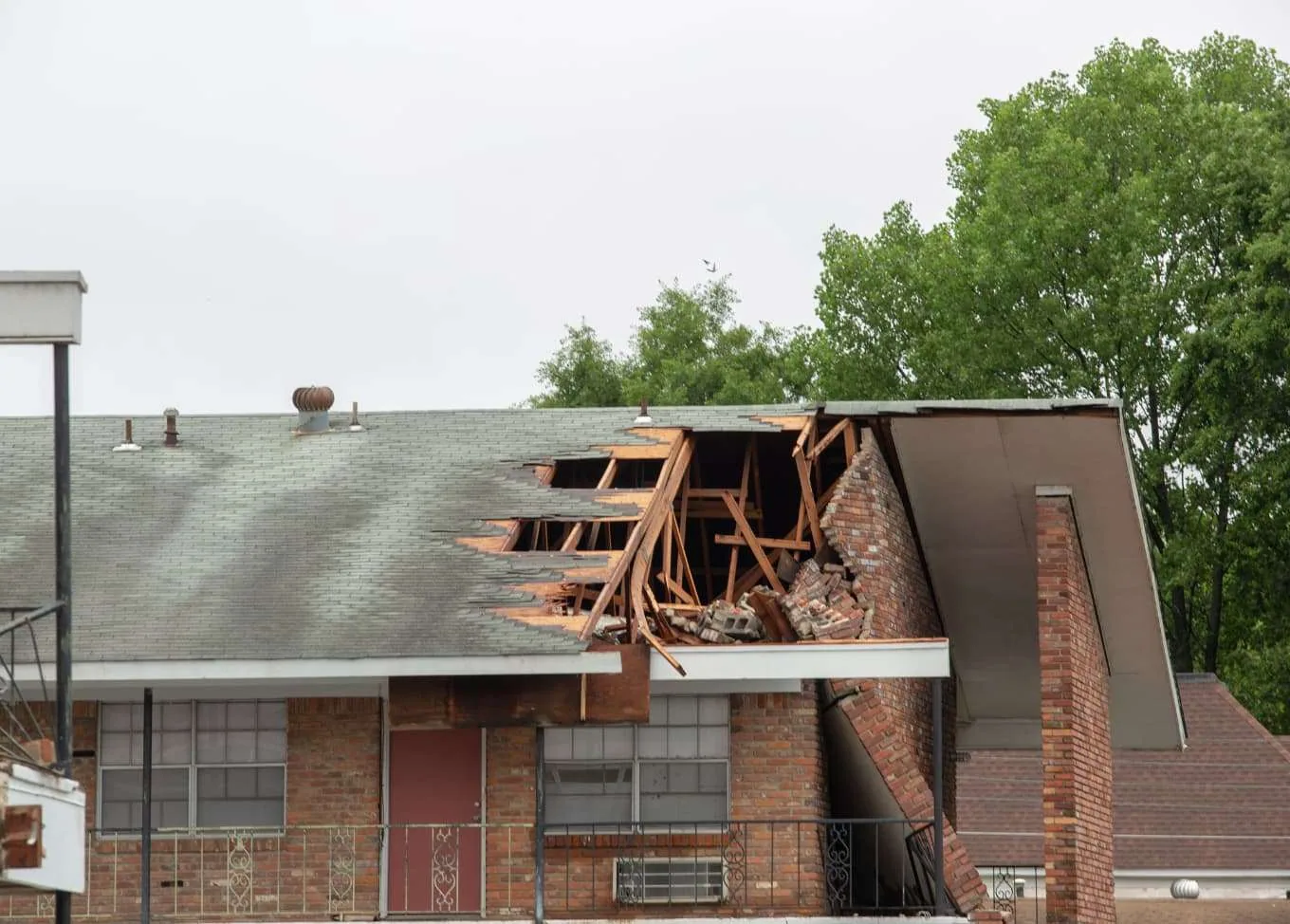
Storms open seams that were already marginal. Wind lifts a free edge and peels the lap along its length, and hail can crack a seam bead or bruise the membrane beside it. Hail the size of baseballs damaged Burkburnett and Iowa Park in April 1991, and in March 1993 larger stones fell at Sheppard AFB. Those events are history, not proof of a seam problem on a given roof. They are reasons to probe after a hard storm.
When a storm is the cause, we document the damage for the owner and, if needed, the insurer. Wind damage and hail damage can look alike at a seam, so the pattern across the roof matters. Open seams all facing one direction suggest wind. Scattered bruises beside a cracked bead suggest hail.
Where seam trouble tends to be found
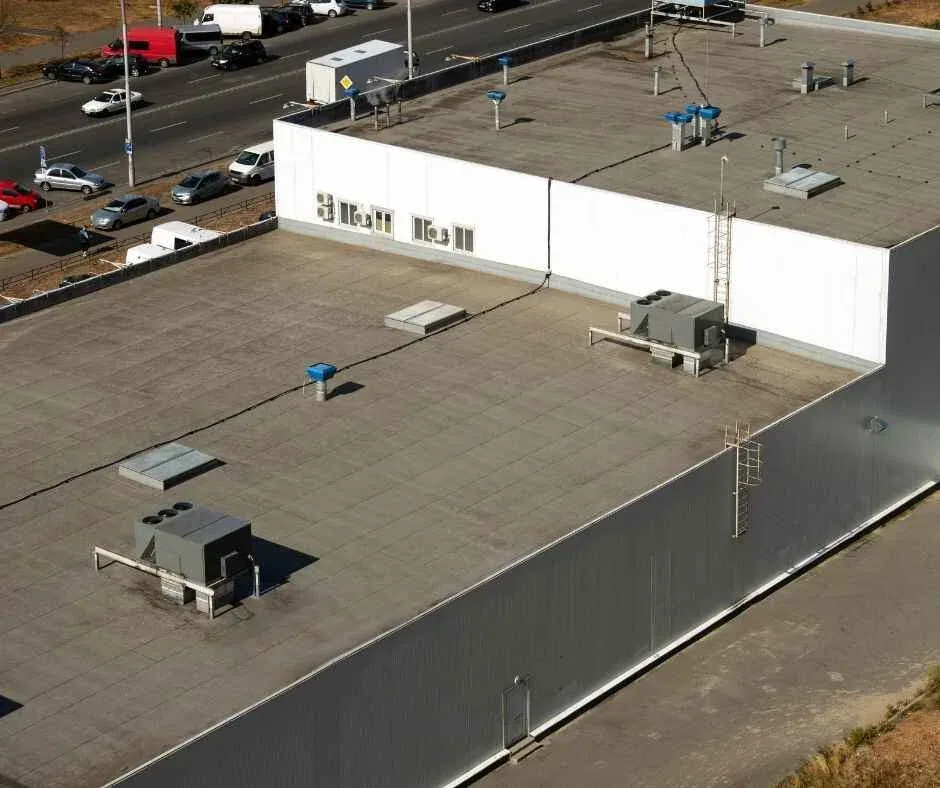
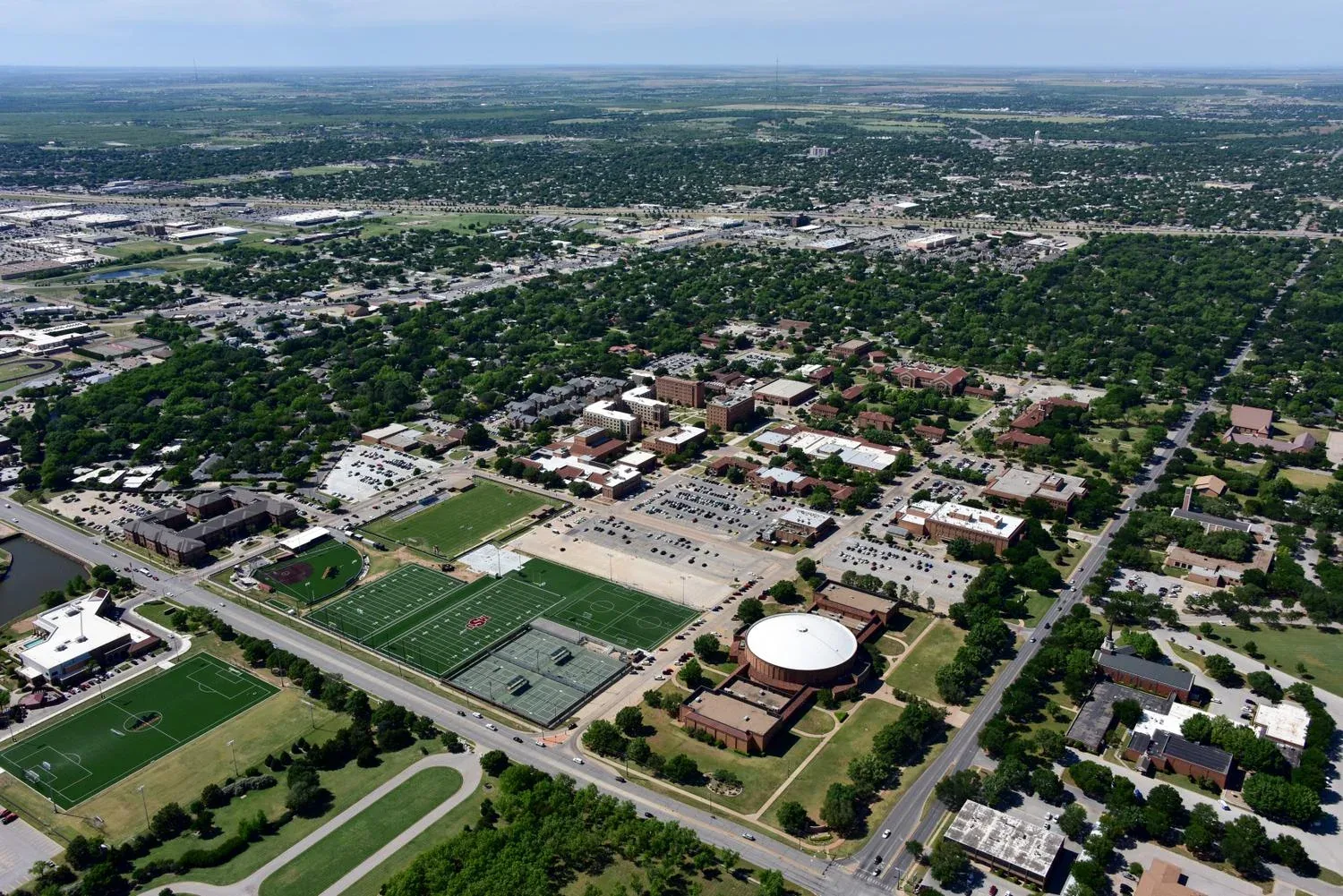
Large membrane roofs have the most seam length. The Wichita Falls Business Park covers 525 acres aimed at distributors and manufacturers, and big low-slope buildings of that kind mean long runs of seams to inspect. The Taft Boulevard area holds the Midwestern State campus, with residence halls, Centennial Hall, which opened in 2019, and the Bridwell Activities Center, completed in 2022. Buildings from different years are read one at a time, since their roofs need not match.
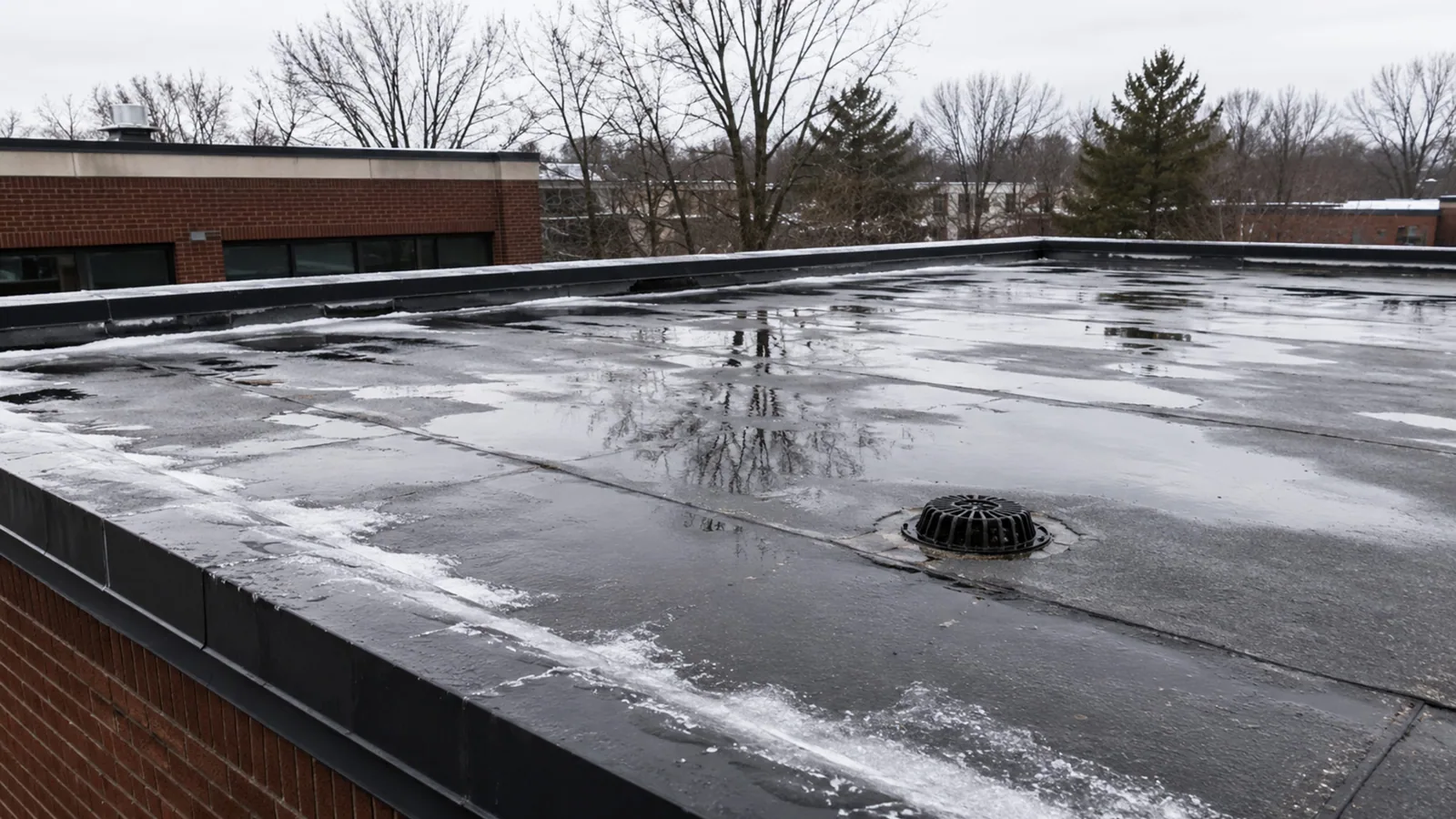
Seams also fail around drains and ponds, where standing water adds weight and heat. Where water sits, ponding water and seam splits often travel together. A maintenance walk that probes the seams before summer catches small splits early, when the repair is a few feet of weld and not a section of roof.
For owners with several buildings, the same seam map can sit in the roof file for each one. It shows where seams were open, what was done and when, so the next inspection starts from a known baseline. That record also helps when a manufacturer or insurer asks what has been done to the roof.
Commercial Roofing Questions
Can I tell a failed seam from a puncture?
A seam leak runs along a line between two sheets, while a puncture is a spot. The probe tells us quickly: a tip that slides into the lap marks a seam, and a clean tear or hole marks damage elsewhere.
Will a repaired seam hold in Wichita Falls heat?
A clean, well-made weld or splice should handle ordinary heat cycles, though the cause matters. If a seam failed from movement, we look at attachment and design so the repair is not asked to do the same job twice.
How many seams usually fail at once?
There is no fixed count. A single bad splice is common, but a pattern across the roof points to installation, age or contamination. The map of marked seams shows which case you have.
Can a coating cover open seams?
Not on its own. A coating can seal a sound seam, but an open lap must be bonded first. We reseal the joint, then decide whether a coating adds value for the whole roof.
What helps the first walk?
The roof age, the membrane type if known, photos of any open edges and the date of the last storm. With that, the first walk can go straight to the seams that matter.