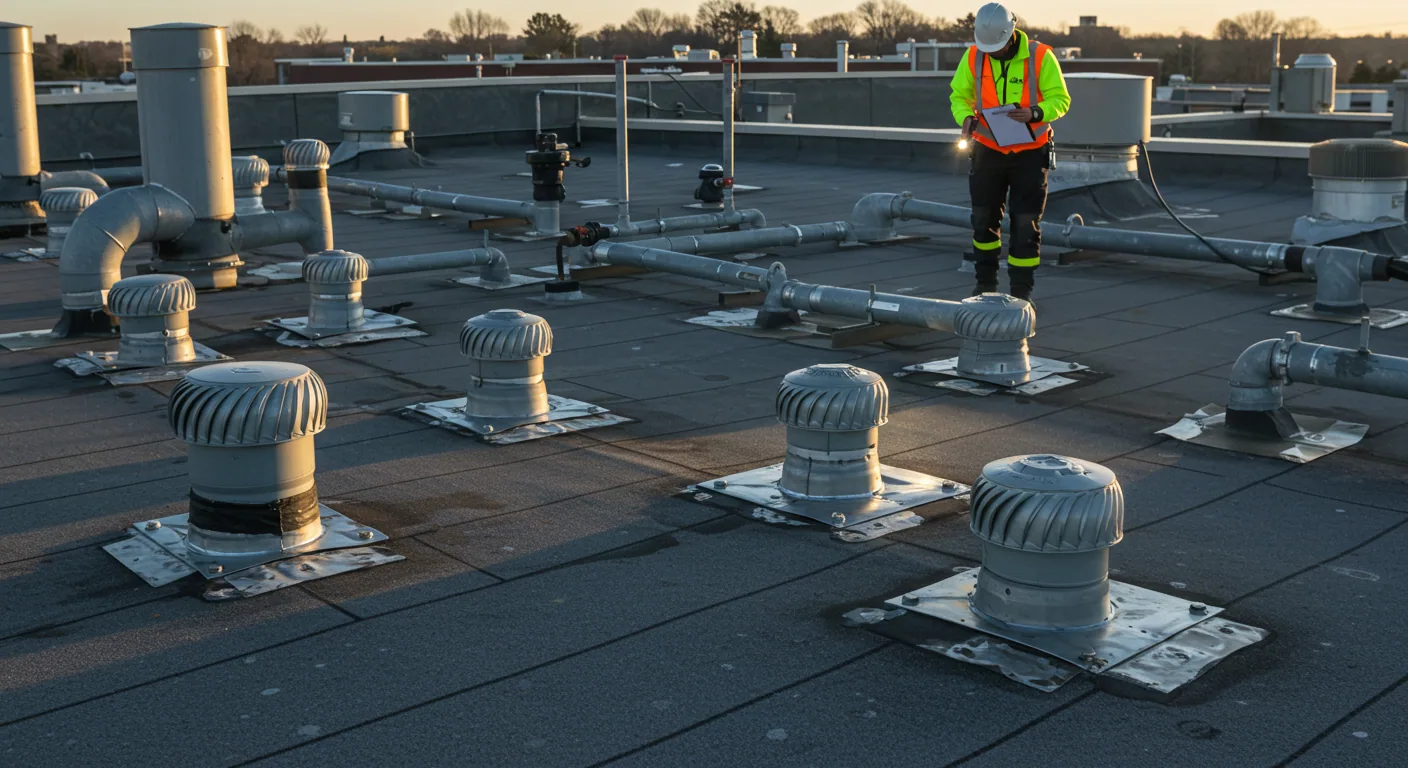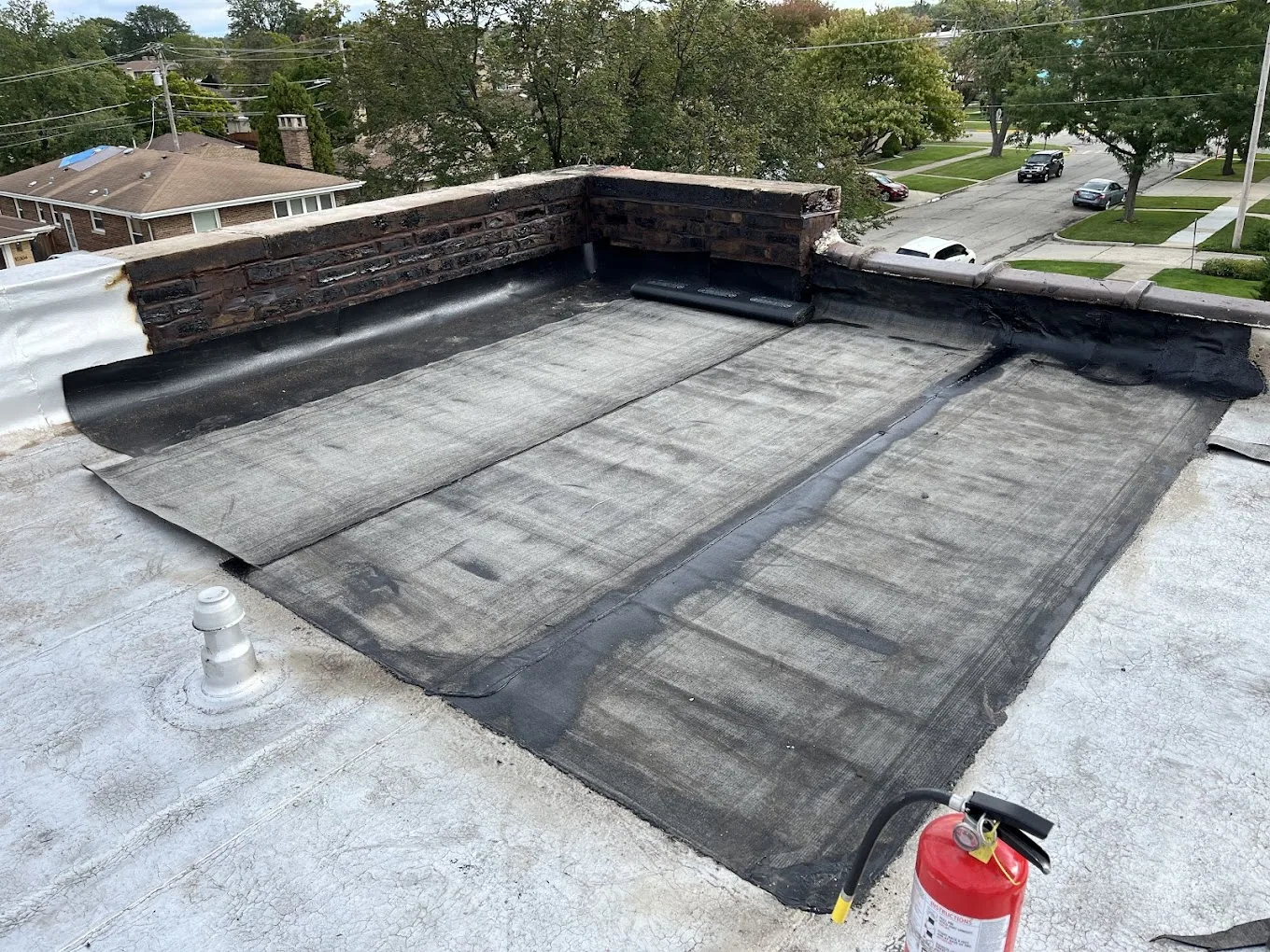
Flashing is where a roof meets everything that is not roof. Walls, curbs, pipes, vents, drains and edges all need a watertight turn from the flat surface up onto something vertical, and that turn is where most commercial leaks begin. The membrane in the open field can be sound for years while a six-inch strip at a wall fails. Step one is to look at the joints. Step two is to learn why one let go.
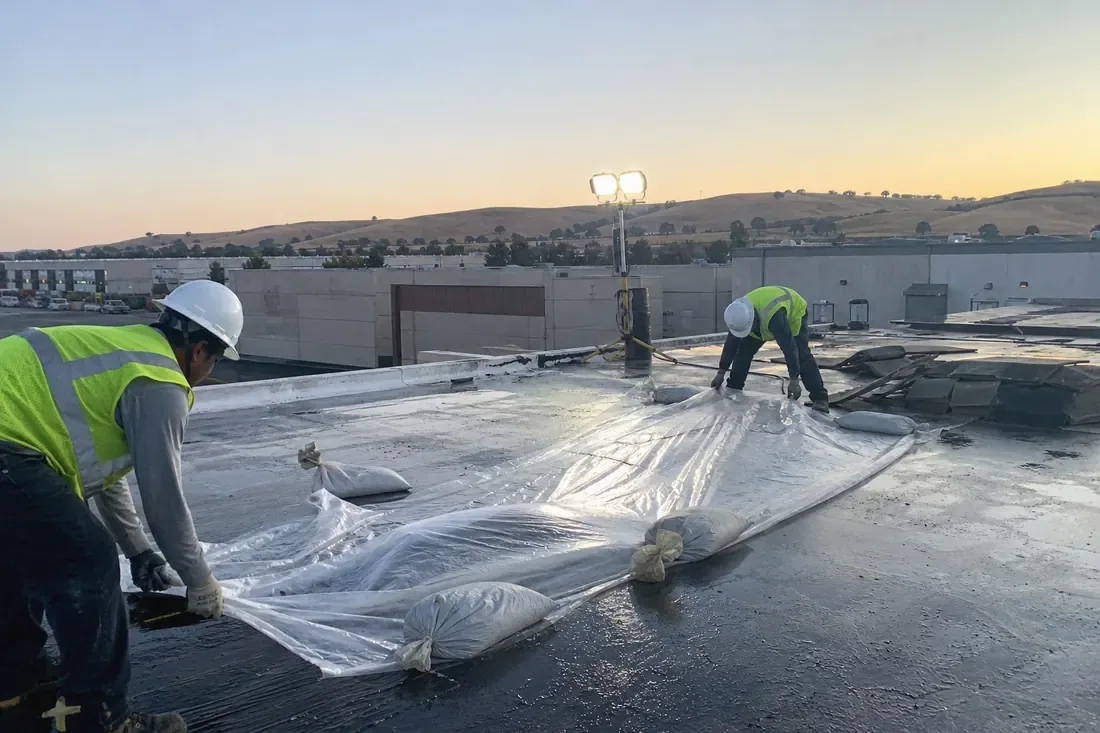
Failed flashing is something we repair on low-slope and metal commercial roofs across Wichita Falls, TX. We rebuild the joint in layers, match the repair to the roof system already in place, and check the neighboring details so one fixed corner does not hand the leak to the next. Emergency response runs around the clock, including holidays.
What failed flashing looks like
Start with the edges of the repair. A membrane that has pulled away from a wall leaves a gap or a loose lip, and sealant that has cracked, shrunk or peeled shows a dark line where water has been entering. Rust streaks below metal flashing, bubbled paint and a damp ceiling at the wall line are all signs from the inside. From above, a bead of old mastic, smeared over and over, tells you the joint has been patched before.
Fasteners matter too. Where a flashing is held with screws or nails, backed-out heads lift the metal and break the seal. We press along each run and mark every spot that moves. A joint that looks closed from five feet away can be open under the thumb, and that test is the one that matters.
Interior clues help narrow the search. A stain that grows after rain from the wall line, a bubble in the paint at a corner or a damp patch beside a mechanical chase each point to a different joint above. We photograph the inside and the outside together, so the finding links the symptom to its cause rather than leaving a list of guesses.
Why flashing fails before the field
Flashing works against the roof's own movement. The field of a membrane expands and contracts with temperature, and so does the wall, the curb and the pipe, each at a different rate. With about 28 days a year at 100 degrees, plenty of afternoons push those parts against each other. A rigid sealant cannot follow that movement for long, and it splits at the weakest point.
Poor detail is the second cause. A flashing that is too short, a termination bar that is loose, a curb with no counterflashing or a penetration sealed with caulk alone will fail early. Workmanship and age make the third. Sealants dry out, adhesives let go and metal corrodes. Equipment service adds a fourth: technicians step on flashing, lean ladders against it and leave screws behind. All of these show up at the joint first.
How a proper repair is built
One clean rule governs the work: rebuild the joint in the right order, from the roof surface up. The old sealant and loose material are removed. The substrate is cleaned and checked for moisture. A new base flashing in a membrane compatible with the field is adhered or welded to the roof and carried up the wall or curb. A termination at the top, with a bar and sealant, holds the upper edge, and a counterflashing or cap sheds water over it.
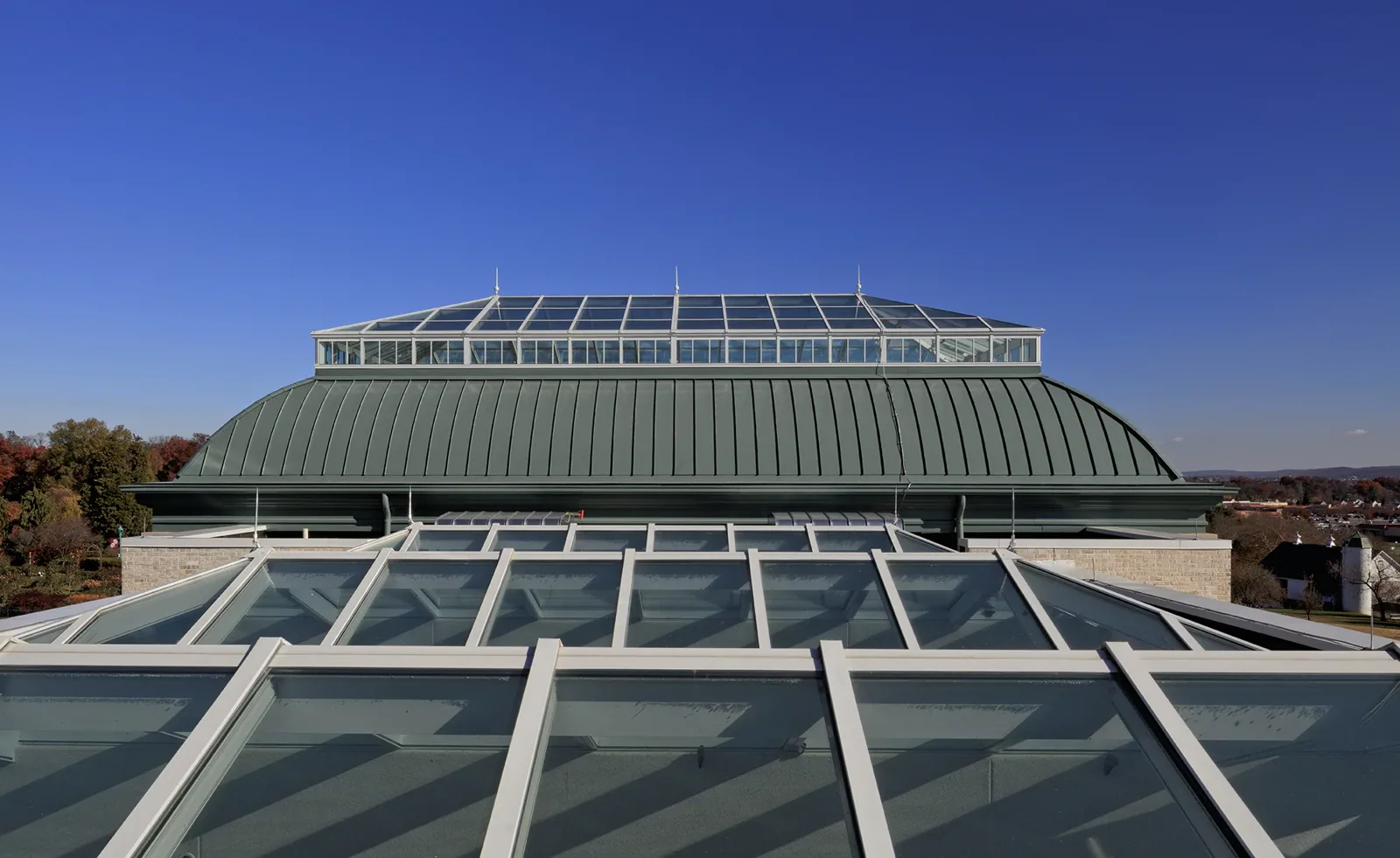
For metal flashing, we reset or replace the pieces, fasten them at proper spacing and seal the laps. Around pipes and penetrations, a prefabricated boot or a liquid-applied flashing resin is used, depending on the geometry. Skylight and penetration flashing follows the same principle: the water path has to be continuous from top to bottom. Smearing more mastic over a bad joint hides it for a season at most.
Timing is part of the repair. Sealants and adhesives bond poorly on a cold, wet or very hot surface, so we pick the hours and the weather, and we protect the open joint at the end of every day. A flashing left half finished overnight is a new leak waiting for a thunderstorm.
Curbs, edges and rooftop equipment
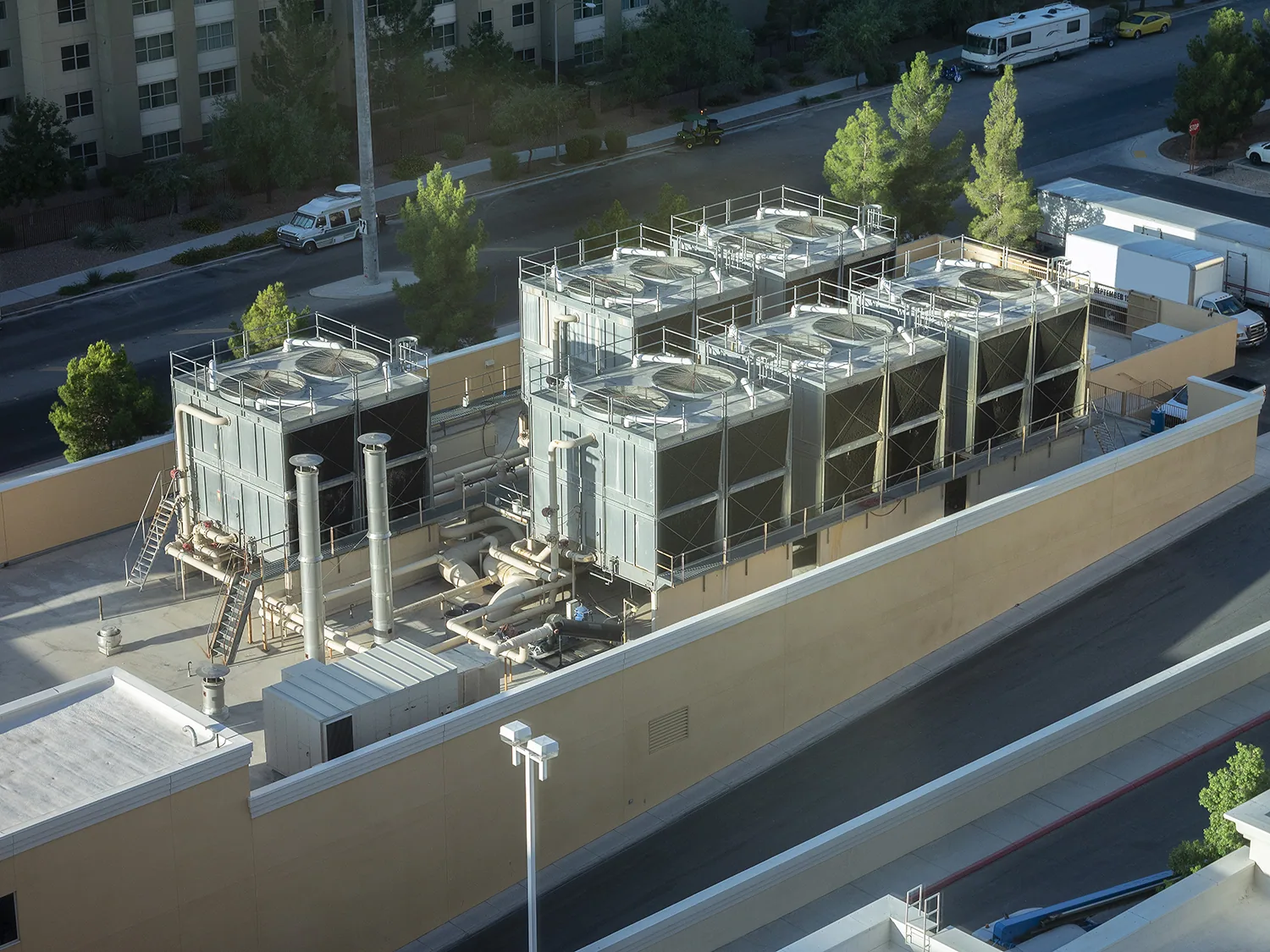
Equipment curbs are the busiest flashing on most roofs. Each one has four sides, four corners and a counterflashing, and each of those details can leak. We check the corners first, since folded membrane tends to open there. Rooftop equipment curbs and supports that were added after the roof was installed are especially likely to be flashed in a hurry.
Edges matter as much. Edge metal and coping turn the roof's border into a finished flashing, and wind loosens it first. The 1979 tornado spent about half an hour crossing the southern and eastern parts of the city, a reminder of how fast wind can lift an edge. An edge that has moved needs the flashing rebuilt and the wind damage traced back to its attachment.
Buildings that test flashing hardest
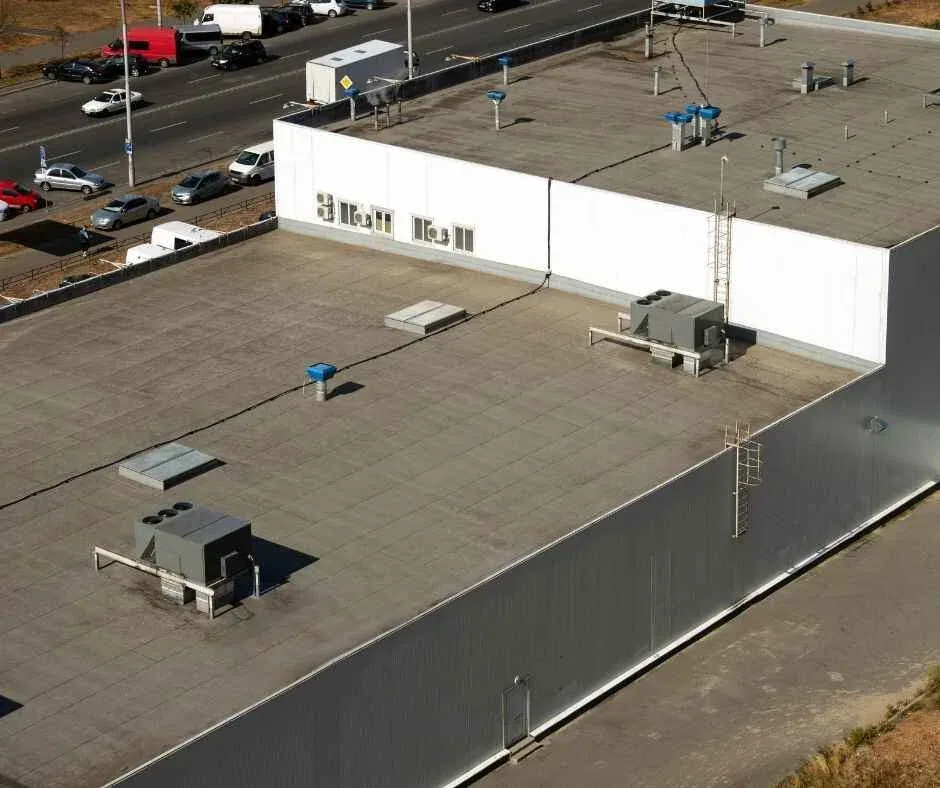
Large retail and industrial roofs have the most flashing per building. Sikes Senter on Midwestern Parkway is a one-floor mall of about 670,000 square feet, and the Wichita Falls Business Park covers 525 acres of distribution, high-tech and manufacturing sites. A building with many parapets, dock canopies and rooftop units has many joints, and each one is a place to inspect. We do not assume a given roof has trouble because of its size. We walk it.
Hail adds its own damage. It can dent metal flashing, crack sealant and bruise the membrane at the joint, and the baseball-size stones that fell on Burkburnett and Iowa Park in April 1991 are a local reminder. After a storm, a quick walk of the edges and curbs finds damage that the field would not show. When seams open next to a failed flashing, the fix extends to seam failure repair as well.
Retail parapets show the problem clearly. A long wall with a cap that has opened at the joints lets water run behind the flashing and down inside the wall, so the stain may appear a long way from the actual opening. Along the Midwestern Parkway retail corridor, the mix of mall, pad and strip buildings means flashing details of every age and type sit side by side. We read each one by its materials and its movement.
Commercial Roofing Questions
Can failed flashing be fixed with sealant alone?
Sealant can slow a leak for a short time, but it does not fix a joint that is moving or poorly built. A lasting repair removes the old material and rebuilds the layers.
Which flashing leaks most often on a commercial roof?
Curb corners, pipe penetrations, wall terminations and parapet caps lead the list. Each is a place where the roof surface turns up onto something else, and movement concentrates there.
How do I know if a leak is at the flashing or in the field?
Trace the stain upward. Leaks near walls, curbs and vents usually start at the flashing. Leaks far from any detail point to a seam or a puncture. A moisture scan helps separate the two.
Does heat shorten the life of flashing?
Yes, in the sense that repeated heating and cooling opens joints and dries sealants. In a city that reaches 100 degrees on about 28 days a year, flashing details deserve regular checks.
What should I send to get a repair quote?
Send photos of the stain inside and the joint outside, the roof age and the building use. We will plan a first walk that checks the flashing and its neighbors.