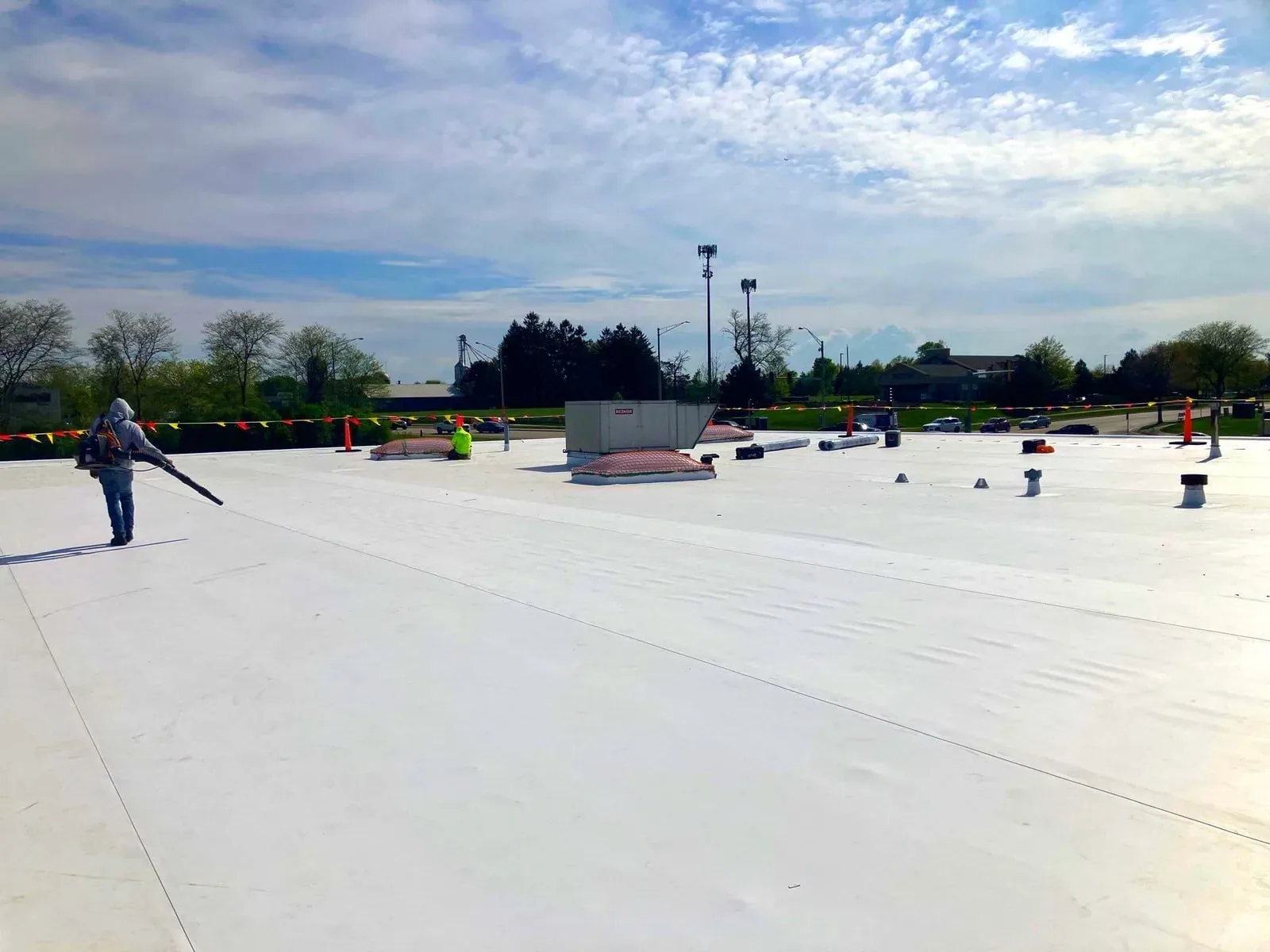
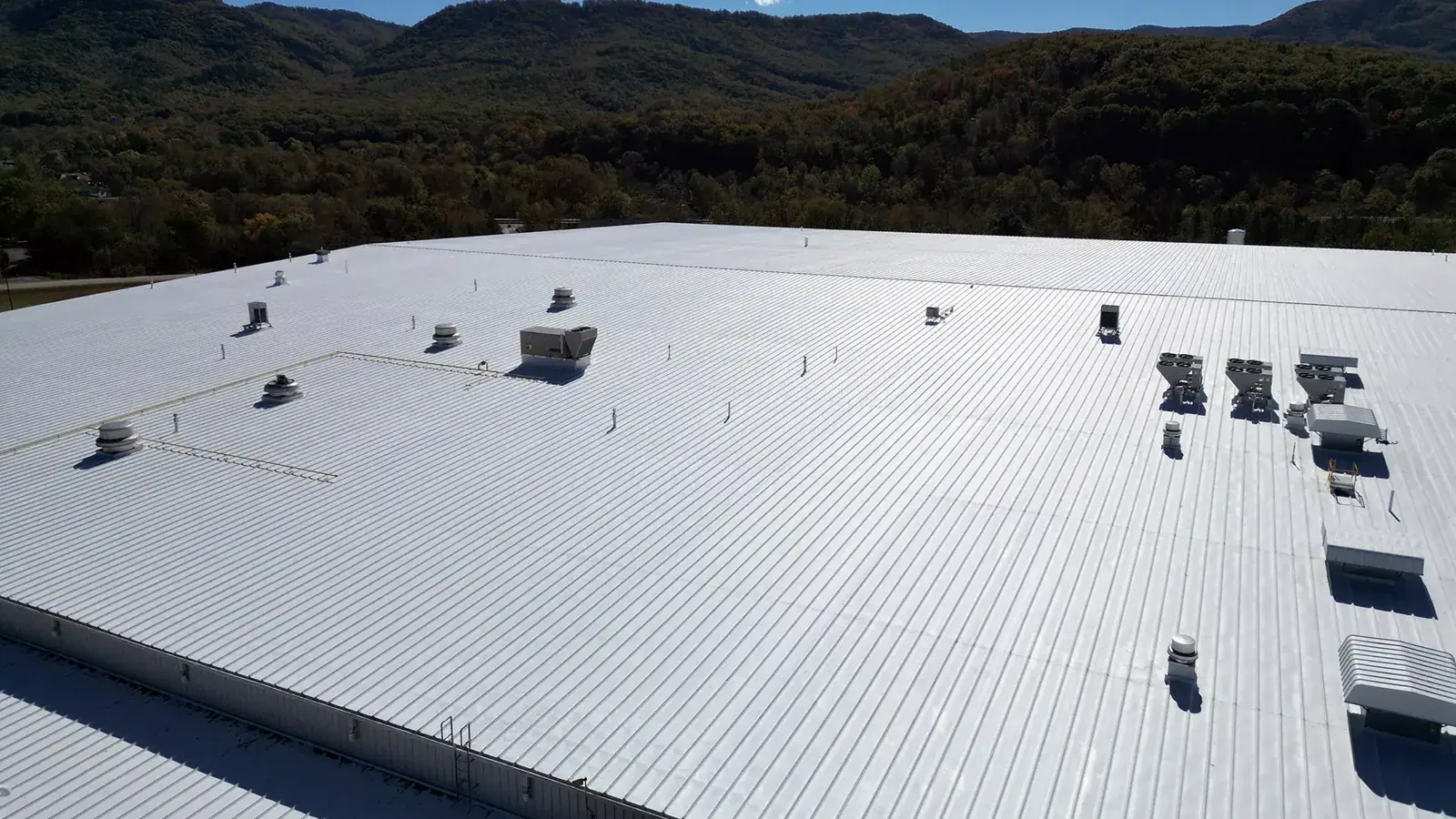
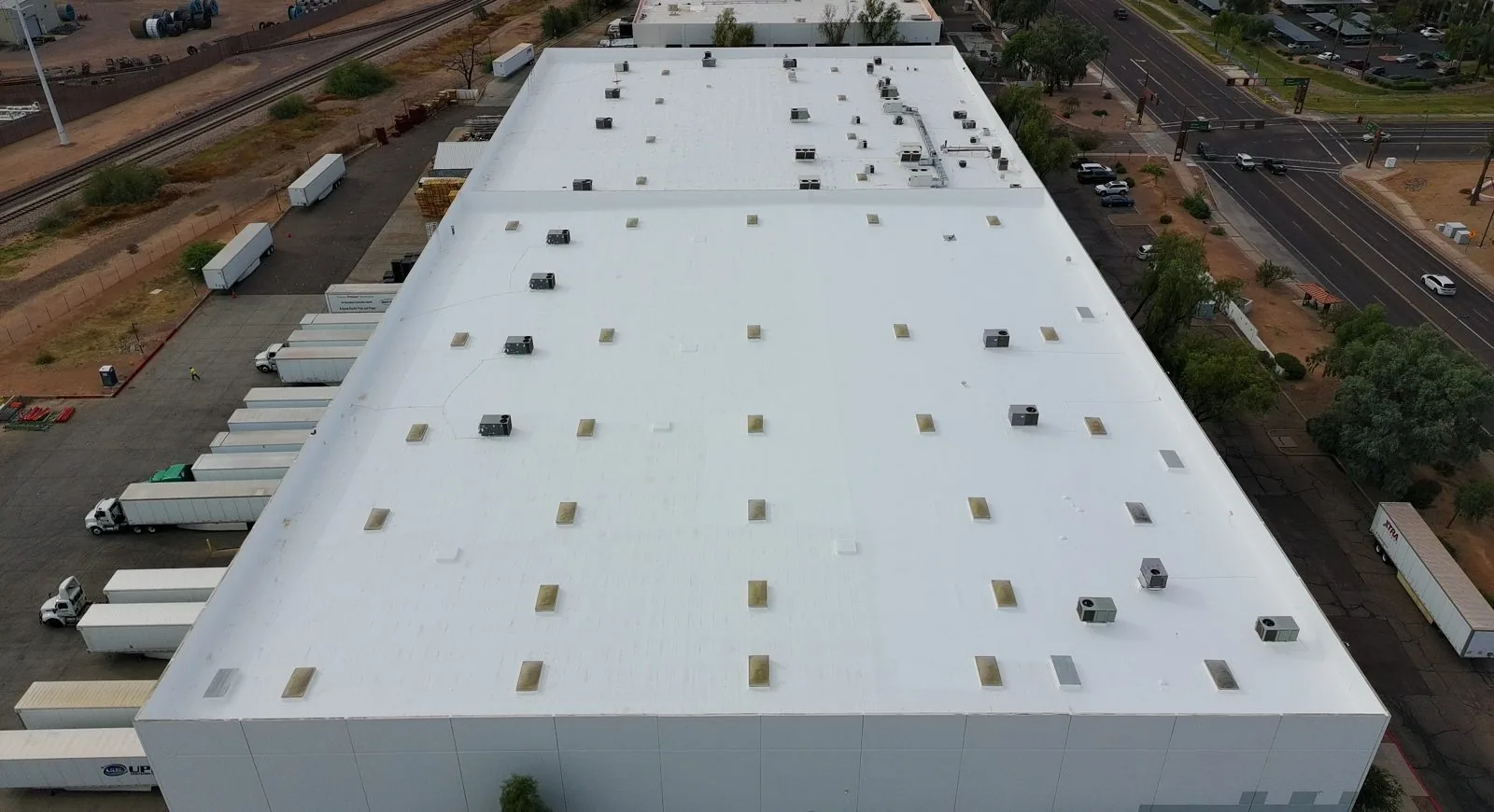
A big warehouse roof with a few shallow low spots is the building where silicone coating makes its case. The one thing an owner should understand is that silicone is a liquid that is rolled or sprayed over an existing roof and cures into a flexible rubber skin. It does not replace the roof underneath. It protects what is already there, and it handles standing water better than most coatings.
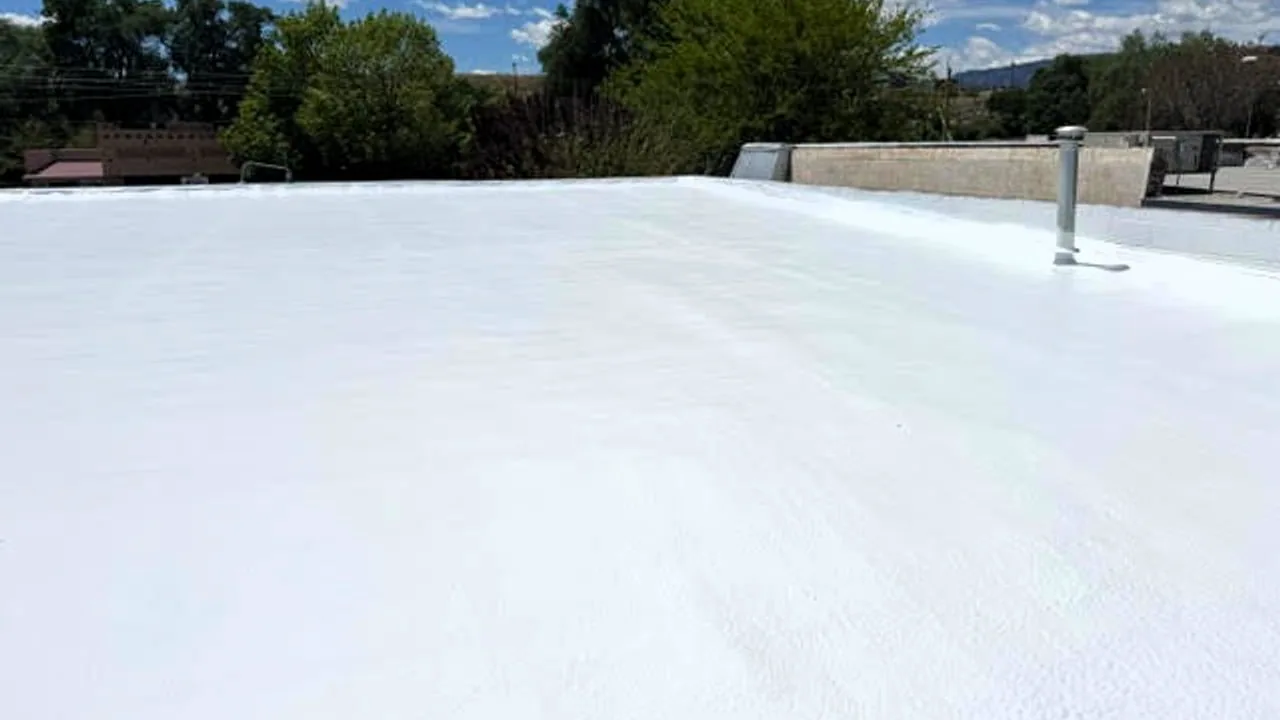
That makes it a restoration tool, and the first job is deciding whether the roof underneath is worth restoring. We install and repair silicone coating systems, and the decision starts with the layer beneath.
Know the Layer Underneath
A coating is only as good as the surface it bonds to. Silicone goes over metal, TPO, EPDM, modified bitumen, built-up and cured foam, but each one needs its own cleaning, and some need a primer. Step one is a bond test. We clean a small patch, coat it and check adhesion after cure before we order materials for the roof.
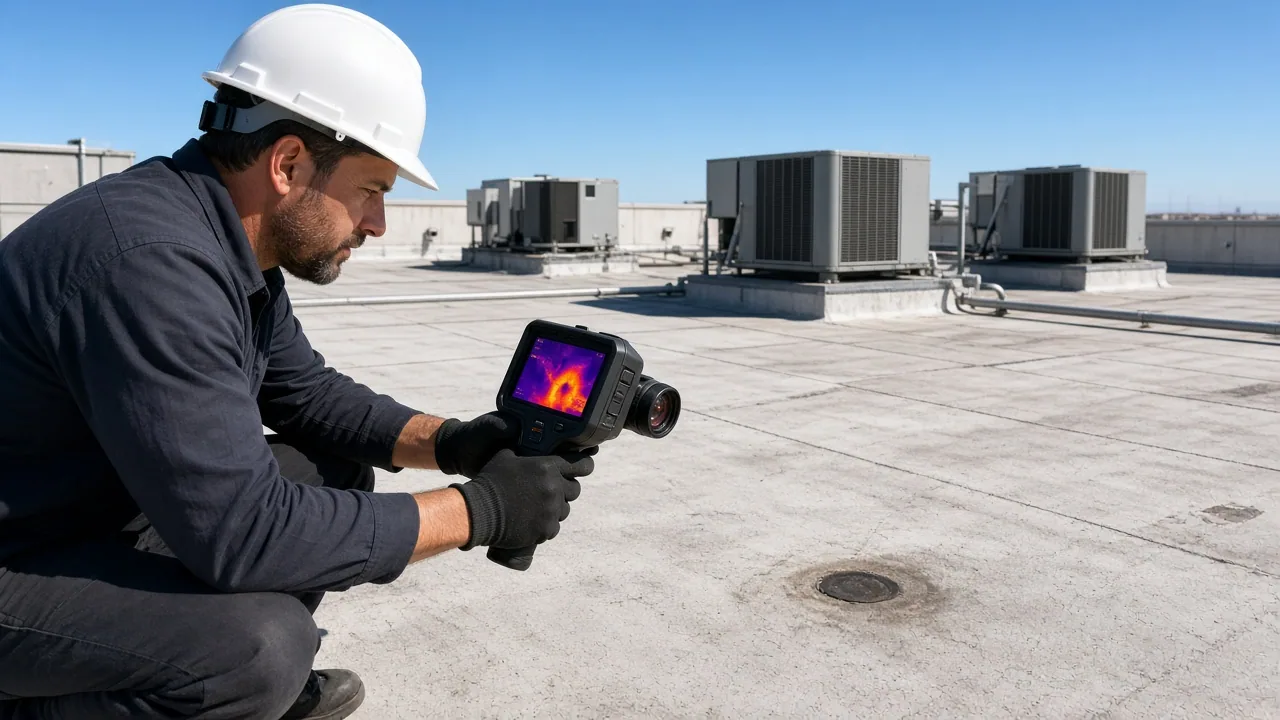
Step two is moisture. Wet insulation under a coating does not dry out, because the coating seals the surface. A scan from the infrared moisture survey marks the wet areas, and those sections are cut out and replaced first. A coating over a wet roof only hides the problem for a season.
Test the Ponding Line
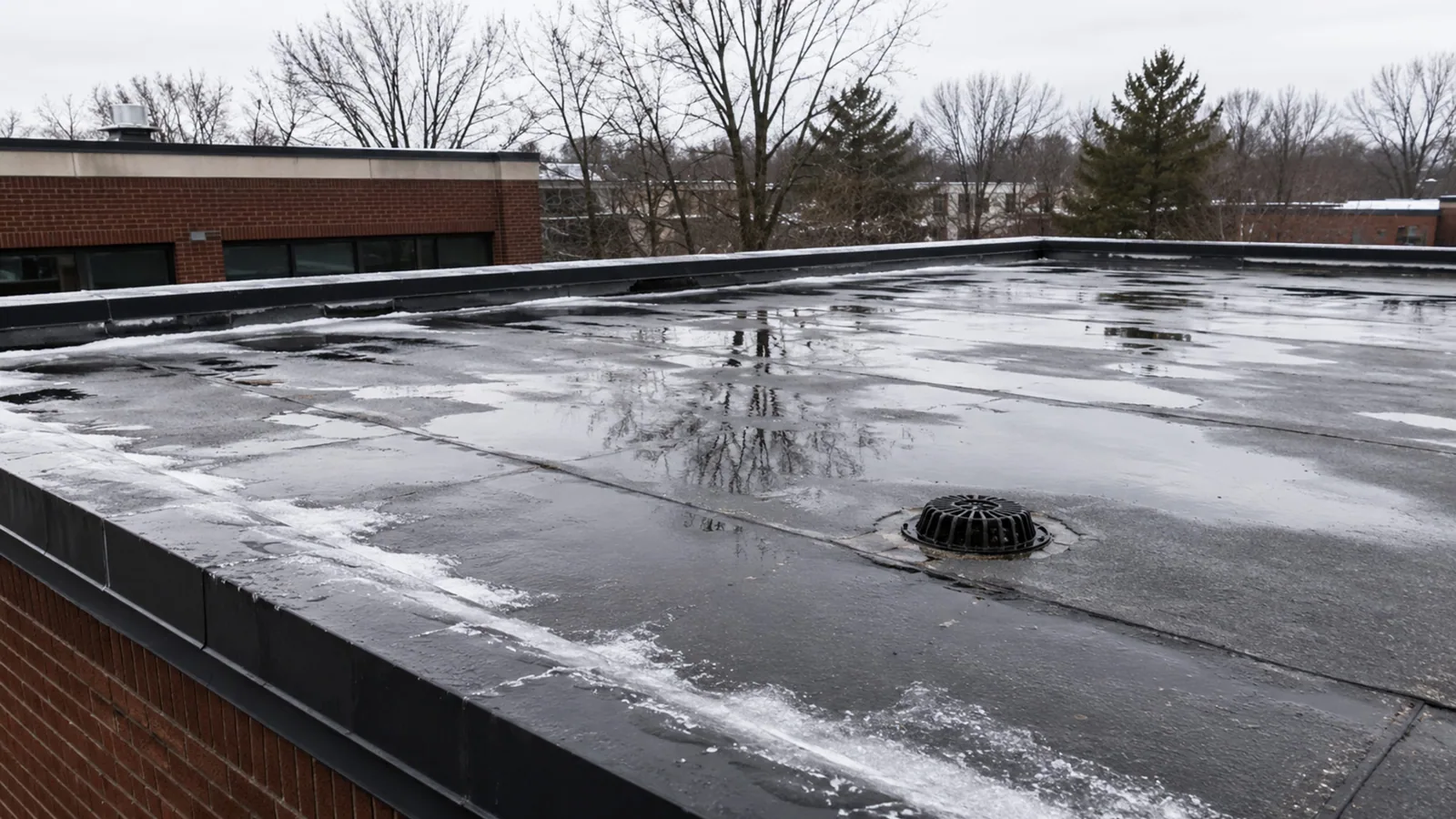
Standing water is the reason owners ask about silicone. Many coatings soften or break down when water sits on them, and silicone is made to cure into a film that tolerates it. After a heavy rain the ponding line shows on the roof as a pale ring of dust and dirt where the water dried. We mark each ring and measure how deep and how long the water stays.
May 2015 set the wettest-month record in Wichita Falls at 17.00 inches, and a roof that held water through a month like that tells its own story. Silicone can live with the water, but ponding still shortens the life of the roof underneath, so low spots, clogged drains and failed ponding water repairs are fixed in the same project.
Count the Heat
Roughly 28 days a year reach 100 degrees in Wichita Falls, and in 2011 the count hit 100. A white silicone coat reflects much of the sun, which lowers the roof surface temperature and slows the expansion and contraction that wears out seams and flashings.
Silicone does not chalk the way some coatings do, and it does not yellow in sun. What it does do is collect dirt. The surface is slightly tacky, so dust and pollen stick, and a coated roof near a gravel lot or a plant that vents particles turns gray. We schedule a wash as part of the maintenance plan, and the reflective benefit returns with it. A low-pressure rinse is usually enough, and it also clears the debris that gathers around drains and scuppers, which keeps the ponding line from growing between visits.
Fix the Seams and Flashings First
A coating covers a roof, but it does not repair one. Open seams, cracked sealant at penetrations and loose flashings are fixed before the first coat. Seams get reinforcing fabric bedded in coating, and curbs and pipe bases get extra thickness, because the corners are where a thin film fails first.
The count of fasteners and flashings on the roof sets the labor. A building with a lot of rooftop equipment has a lot of detail work, and the coating restoration job is mostly the preparation. The spray or roll comes last, and it goes quickly when the preparation is good. Skipping the prep is how a coating peels in sheets at the first hot spell, so the crew treats that part of the day as the real work.
Match Silicone to the Building
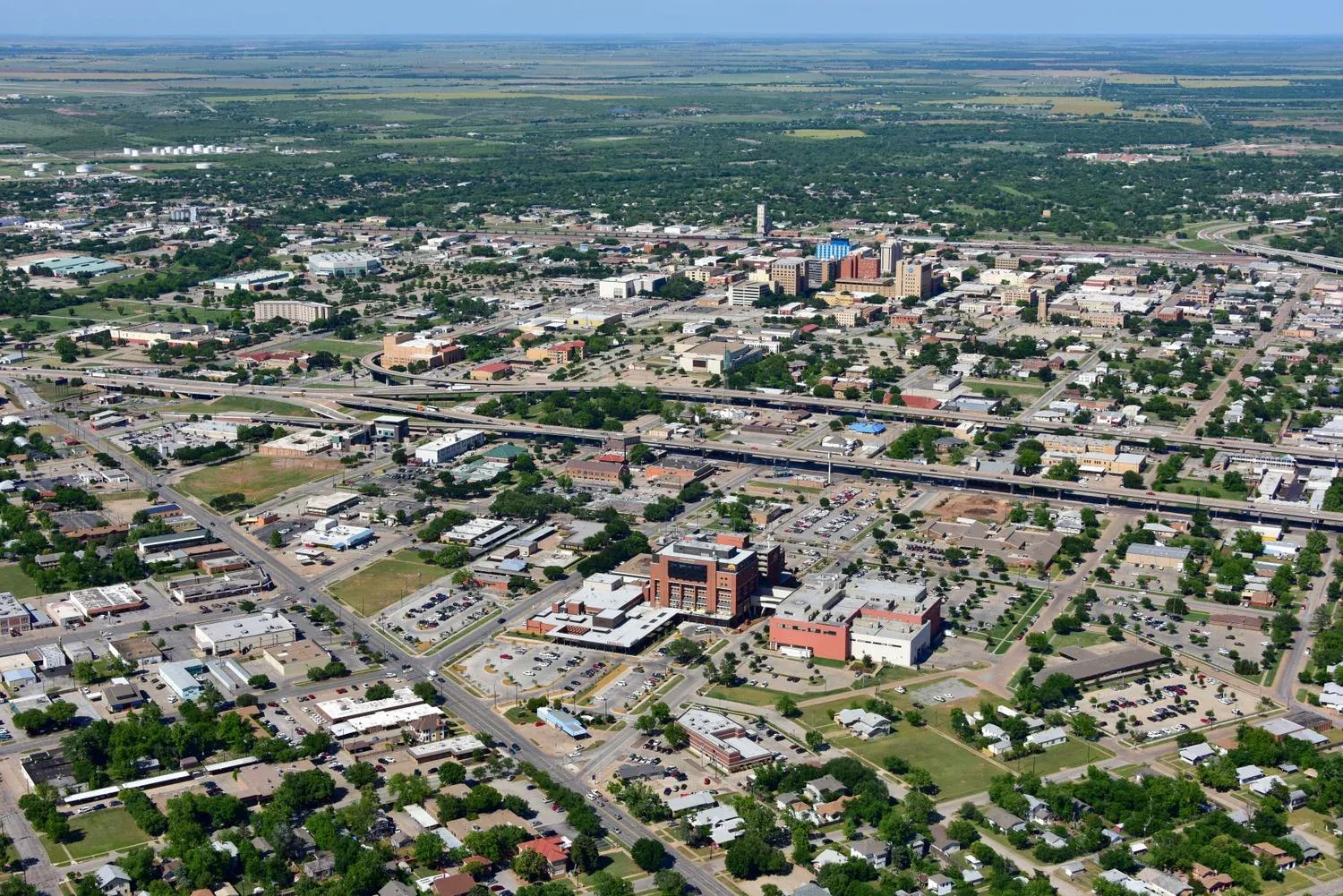
Think of the large, flat roofs where silicone has room to work. A distribution building in the Wichita Falls Business Park is the sort of place where a wide field and a few shallow low points call for this kind of coating. A campus building near Taft Boulevard is another match, where the Midwestern State University campus has 50 or more buildings and roof access can be scheduled around breaks.
The system is not right for every roof. A roof that will be walked on often, or one that is going to be recovered with a new membrane soon, is a poor match, because silicone is hard to overcoat with other coating types. The cool-surface benefits are part of cool roof installation planning as well.
Plan the Application Window
Silicone goes on in a dry window, with a surface that is clean, dry and free of dew. In north Texas the best days are the dry stretches of spring and early fall, since midsummer decks run hot enough to flash the coating and winter mornings can hold frost. A wash and a dry day come first, then prep, then the coat, and the sequence runs across several days on a large roof.
Occupants feel little of it. The coating has a mild odor while it cures, so intakes near the work area are shut or covered, and tenants hear the schedule ahead of time. Pallets and hoses stage on the ground by the access point, and traffic on the roof is kept to the crew until the coat is firm.
The last step is a walk with the owner. We measure film thickness at several spots, look for pinholes and runs, and photograph the finished surface so the baseline for later washes and recoats is on file.
Repair or Replace
A silicone coat extends a sound roof, and it does not rescue a failed one. If the core cuts show wet insulation across most of the roof, or the membrane has split along the seams, the right answer is replacement or a tear-off. If the core cuts are dry and the roof has years left in it, coating is the lower-cost route.
Cost drivers are the size of the roof, the prep work, the number of coats and the thickness of the film. We give the owner the cost of the coat and the cost of the prep as separate items, so the choice is clear. Compare it with an acrylic coating, which costs less to apply and behaves differently around standing water.
Commercial Roofing Questions
How long does silicone cure before rain?
Silicone cures by reacting with moisture in the air, so it tolerates light humidity better than most coatings. It still needs a dry surface when applied, and we avoid starting when rain is forecast within hours.
Can another coating go over silicone later?
Not easily. Silicone resists adhesion from other coatings, so a future recoat usually means more silicone. That is one reason to choose it only after the plan for the roof is clear.
Why does my coated roof look dirty?
Silicone has a slightly tacky surface that holds dust. A wash brings back the brightness, and we include one in the maintenance plan. The dirt does not mean the coating has failed.
Does silicone make a leaking roof watertight?
Not by itself. Leaks come from seams, flashings and wet insulation, and each is fixed first. The coating then protects those repairs and the field of the roof.
What about the roof around a kitchen exhaust vent?
Vents that release grease or oil can stain and soften some coatings. We cover the area, check the vent and keep that stretch of roof clean on the maintenance walk.