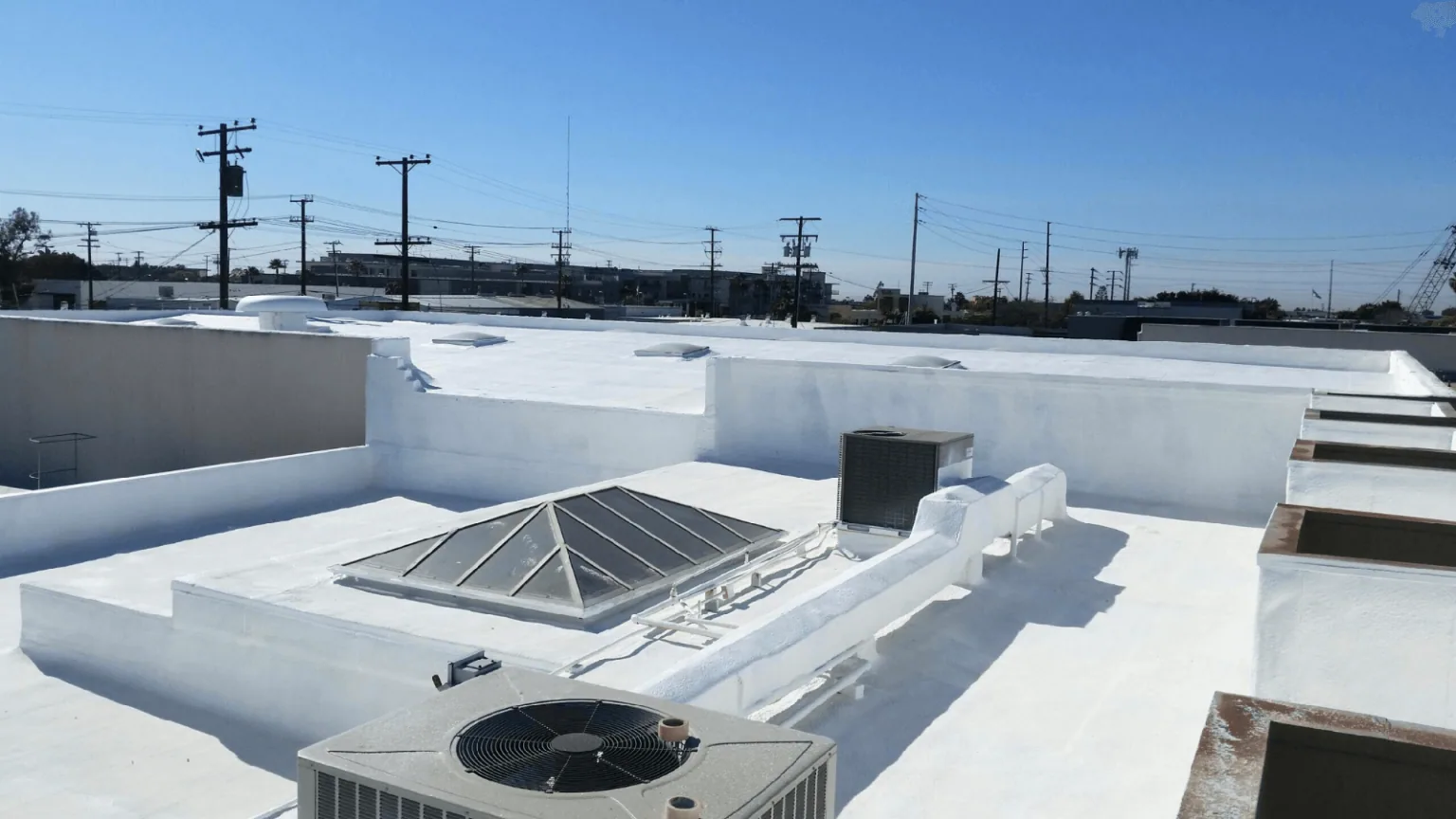
A coating is a skin, and a skin only helps a body that is healthy underneath. That is the one thing an owner should understand before asking about restoration. A coating system adds a reflective or waterproof layer over a roof that is sound but tired, and it can add years of service at a fraction of the cost of tear-off. It cannot fix wet insulation, a soft deck or a membrane that is coming apart. So step one is not the coating. Step one is finding out whether the roof under it qualifies.
In Wichita Falls, where the sun does hard work on a low-slope roof, every owner has to answer that question before spending a dollar. Here is how we answer it.
A roof qualifies most easily when the owner acts early. A roof coated while its seams were still sound, its insulation dry and its drains clear is a roof that gets a second life. Wait until the leaks start and the same roof usually needs a replacement.
What Qualifies a Roof
Three conditions have to hold. The insulation must be dry. The deck must be sound enough to carry foot traffic and fasteners. And the existing membrane must be bonded and intact enough to take a coating, with seams that can be repaired. We test each one before quoting, not after.
Metal roofs, modified bitumen, built-up roofs, single-ply membranes and spray foam can all be candidates. The same coating does not suit all of them, so we identify the roof system first. A roof with widespread ponded water, active leaks through the deck or several old layers soaked together is a replacement candidate, and we say so plainly rather than sell a coating that will not hold.
How the Test Works
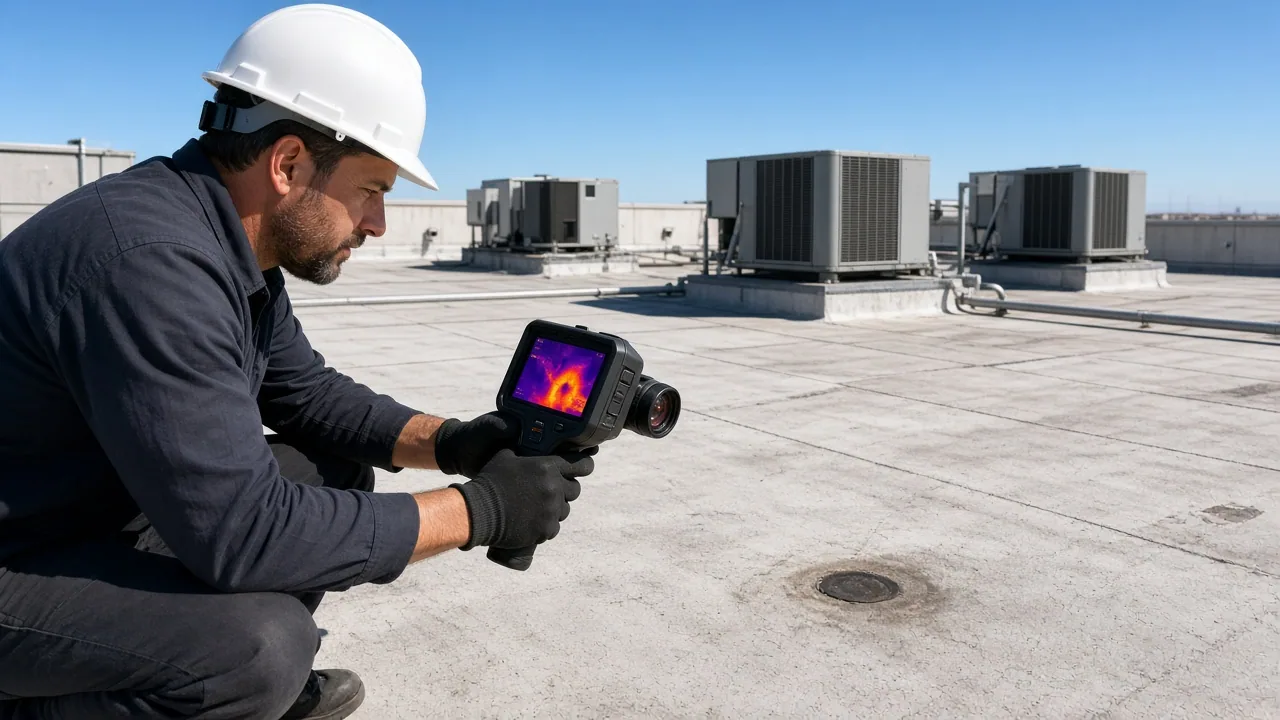
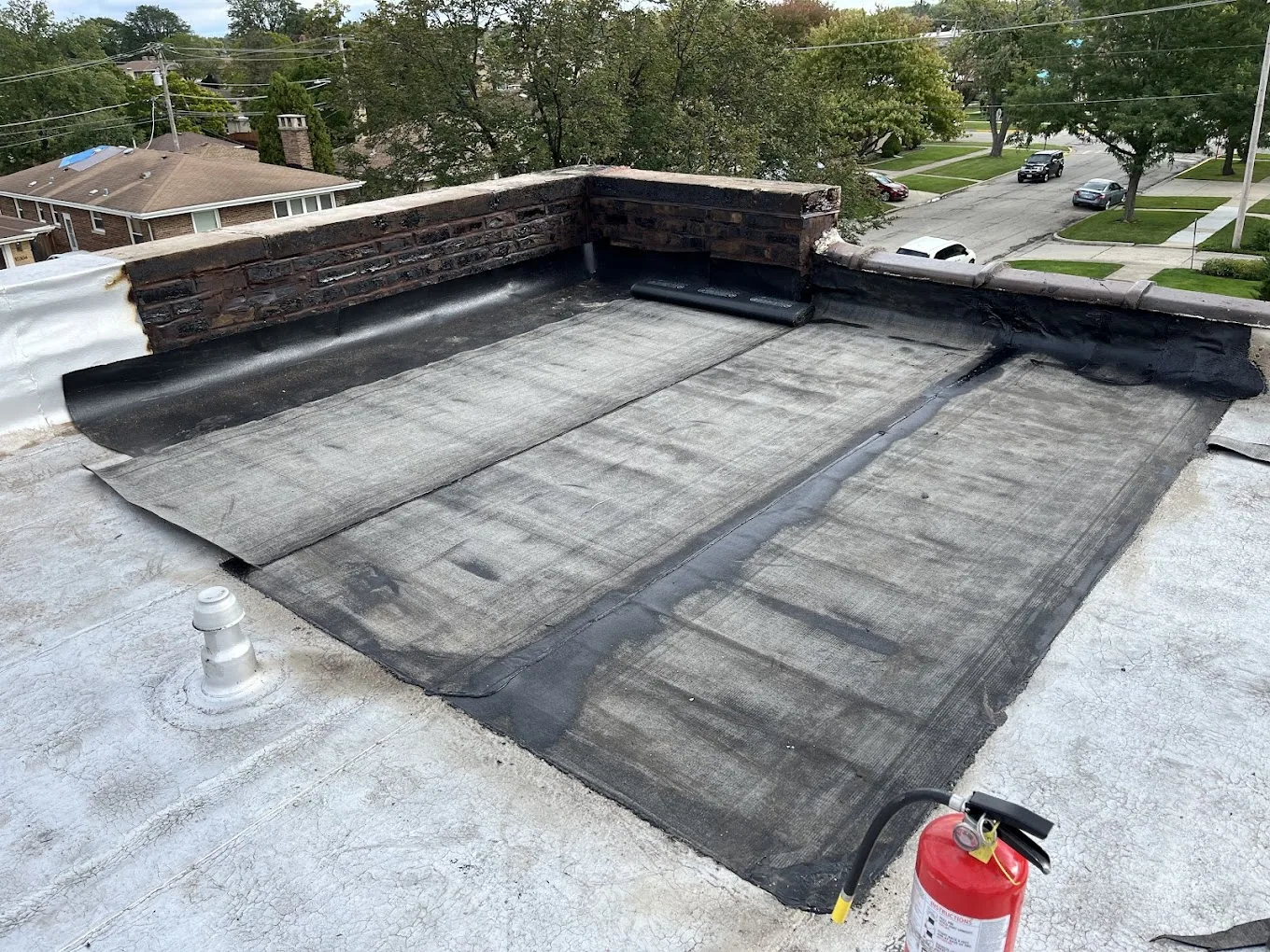
A simple test comes first: we walk the roof and press on it. Soft spots, squishy areas and blisters tell us where to look. Then an infrared moisture survey maps temperature differences that point to wet insulation, and core cuts confirm what the scan suggests. Cores also show how many layers sit on the deck and how well the old membrane is bonded.
An adhesion test follows. A small patch of coating goes on a cleaned spot and cures, and then we try to pull it off. If it holds, the surface can take the full system. If it peels, the cleaning or the primer has to change, or the roof needs a different answer. The result goes in the file with a photograph.
Cleaning is its own step. Dirt, oxidation, algae, old sealant and loose granules all keep a coating from bonding, so the surface is power-washed and, where needed, abraded. The roof dries before primer goes on, and we check it with a moisture meter, not by eye.
Silicone or Acrylic
The two coatings usually compared behave differently. A silicone coating sheds ponded water well and keeps its properties in heat and sun, which suits a flat roof with low spots. An acrylic coating is water-based, easy to apply and economical, but it does not like standing water, so it belongs on roofs that drain well.
Neither is a miracle. Each needs the surface cleaned, repaired and primed to the maker's method, and each needs a minimum thickness measured in wet film as it goes on. A coating applied thin looks the same on the first day and fails in the first few seasons. We check thickness at set points during application and record it.
Details get fabric. Seams, pipe boots, curb corners and wall bases are reinforced with mesh or fabric bedded in the base coat, because movement concentrates there. A field coat with no reinforcement at the details cracks along the same lines the old roof did.
Heat and Reflectivity
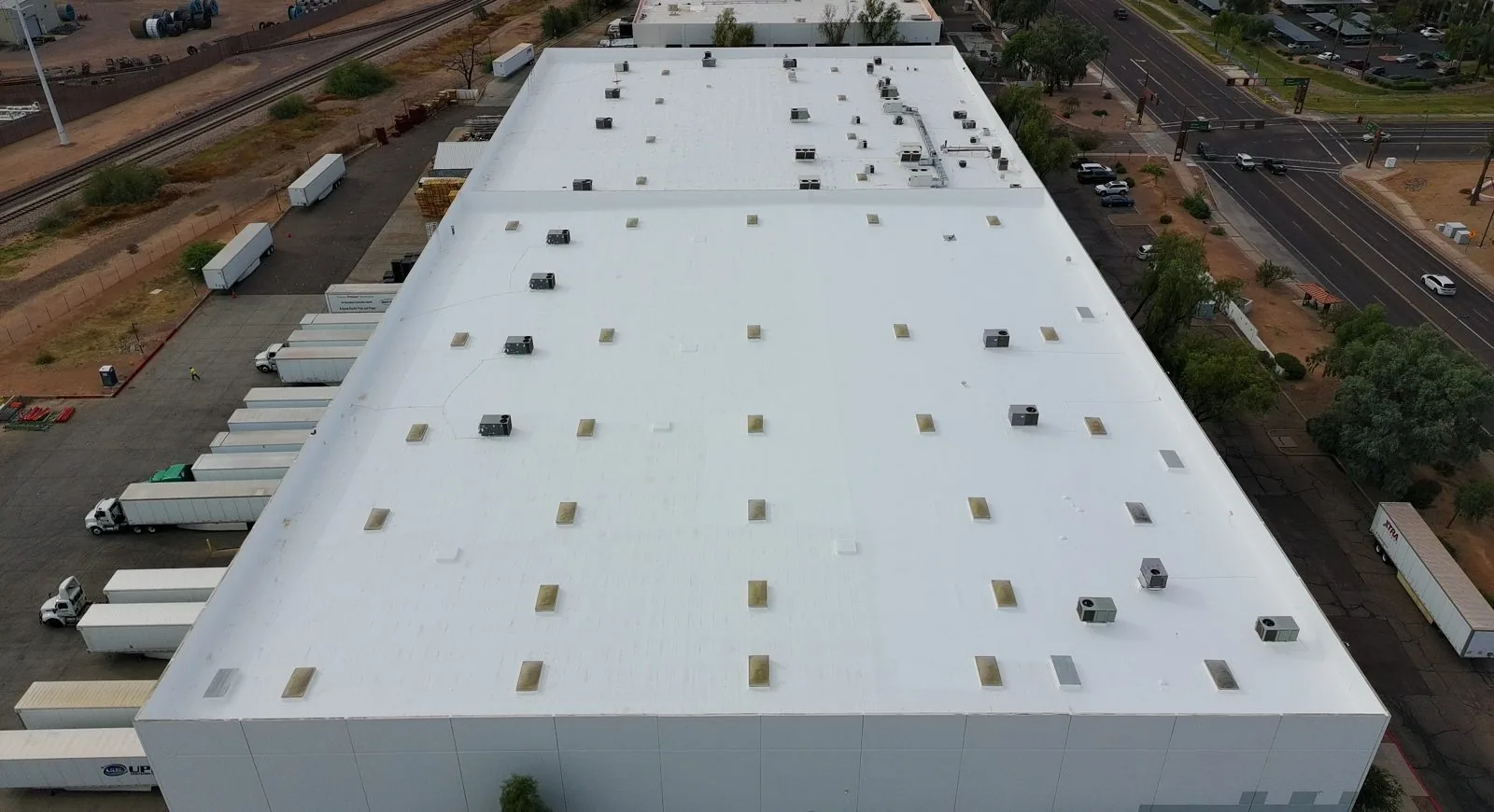
A Wichita Falls summer stacks up roughly 102 days at 90 degrees or higher. A dark roof absorbs that heat and passes some of it into the building. A white reflective coating sends much of it back, which can lower roof surface temperature and ease the load on rooftop air conditioning.
Reflectivity also slows the expansion and contraction that wears on seams and flashings. A cool roof surface is a side benefit of restoration, not the reason for it. The reason is a sound roof kept in service, and the cooler surface is what the owner notices in the utility bill.
Where Coating Does Not Help
Hail is the big limit, because a coating cannot cover bruised membrane or fractured insulation, and this area has a history of large stones, from Electra in 1982 to Iowa Park and Burkburnett in 1991. If a roof has taken serious hail, the bruises are repaired or the affected areas replaced before any coating goes on, and an insurance claim may change the plan.
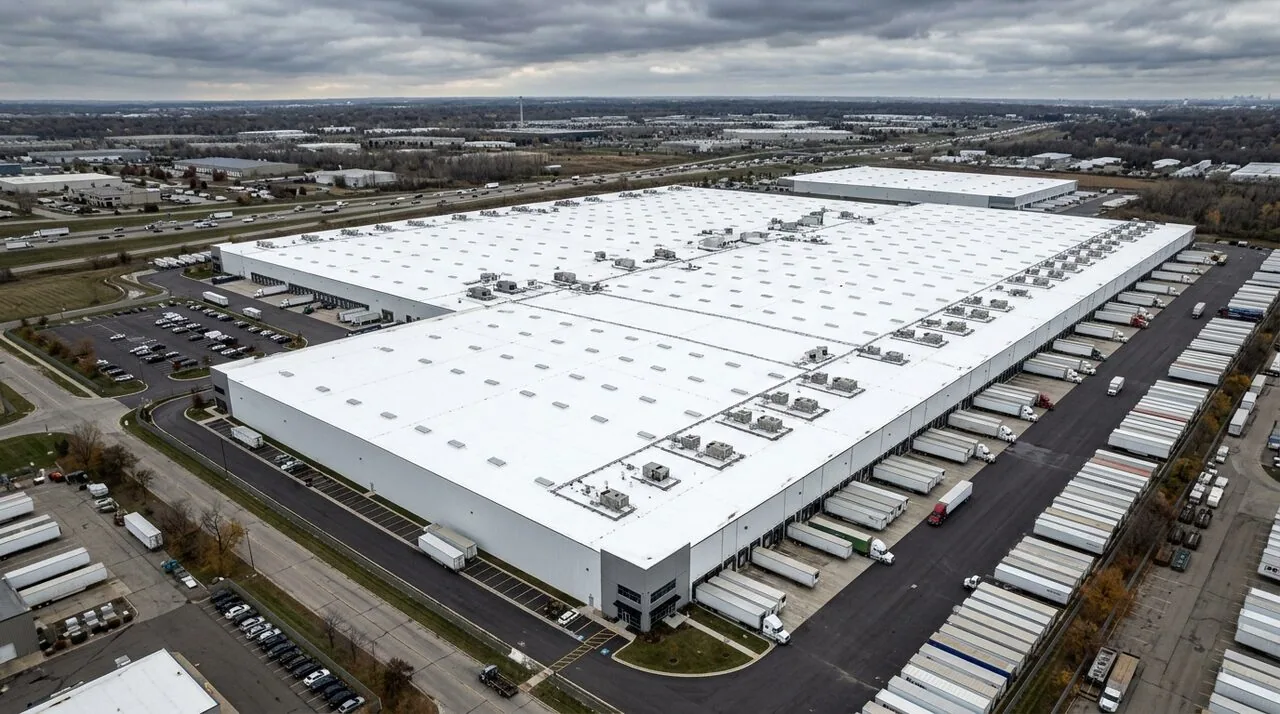
Coatings also do not fix poor drainage, undersized scuppers or flashings that have pulled from walls. Those are repaired first. A building like a large warehouse at the Wichita Falls Business Park may have a big, simple roof that is an excellent candidate once seams and details are corrected, while a roof with many failed penetrations needs more repair than coating.
What the Job Looks Like
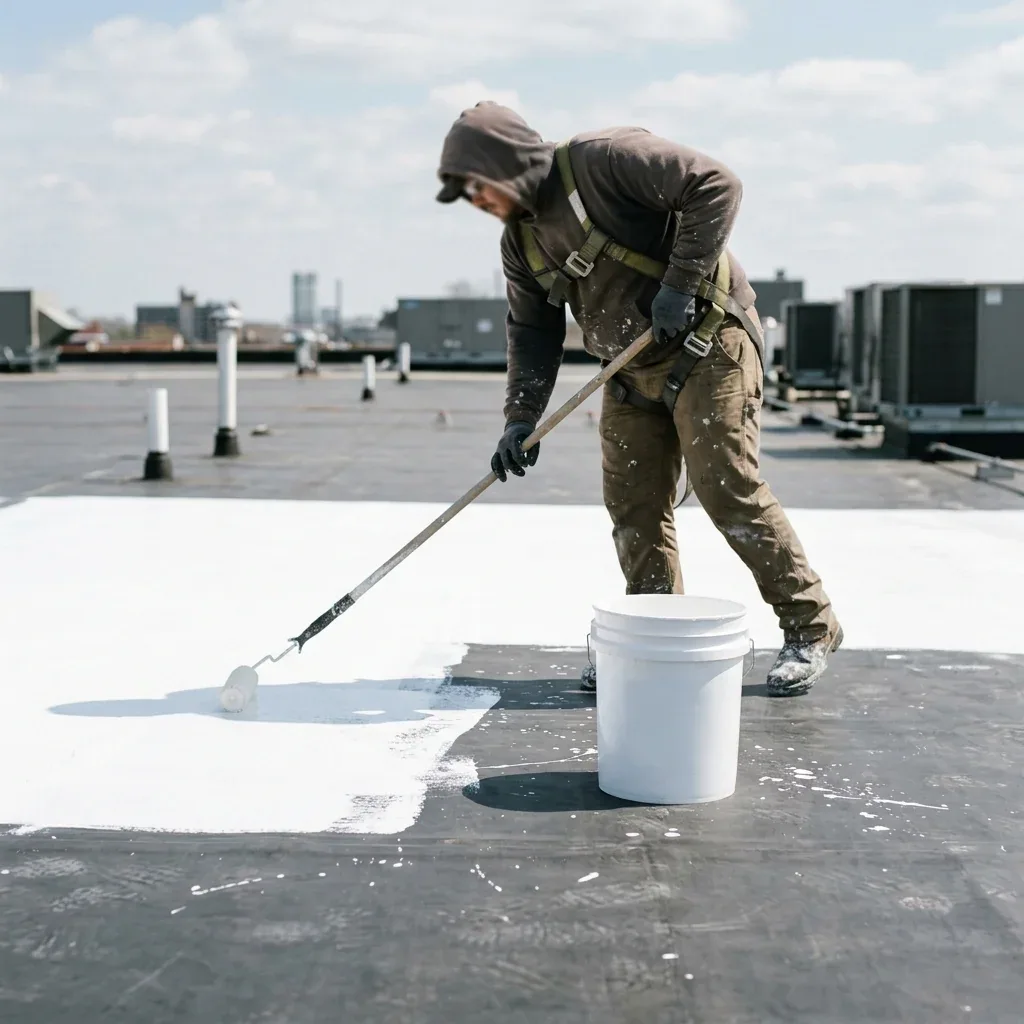
The sequence is the same on every roof. Clean and power-wash. Repair seams, flashing and punctures. Prime where the maker requires it. Apply a base coat, reinforce seams and details with fabric or mesh, then apply the top coat. Each step has a cure time, and rain stops the work. Dry weather is the schedule driver, which is why spring and fall suit the work.
The building stays in use. The roof is closed in sections, and the work is quiet compared with tear-off. At the end you receive the thickness readings, product data and a maintenance plan. When the coating nears the end of its life, a replacement decision comes with a record to guide it.
Metal roofs follow the same order with their own preparation: fasteners are tightened or replaced, laps are sealed and rust is treated before the base coat. The coating then bridges small gaps that sealant alone would not hold through another summer.
Commercial Roofing Questions
How long does a roof coating last?
Product, thickness and the roof underneath set the range. Some coatings can be maintained and recoated, which extends the roof's life again. We give a range for your roof after the test, never a promise before it.
Can you coat over wet insulation?
No. Coating wet insulation traps moisture and the roof fails early. The wet sections are removed and replaced first, or the roof is replaced if the wet area is large. The moisture survey comes before any coating quote.
Does a coating affect my warranty?
It can. A coating may void an existing manufacturer warranty or be covered by a new one from the coating maker. Read the roof's warranty first, and tell us what it says so the plan is made to match.
Is coating cheaper than a new roof?
Usually, since there is no tear-off and less disruption. But a coating on a roof that needs replacement only delays the bigger bill. The test shows which side of that line your roof is on.
How soon can the roof get wet after coating?
Most coatings need hours to shed rain and days to fully cure, and temperature and humidity move those numbers. We schedule around the forecast and keep the work to sections we can protect.