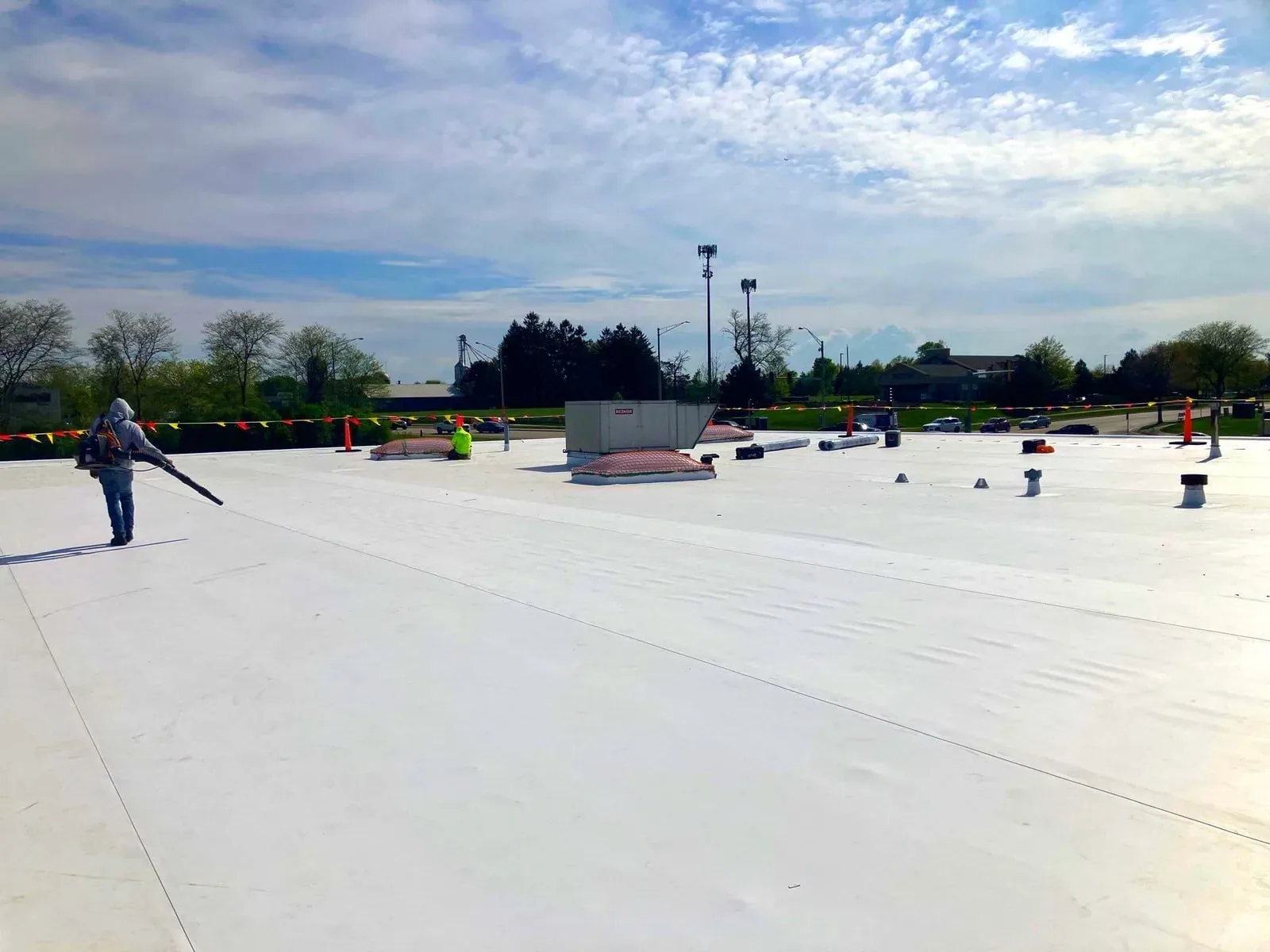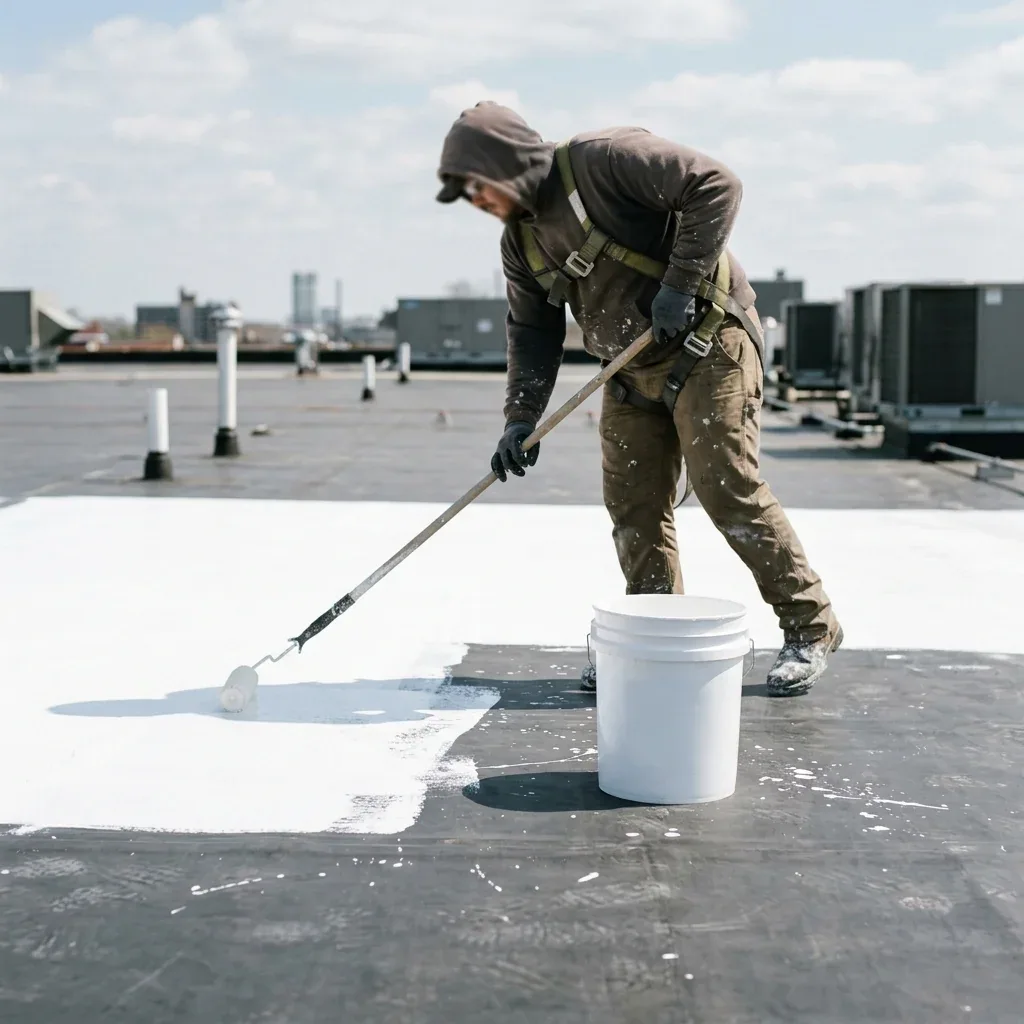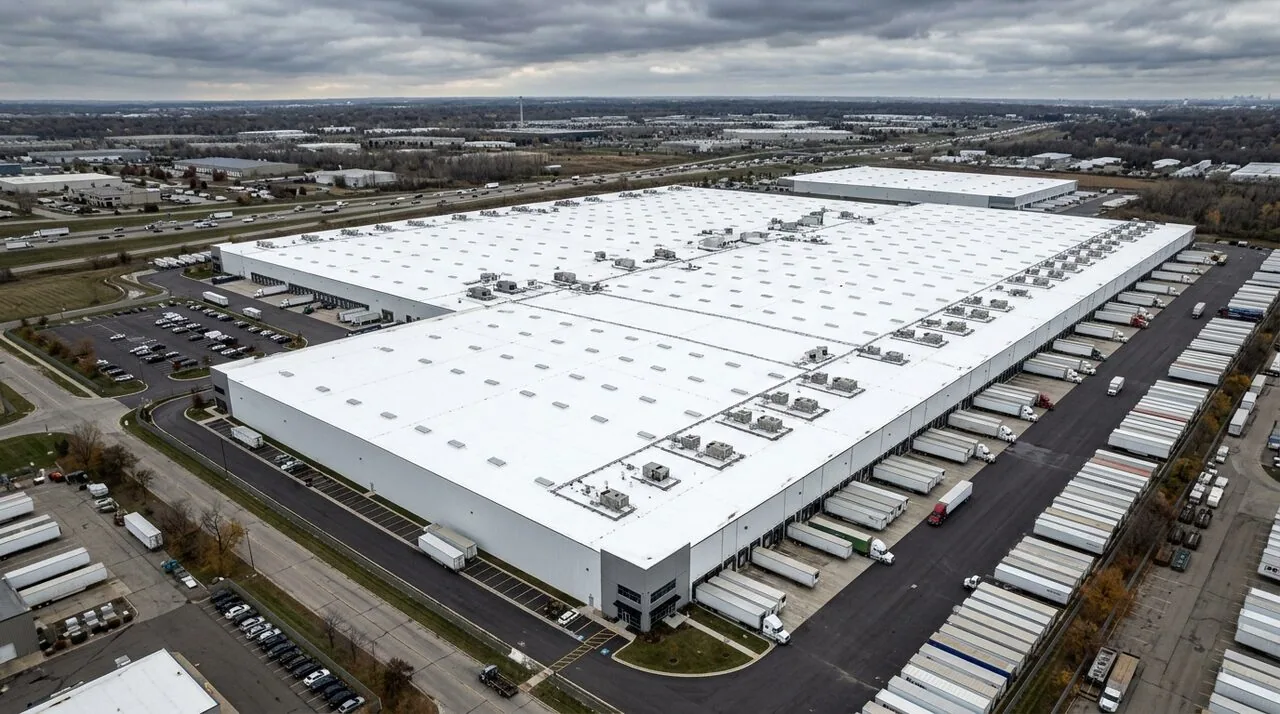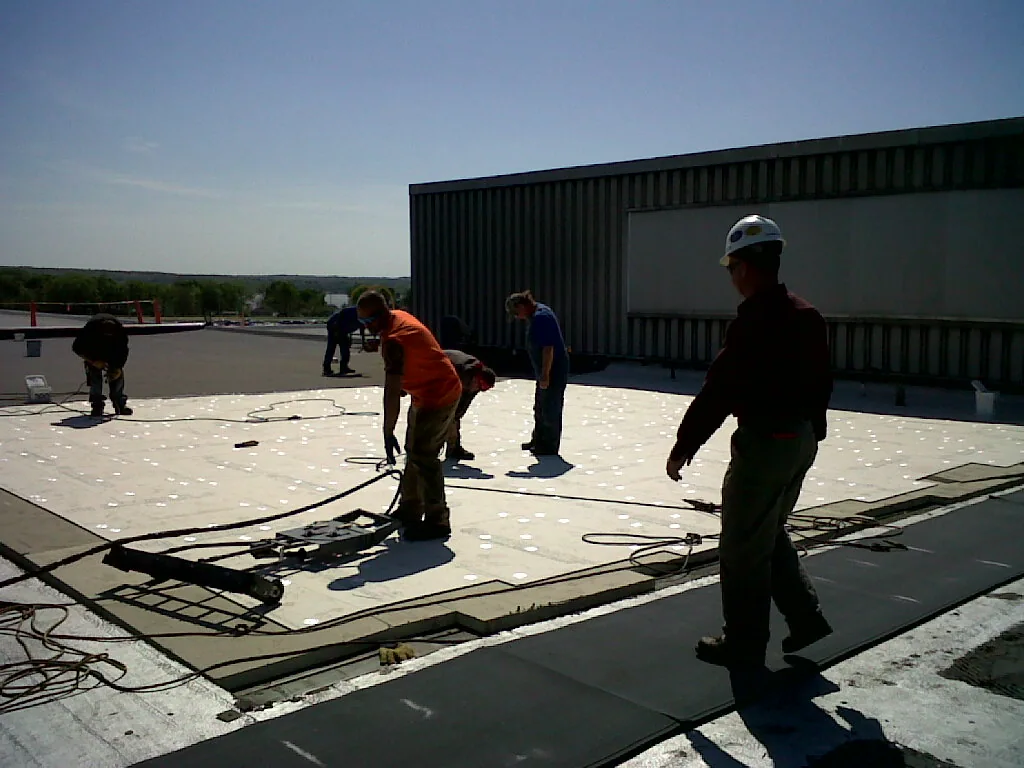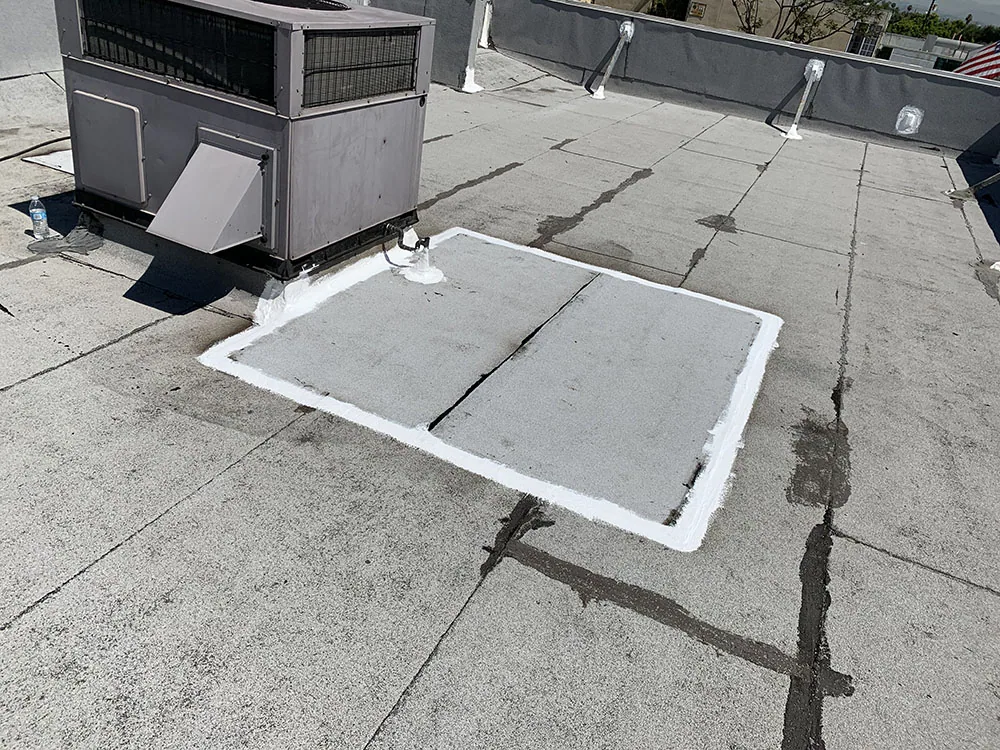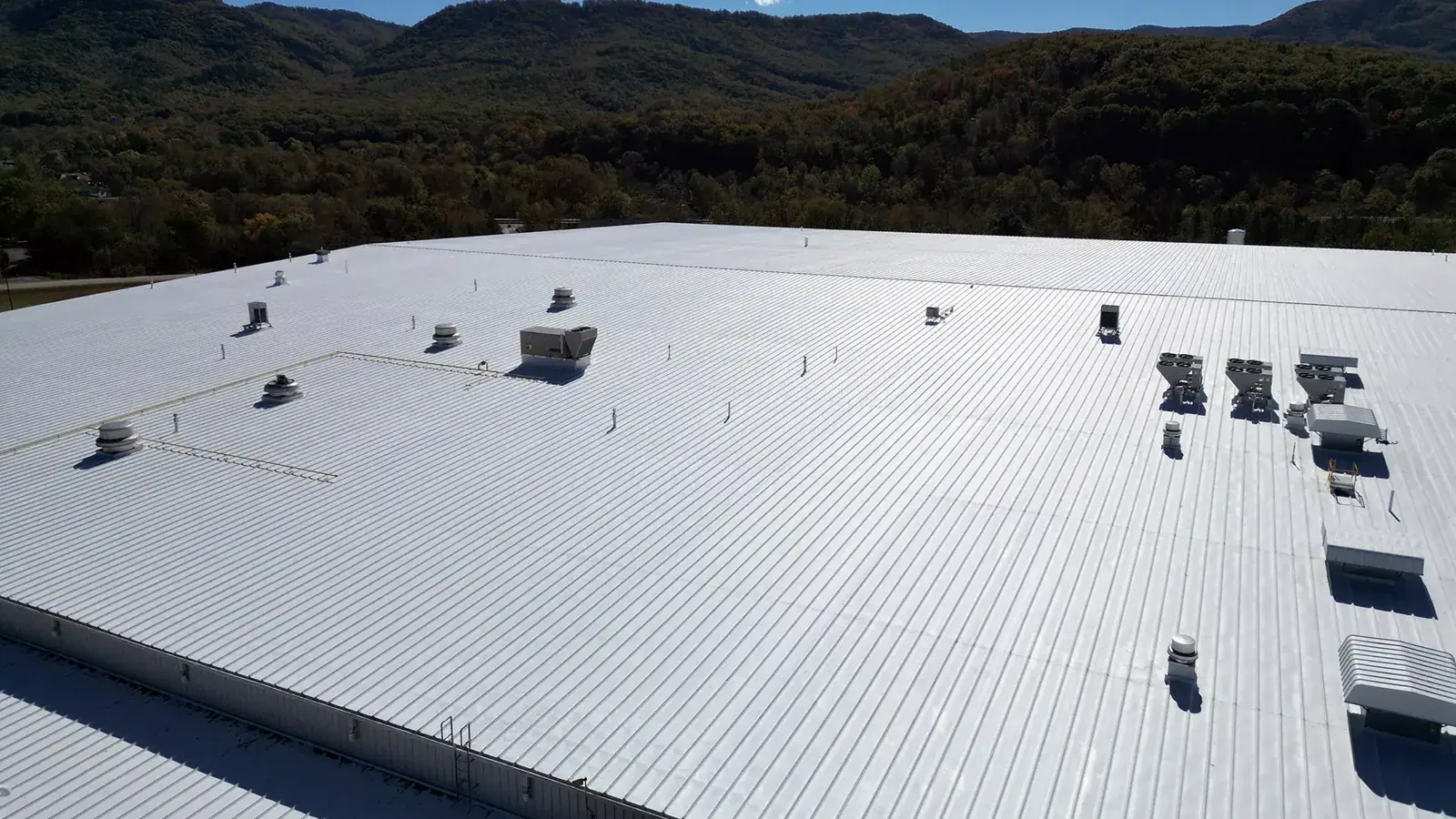
A dark flat roof on a large single-story building in Wichita Falls does one job all summer: it absorbs sun and hands the heat to the room below. A cool roof does the opposite. It reflects most of that light, stays cooler at the surface and sends less heat into the building. The one thing an owner should understand is that reflectivity is a surface property, and the surface only works if the layers under it are sound.
Start with the building. A distribution warehouse in the Wichita Falls Business Park has a huge low-slope roof and a lot of ceiling area to cool. A small office on Taft Boulevard has the same sun and a smaller bill. Here is how we walk a cool roof decision in order.
Count the Heat Days
Heat is the whole case for a cool roof. A typical Wichita Falls year brings about 28 days at 100 degrees and a record of 117, and on each of those afternoons a dark surface runs well past the air temperature.
A roof that runs hot costs money twice. Air conditioning works harder, and the membrane ages faster. Heat expands and relaxes a sheet every day, and over years that motion cracks seams and hardens sealants. Lower surface temperature reduces both effects. A thermometer or an infrared gun on a July afternoon makes the point: a dark membrane can read far above the air, and a white one reads much closer to it. We take readings at several spots on the walk and put them in the report.
That is the lesson in one line: a cooler surface protects the roof as well as the room.
Know What Makes a Roof Cool
Two properties matter. Reflectance is how much sunlight the surface sends back. Emittance is how well it gives off the heat it does absorb. White membranes and light coatings score high on both when new.
The common choices are a white single-ply membrane such as TPO, a white or light-colored PVC, or a reflective coating applied over a sound existing roof. A white acrylic coating is common on roofs that drain well. A silicone coating tolerates ponded water better.
None of these is a miracle. Reflectivity falls as dirt and algae collect, and a cool surface still needs washing and a check each year. Seams matter as well: a white membrane with open seams is a leaking roof that happens to look clean.
Check the Layer Underneath
This is step one for any cool roof, and it is the step most often skipped. A reflective coating over wet insulation traps water. A reflective membrane over a deck that has rusted still fails. We test first.
The test is simple. An infrared scan finds warm spots where insulation holds water. A few core cuts confirm what is under the surface. We press the membrane for soft spots, probe the seams and check adhesion with a small pull test. If the roof passes, we can coat or recover. If it fails, we repair or tear off the bad section first.
Insulation thickness belongs in this step too. A cool surface helps, but it does not replace insulation. If the existing board is thin, adding insulation or cover board during the job gives a better result than the surface alone. A cover board also helps against hail, which is why a cover board belongs under a new white sheet here.
Plan for Hail and Dirt
Hail has hit this area many times, from golf-ball stones in Electra in 1982 to baseballs in Iowa Park and Burkburnett in 1991 and larger hail at Sheppard Air Force Base in 1993. That history does not prove damage on any roof. It does mean a white surface should be checked after a storm, because bruises show as dark marks on pale membrane and are easy to photograph.
Dirt is the quieter problem. A white roof near a dusty lot or a rail line loses its shine quickly. We plan washing into the maintenance calendar, and we tell owners that the benefit declines if the roof is neglected. A dusty lot, a rail spur or a nearby field raises the dirt load, so we ask what surrounds the building before we promise a cleaning schedule.
Sustained sun does its own damage to older surfaces, and heat and UV damage shows up as chalking, cracking and hardened sealant long before a leak appears.
Choose Coating or New Membrane
A coating suits a roof that is dry, well attached and has years of service left. It costs less than tear-off and adds a reflective layer. A new white membrane suits a roof near the end of its life, or one with wet insulation, or one that needs more insulation anyway.
Compare them on the same page. What does each cost? How long will each last? What does each do to energy use? What does each need for maintenance? We price both so the choice is an owner's, not ours. The lower first cost of a coating can be the right call when the roof is sound; the longer horizon of a new membrane can be the right call when it is not.
Energy and reflectance requirements depend on the provisions in force when the permit is pulled. We confirm them for the address before we write the scope, so the surface chosen meets any reflectance rule that applies. A coating restoration is often the shorter path when the roof passes the tests.
Time the Work and Take the Next Step
Coatings need dry weather to cure. Tornado season in spring brings storms and wind, and summer heat can make a roof too hot to coat safely at midday. We plan early starts, check the forecast and close each section before the crew leaves. A forecast of wind or a late spring storm moves the schedule, and the roof is never left open overnight.
Access matters too. A working warehouse keeps trucks moving. A retail center keeps customers walking. We stage material away from doors and tell the manager which areas are closed each day.
Tell us what the top floor feels like in August and where the roof has leaked, and the first walk starts there. Owners in the Wichita Falls Business Park and along the Kemp-Kell corridor can use the same checklist, and a warehouse roof is a natural first case.
Commercial Roofing Questions
Does a cool roof work on a metal building?
Yes. A reflective coating or a light-colored panel lowers surface heat. The metal must be sound, clean and well fastened first.
Will a white roof raise my winter heating bill?
A small amount, in theory. In a climate with this much summer heat, the cooling savings usually outweigh it. Insulation matters more than color in winter.
How long does the white stay white?
It fades with dirt and algae. Washing and an annual check keep it working. A neglected white roof loses much of its benefit.
Can I coat over wet insulation?
No. A coating over wet board traps the water. Test first and cut out the wet section.
How much cooler does the surface run?
A white surface reads much closer to the air temperature than a dark one on a July afternoon. We take readings on the walk and put the numbers in the report, so the difference is measured on your roof instead of assumed.