Lake Arrowhead covers 14,969 acres on the Little Wichita River. It was built to supply drinking water for Wichita Falls and began filling in 1966, and Lake Arrowhead State Park, managed by Texas Parks and Wildlife, is centered on it. Scotland's city limits extend east to the shore. Commercial roof work around a reservoir like this covers service buildings, shops, offices and storage structures that sit in open, windy, sun-washed ground.
Open ground changes the checklist. Nothing blocks the wind, nothing shades the roof, and nobody is nearby to see a small leak start. So the walk begins at the edges and ends at the drains. In between we photograph every penetration, every seam and every place where the surface looks different from the rest of the roof, then write the findings in plain words that an owner, a lender or an insurer can read.
Open Ground Puts the Edges First
Wind arrives across water and open land with little to slow it. It finds the corner of a roof, then the edge metal, then the first row of fasteners. A coping cap that has loosened or a drip edge that has bent gives wind a place to lift the membrane. Step one is always the perimeter.
We check every length of edge metal, the fasteners behind it and the sealant under it. We tug on loose pieces and photograph each one. A coping and edge metal repair is among the cheapest jobs in roofing, and the one most likely to prevent a large loss.
Gutters and downspouts belong to the edge as well. A gutter pulled loose by wind drags the fascia with it and exposes the deck. We check the hangers, the joints and the slope toward the outlet, then run water through to confirm that it leaves the roof and does not settle behind the trim.
Sun Without Shade
A roof near a lake gets sun from every side, and the surface takes it all day. Summer in Wichita Falls, the market city, brings around 28 days at 100 degrees and about 102 at 90 or higher. Ultraviolet light chalks a membrane, dries sealant and fades the coating on metal.
We look for heat and ultraviolet wear on the sun-facing slopes first. Chalky white powder, hairline cracks at folds and sealant pulling away from metal are the common signs. A sound roof showing that wear can often be restored with a silicone coating. A wet roof cannot, so we test first. Coatings also need clean, dry surfaces, which means a wash, a repair of every known opening and a day with the right temperature.
Service Buildings and Small Shops
The buildings that serve a recreation area are often small and plain: a shop, an office, a storage barn, a restroom building. Their roofs are metal panels or a low-slope membrane with a few penetrations. Plain roofs fail in plain ways, at fasteners, laps, boots and edges, and each is easy to check.
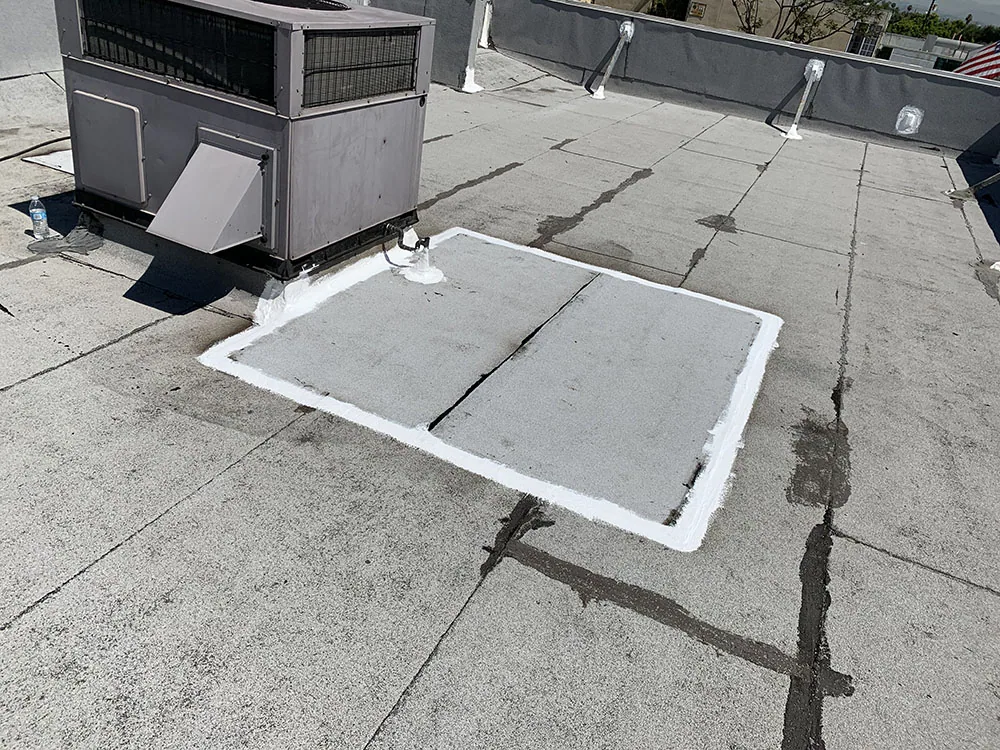
We identify the roof type first. A metal roof gets a fastener check and a rust check. A membrane roof gets a seam probe and a flashing check. Then we read the pattern: leaks in a line along a rib mean fasteners, while leaks around a pipe mean a boot.
Condensation can pass for a leak under uninsulated metal. The way to tell is the timing. A true leak follows rain, while condensation follows swings in temperature. We compare the stain with the weather on the day it showed up and probe for moisture in the underside of the panels.
Rain, Runoff and the Ponding Line
The wettest month on record in Wichita Falls was May 2015 at 17.00 inches, while a typical year brings near 27.9 inches in all. A roof that sheds that much water in a few days needs clear outlets. Leaves, grit and nesting material gather in gutters near a lake, and a clogged downspout sends water behind the fascia.
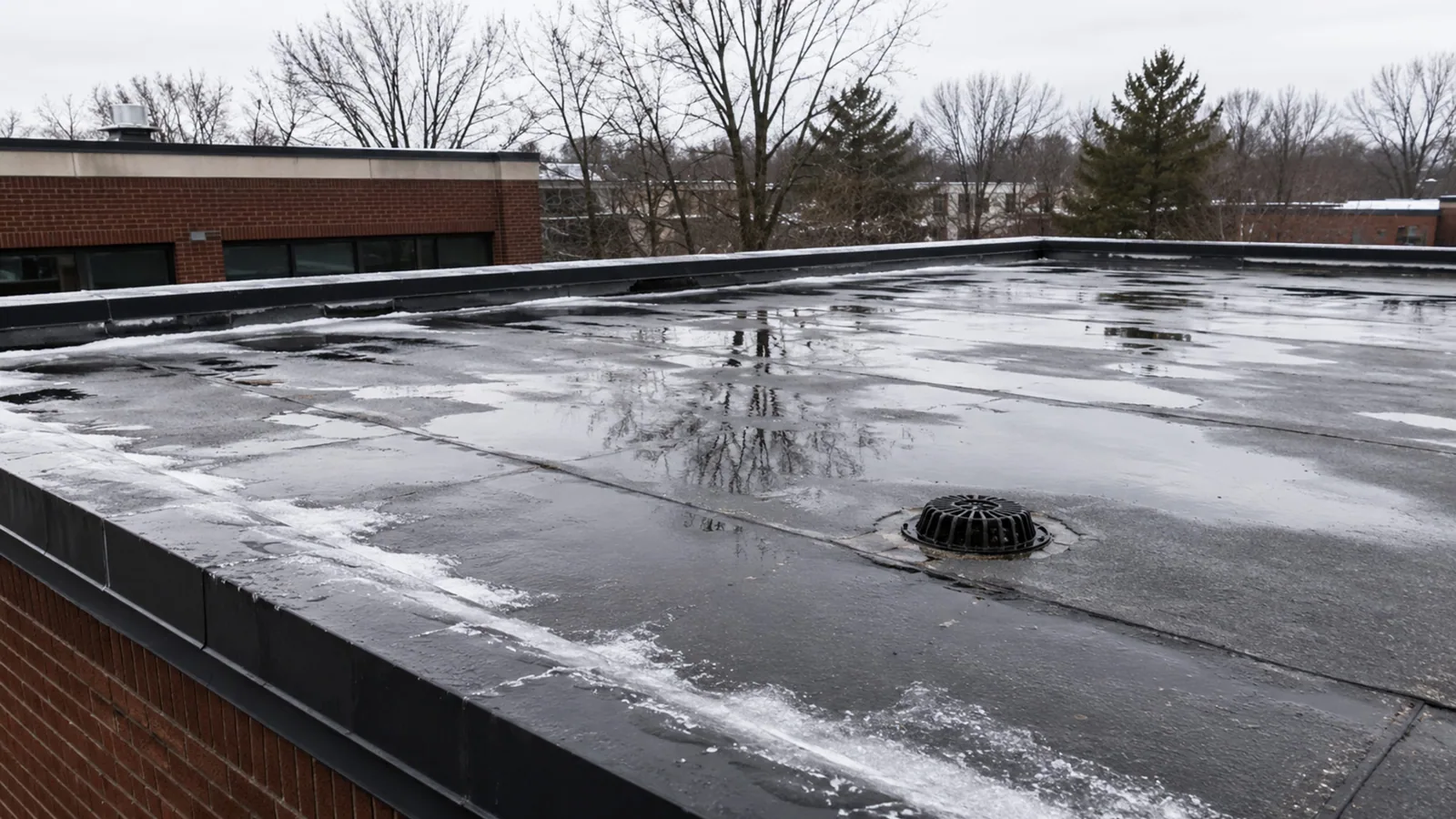
A puddle that dries leaves a ring of dirt, and we call it the ponding line. A thin ring over a sound deck is a drainage problem. A ring over a soft spot is a moisture problem. We follow it back to the cause, which may be a clogged outlet, a sagging deck or a low corner. Our ponding water repairs begin with that split.
Hail and Wind History in the Region
The regional record includes baseball-size stones on Iowa Park and Burkburnett in 1991 and golf-ball hail on Electra in 1982. None of it is a finding about a roof at the lake, but it does tell us to check for hail bruises and for dents on metal after any severe storm.
Counts from test squares go into a hail damage report slope by slope. A scattering of shallow marks may mean little, while a heavy count over soft spots needs a closer look beneath.
Plan the Job Around Distance and Season
A site by the lake is a drive from town, so we plan materials, lifts and crew hours to avoid a second trip. Seasonal use also matters. If a building is busiest in summer, the heavy work moves to the quiet months, and we set the schedule with the owner before ordering.
The same planning fits Scotland and Archer City. Repair, recover or replacement follows the walk: a few failed screws or a split boot calls for repair, a sound roof with a worn surface can take a coating, and wet insulation usually means replacement. Price tracks roof size, deck condition, access and penetrations.
The written report ranks each finding by urgency. The urgent items stop water. The next group protects the deck for another season. The last group can wait for a planned year, and the owner decides which year. Photographs of each finding go with the report, so a seasonal owner can review the roof from a distance.
Commercial Roofing Questions
Why do edges matter most near open water?
Wind has a long clear run across the water and open ground, and it concentrates at corners and edges. Loose edge metal gives it a handle on the membrane. We tighten and seal edges before touching anything else.
Can a coating protect a roof from sun damage?
A reflective coating can lower surface heat and slow ultraviolet wear on a sound roof. It does not fix a leak or wet insulation, so we test moisture first and repair known openings before coating.
How do I find a leak when no one is in the building?
Walk the roof after a rain and look for ponding lines, stained seams and wet spots near penetrations. Inside, check ceilings and wall tops. A moisture survey locates wet insulation that the eye cannot see.
Is the roof of a small service building worth repairing?
Often yes. A new boot, fresh sealant or a few replaced screws costs little next to a rotted deck. We rank each finding by urgency so the money goes first to the openings that let water in.
Can condensation be mistaken for a roof leak?
Yes, especially under uninsulated metal. Stains that appear on cool mornings and dry by afternoon point to condensation. Stains that follow a rain point to a leak. We check both patterns and probe the deck before recommending a repair.
What should I send before the first walk?
The roof's age, the building's role and the spots where it has leaked. If a particular storm stands out, give us its date and the walk will follow it.