Eighteen miles is close enough that a roof in Scotland can be on the schedule the same week as one in Wichita Falls, TX. The town sits in eastern Archer County on U.S. 281, and its city limits reach east to Lake Arrowhead on the Little Wichita River. With 413 residents in 2020, it is a small place, and a small place has a simple rule for roofs: spend on the right repair the first time.
That is why we begin by learning the building rather than quoting the roof. Step one is the use and the age. Step two is a walk across every surface. Step three is a report that sorts findings into fix now, fix this year and watch.
Buildings Near Open Water
Lake Arrowhead covers 14,969 acres and was built to supply drinking water to Wichita Falls. It first flooded in 1966, and Scotland's city limits run east to it. A building close to a large body of water has open sky on one side, and wind and sun reach its roof with fewer obstructions in the way.
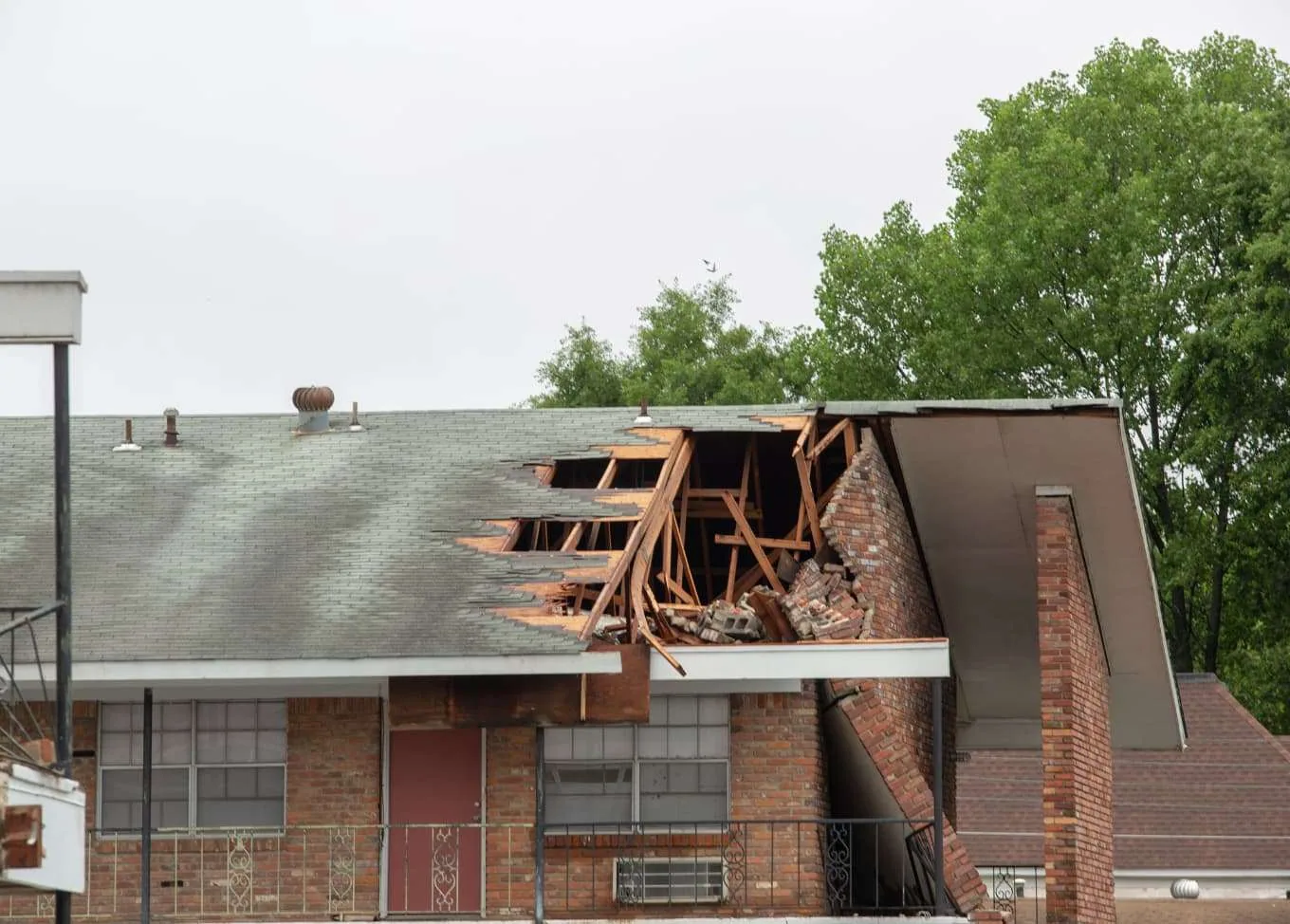
What a building near the lake is made of, we learn on the roof. What to check on one with open exposure, we already know. The perimeter metal, the corners and the seams nearest the edge take the load first, so the first walk spends extra time there. A loose corner is the sort of thing that grows from a repair into a replacement over a single storm season.
Hail Records Nearby
Nearby towns have taken large hail: baseballs dropped on Iowa Park and Burkburnett in April 1991 while Electra saw golf-ball stones in March 1982. Scotland is not on either list. Still, hail is part of the weather this region produces, and a roof deserves a hail check after any spring storm, wherever the storm was recorded.
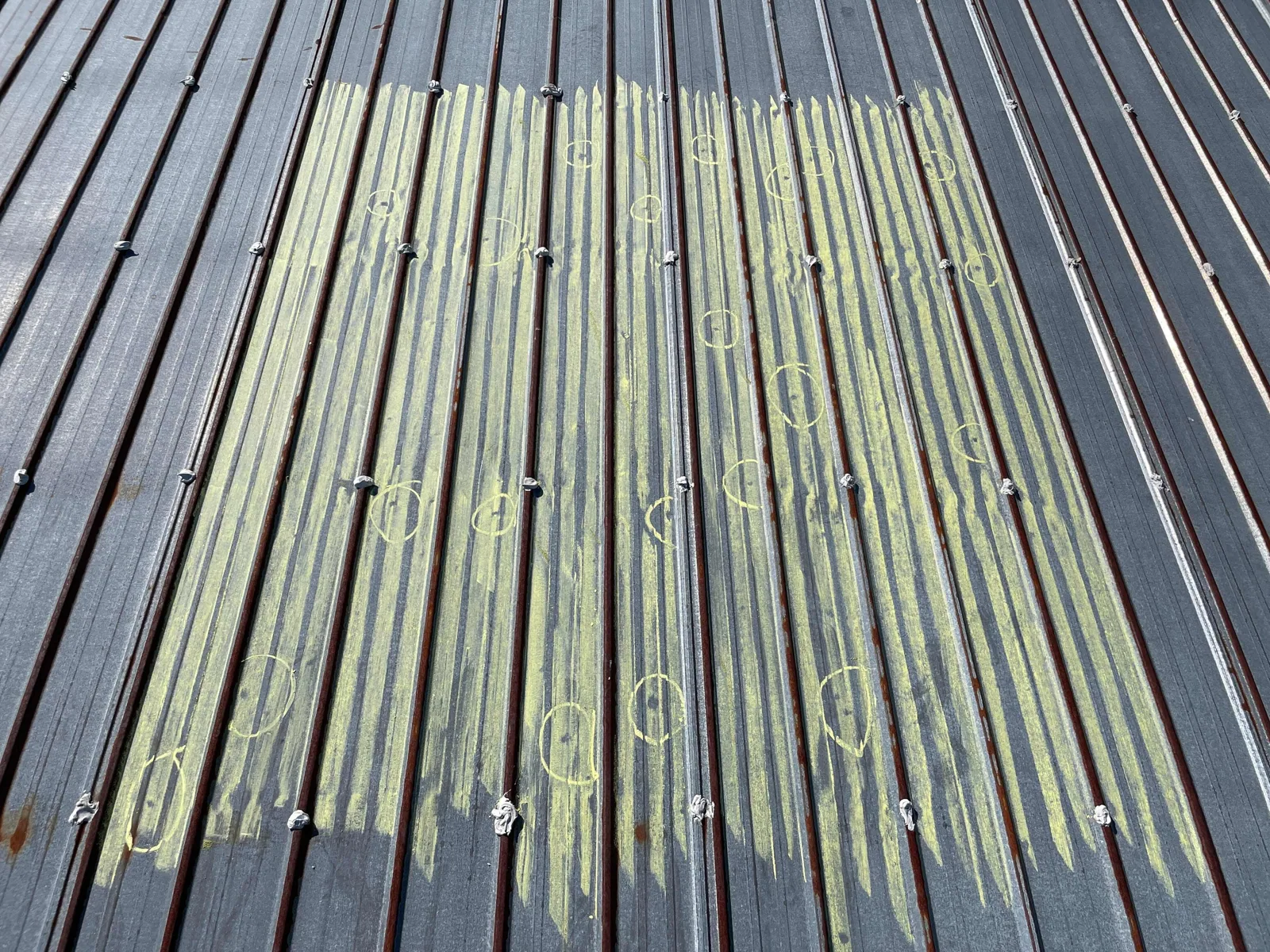
What we look for is a hail bruise, a soft spot where the insulation has crushed or the membrane has cracked. It often shows no stain for months. We probe, mark and photograph, then write the findings in a form your insurer can read. If bruising is there, hail damage repair follows, and we organize the photographs for a claim if you file one.
Heat That Works Slowly
In Wichita Falls the thermometer passes 100 on about 28 days of a typical year, and it did so on 100 days in 2011. A roof in Scotland meets similar summers, so we plan for them. Heat dries sealants, softens asphalt layers and pushes membranes through a daily cycle of swelling and shrinking.
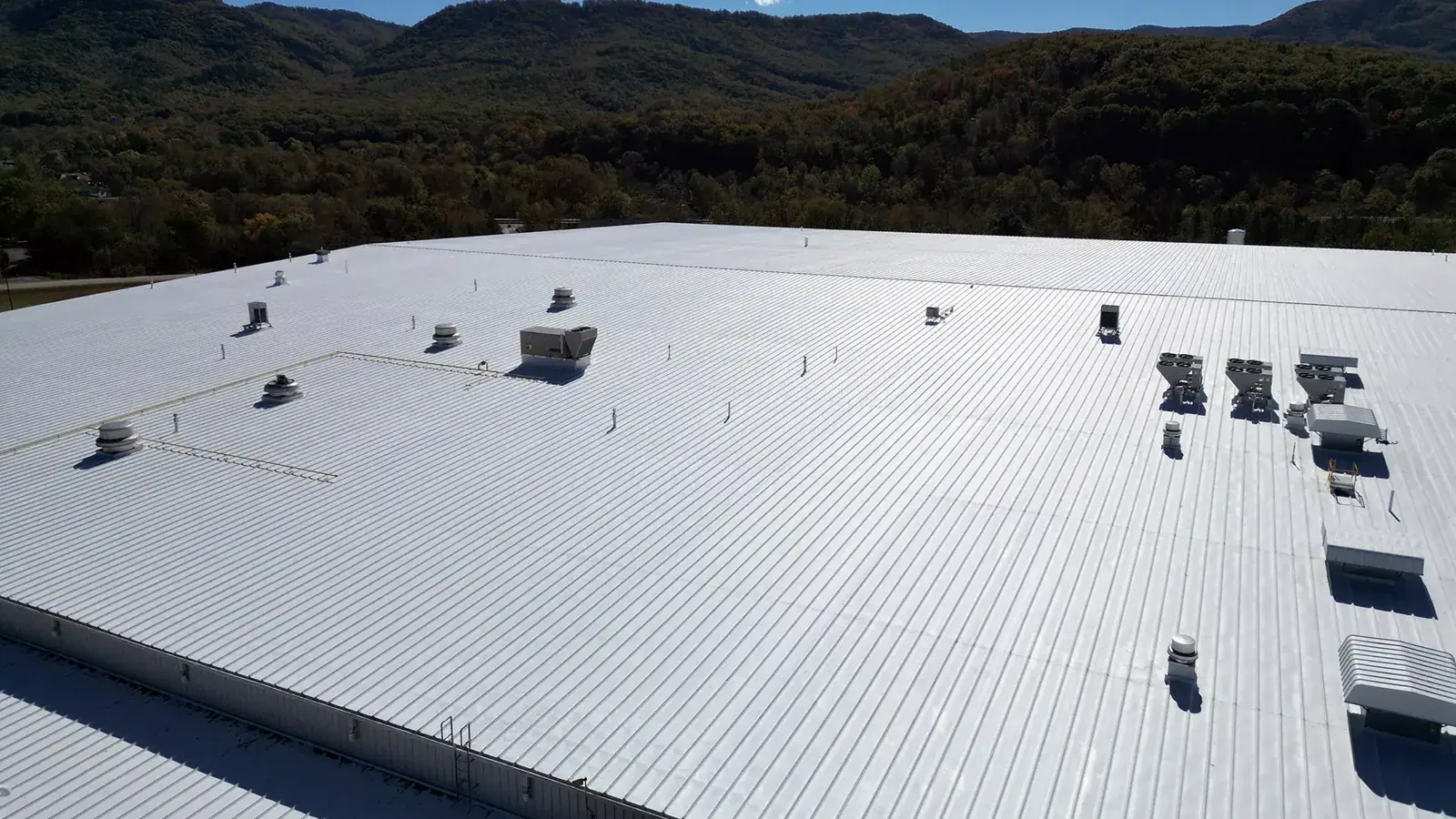
Over years, that cycle opens seams and pulls flashing from walls. A restoration coating can extend a roof that is otherwise sound, because it adds a fresh reflective skin over the old surface. It does not repair wet insulation or open seams on its own, so the survey comes first and the coating comes after the repairs.
What Sits Under the Membrane
The membrane is the visible layer, but the insulation and deck decide how a leak behaves. Water that gets through a seam can soak the insulation, travel sideways and drip far from the entry point. A deck that stays wet corrodes or rots.
To find wet insulation, we use a moisture survey, either by infrared scan at the right time of day or with a hand meter and probe. The map shows which areas are dry, which are damp and which are saturated. A small damp patch is a repair. A large saturated area is a conversation about replacement.
The Route Through Archer County
Scotland and Windthorst both sit on U.S. 281, so one trip can serve both. Archer City is a short run beyond Windthorst on State Highway 25. Planning visits along one road keeps the first walk-through affordable, and the report arrives soon after.
For the job itself, we send a plan with the work order. It names the staging area, the hours, the route for trucks, and the protection we put over doors and rooftop units. If a tenant keeps odd hours, we adjust the plan. Emergency calls run every hour of the day, including holidays.
The Walk, in Order
Step one on the roof is the penetrations: vents, pipes, curbs and rooftop units, each with flashing that can crack or lift. Step two is the seams, where sheets meet and where heat and wind do their slow work. Step three is the field, pressed by hand and probed for soft areas that may mean wet insulation. On a metal roof, we swap the seam check for a look at panel laps, ribs and fastener heads that have backed out.
Last, we check the drains. A ponding line after rain shows where water lingers, and standing water speeds up wear on the membrane. The finished inspection report carries a photograph and a plain sentence for each finding, ranked by urgency.
Pick the Right Size of Fix
A small tear in a sound membrane calls for repair. Dry insulation under a worn surface may allow a recover or a coating. A roof with wet insulation over a wide area usually needs the wet portion removed, which often means a full replacement.
Cost follows the size of the roof, how much insulation is wet, the number of penetrations, the system chosen and the difficulty of access. We write each choice with its own scope so the numbers can be compared line by line. There is no single right answer for every roof.
Timing matters as much as price. Membrane work wants dry weather and moderate temperatures, and a roof that is opened for a repair must be closed again by evening. We stage materials so that no area is left open overnight, and we watch the forecast for the days the work is planned. A job that slips a day for weather is better than a job that gets rained on.
Commercial Roofing Questions
Is Scotland close enough for a same-week visit?
It is about 18 miles south of Wichita Falls on U.S. 281, so yes. We schedule the walk first, then send a report with photographs, and plan the crew once you pick a scope. If the roof is leaking now, call, and we will tell you what to do to limit the water until a crew arrives.
Do roofs near a lake need special treatment?
They need attention at the edges. Open ground gives wind a clear approach, so we check perimeter metal, corner flashing and nearby seams more closely than we would on a sheltered roof.
Can a coating fix a roof that leaks in several places?
Only after the leaks are traced and repaired. A coating seals a sound surface, but open seams and wet insulation need their own repair first. The survey shows which situation the roof is in.
What if my building is split between tenants?
We work in sections, keep walkways and entrances clear and tell each tenant when noisy work will happen. The roof plan follows the building's use. Any tenant space with rooftop equipment gets a heads-up before we touch the curb, and we coordinate with whoever services that unit so cooling is not lost on a hot afternoon.
How do I know the repair actually fixed the leak?
We photograph the repaired area and test the spot with water when the weather allows. After the next rain, a quick check of the ceiling below confirms the result, and we come back if it does not.