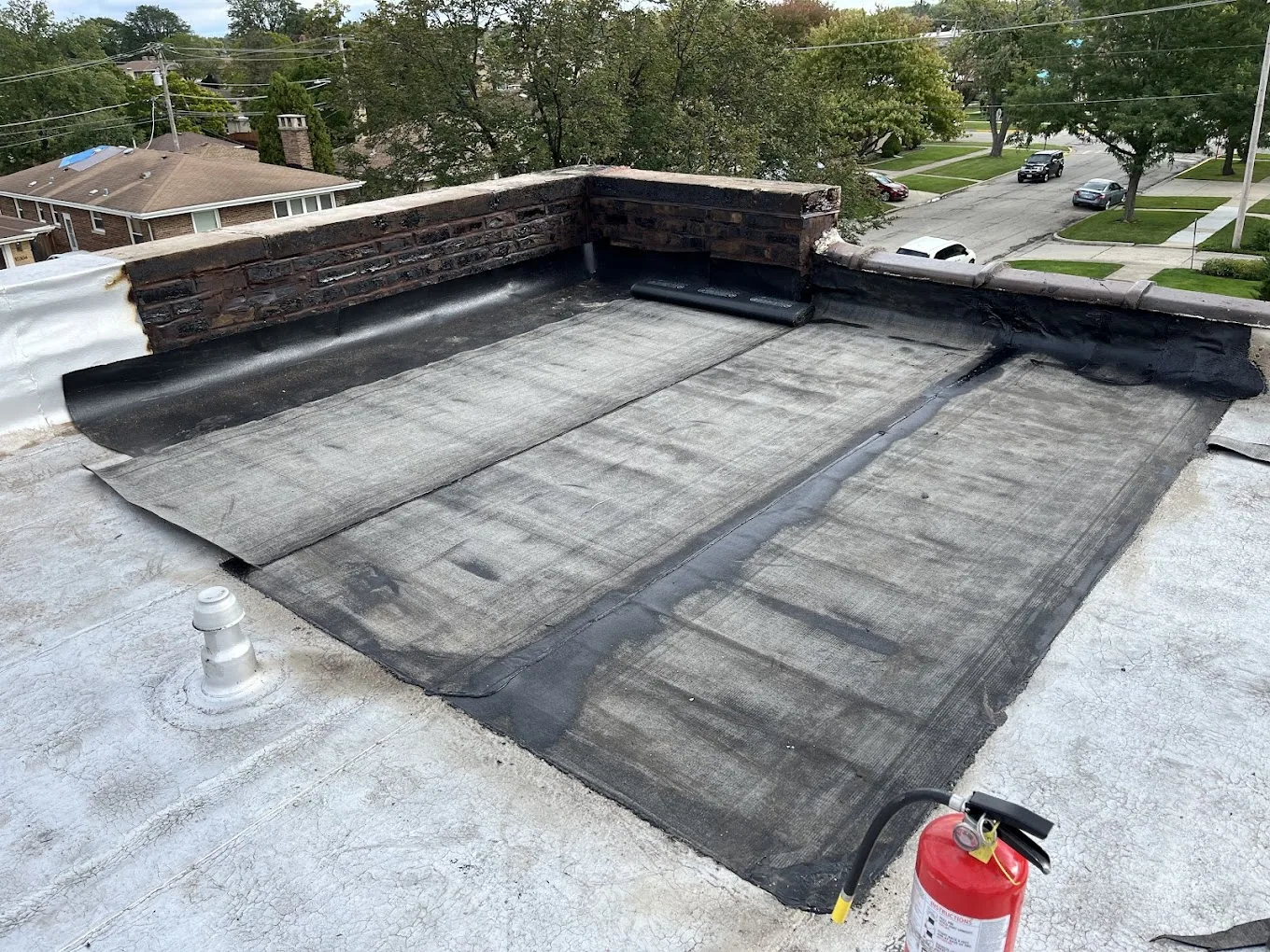
The edge of a flat roof is where the wind gets its first grip. Air hitting the side of a building rolls up and over the roof edge and pulls up on whatever is there. If the edge metal is fastened well, the membrane stays pinned down. If it is not, the metal lifts, the membrane lifts behind it, and the damage runs inward. That is why the perimeter is the first place we look and the last place we skimp.
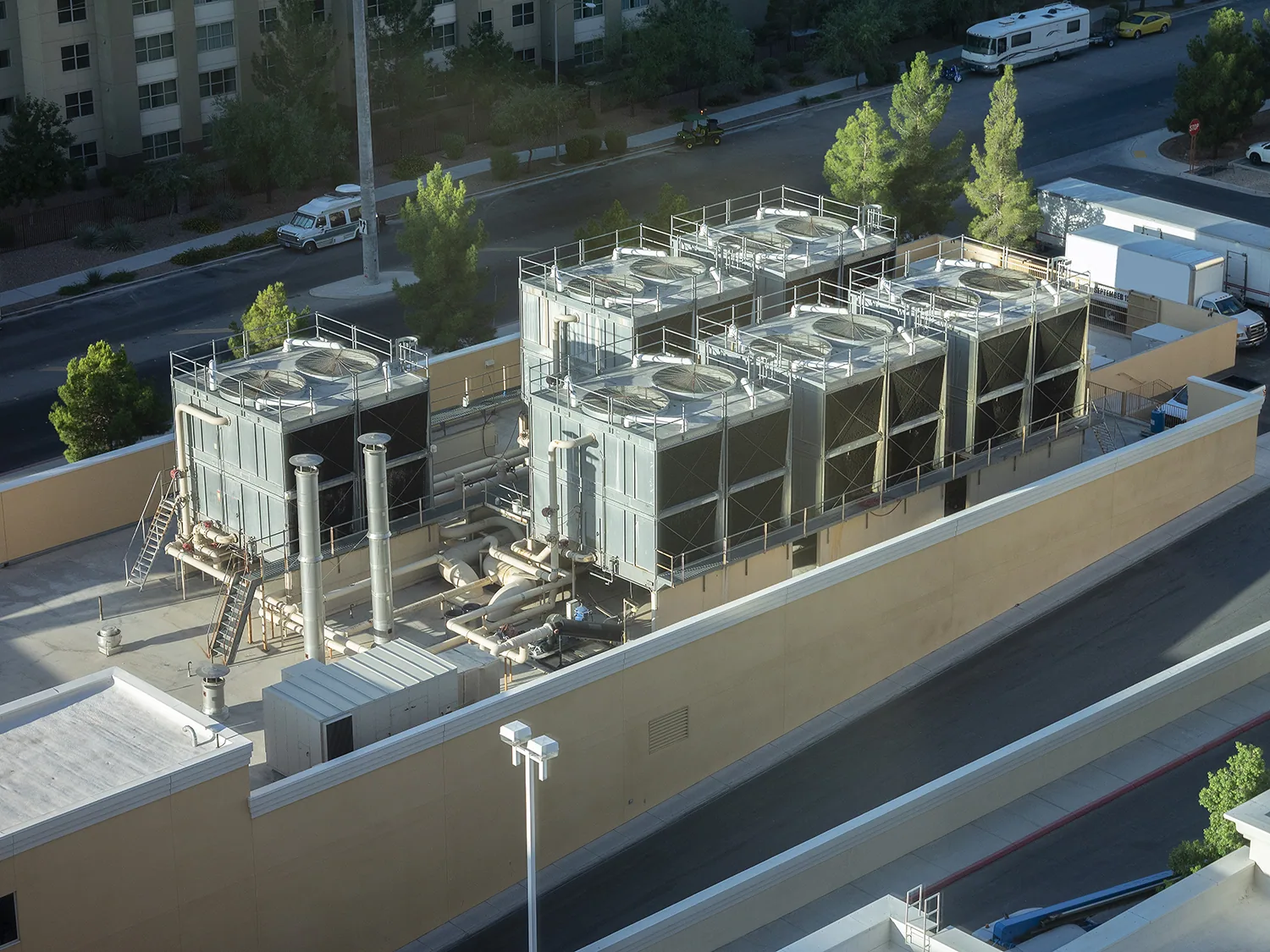
Here is the plain version of what edge metal, coping and gutters do, and what we check on each.
Three Parts, Three Jobs
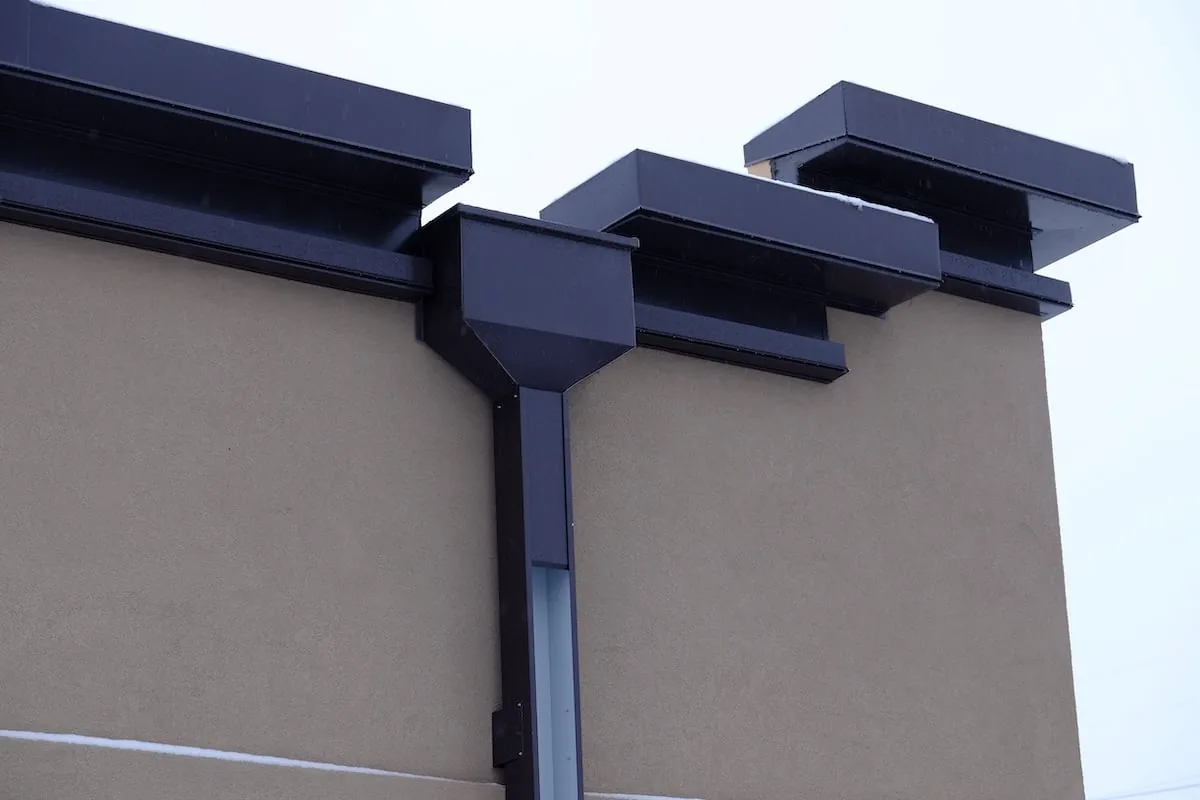
Edge metal, sometimes called a drip edge or fascia, finishes the roof where there is no wall. It covers the edge of the membrane, sheds water away from the building face and holds the membrane down. Coping caps the top of a parapet wall, keeping water out of the wall and covering the top of the flashing. Gutters and downspouts catch water that runs to an eave and carry it away from the foundation.
Each is made of formed metal, usually steel, aluminum or copper, with a finish that resists the sun. Each connects to the roof membrane with a flashing detail, and that detail decides whether the roof leaks. A beautiful edge with a poor flashing behind it still lets water in.
Corners deserve their own mention. A corner piece takes wind from two directions, and a mitered corner that is only caulked will open in a season. Factory-formed corners or welded corners hold up, and we use them where the profile allows.
The membrane behind the metal matters as much as the metal. At an edge, the roof sheet runs to the face and is held by a bar or a clamping ring, and that termination is where seams of membrane and metal meet. We check it first, since a perfect edge cap over a failed termination hides a leak for years.
How Wind Pulls on the Edge
Uplift is highest at corners and along edges. That is where the manufacturer's details ask for stronger fastening and tighter spacing. Edge systems are tested and rated for wind, and the rating we need depends on the building height and exposure, which is why a drawing matters.
Wichita Falls has a long record of damaging wind. The April 10, 1979 F4 tornado ran eight miles across the south and east of the city, and the April 3, 1964 F5 tornado heavily damaged downtown Wichita Falls. They are history, not a forecast, and no edge detail survives a tornado. But everyday thunderstorm wind loads a roof edge year after year, and a loose edge fails in ordinary weather first, which is why a wind damage repair starts at the perimeter.
What We Check
Start with a simple test. Press on the metal and tug it. Edge metal should not move. Then look at fasteners: heads backed out, missing or rusted, and spaced too far apart. Check laps and joints between lengths of metal, which should be sealed or covered with a splice plate. Look at the cleat, the hidden metal strip that locks the edge in place, because a bent or missing cleat lets a whole run pull loose.
On coping, we check the joints, the slope toward the roof and the seal under each length. Water that gets under coping runs down the inside of the wall, and a stain far below the roof is often the first sign. On gutters, we check slope, hangers, seams and downspout connections. We measure everything and mark it on the drawing.
Pull tests settle doubts. We choose a sample of fasteners along each run and test them against the force the design asks for. If a fastener pulls out of a soft substrate, the whole run is suspect, and the fix may be a different fastener type or a repaired nailer, not just a longer screw.
Heat, Hail and Metal
The record high here is 117 degrees, and metal expands in heat like that and contracts at night. Long runs need expansion joints, and fasteners need slotted holes or floating clips so the metal can move without tearing itself loose.
Hail dents metal. The National Weather Service in Norman records golf-ball-size hail falling for 15 minutes in Electra on March 13, 1982, with damage from Electra to Burkburnett. A dent in edge metal may be cosmetic, or it may crack the finish, open a seam or kink the cleat. We note each dent, test it and report whether it affects function. Insurance may treat cosmetic damage differently, so the report keeps function and appearance separate.
Color and finish matter at the edge, because it is the part of the roof people see from the street. A finish that chalks or fades in the sun looks tired years before it fails, and a replacement lets an owner match or refresh it.
Repair or Replace
Small problems get small repairs. A loose run is refastened, a joint is resealed, a dented section is straightened or swapped, and a gutter hanger is replaced. If the metal is sound, those repairs restore it. When the metal is corroded, bent beyond repair or the wrong profile for the wind load, replacement is the answer. We replace in full lengths and tie the new metal into the membrane with a proper flashing.
The edge usually gets replaced alongside other roof work. A commercial roof replacement is the right time, since the membrane is already open at the edge. For a roof that is not being replaced, an edge repair can be done on its own, with the building in use.
Gutters and Downspouts in Practice
A gutter on a commercial building carries more water than it looks like it can. A roof's worth of rain funnels to a few downspouts, and a clog or a sag overflows the gutter at the worst time. We check the pitch toward each downspout, add hangers where it sags and size outlets to the roof area they serve.
Downspouts need a place to discharge. One that ends against a foundation wall pushes water into the soil and sometimes into the building. We extend or redirect them so water leaves the property cleanly. The drainage plan on the roof, including drains and scuppers, and the plan at ground level work as one system.
Leaf guards and debris screens can help where trees overhang a roof, but only when the opening stays clear enough to flow. We clean the gutter before judging, test it with a hose and report what the water actually does.
Commercial Roofing Questions
How do I know my edge metal is failing?
Look for gaps along the edge, metal that moves when pressed, rust streaks, missing fasteners or a roof membrane that is wrinkled or lifted near the perimeter. A walk on the roof confirms it.
Can edge metal be replaced without replacing the roof?
Often yes. We remove the old metal, repair the flashing and membrane at the edge and install new metal fastened to the current method. It is a contained job and the building stays in use.
Does hail denting count as damage?
It can. A dent may be cosmetic or functional, and the difference matters for insurance and for the roof. We test each dent and record whether the finish, seam or fastening is affected.
What is coping and why does it leak?
Coping is the cap on top of a parapet wall. It leaks at joints between lengths, at corners and where fasteners pierce it. Water then enters the wall and may show up far below the roof.
Do gutters matter on a flat roof?
Where the roof sheds to an eave, yes. A sagging or clogged gutter overflows against the wall and soaks the masonry. Where the roof drains inward, gutters are not used.