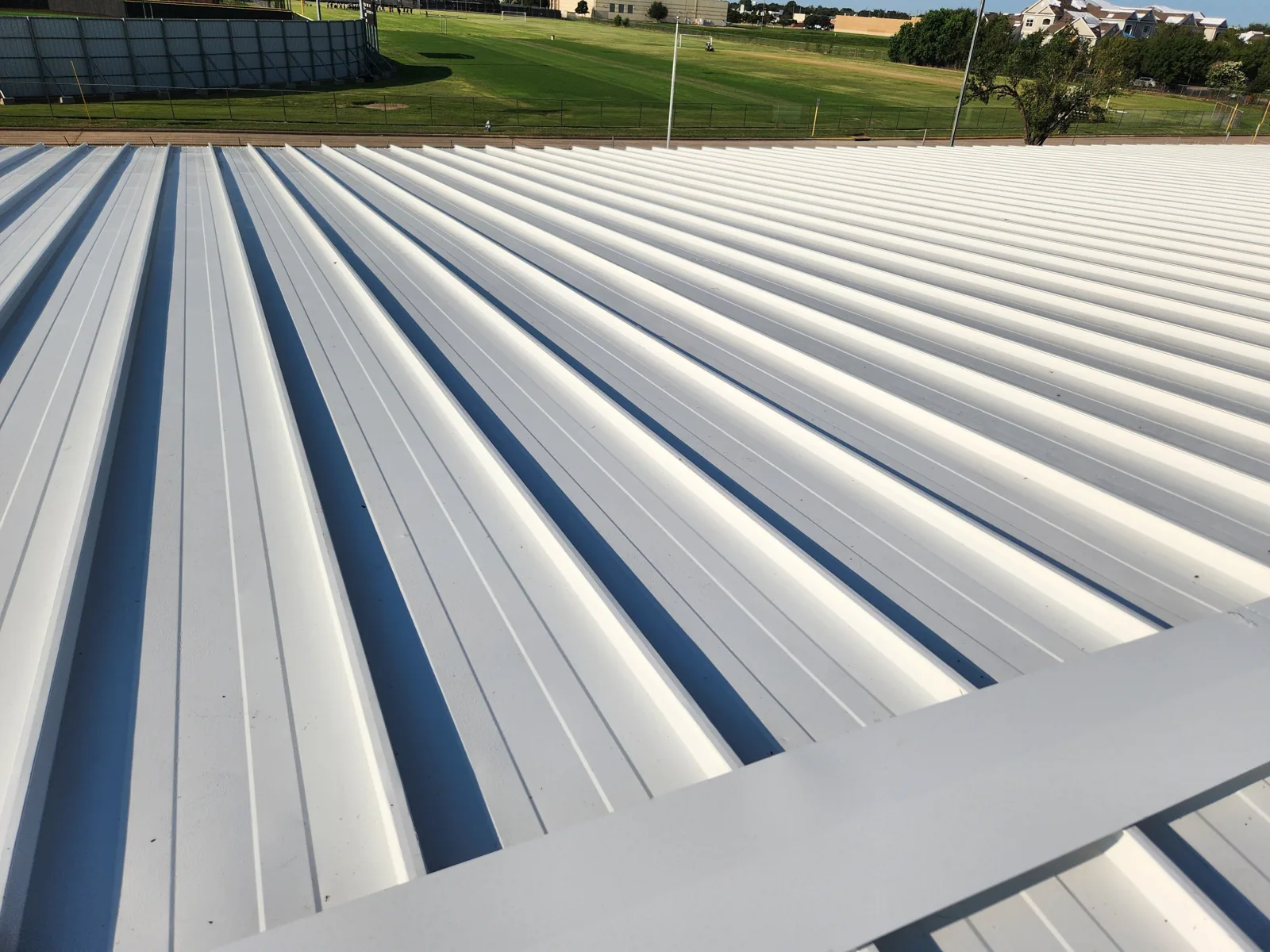
Kamay, TX is an unincorporated community along State Highway 258, roughly 12 miles southwest of Wichita Falls. Oil exploration in the 1920s built it, and its businesses dwindled from 27 in the mid-1950s to seven by 2000. Roof work there is mostly about shops, small offices and service buildings, and about buildings that may sit idle between uses.
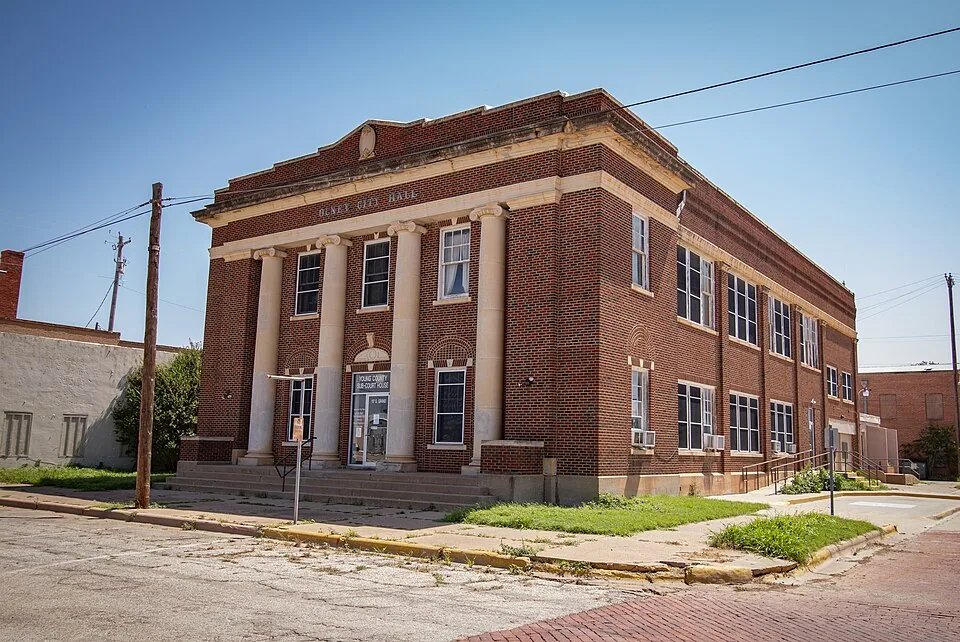
An idle building is a roof problem with a clock on it. Water does not wait for the next tenant. So the first walk in Kamay answers two questions: what is this roof made of, and what has happened to it while nobody watched?
Shop Roofs in an Oil-Era Community
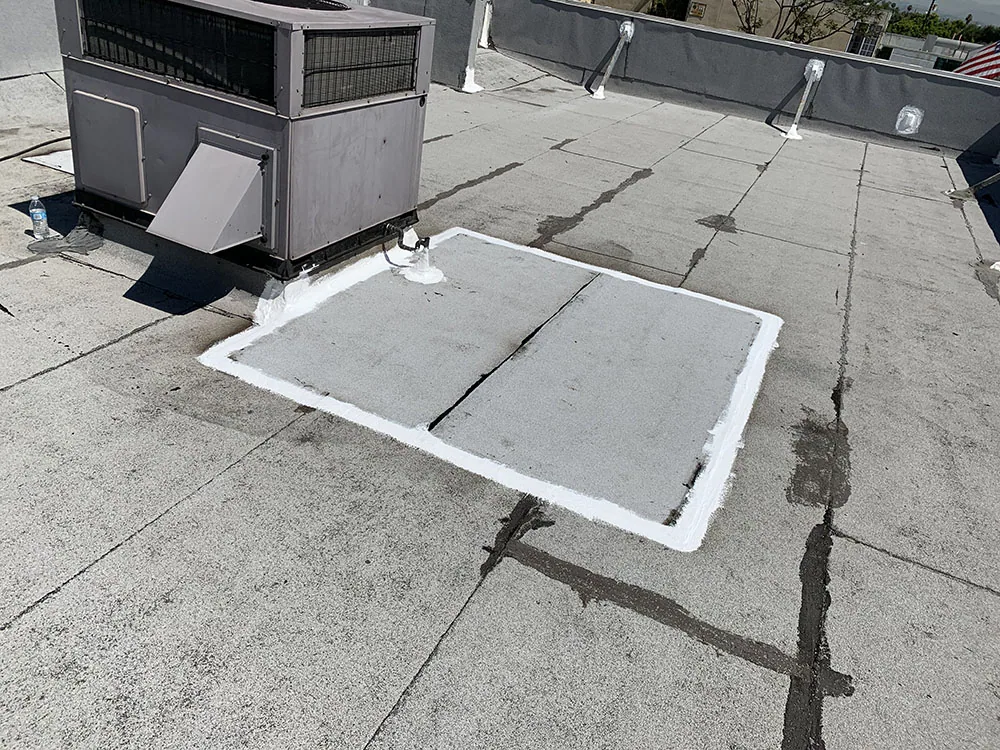
A shop or service garage often has a simple roof: a long span of metal panels or a flat membrane with a few vents. Simple does not mean safe. Panels fail at screws and laps, and a flat roof fails at seams and flashings. We identify the type before anything else, since the repair depends on it.
Yards bring their own wear. Truck and equipment traffic raises dust and gravel, and wind lifts it onto the roof, where it settles at drains and lap lines. We sweep and photograph those places on the first walk and note any scuffing where workers have crossed the roof to reach a vent or unit.
Buildings tied to oil work may see fumes, oil mist or hot exhaust. Some membranes soften when they sit near those, and metal can stain or corrode. We look for discoloration, soft spots and rust near vents and doors, and we read the pattern before we recommend a fix.
Fasteners Tell You When Metal Is Tiring
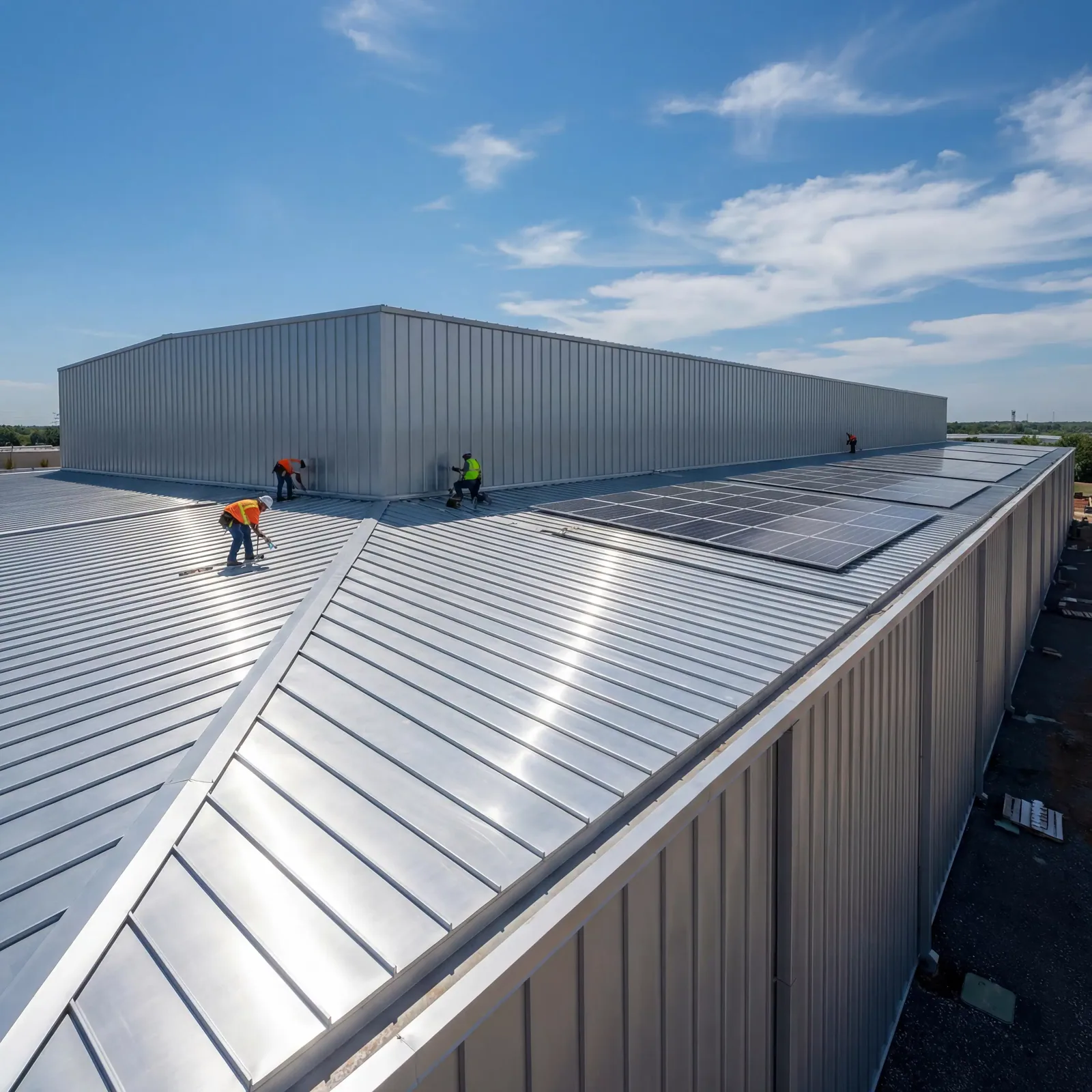
Metal panels shed water well, and they still need care. Metal swells and shrinks daily, and screws can creep out bit by bit. That is fastener back-out. A rubber washer that no longer seals lets water follow the screw into the deck.
We walk every fastener line and press on the screws that look raised. Failed screws are replaced with larger ones where the hole has worn. Laps get fresh sealant, and the trim gets checked where panels meet walls. On a standing seam roof the clips and seams get the same attention. Rust starts at cut edges and scratches, so we treat it early before it spreads across a panel.
What Happens to a Roof Nobody Visits
A roof on an unused building collects debris. Leaves, windblown trash and grit settle in drains and valleys, and the first storm finds them. Water backs up, finds a seam and gets into the insulation. Nobody sees it, because nobody is inside.
Here is a simple test. Walk the perimeter after a rain and look at the ground below the drains and scuppers. If the water is not coming out, the outlet is clogged. Then walk the roof. We clear drains, photograph low spots and probe for soft decks. The condition record tells a buyer, lender or insurer what the roof is carrying before a lease or a sale is signed. A due diligence roof survey does that for a purchase.
The survey lists each roof zone, its condition, the repairs needed now and the repairs that can wait. A buyer then prices the building with the roof included, and a seller can show what has been done.
Heat and Sun on an Unshaded Roof
In 2011 Wichita Falls, the market city, logged 100 days at 100 degrees or higher, the first Texas city to do so. A dark roof in an open lot takes that heat all day. Membranes expand and relax, sealants dry out, and thin spots appear where foot traffic once crossed.
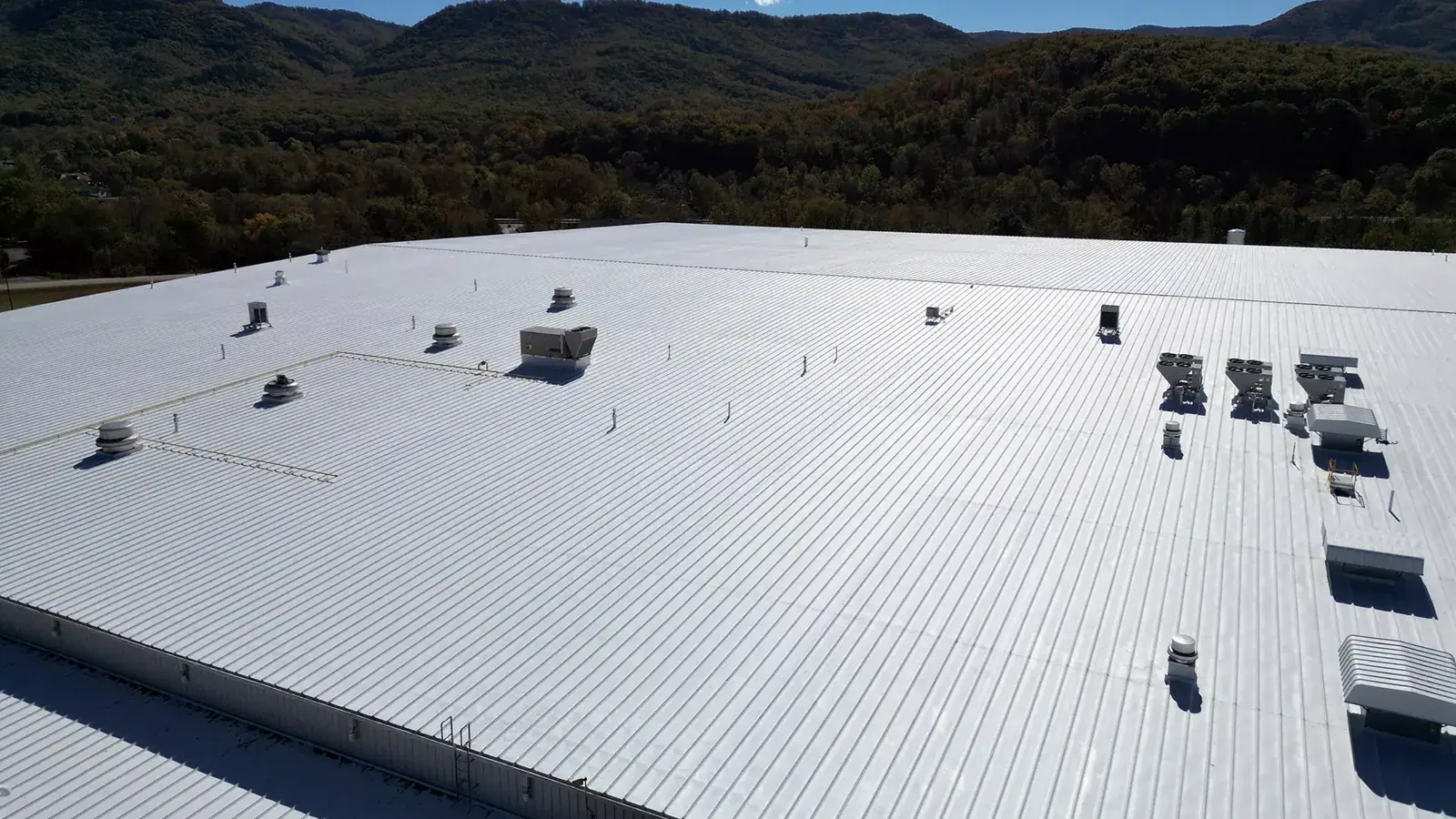
We look for heat and ultraviolet wear on the sunny slopes and note chalking, cracking and lifted seams. A sound roof that has only surface wear can be restored with a roof coating. A roof with wet insulation cannot, and we test moisture before we say yes.
Storm History Frames the Check
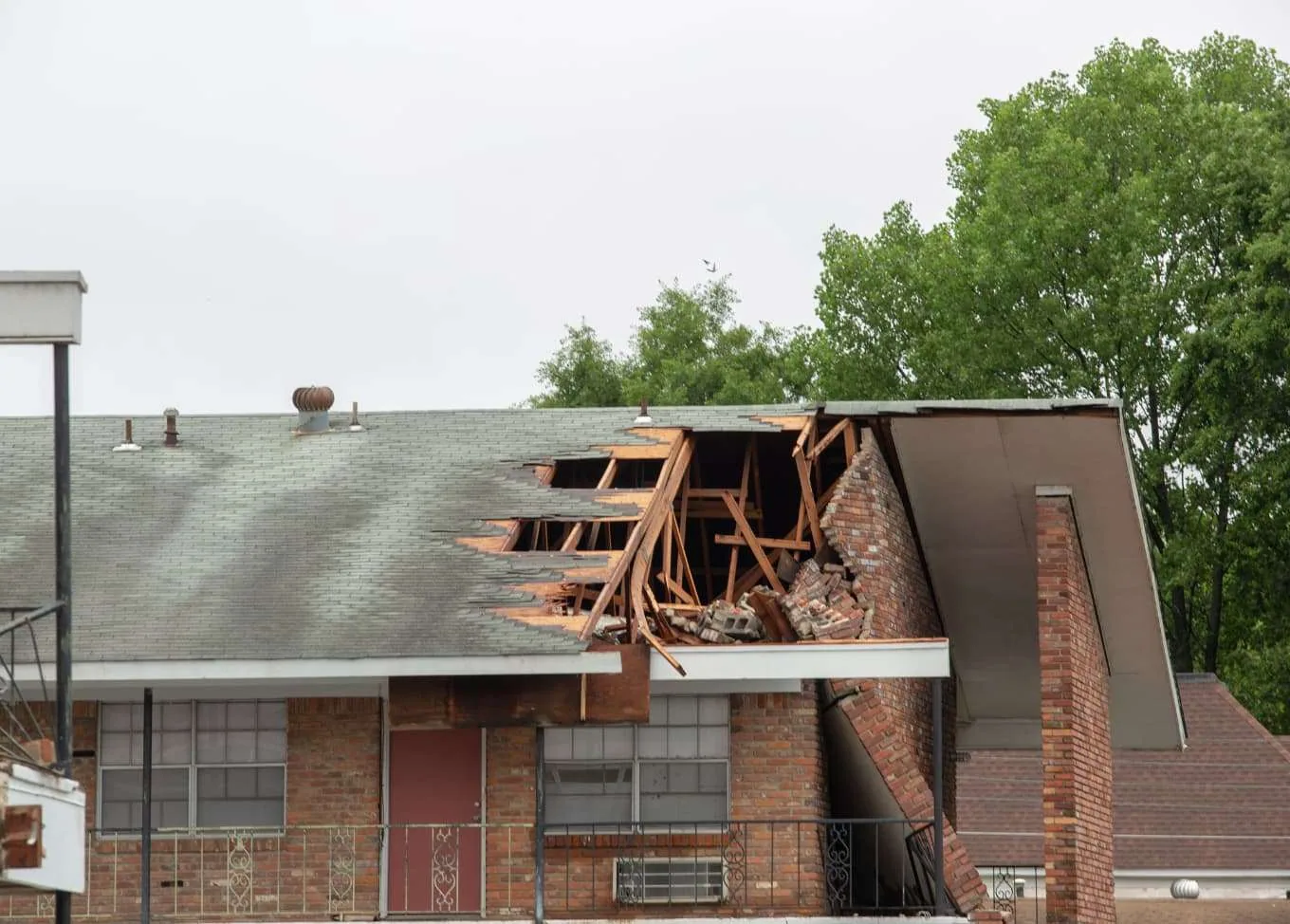
Baseball-size stones struck Burkburnett and Iowa Park in April 1991, and golf-ball stones kept falling on Electra for fifteen minutes in March 1982. Those events happened in other towns. They do not prove anything about a Kamay roof, but they tell us what to look for after a severe storm: bruises, dents and cracked coatings.
Counts from test squares on each slope go into a hail damage report. Few, shallow marks may mean little; many marks over soft spots need a closer look. On metal, we also check dents for broken coatings, because a dent that holds water rusts through in time.
Pick the Right Scope for a Low-Use Building
A building that earns little cannot absorb a large roof bill. So we separate three things: what must be fixed to stop water, what can wait a year, and what would be wasted money. A patch that holds is better than a full replacement the building cannot repay.
When the roof is past patching, a metal roof retrofit or a recover over dry insulation can cost less than a full tear-off. Neighbors such as Iowa Park and Lakeside City face the same trade-offs, and the same walk answers them. Cost depends on roof size, deck condition, access and penetration count, and each driver is explained in writing.
Plan Access for a Rural Highway Site
State Highway 258 is a working road. Trucks that deliver materials need a safe place to stop, and a lift needs firm ground. We choose the staging area, the route for deliveries and the closeout point before the crew arrives. If the building has no power or water, we bring what we need.
The order is simple. Clear the roof of debris, fix the leaks, protect the open areas and leave the building weathertight each evening. When storms arrive, we cover what is open. Photographs at the start and the end of each day go to the owner, so a roof can be reviewed from Wichita Falls or from across the country.
Commercial Roofing Questions
Does an empty building need a roof inspection?
Yes. A roof with no tenant has no one to report a leak, so water can sit in the insulation for a season. A walk before a sale or a lease catches that and gives the owner a record.
Can a tired shop roof be coated instead of replaced?
Only when the insulation is dry and the surface holds together, and we confirm both with a scan and a probe before anyone mixes material. We test for moisture first. A coating over wet material fails and traps water under the surface.
What is the quickest way to stop an active leak?
Find the entry point, then seal it. A temporary patch or tarp can hold until a permanent repair is made. We write down the cause so the same leak does not come back.
Do oil fumes hurt a roof?
Some membranes soften near oil mist or hot exhaust. We look for stains and soft spots around vents and doors, and we pick materials that suit the exposure.
How do I tell fastener back-out from a failed seam?
Back-out appears as raised screws with tiny rust rings or stains in a row down the panel ribs. A failed seam shows as a gap or lifted edge. Both are visible on a close walk, and both are cheaper to fix early.
What helps before the first visit?
The roof's age, what the building is used for, where it has leaked and the date of any storm you recall. The walk follows that order.