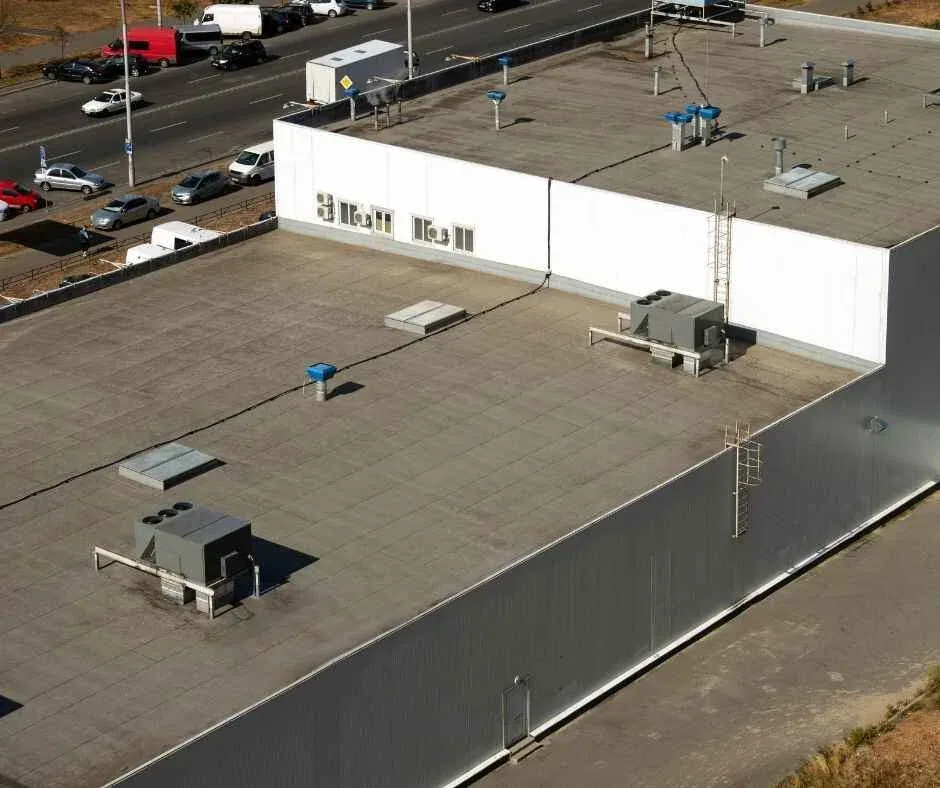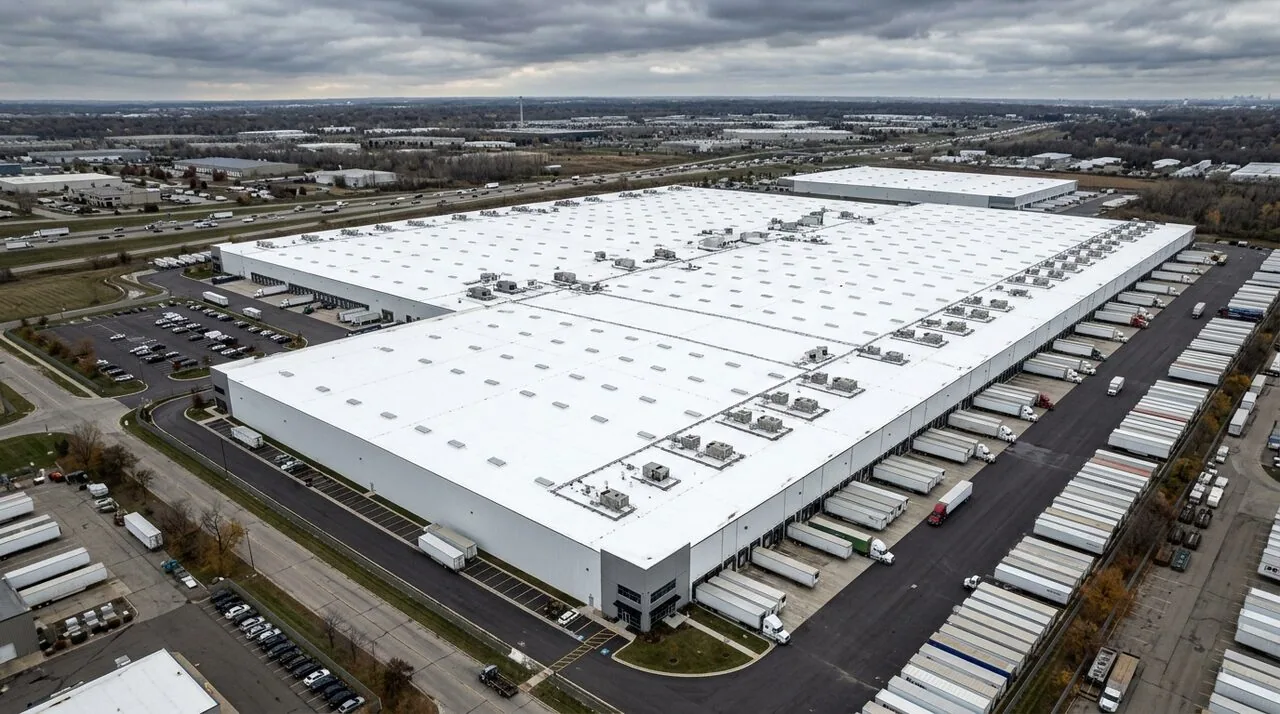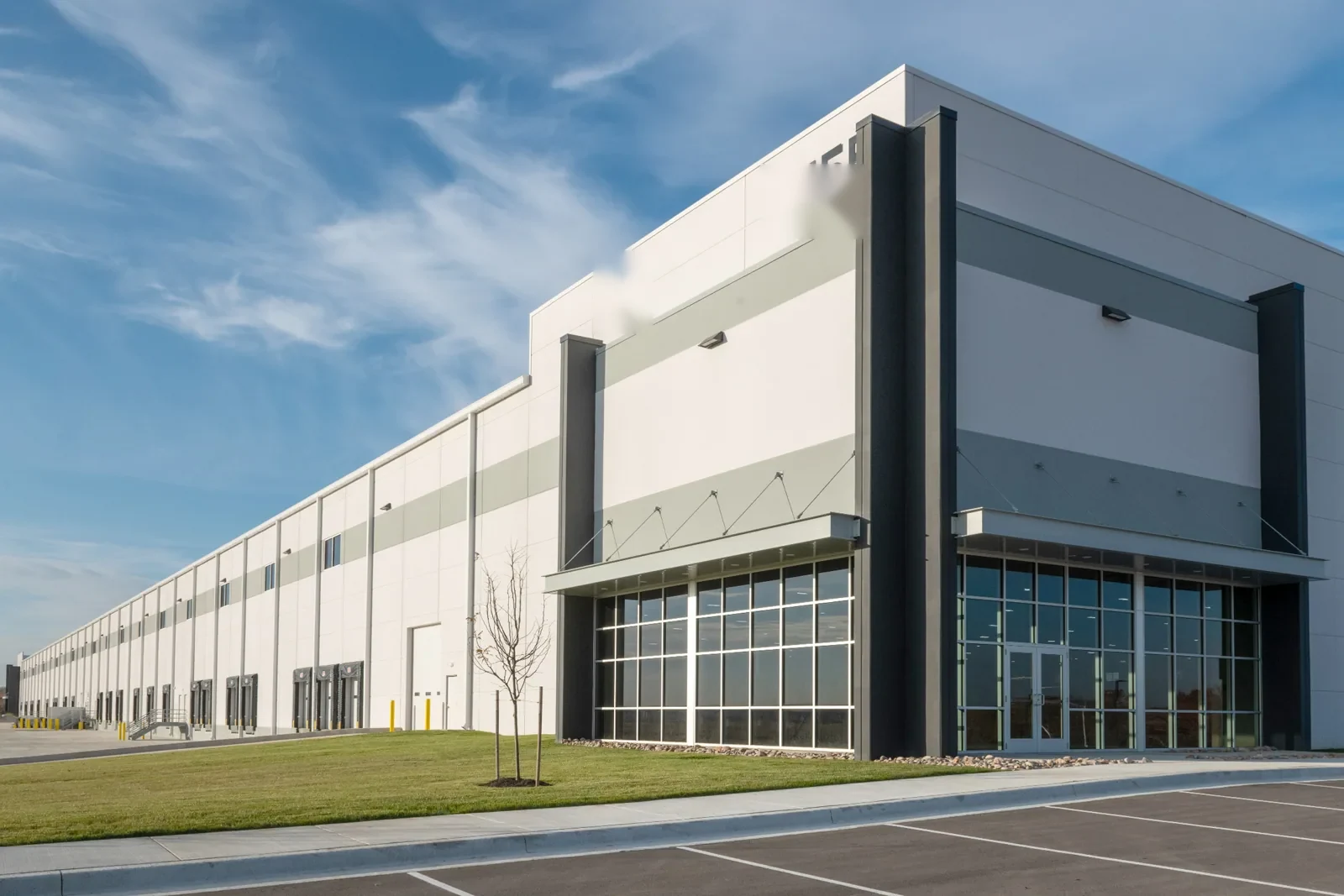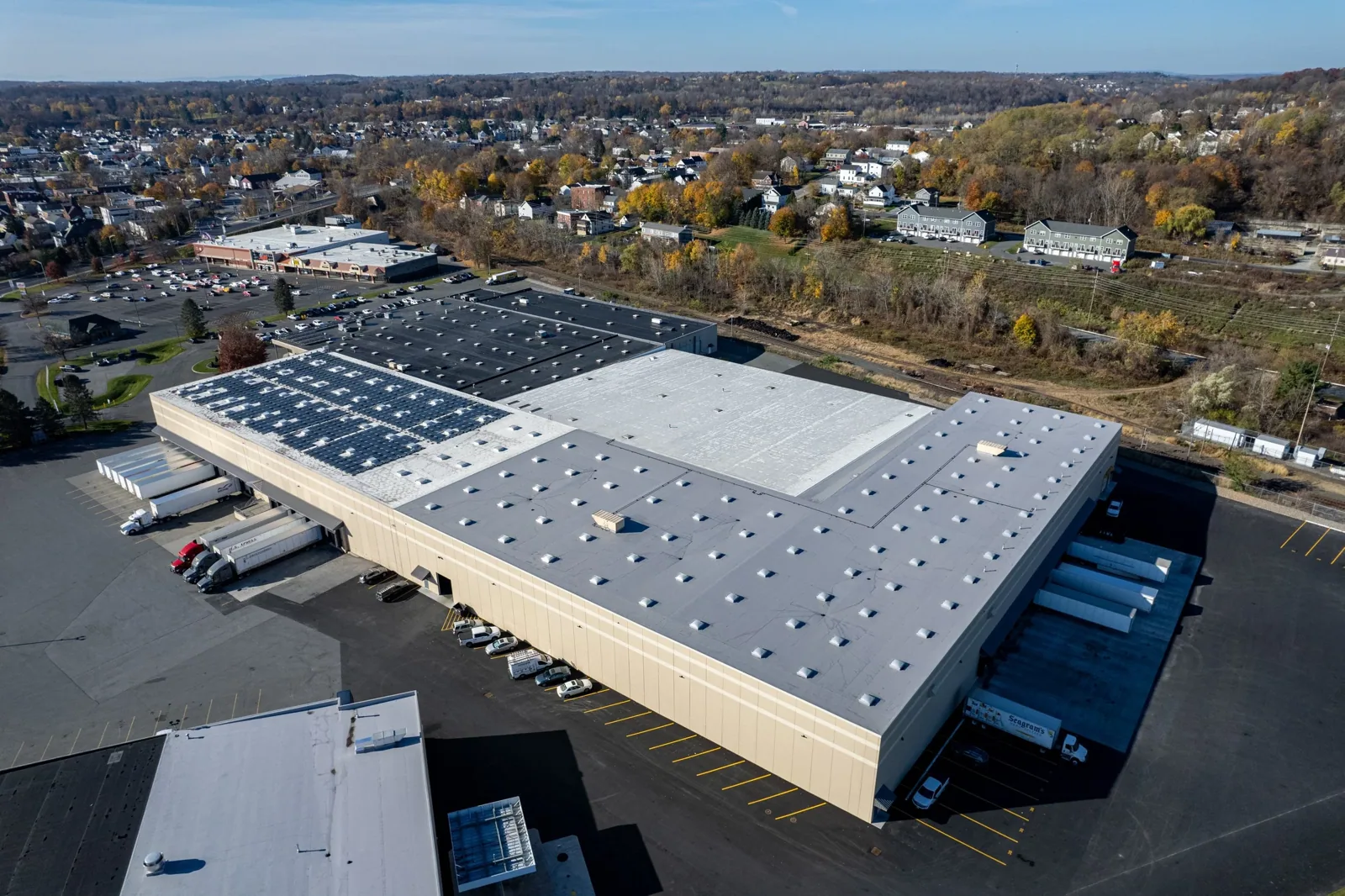
Corrugated or ribbed panels held down by exposed screws are common on metal manufacturing sheds, storage buildings and older warehouses, and a distribution and manufacturing area such as the Wichita Falls Business Park is where an owner might meet them. The one thing an owner should understand is that these roofs rarely fail because the metal wears out. They fail because the fasteners and the sealants wear out first.
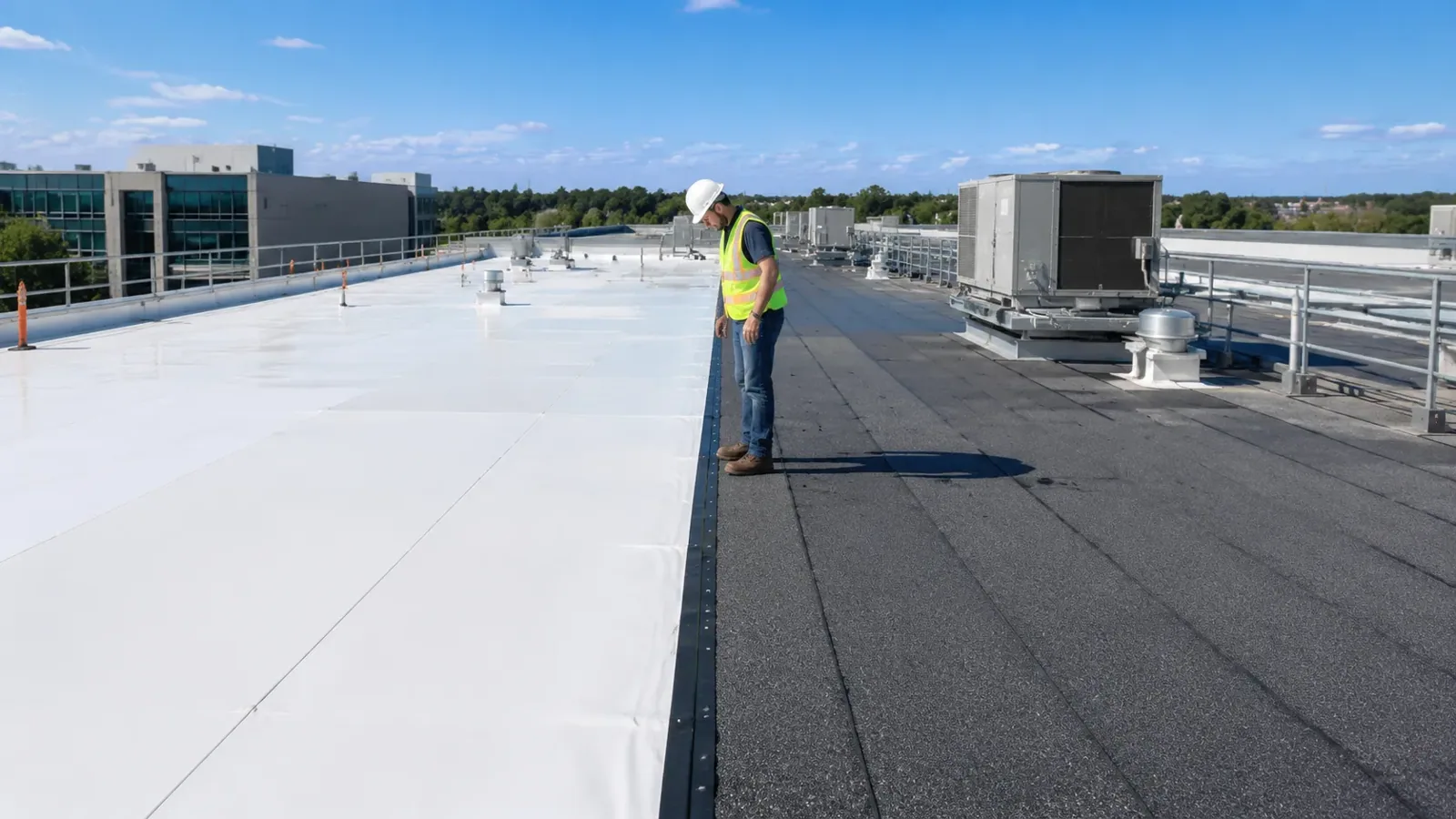
A retrofit gives such a roof a second life without tearing it off. Restoration repairs and coats it. Here is how we walk an exposed-fastener metal roof, in order, and how to decide between the two paths.
Find the Fastener Back-Out
Each screw has a rubber or neoprene washer that seals the hole. Sun and heat harden the washer. Wind moves the panels. The screw works loose, and the hole stretches. Water follows the shank into the building. We call this fastener back-out, and it is the most common cause of leaks on these roofs.
On a walk we look for screws standing proud, washers cracked or missing and rust rings around heads. We press panels near the ribs and listen for rattles. Staining on insulation below shows where water has come in.
A simple test: if a screw turns by hand, the hole is stripped. Replacing it with a larger one with a new washer can stop the leak. Doing that across a whole roof is a fastener program, and it is the first thing we price.
Washers fail in a pattern, not at random. Screws on the south and west slopes take the most sun, and screws at the ridge and the eaves take the most wind movement. We map failures by run, so the repair order starts where the roof is worst and the owner can see whether the trouble covers the whole roof or one slope.
Check Laps, Ridges and Rust
Panel laps overlap with a bead of sealant or butyl tape. That tape dries over time, and laps open. Ridge caps and trims carry the same sealants and fail the same way. Rust starts at cut edges, at scratches and where water sits.
We look at the lap lines for gaps and at the ridge for open joints. We look at the panel ends for rust and check the purlins from below where we can reach them. Ridge and eave trims get the same count, because a rusted trim piece hides behind a sealed edge and leaks into the wall. Rust that has gone through the metal means the panel is finished. Surface rust that has not bitten deep can be treated.
Then measure how far it goes. A few rusted panels can be replaced. A roof with rust through many panels is a candidate for a retrofit or full replacement. The count of failed fasteners and rusted panels by run gives us the numbers.
Count the Heat
A typical Wichita Falls year runs about 28 days at 100 degrees, and in 2011 the city counted 100 such days. A metal roof in that heat expands and contracts every day, and the movement works fasteners and laps. Dark panels run hotter. Insulation and ventilation below affect how hot the metal gets.
What it means for you: a screw that held for years can loosen in a single hot season if the washer has aged out. A spring check for loose screws is cheap insurance, and a coating over a sound roof reduces the daily swing.
Plan for Hail and Wind
Baseball-size stones struck Iowa Park and Burkburnett in 1991 and golf-ball stones fell on Electra in 1982, which proves nothing about any one roof but tells us what to look for. After a storm we look for dents and punctured panels.
Thin ribbed panels dent easily. A dent on a rib can crack the finish or open a lap. A dent in a flat is usually cosmetic. We mark each and photograph it with a scale.
Wind loads metal at the edges. The F4 tornado of April 10, 1979 passed through the southern and eastern parts of the city. It is history, not a forecast, but it explains why we check eave and rake trim and the first fastener rows. A wind damage repair starts there.
Choose Restoration or Retrofit
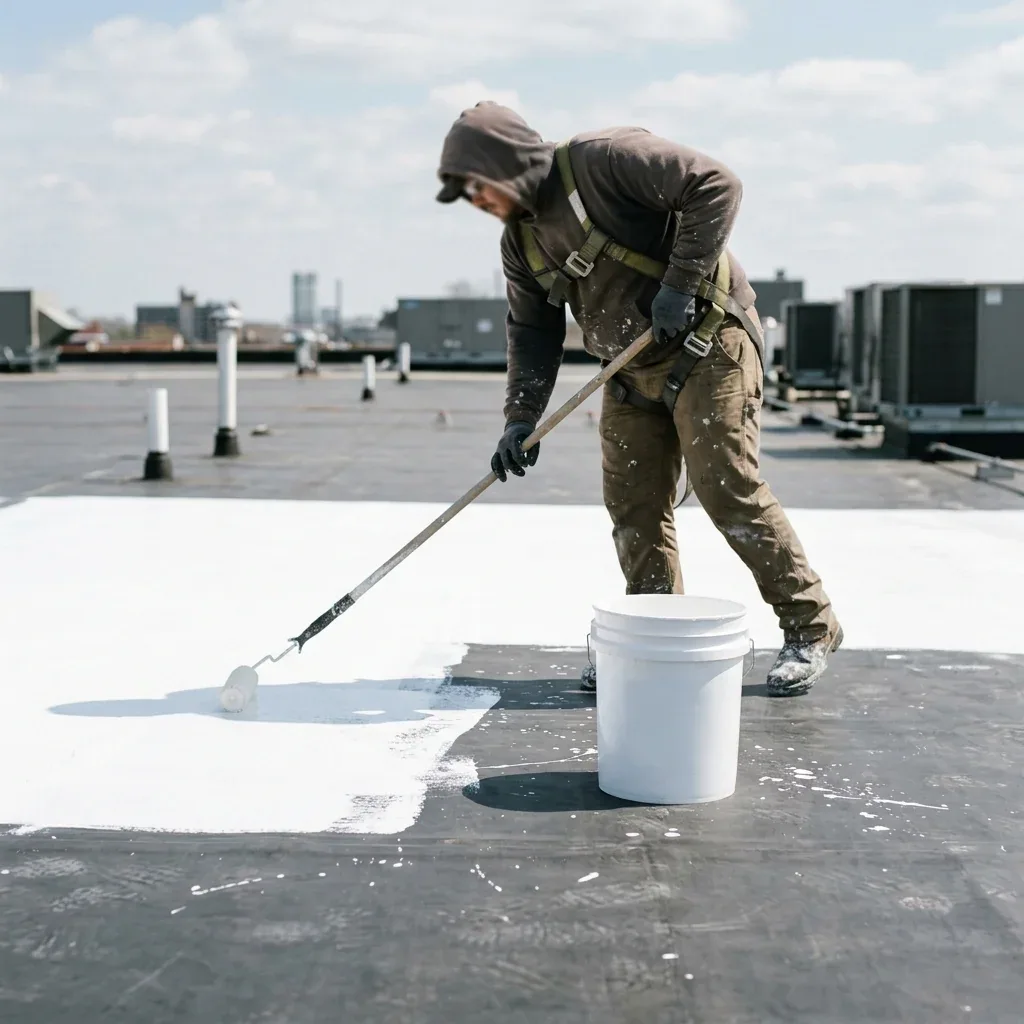
Restoration repairs the roof and coats it. We replace failed fasteners, reseal laps, treat rust, apply a primer and top-coat with a reflective coating. It suits a roof whose panels are sound. A silicone coating or an acrylic coating can be the finish, depending on drainage.
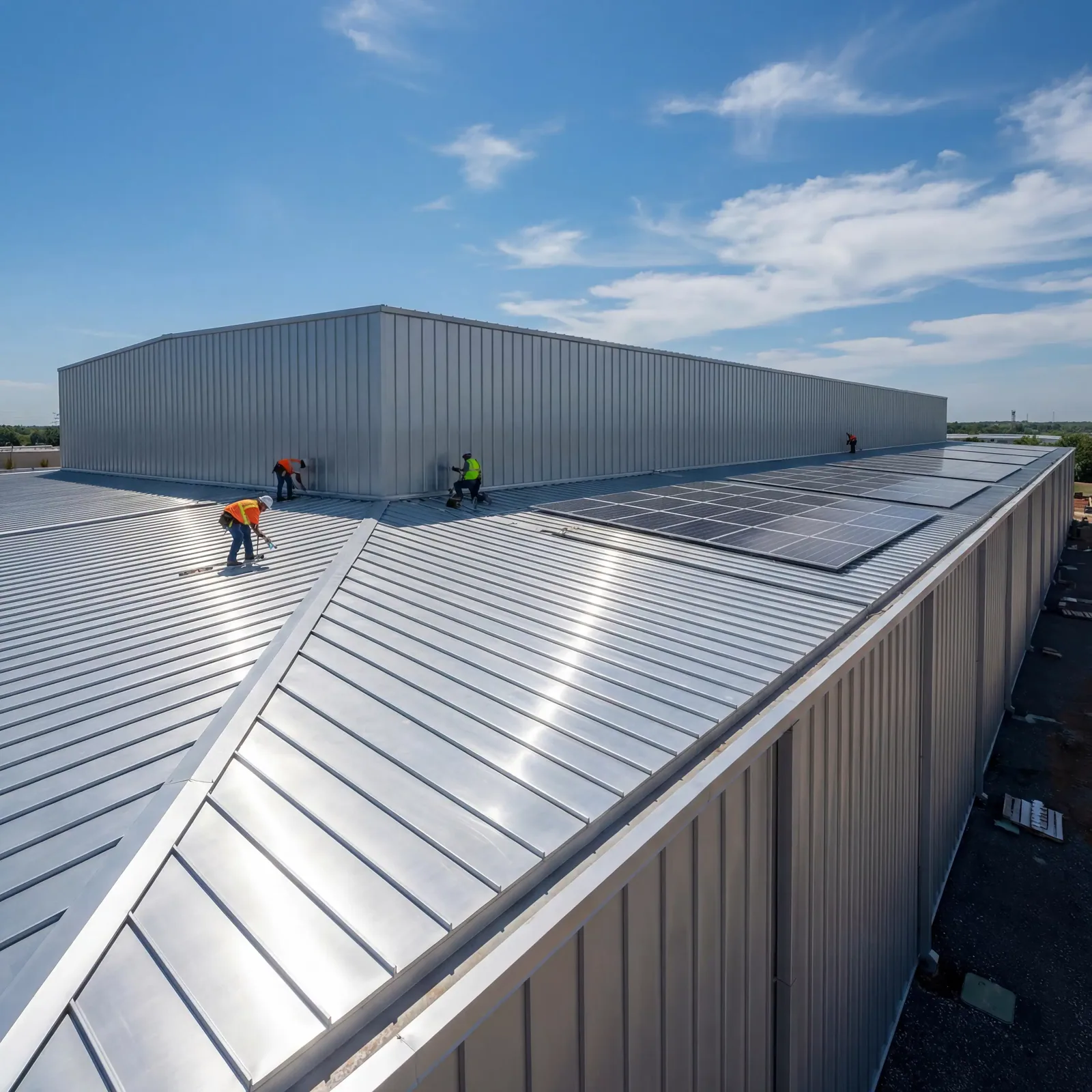
A retrofit puts a new roof over the old one. Framing is added over the old panels, and new panels or a standing seam system go on top. It adds a layer of insulation and cuts the fastener problem. It suits roofs where the old panels are too far gone to coat but the structure is sound.
Condition decides. We test the structure, the panels and the insulation, then price each path with its service horizon.
Either path starts with a conversation about clearances and drainage. A retrofit changes the height at the eaves and the rake, so gutters, trims and wall flashings are checked against the new profile. A restoration leaves the profile alone, which matters when an overhead door, a crane rail or a neighboring wall limits what can be added.
Match the Fix to the Building
The Wichita Falls Business Park covers 525 acres and is marketed to distributors, high-tech operations and manufacturers. We do not assume what any one building carries. We check.
A warehouse roof that stays dry and sound may need only fasteners and a coat. A manufacturing plant roof with wet insulation under the metal needs more. We cut cores and scan before we recommend.
Occupied buildings add rules. Noise, dust and fumes are planned around operations, and each roof run is closed before the crew leaves.
Metal roofs also carry skylight panels, ridge vents and turbine ventilators, and each is a hole sealed by the same aging sealants as the laps. They go on the plan alongside the panels, so the price covers the whole roof and not just the field.
Take the Next Step
Tell us how many screws have been replaced and where the stains show, and the first walk starts along those runs. A shed in the Wichita Falls Business Park or a storage building in Burkburnett gets the same run-by-run walk. When the panels pass the tests, a coating restoration is the shorter path.
Commercial Roofing Questions
Why does my metal roof leak at the screws?
The washer hardens and the hole stretches. Water follows the screw in. Larger screws and new washers can stop it.
Can I coat a rusty metal roof?
If the rust has not gone through, yes, after treatment and priming. Rust that has stained but not pitted the surface is converted and primed before any coat goes on. If panels are rusted through, they must be replaced first.
What is a metal roof retrofit?
A new roof system installed over the old metal, usually on new framing. It avoids tear-off.
Does a retrofit add insulation?
Often. The new framing space can hold insulation, which helps energy use.
How do you tell restoration from retrofit?
We count failed fasteners and rusted panels by run, test the insulation and check the framing. Sound panels on a sound structure get restoration. Panels too far gone to coat, over a sound structure, get a retrofit.