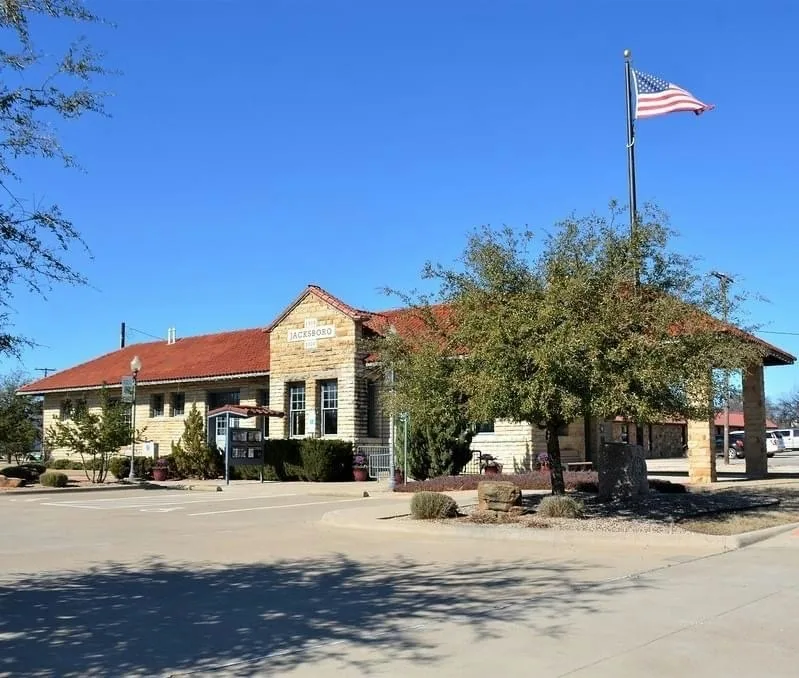
Dean grew from 341 residents in 2000 to 488 in 2020, and a town that is adding people may be adding buildings, with new roofs to inspect and hand over. Dean sits in northwestern Clay County, about 10 miles southwest of Wichita Falls, TX, on State Highway 79. A roof on a newer building needs a different kind of attention than an old one, and the first year is when a quiet defect is cheapest to correct.
Here is the order we follow. Step one is the building and its use. Step two is the roof age, the system and any paperwork that came with it. Step three is a walk across every surface, with photographs, to confirm that what was installed matches what was meant.
A Young Roof Still Needs a Walk
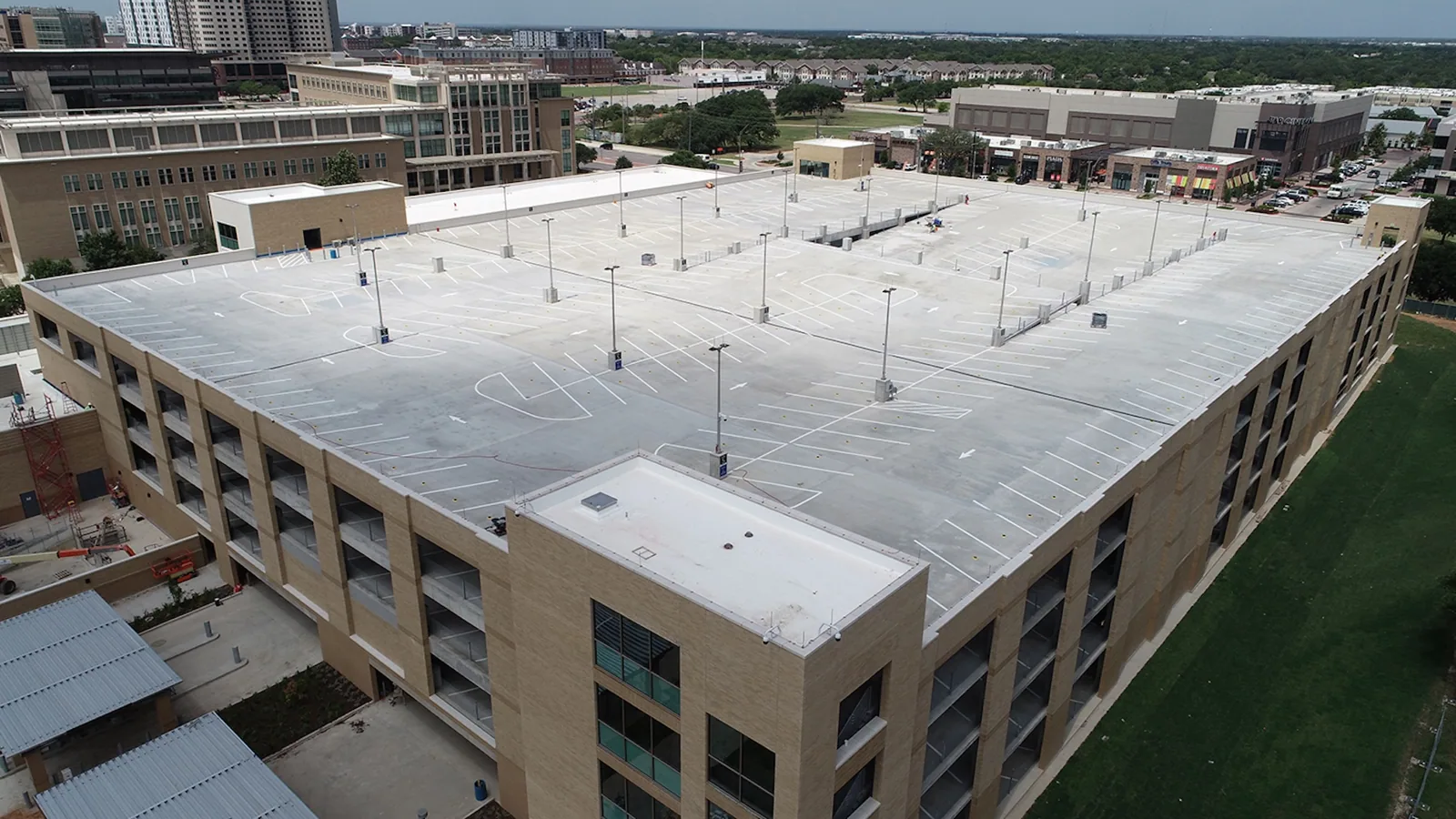
A new membrane can carry hidden problems. A seam that was not fully welded, a flashing that was left short or a drain that sits a half inch too high will not show on the day the crew leaves. They show after the first hard rain, or the first hot week, when the roof starts to move.
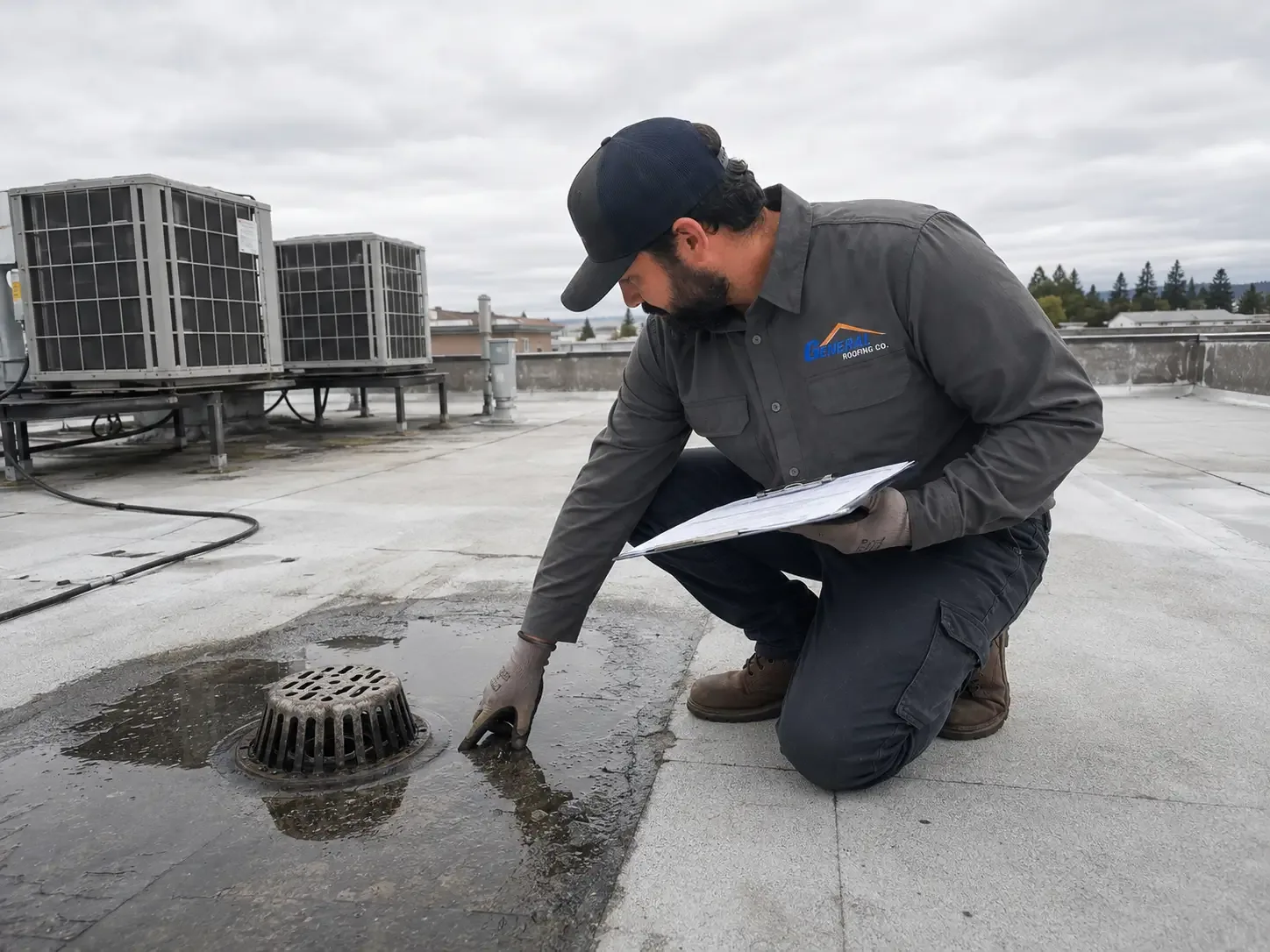
Drainage is the other early check. A roof that ponds in its first season is telling the owner about slope, outlet height or a sump set too high, and standing water on a young roof is easier to correct than on one that has aged under it. We measure pond depth after the first good rain and photograph the ponding line, then compare it with the drains on the plan.
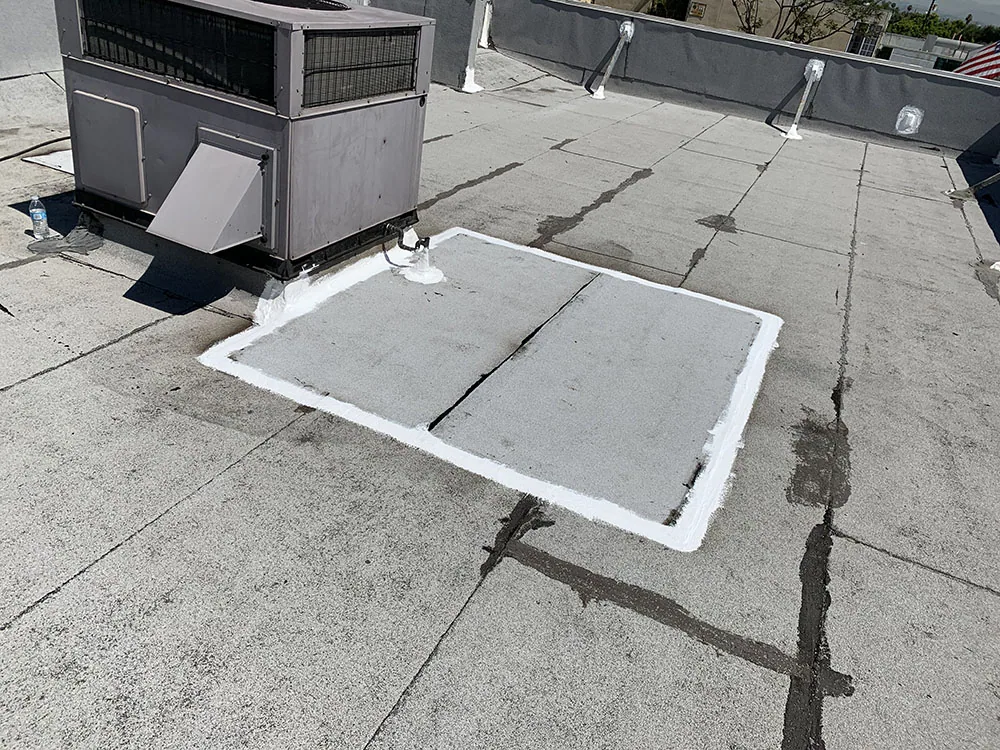
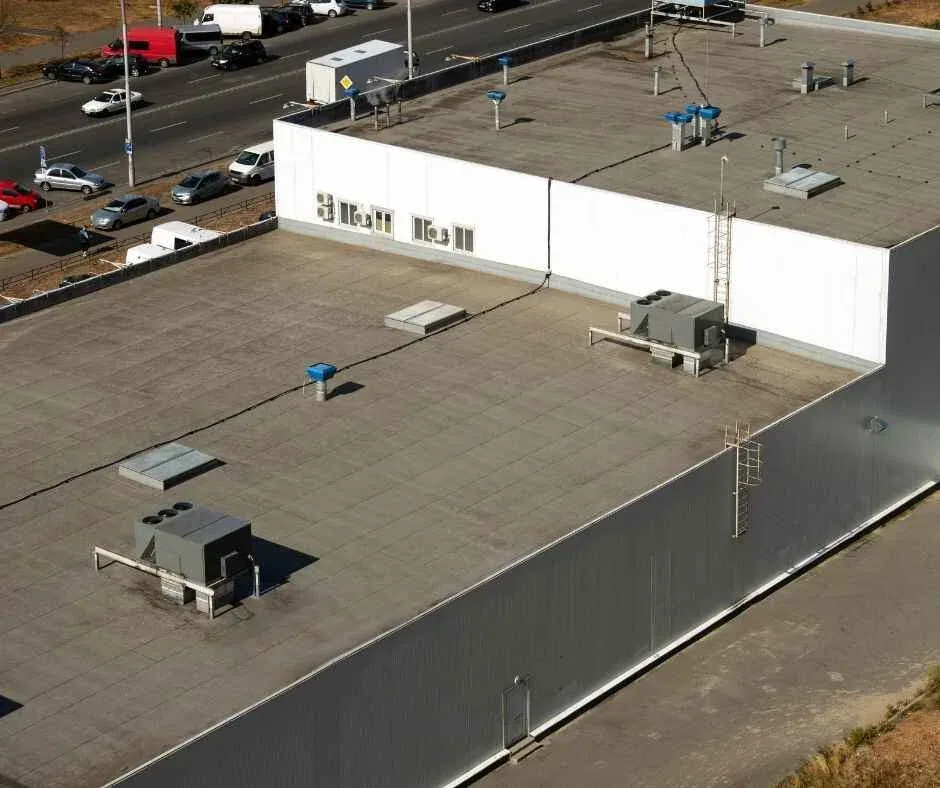
We look at the details that installers rush: the corners, the penetrations, the transitions at walls and the areas around rooftop units. A roof inspection in the first year of a new roof, with photographs, gives the owner a record. If a defect is found, the record shows when and where, which helps when the question turns to who should fix it.
Paperwork Worth Keeping
Most commercial roofs come with some kind of written coverage from the installer or the manufacturer, and the terms vary a great deal. Many require periodic maintenance, and some are voided by work done by someone else. Read yours before any repair is made.
Product data matters on a new building as well. The membrane type, the fastener pattern and the flashing details named in the file tell a later repair crew what to match. When a patch is made with the wrong material, the repair becomes its own defect, so the file stays with the building and not with the contractor.
We help owners keep a file: the roof plan, the product data, the inspection reports and the photographs. That file makes any later repair or claim clearer. Our warranty management work is built on the same habit of writing things down while they are fresh.
Heat on a Newer Surface
Dean lies about 10 miles from Wichita Falls, where an average year brings about 28 days at 100 degrees and 2011 reached 100 of them, so a roof in Dean sees similar sun. A new dark membrane takes the heat hardest in its first summers, expanding in the afternoon and relaxing at night. A well-welded seam handles it. A weak one starts to open.
We look for the first signs of heat and ultraviolet wear: seam edges that lift, sealant that cracks, flashing that pulls away from a wall. A light-colored membrane reduces the surface temperature, which is part of why owners choose white roofs on new buildings.
Wind History Near Dean
The April 10, 1979 F4 tornado crossed the south and east of Wichita Falls, and the weather service records rural home damage near Dean and Byars in Clay County. That is history, and it does not describe a roof here today.
What it does is remind us to check the parts of a roof that wind attacks first. Edge metal comes first. Then corners, parapet caps and the membrane just inside them. A fastener that has backed out of the deck is a small repair now and a lifted flap after the next storm. If a storm has passed, our wind damage repair starts with making the roof safe, then documenting what moved.
Hail Bruises on a New Roof
Dean is not named in the weather record, which includes baseball-size hail at Iowa Park and Burkburnett (April 1991) and bigger stones at Sheppard Air Force Base (March 1993), and none of it describes a roof here. A new roof is not immune to hail, though, and a hail bruise on a young membrane is easier to document because the surface is still clean.
We press, probe and mark each spot, and photograph it. A dated record of bruising supports a claim, and a dated record of a clean roof supports the opposite conclusion, which is also useful to an owner.
Ten Miles on Highway 79
Dean is close enough to Wichita Falls that a same-day visit is practical. State Highway 79 also runs to Petrolia, and a trip southwest can often cover both. Kamay, on State Highway 258, is another stop on that side of the city.
On the job, staging, delivery times and debris removal are settled with the owner before the crew arrives. We confirm on the first visit where a truck and a hoist can stand, and we put the plan in writing. Emergency calls are answered at any hour, holidays included.
A building at the edge of town may have a gravel drive, a gate or a long approach for the lift, so we ask about the site before the truck rolls. A roof that is easy to reach is priced for the work on the roof, and a roof that is hard to reach is priced with the approach written in.
Maintenance Before Repair
The least expensive roof work is the work done early. A maintenance visit clears drains, reseals small gaps, tightens loose fasteners and photographs the roof. It costs a fraction of what a repair costs after water has soaked the insulation.
Cost for larger work follows roof size, system, penetrations, insulation and access. We price each item separately so you can approve what you want and defer what you do not. A first-year file also pays off at the end of an installer or manufacturer warranty: the owner can show the roof was walked, photographed and kept clean from the start, which is the record most coverage terms ask for.
Commercial Roofing Questions
Is it too early to inspect a roof on a new building?
No. The first year is when installation defects show up, and the record from an early walk is useful if a question about responsibility comes up later.
Does my roof coverage require maintenance?
Many do. Read the terms and keep a record of each visit. We document every visit with photographs and a written report so that file stays complete.
When should a new roof be checked after a storm?
Once it is safe to be on it. Wind and hail leave marks that fade or get covered over time, and early photographs are the strongest evidence.
How long does a typical repair take?
Small repairs often take a few hours. Larger repairs depend on the size of the area and the weather. We give a time estimate in the written scope.
Do you work on buildings still under construction?
We inspect and repair existing roofs. If a roof is in progress, we can walk it at key stages and report what we find.