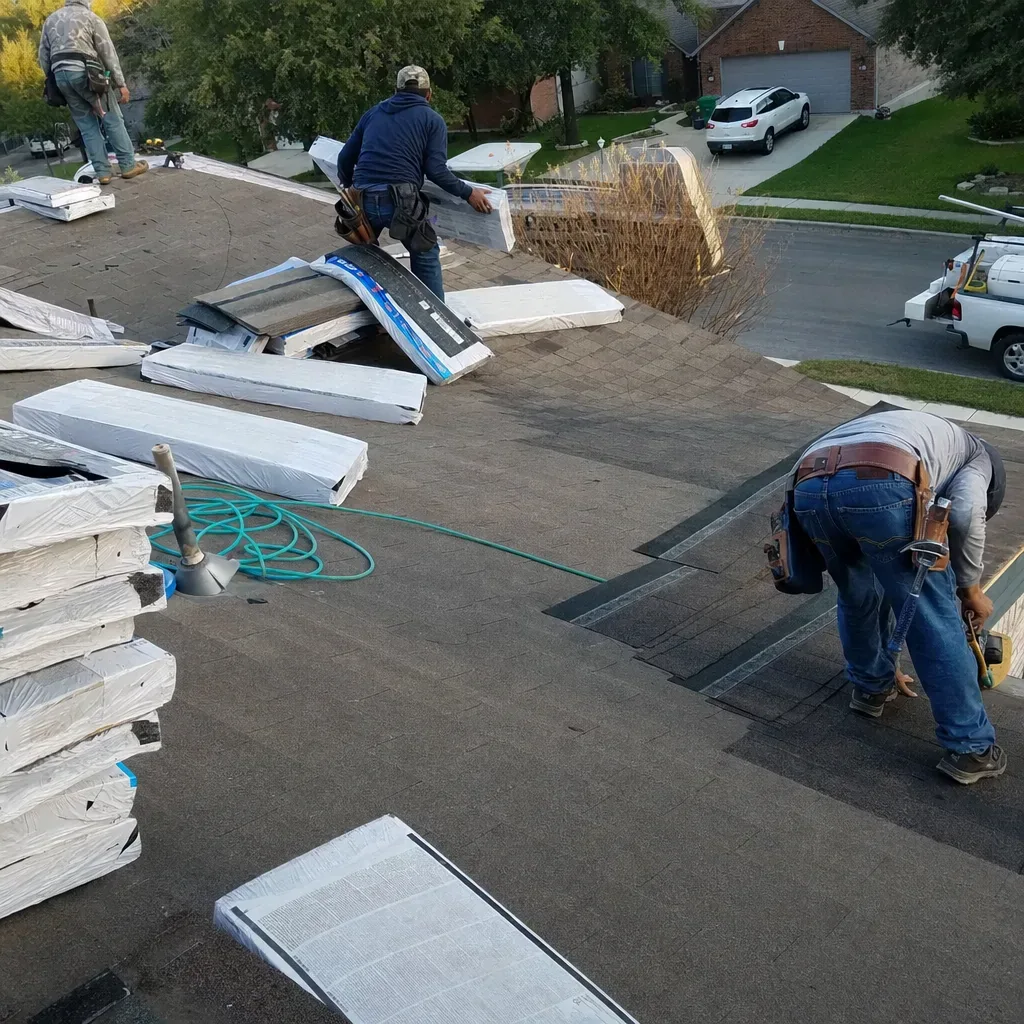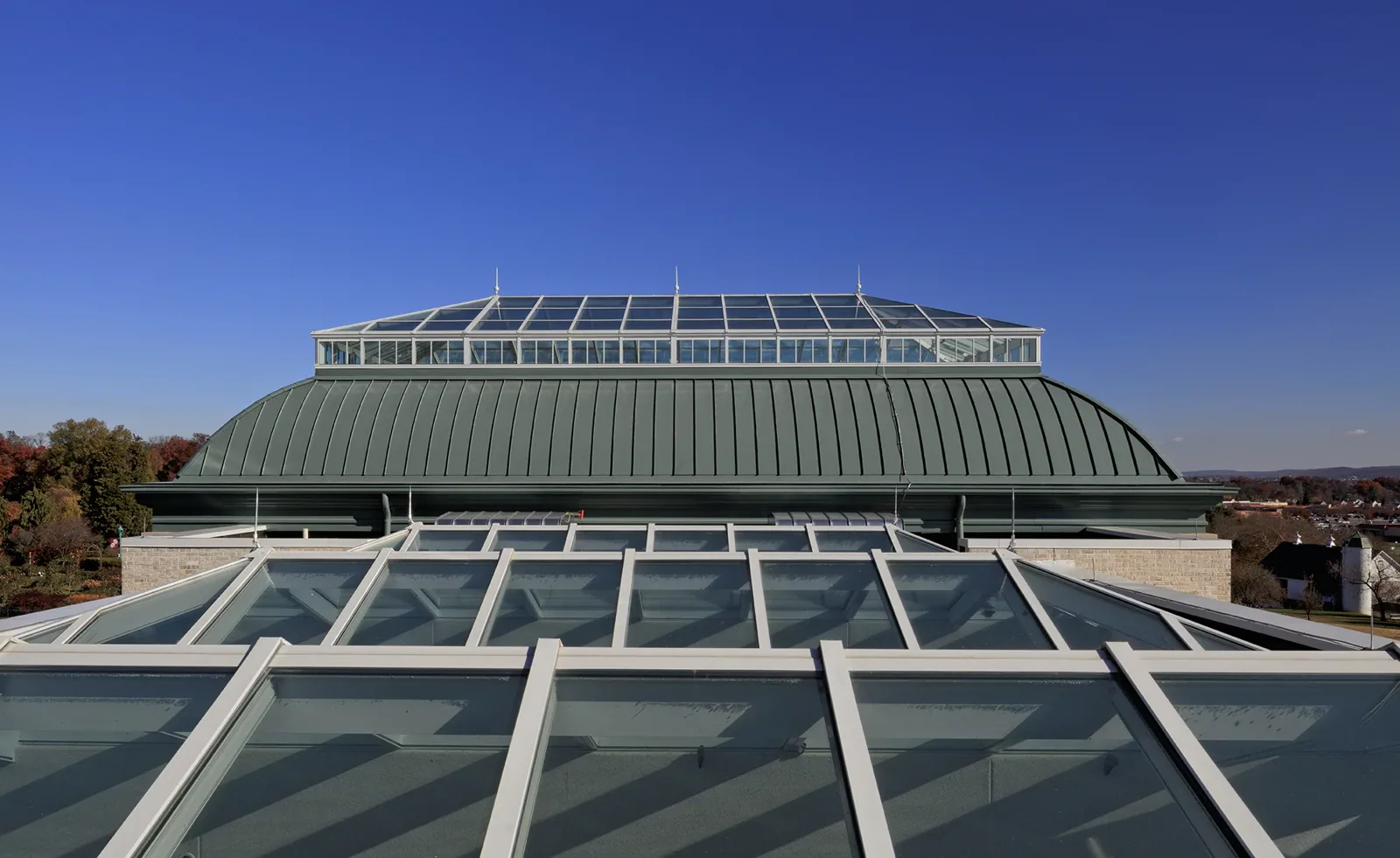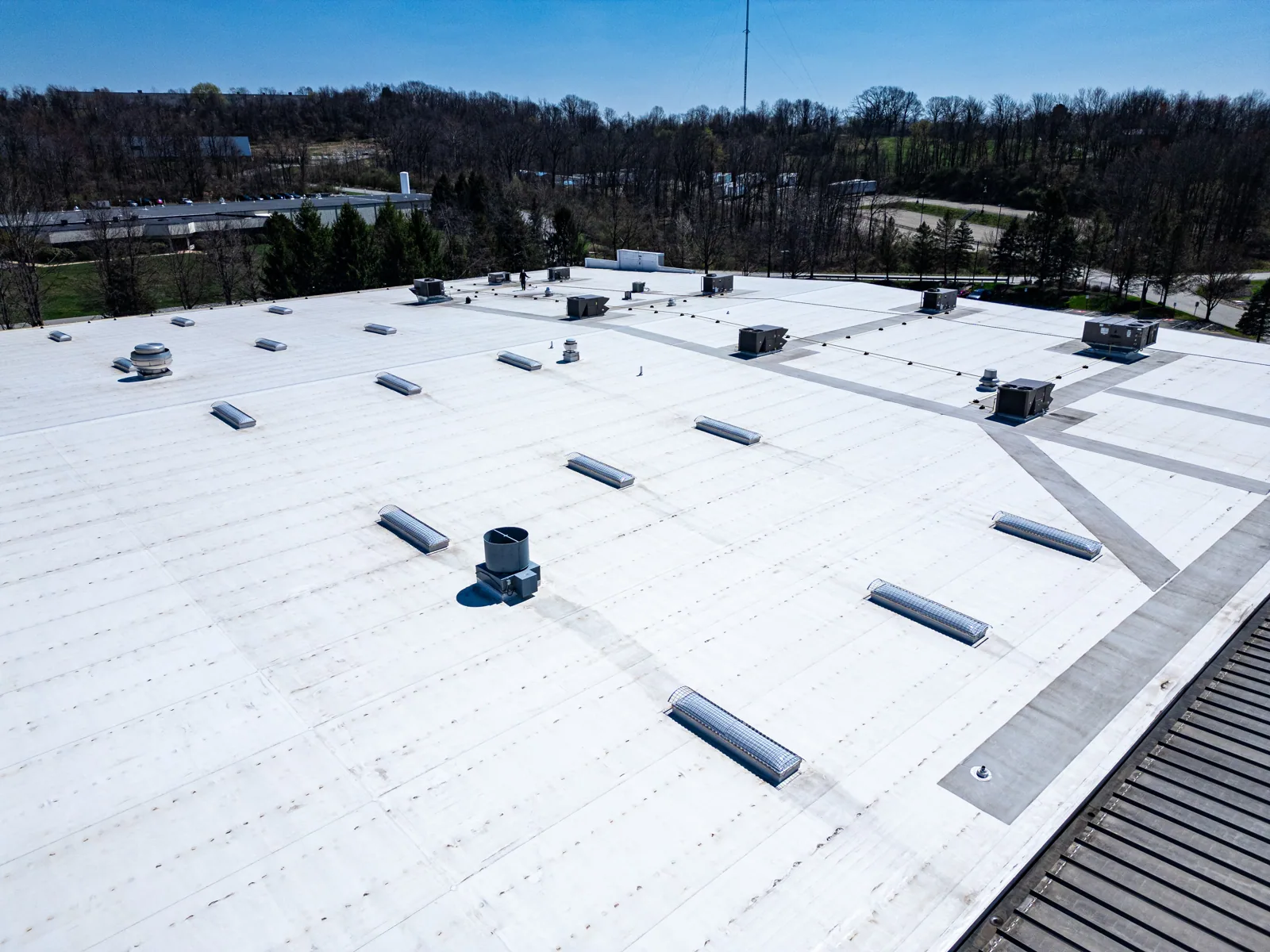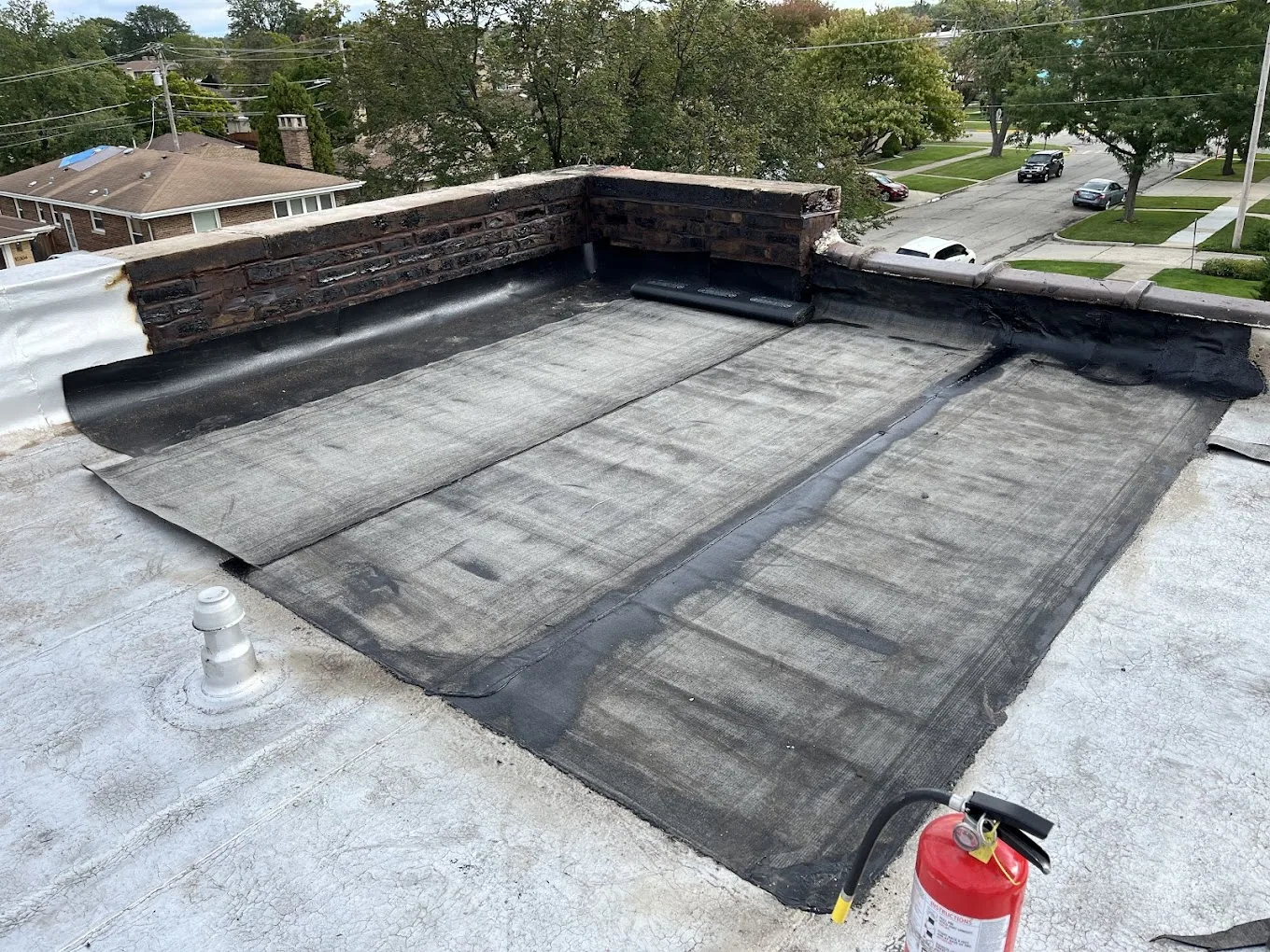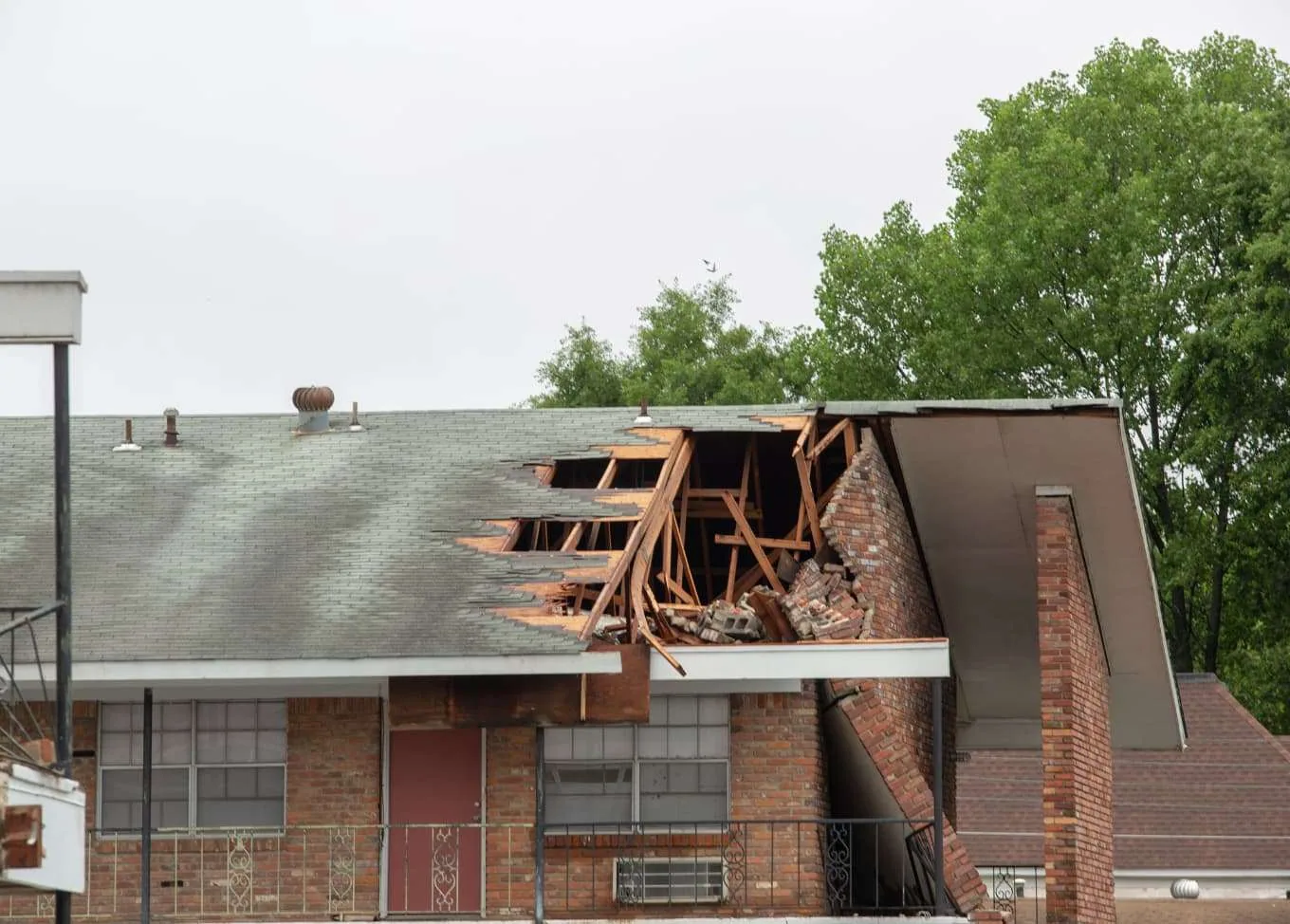
A long, flat strip-center roof tells its wind story at the corners. The field of the membrane may look untouched while a metal cap at the end of the building sits a half inch out of line. That small displacement is the clue, and it is the first thing to understand about wind damage: it starts at a weak point and travels. Step one is to find the weak point. Step two is to learn how far the damage has run.
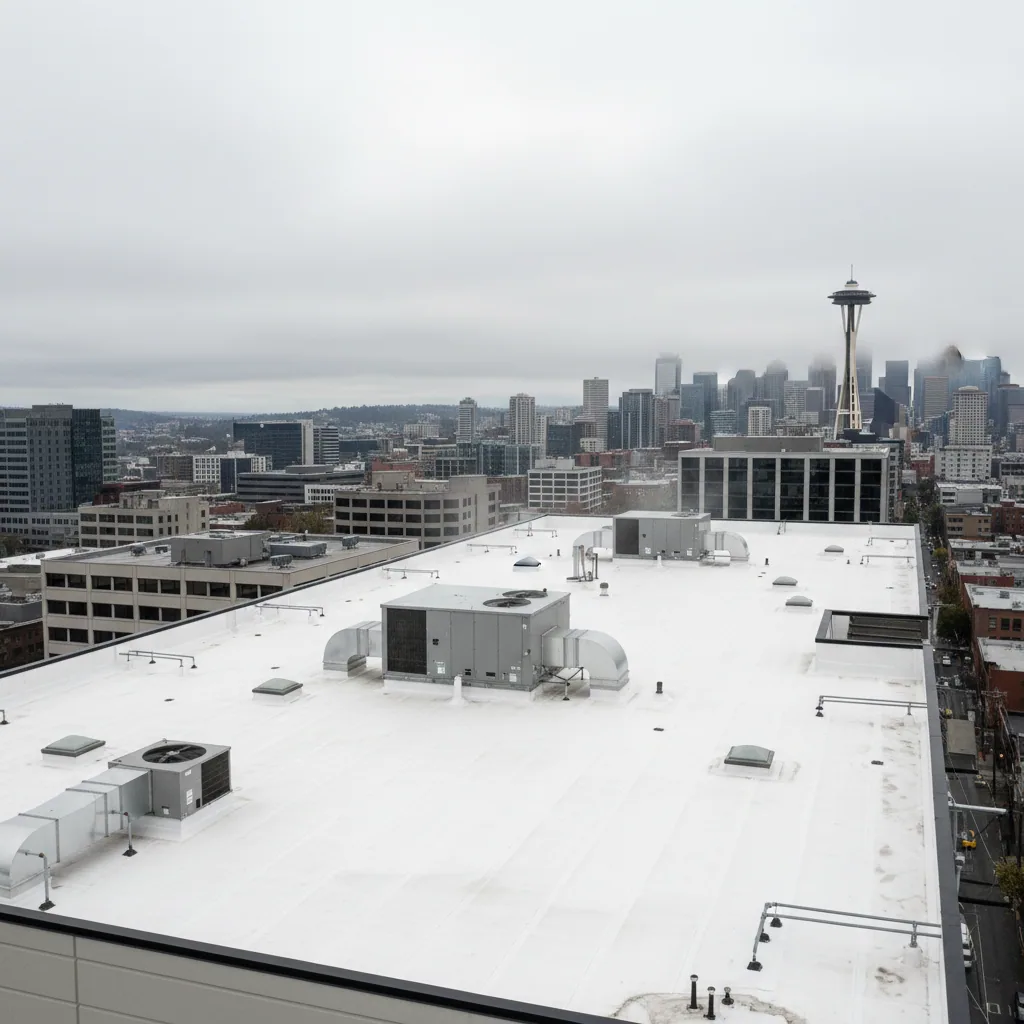
At Wichita Falls, TX commercial buildings with low-slope or metal roofs, wind repair begins with a walk of the perimeter. We trace every lifted piece back to its cause, make the building watertight and then write down what a permanent repair involves. Emergency response runs around the clock, holidays included.
What wind damage looks like
Start at the edges. Wind pressure is highest at corners and along the perimeter, so edge metal, coping and gravel stop are the first parts to move. A bent or displaced cap, a gap between the metal and the wall and a trail of sealant stretched like taffy all say the same thing: the edge has been lifted and set back down.
Then look at the membrane. A single-ply membrane that has been pulled by wind may show wrinkles, ridges or a billow, and a mechanically attached system may show fasteners that have pulled through or backed out. Torn sections, flapping flashing and debris scars are the obvious cases. The less obvious cases are seams that look closed from above but have been peeled partway open. We press along the seam and mark every spot that gives.
Why a roof loses its grip
A roof holds against wind through its attachment, and the attachment can be adhesive, ballast, fasteners or a mix. Each fails in its own way. An adhered membrane lets go where the bond was weak. A ballasted roof loses stone, which then becomes a hazard. A fastened system pulls at the plates. In all of these, what lies beneath counts as much as the sheet, since a tired deck or wet insulation holds fasteners poorly.
Wichita Falls has a long wind record to learn from. The 1979 tornado covered eight miles of the south and east of the city, and at Sheppard AFB the 1962 tornado took the windows out of the control tower. Those events say nothing about your roof today, but they explain why edge metal and attachment get attention here.
Retail buildings carry their own wind story. In 1979 the northern edge of Sikes Senter on Midwestern Parkway took a direct hit, a JCPenney store partly collapsed with about 1,000 shoppers inside, and businesses along Kemp Boulevard were destroyed. A big enclosed box with large spans and tall parapets takes wind differently from a low warehouse, which is why the building type shapes the inspection. A storm of that scale leaves tornado damage that has to be planned as a larger recovery, with the structure checked before any membrane work begins.
Repairs, in the order they should be done
One clean rule governs the sequence: restore the edge first, then the field. A roof with a loose edge will open up again in the next gust, so the perimeter metal is reset, refastened and sealed before any membrane patch is trusted. Where metal is bent beyond reuse, we replace it with the same profile and secure it to current attachment requirements.
Membrane repairs follow. Small tears are cleaned and patched with material compatible with the existing roof. Larger areas may need a new section with seams and flashings tied back to sound membrane. We also check the layer below: wet insulation under a torn area is cut out and replaced, since a patch over wet material fails again. Where the damage is widespread, a recover or replacement may be the better plan, and we explain both. Start with edge metal and coping, and the rest of the job follows.
Transitions deserve their own look. Wind often finds the joint where a roof meets a wall, a curb or a vent, and a loosened termination there lets water in without any visible tear. When flashing has been pulled free, the metal, the sealant and the membrane edge all have to be rebuilt together, which is the work of flashing failure repair. Peeled seams need their own fix, because a failed seam is welded or bonded again, not simply sealed over. Each repair is checked against the neighbors so the next gust does not find a fresh weak point.
The first night after a storm
A wind-opened roof lets in rain, and the damage compounds each hour. The first call is for dry-in. We secure loose material, tarp or seal torn sections, and photograph everything for the file. Emergency roof repair is available at any hour, and the temporary work is recorded as temporary so the permanent plan stays clear.
Wind-opened roofs also shed debris onto neighboring property. Loose gravel, torn sheet and unsecured metal are cleared promptly. For owners dealing with an insurer, storm damage repair and documentation can be handled together, and a record of what was found helps separate wind from age wear.
What reduces the next wind loss
Prevention is mostly inspection. A scheduled walk looks at edge metal, termination bars, fasteners, seams and flashing before the storm, not after. Loose items are fixed when they are small. Walk pads protect the membrane from traffic, and rooftop units are checked for secure curbs and panels, since an open access panel can catch the wind like a sail.
Buildings in open settings feel more wind. The Wichita Falls Business Park has a rural setting with room to expand, and large low-slope roofs there should have their perimeter checked after any strong storm. A building with a hail-bruised membrane is weaker in wind, so one problem often leads to the next.
Attachment can be checked without tearing anything up. Pull-testing a few fasteners, probing a seam edge and comparing the roof to its drawn attachment pattern give a clear read on whether the system will hold. The result is a short list, in plain terms, of what to tighten, what to replace and what to leave alone.
Commercial Roofing Questions
How do I tell wind damage from normal aging?
Wind damage clusters at corners and edges, and it often shows displaced metal, creases and peeled seams. Aging shows as uniform wear across the surface. We walk the roof to separate the two.
Is a lifted edge an emergency?
A lifted edge is urgent because it can open the whole membrane in the next gust. We secure it first, then plan the permanent repair. Rain makes the case more pressing.
Can a wind-damaged membrane be patched, or does it need replacing?
Often a patch is enough when the insulation underneath is dry and the roof is otherwise sound. Wide damage or wet insulation points to a larger repair. A moisture survey and a walk settle it.
Do tornadoes from decades ago matter for my roof today?
They matter as context. The 1979 and 1964 storms show what wind can do in this area, but your roof is judged on its present attachment, edge metal and condition.
What should I send to get started?
Send the roof age, the building use, photos of the damage and the date of the storm. With those, we can plan a first visit that answers a specific question.