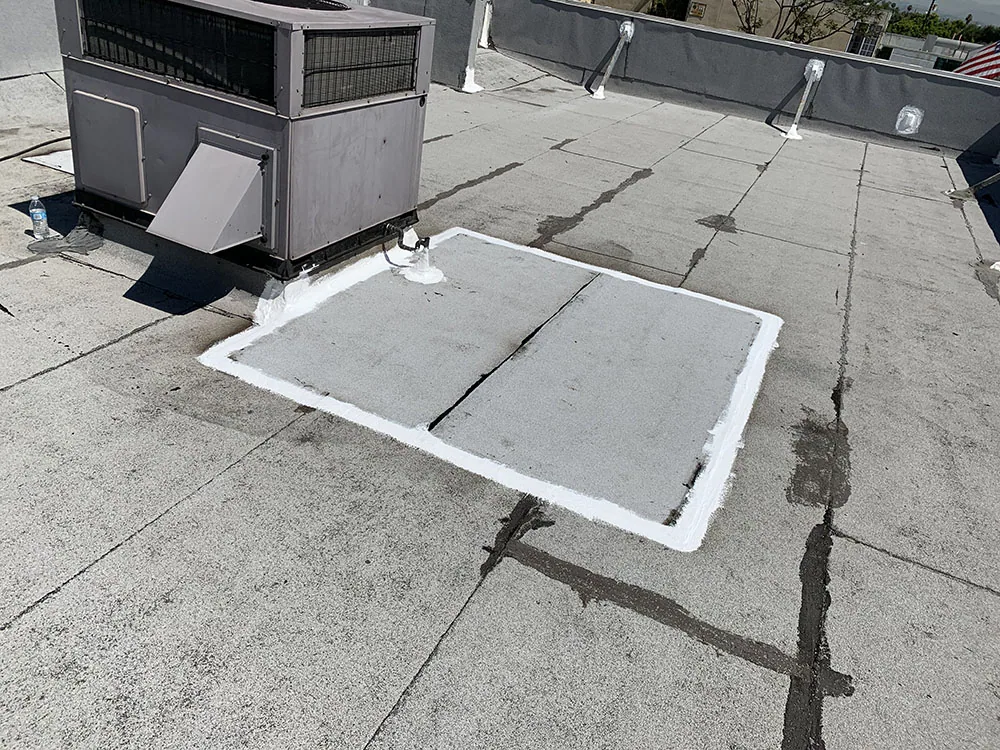
Petrolia had 782 residents in 2000 and 514 in 2020, and a roof decision in a town with a shrinking count of people is a decision about what a building is still for. That question comes before the membrane. Petrolia lies in northern Clay County along State Highway 79, some 17 miles southwest of Wichita Falls, TX, and a commercial owner there weighs a repair against the future of the building itself.
We begin with that question. Step one is the use: occupied, part-used or waiting. Step two is the roof age and what has been done to it. Step three is a walk that shows the actual condition, so the decision rests on what the roof will do and not on what it looks like from the road.
Match the Fix to the Building's Future
A building with years of use ahead deserves a roof built to match. A building whose use is uncertain deserves a roof that stays dry at the lowest reasonable cost. The two answers can be very different, and we write them as separate options.
For the uncertain case, a targeted repair or a coating over a sound surface may buy several useful seasons. For the long-term case, a new membrane with proper insulation and drainage is the better value. Cost follows roof size, insulation condition, penetrations and access, and each option in the report carries its own scope and price.
Two Highways, Daily Use and Late Calls
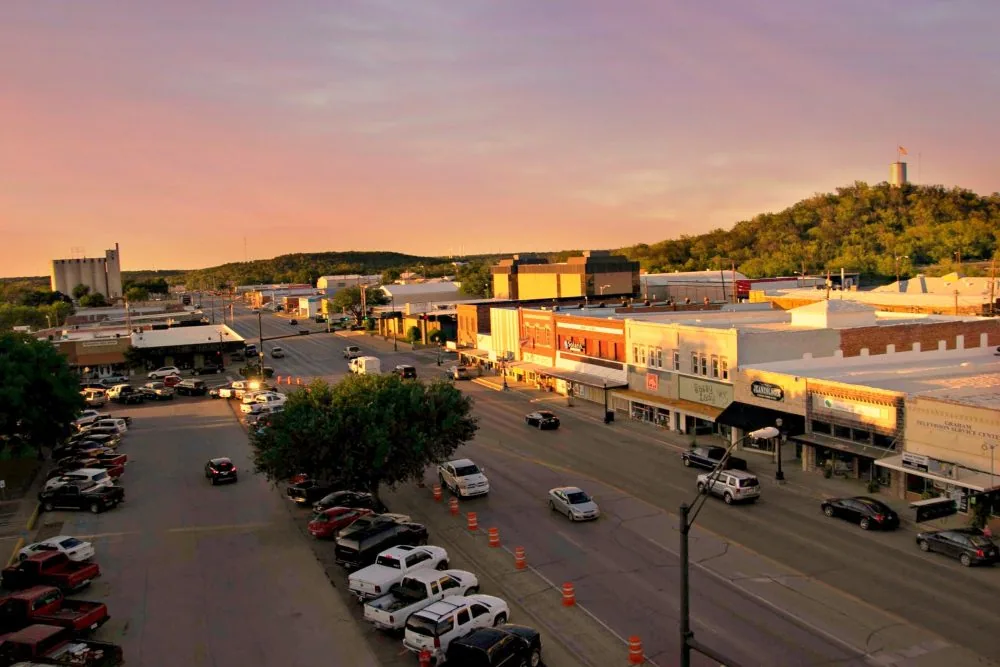
State Highway 79 connects Petrolia to Wichita Falls, and State Highway 148 runs 14 miles south to Henrietta. A single trip can cover buildings along either road, which keeps the first walk-through practical. Dean also sits on Highway 79, about 10 miles from Wichita Falls, so a trip out can pick it up on the way.
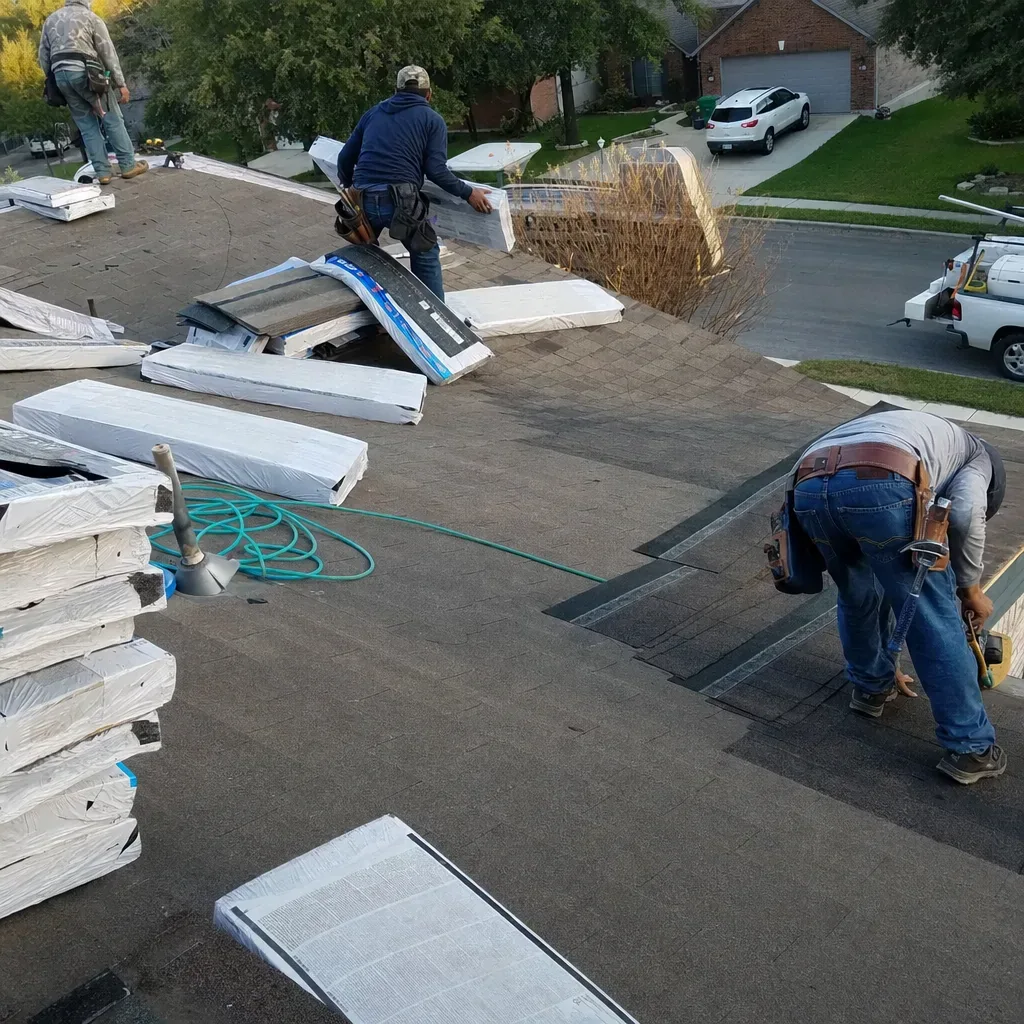
For the work itself, we plan the staging area, the delivery times and the path for debris before the crew arrives. A written plan goes to the owner first. If the building has tenants or a gate code, tell us and the plan will include them.
A small commercial building can stay open while the roof is worked on. We section the roof, keep one area open at a time and put protection over doors and rooftop equipment. Noisy work is planned for quieter hours when the building allows it.
Emergency calls run around the clock, including holidays. If a storm opens a roof, the opening gets covered first, and the permanent repair waits for good weather. A temporary closure stops the damage while the larger decision is made.
The Heat Cycle on a Flat Roof
Wichita Falls, 17 miles northeast, counts roughly 28 days a year at 100 degrees, with a 2011 run of 100 such days that was the first in Texas. A flat or low-slope roof in Petrolia is under similar summer sun. Dark membranes absorb it, swell and then relax at night. Over years, that cycle works at seams and flashing corners like a bent paperclip.
The signs of heat and ultraviolet wear are quiet: a chalky surface, a seam edge that has curled, sealant that has cracked. We catch them by walking the roof and pressing along every seam. Catching them early is the cheapest roof work there is.
Reading Hail History Without Over-Reading It
Electra took golf-ball hail in March 1982, with damage out to Burkburnett, and Iowa Park and Burkburnett got hit with baseball-size stones in April 1991. Petrolia is not named in those records. They are a reminder of how big the stones can get in this part of Texas, and they are no proof of anything on a roof in Petrolia today.
So we look at the roof itself. A hail bruise shows as a soft, dished spot in the membrane, or in the insulation beneath it. It can sit quiet for a season and leak at the next hard rain. We press, probe, mark and photograph every spot, and the findings go into a report that a claims adjuster can follow.
Following Water Uphill
A ceiling stain tells us where water landed, not where it entered. Step one is to find the nearest opening above the stain: a seam, a drain, a pipe boot or a rooftop unit curb. Step two is to confirm with moisture readings. Step three is to cut a small test opening if the readings suggest wet insulation.
A clean, small opening gets a patch. A string of failed seams needs a longer leak repair. Wet insulation over a wide area is the point where a patch stops making sense, because the water will keep moving through insulation that cannot dry. A moisture map taken before any cut keeps the opening small and the repair sized to the wet area.
What a Recover Can and Cannot Do
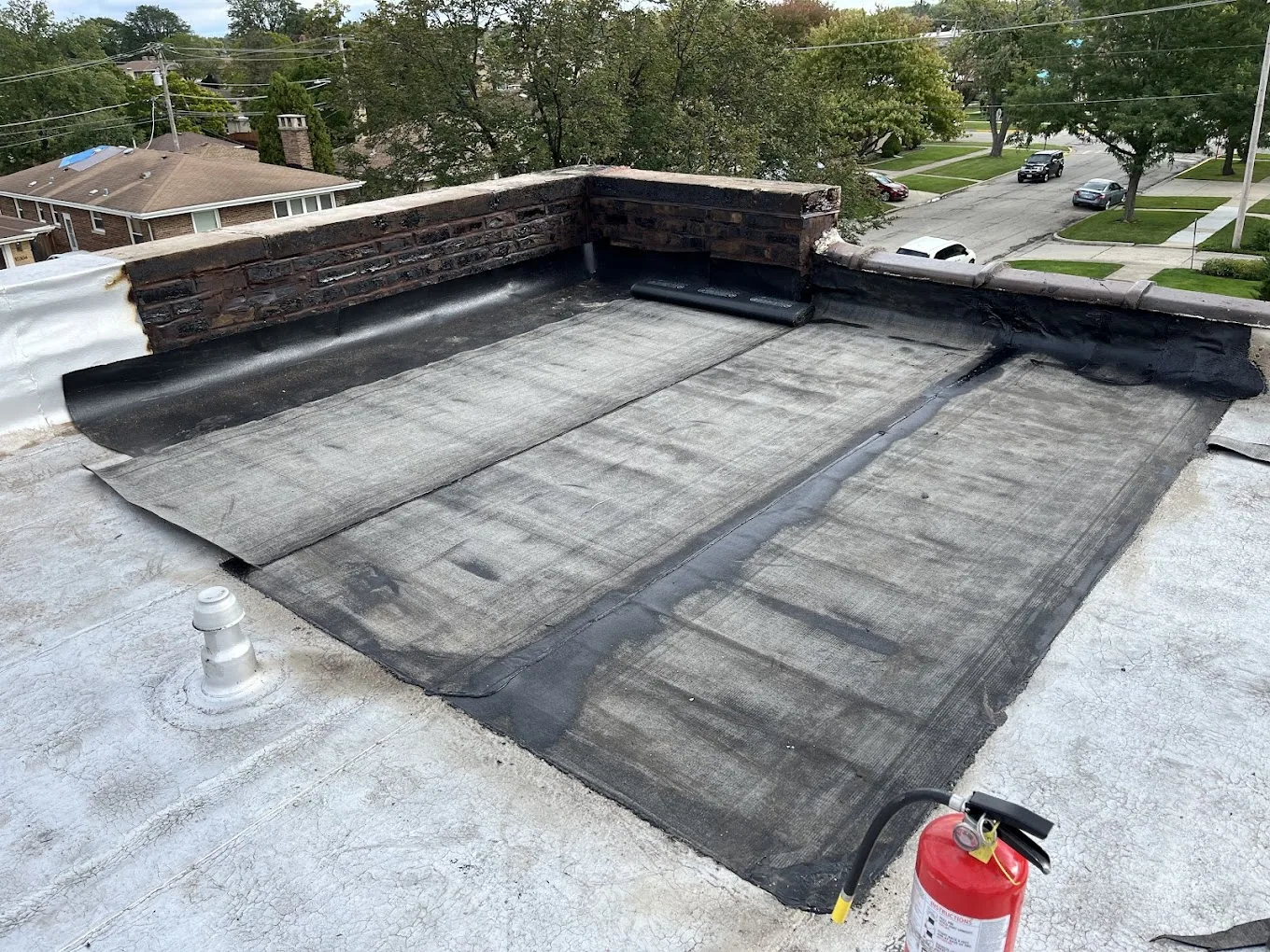
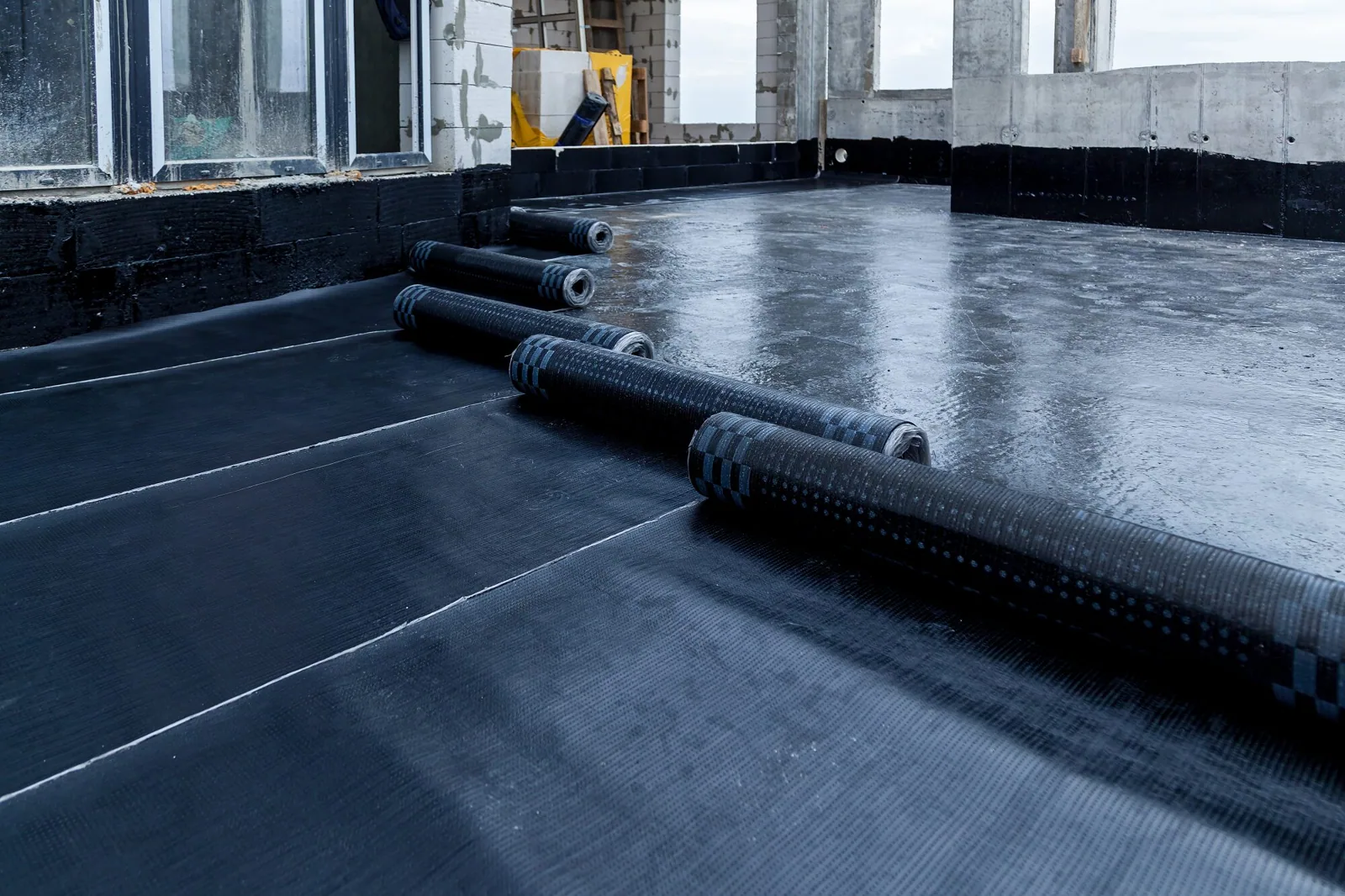
A recover puts a new membrane over the old roof. It saves tear-off labor and disposal, and it keeps the building working during the job. It also depends on the insulation under the old roof being dry, so the survey comes first.
If moisture readings find wet insulation, a recover would trap that water under a new sheet. In that case the wet portion has to come out, and the project becomes a partial or full replacement. We say so in the report, with the readings attached, and let you choose with the facts in front of you.
What We Check First
Step one is the edges, where wind and runoff do the most work. Step two is the penetrations, since every vent and pipe is a hole with flashing around it. Step three is the seams and the field of the roof, pressed by hand so soft areas show themselves. On a metal roof we check panel laps, fastener heads and the sealant at the ribs. We finish with the drains, looking for the pale ponding line that shows where water has lingered.
The written inspection carries a photograph and a plain sentence for every item, ranked from urgent to watch-only. That ranking is what lets an owner spend on the right thing first.
Commercial Roofing Questions
Is it worth spending on a roof in a shrinking town?
That depends on the building's use over the next several years. If it will stay occupied, a good roof protects what is inside. If its use is uncertain, a limited repair keeps it dry for less. The report lays out both. We do not push the larger option when the smaller one fits the building.
Which highway do you take to reach Petrolia?
State Highway 79 from Wichita Falls, about 17 miles. Buildings along State Highway 148 toward Henrietta, 14 miles south of town, can be handled on the same trip.
Is patching worth it on a roof near the end of its life?
When the patch is priced as a patch, yes. Patches on an old roof buy time, not a new life. We say how much time we expect and what the next step will be.
What does the first roof walk include?
We walk every edge, seam, drain and penetration, press the surface to find soft spots and photograph each finding. A written report follows, with the findings ranked by urgency and each option priced separately, so you see the scope before anything is scheduled.
How do I describe a leak when I cannot find it?
Tell us where the stain is, when you first saw it and whether it spreads after rain. Photographs of the ceiling help. We use that to decide where to start the walk.