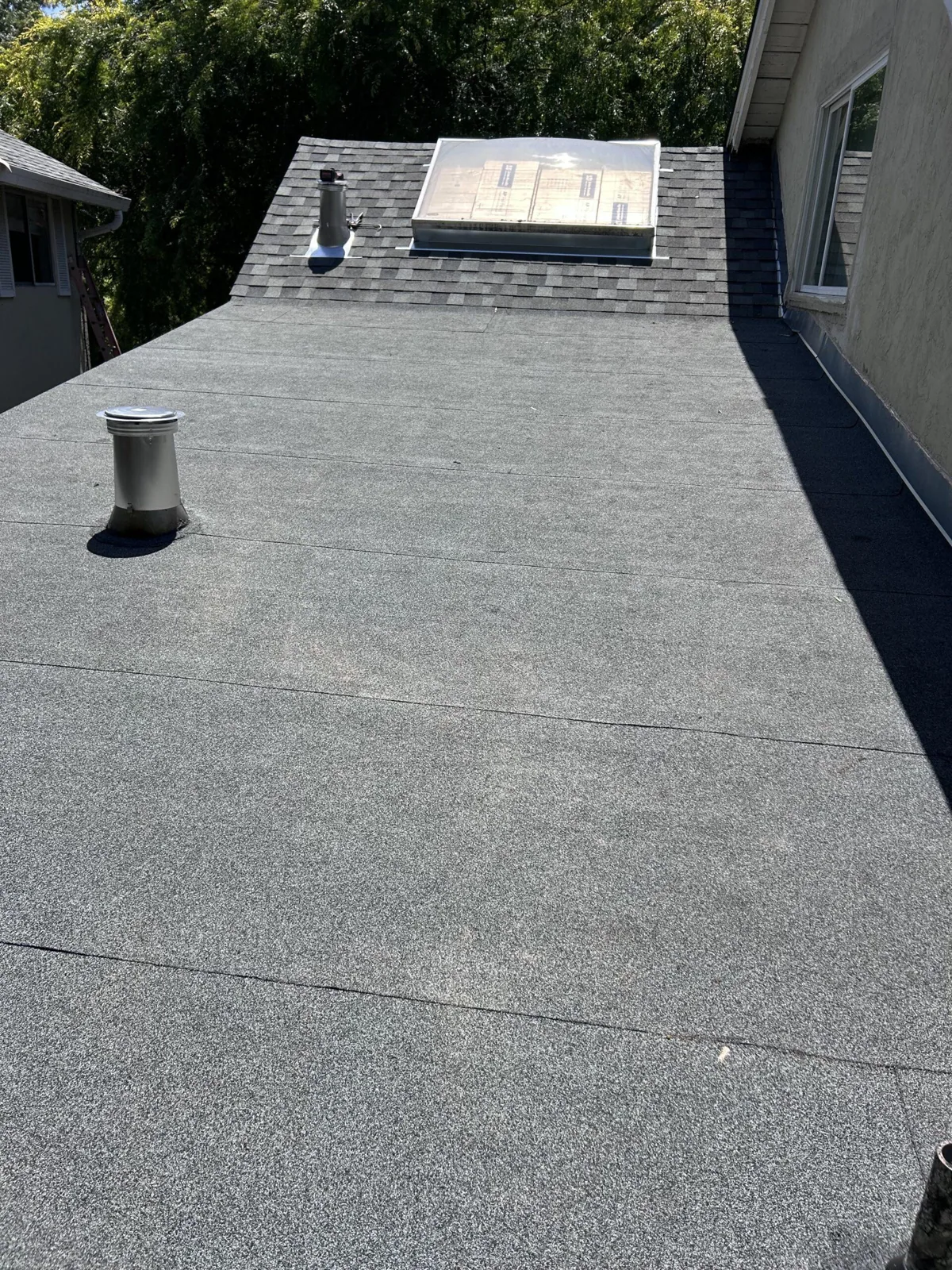
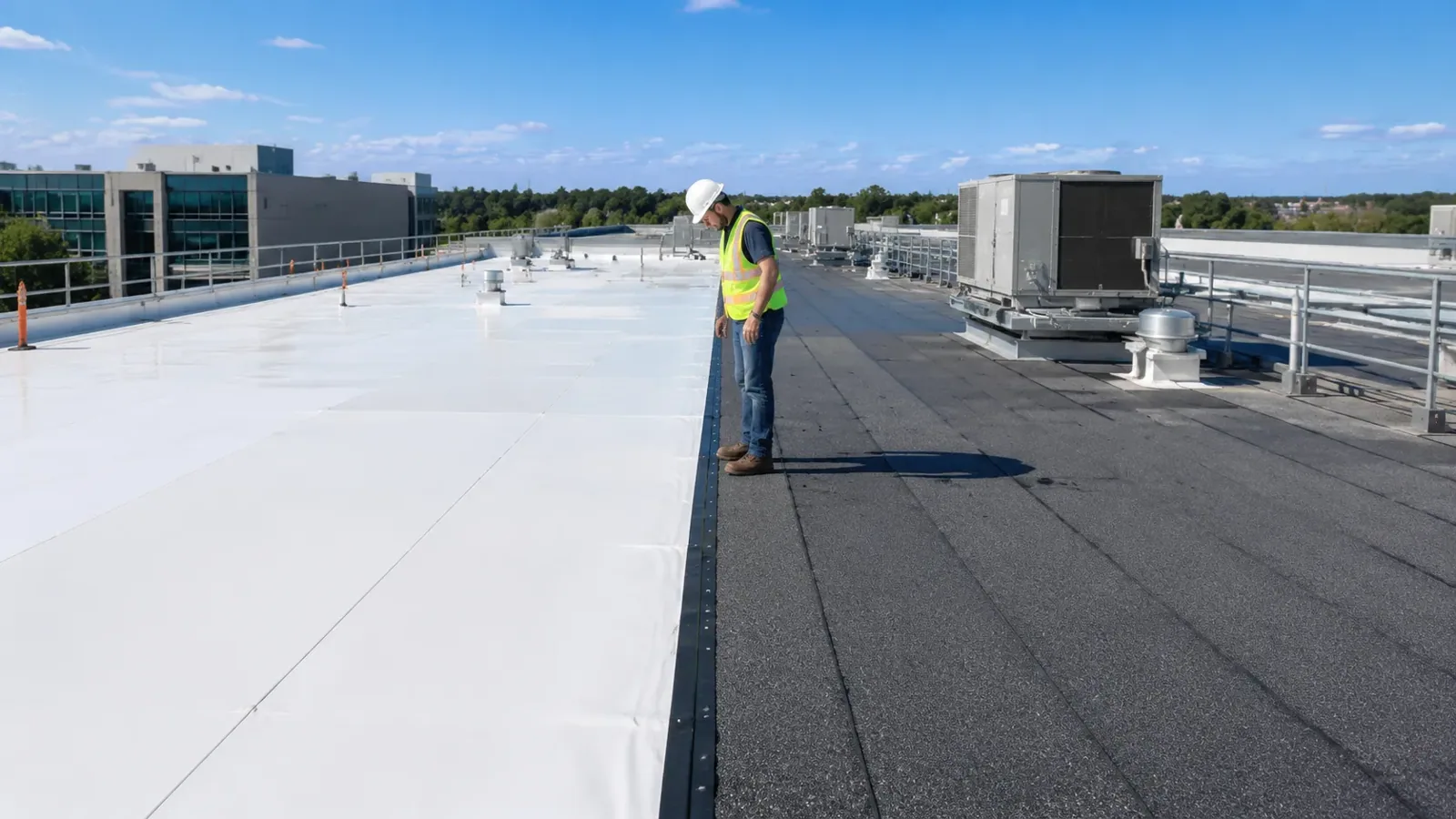
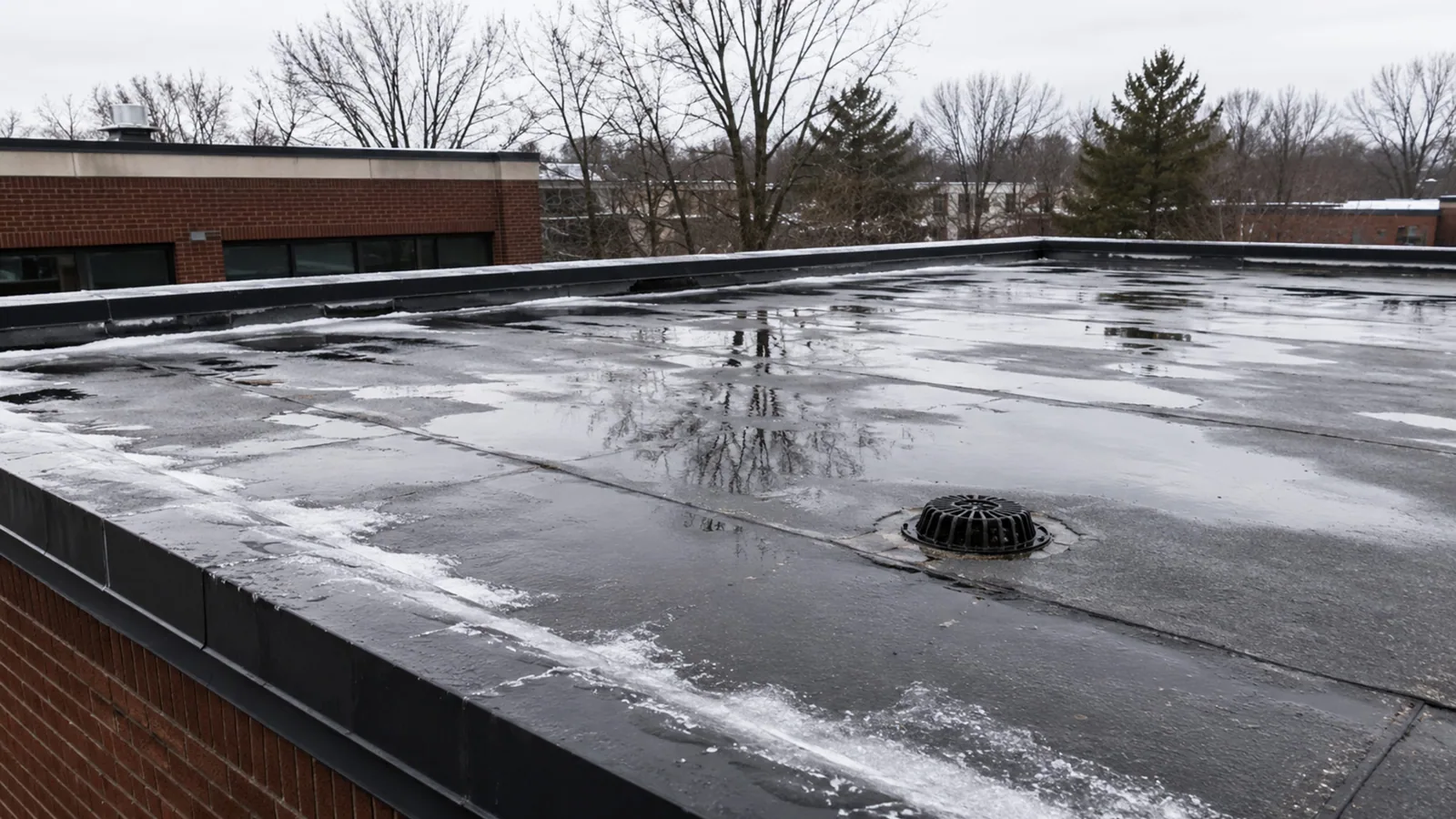
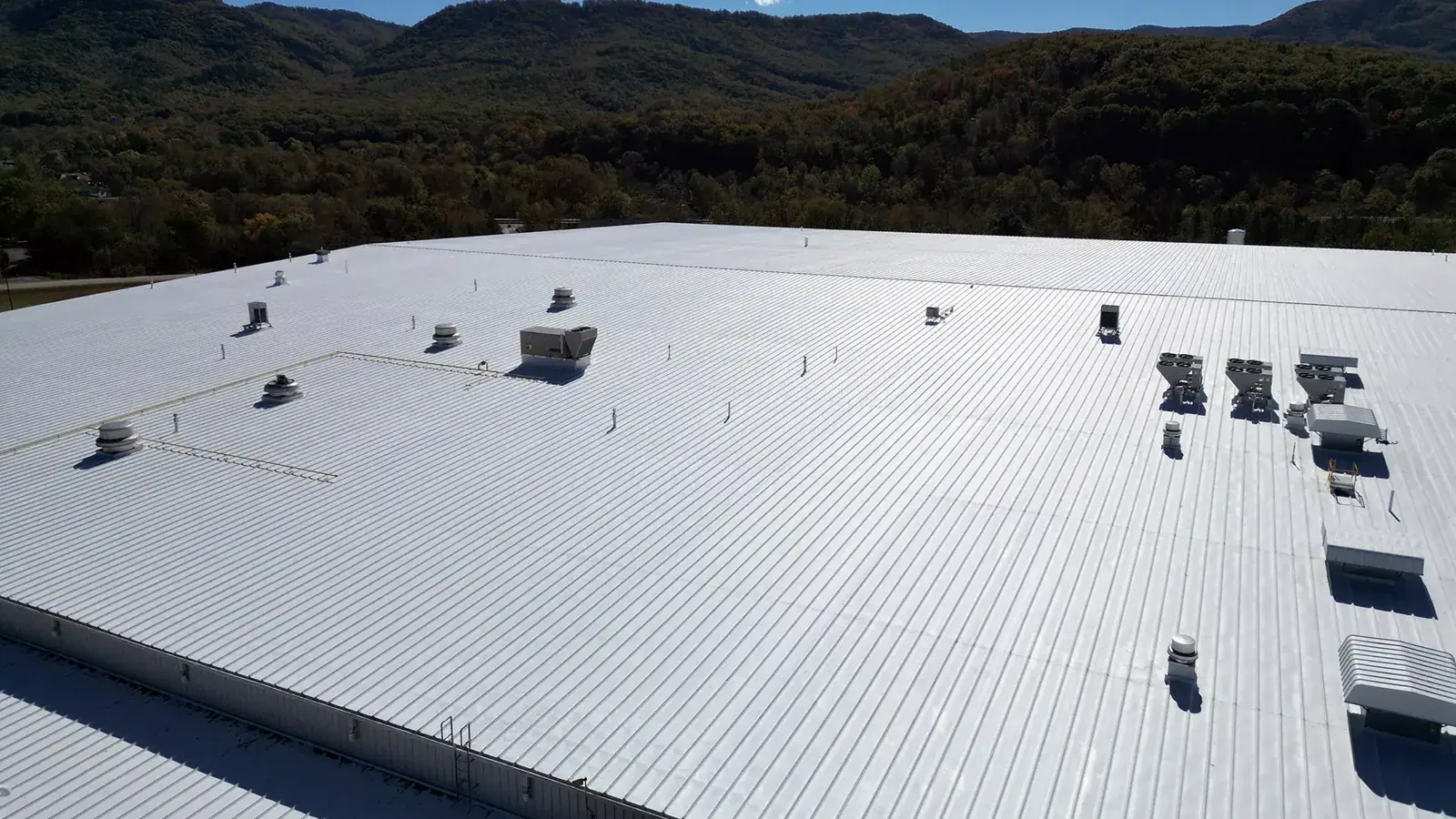
A metal-roofed shop, a worn built-up roof on a small office or a faded modified bitumen cap each ask the same question: can the roof get another round of life without a tear-off? The one thing an owner should understand about an acrylic coating is that it is water-based. It cleans up with water, goes on in thin coats and cures into a bright, reflective film, and it works best on roofs that drain well.
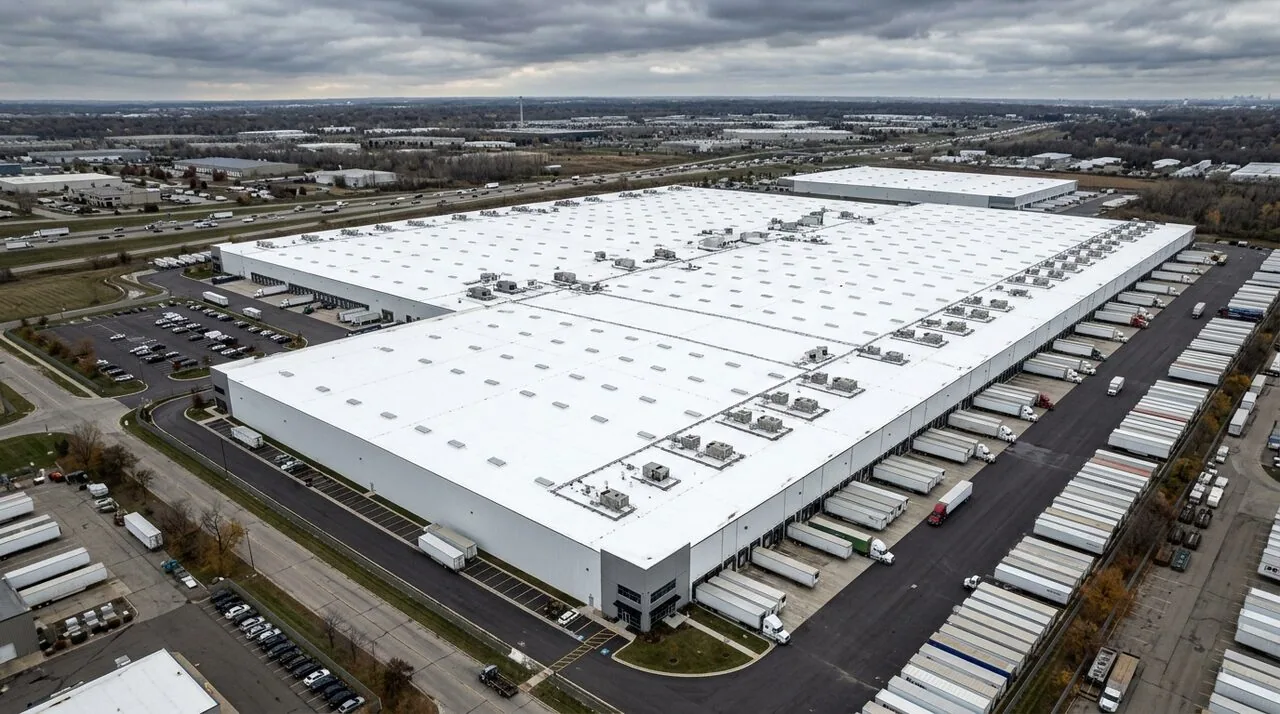
That last point decides most jobs, and it is the first thing we test. We apply and repair acrylic coating systems, and the first walk is mostly about where the water goes.
Know What It Bonds To
Acrylic sticks well to metal, built-up roofing surfaces, modified bitumen and cured foam once the surface is clean. It needs a primer on rusted metal and on some asphalt surfaces, and it needs fabric at seams and cracks. Step one is a wash, step two is a bond test on a small patch and step three is repairs. The coat comes last.
Asphalt surfaces are the usual trouble spot. Dark asphalt can bleed oils into a light coating, which shows as brown staining. A primer or a stain-blocking first coat stops that. On metal, rust is treated and sealed first, since a coating over active rust lifts as the rust grows. Fastener heads get a dab of sealant and a second look, because a backed-out screw pushes up through the film and opens a path for water.
Check Where the Water Goes
Acrylic does not like to stay wet. A film that sits under standing water for days can soften, blister or wash out at the edges. After a rain we look for puddles that are still there the next day and mark the ponding line, because that line tells us where the coating will struggle. Annual precipitation in Wichita Falls runs near 27.9 inches, but May 2015 alone dropped 17.00, the wettest month on record.
A roof with drains that work and a slope that moves water is a good candidate. A roof with low spots gets those corrected first, with tapered insulation, new drains or a different coating. When the low spots cannot be fixed, silicone is the better match, and the ponding water repair is part of the same job.
Count the Heat
The city sees about 28 days a year at 100 degrees and about 102 days at 90 or higher. A white acrylic coat sends much of that sun back, which lowers the roof surface temperature and the load on the air conditioning. The film expands and relaxes with the temperature, so it needs enough thickness to handle the swing.
Coating thickness is what protects the roof, and it is measured, not guessed. We calculate the coverage rate, apply in at least two passes and check a wet film at several points. A thin coat wears early, and the savings are lost at the first recoat. The coating restoration plan sets the recoat cycle at the start, so the owner knows when the next coat is due. Between coats, a yearly walk catches pinholes, scuffs near rooftop units and debris at the drains while they are still small jobs.
Plan for Hail and Wind
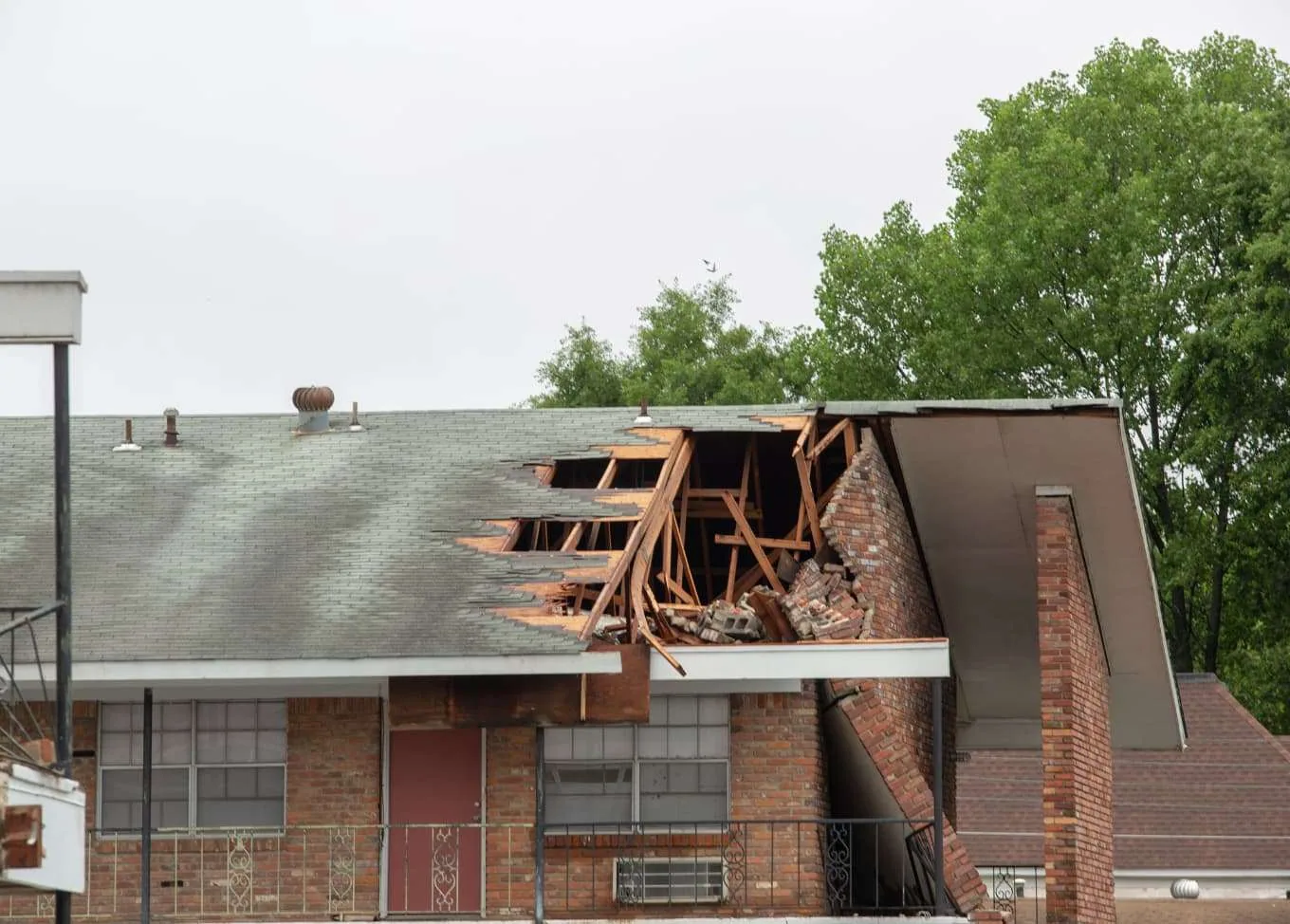
A coating does not make a roof hail-proof. Baseball-size hail damaged Iowa Park and Burkburnett badly on April 2, 1991, and Electra endured golf-ball-size hail for 15 minutes in 1982. Those events are history, not an inspection, but they explain why a coated roof is checked after every hard storm for dents, cracked film and loose seams.
Wind works on the edges first, and it is a separate risk from hail. The April 1979 tornado tore across the south and east sides of Wichita Falls, and strong wind of any origin lifts loose flashings and edge metal. We secure those details before coating, because a coat over a loose edge peels with it. After a storm, the marks we make for hail damage repair start at those edges.
Match Acrylic to the Building
Acrylic suits roofs with good drainage and a long list of other work. A retail strip in the Kemp and Kell corridor with an older metal or built-up roof is a fair match, and so is a small commercial building in Burkburnett, where oil drew roughly 20,000 people by 1918. Whether a given roof qualifies is a walk, not a guess. The walk checks the drains, the slope, the age of the existing surface and whether the owner plans to keep the building long enough to justify a restoration.
Acrylic is a poor match for a roof that holds water or has wet insulation underneath. In those cases a metal retrofit or a new membrane is the better route, and we say so on the first walk.
Plan the Application Window
Acrylic needs a stretch of dry weather, because rain on a fresh film washes it off the roof before it cures. The best windows in north Texas are spring and fall days when the forecast shows no rain for a day or two and the deck is neither cold nor scorching. We avoid dew on the surface, and on a hot roof we start early.
On an occupied building the work is quiet. The material has a mild smell, intakes are protected and the lot below is kept clear. The roof is closed to traffic until the coat is firm, which keeps footprints and dropped tools out of the film. Crews also tape off skylights, vents and drains before the first pass so the coating does not clog them. At the end we walk the roof with the owner, check thickness and photograph the finished surface for the file.
Repair or Replace
Coating is the right answer when the roof underneath is dry, sound and drains. It is the wrong answer when insulation is wet, the deck is rusted through or the membrane has split across large areas. A core cut across a few spots tells.
Cost drivers are the size of the roof, the preparation, the number of coats and the primer. Acrylic usually costs less to apply than other coating types, and the tradeoff is the recoat schedule and the need for good drainage. The cool roof benefit is real, but only when the film is kept clean and recoated on time.
Commercial Roofing Questions
Can acrylic go over my old roof?
If the roof is dry and sound, usually. We wash it, test a patch and repair seams first. Wet insulation or active rust has to be fixed before any coat goes on.
How is acrylic different from silicone?
Acrylic is water-based and costs less to apply, and it dislikes standing water. Silicone tolerates ponding but is harder to recoat. The ponding line on your roof decides between them.
Will a white coat lower my cooling bill?
It lowers the roof surface temperature, which reduces heat gain through the roof. How much that saves depends on insulation, equipment and use. We do not promise a figure.
When does a coated roof need another coat?
On a schedule set at the start, plus after storms. A clean roof with even film lasts longer between coats, so a yearly walk and wash pays off.
Does rain right after coating ruin the job?
It can. A fresh film washes off before it cures. We watch the forecast and start only when a dry window is clear, and we recoat any area that was marked by rain.