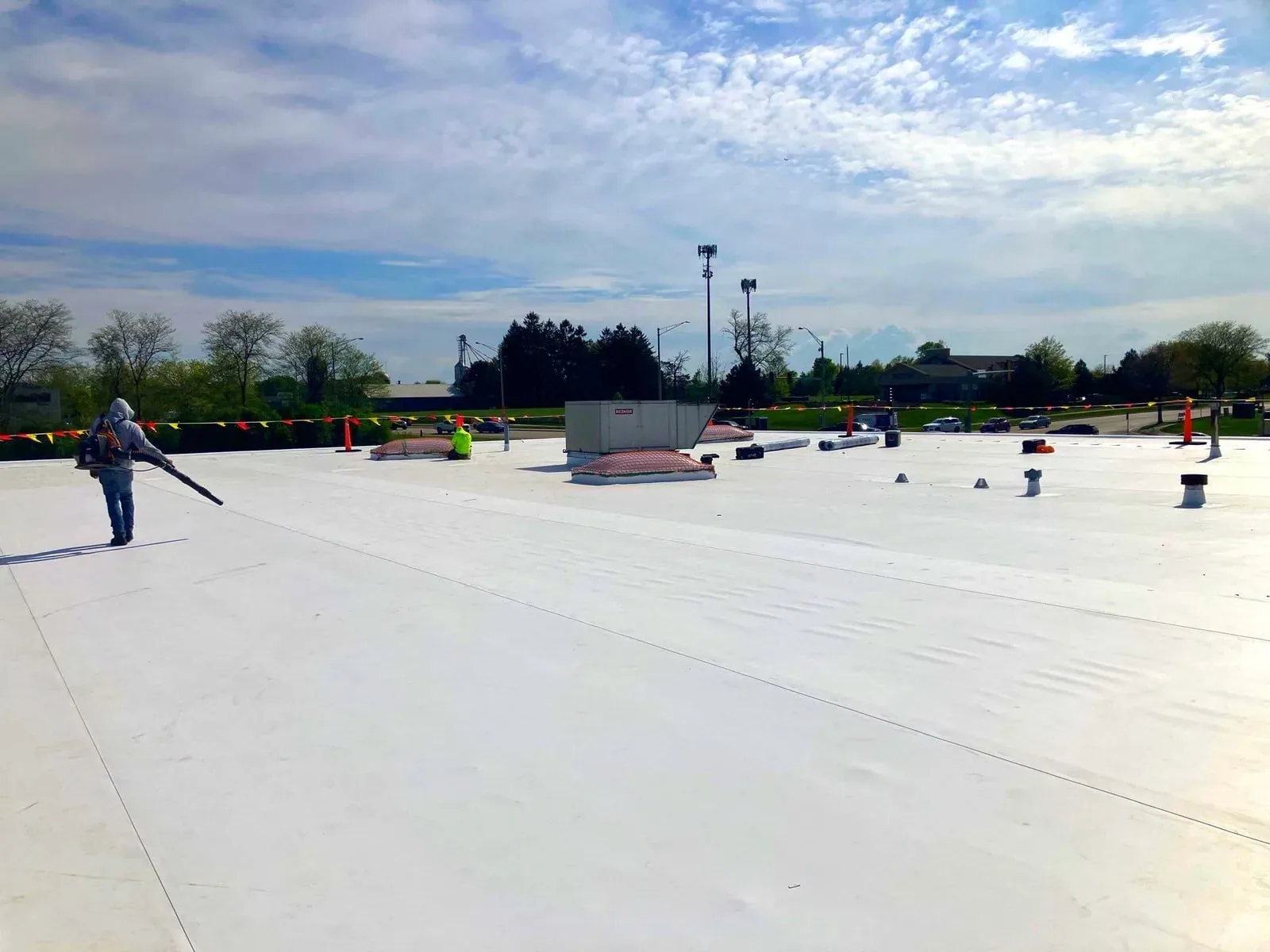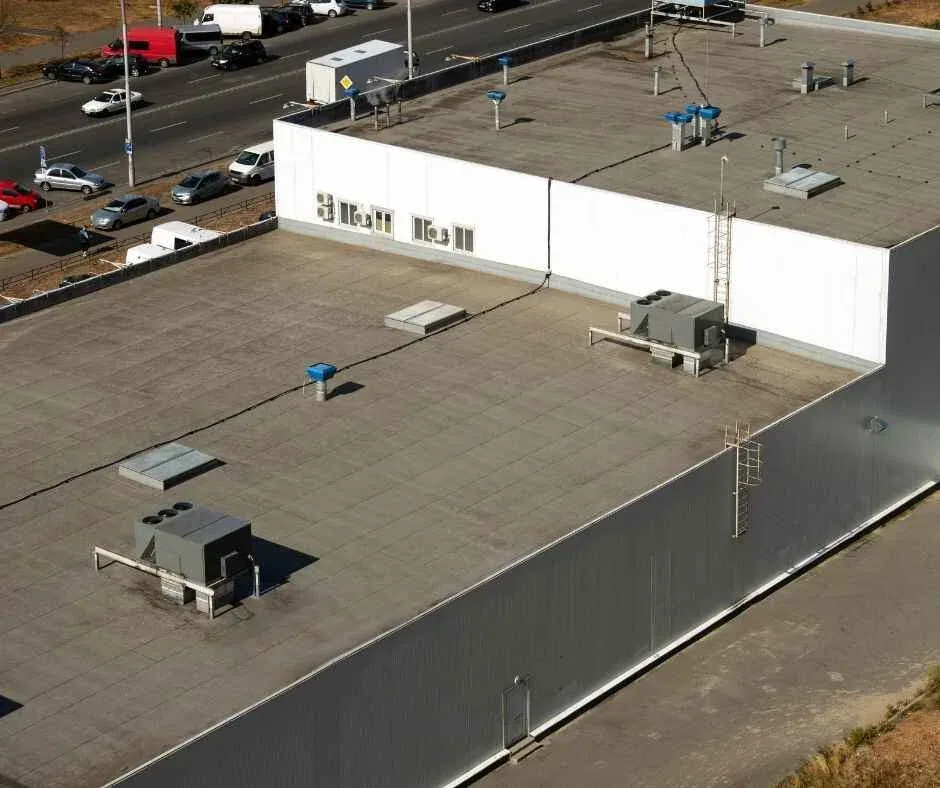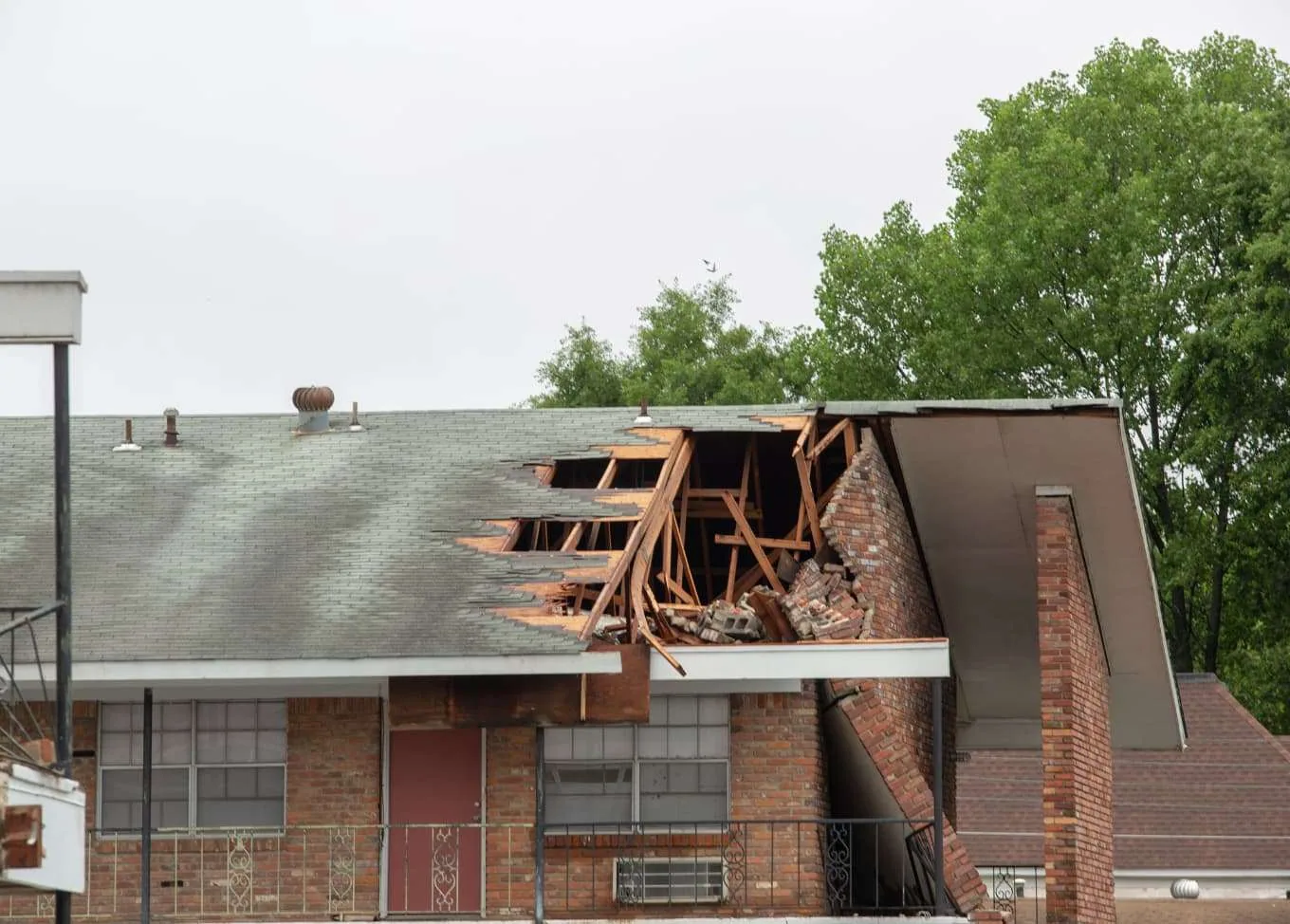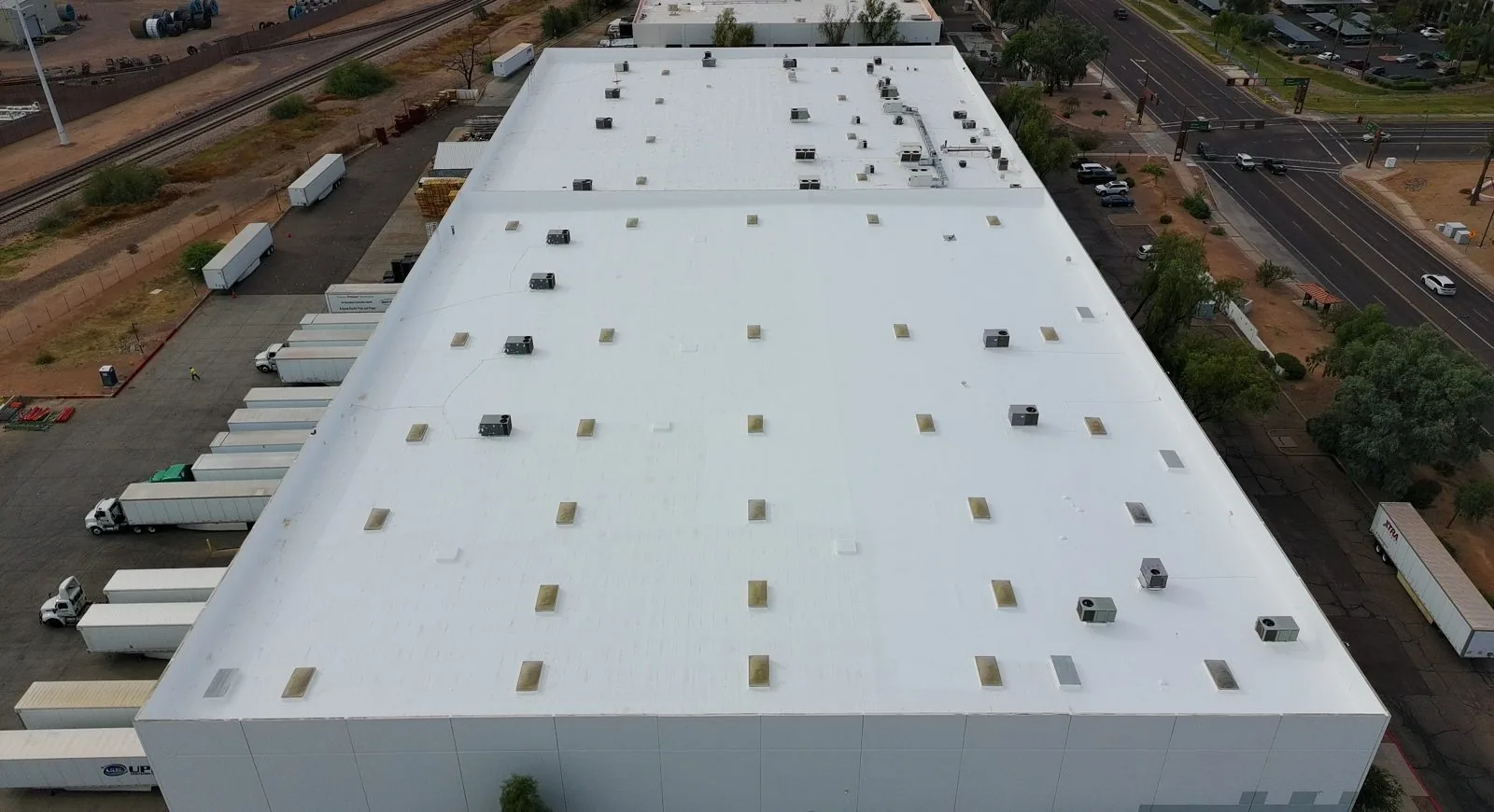
A big-box store is one wide, quiet roof with a few busy corners, and the corners are where the money goes. The field of the membrane may run for a long way with nothing on it, while the loading dock, the entrance canopy and the rooftop mechanical yard carry most of the leaks. In Wichita Falls, TX, that shape meets long summers and spring hail. Start with the building, then the field, then the corners. That is the order we use to read a store roof, and it is the order that makes a repair budget make sense.
Read the Footprint First
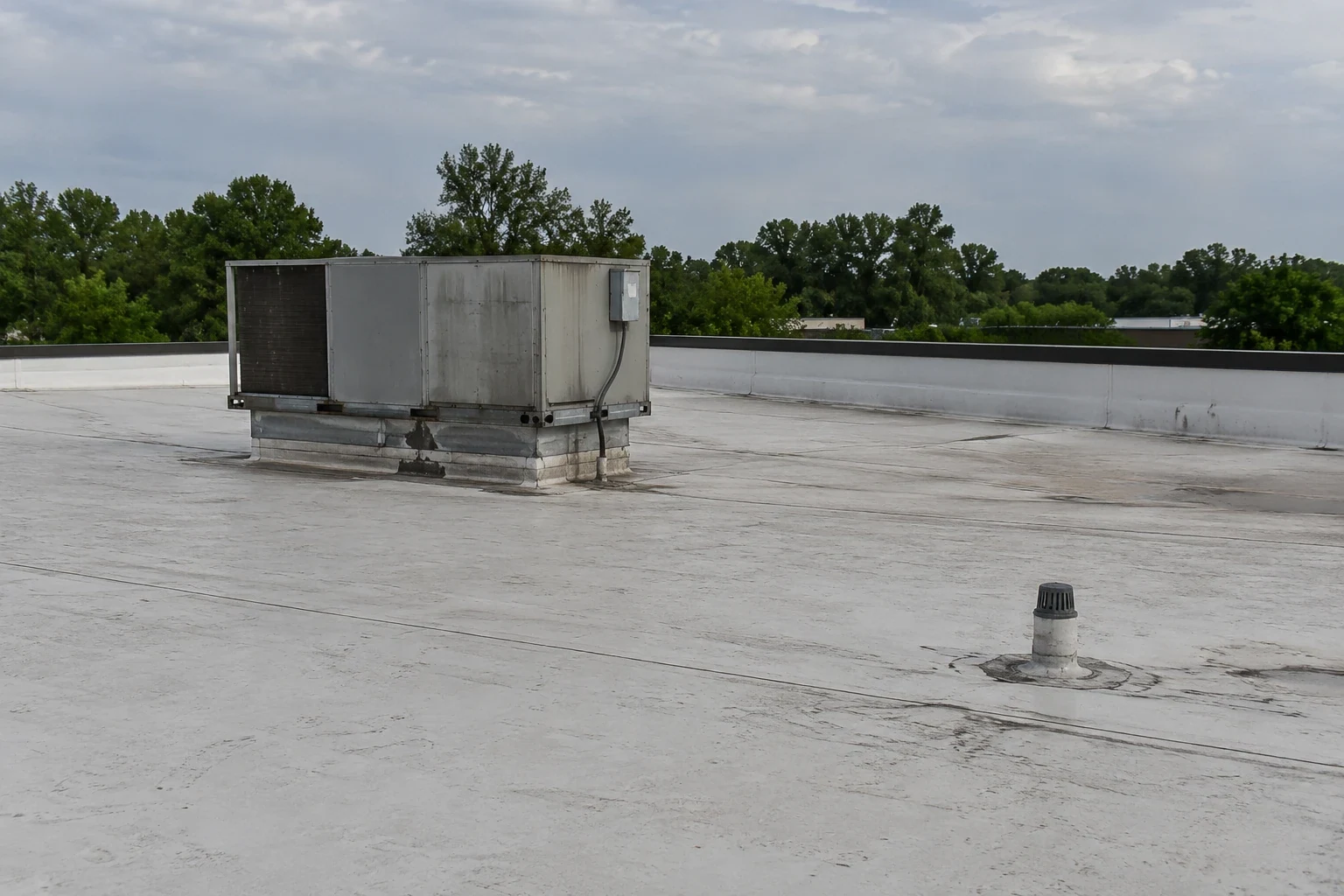
A large retailer's roof is shaped by what happens below it. The sales floor sits under the biggest stretch of the field. Stockrooms and receiving sit along one side, usually beneath a taller section that creates a step in the roof. Refrigeration and food areas, where they exist, add condenser lines and extra penetrations. Offices, restrooms and the front vestibule each add their own vents and flashings.
Walmart is the seventh-largest employer in Wichita Falls at 1,009 jobs, and any large-format store, whatever the name on the sign, follows the same plan, from the Kemp and Kell corridor to the edge of town. The large format makes a building simple to describe and expensive to ignore. A drip over a display of goods is a loss by the hour, and a wet spot over a registers zone interrupts the day's sales. We mark the drawing by what is underneath, not just by the roof type.
Layers and Fasteners
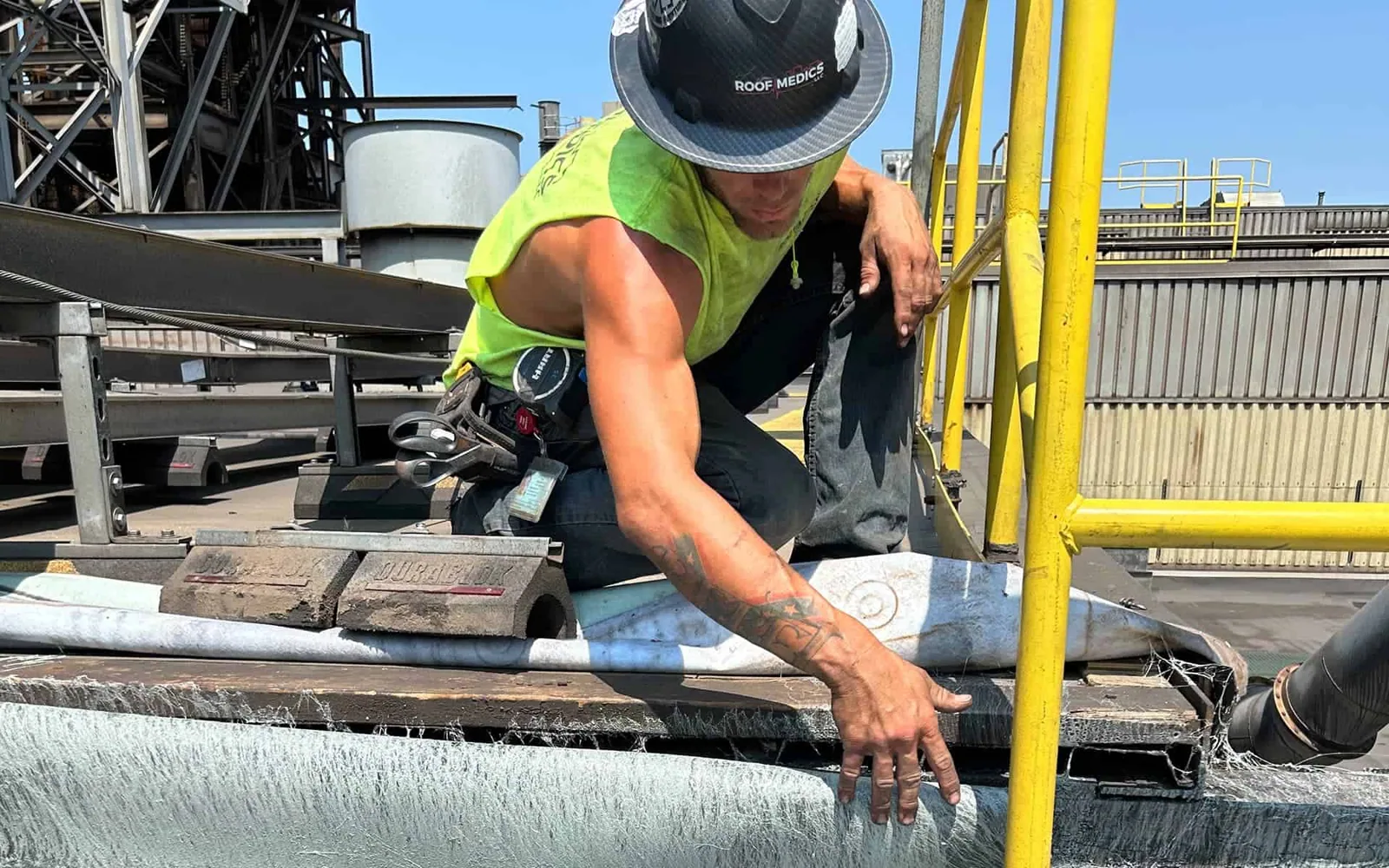
Most large stores wear a single-ply membrane, often TPO or EPDM, mechanically attached or ballasted over insulation on a steel deck. The deck matters because fasteners go through it. In a mechanically attached system, screws and plates hold the sheet down, and every one of them is a place where movement concentrates. Heat swells the steel and the sheet at different rates, so the plates work a little with each hot day.
This leads to the fastener back-out, which is a screw that slowly rises out of the deck and pushes a bump into the membrane. It is invisible until the sheet is walked and felt. A bump over a screw wears through the membrane from below, and the leak follows. We press along the lines of fasteners, count the ones that have risen, and note which rows are affected. A pattern across a whole row says the deck or the installation.
The Corners That Fail
Failure on a big-box roof starts at the edges and the equipment. The perimeter takes the highest wind pressure, so edge metal and the first seams inside it work hardest. A lifted cap or a loose cleat shows up first on the side that faces the prevailing storm. Wichita Falls takes tornado-season wind, and the wind damage that matters most is the kind that starts at a corner and peels a sheet back in sections.
Equipment comes second. Large rooftop units are heavy, and their curbs are cut into the deck and sealed with a flashing that moves with the unit. Condensate lines drain onto the membrane if no one has routed them, and a steady drip wears a white spot into the sheet. The loading dock sits below a tall wall, so water runs down it and into the dock roof. Add a long run of coping or counterflashing, and the number of joints on a large store roof climbs fast.
Hail and Heat Exposure
A wide, flat roof is an easy target for hail because it presents the same face to every stone. Burkburnett and Iowa Park took baseball-size hail on April 2, 1991, and Sheppard AFB saw stones larger than that two years later. A store roof today needs its own inspection regardless. A hail check on a store roof means pressing the field in a grid, looking for bruises, and cutting a core to see whether the insulation under a suspect spot has been crushed.
Heat works more slowly: summer brings roughly 28 days at 100 degrees across a typical year, and brought 100 of them in 2011. A dark membrane on a big flat roof soaks up all of that, and the sheet and its seams age faster on the sunniest slopes. A white reflective sheet reduces the load, which is part of why cool roof options come up when a store plans a replacement.
Fix, Recover or Strip
Here is one clean rule. A dry roof with failed details gets repaired. A sound but tired roof with dry insulation can take a recover, which adds a new membrane over the old and avoids the tear-off. A roof with wet insulation across a wide area needs the wet layer removed, which means full replacement. An infrared moisture survey tells the three apart before anyone cuts.
The recover has a limit: it can only go over a sound base, so it is not an option when the insulation is wet or the deck has rusted. The cost of any option moves with roof area, access, the number of units to disconnect and lift, and the extra insulation needed to meet current energy requirements. Keep the written scope itemized, so the choice stays comparable between bidders and between years.
Keep the Store Open
Stores do not close for roofing, and the work is planned for that. We work in sections, usually starting at the back where receiving is, and we stage hoisting away from the customer entrance and fire lanes. Rooftop units that must be disconnected are scheduled with the store's facilities team, so the sales floor does not lose cooling in the middle of an afternoon. Interior protection goes up under any section where a cut is open, even for a morning.
Retail seasons set the calendar. Holiday stock and back-to-school weeks push owners to finish before the busy window, so the planning conversation starts months ahead. A grocery store adds refrigeration and food-safety limits, and a shopping center adds a crowd of small tenants under the same sheet. Either way, the first step is a written schedule, shared before anyone is on the roof.
Commercial Roofing Questions
Why do big-box roofs leak at the loading dock first?
The dock sits below a tall wall that sheds water onto a lower roof, and the wall flashing takes the most movement. Add a canopy and several penetrations, and the joints multiply. We check each one with a probe and a hose.
Can a store roof be recovered instead of torn off?
Often, if the insulation underneath is dry and the deck is sound. A moisture scan and a few core cuts settle it. If wet insulation spreads across a wide area, tearing off becomes the better buy.
Does a white membrane cool a large store?
It reflects more sun, so the roof surface runs cooler and the rooftop units work a little less on hot afternoons. The saving depends on insulation and equipment, so we describe the effect without promising a number.
How do you protect merchandise during a reroof?
We keep each cut section small, close it in before the day ends and hang protection under open areas. The facilities team gets a map of the sections so stock can be moved before a section opens.
What does a regional chain need to hand over?
Store address, roof age if known, roof type, any warranty paperwork on file and a log of past leaks. Send that list and the first visit will answer a specific question instead of a general one.