The roof of a grocery store carries the machines that keep the food cold, and that fact decides how the roof ages. Condensers, compressor racks, make-up air units and kitchen exhaust all sit up there, each with a curb, a line set and a path that technicians walk every week. In Wichita Falls, TX, those machines also work against a summer that stacks up about four weeks of 100-degree days. Step one is to count what is on the roof. Step two is to see how the membrane has handled being walked on and warmed up for years.
Count the Machines
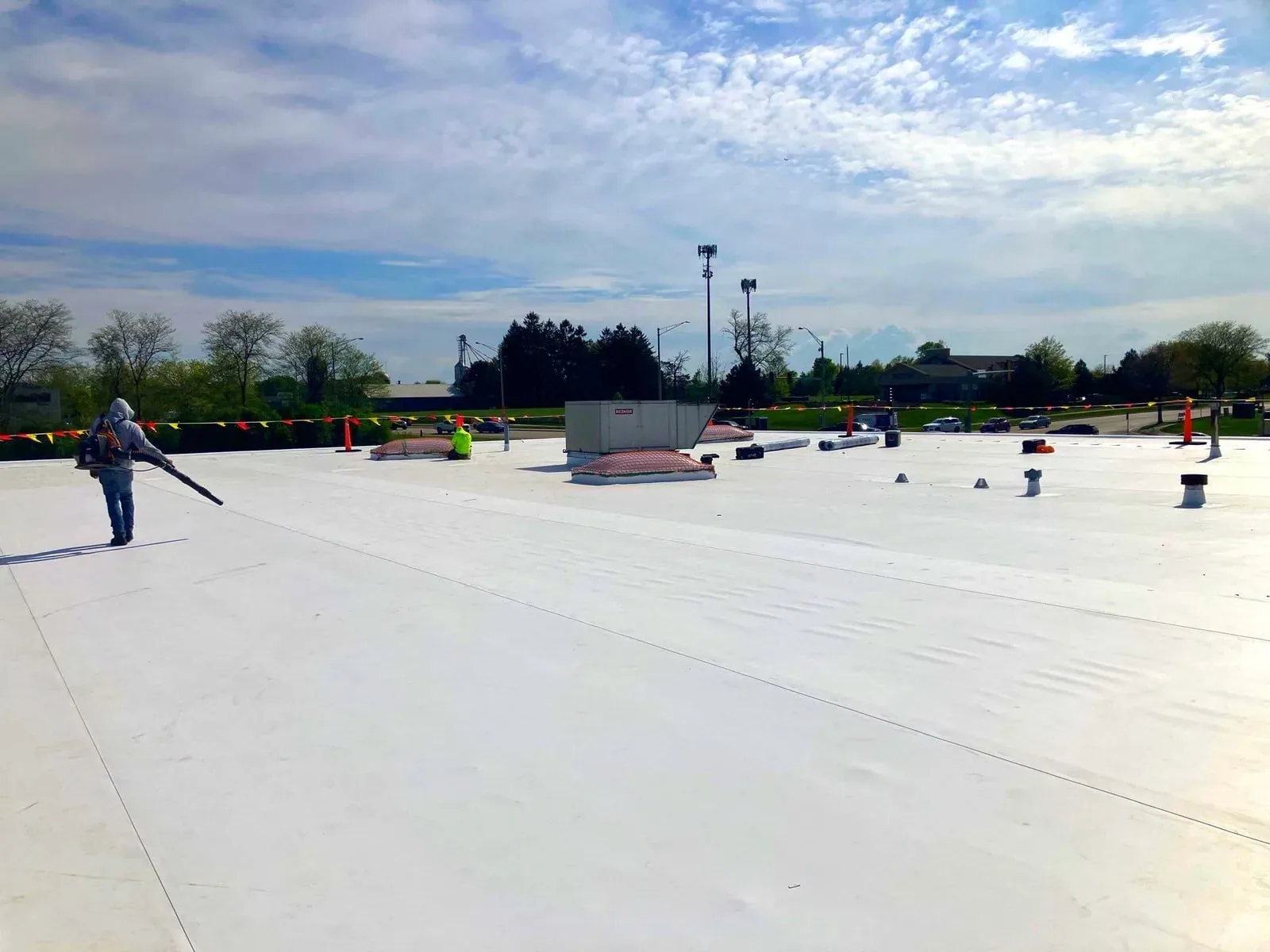
A walk across a supermarket roof usually finds more equipment than any other retail type. There are refrigeration condensers, often in banks, rooftop air handlers, exhaust fans over the bakery, deli or prepared food area, and a web of refrigerant and electrical lines running between them. Each of these has a place where it meets the membrane. Each place is a flashing detail that has to flex with heat and vibration.
Vibration matters more here than on an office roof. A compressor rack shakes its supports all day, and a support that shakes will work against its seal. We look at how each unit is held, whether pipe supports sit on pads or on bare membrane, and whether any line rubs on the sheet. A pad or a sleeper that was never added is a ten-minute fix on the day of the walk and a patch job after a year of wear. We also note where condensate drains, because a pipe that empties onto bare membrane leaves a worn spot that grows every summer. Redirecting that water to a drain or a pad is a small change that keeps one more seam out of the repair list.
Layers Over the Cold Cases
Under the membrane sits insulation, and under that a deck above the sales floor and the back rooms. Many stores use a single-ply sheet such as TPO or PVC. PVC is worth a note here because it resists the grease and oils that exhaust fans throw onto a roof, and a store with a kitchen or bakery puts exactly that on the surface. The membrane choice should follow what actually lands on the roof, not only what the neighboring store used.
The layer that is easy to forget is the insulation. A cold store pulls moisture through the building envelope in humid weather, and wet insulation loses its job. It also grows heavy and sags, and a sagging spot holds water. A moisture scan finds that kind of damage while the surface still looks dry, and a small core cut proves what the scan only suggests.
What a Leak Costs Over Food
A leak in a warehouse costs a repair. A leak in a grocery store can cost the product underneath, a cleaning crew, a closed aisle and a call from the health department. A drip near open cases, produce, bakery or a prep surface forces decisions fast, and the decisions are about food safety before they are about the roof.
That is why a store needs an emergency plan on file before the first leak. It names who shuts off power to a wet fixture, who moves product, who calls us, and which door the crew uses. Our emergency response runs around the clock, holidays included, and it works better when the store has already told us where the roof access is and which departments sit under which section. A short temporary repair stops the water. The permanent fix follows once the cause is traced.
Wind, Hail and the Local Record
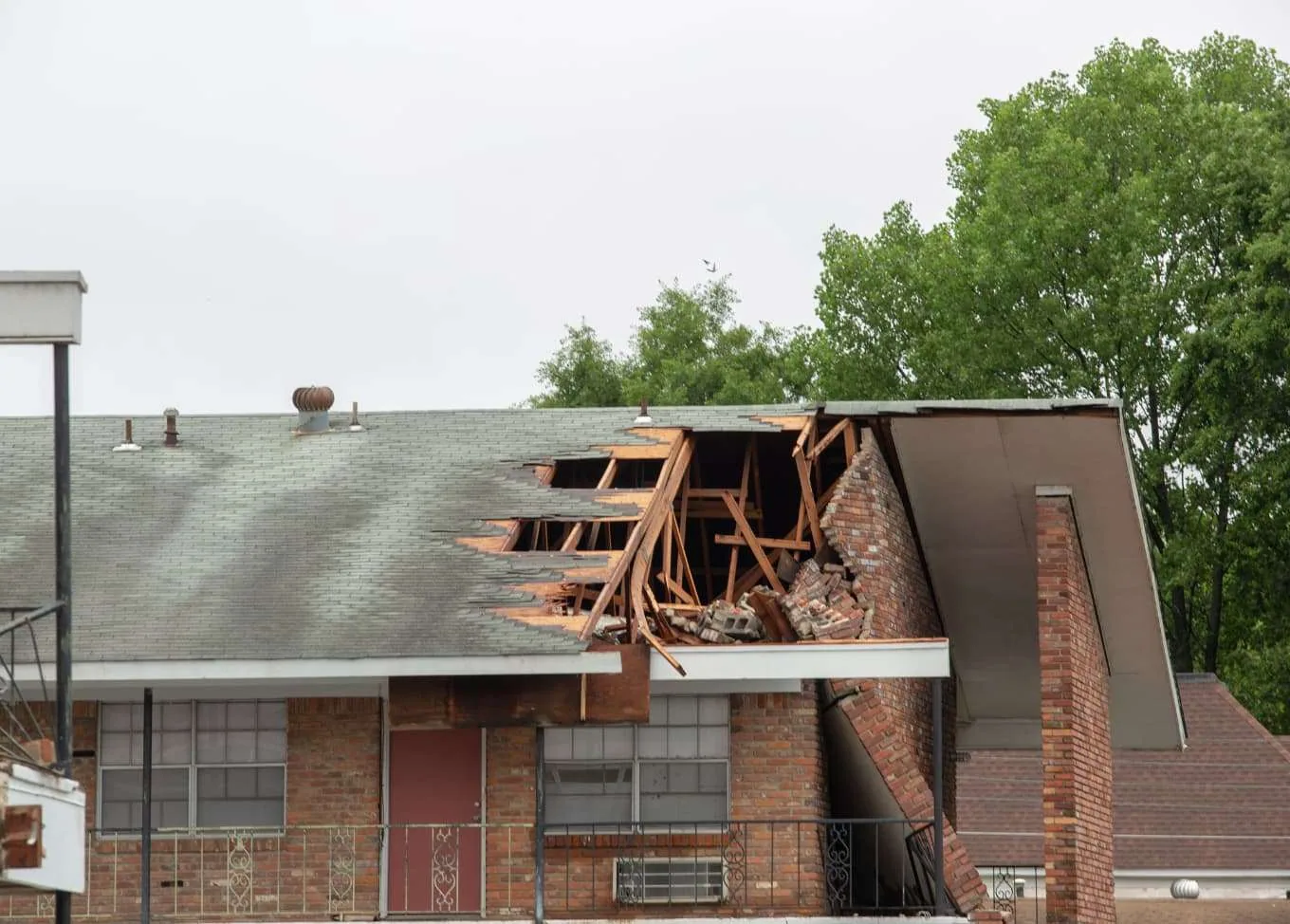
Grocery stores are wide, low buildings with plenty of rooftop equipment, and that profile catches wind and hail. The April 1979 tornado razed a shopping center in the Southmoor subdivision and destroyed businesses in the Sun Valley area on the southwest side of the city, which shows how exposed a wide retail roof can be. Hail the size of baseballs followed in April 1991, damaging Burkburnett and Iowa Park.
Treat those events as history, never as proof of what a roof looks like now. A store near an old storm path carries no damage because of it, and a store that escaped is not safe for that reason. What we do is check hail bruises by pressing and probing, then look at the equipment: dented condenser fins, displaced hoods and crushed vent caps often show impact before the membrane does.
Repair or Replace With a Store Running
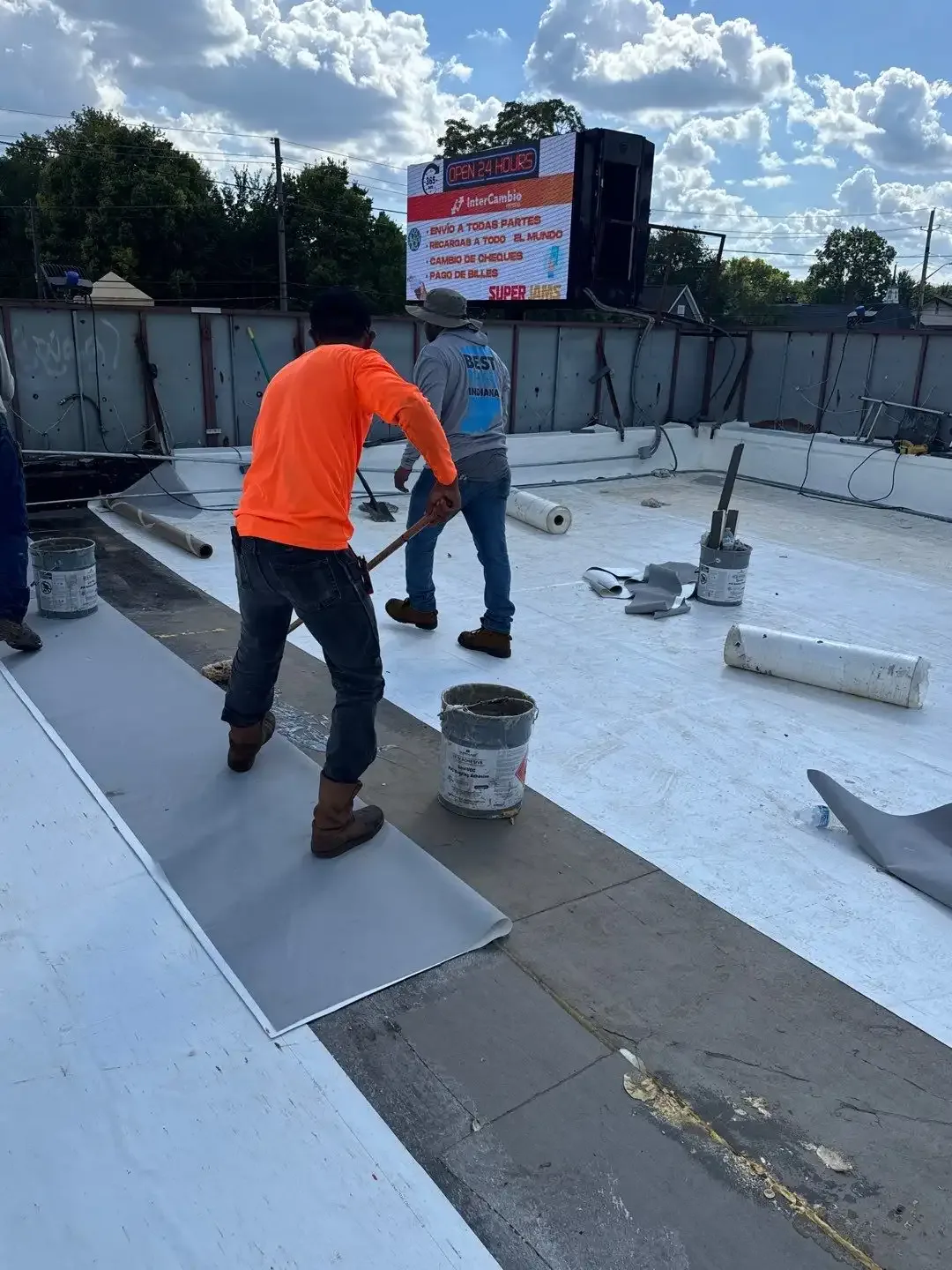
The rule is the same as for any flat roof: dry with failed details means repair, sound over a dry base means recover, and wet across a wide area means replace. The grocery twist is the order of work. We replace in strips between equipment banks, so the machines keep running and the cooling load is not interrupted. When a unit has to move, the refrigeration contractor schedules the shutdown and we plan the cut-in around it.
Cost follows the number of curbs and lines to reroute, the area, the access around deliveries and the need for temporary protection inside. A recover reduces mess and noise in the building, which counts when product is exposed. The written scope lists each unit by number and each flashing by type, so the owner can compare bids against the same lines.
Deliveries, Hours and Heat
Delivery trucks, early restocking and weekend rushes set the working windows. Hoisting and staging happen when the dock is quiet, and a crew starts early on hot days because membrane and adhesives behave better before the afternoon sun. A cold storage building shares the equipment problem, and a restaurant shares the grease problem. A grocery store has both.
Before work starts, we agree with the store manager on the delivery calendar, the closest safe access and the quiet hours. Customers should never walk under a work zone, and the back-room ceilings stay covered where cuts are open.
Wet weather gets its own rule. A cut section is closed in before any rain is forecast, and the crew keeps temporary material staged for a surprise shower. Spring storms in north Texas can arrive quickly, so a grocery roof never sits open overnight. Each evening the foreman walks the finished area with the store manager and photographs the edges, so the next morning starts from a known condition.
Commercial Roofing Questions
Why does the roof over a grocery store get walked so often?
Refrigeration and air handling need regular service, and technicians cross the membrane each time. Walk pads along those routes protect the seams, and a log of visits shows which paths take the most wear.
Which membrane handles kitchen grease best?
PVC resists oils and grease better than most single-ply sheets, so it is a common choice near bakery and deli exhaust. TPO and EPDM can work with the right detailing, and we weigh what lands on your roof.
What happens if water reaches the cold cases?
The store handles power and product first. We stop the water with a temporary repair, trace the opening with a moisture scan and hose test, and then schedule the permanent fix around the refrigeration contractor.
Can condenser banks stay running during a reroof?
Usually, if the work moves in strips between banks. Where a unit sits on the line of a cut, its contractor schedules a short shutdown and we plan the closing-in around it.
What should a store manager send first?
The roof age if known, a note of which departments sit under the leak, and photos of the ceiling or equipment area. That lets the first visit answer a specific question.