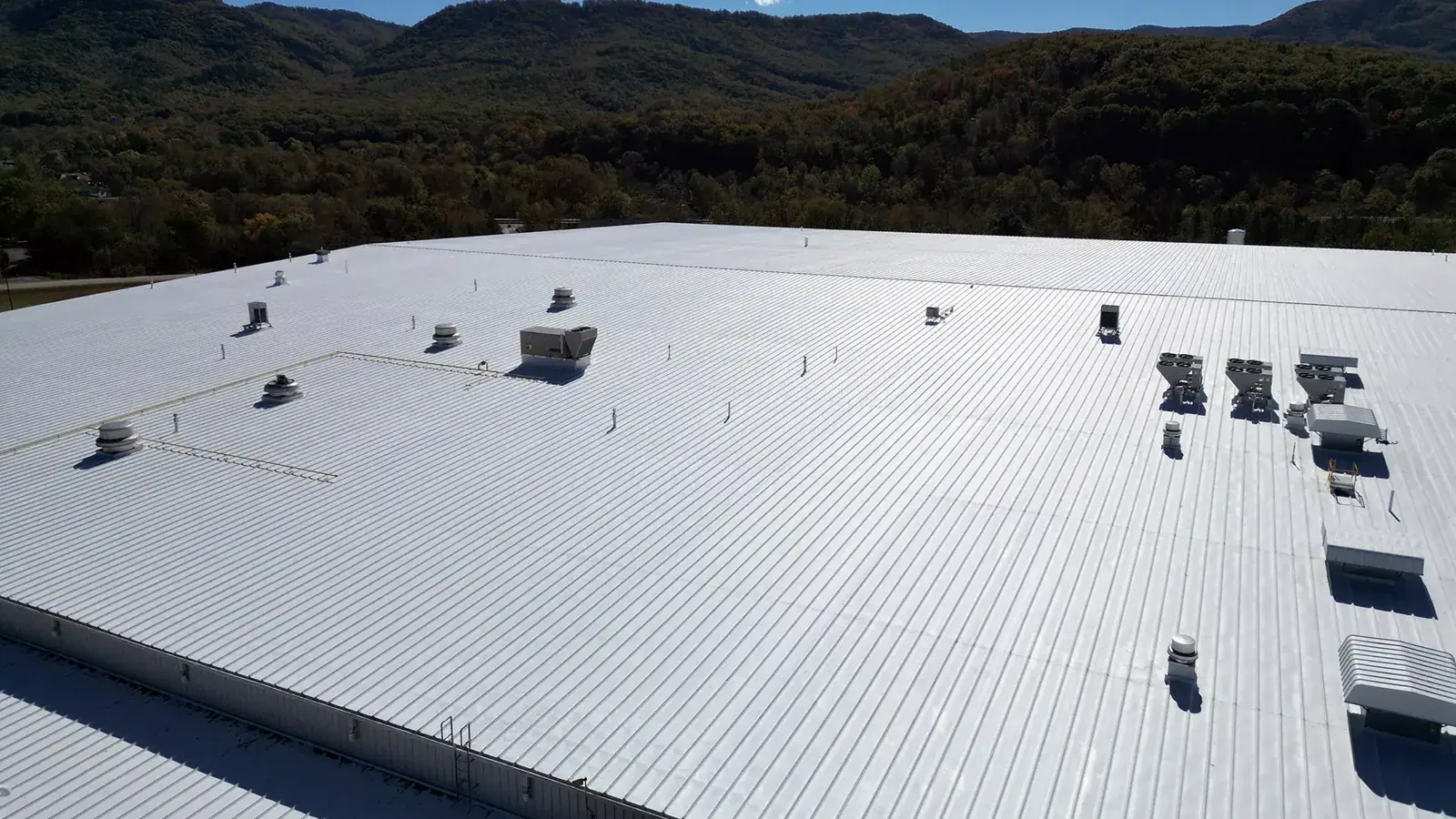
A strip center puts a dozen small businesses under one continuous roof, and that continuity is the first thing to understand. Water does not respect a lease line. It runs along the deck and through the insulation, so a stained ceiling tile in one suite can sit a long way from the opening that caused it. In Wichita Falls, TX, the retail stock runs from the enclosed mall on Midwestern Parkway to small strips along Kemp and Kell. We take them in order: who sits under each section, what the layers are, where the trouble starts, and then the choice.
Start With Who Sits Underneath
Step one is a tenant map. A shopping center roof is never judged as a single surface, because the businesses beneath it are very different. A nail salon can tolerate a day of noise. A pharmacy with refrigerated stock cannot lose power or take a drip. A restaurant bay has grease exhaust and a hood that cut through the roof. Each of those changes where we stage material, when we hoist, and which section we open first.
The mall on Midwestern Parkway shows how large a retail footprint can get: Sikes Senter is a one-floor building of about 670,000 square feet that opened in 1974. Most shopping centers in the area are far smaller, but the lesson carries down. Owners who know which suites sit under which part of the roof make faster repair decisions, and they hear about leaks sooner, because tenants know whom to call.
The Layers Over the Storefronts
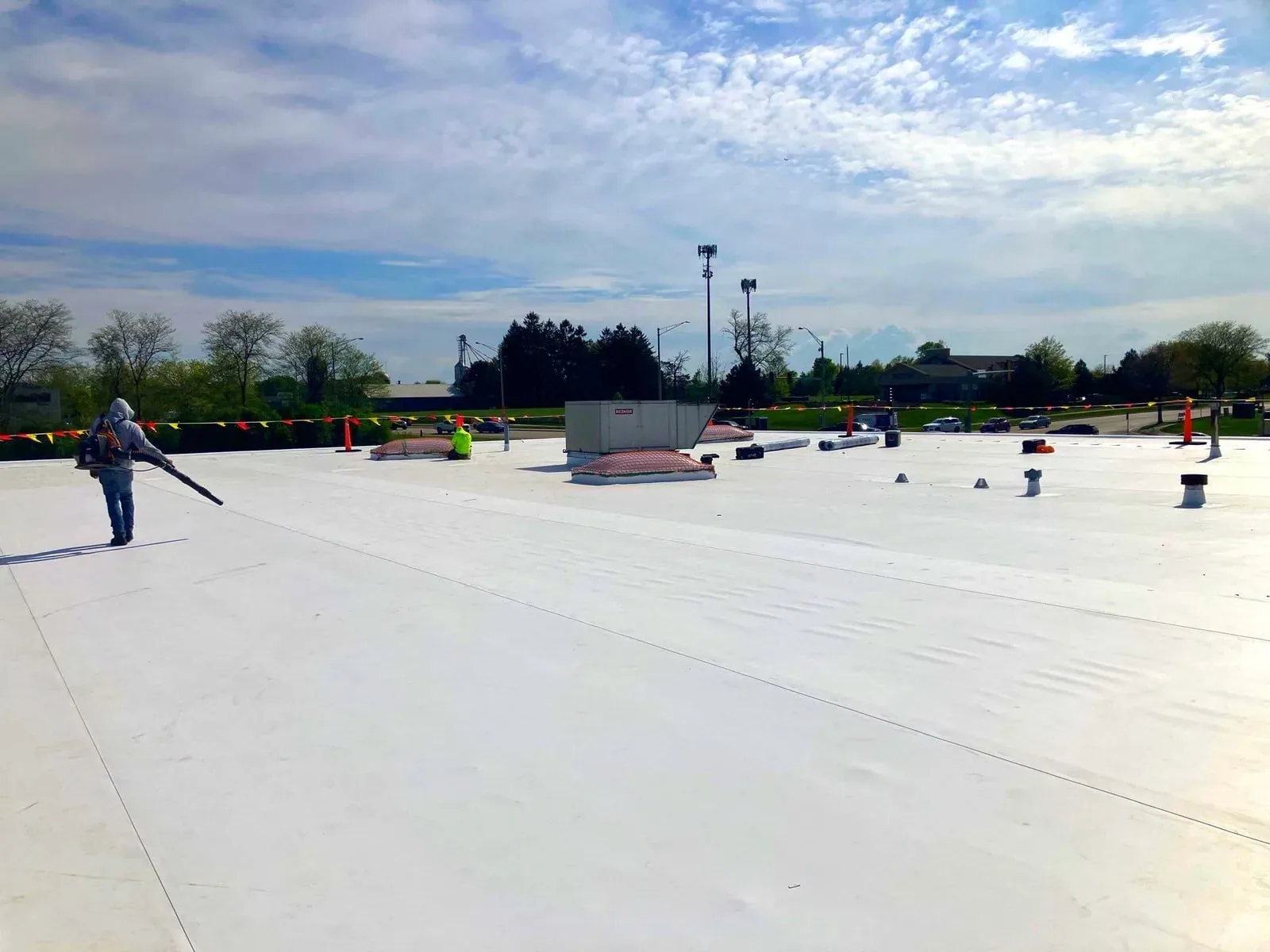
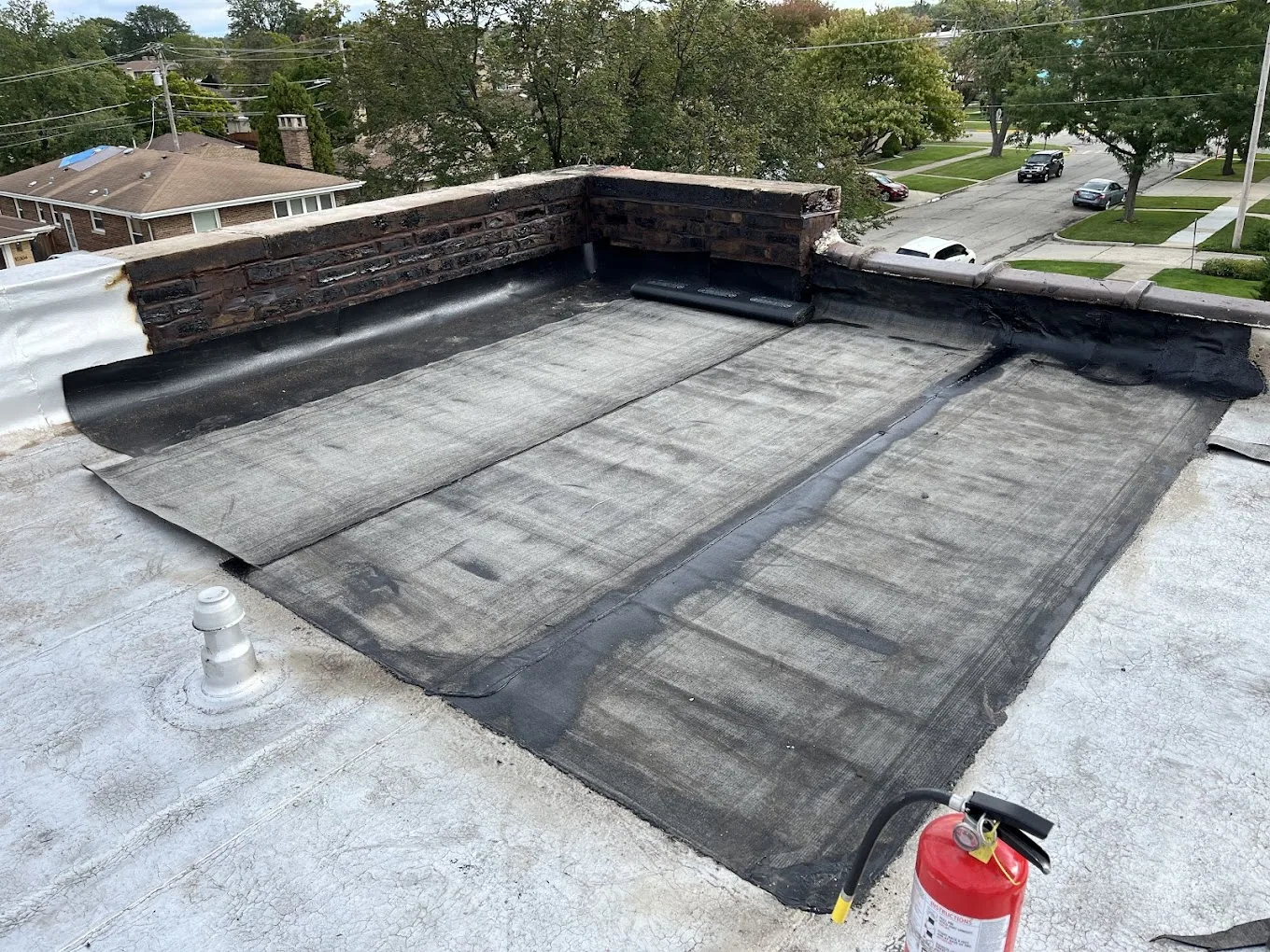
Most strip centers carry a low-slope roof behind a parapet or a decorative front. Under the membrane sits insulation, and under that a steel or wood deck, often with a long run of walls that divide one tenant from the next. The membrane might be TPO, an older modified bitumen sheet, or a built-up roof with a gravel top. The type matters less than its condition and the way it was finished at the edges.
The front of a strip center usually has a canopy, a sign band or a tall false parapet. These are decorative on the street side and structural headaches on the roof side. Each one needs its own flashing, and each flashing ages at a different pace from the field of the roof. When a canopy ties into the main roof, water finds the joint long before it finds anything else. Read that joint first. It tells you more about the next five years than the shiny surface does.
Where Retail Roofs Give Out
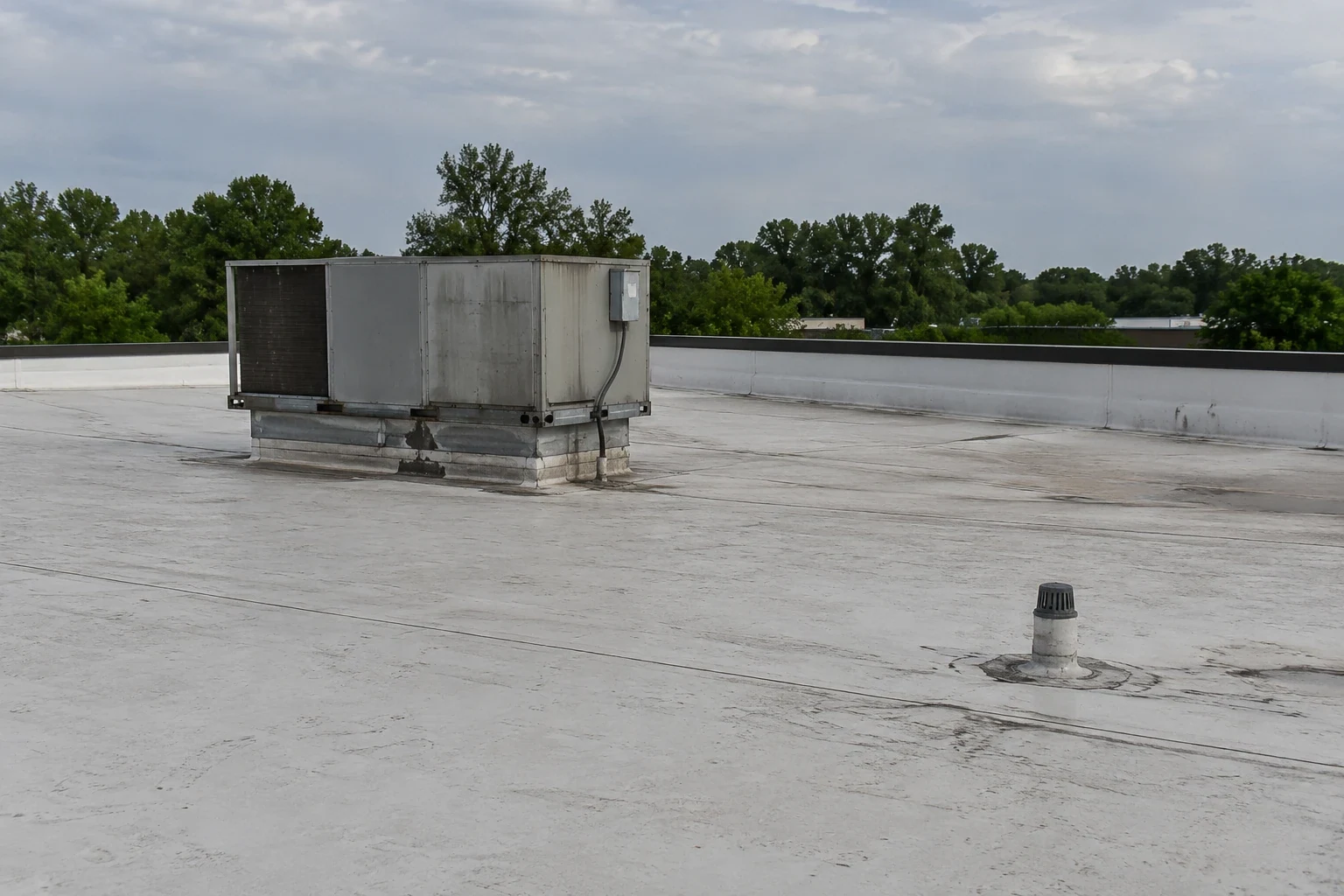
Retail roofs fail in a predictable order. Rooftop units come first, because every suite has its own air handler and every handler has a curb, a line set and a drain pan. A center with twelve suites may carry twelve of each. Technicians walk the membrane to reach them, and foot traffic wears a path that the sheet was never meant to carry.
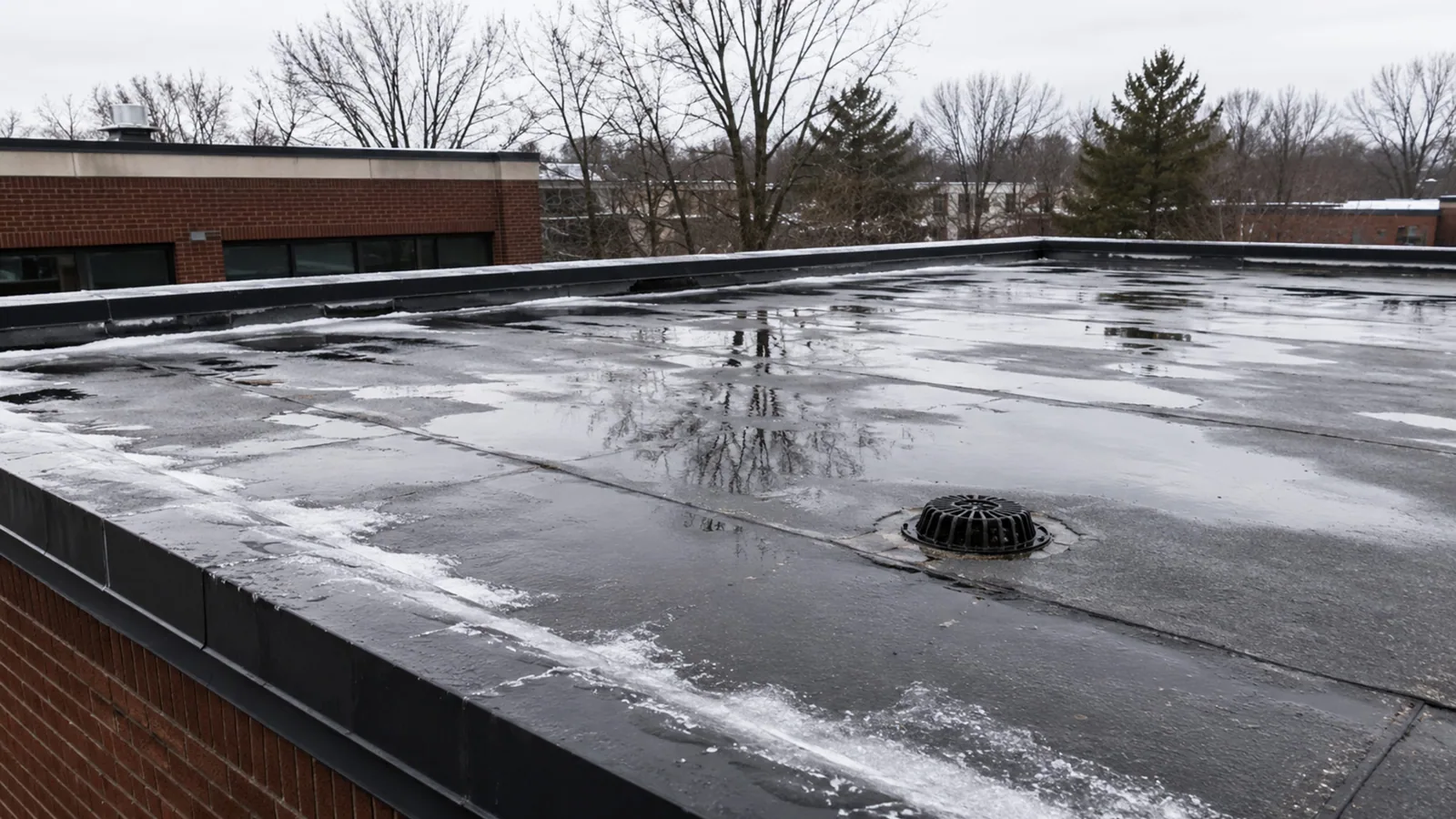
Next come the shared details: the scuppers that move water off a long, nearly flat roof, the expansion joints between building sections, and the end walls where the parapet meets the sheet. A clogged scupper lets water stand against the wall flashing, and standing water finds any thin spot. A dark membrane expands through roughly 28 days a year at 100 degrees and pulls on every one of those joints. A ponding line on the roof, a dirt ring where a pool dried, shows where the slope loses the argument.
Hail is the sudden stress. A hail bruise in the sheet may not leak for a season, then open on the first wet week.
What Past Storms Tell a Retail Owner
Local storm history matters to retail owners because shopping centers are low, wide and full of people. The April 1979 tornado damaged the northern edge of the mall on Midwestern Parkway while about 1,000 shoppers were inside, and it razed a shopping center in the Southmoor subdivision. It also destroyed businesses along Kemp Boulevard. Retail roofs sat directly in the path of that storm.
That history is context, and it is not an inspection. A roof that survived is not proven sound by surviving, and a roof near a storm path is not proven damaged by proximity. What the history does is justify a walk after any major wind event. The tornado damage checklist is simple: lifted edges, displaced rooftop units, torn parapet caps, debris punctures and broken skylights. The sooner those are photographed, the cleaner any claim paperwork becomes.
Repair, Recover or Replace
One clean rule: decide by what is wet. If the insulation under a section is dry, repair the failed details and move on. If the membrane is sound but tired, a coating or a recover can add years without a tear-off. If water has spread across a wide area of insulation, replacement removes the wet layer and starts clean.
Retail adds a tenant question that warehouses do not have. One owner, one roof, many leases: some tenants pay a share of roof costs and some do not, and the lease decides who funds what. Cost drivers are roof area, the amount of wet material, the number of curbs and penetrations, access around parked cars, and edge details on tall parapets. We price each option on its own line items, so an owner can show a lender or a tenant exactly what the money buys.
Working Around Customers
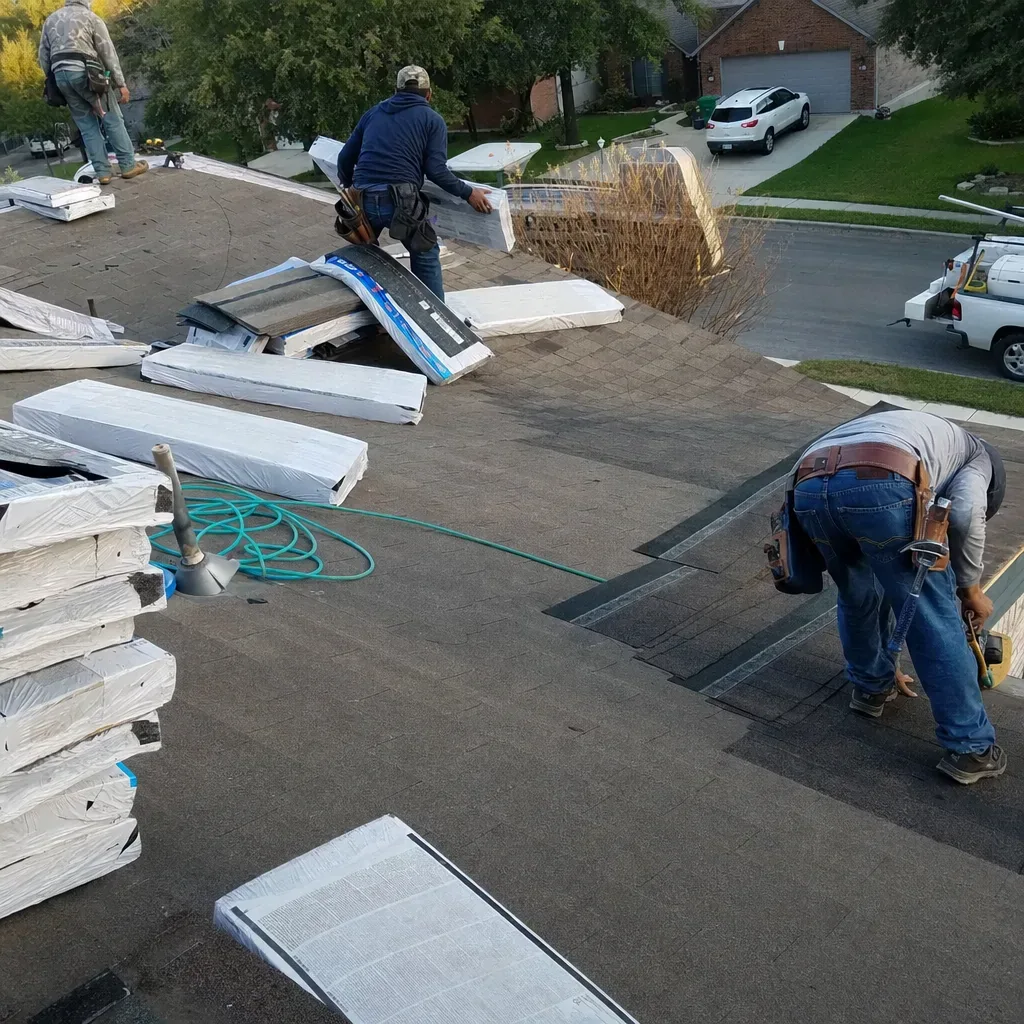
A shopping center has two clocks: the tenants' hours and the retail calendar. Roofing near front doors is staged away from customer walkways and delivery windows, and sections are closed in before crews leave each day. Back-of-house access for hoisting is usually the only workable route, so we confirm it with each tenant before the first day. Because the roof is shared, a single schedule covers all suites, and each tenant gets a plain notice about noise and any short utility interruptions.
Timing also follows the heat. Hot membranes soften and scuff, and adhesives behave differently in a 100 degree week, so crews start early and finish work that needs the cooler hours before midday. The same shared-roof logic applies to a big-box store or a restaurant pad, although the tenant map is simpler in those. After an area is closed in, we photograph the work for the owner's file.
Commercial Roofing Questions
Who pays when one tenant's leak comes from a shared roof?
The lease decides, so read it before the repair is ordered. We document where the water entered and which suites were affected, which gives an owner the record needed to apportion costs and to answer a tenant's complaint with facts.
Why does a leak show up in a suite far from the roof opening?
Water travels along the deck, through insulation seams and down wall cavities before it drips. The wet ceiling is where it finally escaped. We trace it back with a moisture scan and a hose test, one section at a time.
Can rooftop unit service ruin a strip center roof?
Yes, slowly. Technicians walking the same path wear the sheet and drop tools on it. A walk pad from the access hatch to each unit costs little and protects seams that would otherwise leak within a few seasons.
Does a vacant suite change the roof plan?
It changes the access, not the roof. An empty suite is easier to work above and easier to inspect from inside. We still treat it as part of the shared roof, because water keeps moving into the neighbors.
What should an owner send before the first walk?
The center's age, the suites and their uses, the roof type if known, and a list of leaks by suite. That gives the first visit a specific question and speeds up the written scope.