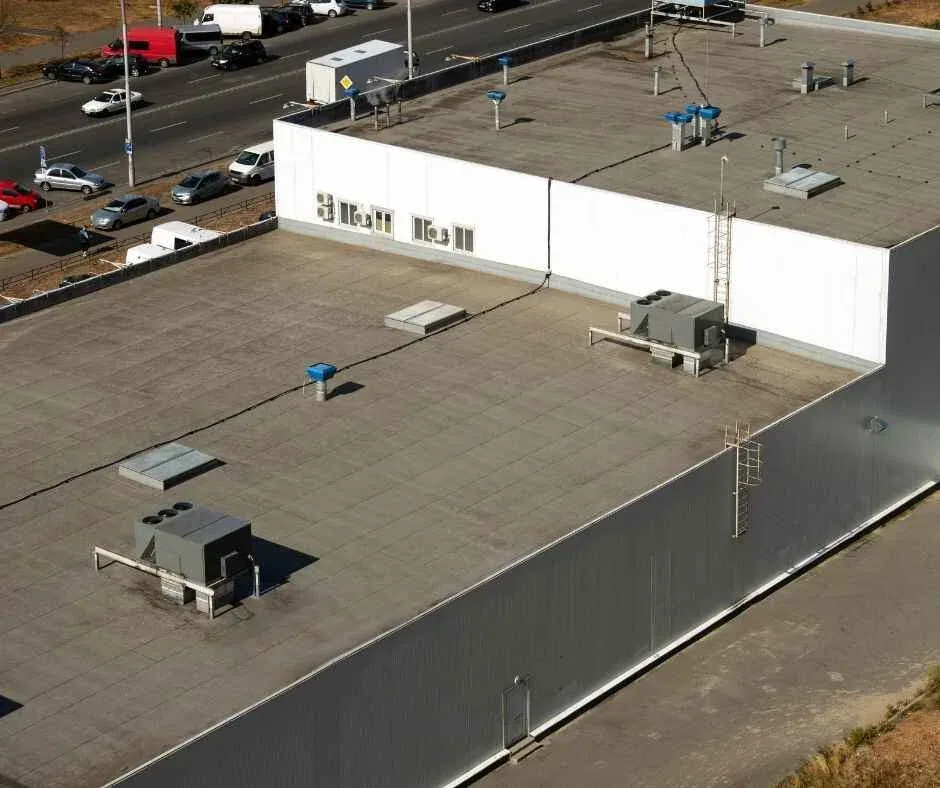
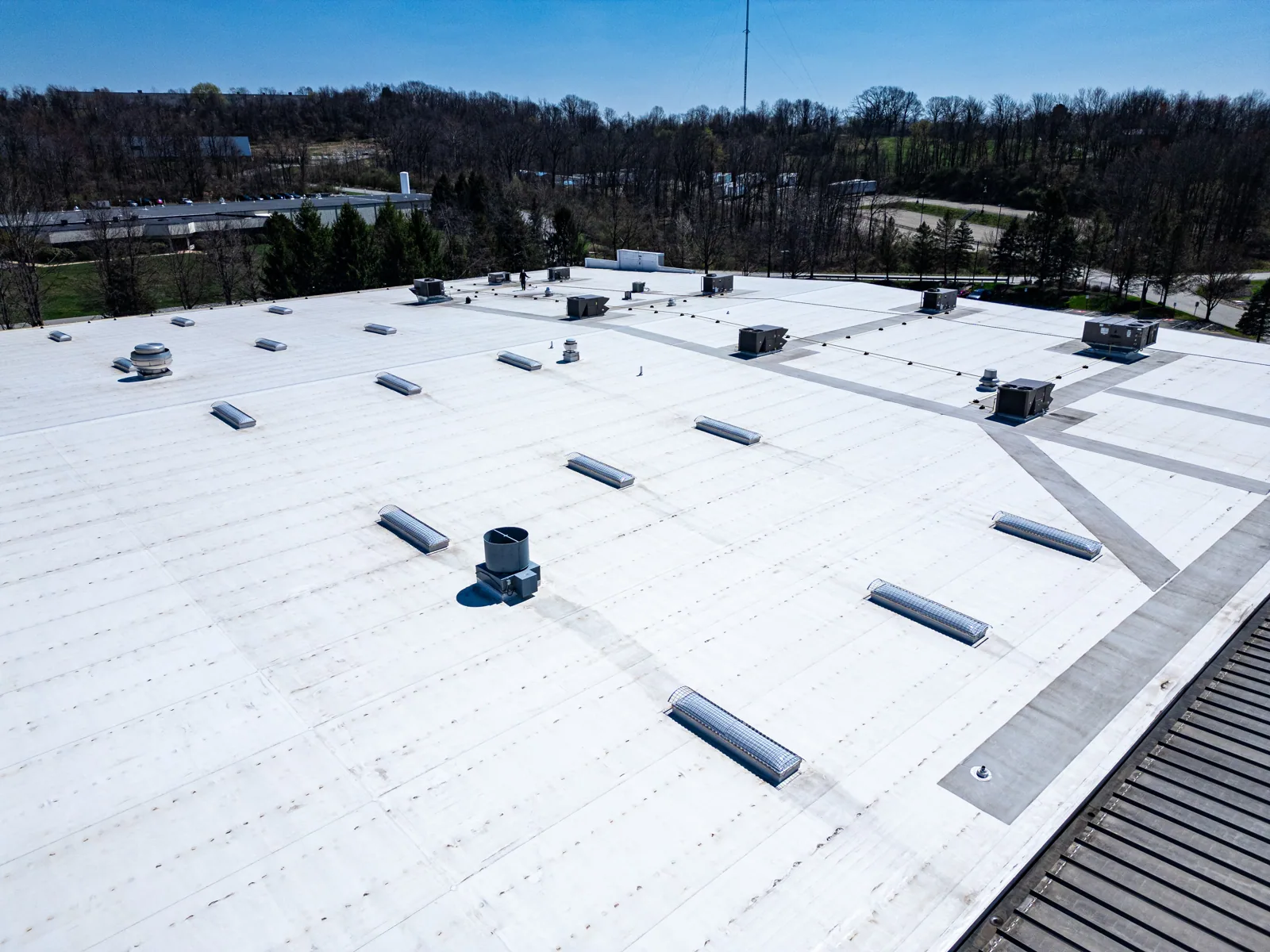
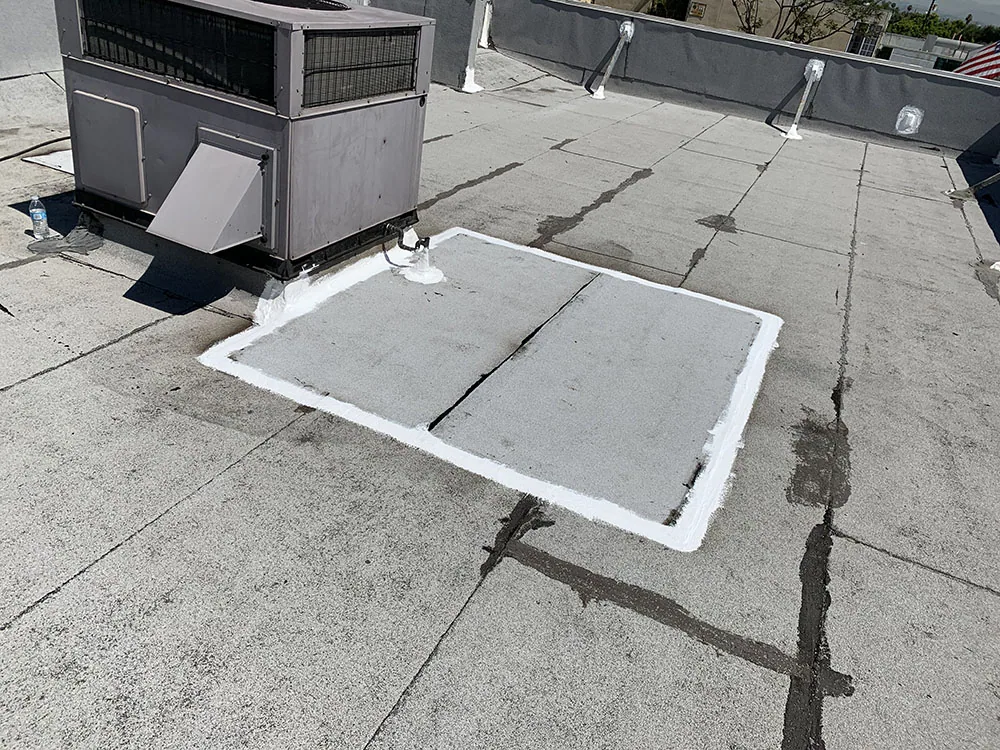
Count the units on a roof and you have counted the holes. Every rooftop air handler, exhaust fan and gas line sits on something, and every one of those supports is a place where the roof membrane has to stop, turn up and be sealed again. That is the one thing an owner should understand about equipment: the curb is part of the roof, not part of the machine.
A retail center along Kell Boulevard or a distribution building in the Wichita Falls Business Park can carry units that outnumber every other detail on the roof. Here is how we walk them, in order, so you know what a good curb looks like and what a failing one does.
Know What a Curb Is
A curb is a raised frame, usually metal or wood-core, that lifts equipment above the roof surface so water can run past the opening. The roof membrane turns up the outside of the curb, and a cap or counterflashing covers the top edge of that turn-up. Inside the frame, the unit sits on a gasket and fastens down.
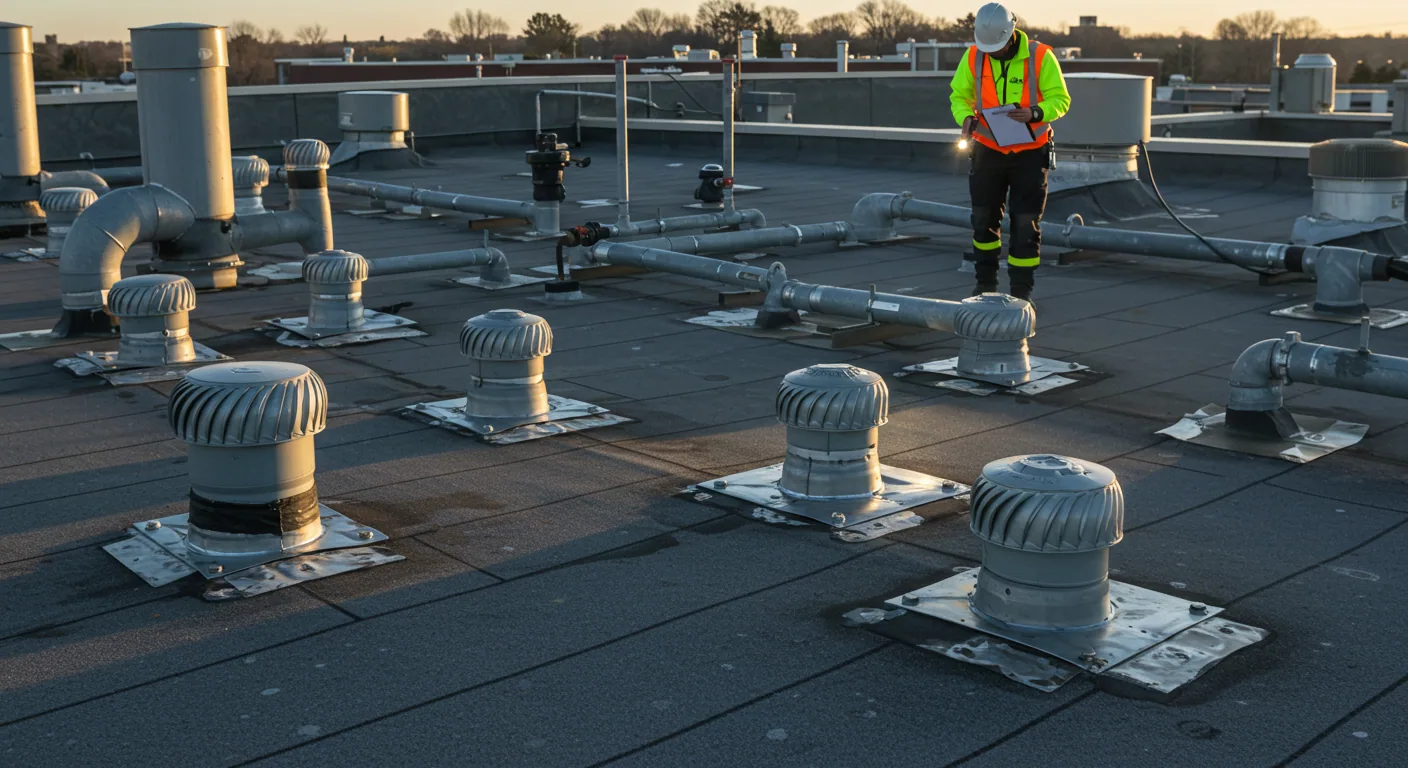
Supports are different. A support carries a pipe, a conduit run or a small piece of equipment and rests on the roof without cutting it. Good supports spread the load so the membrane under them is not crushed. Bad ones sit directly on the sheet and rub through it.
That is the whole idea. A curb makes an opening and seals it. A support carries weight and leaves the roof intact. The two are easy to confuse, and the confusion causes leaks.
Walk the Layers One at a Time
Step one is the height. A curb should lift the opening well above the roof surface so ponded water and snow-melt cannot reach the top edge, and it should be taller where the roof holds water. A low curb on a roof with a ponding line leaks the first time the drain slows down.
Step two is the turn-up. The membrane must run up the side of the curb and stop under a cap or counterflashing, with no tears at the corners. Corners are the weak spot, because a flat sheet has to fold around a right angle and the fold is where splits start.
Step three is the cap and the sealant. Cracked sealant is the first sign. Pull back a loose cap and look underneath for staining, which shows water has already been there. A simple test: press on the cap by hand. If it moves, the fasteners are loose and the flashing behind it is likely open.
Count the Heat and the Shake
A typical year here brings about 102 days of 90-degree heat, and 2011 pushed 100 of its days past 100 degrees. Equipment pushes more heat into the roof around it, and a dark membrane next to a hot exhaust expands and relaxes all day. Sealants harden and crack. Fasteners work loose.
Vibration adds to the heat. Fans and compressors shake the curb a little all the time. Over a few seasons that movement works screws out and breaks sealant bonds. We call this fastener back-out, and it is a quiet cause of leaks that owners blame on the membrane.
What it means for you: a check of curb fasteners and sealant each spring costs little, and it catches the loosening before the first big rain.
Plan for Hail and Wind
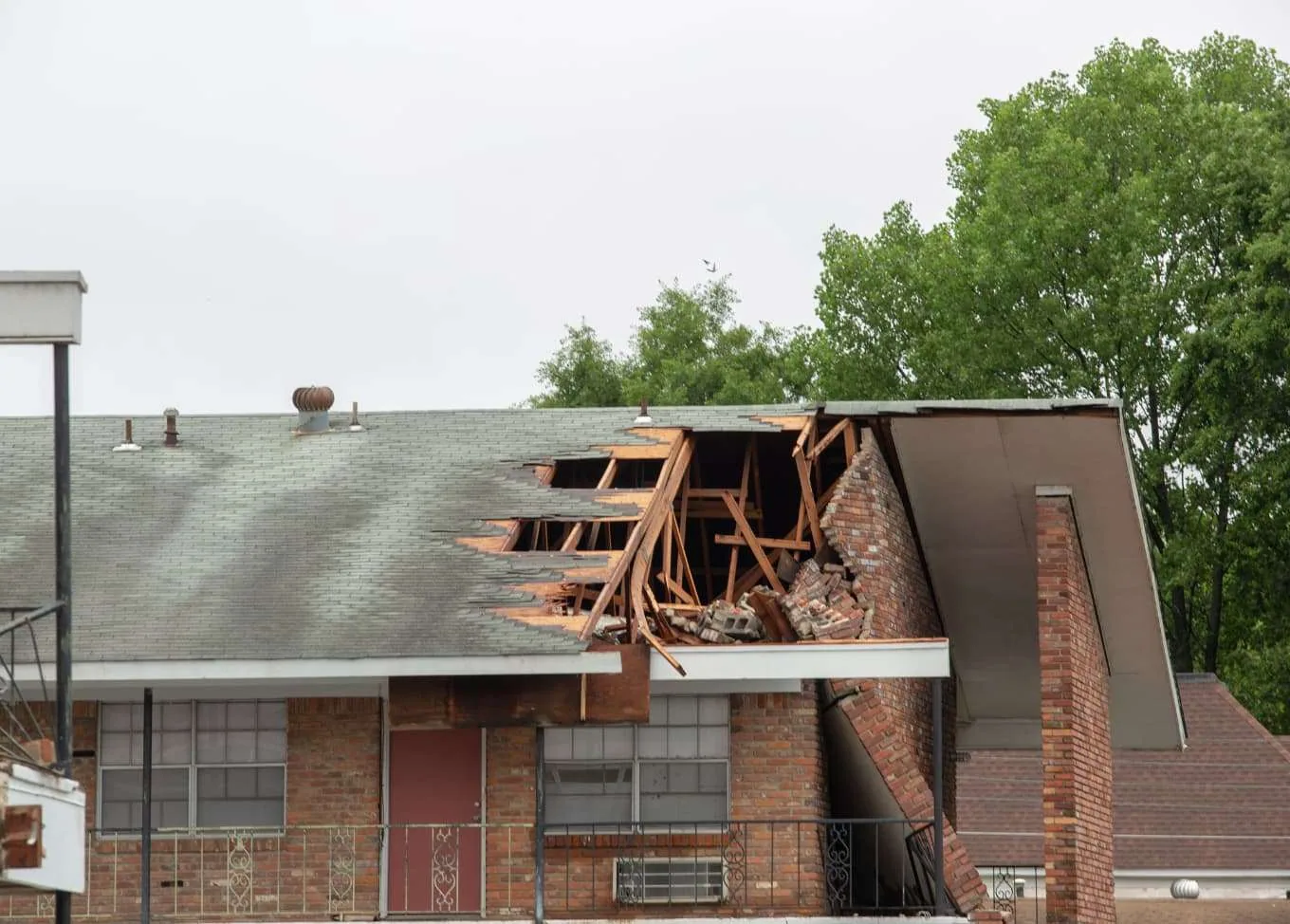
Hail has a long record here: baseballs in Iowa Park and Burkburnett in 1991, and stones larger than that at Sheppard Air Force Base in 1993. That is history, not a finding about any roof. It does tell us what to look for after a storm: dented unit housings, crushed coil fins, cracked curb caps and bruised membrane near the base.
Wind is the other test. Tornado-season gusts can lift a unit that is not strapped to its curb, and a shifted unit tears the flashing around it. After wind damage, we check the straps, the curb corners and the gasket line first. After hail damage, we press the membrane around the base and probe for a soft spot.
Check Before You Add a Unit
Tenants add equipment. A new unit means a new curb, a new cut in the deck and a new load on the structure. The roof under it was designed for a certain weight. Adding without a structural check can sag the deck, and sag creates a pond.
Before any addition we ask four questions. What does the unit weigh? Where does it sit relative to framing? How far is it from the nearest drain? Will the curb clear the existing seams and flashings? The answers decide where it goes and what must be reinforced.
Pipe and conduit supports follow the same rule. Spacing matters, because a long unsupported run sags onto the roof and a short one adds more contact points than needed. The skylight and penetration flashing work we do on every other roof opening follows the same order of checks.
Repair or Replace the Curb
A cracked sealant bead is a repair. A rusted wood-core curb, a corner split in the membrane or a curb that was set too low is a replacement. We tell you which by testing, not guessing: probe the wood, pull the cap and look at the turn-up.
When a unit is replaced, the curb is the time to fix. A new unit with a different footprint needs an adapter or a new curb anyway, and the roof is open. Doing the flashing then costs less than opening the roof again later.
We document each curb with a photo before and after, a note on the height and the condition of the turn-up. A flashing failure repair on one curb often shows the same flaw on the next, so the log lets you fix the pattern, not just the leak. A maintenance visit each spring keeps it current.
Take the Next Step
Start with the building. A strip center on Kell Boulevard, a warehouse in the Business Park and a clinic near Taft Boulevard each carry a different mix of units. Tell us how many units the roof carries and where the last leak showed, and the first walk starts at the curbs nearest the stain. Owners of retail space in the Kemp-Kell corridor and of industrial space in the Wichita Falls Business Park can use the same checklist.
Commercial Roofing Questions
How high should a rooftop unit curb be?
High enough that ponded water cannot reach the opening. Taller is safer on a roof with low spots, and the right height depends on the system and the drainage.
Can a unit be moved without opening the roof?
No. Moving a unit means removing the old curb and flashing and building a new one. Plan the move with the roofer.
Why does a leak appear after a unit is serviced?
Service techs walk the roof and loosen caps and panels. A disturbed cap or a punctured membrane leaks on the next rain. Walk the area after any service call.
Do pipe supports need flashing?
Supports that rest on the roof need pads under them, not flashing. Pipes that pass through the roof need a boot or a curb.
What should I record when a unit is added?
The weight of the unit, its position against the framing and the nearest drain, and the date the curb went in. That short log lets the next crew see which flashing is new and which is original.