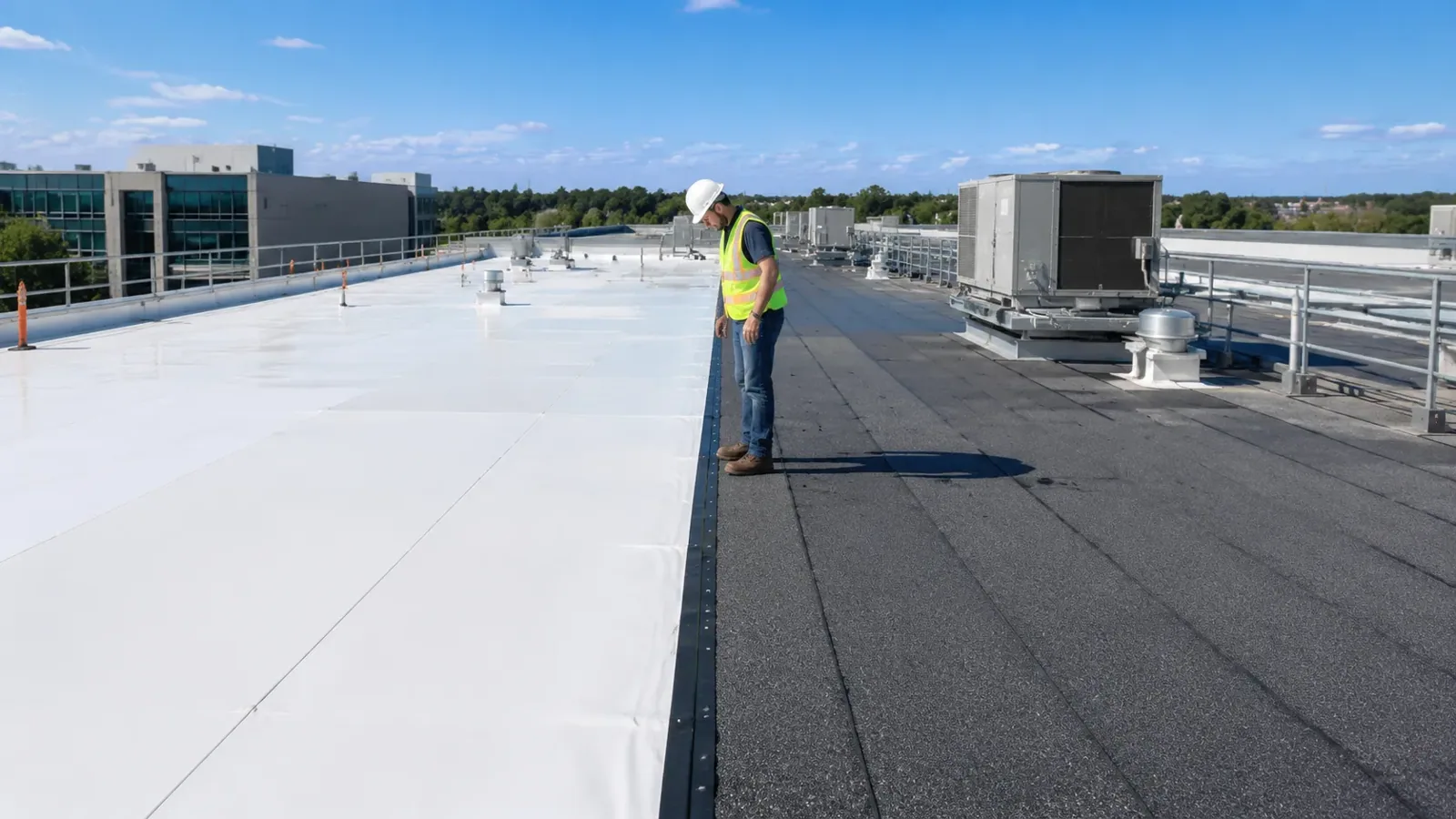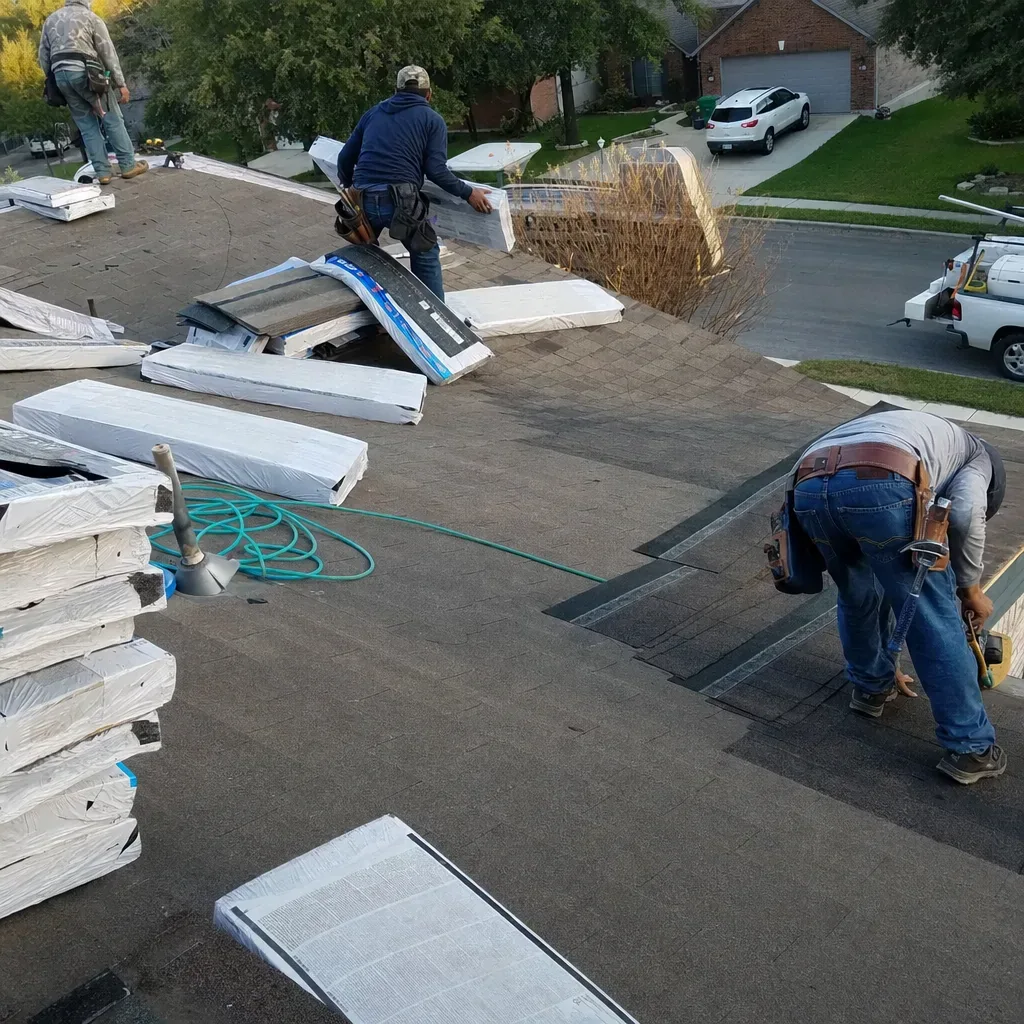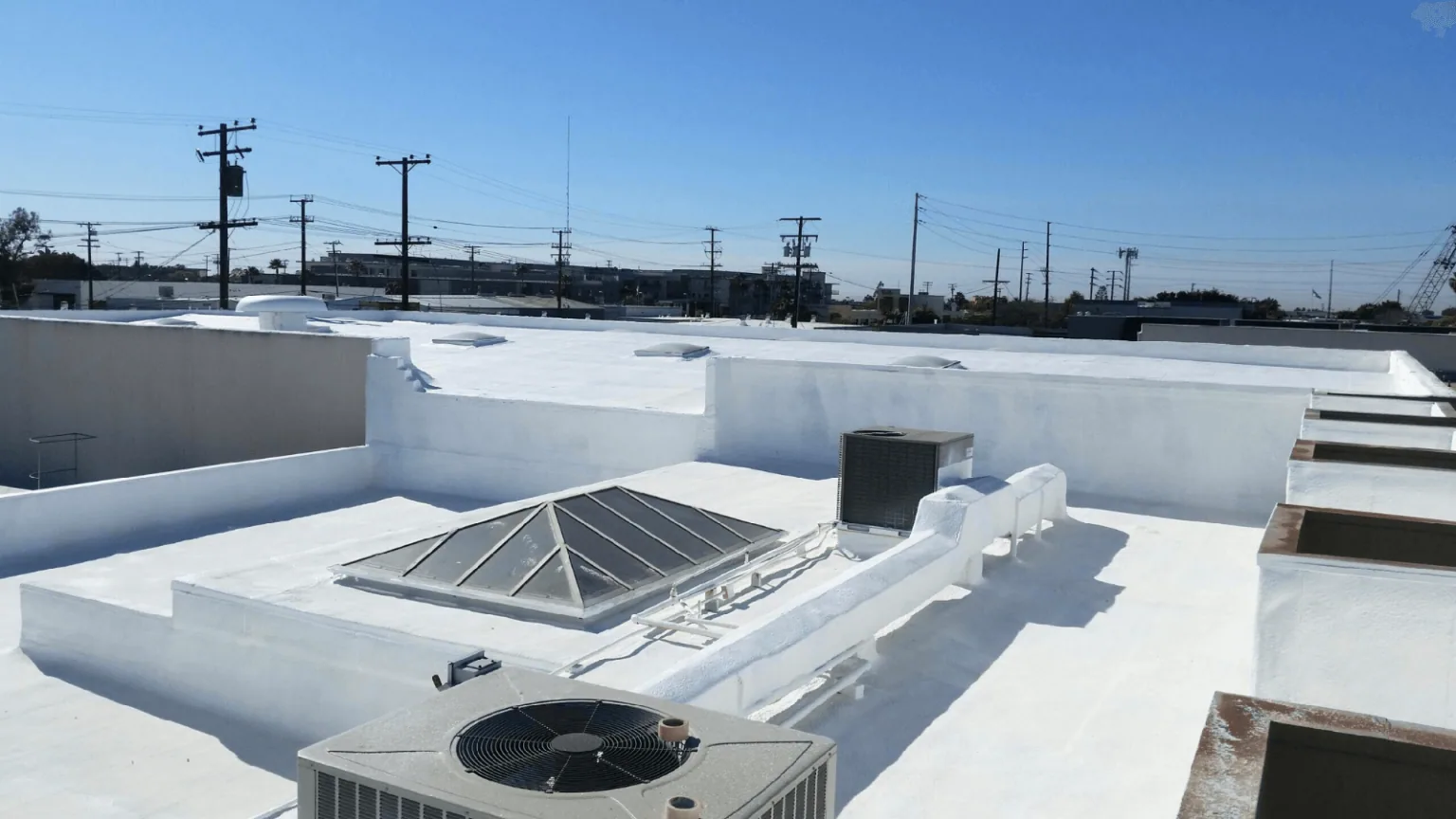
Storm damage looks different on every kind of roof, and the first job after a storm is to learn what actually hit this one. A gravel-surfaced built-up roof shows hail as dents in the gravel and cracks beneath. A single-ply membrane shows it as round soft spots. A metal roof shows it as dents, and sometimes as nothing the eye can see. Wind lifts edges and flashings. Debris punctures. Each leaves its own trace, and reading those traces in order is how a repair gets scoped correctly.
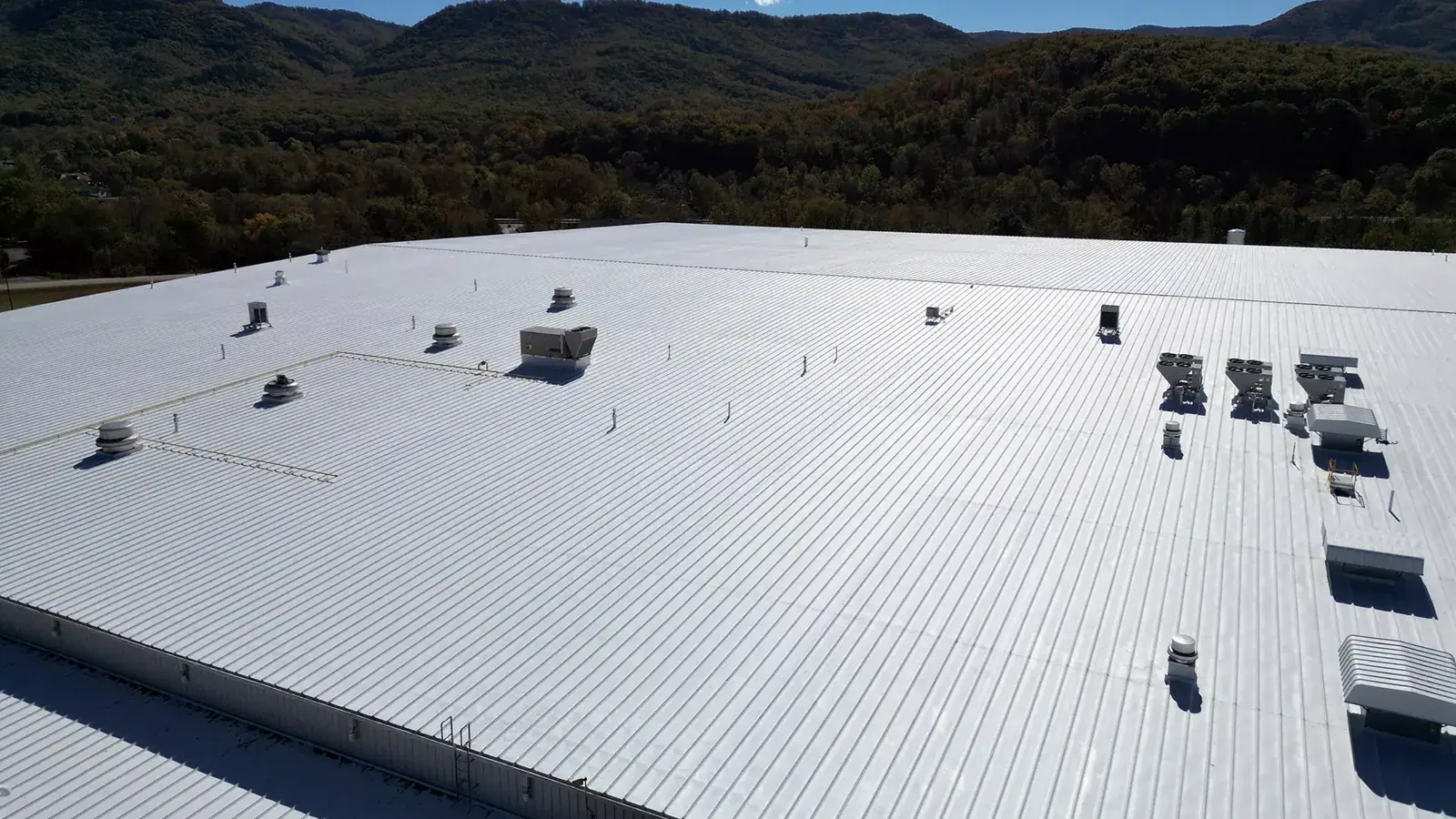
Here is how that goes in Wichita Falls, where hail, high wind and tornado-season storms all reach commercial roofs.
Start With What Hit the Roof
Before we look at a single seam, we ask three questions. What kind of storm was it? When did it pass? What did you see from inside the building? Answers narrow the search. Hail leaves a pattern across the whole roof, while wind concentrates damage at corners, edges and the windward side. Debris damage sits along the line a branch or a loose panel traveled.
The Wichita Falls area has a long record to read against. Golf-ball stones fell on Electra in March 1982 with damage reaching Burkburnett, and baseball-size hail followed in Iowa Park and Burkburnett in April 1991. Those events are context. The roof in front of us is the evidence.
Reading Hail Damage
From the ground a hail bruise looks like nothing; up close it is a soft spot. On a single-ply roof, it is a round depression where the membrane and the insulation under it were crushed. On a modified bitumen or built-up roof, it is a missing patch of granules or a crack in the felts. On metal, it is a dent, and the question is whether the coating cracked with it.
We press, probe and mark every spot we find, then count them in test squares and photograph each square. Cores show whether insulation beneath has been crushed or soaked. Hail also dents rooftop units, vents, skylights and edge metal, so those are walked as well. The count and the photographs tell an owner and an adjuster the same story.
Test squares are marked on a grid across the roof, each the same size, and the bruises inside each one are counted so one roof can be compared with another and one storm with the next. A roof with a handful of scattered hits is a repair candidate. A roof with dozens in every square is telling you the membrane and insulation have both taken a beating.
Reading Wind Damage
Wind starts where the roof is weakest, and the weakest places are edges, corners, laps and flashings. We look for lifted edge metal, peeled-back membrane, loose coping, torn seams and fasteners that have backed out. A fastener back-out lets the membrane above it flutter, and a fluttering membrane eventually tears.
The edge metal and coping get a pull test, since a metal edge held by loose fasteners lets wind under the roof. Parapet caps, gutters and downspouts are checked for dents and displacement. Rooftop equipment is checked for shifted curbs and torn flashing, because a unit that moved a quarter inch has broken its seal.
Wind also works under a roof from the inside. A pressure change from an open overhead door or a failed window can push up on the deck from below, so the walk includes a look at the ceiling side where access allows.
Tornado Season and Debris
Two tornadoes mark the city's weather record. The April 3, 1964 F5 tornado killed 7 people, heavily damaged downtown and left debris on all four Sheppard AFB runways. The April 10, 1979 F4 tornado killed 42 people directly, destroyed over 3,000 homes and more than 100 commercial businesses, and left an eight-mile track across the southern and eastern parts of town.
Those storms are history, not an inspection of any roof today. The lesson for a roof is about debris: after a high-wind event, we look for puncture holes, torn membrane, crushed vents and impact marks from flying material. A small puncture from a roofing nail or a tree limb leaks as surely as a large one, and each gets patched and photographed.
Protecting the Building First
If water is entering, protection comes before the permanent repair. That means a temporary seal, a tarp fastened to the deck, or a cut-and-cap of an open penetration, whichever stops the water and does the least harm. The interior is protected too: fans, plastic sheeting and moved equipment keep wet insulation from becoming a mold problem.
The temporary measure is a bridge, not a repair. We write it on the plan with the date it went on and what must happen next, so it does not become a permanent roof by accident. Our emergency roof repair crews respond around the clock when a section opens up, and the storm assessment follows once the weather clears.
Water on a deck is not only a roof problem. It can run along ductwork, down a wall cavity or into a light fixture, so the interior check follows the water to where it ended up, not to where the stain appeared.
Repair, Replace and Paper
With the findings in hand, the owner gets options. Isolated damage gets a repair list. Widespread bruising over crushed insulation points to replacement of the affected areas or the whole roof. A roof near the end of its life with moderate damage may be the right moment for a commercial roof replacement that insurance can help fund.
The documentation travels with the work. Dated photographs, test-square counts, core results and a written scope go to the owner and, if a claim is filed, to the adjuster. We lay out the claim paperwork in the order an adjuster reads it, and we separate storm damage from wear so the record is credible. A roof condition report written before the storm makes that separation easier, because it shows what the roof looked like the season before.
Commercial Roofing Questions
How soon after a storm should the roof be checked?
As soon as it is safe to be on it. Water that enters through a hail-split seam spreads through insulation within days, and a quick walk finds the entry points before the next rain.
Can hail damage a roof that does not leak?
Yes. Bruises and crushed insulation can sit unseen for a season or more before a leak shows. A walk with test squares finds damage that has not yet become a stain.
Should I file a claim before I get a repair estimate?
Get the inspection first. It tells you whether the damage is large enough to justify a claim and gives you photographs and counts to attach. Check your policy for deadlines on reporting storm damage.
What does a temporary repair cost compared with a permanent one?
A temporary seal costs a fraction of a permanent repair, but it only holds for a short time. If it is left in place, water finds a way around it, and the permanent repair costs more later.
Do you repair storm damage on a roof with a warranty?
We do, and we read the warranty first. Some warranties exclude hail or require the maker's approval for repairs. We document the work to the maker's method so coverage is not put at risk.