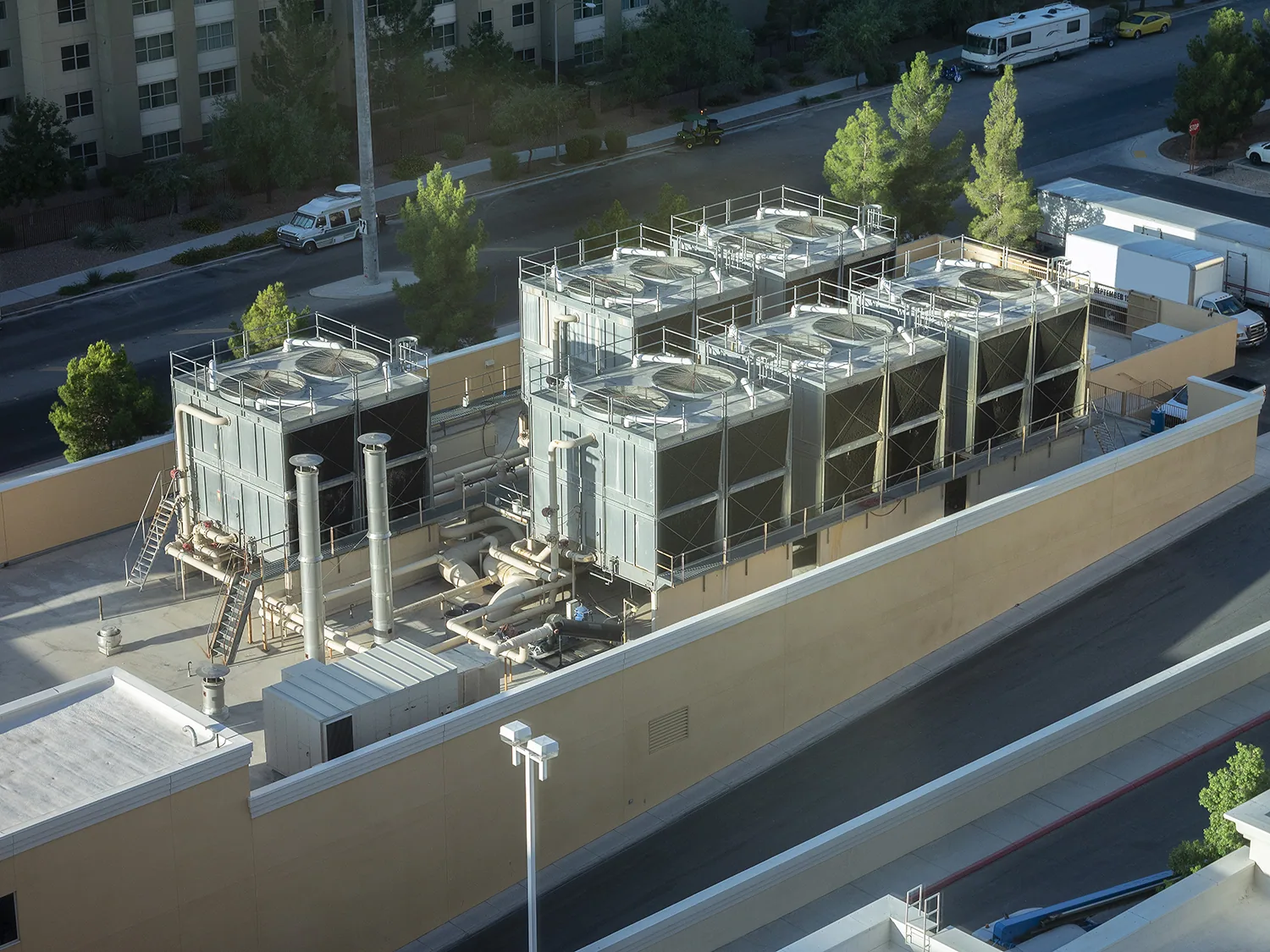
Every hole in a roof is a promise to keep water out, and flashing is the way the promise is kept. A membrane across an open field is a simple, forgiving thing. A pipe, a vent, a skylight curb or a hatch breaks that field, and the flashing around it has to turn a break into a tight joint. When a commercial roof leaks, the cause is more often one of these details than the open membrane, which is why we start the search there.

Here is how each detail works, how it fails and what a lasting repair looks like in Wichita Falls.
The Anatomy of a Flashing
A good flashing has layers. At the bottom is the roof membrane, running up to the curb or the pipe. A strip of flashing material is bonded to it, runs up the vertical surface and is held at the top by a termination: a bar, a metal cap or a counterflashing. Sealant fills the top edge, but it is a backup, never the main defense.
The detail depends on the roof system. A single-ply membrane uses welded pre-molded boots and flashing strips. A modified bitumen roof uses layers of flashing sheet torched or adhered to the base. A metal roof uses formed metal collars and butyl or sealant at fasteners. The wrong detail on the wrong roof leaks within a season.
Height matters. A flashing should rise high enough above the roof surface to stay clear of ponding and drifting debris, and a short flashing near a low spot is a leak waiting. We measure the rise on each detail and extend it where the roof system allows.
Pipes, Vents and Small Penetrations
Plumbing vents, conduit, gas lines and refrigerant lines pass through the roof in numbers. The common failure is a rubber boot that cracks in the sun. Another is a pipe clamp that rusts and lets the flashing slip. A third is a pitch pocket, the old trick of pouring sealant around a pipe, which shrinks, cracks and lets water in.
Our repair replaces the boot or builds a proper flashing: a pre-molded boot welded or adhered to the membrane for round pipes, a flashed pipe collar for odd shapes, or a sealed pocket only when nothing else fits. Penetrations that serve equipment no longer in use are removed, the opening is patched and the deck is closed, rather than capped with a bucket of sealant.
Gaskets and glazing seals get a close look. A gasket that has hardened lets water track past the glazing into the frame, and a sealed unit with a failed seal fogs inside. We test by pressing, by water and, if needed, by moisture scan, and we replace what fails.
Rows of penetrations need extra thought. A cluster of pipes close together defeats individual boots, so we frame the group with a single curb or a sealed pan and flash it as one unit.
Skylights and Roof Hatches
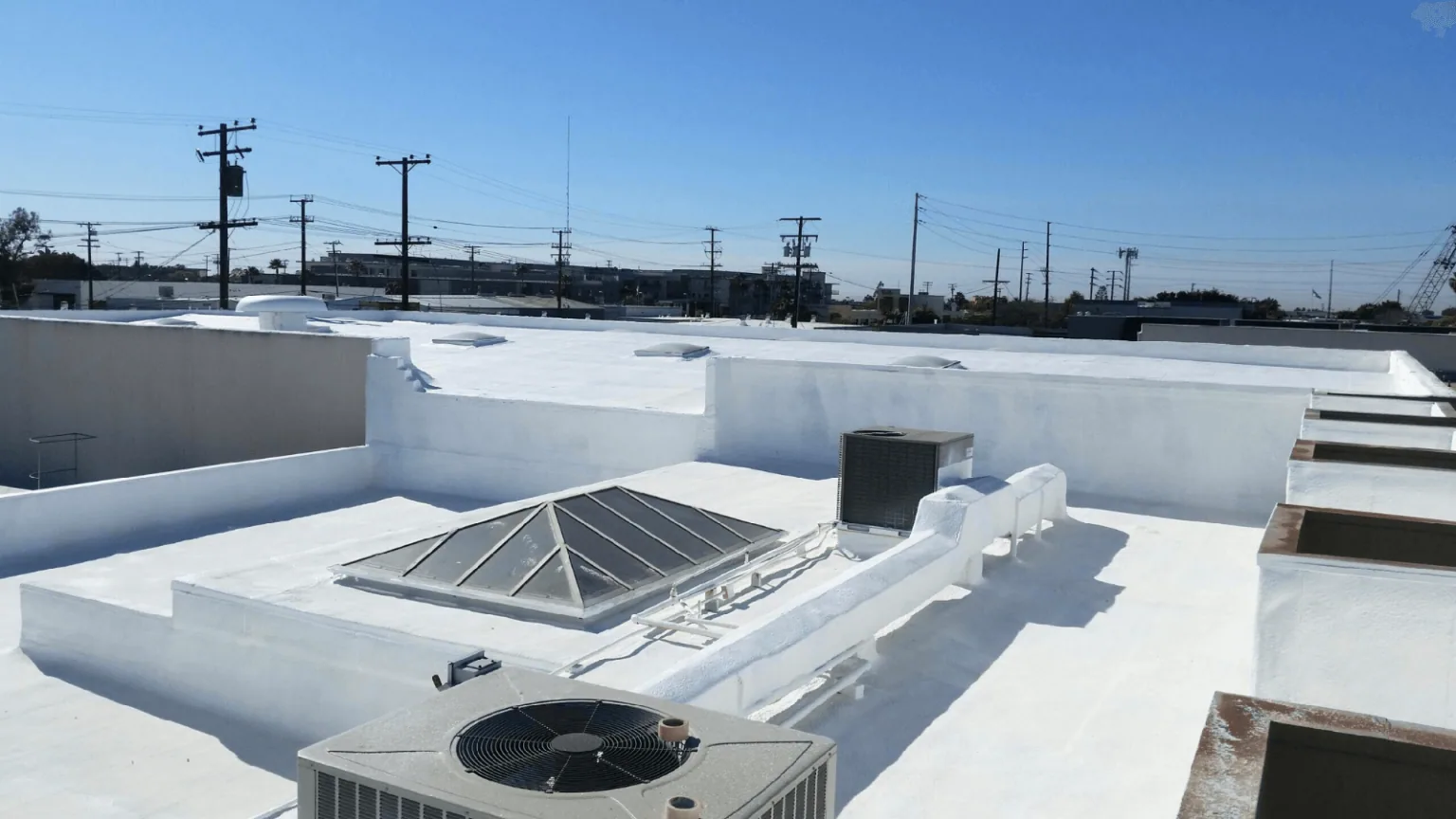
A skylight is a hole with a window in it. The curb that holds it sits above the roof surface, flashing wraps its base and the glazing seals to the top. Water gets in at four places: the flashing at the curb base, the corners where the flashing turns, the seal between glazing and frame, and the condensation channel that leaks inside the unit.
Sun is hard on skylights. With a record high of 117 degrees on the books, plastic domes here yellow, crack and warp in the heat. Hail breaks them outright, and baseball-size stones fell on Iowa Park and Burkburnett in April 1991. We inspect domes for crazing, check gaskets and replace failed units. Roof hatches get the same attention at their hinges and seals.
Curbs, Supports and Moving Parts
Rooftop units sit on curbs, and the curb flashing is the weak link. Maintenance traffic bumps it, vibration loosens it and the sun bakes it. We check the corners of each curb first, since that is where flashing stretches and splits, and then the counterflashing, which is the metal skirt that covers the top edge. The frame of an equipment curb and support carries the unit, while the flashing keeps the opening dry, and each needs its own inspection.
Pipe supports and conduit also matter. A pipe resting on the membrane wears a hole. A support with a sharp base punctures. We raise lines on supports with wide, soft pads, and we place walkway pads where technicians cross, so the people who service the roof do not damage it.
What We Check
Step one is to look at every penetration, count it and mark it on the roof drawing. Step two is to press the flashing and check for movement, cracking, gaps and open laps. Step three is to examine the sealant: is it soft, is it hard, is it pulling away? Step four is to look at the membrane around the base for signs of old water, such as stains, blisters or soft insulation.
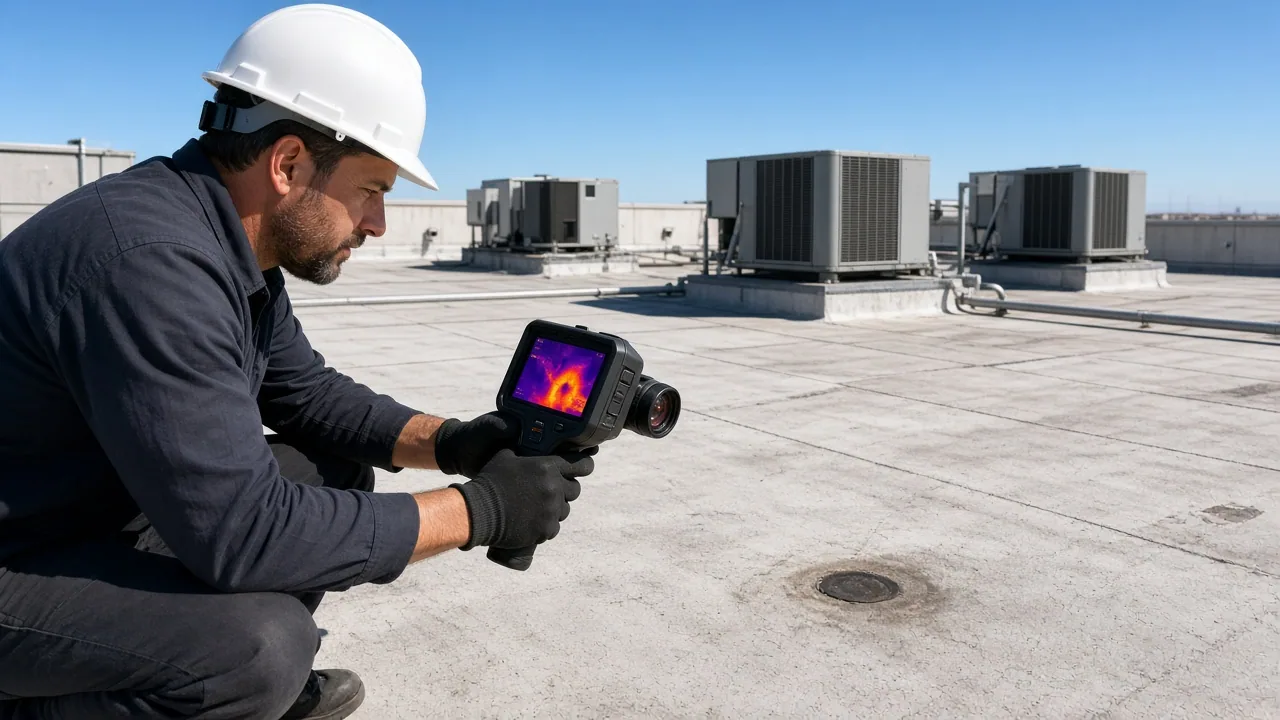
If we suspect water has entered, a moisture survey shows how far it spread. An infrared scan of the area around a skylight or a curb often reveals a wet halo that the surface does not show. The scan guides how big the repair has to be.
We also photograph each detail before we touch it and after we finish. The set of photographs tells the owner which penetrations were repaired and which were left alone, so the next walk starts from a known condition.
Repair, Rebuild or Remove
Some details can be repaired in place with a new boot, fresh sealant or a reset termination bar. Others need to be rebuilt, which means removing the old flashing back to clean membrane, setting a new base and flashing up the curb in the roof system's own method. And some should be removed. A skylight that leaks every year and lights a space that no longer needs light is a candidate for a roof panel that closes the hole for good.
On a new roof replacement, every detail is rebuilt, because flashing is where an old roof's life ends. A roof with large, simple fields, such as a distribution shed in the Wichita Falls Business Park, has fewer details to maintain. Roofs with many penetrations need more flashing attention in every maintenance visit.
Commercial Roofing Questions
Why does my roof leak near a pipe?
The boot has probably cracked or the flashing has pulled away. Sun and movement wear both. A replacement boot or a rebuilt flashing fixes it. Sealant alone is a short-term patch.
Can a skylight be repaired or does it need replacing?
If the frame is sound and the leak is at the curb flashing or the gasket, repair works. If the glazing is cracked, crazed or warped, replacing the unit is the better value.
What is a pitch pocket?
A box of sealant poured around a pipe on an older roof. It shrinks and cracks over time. We replace it with a boot or a flashed collar that moves with the pipe.
How long does flashing last?
It depends on the material, the exposure and the movement of the thing it surrounds. Neoprene boots may need replacement sooner than the roof, while welded or torched flashings can last as long as the field membrane.
Do you remove skylights we no longer need?
Yes. We take out the unit and curb, frame the opening, deck it and close it with roof membrane. It removes a leak path for good and can improve insulation too.