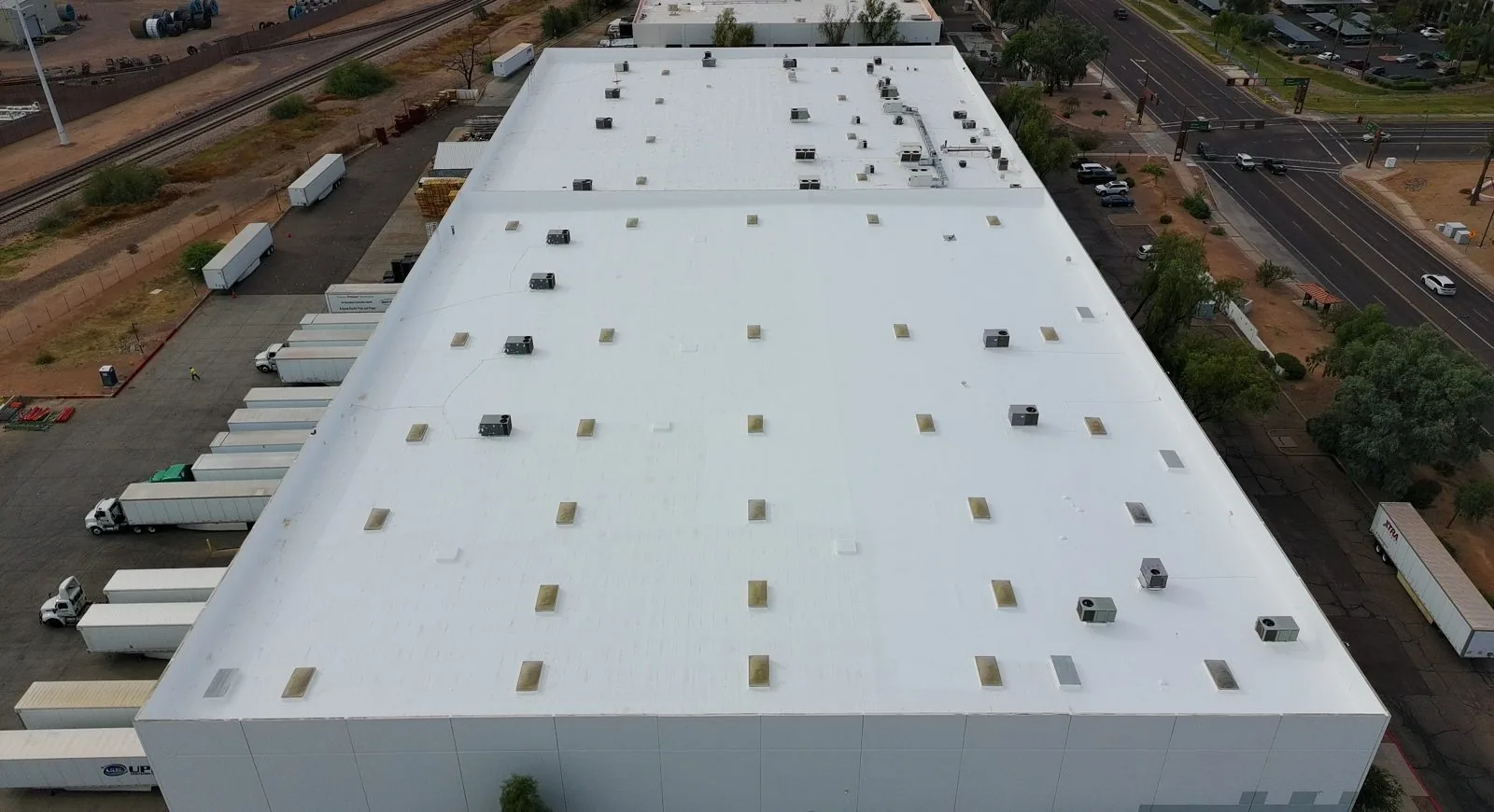
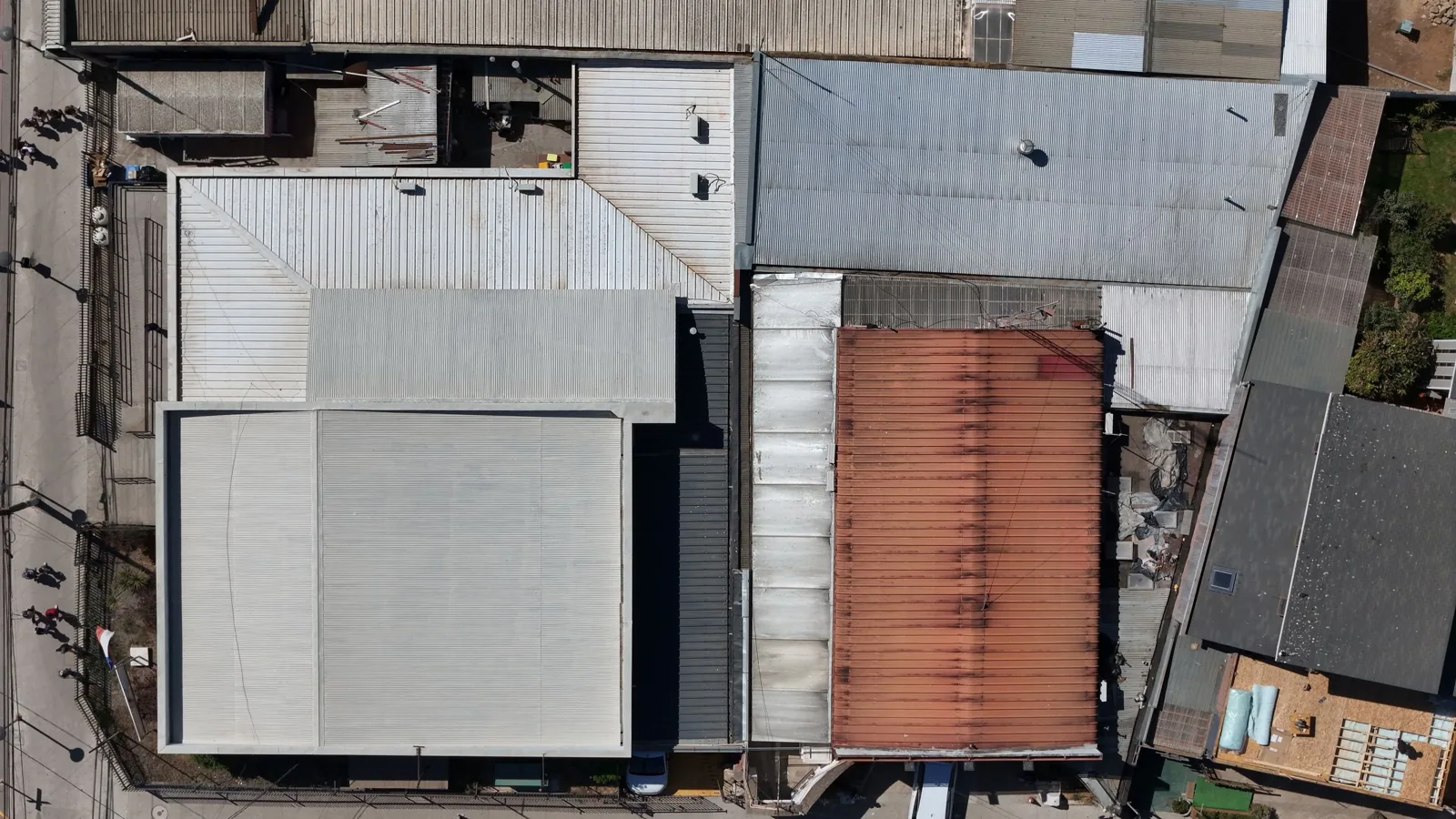
A hangar is one very large room with one job: keep the aircraft dry and the doors working. The room has no columns in the middle, so the roof spans the whole width on long trusses or rigid frames, and the doors take up an entire wall. That shape drives everything about the roof, from how it expands in heat to how a small leak turns into a big problem. In Wichita Falls, TX, aerospace and aviation supply-chain firms are one of the major business clusters, so we start with the building. Then the span. Then the doors, where hangar roofs often fail first.
A Clear Span Changes the Rules
The long span means a single wide roof deck with no interior walls to stop water. A leak can drip onto an aircraft wing, an engine, a work stand or a tool cabinet, and the damage is measured in the value of what is under the drip. Hangars also hold fuel, solvents and paint, which makes water, fire and electrical hazards a shared concern.
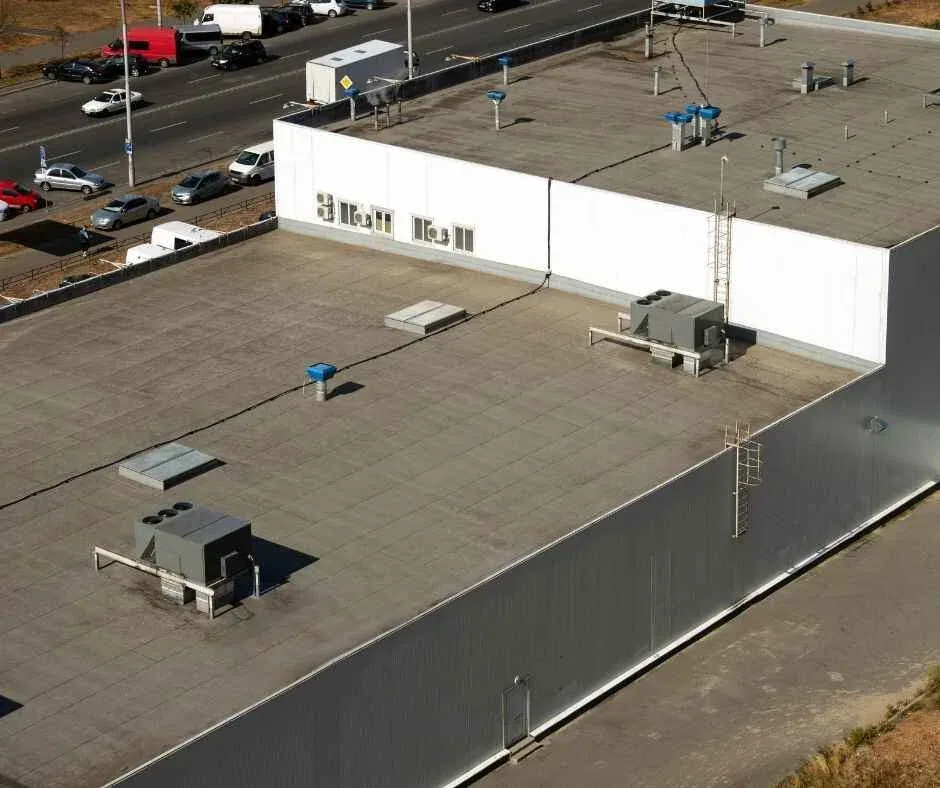
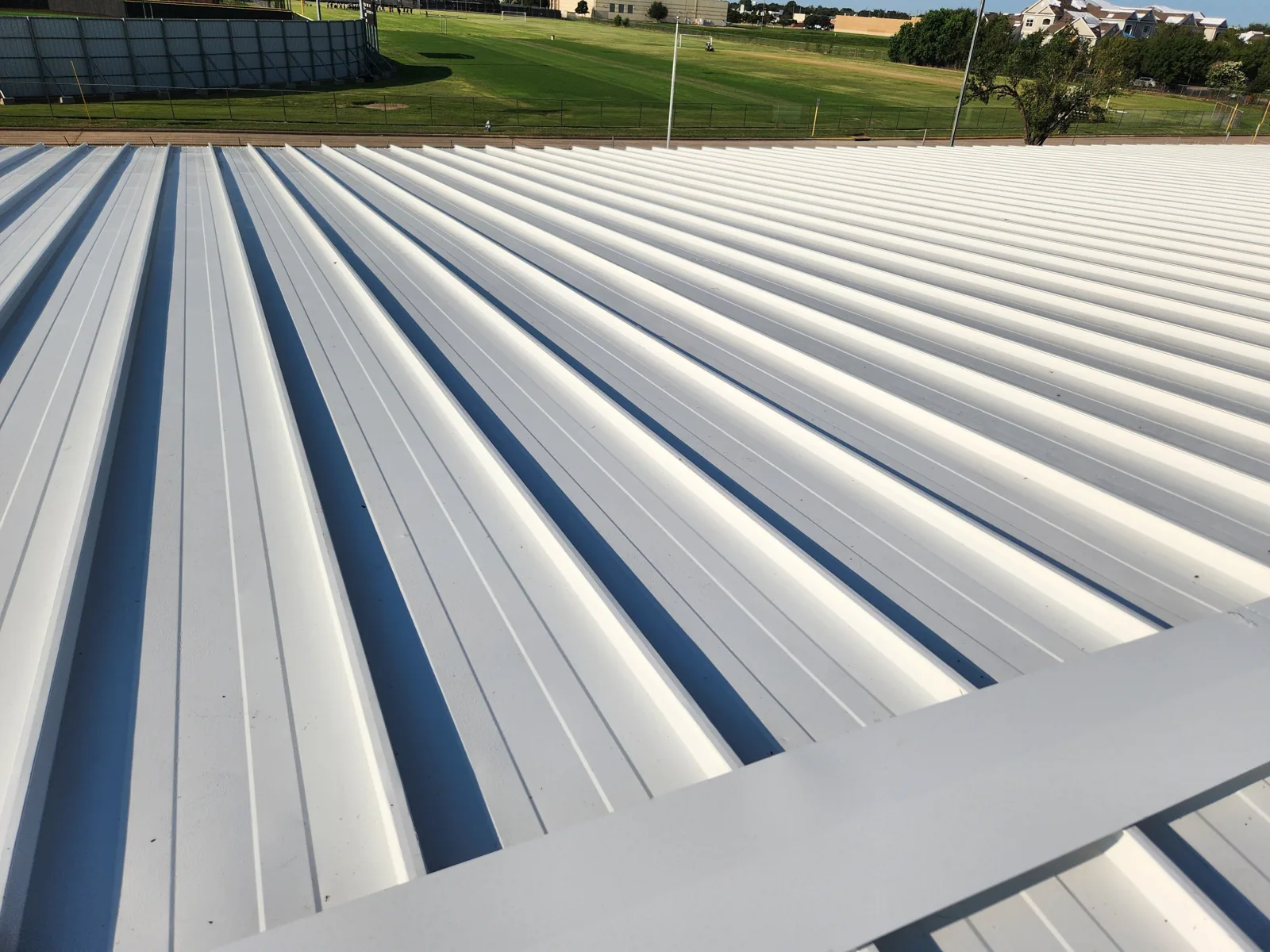
Most hangar roofs are metal, either standing seam or exposed-fastener panels, with some low-slope membrane roofs over steel decks on larger or newer buildings. Both rely on a steel frame that moves with heat. A metal roof on a long span changes length by a noticeable amount on a hot day, and fasteners, clips and laps have to allow for it. We start by finding how the roof is attached and where the movement concentrates.
Translucent panels and skylights are common on hangars, because daylight cuts the lighting load. Each panel is a place where plastic meets metal, and the two expand at different rates. Panels yellow, crack and lose their seal long before the metal around them wears out. We check each one, replace the cracked ones and reseal the rest, since a hangar has a long run of them and every one is a possible drip over an aircraft.
The Door Wall and Its Roof Edge
The large doors on a hangar slide, fold or lift, and they hang from a header that carries loads from the roof. Where the roof meets the door header, water follows the wall down and finds the track. A leak near the doors often looks like a door problem, when it is a flashing problem above the door. We test it with water to see.
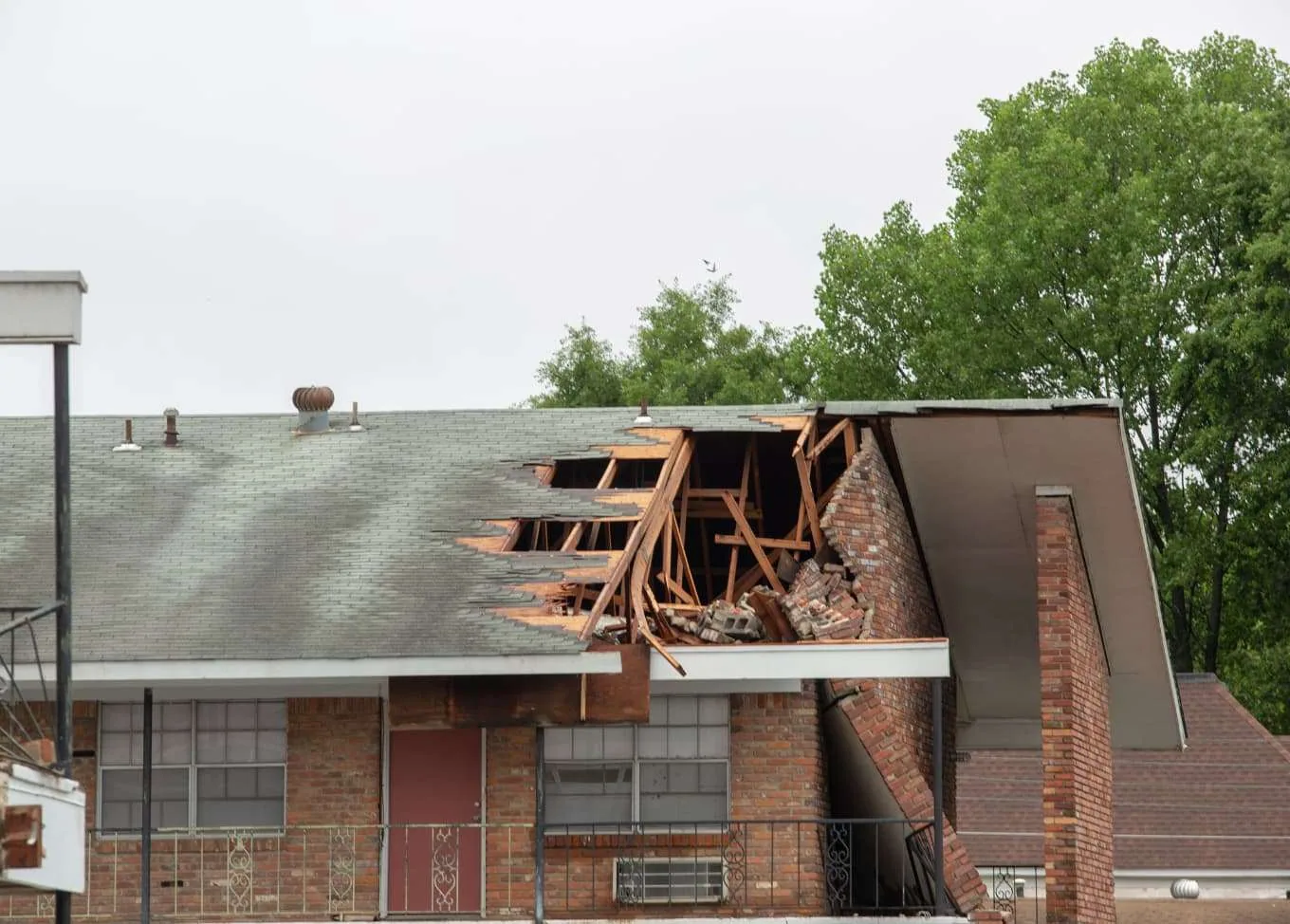
Edge metal on the door wall also takes the full force of wind. Gusts blowing across an open airfield hit the front of a hangar head-on, and a lifted edge can peel a section of roof back. Wichita Falls takes tornado-season wind, and the F5 tornado of April 1964 dropped debris on every runway at Sheppard AFB. That is history, not a prediction. It is a reason to check the door-wall edge after every major wind event, and to repair wind damage before the next storm.
Roofs Near the Airfield
Wichita Falls Regional Airport, about six miles north of the city, runs on the same runways and taxiways as Sheppard Air Force Base, so aircraft buildings in the North Wichita Falls and airport area sit beside a mix of civil and military flying. The airport counted 213 based aircraft in 2020, including 200 military, and about 97 percent of its operations are military. A civil hangar near that traffic shares the same open airfield and weather.
Airfield work has its own rules. Cranes and lifts near taxiways need permission and height limits, and crews often need an escort and a badge. We plan the lift path, the staging area and the lay-down yard before the first day, and we confirm the airport's requirements with the building owner. The work follows the access rules the owner sets.
Hail on Light Metal Roofs
Hail larger than baseballs fell at Sheppard Air Force Base on March 29, 1993, and baseball-size hail damaged Burkburnett and Iowa Park in April 1991. Hangars have wide roofs with little cover, and thin metal dents. A dent alone does not mean a leak. A dent that cracks a coating, or sits at a fastener, can start rust and a slow drip.
After a hail event, we check dents by location, fastener heads, ridge caps and skylight panels. A hail damage report maps the dents and notes which ones affect water-shedding. An owner or tenant can use that map to see what is cosmetic and what is functional. Heat expansion belongs in the same check, with about 28 days a year at 100 degrees.
Repair, Retrofit or Replace
One clean rule: repair what is sound and dry, retrofit what is tired but dry underneath, replace what is wet or rusted. A metal roof retrofit adds a new panel system over the old one, which avoids a tear-off over aircraft and keeps the hangar usable. A coating can seal a sound roof, though it needs a clean, rust-free surface.
Cost drivers are roof area, height, lift access, the number of penetrations and skylights, door-wall tie-ins and the need to protect the aircraft below. Standing seam panels remove exposed fasteners and last well on long spans, and they can be more costly up front. The written scope lists each option with its effect on the hangar floor, so the owner decides with the full cost in view.
Working Over Aircraft
No loose tool or fastener can be left to fall on an aircraft. Work over occupied bays starts with a plan for moving aircraft, covering what remains and sealing every opening before cuts are made. We prefer to clear a bay completely when the schedule permits. Debris is caught, not dropped, and the floor is swept and checked before the aircraft returns.
The same discipline applies in a base building and a military maintenance facility, where access, escort and mission calendars set the schedule. For any hangar, the plan begins with a written sequence, the cover for every aircraft and a clear contact who can authorize moving them. Because fuel and solvents may be stored nearby, we also agree on where hot work is allowed, and we choose welded or cold-applied methods that keep open flame out of the building. Each day closes with a walk-through, so the owner sees the cover that stayed over the bays overnight.
Commercial Roofing Questions
Why do hangar leaks seem to start near the doors?
The door header carries a flashing that handles roof movement and water running down the wall. Wind-driven rain exposes it first. We water-test the header to separate a door problem from a roof problem.
Can aircraft stay in the hangar during repairs?
Sometimes, if the work is in a different bay and the aircraft are covered. For work directly overhead, clearing the bay is safer and usually faster.
Is a metal retrofit better than a tear-off?
Over aircraft, often yes. A retrofit avoids debris and keeps the hangar usable. It needs a sound structure and dry insulation if any is present, which a survey confirms.
Do hangar roofs need lightning or fire-related details?
Hangars have their own fire protection and grounding systems. We coordinate with the owner's engineers so roof work does not disturb conduits, sprinkler piping or grounding connections.
What should the hangar owner send first?
The roof type and age if known, the door wall layout, aircraft stored in each bay and any leak reports. That lets the first walk-through answer a specific question.